New Carbon Capture Tech Removes 99% of CO2 from Air

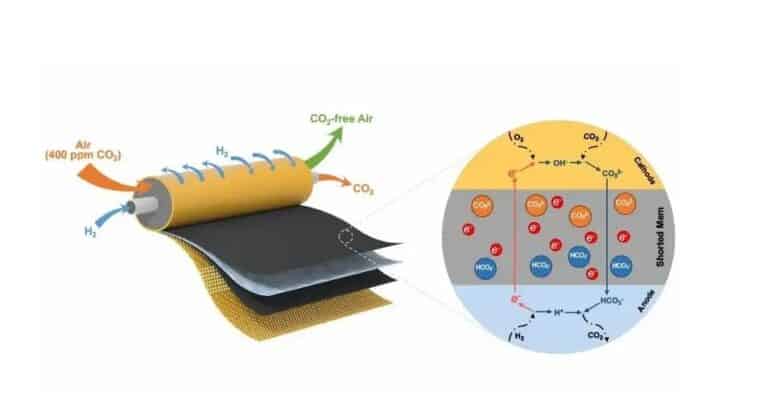
Researchers at the University of Delaware developed a way to capture 99% of carbon dioxide from the air.

This new technology involves an electrochemical system powered by hydrogen.

“It turns out our approach is very effective. We can capture 99% of the carbon dioxide out of the air in one pass if we have the right design and right configuration,” said Professor Yushan Yan who led the research.

Here’s why this new carbon capture technology is so important.

Researchers at UD  focused on Fuel Cell Energy for many years.

Simply put, this is where fuel cells convert fuel chemical energy into electricity. They can use that electricity to power hybrid or zero-emissions vehicles.

But researchers faced a bit of a problem.

When exposed to CO2, fuel cells lose efficiency.

So, Yan’s research team has been searching for a solution for more than 15 years.

And that search is what led them to this discovery.

First, researchers found a way to implant the power source for this electrochemical technology inside a separation membrane. Then, they developed a filtration membrane that could separate gases – like carbon dioxide.

Best of all, the tech is practical and affordable. So, for a vehicle, the device would only be about the size of a gallon milk container.

Long-term, researchers believe they could use this technology within planes and buildings.

“We have some ideas for a long-term roadmap that can help us get there,” said Brian Setzler, assistant professor for research in chemical and biomolecular engineering and the paper’s co-author.

The race to reduce CO2 emissions.

The world sees the effects of climate change.

Companies are working to develop new technology to reduce their carbon footprint to accomplish this. They are investing in carbon credits and carbon offsets too.

So, as carbon capture becomes more accessible, it can also be a part of the climate solution.
In green energy push, the UK plans to hold annual renewables auctions

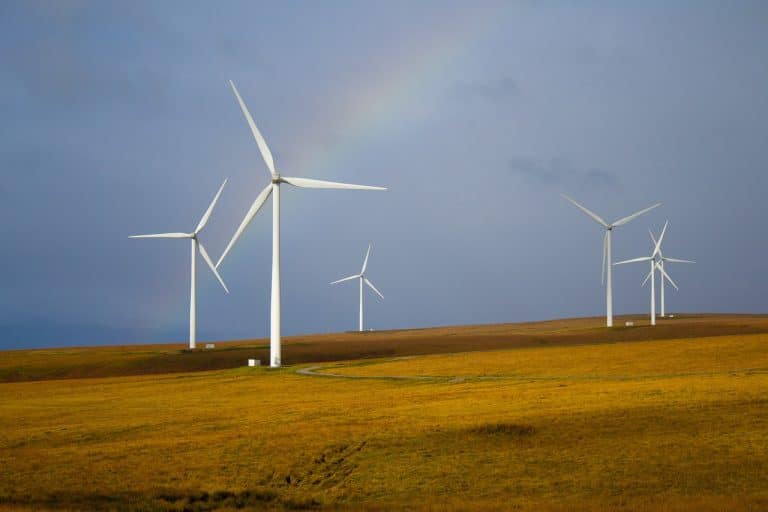
In a green energy push, the UK plans to have renewables auctions every year to support low-carbon electricity. Currently, the UK has them every two years.

The UK believes this change is the best way to stop volatile gas prices. Also, it will give firms investing in wind and solar energy an incentive to keep doing so.

According to Energy Secretary Kwasi Kwarteng, “We are hitting the accelerator on domestic electricity production to boost energy security, attract private investment and create jobs in our industrial heartlands.”

Kwarteng went on to say, “The more clean, cheap, and secure power we generate at home, the less exposed we will be to expensive gas prices set by international markets.”

Renewables Auctions can help the UK meet net-zero emissions goals.

The UK wants to meet net-zero emissions by 2050.

So, in addition to their Emissions Trading System (ETS), the UK must do more.

To hit targets, the UK must quadruple its installation rate. This is no easy feat. But, renewables auctions are a way to do just that.

Investments include onshore wind, solar, floating wind, green hydrogen, and marine power.

According to Morag Watson, director of policy at Scottish Renewables, “By 2050, electricity demand will have almost doubled, and the vast majority of that electricity must come from renewable sources if we are to meet net-zero [emissions].

However, some in the UK do not approve. They believe the UK should produce its own gas by fracking to prevent price increases.

Where did renewables auctions come from? Are they effective?

Renewables auctions were developed by an unknown UK civil servant. They have helped to drive down the price of wind by 65% in the UK.

Renewables auctions have also saved billions of pounds globally.

As such, these auctions have been copied around the globe.

eAgronom Raises $7.4M for farming-based Carbon Credits Platform

Estonia-based eAgronom has closed a $7.4 million Series A to develop a platform for farming-based carbon credits. EAgronom had previously raised $12 million and also received a $600,000 EU grant.

The Farm Management Software (FMS) is booming with no global leader yet to step forward Competitors Agrivi, Granular and FarmLogs also have combined raised nearly $70 million.

eAgronom plan on entering new markets (including those outside the EU) and improve their carbon tracking systems.

Plans are already in the works to develop “Solid World”, a web3-based DAO, to assist farmers and other carbon projects in financing CO2 sequestration.

Carbon credits will hasten farm digitization and establish a $10 billion worldwide market.

eAgronom currently has over 1,500 clients who manage over a million hectares of grain land. They have also secured exclusive carbon agreements with over 100,000 of those hectares.

Because soils are the largest carbon sink outside of the seas, the world will require sustainable farming techniques to address the climate catastrophe.

Given the lack of transparency and measurability in carbon offsetting, eAgronom believes that a blockchain solution will bring more responsibility.

Robin Saluoks, co-founder and CEO of eAgronom, said: “Through our experience helping farmers with technology, we are uniquely positioned to capture the global agri-carbon opportunity… To fight climate change, we have to provide transparent tracking and access to capital to all nature-based companies…. We aim to become the leading developer of high-quality carbon credits.”

The carbon markets are growing at a rapid pace and the “carbon farming” industry is in its infancy. Players like Agoro, IndigoAG, Soil Capital, Trinity, Agreena, and CommodiCarbon are all fighting for market share.

Depleted Gas Reservoirs Hold CO2 and Carbon Credits

Australian gas producer Santos has secured a network of depleted gas reservoirs for carbon storage – with the potential to keep up to 100 million metric tons. Santos can then issue carbon credits worth as much as $25M annually.

These reservoirs serve as a piece of the puzzle for Santos’ carbon project called Moomba.

Beach Energy has partnered with Santos on Moomba. The is to capture 1.7 million metric tons of carbon each year. So, the storage option proposed could last more than 50.

They expect to start in 2024.

How does carbon capture and storage (CCS) work?

Carbon capture is when carbon is collected from the atmosphere and then reused or stored. The technology behind it is quite complex.

While governments and industries support carbon capture and storage, it is only just starting to pick up steam. This is mainly due to the high cost.

As such, once the technology becomes more accessible, CCS will continue to grow.

“[Carbon capture and storage] is a critical technology to achieve the world’s emission reduction goals, and we only have to look at current carbon prices to see how valuable 100mn tons of storage is,” chief executive Kevin Gallagher said in a statement on Tuesday.

What are carbon credits?

For every carbon credit purchased on the carbon markets, one metric ton of carbon is offset through an environmental project.

The Santos capture and storage project qualifies.

Santos can claim one Australian carbon credit for every ton of carbon they capture and store. They could then sell the credits for A$17 (US$12) per ton, which the Australian government would then retire, or sell them privately.

On the private carbon market, ACCUs are going for more than A$55 (US$39).

Santos can capture and store carbon at Moomba for $24 a ton if prices stay where they are now – though many expect carbon prices to continue to increase over the next several years.

CME to launch CBL Core Global Emissions Offset (C-GEO) futures in March.

CME Group plans to launch CBL Core Global Emissions Offset (C-GEO) futures in March. As such, it is currently pending review.

CBL C-GEO futures are the latest in our suite of risk management tools to help bring standardized benchmarks to the rapidly evolving voluntary carbon markets,” said Peter Keavey, Global Head of Energy and Environmental Products at CME Group.

As our clients closely follow the implications of Article 6 and other developments in this space, we are responding to demand for scalable market-based solutions that will allow them to execute their reduction strategies more effectively.”

What will C-GEO futures focus on?

C-GEO will deliver energy, renewables, and other technology-based offset credits based on the Core Carbon Principles. Also, credits will roll forward each year for new projects and markets.

The CBL Core GEO spot contract has been tremendously well-received, with more than 1 million metric tons traded since its January launch,” said Xpansiv Chief Commercial Officer Ben Stuart.

The launch of CBL C-GEO futures will bring expanded risk management and forward pricing capabilities to the market, the benefits of which have been clearly demonstrated by the introduction of futures on our GEO and N-GEO spot instruments.”

What are carbon offsets? Why are they so popular?

If you don’t know how carbon offsets work, they are pretty simple to understand.

One offset is equal to one metric ton of carbon.

So, for every offset purchased, one metric ton of carbon is “offset” through an environmental project. Hence the term carbon offset. You are essentially neutralizing carbon emissions through something positive.

Many different projects count, like reforestation and agriculture. These projects are great for the environment and farmers, who receive compensation.

So, investing in carbon offsets is a win for all.

C-GEO futures will work with CBL GEO and N-GEO futures. Those funds were launched last year.

Both contracts traded more than 57 million tons of carbon. Also, they delivered 6.5 million offsets. There are about 230 million offsets available.

Xpansiv market CBL helped create C-GEO futures.

Carbon is Forever – Is this the End of the Diamond Industry?

The world’s first “Air” mined diamonds could signal the end of the diamond industry as we know it.

Diamonds have been around for a long time, they were not a very important gem until De Beers began their successful marketing campaign in the 20th century.

De Beers began to convince people that diamonds were a show of love and that size matters. Over time celebrities and the global PR machine made diamonds extremely valuable and “rare”.

Traditional mined diamonds have a much larger environmental impact than lab-grown diamonds.

Lab-grown diamonds are nothing new, they are cheap and can produce the same quality as mined diamonds, the problem is perception.

It was ingrained in our minds that diamonds must be expensive to show how much you love someone, but that is changing fast.

Millennials and Generation Z, are now the main purchasers of diamonds for engagement rings. They are eco-conscious and 70% of them are considering buying lab-grown diamonds.

Climeworks has partnered with Aether Diamonds to produce Carbon-Negative Diamonds.

For every carat of diamond, Aether says it removes 20 metric tons of carbon dioxide from the air (i.e., 20 carbon credits). That is more than a year’s worth of emissions for the average American.

The costs are a lot more than traditional lab-made diamonds to produce, but then again diamonds are only expensive based on perception.

With Carbon set to become one of the biggest commodities of the future, maybe one day all diamonds will be graded by the 5 Cs: carat, cut, clarity, color, and carbon credits.

Canadian Carbon Credit ETF’s set to Launch

The carbon markets are heating up, so much so that Canada is getting two carbon credits ETF’s.

Both are claiming to be the “first” Canadian Carbon credit ETF.

Horizons ETFs Management (Canada) and Ninepoint Partners LP are launching their own respective carbon credit ETF’s on the TSX and NEO exchanges.

Horizons Carbon Credits ETF will trade under the ticker “CARB” and the goal is to replicate the performance of its Horizons “Carbon Credits Rolling Futures Index”. That index seeks to provide exposure to investments in cap-and-trade carbon allowances.

CARB will begin trading on February 10, 2022 on the TSX exchange.

The Ninepoint Carbon Credit ETF has a US and Canadian denominated ticker. The Canadian ticker is “CBON” & the US Dollar ticker is “CBON.U”. Both are set to launch on the Canadian NEO exchange around February 16th, 2022.

The Ninepoint offerings have a similar investment strategy as CARB, by investing in carbon emissions allowance futures in jurisdictions with cap-and-trade regimes such as Europe and California.

Both have claimed to be Canada’s first Carbon ETF’s and to check if these are “carbon copy” funds you will need to review their prospectus’ as both have a similar management fee structure of 0.75%.

Here’s the link to the official press releases here – CBON & CBON.U & CARB.

Investors are demanding more options to get exposure to the carbon credit sector which grew to over $850 billion last year.

Sustainability Conservation Firm Launched by Kyle Bass and Terry Anderson

Kyle Bass and Terry Anderson launched Conservation Equity Management, LP – a sustainability and conservation firm. Conservation Equity will buy large parcels of land in Texas. They are searching in other states nearby too.

They plan to protect ecosystems while raising their value. Plus, they will use the land they buy to create environmental credits.

How do environmental credits work? 

Environmental credits are just like carbon credits. A company invests in an environmental project to offset its carbon emissions with carbon credits.

So, one carbon credit equals one metric ton of carbon. Pretty simple.

But environmental credits are a bit different.

Environmental credits restore wetland, water, and habitat resources. They also reduce air pollution.

So, they are not just focused on carbon.

However, Conservation Equity wants to do all the above.

They plan to mitigate wetland, stream, and endangered species habitat destruction. Plus, they want to generate sustainable income as well.

“There is a substantial opportunity to acquire larger timberland and rangeland parcels as ESG solutions to carbon capture, utilization or storage (CCUS), biodiversity offsets, and as hedges to inflation risk,” said Anderson, Principal.

Environmental credits and sustainability and conservation.

“As more companies and people move to Texas and other pro-business, low-tax states, there will be devastating environmental consequences, forcing firms to consider their physical environmental impacts, carbon footprints, and mitigation options,” said Bass, CEO.

So, environmental projects will be needed to promote sustainability and conservation efforts. Hence the need for environmental credits.

Bass continued, “This is the right moment for Conservation Equity.”

To date, Conservation Equity has successfully completed two transactions. One is in Cameron County, TX. The other is in Cherokee County, TX.

Per Bass, “The Bahia Grande and Cherokee Ridge properties are both outstanding opportunities to create value by employing various levels of conservation and mitigation strategies.”

Carbon Credit Program Launched by Phillips 66 Aviation

0

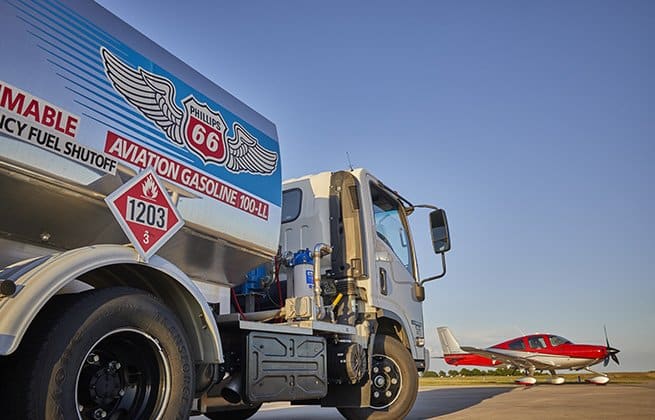
Phillips 66 Aviation has partnered with 4AIR to launch a carbon credit program.

Phillips 66 is one of the largest refiners in the U.S. and a major contract jet and fuel supplier to private, commercial, and military aviation.

Through this program, flight operators and airports can offset carbon from jet fuel, gasoline, and diesel emissions. Emissions created by vehicles and operating are also included.

The 4AIR program has 4 different rating levels for clients to chose from:

  1. Requires a 100% carbon dioxide (CO2) offset.
  2. Requires a 300% offset to comprehensively offset emissions.
  3. Requires a 5% direct emission reduction.
  4. Requires a direct contribution to the Aviation Climate Fund.

“4AIR’s rating system is designed specifically for aviation and makes compliance with industry goals and sustainability efforts simple,” said Kennedy Ricci, president of 4AIR.

Lindsey Grant, Manager, Phillips 66 Aviation said, “We’re giving pilots and FBOs the right tools to help them on their carbon journey. We look forward to working alongside the 4AIR team to bring sustainable offerings to our customers.”

Sustainable Aviation Fuel (SAF) emits 80% less carbon than jet fuel. However, SAF is not easy to make. So, it is difficult to make the switch.

Phillips 66 Aviation hopes to change that by converting its San Francisco Refinery into a place to produce SAF. They would like it to be one of the most significant SAF production facilities in the world.

Carbon Capture Startup Verdox Gets Investment from Bill Gates

Verdox, a carbon capture start-up in Massachusetts, has raised $80 million from investors, including Bill Gates-backed Breakthrough Energy Ventures.

Increased interest in Verdox is due to a recent breakthrough in their technology.

According to CEO Brian Baynes, it involves a critical material used to trap GHG emissions.

What is carbon capture?

Carbon capture is when carbon is separated from the atmosphere and stored deep within the earth’s surface.

Most technology uses a liquid that attracts carbon like a magnet.

This takes a lot of time, energy, and, quite frankly, money.

Many do not feel it is an efficient or cost-effective way to reach net-zero.

How is Verdox’s technology different?

Verdox has developed a new plastic that can pull carbon from the air when charged with electricity. This could cut the total energy usage for direct air capture by more than 70% – which is a big deal.

Verdox hopes this technology will enable millions of tons of carbon to be captured at $50 per/tonne or less.

It is important to note that Verdox’s technology is still only operable at the lab scale.

What are carbon credits?

Carbon credits are permits that companies can buy to emit more carbon than regulated.

Each carbon credit represents an environmental project that helps offset carbon in the atmosphere.

One carbon credit = one metric ton of carbon.

So, carbon credits are different than carbon capture because carbon capture takes carbon out of the atmosphere (while credits just offset it).

Carbon credits have reached an all-time high of $851 billion. Much of that growth is due to the EU’s Emissions Trading System, now trading over 90 Euros per ton.

Verdox is now competing with Canada’s Carbon Engineering Ltd. and Switzerland’s Climeworks AG – which have raised more than $100 million each.

U.S. based Global Thermostat is another competitor.