


Carbon markets continue to grow as countries and companies work to reduce greenhouse gas emissions. Many firms now set net-zero targets. To reach those goals, they must cut emissions and offset the emissions they cannot eliminate. Carbon credit exchanges play an important role in this process by providing platforms where verified carbon credits are bought and sold.
Each carbon credit represents one metric ton of carbon dioxide removed or avoided through climate projects such as reforestation, renewable energy, or methane capture. Carbon exchanges help the credit markets work. These platforms support price discovery, market liquidity, and transparent trading.
This article explores the top carbon credit exchanges shaping the market in 2026: Intercontinental Exchange (ICE), Xpansiv, AirCarbon Exchange (ACX), and ESGCX. They span global compliance markets, voluntary carbon credit venues, and next-generation digital marketplaces.
Carbon Credits and Market Trends Shaping 2026
The carbon credit market has expanded quickly in recent years. Governments have introduced carbon pricing programs, while many corporations now use carbon credits as part of their climate strategies.
The global carbon market hit around $783 billion in 2024 and exceeded $1 trillion in 2025. This growth shows strong demand from corporate climate programs and government policies.
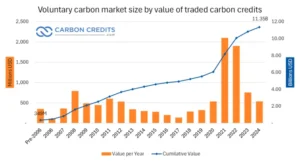
Voluntary carbon markets (VCMs) also continue to grow. The sector reached over $2 billion in traded value in 2024. Forecasts suggest strong growth ahead. The VCM could exceed $10 billion by 2030.
Several trends are shaping this market:
- Corporate climate commitments. More companies now include carbon credits in their climate strategies. Studies suggest that over 60% of sustainability-focused companies plan to increase their use of carbon offsets.
- Nature-based climate projects. Forestry and land-use projects remain major sources of credits. Forestry projects account for about 41% of the carbon credit supply, while renewable energy projects represent roughly 32%.
- Demand for high-quality credits. Many buyers now seek projects with strong verification and measurable impact. Around 44% of buyers prefer high-quality certified credits with stronger transparency standards.
- Digital technology in carbon markets. New platforms use digital tools and data systems to track carbon reductions. About 41% of market participants are adopting digital monitoring and verification systems.
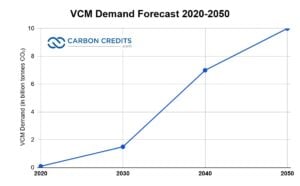
As the market grows, trading infrastructure also becomes more important. Carbon exchanges provide the platforms that allow buyers and sellers to transact efficiently.
How Carbon Exchanges Support Climate Markets
Carbon exchanges create structured marketplaces for environmental assets. They connect buyers and sellers and provide transparent trading systems. These exchanges typically support two main types of markets.
- Compliance carbon markets: Governments create these markets through emissions trading systems. Companies must hold carbon allowances equal to their emissions. The European Union Emissions Trading System is the largest example.
- Voluntary carbon markets: Companies buy carbon credits voluntarily to offset emissions. These credits usually come from climate projects such as forest protection or renewable energy development.
Exchanges support both markets by providing tools for trading and price discovery. Some exchanges focus on derivatives and futures contracts. Others focus on spot trading of voluntary credits.
Reliable trading platforms also help reduce risk. They improve transparency by publishing prices and trading data. Several exchanges now play a major role in these global markets, and we’re breaking down each one of them so you’ll know your best pick.
- READ MORE: The Carbon Credit Market in 2025 is A Turning Point: What Comes Next for 2026 and Beyond?
Intercontinental Exchange (ICE): The Global Benchmark for Carbon Derivatives
The Intercontinental Exchange (ICE) operates one of the largest environmental derivatives markets in the world. It focuses mainly on compliance, carbon markets, and emissions allowance trading.
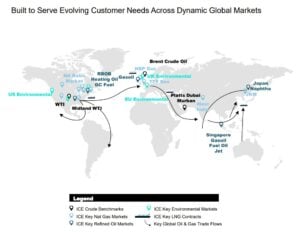
ICE hosts futures and options contracts tied to several carbon pricing systems. These include European Union Allowances (EUAs), which serve as a global benchmark for carbon pricing. The exchange has recorded strong trading activity in recent years.
In 2025, ICE environmental markets saw a record of 20.9 million environmental futures and options contracts. This was a 4% rise from the previous record year.
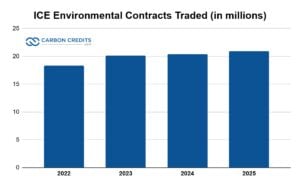
The trading volume exceeded $1 trillion in notional value. This trend marks five years of trillion-dollar environmental trading on the platform. The exchange also reported $117 billion worth of physically delivered carbon allowances in 2025.
ICE supports several major environmental products:
- EU Carbon Allowance (EUA) futures
- UK Carbon Allowance futures
- California Carbon Allowance contracts
- Renewable Energy Certificate (REC) futures
North American environmental markets on ICE also reached record activity. In 2025, 6.2 million contracts were traded in these markets. This total included 4.2 million California Carbon Allowance contracts.
Because of its deep liquidity and strong participation, ICE remains a key platform for companies and financial institutions managing carbon price risk.
Xpansiv: Powering the Largest Spot Market for Carbon Credits
Xpansiv operates the CBL carbon exchange, a leading marketplace for voluntary carbon credits. The exchange focuses on spot trading of environmental commodities. These include carbon credits and renewable energy certificates.
Xpansiv has become a major infrastructure provider for voluntary carbon markets. Since 2020, the platform has facilitated transactions involving more than 330 million carbon credits and environmental certificates.
CBL provides a central order book system that helps improve price transparency. Buyers and sellers can trade standardized contracts that represent verified carbon credits.

The exchange also supports the Aviation Carbon Exchange (ACE), developed with the International Air Transport Association. ACE offers a marketplace for airlines to buy carbon credits that meet CORSIA requirements.
- Since its launch, the platform has supported the trading of over 20 million tonnes of carbon credits used by airlines and other participants.
Xpansiv also connects to major carbon credit registries. These include Verra, the American Carbon Registry, Climate Action Reserve, and Gold Standard.
These integrations allow credits to move between registries and trading platforms. This improves liquidity and market access for project developers and buyers. As voluntary markets expand, platforms like Xpansiv play an important role in connecting carbon projects with global buyers.
- SEE MORE on Xpansiv:
AirCarbon Exchange (ACX): A Digital Marketplace for Global Carbon Trading
AirCarbon Exchange (ACX) is a digital carbon credit exchange designed to simplify trading of environmental assets. The platform operates fully online and connects market participants across regions.
Members, over 190 globally, include corporations, traders, financial institutions, and project developers. The exchange has transacted over 21 MtCO2e (million tonnes of carbon dioxide equivalent).
ACX focuses on providing efficient digital infrastructure for environmental markets. Its trading system supports carbon credits and other environmental products. The exchange serves members from more than 30 countries, reflecting the growing global nature of carbon markets.
ACX also emphasizes transparent pricing and streamlined trading systems. Digital exchanges reduce barriers for companies that want to participate in carbon markets.

The platform has gained recognition from industry groups and environmental finance organizations for its trading technology and market structure. It has been voted as the Best Carbon Exchange for four consecutive years.
Digital exchanges such as ACX illustrate how technology is changing environmental markets. As more companies join the carbon economy, digital platforms may help scale global trading.
ESGCX: Integrity‑Focused Carbon Market Platform
ESGCX is a platform focused on carbon credit quality, transparency, and verification. It integrates project evaluation, digital monitoring, and trading readiness in one system.
In 2025, ESGCX launched the Carbon Credit Integrity Pilot Program (CCIPP). The program brings together project developers, investors, and verification partners. Participants get early access to ESGCX’s tools for digital MRV, credit ratings, and market readiness.

The exchange supports only premium carbon credits with third-party verification. This ensures buyers access high-quality credits with measurable climate impact.
The platform also uses digital tools and blockchain-friendly systems. These help improve transparency and simplify trading. Institutional buyers gain priority access to high-impact projects.
Market demand for high-integrity credits is rising. Corporate buyers committed over $10 billion to durable carbon removal in 2024–2025. ESGCX positions itself to meet this growing demand.
In short, ESGCX is building a transparent, verified, and reliable carbon market. Its focus on quality and digital verification makes it a strong platform for developers, investors, and buyers.
As VCMs mature, stronger integrity systems may become more important for buyers and regulators.
The Major Carbon Exchanges at a Glance
The exchanges discussed in this article operate in different parts of the carbon market. Here’s the summary of what they are and their market focus.
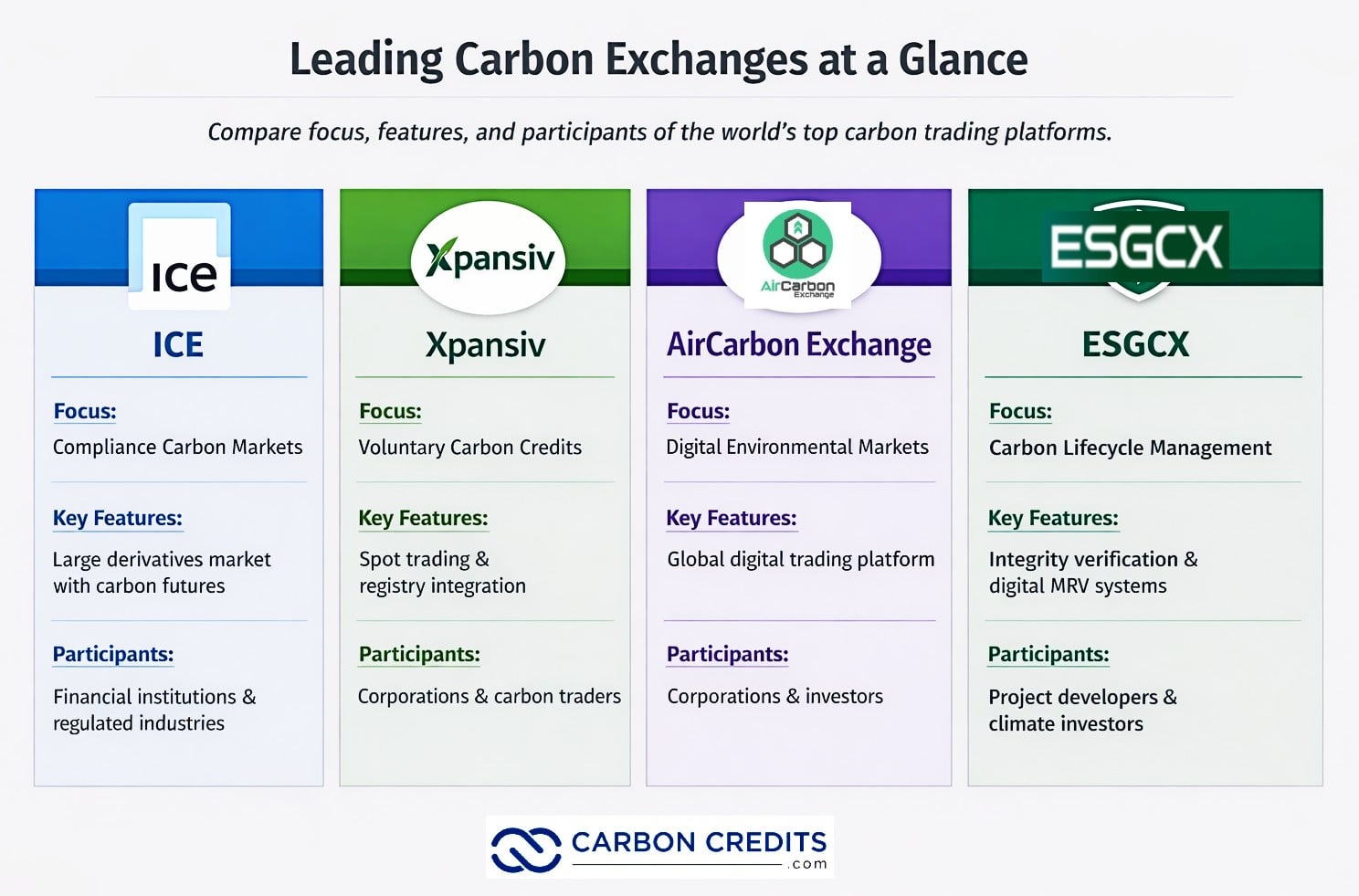
Each platform serves a different role within the global carbon economy.
Carbon Exchanges as the Backbone of Climate Markets
Carbon credit exchanges now serve as critical infrastructure for climate markets. They provide transparent pricing, enable trading, and connect climate projects with buyers. As carbon markets expand, exchanges will likely play an even larger role.
The carbon economy continues to evolve. Governments are expanding emissions trading systems, while companies increase investments in climate solutions.
At the same time, buyers are demanding stronger verification and higher-quality credits.
These trends are shaping the next phase of carbon markets. Exchanges such as ICE, Xpansiv, ACX, and ESGCX illustrate how trading platforms are adapting to support a rapidly growing global climate economy.
- MUST READ: Top Carbon Credit Companies to Watch in 2026