

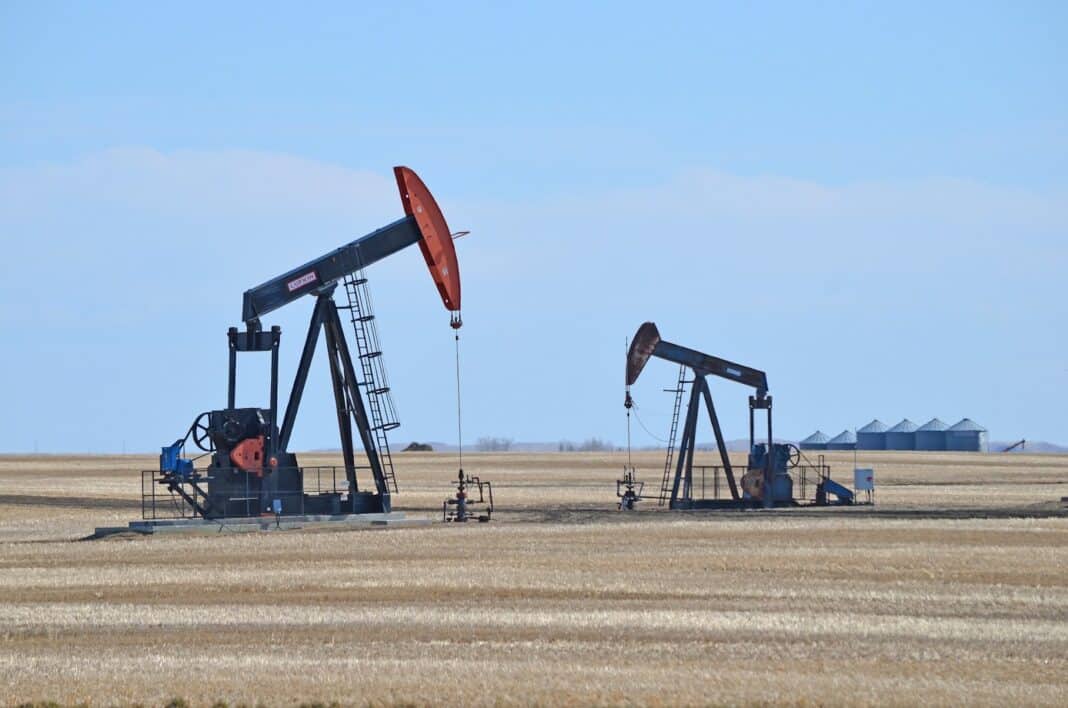
You’ve probably seen dozens of pictures before that look exactly like the one above.
An active oil field littered with pumpjacks, all churning out oil by the barrels…
But have you ever stopped to think of what happens to these oil wells when the oil is gone? When the oil and gas companies pack up and leave for greener pastures?
If you haven’t… then you’re not alone.
Because as it turns out, most oil companies haven’t, either.
Abandoned oil wells have rapidly become one of the major headline issues in the world’s fight against climate change.
The Original Pump and Dump
When oil wells on land are drilled, holes are bored into the ground that often go miles down. These holes are cased in cement to prevent leakage, all the way down to the bottom of the well where the oil is.
As you can probably imagine, oil wells can be pretty expensive to drill.
However, it’s even more expensive to clean up afterward when they’re no longer profitable.
Here’s the thing: oil wells don’t produce a constant amount of oil. It’s not like a faucet you can turn on and off.
- Oil well flow rates vary depending on a number of factors, including how much oil is left in the reservoir.
Generally speaking, an oil well produces the most oil when it’s first drilled.
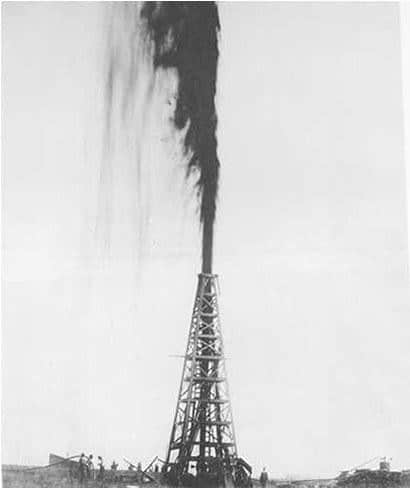
The Lucas Gusher in Texas. Taken by John Trost in 1901
If you’ve seen any old photos like the one above…
Pictures like these were usually taken when a new oil well had just breached a new oil reservoir under high pressure.
Over time, however, as more and more oil and gas is pumped away, flow rates will continuously decrease.
-
At some point, there won’t be enough oil coming out anymore to offset the costs of keeping the well running. This is known as a well’s “economic limit”.
Now, this oil well isn’t empty. There’s still plenty of oil and gas left down there. It’s just not coming up fast enough for the oil company to make any money off it. So, at this point the well is usually shut down – or “plugged”.
Quite often, oil companies will do this simply when oil prices are unfavorable, as opposed to only when flow rates have fallen too low. Temporary plugs are placed in these wells so that they can be reactivated at a later date.
However, sometimes these wells are forgotten afterwards. The owners may have gone bankrupt, lost their drilling rights… Or they may simply have walked away from the well, leaving them neglected. Abandoned.
But just because they’ve been abandoned doesn’t mean they’re out of sight, out of mind. Many of these abandoned wells leak, potentially contaminating the surrounding groundwater or soil.
And one of the most concerning things these wells leak is methane – a deadly greenhouse gas that’s the second-largest contributor to climate change, right behind carbon dioxide.
Methane gas is up to 86 times better than CO2 at trapping heat in the atmosphere in the first 20 years after it’s been released. So, targeting methane emissions is an important part of the fight against climate change.
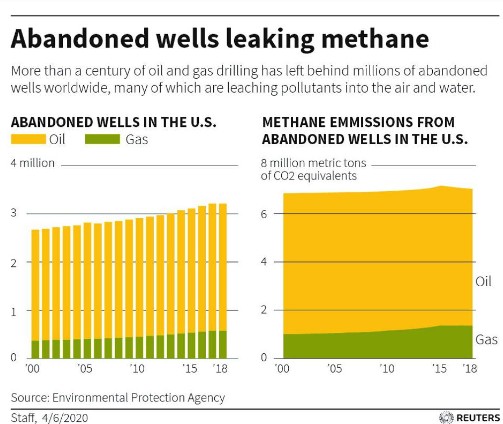
There are over 3 million abandoned oil and gas wells in the U.S. They collectively emit the equivalent amount of putting an extra 1.5 million cars on the road every day.
Reuters estimates that, when taking into account major oil-producing nations with a poor track record like Russia or Saudi Arabia, there may be as many as 29 million oil wells abandoned internationally.
That’s why these abandoned oil wells – also known as orphan wells – have turned into a major problem in the fight against climate change.
One Man’s Trash…
Now you’re probably thinking: why do these oil companies get to just walk away from oil wells like that? Why even do it in the first place?
Well, as it turns out…
- Cleaning up an oil well is expensive. Potentially more expensive, in fact, than drilling the well in the first place.
The process of plugging a well begins with dismantling the pumpjack, alongside any other equipment that may still be left on the surface.
Then – and this is the hard part – they have to inspect the casing of the well for leaks and other defects.
A casing is a series of hollow steel pipes surrounded by a cement shell. It supports the well hole and protects against leakage. It keeps the oil that’s being pumped up from getting out and contaminating the surroundings.
So, as you might guess, the casing needs to go all the way down to the bottom of the well.
In the years that a well has been abandoned, the casing will have been deteriorating, as cement will over time. Especially since the impurities found in crude oil are often corrosive.
Any defects in the casing need to be repaired first, to ensure that no more oil or gas leaks out. This is generally accomplished by cleaning out any oil or gas that could cause corrosion, and then pouring more cement.
When the condition of the casing is deemed satisfactory, the well is then filled with water or another non-corrosive liquid. The well casing is then cut, typically one meter below the surface, and then topped with a vented cap.
The cost of plugging an abandoned oil well can run anywhere from $20,000-$40,000 all the way up to $1,000,000. That depends on how deep the well goes and what condition it’s in.
Oil wells for fracking, for instance, are expected to run closer to $300,000 on average to plug. That’s because their long horizontal nature makes them harder to deal with than traditional oil wells.
The problem is, while oil and gas companies are required by law to set aside a chunk of money for each well they drill to plug it later, this amount of money is based on the cost to plug a traditional oil well. This required amount is as low as $10,000 per well in some areas. But on federal land, caps at a maximum of $150,000 for all wells drilled nationwide.
And for many of these abandoned oil and gas wells, the owners lack enough money to cover the actual costs of plugging each well… or worse, there’s no more owners left to chase down for the money.
Which is why the government’s been stuck with the bill.
… Is Another Man’s Treasure
They’re a major environmental disaster… but at the same time, they’re also an opportunity for some.
In November of 2021, the Biden administration launched a $4.7 billion program to plug abandoned wells as part of the Infrastructure, Investment and Jobs Act.
Through this program, qualifying states can receive federal grant money to find and plug abandoned wells, as well as reclaim the land surrounding them.
Phase one of the program is already under way. $560 million was awarded last August to 24 different states, with more on the way.
In addition to this, since plugging abandoned wells eliminates methane emissions, any abandoned wells not already covered under a government program are a potential source of carbon credits for companies willing to take on the burden of plugging them.
The Biden administration may be willing to take the fight to abandoned oil wells in the U.S., but what about the other 29 million scattered around the world? Some of them are even very close to home, such as right across the border in Alberta, Canada.
There’s a big opportunity here for the right companies in the right places to make a ton of money.
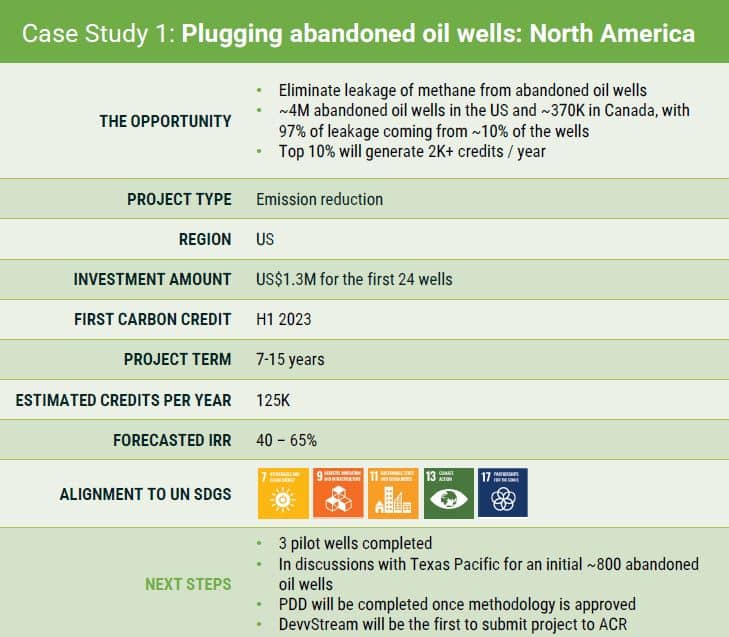
Canadian-based DevvStream (DESG) last year announced an agreement with TS-Nano to plug abandoned wells and generate a stream of carbon credits.
Disclosure: Owners, members, directors, and employees of carboncredits.com have/may have stock or option positions in any of the companies mentioned: DESG.
Carboncredits.com receives compensation for this publication and has a business relationship with any company whose stock(s) is/are mentioned in this article.
Additional disclosure: This communication serves the sole purpose of adding value to the research process and is for information only. Please do your own due diligence. Every investment in securities mentioned in publications of carboncredits.com involves risks that could lead to a total loss of the invested capital.