

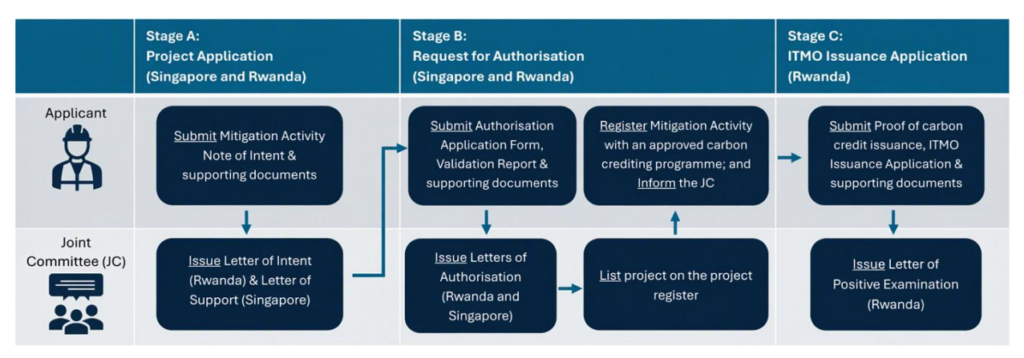
Singapore is expanding its international carbon market network after authorizing its first carbon credit project in Rwanda and signing a new carbon trading agreement with Bangladesh. Both developments, announced at COP31 in Antalya, Türkiye, show how Singapore is turning its Article 6 partnerships into practical projects and new sources of climate finance.
The Rwanda project is expected to reduce about 780,000 tonnes of carbon dioxide equivalent (CO₂e) between 2026 and 2030. It will distribute 300,000 ceramic water filters to households and early childhood centres, giving more people access to safe drinking water.
Singapore also signed a memorandum of understanding (MoU) with Bangladesh to explore future carbon trading. The two countries will work toward a formal agreement that could allow Bangladesh to transfer eligible carbon credits to Singapore.
These steps form part of a wider plan to build a regional carbon market hub. Singapore is also working with the World Bank and private groups to improve project funding, carbon registries, and access to buyers.
Singapore Approves First Rwanda Carbon Project Under Article 6
On November 14, Singapore’s National Environment Agency (NEA) announced its first project authorization under its carbon market agreement with Rwanda. Singapore-based Climate Bridge International developed the Safe Water Supply Project. It will distribute 300,000 ceramic water filters across Rwanda, focusing on the Western Province.
The filters will provide clean drinking water without the need to boil it using firewood or charcoal. This can lower fuel use, reduce emissions, and improve indoor air quality.
- The project is expected to benefit around 1.8 million people and reduce about 780,000 tonnes of CO₂e from 2026 to 2030. The first 10,000 filters began distribution in June 2026, with the rest planned for 2027.
This is the first project authorized under Singapore’s six operationalised Article 6 agreements. More than 20 other projects are also being assessed under its agreement with Rwanda.
However, authorization does not mean that all 780,000 credits have already been issued or transferred. The project must still undergo independent checks and credit issuance. The two countries must also approve the transfer of eligible credits.
Under Article 6 of the Paris Agreement, countries must make a corresponding adjustment when they transfer credits internationally. This prevents both countries from counting the same emissions reduction toward their climate targets.
The Singaporean official document reads:
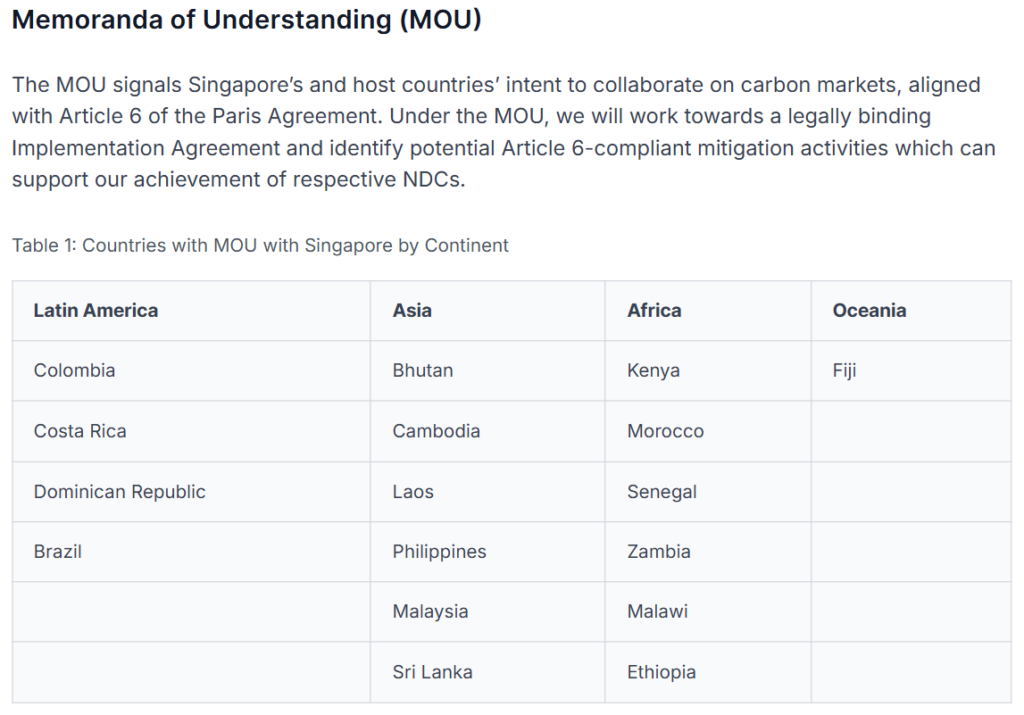
“The Singapore-Rwanda IA comprises three stages, corresponding to different stages of a carbon credit project’s development and implementation. At each stage, Singapore and Rwanda assess applications against their respective requirements. For Singapore, projects must meet Singapore’s eligibility criteria for International Carbon Credits (ICCs).”
Singapore and Bangladesh Explore Carbon Trading
Singapore and Bangladesh also signed an MoU on November 14 to develop carbon market cooperation under Article 6. The agreement sets the stage for talks on a legally binding implementation agreement. This would establish how both countries approve projects and transfer eligible carbon credits from Bangladesh to Singapore.
The two governments also plan to share knowledge and support the growth of high-quality carbon markets. Bangladesh could gain new funding for projects that cut emissions and support sustainable development. Singapore could gain another source of international credits for companies covered by its carbon tax.
Permanent Secretary Melvyn Ong remarked:
“Carbon markets are a new area of partnership for Singapore and Bangladesh, and this MOU is an exciting next step in our relationship. Together, we will work towards an Implementation Agreement and enable the development of high-integrity carbon credit projects that support both countries’ climate goals.”
The MoU is an early step, however. It does not yet allow Bangladesh to transfer credits for use under Singapore’s carbon tax system. That will require a formal agreement and approved projects.
The deal adds to Singapore’s growing network of carbon market partners across Asia, Africa, and South America.
Singapore Expands Its Article 6 Network
Singapore has signed carbon market agreements with 12 countries: Papua New Guinea, Ghana, Bhutan, Peru, Chile, Rwanda, Paraguay, Thailand, Mongolia, Vietnam, the Philippines, and Laos.
Six agreements have been operationalized, with project application processes open for Ghana, Bhutan, Peru, Rwanda, Thailand, and Mongolia. These partnerships follow Article 6.2 of the Paris Agreement, which allows countries to trade emissions reductions toward their climate goals.
Singapore’s rules also include safeguards. Five percent of proceeds from authorised credits must support climate adaptation in host countries or the UN Adaptation Fund. In addition, 2% of authorised credits must be cancelled at issuance to help reduce global emissions.
These rules aim to ensure that carbon trading supports wider climate action, rather than simply moving credits between countries.
MORE STORIES on Singapore:
- Singapore, Laos Sign Article 6 Carbon Credit Deal to Unlock Climate Finance
- Singapore-based CIX, Carbonplace Merger Targets More Connected Global Carbon Market
World Bank Partnership Supports Carbon Market Growth
Singapore is also working with the World Bank to help developing countries build the systems needed to take part in carbon markets. The two partners signed a 2027–2029 activity plan under the Singapore Carbon Markets for Development Programme at COP31.
- The plan will focus on three areas: carbon market systems, project funding, and technical support.
It will help countries develop carbon registries and digital systems to track and verify emissions reductions. It will also explore ways to combine smaller projects into larger groups to attract investment.
This is important because many developing countries lack the funding, skills, and systems needed to bring carbon projects to market. Better infrastructure can help them attract buyers and manage credit transactions.
The programme also plans to develop a Carbon Registry Toolkit to guide countries in setting up and running their own registries.
New Initiatives Aim to Grow Credit Supply and Demand
Singapore also announced new efforts to support carbon project development and increase demand for credits. Its Economic Development Board awarded grants to myclimate and Conservation International to support early-stage projects in Southeast Asia. Potential areas include forest protection, mangrove restoration, and other nature-based projects.
Climate Action Reserve also plans to open an office in Singapore. It will work on carbon standards and project methods for the Asia-Pacific region, including coastal ecosystems, peatlands, and industrial emissions.
On the demand side, Climate Impact X launched a platform to make it easier for companies covered by Singapore’s carbon tax to buy eligible credits.
Another effort is the Action for a Resilient Climate (ARC) Coalition. It aims to bring together corporate buyers and support at least 10 million tonnes of carbon credit purchases by 2030. Its first request for proposals will target 1 million tonnes of nature-based credits in the first half of 2027.
While these are future targets, not completed purchases, they show how Singapore is trying to build both sides of the market: more projects and more buyers.
Carbon Tax Creates Demand for Eligible International Credits
Singapore’s carbon tax is another key driver of its carbon market plans. Companies covered by the tax can use eligible International Carbon Credits (ICCs) to offset up to 5% of their taxable emissions each year.
The government raised the carbon tax to S45 per tonne of CO₂e for 2026, up from S25 in 2025. It plans to increase the rate to between S50 and S80 per tonne by 2030.
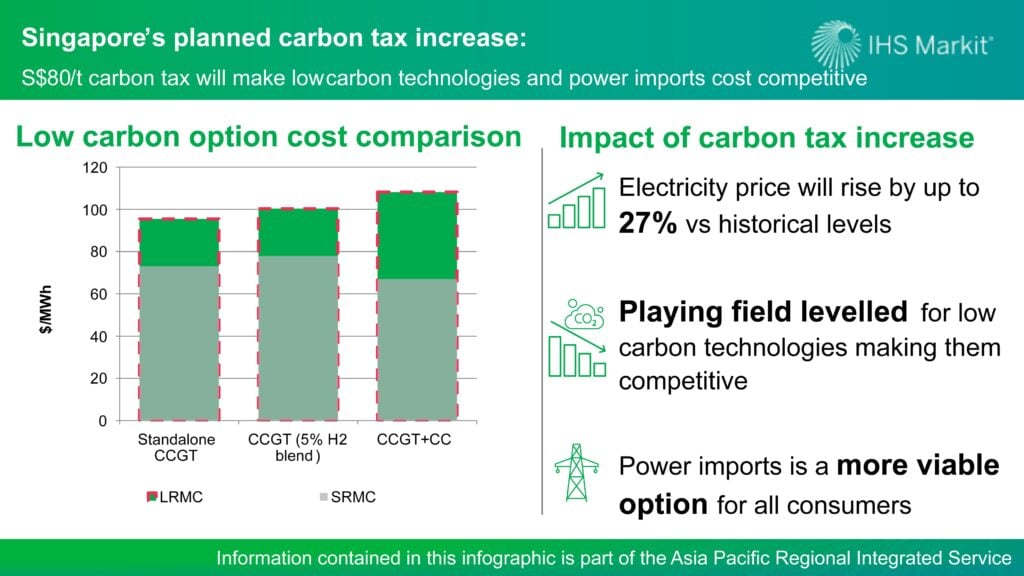
The higher tax rate gives companies a stronger reason to cut emissions and consider eligible carbon credits. It also creates demand for projects in partner countries.
However, the supply of approved credits has been limited. Singapore previously allowed companies to carry forward unused credit allowances from emissions year 2025 to 2026 because eligible international credits were not widely available.
The first Rwanda project authorisation is an important step toward building that supply. More projects must still pass the required checks before their credits can be used.
Singapore Seeks to Turn Carbon Deals Into a Regional Market Hub
Singapore’s latest moves show that it seeks to play a larger role in international carbon trading. The Rwanda project is a first example of its bilateral agreements moving into project authorization. The Bangladesh MoU expands its potential partner network, while the World Bank programme and private-sector initiatives aim to improve funding, project development, and access to buyers.
For developing countries, these partnerships could provide new funding for clean water, forest protection, renewable energy, and other climate projects. However, the market’s success will depend on more than agreements and targets. Projects must deliver real emissions reductions, credits must pass independent checks, and buyers must be willing to purchase them.
Singapore’s next challenge is to turn its growing network of partnerships into a steady supply of eligible credits and measurable climate benefits. If it succeeds, the country could strengthen its position as a regional hub for high-quality carbon markets while helping developing countries attract more climate finance.