

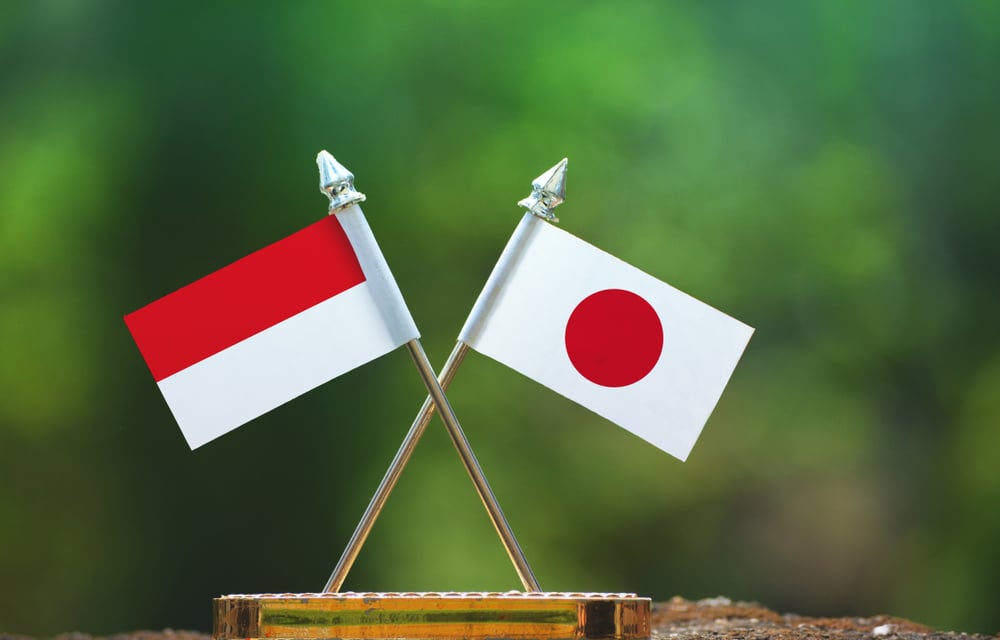
Indonesia and Japan are looking to expand their cooperation in forest-based carbon projects through the Joint Crediting Mechanism (JCM), creating new opportunities for carbon finance, forest restoration, and biodiversity protection. The partnership could also help connect Indonesia’s large forest-carbon potential with Japan’s growing demand for carbon credits under its climate policies.
As per reports, the two countries discussed expanding the collaboration during a bilateral meeting at the 31st UN Climate Change Conference (COP31) in Antalya, Türkiye, on November 9, 2026. Indonesian Deputy Forestry Minister Rohmat Marzuki met with Japanese Deputy Environment Minister Hiroshi Ono to explore ways to develop high-integrity forestry carbon projects.
The discussions focused on more than generating carbon credits. Both countries want projects to support ecosystem restoration, protect biodiversity, and improve livelihoods in local communities.
The initiative also aligns with Indonesia’s broader strategy to attract international investment into nature-based climate solutions while supporting Japan’s carbon market ambitions.
Indonesia Targets 12 Million Hectares for Forest Carbon Removal
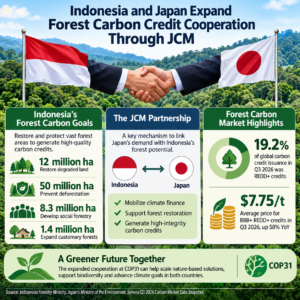
Indonesia is preparing an extensive pipeline of forest-based carbon projects under a four-part strategy outlined by its Forestry Ministry.
The plan covers both carbon removal and emissions avoidance, alongside greater participation from local and Indigenous communities.
Its main targets include:
- 12 million hectares: Restore degraded and severely degraded land through carbon removal projects.
- 50 million hectares: Protect forests from deforestation and degradation through carbon avoidance projects.
- 8.3 million hectares: Develop carbon projects through the country’s social forestry program.
- 1.4 million hectares: Expand carbon project development across customary forests.
These targets offer a substantial potential pipeline for nature-based carbon credits. Restoration projects can generate removals as vegetation and forest ecosystems absorb atmospheric carbon dioxide. Meanwhile, forest protection projects can generate avoided-emission credits by preventing deforestation and forest degradation.
Indonesia also wants peatlands and mangroves to become important parts of its JCM portfolio. Both ecosystems offer significant climate benefits because they store large amounts of carbon in vegetation and soils. Their protection can also support coastal resilience, water management, and biodiversity.
However, the government wants to translate these ambitions into projects with credible methodologies, effective environmental and social safeguards, and meaningful community participation. These requirements will be important for attracting international buyers and maintaining confidence in the resulting credits.
Japan’s JCM Could Open a New Market for Indonesian Carbon Credits
The JCM could provide an important financing and crediting channel for Indonesia’s forestry ambitions.
Japan established the bilateral mechanism with Indonesia in 2013. It encourages Japanese companies to invest in emissions-reduction and carbon-removal projects in partner countries. The mechanism measures the resulting climate benefits and allows Japan and its partner country to account for their respective contributions.
As of November 2024, the two countries had implemented 51 JCM projects, supporting the deployment of low-carbon technologies, infrastructure, and emissions-reduction activities in Indonesia.
A major development came in October 2024, when Japan and Indonesia signed a mutual recognition arrangement covering the JCM and Indonesia’s national greenhouse gas emissions-reduction certification system. The agreement aims to improve coordination between the two systems and strengthen the framework for international carbon market cooperation.
Japan is also expanding the mechanism internationally. According to its Ministry of Foreign Affairs, the country had established JCM partnerships with 32 countries by April 2026.
- The latest discussions at COP31 add a stronger forestry focus to this relationship. Indonesia expects the JCM to help connect Japan’s ambition to secure carbon credits equivalent to 100 million tonnes of CO2 by 2030 with its own ecosystem restoration plans.
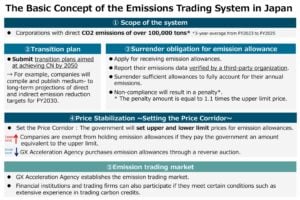
- Japan’s Green Transformation (GX) Emissions Trading System also creates an additional opportunity. The system entered its mandatory phase in fiscal 2026, increasing the potential role of carbon credits in Japan’s wider decarbonization strategy.
For Indonesia, this could translate into greater access to international climate finance. For Japanese companies, it could provide opportunities to support measurable emissions reductions and removals through projects in a country with extensive forest and peatland resources.
Forest Carbon Credits Gain Traction in the Global Market
The renewed cooperation comes as forest-based carbon credits continue to attract buyers, although demand increasingly favours projects with stronger environmental integrity and measurable benefits.
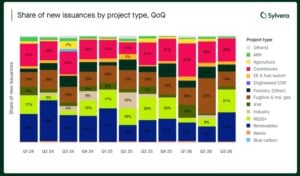
- According to Sylvera’s Q3 2026 Carbon Market Data Snapshot, REDD+ credits accounted for 19.2% of total carbon credit issuance during the quarter, equivalent to approximately 17.3 million credits.
This marked a recovery in issuance activity for projects focused on reducing emissions from deforestation and forest degradation.
Indonesia has already demonstrated its potential to supply credits at scale.
The Katingan Peatland Restoration and Conservation Project in Indonesia issued 10.78 million AA-rated credits in Q3 2026, making it the largest contributor to AA-rated issuance during the quarter. The project focuses on protecting peatland ecosystems and preventing emissions associated with their degradation.
Another important development came in July 2026, when Verra announced that it was preparing to issue at least 20 million tonnes of CO2-equivalent credits across three Indonesian forestry projects:
- Katingan Peatland Restoration and Conservation Project
- Sumatra Merang Peatland Project
- The Mayas Project
These projects had secured the necessary approvals under Indonesia’s updated carbon market regulations. The development marked an important step toward aligning international carbon crediting standards with Indonesia’s domestic oversight framework.
The national government also plans to connect its domestic registry with Verra’s registry through an application programming interface (API). This should improve transparency and help track carbon credits for national climate reporting.
Quality and Biodiversity Will Shape Future Forest Carbon Investments
The market’s pricing trends also highlight why Indonesia and Japan are emphasizing high-integrity projects.
- Sylvera’s Q3 2026 data also showed that BBB+ rated REDD+ credits averaged $7.75 per tonne, up 58% from $4.90 in Q3 2025. This suggests that buyers are increasingly willing to pay more for credits with stronger quality assessments.
However, generating large volumes of credits will not automatically guarantee investment. Projects must demonstrate additionality, establish credible baselines, monitor emissions reductions, and address the risk of carbon leakage and reversal.
Indonesia also faces the challenge of ensuring that forest carbon investments benefit the communities responsible for protecting these ecosystems.
Its social forestry and customary forest initiatives could help bring local communities and Indigenous groups into project development. Meaningful participation, transparent benefit-sharing, and safeguards for land rights will therefore play an important role in determining the success of the partnership.
The emphasis on biodiversity also gives the collaboration a broader environmental focus. Forest protection can deliver benefits beyond carbon storage, including habitat conservation, improved ecosystem resilience, and protection of water resources.
Can the Indonesia-Japan Partnership Scale Forest Carbon Finance?
The expanded JCM cooperation could create a stronger connection between Japan’s demand for international carbon credits and Indonesia’s extensive forest restoration and conservation opportunities.
For Indonesia, Japanese investment could help finance projects across degraded landscapes, peatlands, mangroves, and community-managed forests. For Japan, the partnership could diversify its access to nature-based carbon credits while supporting its international climate commitments.
However, the scale of the opportunity will depend on how quickly both countries translate their discussions into approved projects, credible credit issuance, and long-term financing arrangements.
Ultimately, the partnership could strengthen Indonesia’s position in the international forest carbon market while giving Japan another channel to support its decarbonization goals.