

Xprize Foundation, a non-profit organization that encourages technological development, has introduced its latest initiative – the XPRIZE Water Scarcity competition. This groundbreaking competition offers a total prize purse of $119 million over five years.
XPRIZE operates highly impactful, incentivized prize competitions that tackle some of the world’s most pressing challenges. These competitions are structured to push the boundaries of innovation and creativity, driving participants to develop groundbreaking solutions that have the potential to transform the world for the better.
At the heart of an XPRIZE competition is a powerful incentive structure encouraging individuals, teams, and organizations to channel their ingenuity and expertise toward addressing complex global problems.
In 2021, XPRIZE launched the Carbon Removal competition. It aimed to encourage the development of innovative CO2 removal solutions to cut emissions. In April 2022, the competition then revealed the 15 winning teams which received $1 million each to fund their projects. This initiative has been closed this year.
Tackling the Global Water Crisis
The new XPRIZE competition offers a total prize of $119 million, made possible by the Mohamed bin Zayed Water Initiative. The primary objective of this competition is to address the pressing issue of global water scarcity by fostering the development of reliable, sustainable, and affordable seawater desalination systems.
Although our planet is predominantly covered by water, only a minuscule fraction (0.5%) of it is readily available to support the needs of the Earth’s population, which currently stands at around 8 billion people.
Water scarcity is a critical issue affecting 80% of the global population, posing serious threats to communities worldwide. With the water demand projected to outstrip supply by 40% by 2030, urgent action is needed to address this looming crisis.
However, traditional desalination methods face significant challenges.
One of the major drawbacks of these methods their negative environmental impacts, worsening the very issues they aim to address. The energy-intensive nature of desalination processes leads to increased carbon emissions and energy consumption, further contributing to climate change.
Roughly 2.5% of the world’s total energy consumption is dedicated to treating contaminated water and managing water supply systems. Additionally, a significant portion of greenhouse gas emissions, approximately 60%, is attributable to energy consumption.
The carbon footprint linked to the reverse osmosis (RO) desalination process of seawater falls within the range of 0.4 to 6.7 kilograms of CO2 per cubic meter. This implies that desalinating 1000 cubic meters of seawater could potentially result in emitting up to 6.7 tons of CO2.
Existing desalination methods not only pose significant environmental risks but also remain financially out of reach for many low- to medium-income countries. Consequently, there is an urgent need for innovative solutions that can effectively harness Earth’s vast ocean water resources.
This is what the XPRIZE water competition tries to address.
Innovating Solutions for a Thirsty World
The XPRIZE Water Scarcity competition aims to address the challenge by encouraging participating teams to develop novel desalination technologies. These technologies will pave the way for a future where clean water is abundantly available to all.
Competing teams are encouraged to develop solutions that not only address water scarcity but also contribute to broader sustainability goals, including climate action and ecosystem protection. Winning teams should excel at creating desalination technologies that possess several key characteristics:
- Scalability
- Cost-effectiveness
- Reliability
- Resilience in changing climate
- Environmental sustainability
XPRIZE Water Scarcity is a multi-track competition, divided into two distinct tracks. Each track has its own objectives geared towards making a significant impact on global water availability.
- Track A: The New Desalination System. This track offers a prize pool of $70 million and focuses on developing innovative desalination systems. Within this track, there are also Moonshot Awards totaling $20 million, intended to incentivize breakthrough innovations in desalination technology.
- Track B: Novel Membrane Materials. With a prize pool of $9.5 million, Track B concentrates on the development of novel membrane materials for desalination processes.
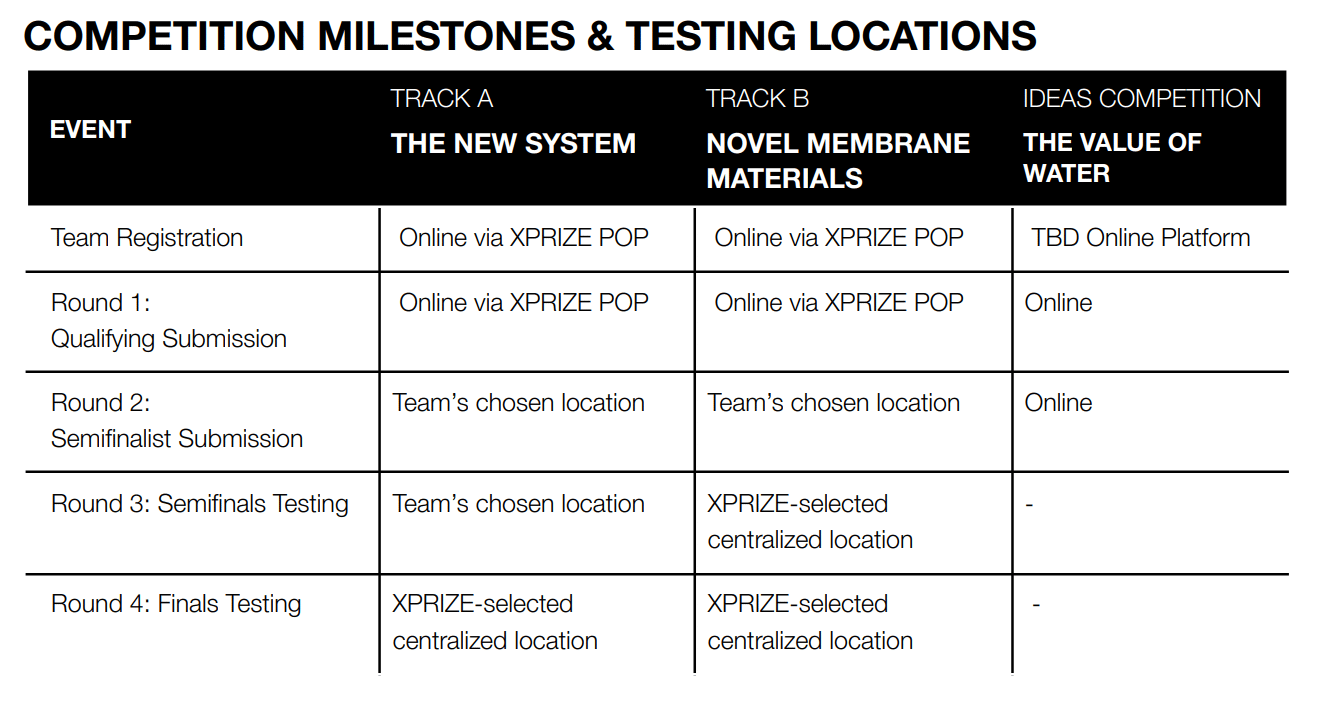
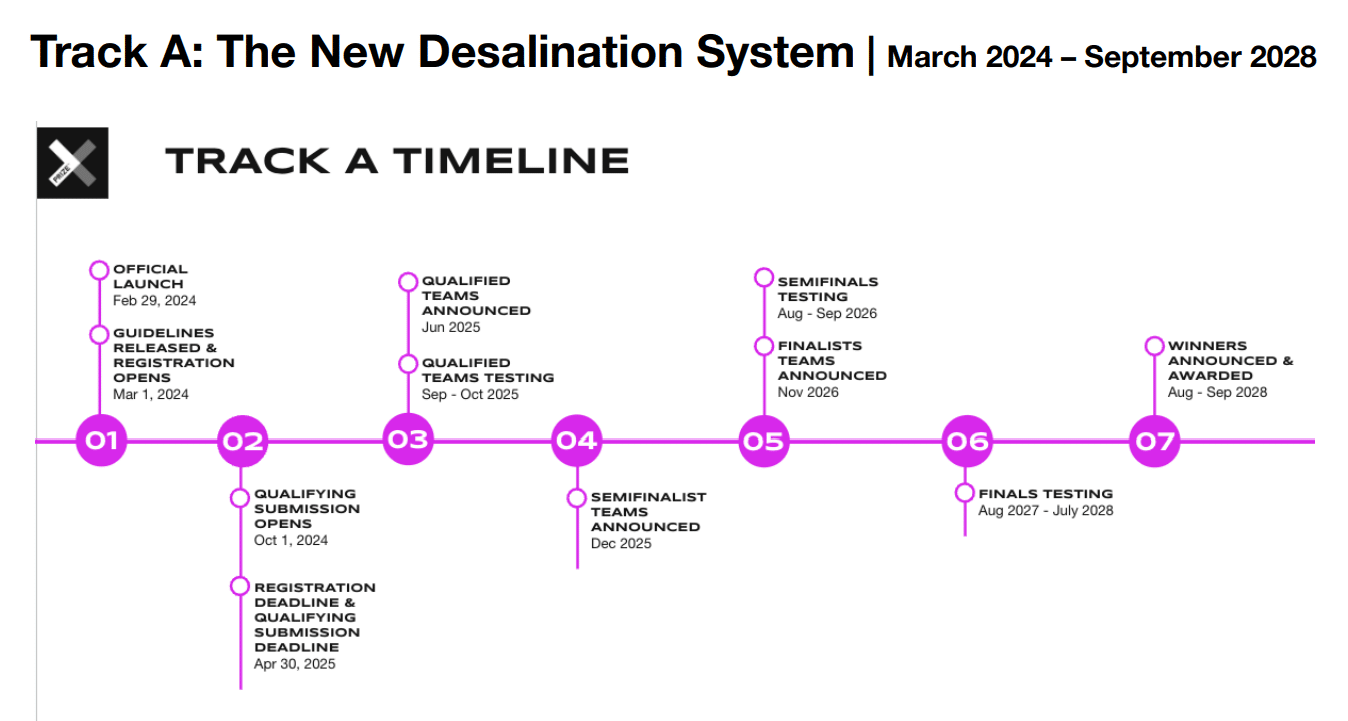
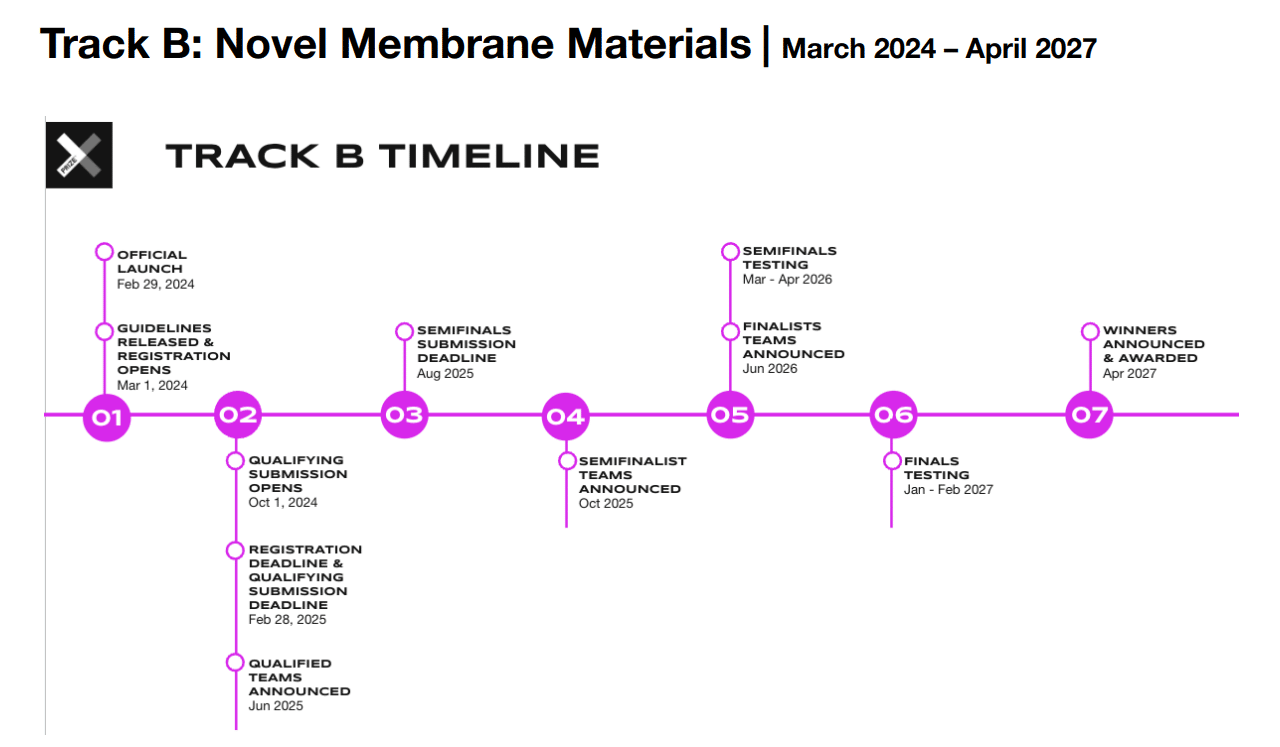
Detailed competition guidelines and entry requirements are accessible in the Guidelines document by XPRIZE. Below are important milestones and timeline to remember.
The success of the XPRIZE Water Scarcity competition holds the potential to make a profound impact on global water security and environmental sustainability.
It can help unlock access to the vast reserves of seawater, make up more than 96% of Earth’s water resources. By incentivizing the development of new, reliable, cost-effective, and sustainable desalination solutions, the prize aims to address the root causes of water scarcity and alleviate water stress worldwide.