

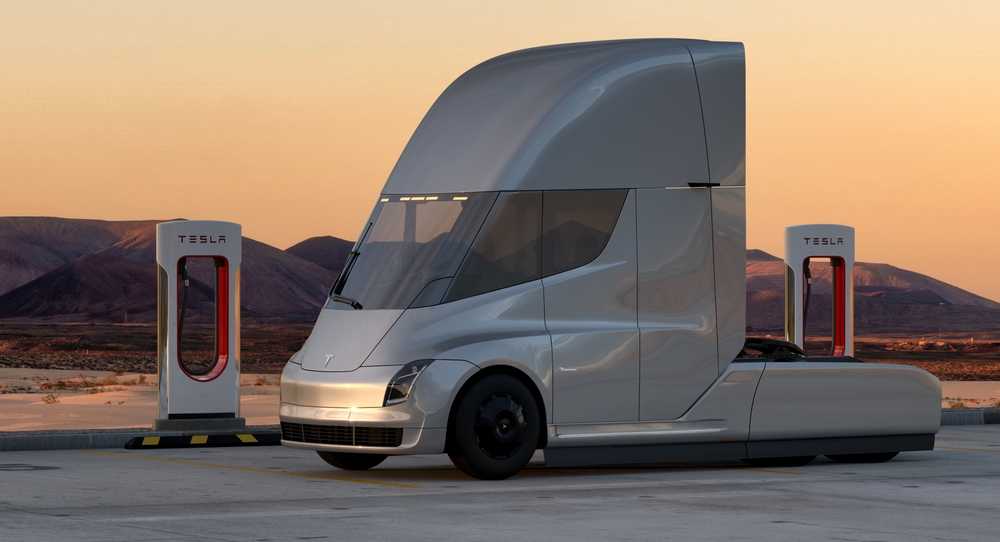
A new initiative involving Amazon, eBay and Etsy is helping bring Tesla electric trucks into real freight operations. The Center for Green Market Activation (GMA), a nonprofit group, is planning a pilot program. This project aims to put about 40 all-electric Tesla Semi trucks on the road between Dallas and Houston. The goal is to reduce emissions from freight transport by using cleaner heavy-duty vehicles.
Under the plan, companies pay for “environmental attribute certificates” (EACs). These certificates represent the emissions savings from electric trucks.
Buyers can use the certificates to reduce their reported Scope 3 emissions. This applies even if they don’t directly use the trucks. All charging for the electric trucks is planned to be covered by renewable energy certificates to support clean power use.
Let’s explore why major online companies are taking part in this system, how Tesla’s Semi vehicles fit in, and what this could mean for decarbonizing freight transport in the United States and even beyond.
Why Freight Is the Next Big Climate Battleground
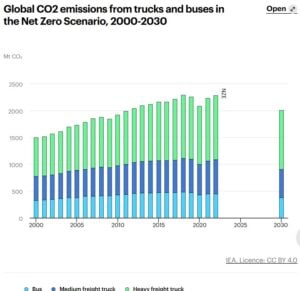
Heavy-duty freight trucks, especially long-haul Class 8 trucks, are a major source of carbon emissions. Traditional diesel trucks burn fossil fuels and produce large amounts of greenhouse gases (GHGs) and air pollutants. They accounted for about 25% of all transport-related CO2 emissions.
Road freight accounts for a sizeable share of transportation sector emissions worldwide. Recent studies show that decarbonizing road freight is tough. Electric options are few, charging stations are still growing, and initial costs are high.
Electric heavy trucks such as the Tesla Semi offer a zero-tailpipe emissions alternative. The Tesla Semi is a battery-electric Class 8 truck designed for freight hauling. It features a battery pack of around 850–900 kWh and an estimated range of about 500 miles (~800 km) per charge on a single route.
The truck uses three electric motors and can operate at around 1.7–2 kWh per mile, making it competitive with diesel trucks over long distances. Planned volume production is expected to begin in 2026.

Using electric trucks like the Semi can cut carbon emissions from freight transport. They may also lower operating costs in the long run. Electricity can cost less per mile than diesel fuel. Also, electric drivetrains have fewer moving mechanical parts, which can cut maintenance costs.
However, electric freight truck adoption faces barriers. Electric heavy trucks are still new, and less than 1% of new heavy-duty trucks in the U.S. are electric. The charging infrastructure for heavy trucks is limited. Also, electric vehicles cost more than regular diesel ones.
What Is Book and Claim? Decarbonizing Freight Without Owning a Truck
The pilot program with Amazon, eBay, and Etsy uses a book-and-claim system. A book-and-claim system divides the environmental benefits of a low-emission product from its physical delivery. It lets companies support decarbonization, even if they can’t use low-emission vehicles directly.
In this case, the environmental attribute certificates represent the emissions savings from operating electric trucks instead of diesel trucks. Participating companies purchase these EACs. They then “retire” them, meaning no one can use the certificate again. This reduction counts toward their climate goals or Scope 3 emissions targets.
This approach is similar to how renewable energy certificates work for electricity. A company can buy certificates for renewable energy generation. This is true even if the actual electricity it uses comes from the grid. The certificates allow buyers to claim the environmental benefits.
Book-and-claim can help scale decarbonization efforts by aggregating demand from many buyers. This pooled demand helps both truck makers and service providers. They have a better reason to invest in electric fleets and charging stations, even if single buyers can’t use trucks on their own routes.
Experts say a clear book-and-claim system with strict rules can help decarbonize transportation. It ensures that emissions savings aren’t double-counted.
How the Pilot Program Works: Miles, Megawatts, and CO₂ Savings
The pilot program is run by the Center for Green Market Activation. This nonprofit aims to speed up climate solutions in supply chains. Under the program:
- Roughly 40 all-electric trucks are expected to operate on the Dallas-Houston freight route.
- The trucks will collectively travel up to 7 million miles per year.
- The trucks save about 60,000 metric tonnes of CO₂ equivalent compared to diesel fleets. This is over the multi-year contracts with buyers.
Amazon, eBay, and Etsy have joined the initiative by purchasing EACs. They will retire the certificates to support their own climate goals and reduce their reported Scope 3 logistics emissions.
All charging for the electric trucks is backed by renewable energy certificates. This means the electricity for powering the truck comes from clean energy, which reduces the carbon footprint of truck operation.
Groups in similar schemes often use book-and-claim. This helps decarbonize sectors with few low-emission options. For instance, sustainable aviation fuel certificates gather demand from airlines and corporate buyers. This helps scale the use of clean fuel.
Why Big Brands Are Buying Clean Freight
Big firms more often set climate goals for their whole value chain, which includes transport emissions. Many emissions are Scope 3. This includes indirect emissions from things like freight transport, business travel, and product use.
Reducing Scope 3 emissions is hard. Companies usually don’t control the sources that create these emissions directly.
Book-and-claim allows companies to access low-emission transport options even if they can’t run them. When companies pool demand, they send a stronger message to manufacturers and carriers. It shows there’s a real market need for clean freight solutions.
Electric trucks, like the Tesla Semi, draw attention because they provide a cleaner option than diesel trucks. They also keep the same freight capacity and range.
Moreover, companies aiming for net-zero and science-based targets are growing. So, the demand for low-emission freight services is likely to increase.
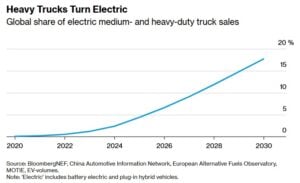
In addition, broader sales of electric heavy vehicles, not just Tesla’s Semi, are rising globally. In China alone, for example, registrations for hybrid and electric trucks reached over 231,000 units in 2025. This was a large increase from the previous year. This trend reflects growing production and adoption of electric freight vehicles worldwide.
A Blueprint for Scaling Zero-Emission Freight
The new pilot connects Amazon, eBay, Etsy, and Tesla Semi trucks, offering an innovative way to reduce carbon in freight transport. Electric heavy-duty trucks, like the Tesla Semi, are nearing mass production, while global sales of electric freight trucks are also rising. Thus, solutions that mix corporate demand, smart accounting, and clean tech could help cut transportation emissions.
This pilot could provide a model for how large buyers and logistics providers work together to accelerate the shift to low-carbon freight systems.