

Google and American Airlines have signed a major sustainable aviation fuel (SAF) agreement that could help reduce emissions from air travel. The deal covers 35 million gallons (132 million liters) of SAF over three years. It is the largest publicly announced sustainable aviation fuel certificate (SAFc) agreement between an airline and a single corporate customer so far.
The two companies estimate the agreement will reduce nearly 300,000 metric tons of carbon dioxide equivalent (CO2e) emissions.
The partnership arrives when airlines and large corporations face growing pressure to cut emissions. Air travel demand continues to rise, but so does the need to lower its environmental impact.
For both Google and American Airlines, the agreement supports broader climate goals. It also shows how companies are working together to help expand the market for cleaner aviation fuels.
Why SAF Has Become Aviation’s Best Near-Term Climate Solution
Aviation is one of the hardest industries to decarbonize. Most commercial aircraft need energy-dense fuels to fly long distances. Current battery and hydrogen technologies cannot yet replace jet fuel for many routes. Because of this, SAF has become one of the most important tools for reducing aviation emissions.
According to American Airlines, SAF can lower lifecycle greenhouse gas emissions by up to 80% compared with conventional jet fuel, depending on the feedstock and production process. The fuel used under this agreement will be made from waste-based materials such as used cooking oil.
Another advantage is that SAF can be blended with traditional jet fuel and used in today’s aircraft. Airlines do not need to replace fleets or build entirely new fueling systems. This makes SAF one of the fastest ways to reduce emissions from flying while longer-term technologies continue to develop.
The aviation sector currently produces about 2% to 3% of global carbon dioxide emissions. At the same time, it supports more than 86 million jobs worldwide and generates over $4 trillion in economic activity each year.
This creates a difficult challenge. The industry must continue supporting global travel and trade while reducing its carbon footprint.
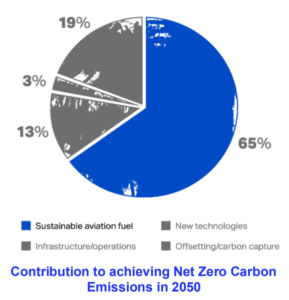
- The International Air Transport Association (IATA) report shows that SAF could account for about 65% of the emissions cuts the sector needs to reach net zero by 2050.
Inside the Record-Breaking 35-Million-Gallon Deal
Under the agreement, American Airlines will purchase and use SAF at Chicago O’Hare International Airport. Google will receive the environmental benefits through the SAFc Registry using a system known as “book-and-claim.”
In simple terms, American Airlines uses the fuel, while Google claims the emissions reductions linked to that fuel purchase.
This model is becoming more common in the aviation sector. It allows companies to support SAF production even when the fuel is not physically used on their own flights.
The agreement also helped American Airlines secure a new SAF supply deal with Valero Marketing and Supply Company. Long-term commitments like this are important because they give fuel producers greater confidence to invest in new SAF production capacity.
The project also received support from Illinois’ SAF tax credit program, which helped improve its economics.
How Google Uses Buying Power to Scale Cleaner Aviation
The agreement fits into Google’s broader climate strategy. The tech giant has committed to reaching net-zero emissions across its operations and value chain by 2030. The company plans to achieve this through deep emissions cuts and investments in carbon removal.
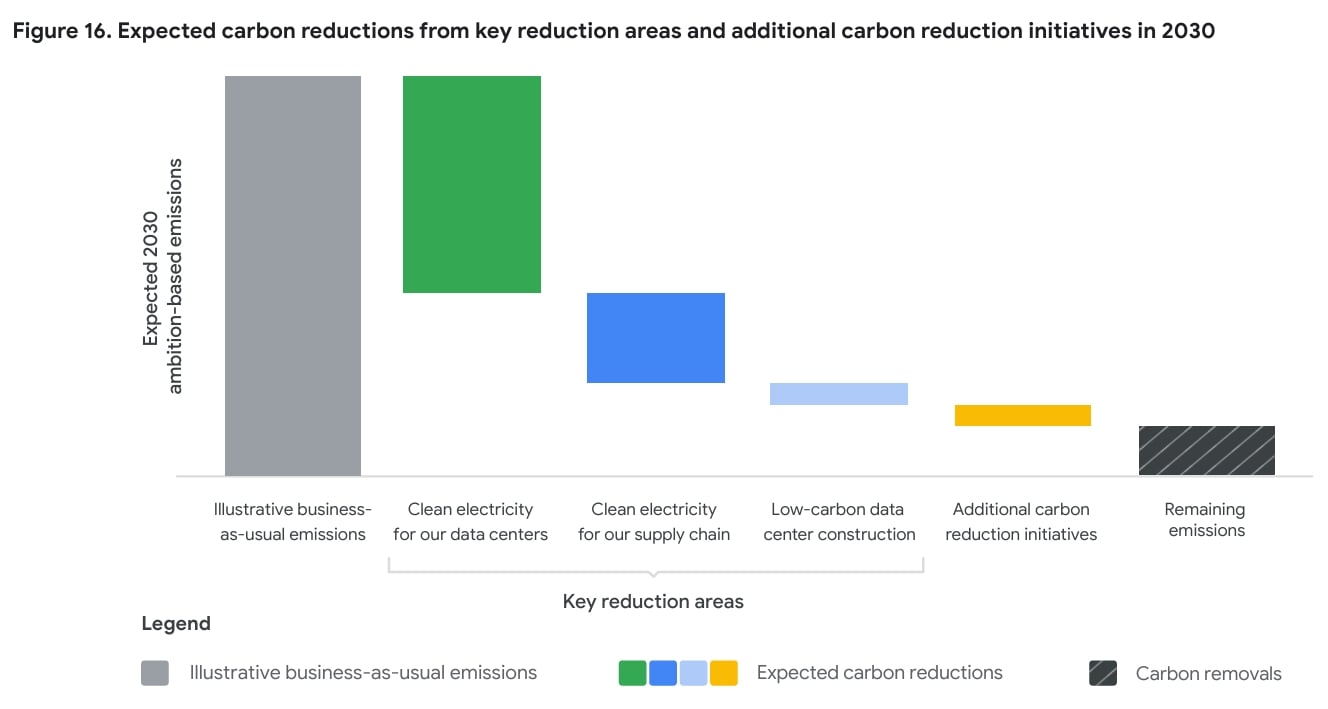
It is also working toward a goal of operating on 24/7 carbon-free energy by 2030. This means matching its electricity use with carbon-free energy every hour of every day.
Google has already become one of the world’s largest corporate buyers of renewable energy. However, business travel remains one of the harder emissions sources to address.
SAF offers a practical way to reduce emissions linked to employee travel while helping increase demand for cleaner aviation fuels. By signing a long-term agreement, Google is helping create a stronger market signal for fuel producers and investors.
That support is important because SAF production remains limited compared with global demand for jet fuel.
In recent years, Google has expanded its support for climate solutions beyond its own operations. These efforts include renewable energy, carbon removal, and cleaner transportation technologies.
American Airlines’ Multi-Pronged Strategy to Cut Flight Emissions
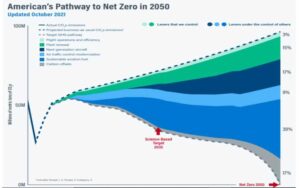
For American Airlines, SAF remains a key part of its climate strategy. The airline has invested in cleaner fuels, newer aircraft, operational improvements, and other technologies aimed at reducing emissions. It seeks to achieve net-zero emissions by 2050.
Jill Blickstein, Chief Sustainability Officer at American Airlines, remarked:
“Our industry-leading agreement with Google is a critical step forward in reducing emissions from our operations. By working with leaders like Google who share our commitment to innovation, we’re helping to grow demand for SAF and support the development of a stronger, more resilient market.”
Modern aircraft use less fuel and produce fewer emissions than older models. As a result, fleet renewal remains an important part of the airline’s environmental efforts. The company has also explored other ways to reduce aviation’s climate impact.
Earlier this year, American Airlines worked with Google, Contrails.org, and Flightkeys on a 16-week trial focused on reducing contrails. These are the cloud-like trails that form behind aircraft and can contribute to warming. According to American Airlines, the project reduced contrail formation by 62% during the trial period.
The SAF agreement builds on these efforts by targeting emissions from fuel use, which make up the largest share of an airline’s carbon footprint.
The Supply Crunch Facing Sustainable Aviation Fuel
The Google-American Airlines deal reflects a broader trend across the aviation industry. Governments, airlines, corporations, and investors are increasingly supporting SAF as a key climate solution.
However, supply remains limited. SAF also costs more than conventional jet fuel, making large-scale adoption more challenging. Industry groups and airlines have repeatedly said that more investment is needed to increase production.

Long-term agreements like this one help address that challenge. They give producers greater certainty that demand will be there before they invest in new facilities and equipment.
Corporate buyers are playing a growing role in this process.
Through SAF certificates, companies can help support cleaner aviation even if they do not operate aircraft themselves. This allows businesses to address emissions linked to employee travel while helping expand the SAF market.
As more companies adopt net-zero targets, demand for sustainable aviation fuel is expected to continue growing.
A Growing Model for Climate Partnerships
The agreement between Google and American Airlines highlights a larger shift in corporate climate action. The record-setting 35-million-gallon agreement is important not only because of its size, but also because it shows how corporate buyers can help accelerate cleaner aviation.
The deal suggests that SAF will play a growing role in the industry’s path toward lower-carbon air travel.
For Google, the deal supports progress toward its climate goals. For American Airlines, it advances efforts to reduce emissions and expand SAF use.
For the aviation sector, it offers another example of how partnerships can help turn climate commitments into measurable action and help cut airlines’ environmental footprint.