

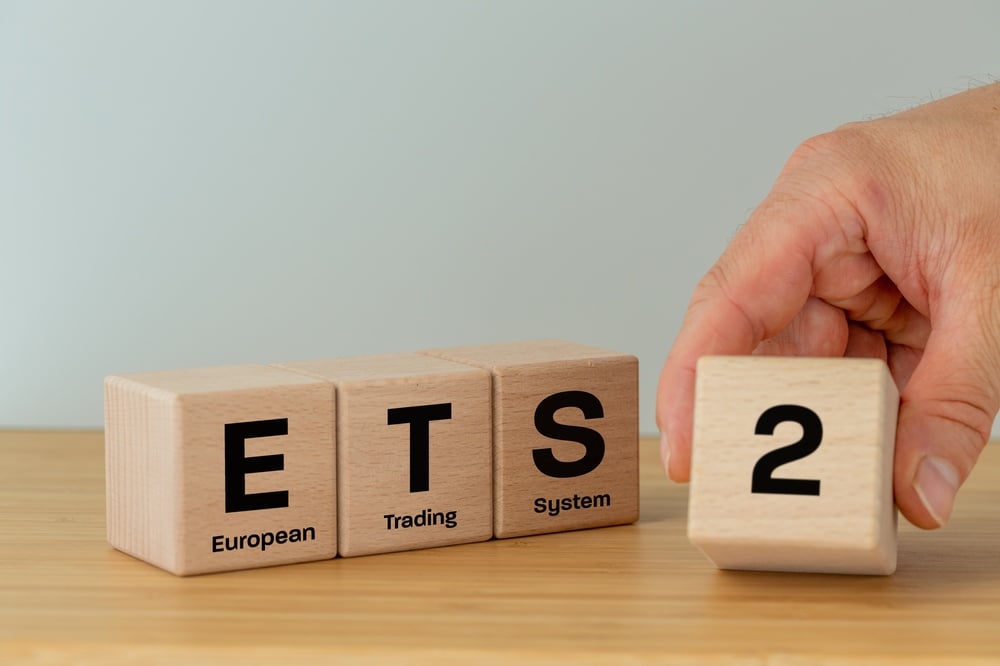
The European Union’s biggest climate policy is facing fresh political pressure. Ten EU countries, led by Italy and Poland, have asked the European Commission (EC) to rethink its new carbon market for road transport and building fuels, known as ETS2. They argue that higher fuel costs could put more pressure on households and businesses already dealing with economic uncertainty.
The request comes as Brussels prepares a wider review of the EU Emissions Trading System (EU ETS). The countries want stronger safeguards against sharp price hikes before the new market starts in 2028. This comes after the EU decided to delay the launch by a year due to worries about energy costs.
The statement of the opposition reads:
“European citizens should not be facing new climate taxes in the current economic and geopolitical circumstances. ETS2 should therefore be addressed directly in the revision and carefully reconsidered.”
Countries that signed the statement and requested revisions to existing ETS include Italy, Poland, Bulgaria, Cyprus, the Czech Republic, Estonia, Greece, Hungary, Romania, and Slovakia.
What Is ETS2?
The EU Emissions Trading System 2 (ETS2) is a new carbon market created under the EU’s 2023 ETS reforms. It expands carbon pricing to buildings, road transport, and small industries that the existing EU ETS does not cover.
Road transport makes up about 25% of the EU’s greenhouse gas emissions. Buildings use around 40% of the bloc’s energy and contribute 36% of its energy-related emissions, says the European Commission.
Like the current system, ETS2 follows a cap-and-trade model, but it applies upstream. That means fuel suppliers, not households or drivers, must buy carbon allowances (carbon credits) through government auctions to cover the emissions from the fuels they sell. Some of these costs could be passed on to consumers through higher fuel prices.
The system will become fully operational in 2028 and aims to cut emissions from the covered sectors by 42% by 2030, compared with 2005 levels. All revenue from allowance auctions will be for climate action and social support.
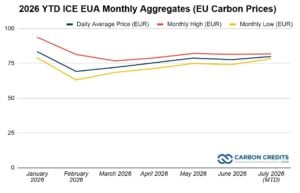
EU carbon prices have been moving higher in recent months. ICE data shows that the benchmark EU Allowance (EUA) December 2026 contract rose to about €82 per tonne in July. It had traded around €80 per tonne in June.
Hopes for reforms in the EU ETS support the market. There may also be closer ties between the EU and UK carbon markets, while the supply of permits is expected to tighten over time. Analysts say carbon prices will remain sensitive to policy decisions as Brussels reviews the future of the ETS.
Why Europe is Expanding Carbon Pricing
The EU believes carbon pricing remains one of its most effective climate tools.
The existing EU ETS, launched in 2005, already covers power generation, heavy industry, and aviation. Together, these sectors account for about 40% of the EU’s greenhouse gas emissions.
The results have been significant.
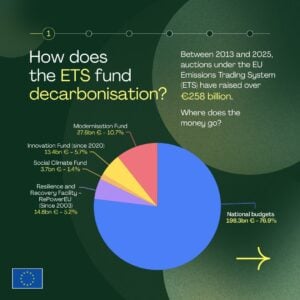
According to the European Commission, emissions from sectors covered by the EU ETS have fallen by about 50% since 2005. The carbon market has also raised more than €260 billion since 2013, with much of the revenue invested in renewable energy, clean technology, and climate projects.
By extending carbon pricing to transport and buildings, policymakers hope to cut emissions in sectors that have made slower progress. The move is central to the EU’s goal of reducing net greenhouse gas emissions by at least 55% by 2030 and reaching climate neutrality by 2050.
Balancing Climate Action and Energy Costs
The debate highlights one of Europe’s biggest climate challenges: how to reduce emissions without making everyday energy more expensive. The main challenge is finding the right balance.
Supporters say ETS2 will encourage cleaner vehicles, better home insulation, and low-carbon heating systems. Critics worry that higher fuel bills could place too much pressure on households, especially in lower-income regions.
To address those concerns, the EU created the Social Climate Fund, worth up to €86.7 billion. The fund will help member states support vulnerable households, small businesses, and transport users through investments in clean heating, energy efficiency, and low-emission mobility.
The current debate is therefore not about whether Europe should reduce emissions. It is about how quickly the transition should happen and how its costs should be shared across society.
Carbon Pricing Is Growing Worldwide
Europe is not the only region putting a price on carbon.
According to the World Bank’s State and Trends of Carbon Pricing 2025 report, there are now 80 carbon pricing instruments operating or scheduled worldwide. These include carbon taxes and emissions trading systems across national, regional, and local governments.
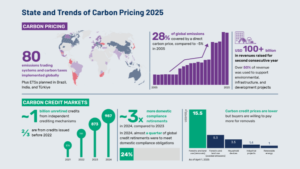
Together, they cover about 28% of global greenhouse gas emissions and generated more than US$100 billion in revenue in recent years. Much of that money has been used to support clean energy, climate projects, and programs that help households and businesses manage the transition.
Europe remains the global leader. The EU ETS is the world’s largest carbon market and has become a model for many countries developing their own emissions trading systems.
Cutting Emissions From the Hardest Sectors
The EU has already made strong progress in cleaning up electricity generation. According to Ember, wind and solar produced nearly 30% of the European Union’s electricity in 2025, while coal generation continued to fall.
As the power sector becomes cleaner, transport and buildings now account for a larger share of the region’s remaining emissions.
That is why ETS2 focuses on these sectors. Reducing emissions from these sectors will be essential if Europe wants to meet its 2030 and 2050 climate targets.
The Debate Is About Timing, Not the Goal
Most governments agree that emissions must continue to fall. The disagreement is over how quickly carbon pricing should expand and how to protect consumers from higher energy costs.
Some countries want stronger safeguards before ETS2 begins. Their proposals include releasing more allowances into the market if prices rise too quickly and improving mechanisms that prevent excessive price swings.
Supporters argue these changes would make the system more stable without weakening Europe’s climate goals. Others warn that delaying or softening the market too much could reduce investment in cleaner technologies and slow emissions reductions.
The European Commission is expected to review the proposals as part of its broader assessment of the EU carbon market.
A Critical Test for Europe’s Net-Zero Strategy
The outcome of the ETS2 will shape the next phase of Europe’s climate policy.
Carbon pricing remains one of the EU’s most important tools for reducing emissions because it rewards cleaner technologies while encouraging investment in energy efficiency and low-carbon fuels.
At the same time, public support will be just as important as strong policy. Governments must show that climate action can reduce emissions without placing an unfair burden on families and small businesses.
Finding that balance will determine the success of ETS2. As more countries move toward net-zero emissions, that balance may become one of the biggest challenges facing climate policy over the next decade.