

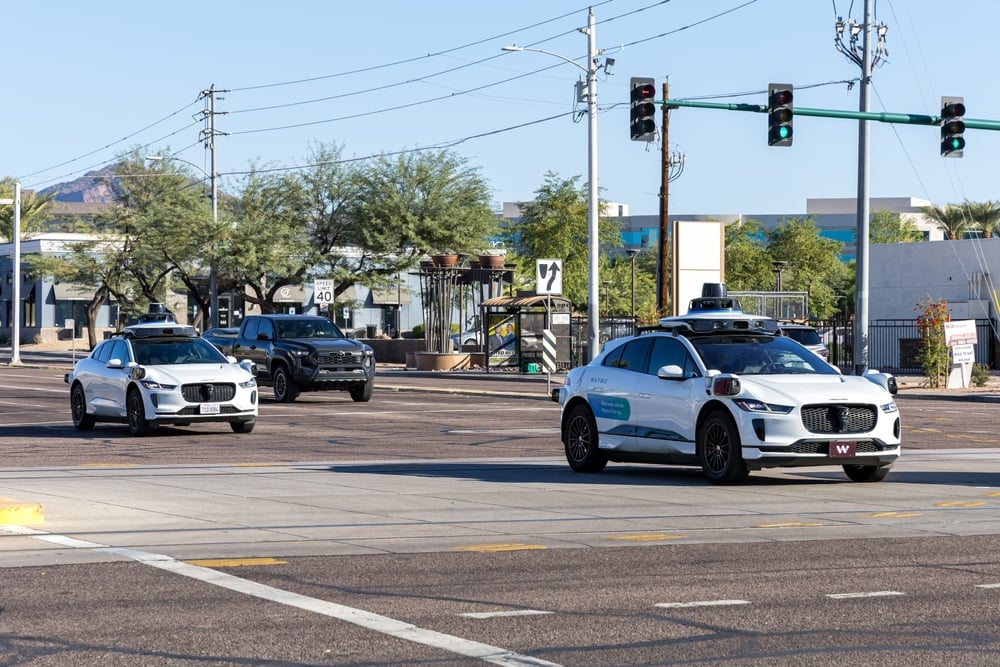
The race to build the future of transportation has reached a new city. Tesla and Waymo are both expanding their robotaxi services into Tampa, Florida, bringing two very different self-driving technologies into direct competition.
The move marks another milestone for autonomous vehicles as companies race to make driverless ride-hailing a mainstream business. This expansion comes at a time when interest in robotaxis is growing quickly.
Artificial intelligence (AI) is improving, electric vehicles (EVs) are becoming more common, and cities are looking for cleaner and safer ways to move people. For Tesla and Waymo, Tampa is both a new market and another test of which of them has the stronger path toward large-scale autonomous transportation.
Two Companies, Two Different Roads to Autonomy
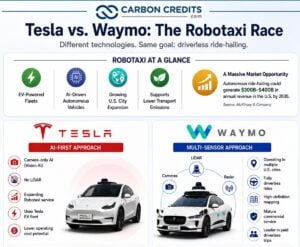
Although Tesla and Waymo share the same goal, they have taken very different approaches.
Waymo, owned by Alphabet, relies on a mix of cameras, radar, and LiDAR sensors. Its robotaxis operate only in carefully mapped areas, known as geofenced service zones. This allows the company to offer fully driverless rides while keeping operations within areas it has already tested extensively.
Tesla has chosen a different strategy. Its Full Self-Driving (FSD) system depends mainly on cameras powered by artificial intelligence. Instead of mapping every street in advance, Tesla trains its AI using data collected from millions of customer vehicles around the world. Chief Executive Elon Musk believes this approach will make it easier and cheaper to expand robotaxi services globally.
The difference also affects costs. Industry analysts estimate that a LiDAR system can add thousands of dollars to the cost of an autonomous vehicle.
Tesla claims its camera-based system can achieve similar results with cheaper hardware. This could make large-scale deployment more affordable if the technology works well.
Tesla Is Scaling Its AI-First Robotaxi Vision
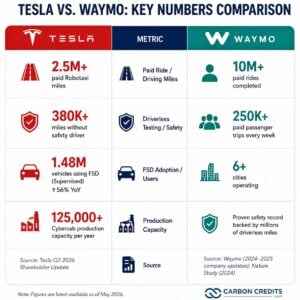
Tesla’s robotaxi business has grown rapidly over the past year. According to the company’s second-quarter 2026 shareholder update, its paid robotaxi service now operates in seven U.S. metro areas. Customers have driven over 2.5 million paid Robotaxi miles.
Tesla’s cars have also recorded more than 380,000 miles without a safety driver during testing and operations.
The EV giant is also expanding the technology behind its robotaxis. The company says 1.48 million vehicles now use its Full Self-Driving (Supervised) software, up 56% from a year earlier. Every mile driven helps train Tesla’s AI system, giving it one of the world’s largest real-world driving datasets.
The company is also preparing for the next stage of growth.
The automaker says its new Cybercab production line is capable of building more than 125,000 vehicles per year. Unlike today’s Model Y robotaxis, Cybercab is designed from the ground up as a fully autonomous vehicle without a steering wheel or pedals.
For Tesla, robotaxis are becoming much more than another vehicle program. They are central to the company’s long-term growth strategy as EV sales slow and competition increases.
Waymo Still Holds the Lead in Driverless Rides
Tesla may be expanding quickly, but Waymo remains the industry’s most experienced robotaxi operator. The company now provides more than 250,000 paid passenger trips every week, according to its report.
Since launching commercial service, it has completed over 10 million paid rides, making it the largest fully driverless ride-hailing network in the world.
The company runs robotaxi services in several cities. These include Phoenix, San Francisco, Los Angeles, Austin, Atlanta, and Washington, D.C. Tampa is one of its latest expansion plans.
Waymo’s safety record has also helped build confidence. A study in Nature showed that Waymo’s self-driving cars had far fewer, 68%, injury crashes than human drivers. This was observed over millions of miles. That growing body of real-world evidence has made Waymo the benchmark for commercial robotaxi services today.
Yet, the race is far from over.
Tesla is betting that artificial intelligence and manufacturing scale will allow it to expand much faster than competitors. Waymo, meanwhile, continues to focus on safety, reliability, and steady deployment.
The next few years will show which strategy proves more successful—not only in Tampa, but across the global robotaxi market.
Why Robotaxis Could Redefine Urban Mobility
The robotaxi race is about much more than technology. It could also reshape how people travel and how cities cut emissions.
Transportation is the biggest source of greenhouse gas emissions in the U.S. In 2025, it makes up about 28% of all emissions, according to the U.S. Environmental Protection Agency (EPA). Switching from gasoline cars to electric robotaxis can cut emissions. This is true, especially if cleaner electricity is used to charge them.
Robotaxis can also make vehicles more efficient.
Most privately owned cars sit parked for about 95% of the day, according to research from the U.S. Department of Energy. A shared autonomous vehicle can stay on the road much longer, serving multiple passengers instead of remaining idle. Higher vehicle use could reduce the number of cars needed in cities over time while lowering the cost of each trip.
The International Energy Agency (IEA) also sees shared electric mobility as an important tool for reducing oil demand and cutting transport emissions, particularly as electricity grids become cleaner.
A $400 Billion Opportunity Is Fueling the AI Mobility Race
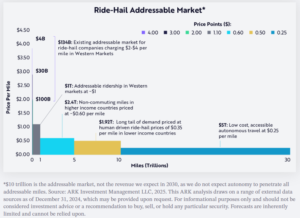
The business opportunity is enormous. According to McKinsey & Company, autonomous ride-hailing services could generate between $300 billion and $400 billion in annual revenue by 2035 in the United States alone.
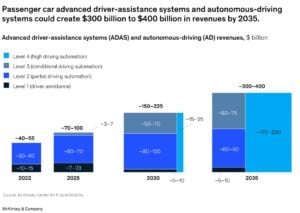
Lower operating costs, combined with growing demand for convenient transportation, could make robotaxis one of the fastest-growing mobility businesses over the next decade.
ARK Invest is even more optimistic. It estimates that autonomous ride-hailing could become a multi-trillion-dollar global market in the long term if self-driving technology reaches widespread adoption.
That potential explains why competition is growing. Traditional automakers, technology companies, ride-hailing firms, and semiconductor companies are all investing billions of dollars in autonomous driving.
The Race Is Bigger Than Tampa
The expansion into Tampa is only the latest chapter in a much larger competition. Tesla brings manufacturing scale, artificial intelligence expertise, and one of the world’s largest connected EV fleets.
Waymo brings years of commercial experience and a proven record of fully driverless operations. Both companies are trying to solve the same challenge, but in different ways.
There may not be a single winner.
Different cities may adopt different technologies, while several companies could succeed by serving different markets. What is already clear, however, is that autonomous electric vehicles are moving from pilot projects to commercial services.
For investors, the robotaxi race could become one of the most important growth stories of the next decade. For consumers, it could change how people think about owning a car. And for the clean energy transition, it shows that the future of transportation will depend not only on electrification, but also on AI and shared mobility working together.