


Elon Musk’s xAI purchased another $269 million worth of Tesla Megapack products in April 2026 alone. This marks a massive jump in energy storage spending by Musk’s artificial intelligence (AI) company.
The purchase shows just how fast AI data centers need power. That single month exceeds what xAI spent on Tesla Megapacks in all of 2024. The April order pushes total Megapack spending by xAI to roughly $1 billion since 2024.
This deal reflects broader market trends. Data centers, where AI models are trained and run, are becoming among the largest new electricity consumers in the world. As power demand grows, energy storage is becoming increasingly important for supporting reliable power supplies and helping companies in their decarbonization efforts.
The Billion-Dollar Battery Bet Behind AI Expansion
The xAI unit purchased $269 million worth of Tesla megapacks in April, according to SpaceX’s amended S-1 IPO filing. This follows Tesla previously disclosing that it sold $430 million worth of Megapack battery systems to xAI last year.
The numbers tell a clear story about AI’s energy needs. AI energy and water consumption are among the most-cited journalism topics around AI in 2026. Data shows why this matters for the energy sector.
xAI operates the Colossus supercomputer in Memphis and needs steady power. xAI has already deployed 168 Megapack units at its Memphis facility and plans to scale to roughly 1 GWh of buffering capacity. At the scale xAI is building — targeting 2 GW of compute capacity — the battery storage needs are enormous.
The AI firm shows no signs of slowing down. Its power needs keep growing as it builds more data centers for AI training and operations. The growing use of battery storage also highlights a larger shift in how energy-intensive industries manage electricity demand.
Large-scale batteries can store excess renewable power when solar and wind generation is abundant and discharge it when demand rises. This helps reduce dependence on fossil-fuel peaker plants while supporting cleaner electricity systems.
As AI infrastructure expands, energy storage is increasingly viewed as a key tool for limiting the sector’s carbon footprint.
Tesla’s Fastest-Growing Business Isn’t Cars
Tesla earned close to $12.8 billion in annual revenue from the segment, marking 26.6% year-over-year growth due to “higher deployments in all regions”. The energy business now makes up a bigger share of Tesla’s total sales.
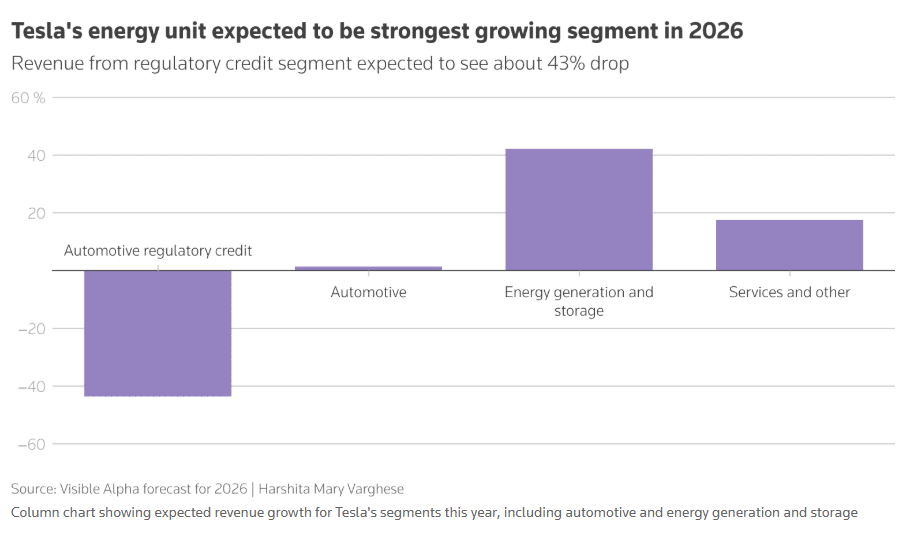
Tesla’s proportion of energy generation and storage to total revenue in 2025 increased to 13%, compared to the 10% share in 2024. This shift shows how important energy storage has become for the company.
The xAI purchases matter for Tesla’s bottom line. For Tesla’s energy division, which generated $12.8 billion in revenue in 2025, the xAI purchases represent a meaningful chunk of business. The $573 million Tesla recognized from SpaceX and xAI alone accounted for roughly 4.5% of total energy revenue.
Storage demand keeps climbing across all markets. Tesla deployed a record 46.7 gigawatt-hours of energy storage products in 2025, a 48% increase from last year. The company sees strong growth ahead despite some challenges.
The growth reflects strong demand for grid-scale battery systems worldwide. The International Energy Agency (IEA) says global battery storage capacity hit new highs in 2025. It will keep growing quickly this decade, as shown in the Bloomberg chart below.
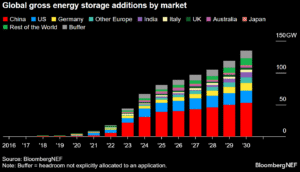
Energy storage is one of the fastest-growing clean energy technologies. It helps solve the problem of renewable power generation being inconsistent.
For utilities and large power users, batteries are becoming essential infrastructure. They enhance grid reliability and cut down on renewable energy waste. They also aid the shift from carbon-heavy electricity sources.
AI’s Electricity Appetite Is Reaching Grid Scale
The AI boom drives huge energy needs. Electricity consumption from data centers is estimated to amount to around 415 terawatt-hours (TWh), or about 1.5% of global electricity consumption in 2024. It has grown at 12% per year over the last five years.
The growth will speed up. Global electricity use for data centers is expected to double, hitting about 945 TWh by 2030, based on recent United Nations research. AI will take up most of this power use.
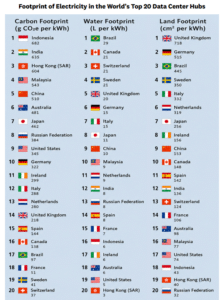
This will account for nearly 3% of total global electricity consumption that year. From 2024 to 2030, data centre electricity consumption will grow by around 15% per year.
Some regions already see major impacts. In 2023, data centers in the state of Virginia (USA) consumed as much as 26% of all electricity in the state. Similarly high shares were recorded, among others, in Ireland – 21% of national electricity consumption in 2022 was attributable to data centers.
Power grids face new stress as AI data centers expand and place greater demands on electricity systems. This challenge is increasingly intersecting with climate goals.
Major technology companies, including Google, Microsoft, Amazon, and Meta, have all announced net-zero or carbon-free energy commitments. However, rapid growth in AI workloads and planned capacity are making those targets harder to achieve.

As data center electricity demand grows, battery storage is key. It helps match clean energy supply with constant computing needs.
The trend is crucial. Data centers will need massive amounts of energy to operate. Without more renewable energy and storage systems, much of that demand may rely on fossil fuels.
Why Batteries Have Become Essential AI Infrastructure
Racks have gone from each having eight GPUs to 72 starting two years ago, requiring around 150kW of power. And power demand keeps growing. Rubin, Nvidia’s new GPU and rack system coming out later this year, will eventually need around 300kW to run.
These power needs drive storage demand. As a result, energy storage is now viewed as a key technology for decarbonization, not just backup power.
Batteries help renewable energy projects provide power even after sunset and when the wind isn’t strong. This increases the value of clean power assets and helps lower overall emissions from electricity systems.
The xAI-Tesla deals show how big customers drive the market. Large orders help Tesla scale production and lower costs for other buyers. This creates a cycle of growth in the storage sector.
Competition is heating up, too. Tesla anticipates margin compression in 2026 as “low-cost competition, policy uncertainty and tariff impacts” intensify. The company plans new products to stay ahead.
Analysts expect global battery storage deployment to grow significantly through 2030 as countries pursue net-zero targets and electrification strategies.
AI’s Next Bottleneck
xAI’s $269 million April purchase shows how quickly AI infrastructure is expanding. The deal pushes its total spending on Tesla Megapacks to about $1 billion and highlights the growing role of energy storage in supporting large-scale computing.
For Tesla, the order strengthens its position in the fast-growing battery storage market. As AI companies build larger data centers and electricity demand rises, battery systems are expected to become an increasingly important part of the global energy transition.