

The World Bank and a Brazilian bank are structuring a carbon fund with an initial target of $100 million to provide upfront financing for carbon projects in Brazil. The resulting carbon credits would then be sold to international investors.
The identity of the Brazilian bank and the final structure of the fund have not been disclosed. It is also not yet clear how many projects the fund could finance or how many carbon credits they could generate.
Still, the proposed vehicle points to a growing effort to connect international capital with Brazil’s large pipeline of nature and carbon projects. While the World Bank’s partner remains confidential, market speculation points to major institutions like BNDES or Banco da Amazônia (BASA) due to their strong history with green capital. However, these names are strictly market context, not confirmed facts yet.
Upfront Funding Could Fill Brazil’s Carbon Finance Gap
Carbon projects often face a financing problem at the start. Developers may need years of investment before projects generate verified carbon credits that can be sold.
An upfront financing fund could help bridge that gap. Developers can get funding sooner instead of waiting for future credit sales. They can use this money for activities like forest restoration, conservation, or other projects that reduce emissions.
The model could also give international investors greater access to Brazilian carbon projects. The proposed $100 million fund is still being set up. So, its investment terms and risk-sharing details are not yet clear.
The announcement comes as demand for carbon projects is shifting toward assets with stronger environmental and social value. The World Bank said in its State and Trends of Carbon Pricing 2026 report that global carbon credit issuances rose 8% from 2024 to 2025.
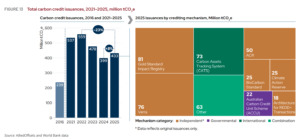
At the same time, credit prices fell slightly overall, while some higher-value categories continued to receive premiums. These included credits eligible for international aviation and highly rated forest conservation and reforestation projects.
World Bank Has Already Tested Carbon Finance in Brazil
The new fund would build on earlier World Bank efforts to connect Brazilian climate projects with private finance.
In 2022, the World Bank approved a $500 million project with Banco do Brasil. This project aims to boost sustainability-linked lending and help Brazilian companies access carbon markets. The project aims to reduce emissions by up to 90 million tonnes of CO2e by 2030. It also seeks to attract $1.4 billion in private capital.
That project is separate from the new $100 million fund. The latest report only identifies the current partner as a Brazilian bank.
The World Bank also used a different financing structure for Amazon restoration in 2024. It issued a $225 million, nine-year Amazon Reforestation-Linked Outcome Bond. Returns for investors depend partly on carbon removal units from reforestation projects. Mombak raised about $36 million to boost its reforestation efforts in Brazil.
These transactions illustrate how carbon and climate results can be included in everyday financial products. This approach goes beyond just direct project investments.
Brazil Is Building a Larger Carbon Market
Brazil is also creating a stronger domestic framework for carbon markets. The country established the Brazilian Emissions Trading System, or SBCE, through Law No. 15,042, enacted on December 11, 2024. The law created a regulated carbon market and set rules for emissions trading, carbon credits, and related infrastructure.
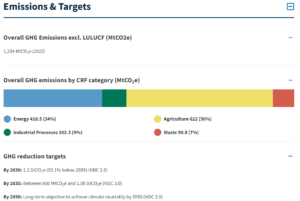
Implementation is now moving forward. In July 2026, Brazil’s Ministry of Finance began public consultations. They focused on which sectors would be included in emissions monitoring, reporting, and verification (MRV). The consultation also addressed a proposed timetable for implementing the system.
The government said the MRV framework will help create an official and reliable emissions database. That information will later help support:
- decisions on the emissions cap,
- allocation of Brazilian Emissions Allowances, and
- the limits for using verified reduction or removal certificates to meet compliance obligations.
The developing regulated market could eventually create another source of demand for eligible emissions reductions.
Nature and Forestry Could Be Major Opportunities
Brazil’s forests offer a large potential project base, particularly for restoration and carbon removal. Public financing is already helping scale this sector.
The BNDES Forest Credit program has approved R$1.9 billion for 14 projects. These projects focus on ecological restoration, productive restoration, native-species forestry, and forest management. BNDES says the program has attracted R$1.59 in private resources for every R$1 invested by the bank.
The bank has also supported projects focused directly on carbon removal. In 2025, BNDES approved R$100 million for Mombak to reforest degraded areas in the Amazon while supporting biodiversity recovery and carbon capture.
These projects illustrate why Brazil could be an important market for carbon finance. The country has vast degraded lands and important forest ecosystems. It is also developing a growing policy framework for carbon markets.
Global Investors Are Looking for Better Credits
The proposed fund also comes as the carbon market becomes more selective. The World Bank reported that carbon credit issuances increased in 2025, but overall prices declined slightly. Credits linked to international aviation and highly rated forest conservation and reforestation projects still attracted premiums.
Investors are now focusing more on the quality, use case, and project type of carbon credits. They’re not seeing all credits as the same anymore.
For a Brazilian fund targeting international buyers, project quality, measurement, and verification will, therefore, be critical. Strong monitoring and clear ownership of the resulting credits would also matter for investors assessing future revenue.
Right now, there’s no public information on whether the proposed $100 million fund will target voluntary carbon markets, Brazil’s future regulated system, international Article 6 transactions, or a mix of these markets.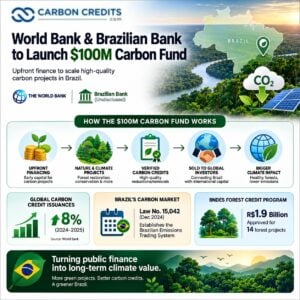
Article 6 Eligibility Is Not Yet Confirmed
Brazil is building its international carbon market. However, it’s too soon to say that projects funded by the new fund will qualify for international transfers under Article 6 of the Paris Agreement.
Article 6.2 allows countries to transfer internationally traded mitigation outcomes, known as ITMOs, under cooperative approaches. A corresponding adjustment stops the same emissions reduction from being counted by both the selling and buying countries.
Whether a project can use this framework depends on national authorization and other eligibility requirements. The latest report on the $100 million fund does not disclose whether its credits will receive such authorization.
For now, the fund should therefore be viewed as a proposed financing mechanism rather than a confirmed source of Article 6 credits.
The Bigger Goal: Turn Public Finance Into Private Capital
The most important feature of the proposed vehicle may be its focus on upfront finance. Brazil has already shown that public and development-bank capital can help bring private money into climate projects.
A new international-investor fund could extend that approach specifically to carbon projects. The opportunity is significant, but the details will determine its impact. Investors will need clarity on project selection, expected returns, credit ownership, verification, market eligibility, and risks before committing capital.
For Brazil, the timing is important. Its regulated carbon market is taking shape, private investment in forest projects is growing, and international demand is increasingly focused on higher-quality credits.
The proposed $100 million fund could help connect those trends. But until the World Bank and its Brazilian partner disclose more details, the size of the opportunity remains an early-stage estimate rather than a confirmed pipeline.