


The Greenhouse Gas Protocol (GHG Protocol) is considering giving companies more time to meet stricter rules for reporting electricity emissions. The move follows concerns from businesses about higher costs, complex reporting, and access to renewable energy.
The proposed rules would require companies to match their clean electricity purchases more closely to when and where they use power. But many businesses oppose making these rules mandatory. They say the changes could make renewable energy projects harder to fund.
In an October 2026 update, GHG Protocol outlined a possible plan that would let companies choose between the current reporting method and a stricter method for a set period. Companies would have to state which method they use. The deadline for switching to the stricter method has not yet been set, and the final rules are still being developed.
The decision could affect thousands of companies that use GHG Protocol standards to measure and report their greenhouse gas emissions. The debate comes as electricity demand grows, especially from data centers and artificial intelligence (AI).
Why GHG Protocol Wants Stricter Scope 2 Reporting
Scope 2 emissions come from the electricity, heat, steam, and cooling that a company buys or uses. For many businesses, electricity is a major source of these emissions.
Under current GHG Protocol rules, companies can use a market-based method to report emissions from purchased electricity. This method lets them count contracts and certificates linked to renewable energy. However, the clean electricity they buy does not always match when or where they use power.
The proposed changes would tighten the rules in two main ways.
- Hourly matching would require companies to match their clean electricity purchases with their power use in the same hour. This would give a clearer picture of whether clean power is available when a company needs it.
- Deliverability would require the renewable electricity a company buys to come from a market that can supply the grid where the company uses power.
GHG Protocol has also considered incrementality. This looks at whether a company’s clean energy purchases help bring new renewable power projects online.
The aim is to make company emissions reports better reflect the electricity systems that supply their power. Under current rules, a company could buy renewable energy certificates (RECs) from another region or match its power use with clean energy generation over a full year. This can happen even if the clean power was not available when the company needed electricity.
Companies Raised Strong Objections to the Proposed Rules
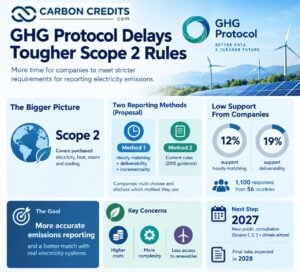
GHG Protocol opened a public consultation on the proposed Scope 2 changes in October 2025. The consultation was extended and closed on January 31, 2026, giving people more time to share their views. GHG Protocol received nearly 1,100 responses from 56 countries.
The results showed limited support among companies for the stricter rules. Only 12% of company respondents supported hourly matching, while 82% reported low or no support. For deliverability, 19% supported the proposal, while 71% reported low or no support.
Companies raised concerns about the cost and difficulty of collecting electricity data for every hour. They also warned that stricter rules could limit their ability to buy renewable energy in markets where clean power projects could have a greater impact.
Among respondents who raised concerns about hourly matching, 87% said it could discourage companies from taking part in voluntary clean energy markets. Another 86% raised concerns about the cost and extra work required for reporting.
For deliverability, 87% of those with concerns said stricter market limits could cut investment in strong renewable energy areas. Some also warned that the rules could discourage long-term renewable energy contracts and push companies toward shorter-term purchases.
These figures reflect feedback from consultation respondents. They are not a vote that decides the final rules. GHG Protocol says it must weigh this feedback against factors such as the accuracy of emissions reporting, climate benefits, and how practical the rules would be to use.
- RELATED: One Carbon Rulebook? GHG Protocol and ISO Join Forces to Rewrite Global Emissions Reporting
Proposed Rules Could Reshape Clean Energy Investment
In response to the feedback, GHG Protocol began exploring a plan with two ways to report purchased electricity emissions using the market-based method.
- Method 1 would introduce stricter rules, including hourly matching and deliverability. The wider proposal also considers incrementality.
- Method 2 would keep the requirements in the 2015 Scope 2 Guidance. This would let companies continue using their current ways of reporting renewable electricity purchases.
The proposed plan reflects a debate over how companies can best support clean energy.
Supporters of stricter rules say matching electricity use with clean power by time and place could encourage investment in renewables, battery storage, and other sources that provide cleaner power around the clock. Others warn that tighter rules could raise costs, limit access to renewable energy certificates, and discourage long-term contracts that fund clean energy projects.
Under the possible transition plan, companies could use Method 2 until a future deadline that has not been set. They would have to disclose their chosen method. After the deadline, Method 1 would apply to market-based reporting where suitable data is available. The rules are still under development and are not final.
The changes could affect how companies buy electricity and fund clean energy projects. Stricter matching may encourage investment in power sources that better fit actual demand, including storage and geothermal power.
However, some markets lack reliable hourly data, enough clean electricity, or the systems needed to support the new rules. Companies operating across countries could face uneven access, while smaller businesses may struggle with the added cost, staff, and data requirements.
The impact could be especially important for technology companies, whose data centers use large amounts of electricity as AI services grow. The final effect on renewable energy contracts and investment will depend on the rules GHG Protocol adopts, the time companies have to adjust, and the availability of reliable electricity data.
GHG Protocol Plans Further Consultation in 2027
GHG Protocol is continuing to develop the Scope 2 changes with its Technical Working Group and Independent Standards Board. The next major step is a public consultation planned for the second quarter of 2027.
The consultation will cover proposed updates to Scope 1, Scope 2, and Scope 3 reporting. It will also cover how companies report climate actions and the use of market-based tools, such as energy certificates.
This work is part of a greater effort by GHG Protocol and ISO. They aim to create a common standard for company greenhouse gas reporting. The combined standard is expected to be published in the fourth quarter of 2028.
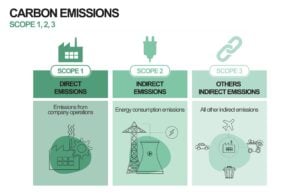
Scope 1 emissions come directly from sources a company owns or controls, such as fuel burned at its facilities. Scope 3 emissions are other indirect emissions across a company’s value chain. These include emissions from suppliers and from the use of products a company sells.
The wider review could make company emissions reports more consistent across countries and reporting systems. But it also means businesses will have to wait longer for clear answers on the final Scope 2 rules.
Scope 2 Debate Puts Corporate Climate Reporting to the Test
The Scope 2 debate shows a big challenge in climate reporting. Companies want to make emissions claims more accurate, but they also need to avoid rules that are too costly or hard to follow. These rules shouldn’t limit investment in clean energy, either.
Stricter matching could help show whether a company’s renewable electricity purchases line up with its actual power use. At the same time, businesses and other groups argue that wider access to renewable energy markets can help direct more money to clean power projects.
GHG Protocol is now considering a plan that could allow both methods for a limited time before moving to stricter reporting where suitable data is available. Companies should follow the review and check whether their electricity contracts, emissions data, and reporting systems could meet the new requirements.
The final standard will shape how businesses report emissions from purchased electricity and how their renewable energy claims are assessed. Its impact will depend on how GHG Protocol balances accurate reporting, practical rules, and support for the shift to cleaner power.