

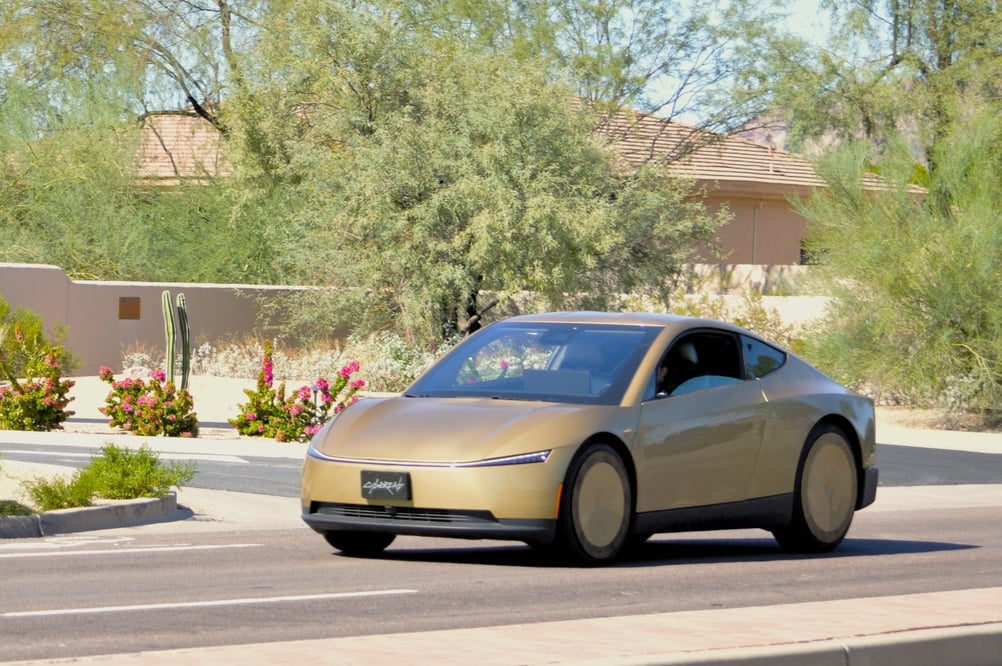
Tesla has won an important regulatory approval in Italy for its Full Self-Driving (FSD) technology, giving the electric vehicle (EV) maker a new opening in one of Europe’s largest car markets. Italy’s Transport Ministry approved Tesla’s Assisted Driving system on November 20, 2026. The decision makes the country the first major European Union (EU) market to accept the technology ahead of a wider EU approval process.
The move could help Tesla expand its software business in Europe. It also comes as the company works to grow its EV and energy businesses while cutting emissions across its supply chain.
However, the approval does not mean Tesla cars can drive without human control. FSD remains a supervised driver-assistance system. Drivers must stay alert, watch the road, and remain ready to take control.
Italy Gives Tesla a Major Regulatory Win
Italy’s Transport Ministry approved Tesla’s Assisted Driving system, which the company calls Full Self-Driving (Supervised) in other markets. The decision came after the Netherlands granted the system its first European type approval in April 2026.
Italy has now become the 12th EU country to accept the technology, according to the Italian Transport Ministry. It is also the first among the EU’s four most populous countries to allow the system. Germany, France, and Spain have not yet followed.
Tesla said the rollout in Italy would begin soon, but it has not announced a firm launch date. Eligible vehicles will need a software update before owners can use the feature.
The approval is an important step for Tesla because Europe has some of the world’s strictest vehicle safety and regulatory rules. Winning access to Italy could also help the company build support for wider approval across the region.
Still, this is not yet full EU-wide approval. The Dutch regulator, RDW, has submitted an application for wider recognition. EU member states must review and vote on that request before the system can be used across the bloc under a common approval.
FSD Still Requires Drivers to Stay in Control
Despite its name, Tesla’s FSD system does not make a car fully autonomous. The technology can steer, accelerate, brake, and handle many driving tasks. But it still requires active driver supervision. Drivers must pay attention at all times and remain responsible for the vehicle.
The Dutch vehicle regulator has made this point clear. It said FSD is a driver-controlled assistance system, not a self-driving system.
The regulator also said its approval followed more than 18 months of testing on test tracks and public roads. The review included more than 3,000 hours of testing, over 1,000 test runs, and data from 1.8 million kilometers driven in Europe.
Safety remains a major issue in the debate over the technology. The European Transport Safety Council (ETSC), a road safety group, has raised concerns about how the system handles speed limits. It urged EU countries to reject approval unless these concerns were addressed.
These concerns show why Tesla’s European expansion depends on more than software performance. The company must also meet local safety rules and gain the trust of regulators and drivers.
European Approval Could Support Tesla’s Software Business
The Italian decision could give Tesla another source of growth beyond vehicle sales. FSD is part of the company’s wider push to earn more from software, subscriptions, and connected services. Customers can pay to use advanced driving features, giving Tesla a chance to generate income after selling a vehicle.
Tesla reported growing demand for FSD in its third-quarter 2026 update. The company said it recorded a new high in net subscriptions during the quarter. More than 75% of new vehicle deliveries in North America included FSD subscriptions.
In Europe, Tesla said the system was available in nine countries at the end of the third quarter. More than 100,000 customers had used it, with total driving distance above 160 million kilometers since its initial approval.
Italy’s approval could help increase that customer base. However, the system’s growth will depend on further regulatory decisions and how quickly Tesla can make it available to eligible drivers.
Tesla’s latest financial filing also showed that higher FSD subscription revenue helped support automotive sales revenue in the third quarter. This matters as the company seeks to build a business that earns more from services and software, not just the sale of cars.
Tesla Stock Rebounds in Premarket Trading
The strategy is part of a wider shift in Tesla’s business model. Its plans include driver-assistance software, robotaxis, energy storage, and other services that could create new sources of revenue.
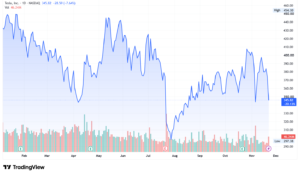
Tesla (TSLA) stock was trading at around $360.90 in premarket trading on November 23, up 4.36% from Friday’s close of $345.82. The rebound follows a sharp 7.64% drop on November 20, when Tesla shares fell alongside a broader sell-off in technology and AI stocks. US stock futures also pointed to a market recovery on Monday.
Tesla’s EVs Can Cut Transport Emissions
Beyond the software business, Tesla’s main environmental contribution comes from its electric vehicles and clean energy products. Battery-electric vehicles produce no tailpipe emissions while driving. Their total climate impact is not zero, however. Making vehicles and batteries creates emissions, and the power used to charge EVs can still come from fossil fuels.
A 2025 study by the International Council on Clean Transportation (ICCT) found that battery-electric cars sold in the EU produce about 73% less lifecycle greenhouse gas emissions than comparable gasoline cars.
The study estimated average lifecycle emissions of 63 grams of carbon dioxide equivalent per kilometer for battery-electric cars. Comparable gasoline cars produced about 235 grams per kilometer.
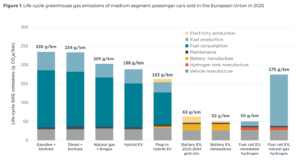
The analysis included emissions from vehicle and battery production, electricity and fuel use, maintenance, and recycling. It also found that EV production creates higher emissions at the start, mainly because of battery manufacturing.
But EVs make up for this difference through lower emissions while driving. The study estimated that battery-electric cars reach this point after about 17,000 kilometers of use.
This gives Tesla a clear role in the shift toward lower-emission transport. However, the full climate benefit depends on cleaner electricity, more efficient production, and better battery supply chains.
Battery Production Remains a Key ESG Challenge
Tesla’s environmental impact also depends on how it sources materials and makes its vehicles. Battery production requires materials such as lithium, nickel, graphite, and other minerals. Mining and processing these materials can use large amounts of energy and water. They can also affect local ecosystems and communities.
In its 2025 Impact Report, Tesla said its battery supply chain accounted for 26% of its total supply chain greenhouse gas emissions. It reported cutting these battery-related emissions by 9% in 2025.
The company also said it used 3.5 terawatt-hours (TWh) of renewable energy in its battery supply chain during the year. It is working with suppliers to improve energy efficiency and increase the use of renewable power.
Tesla also reported that its Supercharger network had been matched with 100% renewable electricity for five consecutive years. This can lower emissions from charging its vehicles. However, the climate benefit also depends on the electricity used at other charging points.
The company has set a goal of reaching net-zero greenhouse gas emissions across its full value chain by 2040. This target covers more than its factories and offices. It also includes emissions linked to suppliers, products, and customers.
Tesla Reports Major Emissions Savings But Faces More Work
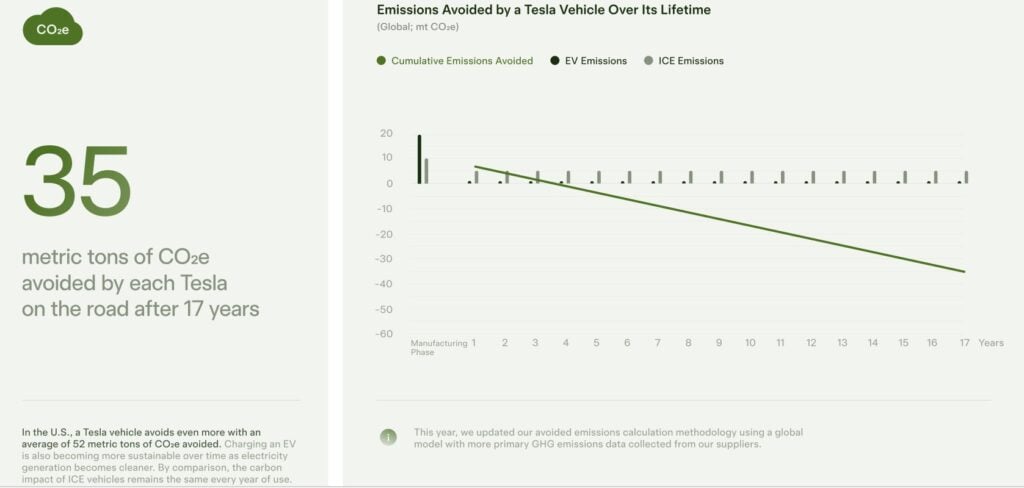
The EV giant said its global products helped customers avoid nearly 37 million metric tons of carbon dioxide equivalent emissions in 2025. That figure covers its combined portfolio of electric vehicles, solar products, and energy storage systems. It should not be treated as emissions savings from EVs alone.
The company also reported progress in its energy business. It deployed 36 gigawatt-hours of energy storage products through the first three quarters of 2026, according to its latest financial filing.
These products can support the wider shift to renewable energy. Large battery systems store electricity when supply is high and release it when demand rises, or renewable generation falls.
Still, Tesla faces pressure to reduce emissions from mining, battery production, and vehicle manufacturing. It must also show that its advanced driving technology meets safety rules as it enters more markets.
Italy’s decision is a major step for Tesla’s European software plans. It could help the company reach more customers and build its subscription business. However, the wider story remains tied to Tesla’s ability to grow its EV and energy businesses while improving safety and reducing its environmental footprint.