

The Canada Pension Plan (CPP) plans to invest in carbon credits on the pathway to net zero.
CPP Investments believes that the performance of its portfolio will be influenced by how well it adapts with the global economy’s path to net zero.
As such, it considers that stewarding its portfolio to net zero is in the best interests of the contributors and beneficiaries of the CPP and meeting its mandate.
The Canada Pension Plan Investments
CPP is one of three levels of the Canadian government’s retirement income system. Established in 1965, it’s responsible for paying retirement or disability benefits to Canadians.
The CPP Investments is a global investment management organization established to help ensure the CPP is strong and sustainable for the long term.
It is one of the largest pools of investment capital in the world with total assets amounting to $523 billion (as of June 30, 2022). By 2040 the CPP Fund’s total assets are expected to reach $1.7 trillion.
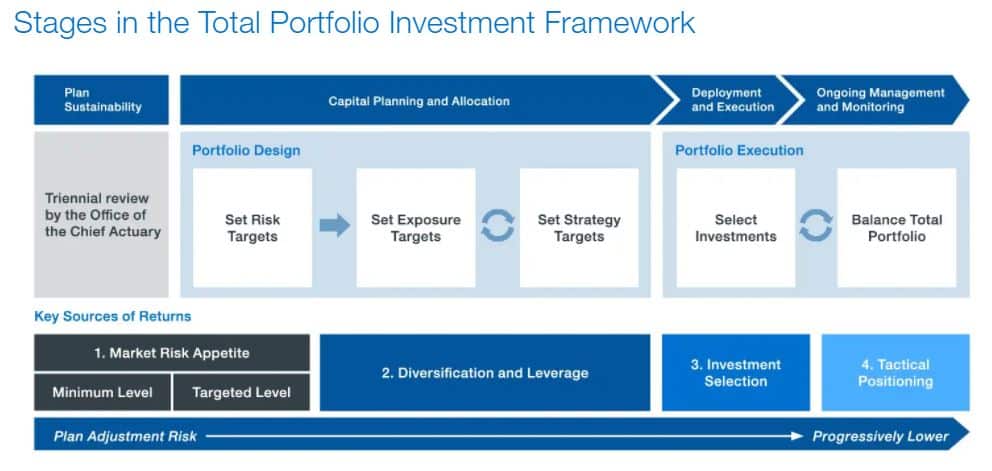
It adopts a total portfolio investment framework with diverse exposures to the broad capital markets.
CPP Investments’ Fund is structured to be resilient to wide-ranging market and economic conditions.
It covers all major asset classes, manages significant risk factors, and involves multiple distinct investment strategies.
The Fund invests in 5 major investments including:
- Private equity investments
- Real assets investments
- Active equities investments
- Capital markets investments
- Holdings & relationships reports
The Fund holds investments in 64 countries and with 318 global partners.
CPP Investments is putting its significant effort and funding in attractive investment opportunities that arise as economies scale up initiatives to decarbonize in response to climate change.
One of those opportunities is the market for credible and high quality carbon credits.
Investing in Carbon Credits
Carbon credits are generated from projects around the world that pull greenhouse gasses out of the air or keep them from being released.
Entities looking to cut emissions that can’t yet be abated can balance out today’s emissions by buying carbon credits. These credits help meet the urgent need to reduce global carbon emissions, either voluntarily or for compliance.
CPP Investments supports efforts that strengthen carbon credit markets as it sees them as a mechanism for delivering strong returns while diminishing risk.
The CPP has also entered into a partnership with the non-profit organization “Conservation International”, which is focused on providing nature-based climate solutions.
- These solutions conserve, restore, or improve the management of ecosystems while keeping their capacity to capture and store carbon.
The partnership will support the development of high-quality projects that reduce and remove carbon emissions. Additionally, it will also enable the private sector to buy carbon credits produced by each project, and offer a return to investors.
Carbon credits generated via the partnership will be verified to the highest quality standards which provide quality assurance to the voluntary carbon markets.
Rising demand for carbon credits
Demand for carbon credits is growing and is expected to continue for decades to come due to stricter regulatory standards and mounting corporate net zero pledges.
- To reach net zero emissions, the global economy needs a growing supply of credits, upwards of 7-13 gigatons in a year.
Meanwhile, BloombergNEF estimates that unmet demand will push the price for voluntary carbon credits upwards of $120/ton by 2050.
The CPP Investments project through nature conservation will generate annual emissions reductions of 220,000 – 330,000 metric tons of CO2. This is equal to avoiding up to 72,000 new cars off the road each year.
The opportunity that CPP Investments see in investing in the potential of carbon credits is based on three emerging trends:
- Credible markets will develop
- Demand will outstrip supply
- Prices will rise
Investing in the Path to Net Zero
CPP Investments commits its portfolio and operations to have net zero emissions across all scopes by 2050. This commitment is achievable through the following key action plans:
- Invest and exert influence in the whole economy transition as active investors, rather than through blanket divestment.
- Achieve carbon neutrality for internal operations by the end of FY23.
- Expect that its $67 billion investment in green and transition assets will increase to at least $130 billion by 2030.
- Build on a new decarbonization investment approach that seeks attractive returns from enabling emissions reduction and business transformation in high-emitting sectors.
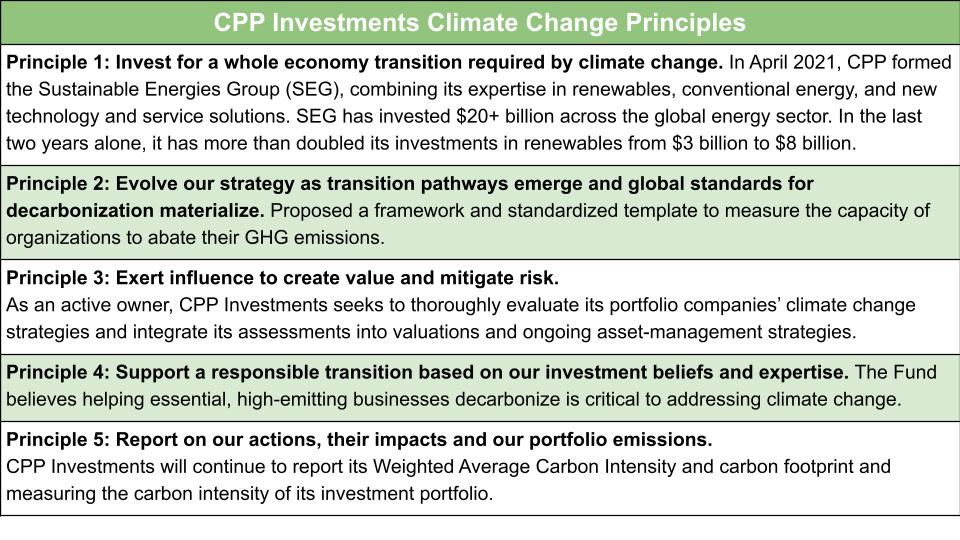
Fulfilling those net zero actions will be according to CPP Investments’ 5 Climate Change Principles.
The choice to invest in carbon credits and net zero is part of CPP Investments’ long track record of including environmental, social and governance (ESG) considerations into its investment activities to drive better financial performance.