

Canada is launching one of the world’s largest carbon capture and storage (CCS) projects. The federal government, Alberta’s government, and five oil producers, aka The Oil Sands Alliance, signed an agreement to cut oil sands emissions while supporting production and exports.
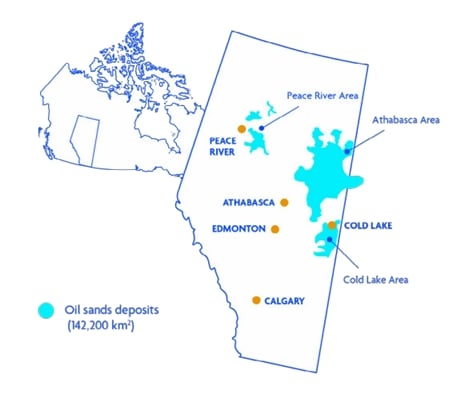
Announced on July 2, 2026, this agreement moves the Pathways Project closer to reality. It will capture carbon dioxide (CO₂) from oil sands facilities in northern Alberta, transporting it through a shared pipeline to a storage site near Cold Lake.
This deal links emissions cuts with plans for a new West Coast oil pipeline. Supporters view it as a chance for economic growth alongside climate action. However, environmental groups worry it might lead to increased fossil fuel production and emissions.
Unlock OSA’s Pathways Project
The Oil Sands Alliance—which includes Canadian Natural Resources, Cenovus Energy, ConocoPhillips Canada, Imperial Oil, and Suncor Energy—is developing the Pathways Project.
The plan involves building a network to transport and store carbon from several oil sands operations. Instead of letting CO₂ escape, it will flow through a pipeline to a geological storage site near Cold Lake.
Oil Sands Alliance Location
Originally, the project was expected to cost around C$16.5 billion. However, costs are now estimated between C$20 billion and C$30 billion due to rising construction expenses and an expanded project scope.
If all goes well, the carbon pipeline and storage system should start by January 1, 2032. The first phase aims for completion by January 1, 2035.
A New Target: Cutting 16 Million Tonnes of Emissions
The recent agreement sets a phased approach for greenhouse gas reductions. The first phase aims to capture and store 6 million tonnes of CO₂ per year through the Pathways CCS project by 2035.
Partners target an extra 5 million tonnes of reductions by 2040 and another 5 million tonnes by 2045. Future reductions may come from expanding the CCS network or adopting new technologies.
- Overall, the plan aims for 16 million tonnes of net annual emissions cuts in Canada’s oil sands sector.
This replaces earlier proposals for larger cuts and aligns with the new Memorandum of Understanding (MOU).
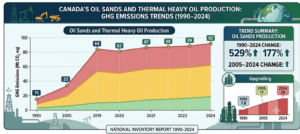
- According to Canada’s latest National Inventory Report, oil sands and thermal heavy oil operations emitted about 92 million tonnes of CO₂ equivalent (MtCO₂e) in 2024.
- The initial capture phase would reduce emissions by roughly 6–7% of the sector’s total, while the full target represents about 17% of today’s emissions.
Government Support Extends Beyond Tax Credits
The agreement includes significant financial support from the federal and Alberta governments to make the project feasible.
Ottawa will extend its 50% investment tax credit for eligible carbon capture equipment and a 37.5% tax credit for transportation, storage, and utilization equipment until 2035, five years longer than planned.
The federal government also plans new tax incentives for enhanced oil recovery projects, offering a 25% credit for carbon capture equipment and 18.75% for transportation and storage used in those operations.
Alberta will extend its Carbon Capture Incentive Program through 2035 and provide additional financial support to increase oil production for future exports.
The province aims to speed up approvals with a 120-day regulatory timeline for qualifying projects and will form a working group to address regulatory barriers in oil sands investments.
Alberta Premier Danielle Smith said,
“The biggest nation-building projects in Canada’s history have succeeded through partnership. This agreement shows what can be achieved when governments and industry work together to grow our economy, strengthen our energy security and unlock new opportunities for people across Canada.”
Carbon Pricing Will Reward Progress
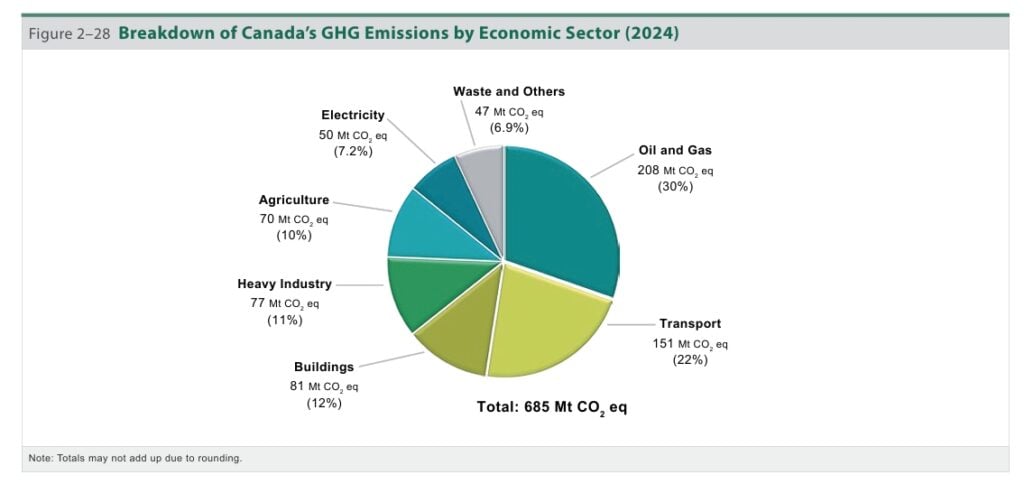
Oil and gas production accounts for roughly a quarter of Canada’s total greenhouse gas emissions, according to federal climate data. This makes Alberta central to national climate policy.
Additionally, a key part of the agreement is Alberta’s carbon pricing system, which encourages emissions reductions.
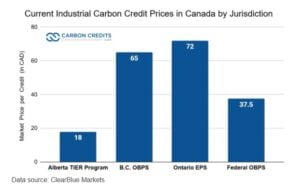
Under Alberta’s Technology Innovation and Emissions Reduction (TIER) program, industrial facilities face stricter emissions benchmarks each year. Companies that do not improve must buy emissions credits or pay into the provincial TIER Fund.
- The new agreement notably offers incentives for companies meeting emissions reduction goals.
- Members of the Oil Sands Alliance that reach their initial target of 6 million tonnes will see their TIER benchmark tightening rate drop from 2% to 1%.
Companies making progress toward future targets can keep this lower rate until 2045. However, those that fall short will face tougher benchmarks and higher compliance costs.
This structure rewards companies investing in emissions reduction technologies while pressuring those lagging.
Linking Carbon Capture With Oil Production Growth
The Pathways agreement also aims to boost Canada’s oil production and export capacity via a proposed West Coast Oil Pipeline (WCOP).
The federal government, Alberta, and the Oil Sands Alliance see a link between the new pipeline and the Pathways Project. Increased oil production will supply the pipeline, while carbon capture aims to reduce emissions from expanded operations.
The agreement also seeks to diversify Canada’s export markets, improving access to customers beyond North America. In addition to production growth, governments commit to engaging with Indigenous communities to create economic opportunities in pipeline and emissions-reduction projects.
More significantly, it also encourages companies to prioritize Canadian suppliers, technologies, steel, aluminum, and construction materials when possible.
What Comes Next?
The July 2 Memorandum of Understanding is not the final legal agreement. It sets the stage for future binding agreements between the federal government, Alberta, and each member of the Oil Sands Alliance.
These agreements are expected to be signed by November 15, 2026.
A trilateral working group will oversee implementation, coordinate regulatory approvals, and advance the carbon capture project and related infrastructure.
If construction goes as planned, the Pathways Project could become one of the largest CCS networks globally, storing millions of tonnes of carbon each year while helping Canada boost its oil exports. Balancing climate goals with more fossil fuel production will be a key topic in Canada’s energy debate in the years ahead.