

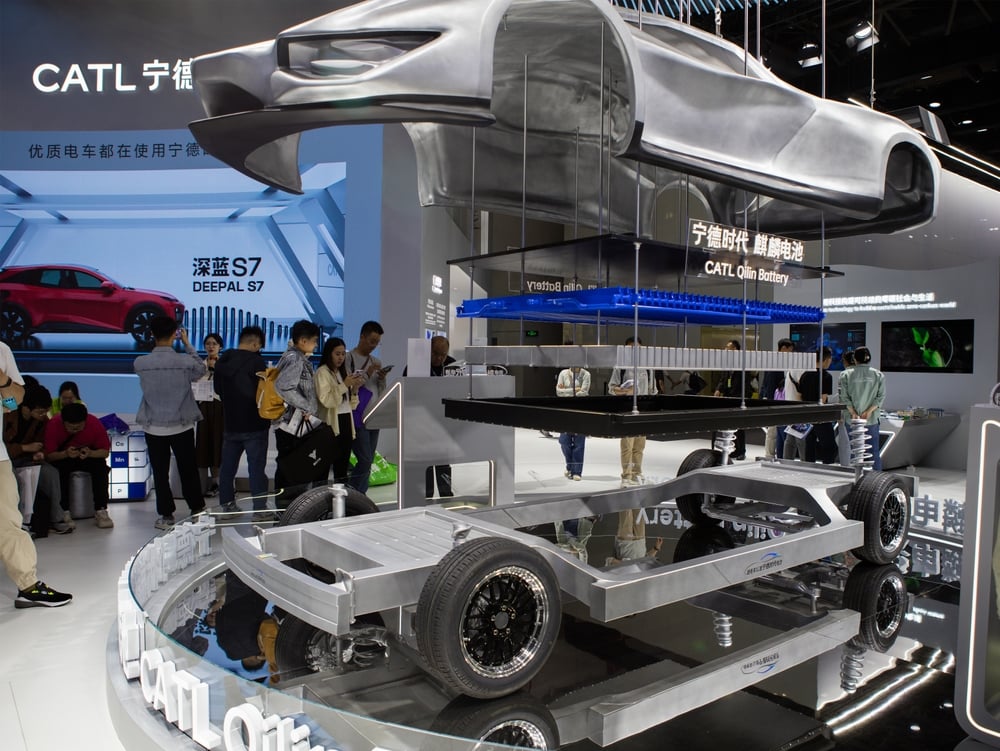
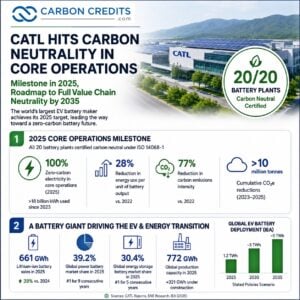
CATL, the world’s largest electric vehicle battery maker, says it has achieved carbon neutrality across its core operations, with all 20 battery plants certified as carbon neutral. The Chinese battery giant announced the milestone on August 17, 2026, after meeting a target it set for 2025. CATL also unveiled a new plan to make its entire battery value chain carbon neutral by 2035.
The timing is important. Global battery demand continues to grow quickly. The International Energy Agency (IEA) says global EV battery deployment reached 1.2 TWh in 2025, up almost 30% from 2024. It expects EV battery deployment to reach almost 3 TWh by 2030 under its Stated Policies Scenario.
That growth puts more pressure on battery makers to cut emissions not only from factories, but also from the wider supply chain. Robin Zeng, Chairman and CEO of CATL, remarked:
“As the world ramps up efforts toward net-zero, zero-carbon batteries will not be a choice but a necessity in the near future. We are ready to share our technologies and experience with partners across the industry, helping to shape global carbon standards and advance industry-wide decarbonization.”
CATL Reaches Its 2025 Carbon Neutrality Goal
CATL announced its core-operations carbon neutrality target in 2023. The company planned to reach carbon neutrality in its core operations by 2025 and across its battery value chain by 2035.
The battery giant says it met the first goal as planned. All 20 battery plants have now received carbon-neutral certification. CATL says 100% of the electricity used in its core operations came from zero-carbon electricity in 2025.
Since 2023, the company says it has consumed more than 18 billion kWh of zero-carbon electricity.
CATL also reports that energy use per unit of battery output fell 28% from 2022 levels, while carbon emissions intensity fell about 77% over the same period.
- From 2023 to 2025, CATL says it achieved more than 10 million tonnes of cumulative CO2e emissions reductions.
The company uses the ISO 14068-1 framework for carbon-neutral certification. This matters because “carbon neutral” does not mean a factory produces no greenhouse gas emissions at all. It means the company applies measures to reduce emissions and address the remaining emissions within the relevant carbon-neutrality framework.
CATL’s own data also shows why reducing factory emissions matters. The company has built a large manufacturing base to meet rising battery demand.
A Battery Giant With a Growing Footprint
CATL’s scale makes the milestone significant for the wider battery industry. The company sold 661 GWh of lithium-ion batteries in 2025, a 39% increase from the previous year.
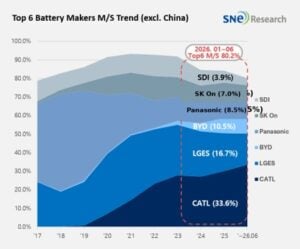
SNE Research data cited by CATL put its global power battery market share at 39.2%, keeping it in first place for the ninth consecutive year. CATL’s global production capacity reached 772 GWh in 2025, with another 321 GWh under construction at the end of the year.
The company also remains a major player in energy storage. Its energy storage battery shipments held a 30.4% global market share in 2025, according to SNE Research, marking its fifth consecutive year in first place.
The wider market is moving in the same direction. The IEA estimates that global lithium-ion battery manufacturing capacity exceeded 4 TWh at the end of 2025, about 30% higher than a year earlier. China accounted for more than 80% of global capacity.
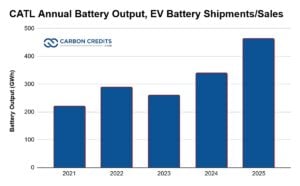
As production expands, reducing the emissions intensity of each battery becomes increasingly important.
- RELEVANT: Why Panasonic, CATL, and China’s Battery Giants Are Racing into AI Data Center (AIDC) Energy Storage
The Supply Chain Is the Bigger Climate Challenge
CATL’s factory milestone does not solve the full emissions problem. The company says more than 80% of carbon emissions across its product lifecycle come from its supply chain. It also says total value chain emissions exceed those from its core operations by more than five times.
Those emissions come from activities such as raw-material production, processing, manufacturing, and logistics. This makes the next stage of CATL’s climate strategy much harder. The company can directly control its own factories. It has less direct control over mines, chemical producers, material suppliers, and transport companies.
The Chinese firm has already collected baseline carbon data from more than 100 core Tier 1 suppliers. It wants to expand carbon data coverage across key upstream parts of the supply chain.
Starting in 2027, CATL plans to require new suppliers to provide product carbon footprint data. It will also consider renewable electricity use and energy efficiency in annual supplier reviews. Suppliers with stronger emissions performance could receive better order allocation and longer-term agreements.
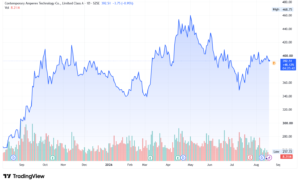
The announcement has acted as a long-term stabilizer rather than a short-term price booster, with the stock seeing a minor 0.91% dip shortly after. While this green milestone secures CATL’s access to strict markets like Europe, investors remain cautious. This is because 80% of the company’s total emissions come from its suppliers, meaning CATL now faces the harder, more expensive challenge of cleaning up its upstream supply chain by 2035.
CATL Targets the Full Value Chain by 2035
CATL’s new roadmap focuses on four main areas: materials and process innovation, manufacturing, green logistics, and battery recycling. The company plans to increase the use of lower-carbon materials and improve production processes. It also aims to achieve 100% green electricity use across its value chain by 2035.
CATL plans to expand zero-carbon logistics across its supply chain and continue building its global battery recycling network through Brunp Recycling.
The company has already taken steps on recycling. CATL says it recycled 210,000 tonnes of spent batteries in 2025, up 63.2% from 2024. It regenerated 24,000 tonnes of lithium salts, an increase of 40.4%.
CATL will also begin a supply chain decarbonization program with an initial group of 30 core suppliers. These actions could have a wider effect because battery supply chains remain highly concentrated.
Why the Milestone Matters for EVs
Battery production sits at the center of the electric vehicle transition. The IEA expects global EV battery deployment to more than double from 1.2 TWh in 2025 to almost 3 TWh by 2030 under its Stated Policies Scenario. It further projects deployment to reach almost 5 TWh by 2035 under that scenario. That means battery manufacturers will need to produce far more cells while limiting their environmental impact.
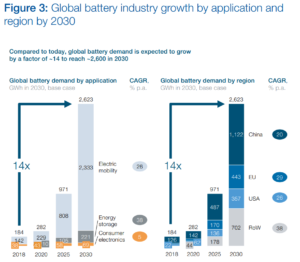
The World Economic Forum analysis shows the global battery demand will grow to over 2.6 TWh in 2030.
CATL’s factory-level achievement shows that large-scale battery production can move toward lower operational emissions. But the company’s own data points to the bigger challenge: most of its product lifecycle emissions occur outside its factories.
The 2035 target will therefore depend heavily on suppliers. If CATL can push lower-carbon electricity, cleaner materials, more efficient production, lower-emission logistics and recycling deeper into its supply chain, the impact could extend well beyond its 20 plants.
From Factory Decarbonization to Supply Chain Action
CATL’s latest announcement marks a shift from controlling emissions inside its factories to tackling emissions across the battery industry. The company has already reached its 2025 core-operations carbon neutrality target and certified all 20 battery plants as carbon neutral. It now has nine years to address the much larger emissions footprint across its value chain.
The challenge is substantial. CATL says more than 80% of lifecycle emissions come from its supply chain, while global battery demand continues to climb.
The next test will be whether CATL can turn its supplier requirements and 2035 roadmap into measurable emissions cuts across mining, materials, manufacturing, logistics and recycling. For an industry expected to supply several terawatt-hours of batteries each year, that could become as important as expanding battery capacity itself.