

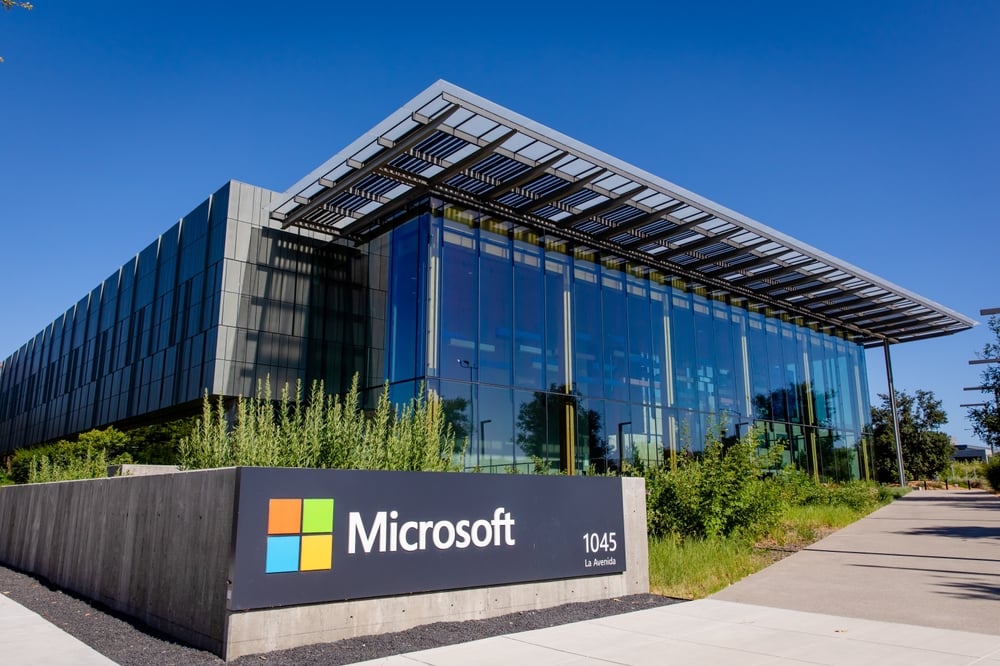
Microsoft is expanding its partnership with solar manufacturer and clean energy company Qcells to explore a new way of powering the growing (artificial intelligence) AI infrastructure boom.
The companies announced that they will work on ways to pair Microsoft’s expanding data center footprint with new energy generation and flexible energy resources. The goal is to add power capacity alongside AI infrastructure instead of simply placing more demand on existing local grids.
Andy Park, CEO of Qcells, remarked:
“Our relationship with Microsoft began with American-made solar manufacturing and construction. Now we’re exploring how we can build the energy capacity needed for AI while creating lasting value for the communities that share the grid.”
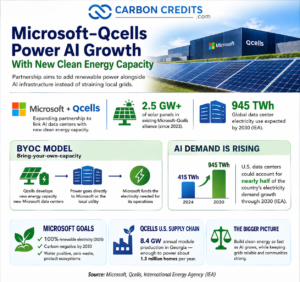
The partnership comes as AI pushes electricity demand higher. The International Energy Agency (IEA) expects global data center electricity use to more than double to about 945 terawatt-hours (TWh) by 2030. AI is the main driver of that growth.
For Microsoft, the deal also fits into a wider effort to expand AI while meeting its climate goals.
BYOC: New Power Model Could Take Pressure Off Local Grids
Microsoft and Qcells teamed up in 2023. Their alliance includes over 2.5 gigawatts (GW) of solar panels. It also covers engineering, procurement, and construction services for solar projects.
The new agreement goes beyond solar equipment. The companies now want to explore a model that links AI data centers with new energy capacity.
Instead of simply adding AI-related electricity demand to the grid, the companies want to develop new generation and flexible energy resources at the same time. They say this could support grid reliability while allowing AI infrastructure to grow.
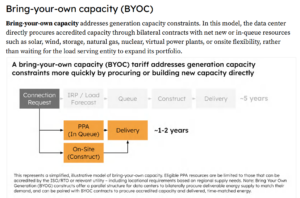
The companies are exploring a “bring-your-own-capacity” (BYOC) model. Under the plan, Qcells could develop and build new energy capacity near Microsoft’s data centers. The power could go directly to Microsoft or to the local utility, with Microsoft funding the electricity needed for its operations.
The partnership will also explore virtual power plants (VPPs) that connect thousands of residential and commercial batteries into one flexible grid resource. The batteries could support the grid during peak demand while customers continue using them normally at other times. Participants could also receive lower electricity bills or payments for supporting the grid.
Qcells plans to prioritize income-qualified households in the VPP program. The companies say this could help spread some of the economic benefits of AI infrastructure to the communities where data centers are built.
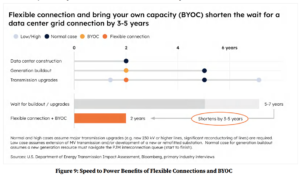
Qcells says the approach could include new generation and flexible energy resources that support Microsoft’s growing data center network across the United States. Moreover, paired with flexible connection, the BYOC model could significantly help reduce the time needed for power generation.
The companies have not announced a specific amount of new generation capacity under the expanded agreement. This is an important point. The partnership is currently an effort to develop and test a new approach. It is not yet a commitment to build a specific number of gigawatts of new power plants.
AI Is Creating a New Power Challenge
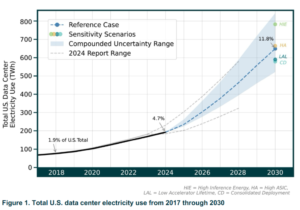
The need for new energy is growing with AI. The IEA estimates that data centers consumed about 415 TWh of electricity in 2024. Under its base case, that figure could reach around 945 TWh by 2030. Data center electricity use would then account for just under 3% of global electricity consumption.
The United States faces an even larger challenge. The IEA expects U.S. data centers to account for nearly half of the country’s electricity demand growth through 2030.
AI data centers can also have very high power needs at individual sites. This can put pressure on transmission networks, local distribution systems and available generation.
That makes Microsoft’s new approach important. The companies want to see data center growth as a chance to add energy resources, not just a demand for the existing grid to handle.
Microsoft Has Already Expanded Renewable Energy
The Qcells deal builds on Microsoft’s broader renewable energy strategy. Microsoft says it matched 100% of its global electricity consumption with renewable energy in 2025. The company uses power purchase agreements and other long-term contracts to support renewable projects.
A power purchase agreement, or PPA, is a long-term contract to buy electricity from an energy project. Microsoft says these agreements can help developers secure financing for new wind, solar, and other carbon-free energy projects.
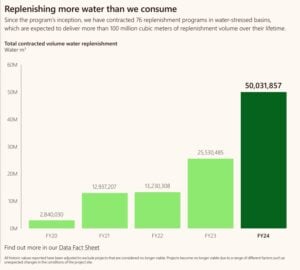
The company has also set a goal of becoming carbon negative by 2030. That means Microsoft aims to remove more carbon from the atmosphere than it emits. Its other 2030 goals include becoming water positive, reaching zero waste, and protecting ecosystems.
These targets are becoming harder to achieve as Microsoft builds more AI infrastructure.
AI Growth Is Making Microsoft’s Emissions Challenge Harder
Microsoft’s sustainability data show the challenge. The company’s latest Environmental Sustainability Report covers fiscal year 2025 and measures progress against its 2020 baseline. Microsoft says the rapid growth of AI is changing the environmental impact of its infrastructure.
The company’s supply chain is also a major source of emissions. Microsoft says about 70% of its emissions come from purchased goods, services, and capital goods, according to its 2026 sustainability report. That includes the materials and equipment needed to build data centers and AI infrastructure.
This creates a difficult balance.
Microsoft needs to build more data centers to meet demand for AI services. At the same time, the company must reduce the emissions linked to construction, electricity use, equipment, and its wider supply chain.
Adding new renewable energy alongside that infrastructure could help address part of the problem.
Qcells Builds the Solar Supply Chain Behind the Deal
Qcells also brings a growing U.S. manufacturing base to the partnership. The company has been building a vertically integrated solar supply chain in Georgia. Its Cartersville facility is designed to bring Qcells’ annual module production capacity to 8.4 GW. The company says that it is enough to produce nearly 46,000 panels per day and power about 1.3 million homes annually.
The expansion supports a broader effort to build more solar manufacturing capacity in the United States. For Microsoft, working with a domestic solar manufacturer could help connect its data center growth with new U.S. energy supply.
Still, the partnership’s new phase is broader than solar panels alone. The companies are looking at how generation and flexible resources can work together with AI infrastructure.
Could Microsoft’s Model Help Build Power as Fast as AI?
Microsoft and Qcells are testing a model that could build new energy supply alongside AI data centers, rather than placing all new demand on existing grids. The approach could combine solar generation, batteries and other flexible resources to support grid reliability as data center demand grows.
The need is significant. The IEA expects electricity for data centers to grow from 460 TWh in 2024 to over 1,000 TWh by 2030. It might even hit 1,300 TWh by 2035. That growth will require closer coordination between data center developers, utilities and energy companies.
Microsoft has already matched 100% of its electricity consumption with renewable energy and aims to become carbon negative by 2030. The Qcells partnership could take that strategy further by linking new clean energy capacity directly with new AI demand.
The companies have not disclosed how much generation or storage the partnership could ultimately add. Its success will depend on whether the model can scale while supporting communities, strengthening local grids and meeting the growing power needs of AI.