


Gold has long been seen as the top safe-haven investment. Platinum, however, is gaining attention for its growing role in the global energy transition. Once used mainly in catalytic converters and jewelry, platinum is now essential for hydrogen technologies, advanced manufacturing, and other clean-energy applications.
More industries now rely on platinum, supporting its long-term outlook despite price swings in 2026 and limited supply growth.
According to the World Platinum Investment Council (WPIC) report, the platinum market recorded its first quarterly surplus in six quarters during the first quarter of 2026. The surplus was mainly due to higher mine production and weaker investment demand.
But before we dive into the market dynamics, let’s understand what platinum is and why it is important for the energy transition.
What Is Platinum?
Platinum is a rare, naturally occurring precious metal known for its durability, corrosion resistance, and excellent catalytic properties. It belongs to the platinum group metals (PGMs), which also include palladium, rhodium, iridium, ruthenium, and osmium.
The metal is mined primarily in South Africa, which accounts for roughly 70% of global production, followed by Russia and Zimbabwe. Because platinum deposits are geographically concentrated, securing reliable supplies has become a growing concern as clean energy industries expand.
For decades, platinum’s biggest market was the automotive sector, where it is used in catalytic converters to reduce harmful emissions from gasoline, diesel, and hybrid vehicles. Today, its applications are expanding well beyond transportation
Why Platinum Is Becoming a Critical Energy Transition Metal
Few metals occupy as many strategic industries as platinum.
Unlike gold, whose value is driven primarily by investment demand, or copper, which is closely linked to construction and electrification, platinum supports a remarkably broad range of applications.
Although the automotive industry has historically been the largest consumer of platinum, the metal is now widely used in:
- petroleum refining
- chemical production
- glass manufacturing
- electronics and semiconductors
- medical devices
- low-carbon energy technologies
Its unique physical and chemical properties explain this versatility.
The metal resists corrosion and performs well even in extreme temperatures. It also acts as a highly effective catalyst, speeding up chemical reactions without being consumed. As a result, many industries rely on it for processes that require high performance, durability, and purity.
Today, its uses go beyond traditional industrial applications. As countries work toward net-zero emissions, demand for the metal is growing across clean energy technologies, especially hydrogen.
Because of its expanding role in the energy transition, many experts now view platinum as a strategic transition metal rather than just another precious metal.
Fueling the Hydrogen Economy
One key opportunity for platinum is in the growing hydrogen economy. Hydrogen will help cut emissions in steelmaking, chemicals, shipping, and heavy transport.
PEM Electrolyzers
Platinum acts as a catalyst in proton exchange membrane (PEM) electrolyzers. These devices use renewable energy to split water into hydrogen and oxygen. The IEA reports that current PEM systems need about 0.3 kilograms of platinum for each megawatt (MW) of capacity.

Green hydrogen produced with platinum-enabled electrolyzers can replace fossil fuels in steelmaking, fertilizer production, chemical manufacturing, and oil refining. These industries account for a significant share of global carbon emissions and are among the hardest to decarbonize.
Hydrogen Fuel Cells
Platinum is also essential for hydrogen fuel cells, which produce electricity by combining hydrogen and oxygen. While battery-powered cars are becoming more common, hydrogen fuel cells are better suited for heavy vehicles such as trucks, buses, trains, ships, and mining equipment. They offer longer driving ranges and faster refueling, making platinum an important metal for cleaner transportation with zero tailpipe emissions.
Countries like China, Japan, South Korea, Germany, and the U.S. are investing in hydrogen infrastructure. So, platinum is likely to benefit from this trend.
- ALSO CHECK: Silver in 2026 and Beyond: Rising Prices, Solar Substitution, and a Market Still in Deficit
Platinum Market Outlook: Q1 2026
The platinum market entered 2026 on the back of one of its strongest rallies in decades. A combination of persistent supply deficits, recovering industrial demand, and growing optimism surrounding hydrogen technologies had pushed prices sharply higher throughout 2025.
A Temporary Surplus Masks a Tight Physical Market
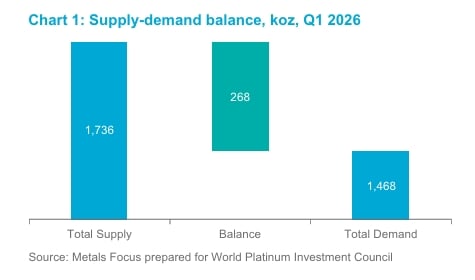
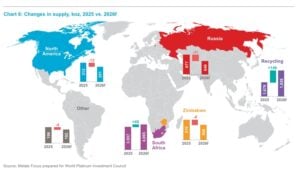
According to WPIC, total platinum supply increased 18% year over year to 1.736 million ounces (1,736 koz). The improvement was largely driven by a recovery in South African mining operations after severe flooding disrupted production during 2025.
- Refined mine output increased 20% to 1.320 million ounces, while overall mine production rose 22% compared with the same period a year earlier.
- Recycling also contributed to a higher supply. Elevated platinum prices encouraged greater recovery of spent automotive catalytic converters, lifting recycled supply 7% to 416,000 ounces.
Demand Shifts in the First Quarter
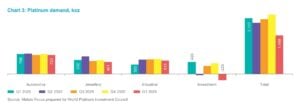
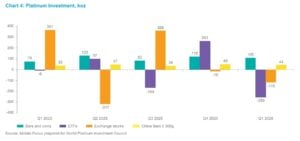
Total platinum demand reached 1.468 million ounces in the first quarter of 2026. Industrial demand remained strong, but investment demand fell sharply. Investors withdrew about 225,000 ounces from platinum investment products, reversing much of the heavy buying seen in 2025.
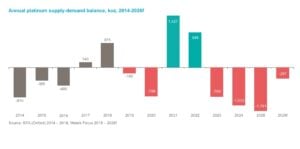
- As a result, the market recorded a 268,000-ounce surplus, compared with a 658,000-ounce deficit in the first quarter of 2025. This was the first quarterly surplus in six quarters.
However, this does not mean the market has too much platinum. The surplus was mainly caused by two temporary factors: higher mine production after earlier disruptions and heavy selling by investors. These are not expected to permanently increase platinum supply.
By the end of the quarter, investor sentiment had weakened. Many investors reduced their holdings, platinum prices fell from their record highs, and the market moved into a temporary surplus.
Annual Supply Growth Remains Constrained
Platinum production bounced back in the first quarter, but its long-term supply outlook is still troubled.
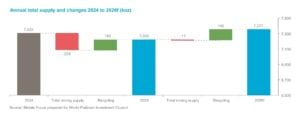
- WPIC predicts a modest 2% increase in total platinum supply by 2026, reaching 7.377 million ounces. Mine production, the main source, is expected to stay nearly the same at 5.551 million ounces.
- The report notes a 297,000-ounce deficit for 2026, marking the fourth straight year where demand outstrips supply.
- Additionally, above-ground inventories are set to drop below three months of annual demand, making the market more sensitive to future supply issues.
Platinum production is different from many industrial metals. About 70% of the world’s supply comes from South Africa. This focus on one area makes the market weak. It can face issues like electricity shortages, labor strikes, aging infrastructure, declining ore grades, and operational delays.
The first quarter showed both the strength and weakness of this supply chain.
Industrial Demand Continues to Diversify
Although investment demand is expected to slow in 2026, platinum’s industrial demand continues to grow, making the market less dependent on investors.
- WPIC forecasts total platinum demand of 7.674 million ounces in 2026, down 9% from 2025. However, this decline is mainly due to a 54% fall in investment demand following last year’s unusually strong buying.
Key Drivers
Industrial Demand: In contrast, industrial demand is expected to increase by 9%, highlighting platinum’s expanding role in the global economy.
Artificial Intelligence: The rapid expansion of AI is also creating new demand. As companies invest in semiconductor factories and precision manufacturing, platinum-group metals are becoming increasingly important in chip production.
Traditional Demand Remains Resilient
Automotive: Automotive demand is expected to fall by only 2%. Demand remains strong because hybrid and petrol/diesel vehicles are still being produced. Car makers are also replacing more expensive palladium with platinum in catalytic converters.
Jewellery: Jewellery demand is expected to decline by 12% because consumers are spending less. However, jewellery now makes up a smaller share of platinum demand as more industries are using the metal.
Regional Production Trends Highlight Supply Risks
South Africa: Following widespread flooding during early 2025, South African operations recovered strongly. Refined production increased 41% year over year to 1.002 million ounces, supported by improved output from major producers.
Elsewhere, however, production remained under pressure.
Zimbabwe: It produced only 84,000 ounces, representing a 26% decline and the country’s weakest quarterly production in a decade due to scheduled furnace maintenance.
Russia: Production also declined 24% to 136,000 ounces, reflecting production scheduling rather than permanent mine closures.
These contrasting regional trends demonstrate how quickly gains in one jurisdiction can be offset by disruptions elsewhere. Because relatively few countries produce meaningful quantities of platinum, the global market has limited flexibility when operational problems occur.
Recycling is therefore becoming increasingly important.
Higher platinum prices encouraged additional recovery of automotive catalytic converters during the first quarter, increasing recycled supply to 416,000 ounces. WPIC expects recycling to rise 9% during 2026, reaching approximately 1.826 million ounces.
Even so, recycling alone cannot eliminate the supply deficit. Developing new platinum mines requires years of exploration, permitting, and infrastructure investment, making it impossible for supply to respond quickly to rising demand.
Platinum Prices React to the Iran Conflict
The biggest factor affecting platinum prices in early 2026 was investor sentiment, not industrial demand.
- After rising 127% in 2025, platinum prices reached a record US$2,000 per ounce in January 2026.
- Investors were optimistic because of supply shortages and growing demand from hydrogen technologies.
However, sentiment changed when tensions between Iran and Israel increased in late February.
Instead of buying precious metals, investors focused on rising oil prices and inflation. Brent crude oil prices rose 55%, increasing expectations that interest rates would stay higher for longer. Higher interest rates make non-yielding assets like platinum less attractive because investors can earn better returns from bonds.
- As a result, platinum prices fell 16%, while gold dropped 13%. Many investors also sold platinum to lock in profits after its strong rally in 2025.
- Currently, platinum is priced at USD 1,685.00 per ounce.
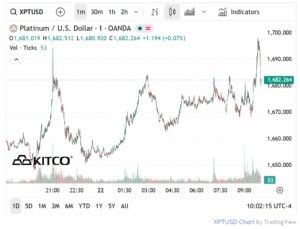
Despite the price decline, industrial demand remained strong. The sell-off was mainly driven by investor behaviour, while the physical platinum market continued to face tight supply.
Investment Trends Across Key Markets
Although global investment demand weakened, regional trends varied considerably.
Platinum investment varied across major markets in 2026, showing that demand is becoming more diversified around the world.
- China: Remained the strongest physical investment market. Bar and coin investment rose 42%, supported by growing interest in hydrogen technologies and advanced manufacturing. The launch of platinum futures on the Guangzhou Futures Exchange in late 2025 also improved trading and price discovery.
- Japan: Continued to see steady investment. ETF holdings increased by around 31,000 ounces, while net investment reached 21,000 ounces, reflecting strong long-term investor confidence.
- India: Recorded the fastest growth, with bar and coin investment surging 226% as investors looked beyond gold and became more aware of platinum’s industrial uses.
- United States: Followed a different trend. Many investors took profits after platinum’s record rally, while higher interest rates encouraged investment in assets that generate regular income.
These regional differences show that platinum investment is becoming more global, with growing demand from Asia helping reduce reliance on Western markets.
A Strategic Metal for Net Zero
As governments invest in hydrogen infrastructure and cleaner industrial technologies, platinum is evolving from a precious metal into a strategic material for the energy transition. However, supply remains concentrated in a few countries, mining faces operational challenges, and platinum is relatively expensive. Expanding recycling and developing more efficient catalysts will therefore be important to meeting future demand.
While batteries will drive much of the clean energy transition, platinum will remain essential for hydrogen production, fuel cells, industrial decarbonization, and emissions control. As the hydrogen economy expands, the metal is expected to play an increasingly important role in building a low-carbon future.