The U.S. Department of Energy (DOE) has canceled about $3.7 billion in clean energy grants, stopping 24 projects. Most of these projects focus on carbon capture and decarbonization. The DOE said this decision followed a review. It found weak execution plans, unclear goals, and limited national security or economic benefits.
Secretary David Wright confirmed this news by saying,
“While the previous administration failed to conduct a thorough financial review before signing away billions of taxpayer dollars, the Trump administration is doing our due diligence to ensure we are utilizing taxpayer dollars to strengthen our national security, bolster affordable, reliable energy sources and advance projects that generate the highest possible return on investment. Today, we are acting in the best interest of the American people by cancelling these 24 awards.”
Why DOE Scrapped Billions in Projects Signed Before Inauguration?
The press release notes that 16 of these projects—nearly 70%—were approved between Election Day and January 20. Most focused on carbon capture and decarbonization technologies.
Wright said the prior administration rushed these deals without proper financial vetting. In contrast, the current DOE leadership conducted a detailed review to ensure public funds are used wisely.
He pressed on the fact that,
“These decisions protect national security, ensure energy reliability, and prioritize high-return investments.”
Earlier this month, DOE issued a memorandum titled “Ensuring Responsibility for Financial Assistance,” outlining strict review standards. The canceled projects failed to meet key criteria—economic value, energy security, and national interest—leading to their termination under this revised oversight policy.
The cancellations mainly impact big carbon capture projects in cement and industry. A media report highlighted the major losses industries suffered due to the canceled projects.
Heidelberg Materials: $500 million canceled
National Cement Co. of California: $500 million canceled
Brimstone Energy: $189 million canceled
Sublime Systems: $87 million canceled
Calpine’s Baytown project: $270 million canceled
ExxonMobil’s Texas hydrogen shift plan: $332 million canceled
Wyoming carbon capture pilot: $49 million canceled
Many companies expressed disappointment and confusion. Brimstone Energy believes its project was misunderstood, despite its alignment with U.S. critical mineral goals. ExxonMobil declined to comment, while Heidelberg is considering an appeal.
These projects aimed to cut industrial CO₂ emissions and aid low-income, high-pollution communities. Losing them means emission-heavy sectors lose vital tools for transition, especially since some processes, like cement production, can’t easily switch to renewables.
Market Reaction: A Blow to Investor Confidence
The cancellation signals that U.S. federal support for carbon capture may not be guaranteed anymore. This worries clean tech investors and developers who rely on long-term government backing for costly, high-risk projects.
Now, companies might turn to:
Private equity
Green bonds
International funding partnerships
Academic collaborations
However, these options often lack the scale and speed of federal aid. Industry leaders fear this move could slow U.S. innovation, especially as Europe and Asia ramp up funding for decarbonization technologies.
Jessie Stolark from the Carbon Capture Coalition expressed disappointment over this decision. She said,
“Today, the cancellation of 24 DOE-funded projects, many of them carbon capture related, is a major step backward in the nationwide deployment of carbon management technologies. It is hugely disappointing to see these projects canceled – projects that had already progressed through a rigorous, months-long review process by technical experts at DOE.”
“Further development and deployment of carbon management technologies is crucial to meeting America’s growing demand for affordable, reliable, and sustainable energy. To be clear, ensuring projects funded by the bipartisan Infrastructure Investment and Jobs Act move forward toward commercialization are necessary to demonstrate the technology across fossil fuel power generation and key industrial sectors, including natural gas-fired power generation, cement, and basic chemicals.”
The DOE’s reversal may hinder U.S. climate goals. Carbon capture and storage (CCS) is vital for decarbonizing cement, steel, and fossil fuel power plants. Without these technologies, emissions from these industries may continue unchecked.
Moreover, many canceled projects were in areas heavily affected by pollution. Their loss means those communities may face ongoing poor air quality and health risks.
Environmental advocates argue that the DOE’s cost-saving approach could lead to larger climate costs later. Reducing carbon capture efforts now could impede the U.S. from meeting its emissions targets under global agreements.
“The abrupt termination of $3.7 Billion in clean energy investment is shortsighted and malicious. This decision will raise energy costs for American families and undermine our nation’s competitive edge. In Northwest Ohio, it endangers jobs, and undermines manufacturing in our critical glass industry, while empowering China and our global competitors. Nationwide, DOE is not only raising the cost of energy in Red Districts and Blue Districts — we’re ceding ground to global competitors racing ahead in innovation and energy efficiency.”
“This decision undercuts American innovation, discourages private-sector investment, and harms workers like the ones I represent who are counting on these projects for jobs and economic revitalization. The American people deserve leadership that meets the moment — not one that backs away from the challenge of a clean, affordable energy future. If the Trump Administration was looking to give Communist China everything they wanted, they are well on their way.”
What’s Next: A Policy Reset for Clean Energy Funding
Moving forward, the DOE is likely to set higher standards for federal clean energy grants. Projects will need to show strong environmental potential along with:
Economic viability
Realistic timelines
National security value
Clean energy still has bipartisan support across many U.S. regions. Yet, the path to funding may now involve stricter standards and accountability.
This gap could attract more private and foreign investment. However, scaling solutions without federal support will be tough. The big question is: Can the U.S. remain a global leader in climate tech while limiting funding for transformative projects?
All in all, the U.S. DOE’s withdrawal of $3.7 billion in clean energy grants may have halted momentum in carbon capture, industrial decarbonization, and climate tech projects. While the move is framed as a measure to safeguard taxpayer money, it casts doubt on the nation’s commitment to lead the global clean energy race. With no clear backup funding, the U.S. might risk falling behind on its path to net zero.
In a move to reshape its steelmaking process, Nippon Steel will invest ¥868.7 billion (approx. $6.02 billion) to build three new electric arc furnaces in Japan. The company is also expecting up to ¥251.4 billion ($1.74 billion) in government support. These scrap-fed furnaces are scheduled to begin operation in fiscal year 2029 and will boost annual steel production by 2.9 million tons.
Why Is Green Steel Important?
Steel remains a cornerstone material for global development, and at the same time,e contributes to 7% of global carbon emissions. Although the steel sector emits high volumes of CO₂ due to the scale of production, steel is still among the most recyclable and energy-efficient materials over its full lifecycle.
Source: Net-Zero Industry Tracker: 2024 Edition
Thus, decarbonizing steel is essential for meeting global climate goals, as steel production is one of the largest industrial sources of CO₂ pollution. And one such shift is green steel.
Green steel means making steel without fossil fuels. One way to reduce the carbon footprint is to use green hydrogen in the steel-making process.
Similarly, electric arc furnaces also help reduce emissions. They replace older furnaces but don’t always use renewable energy, so their steel isn’t always fully green.
Green steel technologies can reduce emissions by up to 97% (H₂-DRI) and 88% (renewable-powered Scrap-EAF) compared to the traditional blast furnace-basic oxygen furnace (BF-BOF) route.
Nippon Bets Big on Electric Arc Furnaces
Unlike traditional blast furnaces that rely on coking coal, electric arc furnaces (EAFs) use recycled steel scrap, which sharply reduces CO₂ emissions. While the switch to EAFs helps Nippon Steel move closer to its decarbonization goals, the company acknowledged the higher costs of electricity and raw materials involved in the transition.
Backing from the GX Promotion Act
In March 2021, the steel giant announced its goal of achieving carbon neutrality through the adoption of three breakthrough technologies:
high-grade steel production in large electric arc furnaces
hydrogen-based direct reduced iron (DRI) production
hydrogen injection into blast furnaces
As part of this commitment, Nippon Steel is moving forward with its investment to transition from the traditional blast furnace steelmaking process to the electric arc furnace method.
Currently, the company has been selected for the “2025–2029 Energy and Manufacturing Process Transformation Support Business (Business I [Steel])” under the Green Transformation (GX) Promotion Act. Following this recognition, Nippon Steel has officially decided to implement the investment.
This shift is a key part of Nippon Steel’s broader push to meet its Carbon Neutral Vision 2050, which targets a 30% CO₂ reduction by 2030 (compared to 2013 levels) and net-zero emissions by 2050.
Nippon Steel–U.S. Steel Deal Gained Trump’s Support
The Wall Street Journal reported that Nippon Steel’s $14.1 billion bid to acquire U.S. Steel recently received conditional support from former President Donald Trump. Though he had previously opposed the foreign takeover, Trump now calls it a “win” for American workers and manufacturing.
On Truth Social, Trump claimed the deal could create up to 70,000 U.S. jobs and inject $14 billion into the U.S. economy, most of it within the next 14 months.
U.S. Steel echoed this optimism, describing the deal as a transformational partnership. The company also praised Trump’s leadership, stating it would remain headquartered in Pittsburgh, a symbolic win for the city’s legacy workforce.
As part of the agreement, Nippon Steel will:
Upgrade plants in Gary, Indiana, and near Pittsburgh
Build a new U.S. steel mill (location undisclosed)
Modernize U.S. Steel’s older facilities with advanced technology
To address political concerns, Nippon has agreed to establish a U.S.-led board with mostly American members, appoint American executives to lead U.S. operations, and allow federal oversight through a national security agreement. However, full details on the ownership structure are still pending.
Nippon Steel aims to cut total CO₂ emissions 30% by 2030 (from 2013 levels) and reach net zero by 2050. That target includes all domestic and consolidated steelmaking operations, including both blast and electric arc furnace facilities.
In fiscal 2023, Nippon Steel’s energy-derived CO₂ emissions stood at approximately 79 million tons, accounting for 96% of its total GHG output. Energy use during the same period reached 936 petajoules.
Source: Nippon Steel
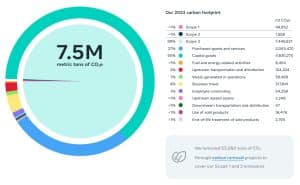
The company’s Scope 1, 2, and 3 emissions are tracked using Japan’s Green Value Chain Platform. Compare the Scope 1 and 2 emissions from the following chart
Source: Nippon Steel
Total Scope 3 emissions from purchased goods and services were 11,995 t-CO₂ in 2023.
Furthermore, it is advancing resource efficiency through:
Power generation from by-product gas and waste heat
Upgrades to coke ovens and oxygen plants
High-efficiency regenerative burners in reheating furnaces
It regularly reviews CO₂ targets for its global subsidiaries to align with changing climate policies and standards.
Blast Furnace Slag Cuts Cement Emissions
It is also cutting emissions by using blast furnace slag in cement production. This method reduces lime and fuel consumption and lowers CO₂ emissions by about 320 kg per ton of cement—a more than 40% decrease compared to traditional cement.
Seaweed Forests and Blue Carbon Credits
Beyond steelmaking, Nippon is tapping into blue carbon through marine ecosystem restoration. In collaboration with fishery cooperatives in Hokkaido and Chiba, it created seaweed beds capable of fixing CO₂. In 2023, J-Blue Credit™ certified 33.3 t-CO₂ in emissions reductions across new pilot areas. This builds on the earlier certification of 49.5 t-CO₂ for absorption from 2018 to 2022.
Moreover, a nationwide seaweed demonstration is underway at 21 sites. Nippon is analyzing iron concentration and seaweed growth pre- and post-installation using its marine simulator “Sea Laboratory.”
Nippon Steel is boosting clean production in Japan while expanding globally. Using advanced furnaces, circular economy efforts, and global partnerships, the company commits to long-term sustainability.
As steel demand rises and regulations tighten, Nippon’s approach shows how traditional industries can pursue net-zero goals without losing scale or competitiveness.
SolarBank Corporation (NASDAQ: SUUN; Cboe CA: SUNN; FSE: GY2) is growing its solar footprint in the U.S. It has signed a new deal with a California-based renowned real estate and infrastructure investor, CIM Group. This deal provides project-based funding of up to $100 million and will support solar projects with a combined capacity of 97 megawatts (MW) across the country.
Dr. Richard Lu, President and CEO of SolarBank, said,
“The financing is another major milestone in SolarBank’s plans to grow its status as an independent power producer. Assuming full funding, SolarBank will retain a majority ownership interest in what is expected to be 21 solar energy projects with a total capacity of 97 MW. The Transaction has been structured such that SolarBank does not have to issue any new shares, as the financing is being completed at the project company level.”
SolarBank’s Joint Venture Structure and Financing Details
CIM is a real estate and infrastructure firm focused on community development with ESG goals intact. Since 1994, it has invested over $60 billion to improve neighborhoods across the U.S. The company manages all stages of a project. From research and planning to daily operations and final sale.
“CIM Group has a long history of developing and investing in essential infrastructure projects that seek to benefit communities and the environment. This transaction with SolarBank to grow its portfolio of solar projects underscores our ongoing commitment to the renewable energy sector and our focus on supporting innovative companies leading the energy transition across North America.”
The funding will be structured through a joint venture called “New HoldCo,” formed by CIM and Abundant Solar Power Inc. (ASP), a fully owned subsidiary of SolarBank.
Under the agreement, CIM will invest in non-convertible preferred equity in the newly created entity. Importantly, SolarBank is not issuing any shares or securities as part of this transaction.
New HoldCo is set to acquire project companies from ASP that collectively own 97 MW of solar capacity. The purchase will occur in two phases:
20% of the purchase price will be paid when a project reaches mechanical completion.
The remaining 80% will be provided upon substantial completion.
Tax Credit Transfers and Financial Returns
Each solar project will earn Investment Tax Credits (ITCs). These credits will be sold to qualified buyers. These sales will follow Section 6418 of the Internal Revenue Code. Tax credit transfer agreements (TCTAs) will formalize these transactions. CIM will keep 100% of the revenue from these tax credit sales.
CIM will earn a 3% annual coupon on its investment. This payment is made twice a year. After this payment, the remaining cash flow from the projects will go to ASP.
New HoldCo can redeem CIM’s preferred equity 180 days after the fifth anniversary of the last project’s launch. The redemption value will be the higher of the fair market value or a set multiple of CIM’s initial investment.
Additionally, if New HoldCo decides not to redeem, CIM can request redemption at the lower value of the fair market price or the same investment multiple.
If a project is liquidated, damaged, or faces similar events, proceeds will be split according to the original contributions made by each party.
Challenges and Conditional Requirements
Despite the positive outlook, the deal comes with several risks. SolarBank must secure interconnection approvals, sign solar contracts, and obtain all required permits. The company also needs to secure third-party financing to keep the projects moving. Construction delays or cost overruns could pose further challenges.
Most importantly, if the government changes or removes solar incentives, the projects may no longer remain financially viable.
Moreover, the funding from CIM is subject to the signing of final agreements. If these aren’t finalized or key conditions fail, funds won’t be released. SolarBank also needs to secure capital for important construction milestones. The CIM funding comes only after achieving mechanical and substantial completion.
However, this deal with CIM Group shows great trust in SolarBank’s U.S. projects and growth plans. The $100 million financing will work if it gets regulatory approval. It also depends on construction moving forward and government policies supporting solar energy.
Community Solar: Current Market Landscape and Growth Projections
As of June 2024, the United States has about 7.87 gigawatts (GW) of community solar capacity. This capacity is spread across 44 states and the District of Columbia.
In the third quarter of 2024, the community solar segment installed 291 megawatts direct current (MWdc). This is a 12% increase compared to the same period in the previous year. This growth underscores the sector’s resilience and expanding appeal.
Solar Bank’s community solar achievements include:
With rising tariffs on solar products from Southeast Asia, U.S.-based companies like SolarBank Corporation could seize new opportunities. SolarBank, which focuses on solar energy, battery storage, and EV charging solutions, does not manufacture solar panels but imports them for its projects. Notably, the company does not source from the Southeast Asian nations affected by the new tariffs, minimizing immediate impact.
These tariffs are expected to drive up the cost of imported panels, potentially increasing demand for domestic solar products. SolarBank, with a strong U.S. presence, may benefit by sourcing panels locally. U.S. solar stocks have already seen a rise since the tariff announcement, strengthening the business case for companies like SolarBank, which can reduce supply chain risks by focusing on domestic production.
Regarding the recent tariffs, Dr. Richard Lu, President and CEO of SolarBank, commented:
“We continue to execute on our development pipeline of community solar projects. I also want to comment on the recent announcement of increased tariffs on south-east Asia solar cells and SolarBank’s plans to manage its supply chain.
SolarBank has not been importing solar panels from any of the four countries that are subject to the tariffs announced by the U.S. Department of Commerce on April 21, 2025. As a result its present operations are not affected by this announcement. In addition, SolarBank has been exploring sourcing solar panels from other jurisdictions such as the Middle East and North America, where (domestic assembled) solar panels are becoming cost competitive with the panels imported from Asia. SolarBank also has significant development opportunities in Canada where solar panels are not subject to the same tariffs. Finally, I am expecting that electricity costs will increase in response to these tariffs which will further mitigate the financial impact on projects.
Overall, SolarBank is well positioned to manage this risk.”
SolarBank’s growth strategy in North America positions the company to capitalize on emerging clean energy markets in both the U.S. and Canada. By focusing on regions with high demand for renewable energy infrastructure, SolarBank is strategically aligning its operations to meet the growing need for community solar, energy storage, and sustainable energy solutions. This approach not only strengthens its market presence but also ensures the company is well-positioned to benefit from the ongoing transition toward green energy.
Disclosure: Owners, members, directors, and employees of carboncredits.com have/may have stock or option positions in any of the companies mentioned: None.
Carboncredits.com receives compensation for this publication and has a business relationship with any company whose stock(s) is/are mentioned in this article.
Additional disclosure: This communication serves the sole purpose of adding value to the research process and is for information only. Please do your own due diligence. Every investment in securities mentioned in publications of carboncredits.com involves risks that could lead to a total loss of the invested capital.
Disseminated on behalf of West Red Lake Gold Mines Ltd.
Investors have long considered gold a safe-haven asset and a reliable store of value. Today, its appeal is growing as geopolitical dynamics shift dramatically, inflation returns, and investors navigate volatile and uncertain markets.
Here’s why now is the opportune time to consider gold as a strategic component of your investment portfolio.
The East-West Divide: Reshaping the Gold Landscape
The gold market is shifting as Eastern and Western investors, who have taken different approaches to gold in recent years, start to converge.
In the last five years, gold prices have risen mostly because of strong demand from central banks and investors in China, India, and the Middle East. But while gold prices made this steady ascent to record highs, equity investments in gold-related stocks remained surprisingly low.
The chart above highlights a clear disconnect between rising gold prices and investor participation in gold equities, suggesting untapped growth potential. If capital shifts even slightly from other sectors into gold stocks, it could significantly boost valuations in the market.
Picture this:
The top 100 gold mining companies worldwide have a combined market capitalization of approximately $600 billion, while the top 5 tech stocks boast a market capitalization of around $15 trillion.
If just 1% of investments from these tech giants moved to gold-mining companies, the gold-mining sector’s market cap could rise by 25%. This shows the huge potential for gold stocks. If general investors put just a little of their money into this sector, it could pay off big.
Gold’s Growing Demand in the East
Many central banks are reducing their reliance on the U.S. dollar to gain more economic control and avoid risks from U.S. policies and sanctions. As global tensions rise, gold offers a stable and independent asset, protecting against trade and financial disruptions. This shift is reflected in the steady increase in gold reserves, showing a long-term strategy for financial security.
In Asia, gold is deeply tied to culture, playing a key role in weddings, festivals, and religious events. This cultural connection keeps demand strong, regardless of market conditions.
In addition, in recent years, many key Asian investment arenas have failed, such as real estate, domestic stocks, and interest rate-based holdings in China. Investors thus compelled to seek returns elsewhere have remembered gold as a trusted way to protect wealth, especially amidst inflation concerns. As Asia’s middle class grows, more people are buying gold as both an investment and a symbol of security.
In the Middle East, gold remains a safe choice amid political and economic instability. It protects wealth from conflicts, currency fluctuations, and financial risks, which have become top of mind of late.
Gold also aligns with Islamic finance, making it a preferred investment. This applies to individual investors, sovereign wealth funds, institutions, and large domestic corporations – all are increasing gold holdings to strengthen their portfolios and prepare for future uncertainties.
All of this gold interest propelled the yellow metal to new heights over the last few years. Meanwhile, Western interest has been essentially absent. A resolution to this divide is setting gold and gold stocks up for what could be some big days ahead.
Western Investors: A Shift in Sentiment Driven by Emerging Realities
For most of the last ten years, Western investors focused on growth stocks, especially in tech. With that focus generating great returns, Western investors had no reason to add gold to their portfolios.
Now, amid growing economic uncertainty, heightened recession risks, and increased market volatility, investors are increasingly turning to gold as a hedge. President Trump’s tariff policies, particularly the recent escalation of tariffs on China alongside a temporary pause for other nations, have amplified concerns about potential inflation and broader economic instability, prompting a flight to safety.
Source: Bloomberg
Consequently, gold, a traditional safe-haven asset, has seen prices surge to new record highs. On April 22, 2025, the spot gold price reached a new record high of $3,424 per ounce, and by early May 2025, gold briefly touched $3,432 per ounce before settling above $3,200, as shown in the latest market data. This sharp increase was fueled by the intensifying trade conflict, a concurrent decline in the U.S. dollar, and robust demand from both institutional and retail investors.
Year-over-year, gold has appreciated significantly, reflecting strong investor demand for stability and long-term value preservation amid turbulent markets. The bullish trend is further supported by persistent inflation fears, ongoing geopolitical tensions, speculation about potential U.S. Federal Reserve interest rate cuts, and continued buying by central banks and exchange-traded funds (ETFs).
Reflecting these dynamics, Goldman Sachs has revised its gold price forecast multiple times in 2025. The bank now anticipates gold will trade in a range of $3,650 to $3,950 per ounce by the end of 2025, with the possibility of reaching $4,000 by mid-2026. In a more bullish scenario, where recession risks and central bank demand intensify, Goldman Sachs sees gold potentially hitting $4,500 per ounce by the end of 2025.
Meanwhile, billionaire investor John Paulson has issued one of the most optimistic forecasts in the market, predicting gold could approach $5,000 per ounce by 2028. Paulson attributes this outlook to sustained central bank gold buying, global trade tensions, and a shift in reserve management strategies following the seizure of Russian assets by Western nations. He argues that if confidence in the U.S. dollar continues to erode, gold will become an increasingly attractive reserve asset, further supporting its upward trajectory.
This is all piling on top of risks that have been rising for years and are now, with major macroeconomic instability creating real recession risk, impossible to ignore.
Rising Recession Risk. Even before the latest tariff escalations and trade tensions, slowing economic growth, weak consumer confidence, and persistent inflation had already heightened fears of an impending recession. These vulnerabilities have only been amplified by recent policy shocks, making economic contraction a growing concern for investors.
Mounting Debt Concerns. Unsustainable levels of public and private debt in many developed economies continue to be a significant concern. Governments are taking on ever more debt, which increases the risk of debt crises and currency devaluations. As a result, investors look for safe assets that hold their value during tough economic times.
Anticipated Interest Rate Cuts. The expectation of future interest rate cuts by central banks is a significant driver of renewed interest in gold. Gold prices usually go up when interest rates drop. Lower rates make holding gold, which doesn’t earn interest, less costly. This inverse correlation has been observed in numerous instances throughout history.
Resurgent Inflation. Even with steps taken to reduce inflation, worries remain. Prices may rise again, which could lessen the value of fiat currencies. Gold is widely regarded as a hedge against inflation, preserving wealth during periods of rising prices.
Dollar Debasement Fears. Discussions about policies aimed at weakening the U.S. dollar have further fueled the argument for diversifying into gold. A weaker dollar makes gold more appealing to international investors. This can increase demand and raise prices.
These factors, combined with the increasing recognition of the need for portfolio diversification, are prompting Western investors to take a fresh look at gold. And when Western investors look at gold, they look at both the metal and the companies that find and produce it. This is precisely the investor interest that has been missing from gold stocks for years – but it looks set to return in the coming weeks and months.
A Bank of Montreal report from March 2025 lists precious metals projects set to start production this year. These projects present exciting gold-plus-growth opportunities.
Included is the Madsen Mine in Canada. It is operated by West Red Lake Gold Mines (TSXV: WRLG) (OTCQB: WRLGF), which is targeting production in H2 2025.
With so much economic uncertainty, traditional investments are facing challenges. So, gold is viewed more and more as a key asset. It offers both stability and potential returns. West Red Lake Gold is set to begin production at its Madsen Mine, which amplifies the potential for this gold stock to offer returns as it goes from building a mine to producing gold.
The Generational Opportunity to Grab
The convergence of rising gold prices, shifting Western investor sentiment, and the potential for significant capital inflows creates a generational opportunity to invest in a gold bull market. For those seeking exposure to high-growth potential, near-term producers represent a particularly compelling option.
Near-Term Producers: Riding the “Golden Runway”
Companies transitioning from development to production are often poised for substantial gains, according to the Lassonde Curve, which maps the life cycle of a mining company. This model shows how valuations typically decline as a company grinds through the years-long efforts needed to get a discovery ready and permitted to become a mine. For companies that survive that grind, valuations often then surge as production nears and revenue starts flowing in.
West Red Lake Gold Mines is a prime example of a near-term producer set to benefit from this dynamic. With its flagship Madsen Mine in Canada targeting production in H2 2025, WRLG is rapidly moving toward becoming a producing gold miner.
WRLG’s progress at Madsen has already drawn investor interest, given its high-grade resource base and historical production. As it moves closer to full-scale mining operations, the company stands to benefit from the surge in gold demand and potential sector-wide capital inflows.
Recent Success Stories
Several companies that have recently transitioned from development to production have demonstrated strong upside potential in the sector:
SilverCrest Metals: Following the successful production start at the Las Chispas Mine in Mexico in November 2022, SILV shares skyrocketed 89%, leading to a $1.7 billion buyout in October.
G Mining Ventures: The company’s Tocantinzinho Gold Project in Brazil has seen a 279% increase in share price since construction began. The first gold was poured in July 2024, further boosting investor confidence.
Artemis Gold: Shares have surged 225% since June 2023 as the company advances its Blackwater Mine in British Columbia, Canada, towards its production phase.
These examples show that companies about to start production often see their stock prices rise a lot. This creates great chances for investors wanting to take advantage of the booming gold market.
Conclusion
Gold is becoming a top investment choice as economic uncertainty grows. It remains a safe haven against inflation, trade risks, and market instability.
Western investors are shifting toward gold due to rising debt concerns and lower interest rates. Beyond holding gold, companies like West Red Lake Gold Mines offer strong growth potential.
Since gold equities are a small market, even slight investment shifts could drive major gains. With the right conditions in place, now is a rare opportunity to invest in gold for both stability and growth.
New Era Publishing Inc. and/or CarbonCredits.com (“We” or “Us”) are not securities dealers or brokers, investment advisers or financial advisers, and you should not rely on the information herein as investment advice. West Red Lake Gold Mines Ltd. made a one-time payment of $30,000 to provide marketing services for a term of 1 month. None of the owners, members, directors, or employees of New Era Publishing Inc. and/or CarbonCredits.com currently hold, or have any beneficial ownership in, any shares, stocks, or options in the companies mentioned. This article is informational only and is solely for use by prospective investors in determining whether to seek additional information. This does not constitute an offer to sell or a solicitation of an offer to buy any securities. Examples that we provide of share price increases pertaining to a particular Issuer from one referenced date to another represent an arbitrarily chosen time period and are no indication whatsoever of future stock prices for that Issuer and are of no predictive value. Our stock profiles are intended to highlight certain companies for your further investigation; they are not stock recommendations or constitute an offer or sale of the referenced securities. The securities issued by the companies we profile should be considered high risk; if you do invest despite these warnings, you may lose your entire investment. Please do your own research before investing, including reading the companies’ SEDAR+ and SEC filings, press releases, and risk disclosures. It is our policy that information contained in this profile was provided by the company, extracted from SEDAR+ and SEC filings, company websites, and other publicly available sources. We believe the sources and information are accurate and reliable but we cannot guarantee it.
CAUTIONARY STATEMENT AND FORWARD-LOOKING INFORMATION
Certain statements contained in this news release may constitute “forward-looking information” within the meaning of applicable securities laws. Forward-looking information generally can be identified by words such as “anticipate”, “expect”, “estimate”, “forecast”, “planned”, and similar expressions suggesting future outcomes or events. Forward-looking information is based on current expectations of management; however, it is subject to known and unknown risks, uncertainties and other factors that may cause actual results to differ materially from the forward-looking information in this news release and include without limitation, statements relating to the plans and timing for the potential production of mining operations at the Madsen Mine, the potential (including the amount of tonnes and grades of material from the bulk sample program) of the Madsen Mine; the benefits of test mining; any untapped growth potential in the Madsen deposit or Rowan deposit; and the Company’s future objectives and plans. Readers are cautioned not to place undue reliance on forward-looking information.
Forward-looking information involve numerous risks and uncertainties and actual results might differ materially from results suggested in any forward-looking information. These risks and uncertainties include, among other things, market volatility; the state of the financial markets for the Company’s securities; fluctuations in commodity prices; timing and results of the cleanup and recovery at the Madsen Mine; and changes in the Company’s business plans. Forward-looking information is based on a number of key expectations and assumptions, including without limitation, that the Company will continue with its stated business objectives and its ability to raise additional capital to proceed. Although management of the Company has attempted to identify important factors that could cause actual results to differ materially from those contained in forward-looking information, there may be other factors that cause results not to be as anticipated, estimated or intended. There can be no assurance that such forward-looking information will prove to be accurate, as actual results and future events could differ materially from those anticipated in such forward-looking information. Accordingly, readers should not place undue reliance on forward-looking information. Readers are cautioned that reliance on such information may not be appropriate for other purposes. Additional information about risks and uncertainties is contained in the Company’s management’s discussion and analysis for the year ended December 31, 2024, and the Company’s annual information form for the year ended December 31, 2024, copies of which are available on SEDAR+ at www.sedarplus.ca.
The forward-looking information contained herein is expressly qualified in its entirety by this cautionary statement. Forward-looking information reflects management’s current beliefs and is based on information currently available to the Company. The forward-looking information is made as of the date of this news release and the Company assumes no obligation to update or revise such information to reflect new events or circumstances, except as may be required by applicable law.
For more information on the Company, investors should review the Company’s continuous disclosure filings that are available on SEDAR+ at www.sedarplus.ca.
Meta and Microsoft have entered into long-term agreements to purchase carbon credits from a forestry project in Washington State’s Olympic Peninsula. These deals aim to support climate-smart forest management practices and contribute to the companies’ sustainability goals.
A Forest with a Mission
The project aims to shift 68,000 acres of forestland on the Olympic Peninsula to climate-smart management. This area near Olympic National Park is managed by EFM. It is supported by Climate Asset Management (CAM), a partnership of HSBC Asset Management and Pollination.
The initiative focuses on Improved Forest Management (IFM) practices. These include:
Lengthening tree rotation periods,
Reducing logging impact, and
Promoting selective harvesting.
These methods aim to increase carbon storage, enhance biodiversity, and support local communities. James Bullen, Head of Asset Management at CAM, remarked:
“Blending timber income, conservation easements, and carbon credits can simultaneously de-risk and enhance returns…The Olympic Rainforest shows how corporates can mobilize capital at scale for high-integrity climate outcomes that complement, not replace, emissions reductions.”
For Microsoft and Meta, this initiative is a move forward for their carbon reduction and climate goals. Together, they’ll purchase almost 1.4 million carbon credits from the said reforestation project.
Meta’s Commitment to Net-Zero Emissions
Meta, the parent company of Facebook, Instagram, and WhatsApp, is working toward an ambitious climate target: to achieve net-zero emissions across its entire value chain by 2030. This means the company plans to cut greenhouse gas emissions from not only its operations, such as data centers and offices, but also from its suppliers and users’ activities, referred to as Scope 3 emissions, shown below.
Meta GHG Emissions 2023
Source: Meta Sustainability Report
To meet this goal, Meta is focusing on energy efficiency, renewable energy, and carbon removal. As of 2020, Meta has already achieved net-zero emissions for its own operations and runs all its global facilities on 100% renewable energy. However, its larger challenge lies in addressing emissions from suppliers, product use, and transportation—areas that are harder to control directly.
The company’s recent 10-year agreement with EFM, which will provide 676,000 nature-based carbon removal credits by 2035, is part of its broader climate strategy. These credits will help offset unavoidable emissions while supporting reforestation and biodiversity restoration.
Meta also supports other high-quality carbon removal projects, such as direct air capture and soil carbon storage. By investing in nature-based solutions, Meta aims to balance its environmental impact while setting a strong example for digital platforms worldwide.
Microsoft’s Path to Becoming Carbon Negative
Microsoft has set one of the boldest climate goals in the tech sector: to become carbon negative by 2030. This means that the company plans not only to reduce its own emissions but also to remove more carbon from the atmosphere than it emits.
Source: Microsoft
In addition, by 2050, Microsoft aims to remove all the carbon it has emitted either directly or through electricity use since it was founded in 1975.
To achieve this, Microsoft is taking a three-part approach: reducing its emissions, removing carbon through innovative solutions, and supporting high-integrity carbon offset projects.
As part of this strategy, Microsoft signed a multi-year agreement with EFM to purchase up to 700,000 carbon removal credits from the Olympic Rainforest project. These credits come from improved forest management practices that help store more carbon and support local ecosystems.
Beyond this agreement, Microsoft has committed $1 billion to its Climate Innovation Fund. This fund invests in early-stage technologies and nature-based solutions like reforestation, soil carbon enhancement, and ocean-based removal.
One of its key investments includes EFM Fund IV, which aims to raise $300 million for climate-smart forestry across the U.S. With this investment, Microsoft could access an additional 2.3 million carbon credits—further strengthening its long-term carbon removal portfolio and advancing global climate solutions.
Why Forests Matter for Climate Action
Forests play a critical role in fighting climate change. They act as carbon sinks, meaning they absorb more carbon dioxide (CO₂) from the atmosphere than they release. Trees store this carbon in their trunks, branches, leaves, and roots. When forests are managed well, they can remove large amounts of CO₂ every year, helping to slow global warming.
Globally, forests absorb about one-third of the CO₂ released from burning fossil fuels each year. That makes them one of the most effective natural tools we have for reducing greenhouse gases. Projects like the Olympic Rainforest help by stopping deforestation. They also remove CO₂ by boosting forest growth and restoring land.
Forests become very useful when managed with “climate-smart” practices. These practices balance carbon removal, conservation, and sustainable timber use.
As major companies like Meta and Microsoft and governments seek to meet climate targets, forestry-based carbon removal is gaining more attention. High-quality forest carbon credits can be a reliable part of long-term climate plans. This is true when they are monitored and verified correctly. That’s why big companies are putting money into nature-based solutions.
The latest market data shows that credits generated by IFM projects are getting more interest and value from corporations. Their trading volume increased three times as seen below.
Source: EM SOVCM Report
Benefits of Climate-Smart Forestry
The project’s climate-smart forestry practices are expected to deliver multiple benefits:
Carbon Removal. Over one million tonnes of carbon emissions are projected to be removed over the next decade.
Biodiversity Enhancement. The project aims to restore habitats for endangered species and support wild salmon restoration.
Community Engagement. Partnerships with the Quileute and Hoh locals focus on wildlife restoration and cultural harvesting.
Economic Opportunities. The initiative supports sustainable timber growth and creates diverse, healthy habitats for wildlife and recreation.
Carbon Credits Get a Corporate Upgrade
These long-term carbon credit agreements reflect a shift in corporate procurement strategies. Companies are moving from spot carbon credit purchases to long-term offtake agreements, signaling a new era where carbon credits serve as strategic assets. This approach provides price certainty and supports the development of high-integrity carbon markets.
Climate Asset Management, managing over $1 billion in investor commitments, illustrates this evolution through its Natural Capital Fund and Nature-Based Carbon Fund. These funds offer exposure to real-asset carbon strategies that combine financial returns with measurable climate, biodiversity, and community impacts.
Meta and Microsoft’s long-term carbon credit deals with the Olympic Rainforest project represent significant steps toward their respective climate goals. By investing in climate-smart forestry practices, these companies are contributing to carbon removal efforts, biodiversity conservation, and community engagement. These agreements also highlight the growing importance of high-integrity carbon credits in corporate sustainability strategies.
The voluntary carbon market (VCM) is a crucial tool in the global fight against climate change. It allows companies, governments, and individuals to purchase carbon credits that represent a reduction or removal of greenhouse gases, offsetting their own emissions. Over the past decade, the VCM has grown rapidly, but it is now entering a new, more complex phase.
Buyers are demanding credits that offer clear, verifiable climate benefits. This change comes from increased attention from regulators, investors, and civil groups. They want to make sure carbon offsets truly reflect climate progress.
New technologies and methods are also emerging. They improve how entities measure and verify emissions reductions and removals. These shifts are becoming more visible in market data, particularly in how transaction volumes and buyer behavior are evolving.
Falling Transaction Volumes, But Demand Remains Resilient
One of the most striking findings in the SOVCM 2025 report is the sharp drop in the total volume of carbon credits traded on the VCM. In 2024, the transaction volume fell by 25% compared to the previous year, bringing it to the lowest level seen since 2018.
Source: Data from Ecosystem Marketplace SOVCM 2025 Report
The decline has sparked questions about demand for voluntary offsets. This is important, especially as companies face pressure to meet net-zero targets and cut their carbon footprints. However, a closer look reveals that demand is holding steady — just in a more cautious and deliberate way.
The market is seeing fewer credits traded. However, the number of credits retired for emissions offset has stayed steady. It’s about 182 million metric tons of carbon dioxide equivalent (MtCO2e) each year since 2021.
Source: EM SOVCM Report
Retirement means the credits are used and are permanently removed from the market. This way, they can’t be resold. It shows that buyers are still dedicated to making real climate impacts.
The drop in trading volumes and steady retirements show that companies are being more careful and strategic in buying carbon credits. They seem to focus more on quality than quantity. They look for projects that fit their sustainability goals and meet stricter standards.
Ricardo Bayon, Partner and Co-founder of Encourage Capital, emphasized this VCM finding, noting:
“The underlying fundamental indicator of demand, the retirements, continue to grow and they have been growing on a pretty constant trend since the market was created. Those companies and individuals who are buying carbon and retiring them are still doing so undeterred; chastened but not deterred. And so the market continues to grow (maybe not as rapidly as its most fervent acolytes would like), and I believe it will once again boom when issues of trust and integrity are dealt with. And they are being dealt with. Buckle up. What goes down, can also go up.”
Carbon credit prices also reflect this cautious optimism. In 2024, the average price for carbon credits dropped slightly by 5.5% to just over $6 per ton of CO2e.
Source: EM SOVCM Report
Even though this dip is small, prices are still more than double what they were five years ago. This shows that demand for higher-quality projects is growing. The small price drop may be connected to a wider slowdown in credit supply. It could also relate to market uncertainty from changing regulations.
This steady demand shows a growing market. Buyers now want more than just compliance or publicity. They seek real, lasting environmental benefits. It also underscores the importance of continued market reforms to ensure trust and credibility.
Quality Over Quantity: The Market’s Shift Toward Integrity
As the voluntary carbon market matures, quality has become a central theme. The time of cheap, poorly verified credits is ending. Now, there’s a stronger focus on the environmental quality of carbon offsets.
The report shows that the total value of traded carbon credits in the voluntary market dropped by 29% in 2024. It hit $535 million, down from earlier years. Despite this decline, the market value remains 1.9 times higher than in 2018, due to relatively stable prices.
Source: Data from Ecosystem Marketplace SOVCM 2025 Report
The fall in value reflects a 25% drop in transaction volume, but not a collapse in demand. Buyers are now more selective. They focus on higher-quality credits, so prices have not dropped sharply. This trend suggests that while liquidity is lower, the underlying market interest in carbon credits—especially those with strong environmental integrity—remains firm.
This focus has led to a rise in the value of “removal” credits—those generated by projects that physically extract carbon from the atmosphere and store it long-term. Examples include reforestation, afforestation, mangrove restoration, and emerging technologies like direct air capture.
In 2024, removal credits sold for an average price 381% higher than regular emission reduction credits. This shows that buyers are ready to pay more for projects that actively take carbon from the air.
The move to removal credits comes from the understanding that just cutting emissions isn’t enough to reach the Paris Agreement goals. Many climate experts say we need negative emissions to keep global warming below 1.5°C. This means removing carbon from the air. In response, voluntary buyers are backing projects that help with long-term carbon storage and improve ecosystem health.
New Rules, New Trust: Standards Take Center Stage
The Integrity Council for the Voluntary Carbon Market (ICVCM) has launched Core Carbon Principles (CCPs). These principles aim to spot high-quality credits. These standards are still being put into action. So far, only a few projects have been approved under the CCPs in 2024. However, they are already impacting market demand.
For instance, credits from CCP-approved landfill gas projects tripled in transaction volumes. Prices also rose by 35% in the year’s second half. This shows that market participants are starting to reward credits that meet stricter quality criteria.
Project Types: Winners and Losers
Not all carbon credit projects are seeing the same trends. Forestry and land use credits are growing fast. Improved Forest Management (IFM) credits are a big part of this. In fact, IFM credit trading volumes have risen over 3x. Buyers are focusing on sustainable forest practices.
In contrast, credits from Reduced Emissions from Deforestation and Forest Degradation (REDD+) projects have dropped. This decline is partly due to worries about their additionality and permanence.
Renewable energy projects, once a staple of the voluntary carbon market, continue to lose ground. Trading volumes for these credits dropped nearly 25% in 2024.
Source: EM SOVCM Report
Biogas and landfill gas projects are gaining popularity in this category. They command higher prices because they provide clear and verifiable emission reductions. Plus, they often bring local environmental benefits.
Agriculture, afforestation, and blue carbon projects create removal credits. Their prices rose by about 20%, showing more buyer interest.
Preference for Recent Vintage Credits
Buyers are showing a strong preference for carbon credits from recent years. Credits with vintages from the last five years sold at a 217% premium compared to older credits, up from a 53% premium in 2023. This indicates that buyers want assurance that offsets are current and reflect recent climate action.
Looking Ahead: Navigating a Market in Transition
The voluntary carbon market is clearly in a period of change—moving from a legacy system toward a more robust, transparent, and high-integrity marketplace. Transaction volumes are down, but steady credit retirements and stable prices show that demand for carbon offsets is strong.
Standards like the ICVCM’s Core Carbon Principles are gaining traction, and buyers now focus more on removals and recent vintages. This shift is setting up the market for long-term growth rooted in quality, not just quantity. This transition may be bumpy, but it is essential for the voluntary carbon market to play a credible role in global climate action.
Massachusetts has passed a bold energy storage mandate. It requires investor-owned utilities to secure 5,000 megawatts (MW) of storage by 2030. This includes 3,500 MW of mid-duration, 750 MW of long-duration, and another 750 MW for multi-day storage. The goal is to modernize the grid and integrate renewable energy fully.
The state’s Department of Energy Resources (DOER) and electric distribution companies (EDCs) have released a draft request for proposals (RFP), expressing interest to buy 1,500 MW of mid-duration battery energy storage systems (BESS).
By locking in contracts early, the state wants a resilient energy system to handle solar and wind power fluctuations. Since renewables generate power intermittently, storage systems are vital for grid stability. The new law urges utilities to secure agreements quickly and cuts red tape by streamlining permitting and siting processes.
How Energy Storage Will Maximize Renewable Energy in Massachusetts
This mandate aims to boost renewable energy use and reduce curtailment, which is wasted clean power. By investing in storage, the state can save renewable electricity produced during sunny or windy periods. It can then use that power when needed.
Data shows that states with clear storage mandates adopt renewables 25% faster than those without. With this law, Massachusetts joins leaders like California and New York in boosting clean energy adoption.
The streamlined approval process also helps speed up clean energy project construction. Stakeholders see this as a game-changing step toward increasing renewable use while maintaining grid reliability.
Environmental Benefits of Energy Storage
This law supports the U.S. goal to cut greenhouse gas emissions by 50% by 2030. Long-duration and multi-day storage systems prevent waste of renewable energy when generation is low. Instead of relying on fossil fuels, utilities can use stored clean energy.
Storage cuts the need for “Peaker plants” that emit high carbon during peak demand. This rule, along with other clean energy investments, boosts the state’s climate action efforts.
The National Renewable Energy Laboratory (NREL) states that effective energy storage can reduce system costs. And this can be possible by improving the use of renewable energy. These solutions can also cut down land use and water needs, making clean energy more environmentally friendly.
Growth Opportunities for Battery and Long-Duration Technologies
This mandate sends a strong message to developers and investors. With a clear goal of 5,000 MW by 2030 and a solid procurement plan, Massachusetts stands out as a prime market for energy storage technologies like lithium-ion, flow batteries, iron-air systems, and thermal storage.
Experts predict U.S. storage capacity will triple by 2030. Massachusetts provides the policy certainty that attracts investment and encourages competition among developers. The state’s mixed approach to mid- and long-duration goals reflects a savvy understanding of energy demand and supply trends.
By combining firm storage targets with faster permitting, Massachusetts sets the stage for rapid deployment—a model for other states.
Source: nccleantech
Challenges Facing Massachusetts Energy Storage Deployment
Challenges like technology readiness, interconnection delays, and permitting risks might slow progress. While the law cuts some bureaucratic barriers, stakeholders must balance speed with oversight.
Cost is another concern. Storage technology costs are higher than some traditional grid solutions. However, NREL expects prices to drop by 2030, especially for long-duration systems. Achieving this goal relies on innovation, market growth, and good investment conditions.
Source: NREL
The law boosts Massachusetts’ role in the national clean energy shift. It also urges utilities to act quickly and effectively.
Source: Massachusetts Gov.
What Do Consumers and the Economy Gain?
Energy storage can lower electricity bills. It does this by stabilizing prices during peak demand. The law also brings economic benefits. It creates jobs in clean tech. This includes roles in manufacturing, engineering, installation, and maintenance as new projects start.
Massachusetts combines clean energy, grid reliability, and economic growth for lasting success. If done right, this policy can guide other states in modernizing their energy systems sustainably and cost-effectively.
Oklo Inc., a pioneer in next-generation nuclear energy, has entered into a strategic memorandum of understanding (MOU) with Korea Hydro & Nuclear Power (KHNP). This collaboration aims to jointly develop and expand the deployment of Oklo’s 75 MWe Aurora powerhouse—a compact, advanced fission reactor designed for clean and reliable power generation.
KHNP, a global leader in nuclear operations and a wholly-owned subsidiary of Korea Electric Power Corporation (KEPCO), brings decades of operational and construction expertise to the table. Together, the two companies plan to explore a wide range of initiatives to fast-track commercial deployment, including the standard design and verification process of the Aurora reactor.
Oklo and KHNP Nuclear Deal: Key Areas of Collaboration
The press release mentions that under the MOU, Oklo and KHNP will focus on early-stage development for Aurora. Their joint work will include:
Standard Design Development – Coordinating on technical specifications and regulatory compliance.
Manufacturability & Equipment Planning – Assessing production capabilities and supply chain planning for major reactor components.
Constructability Studies – Identifying best practices for efficient and cost-effective project execution.
Balance of Plant System Development – Coordinating efforts to enhance overall system integration.
This partnership aligns with both companies’ shared goal of expanding safe, carbon-free energy to global markets while addressing rising energy demands and climate targets.
Jacob DeWitte, Co-Founder and CEO of Oklo, emphasized,
“We’ve recently completed site characterization borehole drilling for our first commercial powerhouse and are preparing for construction, with commercialization as a top priority. Partnering with KHNP, one of the most accomplished nuclear builders in the world, who have been building nuclear power plants continuously since 1971, offers meaningful opportunities to align on key execution factors such as manufacturability, constructability, and supply chain development. Their experience in delivering projects at scale can complement our efforts and help us move more efficiently toward commercialization and the ability to build future powerhouses faster.”
Oklo is moving forward with plans to deploy its Aurora powerhouse at the Idaho National Laboratory (INL). On March 20, Oklo announced the launch of its first commercial powerhouse in Idaho. The company signed an MoA with the U.S. DOE and an Interface Agreement (IAG) with Idaho National Laboratory (INL). These agreements ensure Oklo follows all environmental rules while preparing the site.
The 75 MWe reactor is currently advancing through the U.S. Nuclear Regulatory Commission’s (NRC) Pre-Application Readiness Assessment. Oklo intends to submit its formal Combined License Application (COLA) later this year—a process that allows for a simultaneous grant of construction and operating permits, reducing delays common in traditional nuclear licensing.
The company has also built a robust commercial pipeline, with planned follow-on license applications to support over 14 GW of future deployment capacity.
This order volume underscores growing global interest in small, advanced nuclear systems that can deliver round-the-clock clean power.
Oklo provides clean energy 24/7 to data centers, factories, industrial sites, communities, and defense facilities. It supplies heat and power through power purchase agreements.
The Aurora Powerhouse will deliver reliable, clean energy to customers and will use recycled fuel made at the Aurora Fuel Fabrication Facility. The facility will process recovered nuclear material from the EBR-II reactor into fuel for the nearby Aurora Powerhouse.
The fission pioneer also explained that they use advanced recycling techniques to keep transuranic materials together as fuel. This avoids the need to create pure material streams, which is a unique feature of fast reactors.
Notably, it’s the only company that has secured fuel for its first commercial advanced nuclear power plant.
KHNP’s Nuclear Expertise on the Global Stage
KHNP operates Korea’s 21 nuclear power plants (NPPs) and 27 hydroelectric facilities, accounting for nearly 25% of the country’s total power generation infrastructure. The company supplies over 34% of South Korea’s electricity, with a long-standing record of performance and safety.
Nuclear Fleet Rank: 5th largest worldwide
Capacity Factor: 90.7% (2010), among the highest globally
Unplanned Capability Loss Factor: 0.3 (2008–2010), indicating exceptional reliability
Employees: Approx. 7,600
KHNP’s proprietary Nuclear Plant Construction Management System (NPCMS) has further enhanced the competitiveness of its project execution capabilities, making it a sought-after partner for international nuclear ventures.
Coming back to the deal, KHNP CEO Whang Ju-ho stated,
“KHNP is focusing on developing its innovative domestic advanced nuclear technology, the i-SMR, to achieve world-class competitiveness. In addition to enhancing safety, successful entry into the advanced nuclear market requires cooperation with leading technology firms. By combining the strengths of KHNP and Oklo, we expect to create strong synergy in the design, construction, and operation of advanced nuclear technology.”
A Carbon-Free Power Future
According to the International Energy Agency (IEA), nuclear energy prevents over 2 billion metric tons of CO2 emissions annually. This makes nuclear power an essential tool in the fight against climate change.
As more power-hungry AI-driven data centers emerge, utilities are increasingly looking at nuclear power for grid reliability. Governments and private firms, including big techs, are investing in advanced nuclear reactors and small modular reactors (SMRs) to scale nuclear capacity efficiently.
As per EIA, in 2024, the monthly nuclear utility generation was approximately 71 million megawatt hours (MWh).
This collaboration highlights the growing momentum behind nuclear energy as a reliable zero-emission solution. As Oklo advances its Aurora powerhouse with KHNP’s support, the potential to scale nuclear power while minimizing emissions becomes increasingly achievable.
By joining forces, Oklo and KHNP are helping shape the future of nuclear, one that is safer, faster to deploy, and aligned with global climate goals.
The European Union (EU) is close to meeting its bold 2030 climate goals. This progress comes from strong growth in renewable energy and better national energy plans. However, challenges in land use, energy efficiency, and emissions from transport and buildings threaten to slow progress unless urgent action is taken.
Emissions Cut: A Strong Showing, But Not Enough
The European Commission says the EU will cut greenhouse gas emissions by 54% from 1990 levels by 2030. This is only one point short of the official 55% target. This progress is based on updated National Energy and Climate Plans (NECPs) submitted by 24 out of 27 Member States.
These reductions are mainly driven by EU-wide measures like the Emissions Trading System (ETS) and CO₂ standards for vehicles. Emissions from sectors identified below in the Effort Sharing Regulation (ESR) are set to drop by 38% by 2030. However, this is still below the 40% ESR target.
In the land use sector, the EU faces a significant shortfall in carbon removals. The goal is to capture an additional 42 million tonnes (Mt) of CO₂ by 2030, but current projections show a gap of 45 to 60 MtCO₂. Soil degradation, poor land management, and slow policy reform continue to hinder progress in this area.
Renewables Are Booming, But the Final Stretch Is Crucial
Renewable energy plays a key role in the EU’s green strategy. Member States have pledged enough action to reach a 41% renewable share in final energy consumption by 2030.
If all commitments are met, the EU could hit 42.6%. This would bring it close to the 42.5% target and the 45% goal set by the Renewable Energy Directive (RED).
The EU added over 205 gigawatts (GW) of solar and wind capacity from 2022 to 2024. This is more than the total increase from the past 8 years. Consumers saved about €100 billion on electricity costs from more renewable energy between 2021 and 2023.
Still, issues remain. A 1.5 percentage point ambition gap exists if Member States do not follow through with their projections. Slow permitting, limited grid capacity, and different regional policies may slow full implementation.
Energy Efficiency: Still a Weak Link
Energy efficiency is a major gap in the EU’s climate goal and strategy. The EU’s binding target is to cut energy use by 11.7% by 2030, but current plans fall short.
By 2030, projected energy use will be 31.1 million tonnes of oil equivalent (Mtoe) over the target for final consumption. This is the same as Belgium’s yearly energy use.
While 15 Member States have improved their national energy efficiency targets, many still lack strong policies. Only a few countries have detailed how they plan to decarbonize buildings or boost public transportation.
The European Energy Efficiency Financing Coalition and the LIFE Clean Energy Transition Programme aim to help close the gap. However, the bloc still needs broader policy alignment to hit the 2030 target.
Carbon Cash: ETS Powers the Green Shift
The EU ETS is one of the most effective tools the European Union uses to reduce emissions. It puts a price on carbon, requiring companies in sectors like power and heavy industry to buy permits for every tonne of CO₂ they emit.
As of 2025, the carbon price typically ranges between €80 and €90 per tonne. However, starting in early February, the price dropped to about €60 in April and is now at over €70.
This EU pricing system encourages companies to reduce their emissions and invest in cleaner technologies.
The ETS has also helped steer large amounts of money toward green projects. Annual investments in circular economy initiatives and low-carbon technologies could exceed €250 billion by 2025. These financial shifts are helping businesses rework how they manage emissions and prepare for a low-carbon economy.
The ETS is also a strong signal to investors. It shows that the EU is serious about cutting emissions, which builds confidence in the clean energy market. While the ETS doesn’t yet fully cover sectors like agriculture or all of transport, new rules are expected to change that.
By strengthening the ETS and expanding its reach, the EU is reinforcing its commitment to climate action—using market forces to help drive down emissions and prepare for its 2040 target of a 90% reduction.
Financing the Clean Transition: €570 Billion Needed Each Year
To meet its climate goals, the EU estimates it will need €570 billion in annual energy system investments from 2021 to 2030. These investments cover everything from renewables and grid upgrades to building renovations and clean manufacturing.
New tools like the Industrial Decarbonisation Bank, the Clean Energy Investment Strategy, and the Innovation Fund will play a key role. The EU also plans to launch a Clean Competitiveness Fund in the next budget cycle to support the green industry.
Yet, many Member States have not fully addressed investment gaps. Few plans specify where the funding will come from or how private capital will be mobilized.
National Plans: 2040 and Beyond
The latest NECPs are a major improvement over earlier drafts. Still, Belgium, Estonia, and Poland have yet to submit their final plans, which risks creating policy gaps across the bloc.
Many Member States also fail to outline how they will phase out fossil fuel subsidies, with only a handful including clear policies or deadlines. Phasing out such subsidies is essential for shifting investments toward clean energy.
Meanwhile, Member States are encouraged to triple building renovation rates and speed up reforms in the transport sector. The electrification of transport and expanded infrastructure for zero-emission vehicles are key focus areas moving forward.
While the EU is close to its 2030 targets, the road to net-zero by 2050 requires even more ambition. The European Commission has proposed a 2040 climate goal of 90% emissions reduction compared to 1990.
Source: Climate Action Tracker
Meeting this goal will depend on the full implementation of current plans, faster rollout of renewables, and stronger investment in innovation and infrastructure.
Europe’s ability to meet its long-term climate goals will hinge on better cooperation among Member States, improved policy alignment, and stronger public-private partnerships. If these efforts succeed, the EU will not only meet its climate goals but also strengthen its leadership in the global clean energy economy.
Schneider Electric, a leader in energy management and automation, has started a big multi-year project. This initiative aims to create an AI-native ecosystem that focuses on sustainability and energy efficiency.
The project focuses on Agentic AI. This type of artificial intelligence learns and adapts. It also takes actions on its own to use energy better and lower carbon emissions. The goal is to help businesses work better, follow strict environmental rules, and support global climate goals.
This article explains what an AI-native ecosystem is, how Agentic AI works, and the potential impact of Schneider Electric’s initiative on businesses and the environment.
Steve Wilhite, President of Schneider’s Sustainability Business division, highlighted the importance of this initiative, saying:
“This technology allows us to create a force multiplier effect where complex data analysis and tasks are automated, freeing our clients to focus on the strategic initiatives and innovations that lead to greater impact – a fundamental shift in how organizations can accelerate on their energy and decarbonization journeys.”
What Is an AI-Native Ecosystem and Why Is It Important?
An AI-native ecosystem is a technology platform designed from the ground up to use artificial intelligence in an active, autonomous way. Agentic AI is different from traditional systems. While traditional systems only collect and show data, Agentic AI learns from data patterns. It can make decisions and act on its own, without waiting for human commands. This ability lets businesses react fast to changes. It helps them improve their operations right away.
In Schneider Electric’s ecosystem, AI tools help companies track energy consumption, measure carbon emissions, and identify opportunities to improve efficiency. The system can automatically adjust settings in factories, office buildings, or other facilities to meet specific sustainability goals. This flexibility means the platform can be tailored to different industries and company needs.
The importance of such an ecosystem lies in its ability to turn large amounts of complex data into actionable insights. Businesses no longer have to rely on manual analysis or guesswork. They receive clear, timely advice and automated tools. This cuts waste and boosts resource management.
Image from Juniper Networks
How Agentic AI Supports Emission Reductions and Resource Efficiency
Agentic AI operates by continuously monitoring energy and resource usage in real time. It analyzes patterns and learns how operations affect consumption and emissions. The AI system can learn and then adjust equipment, production schedules, or building systems. This helps reduce waste and improve efficiency on its own, without needing human help.
Moreover, the AI can spot when a factory’s heating or cooling system uses too much energy. Then, it can adjust the settings to save energy during peak hours. It can predict future energy needs from production plans or weather patterns. This helps companies avoid waste and lower costs.
Schneider Electric believes that businesses using this AI-native ecosystem can cut carbon emissions. This reduction is important for companies’ climate and emission reduction goals. It helps them meet local environmental rules and support global climate goals like the Paris Agreement. Some of its features include:
Decarbonization Strategy
Emissions Management
Reporting & Compliance
Climate Risk
Value Chain Engagement
Energy Management
Resource Efficiency
The system can help lower emissions and make compliance easier. It also creates clear and accurate reports for environmental agencies. This is important as transparency matters more and more to investors, customers, and regulators. They are after accountability in sustainability efforts.
Environmental and Operational Benefits of Schneider Electric’s Initiative
The AI-native ecosystem promises several key benefits for the environment and business operations:
Emissions Reduction. By improving energy management and reducing waste, companies can cut their carbon footprint.
Energy Cost Savings. Smarter energy use can reduce expenses significantly, which positively impacts a company’s bottom line.
Resource Optimization. Real-time monitoring reduces material waste. It also boosts the use of water, raw materials, and other resources.
Improved Decision-Making. Sustainability teams get clear, useful data, which helps them act fast on problems or risks.
Regulatory Compliance and Reporting. Automated data collection and reporting simplify adherence to environmental laws and standards.
These benefits support a shift from broad sustainability goals to precise, measurable actions. Businesses can monitor their progress in real time. This lets them adjust their strategies as needed. So, sustainability becomes a key part of everyday operations.
Market Trends Driving AI Adoption in Sustainability
The demand for AI-powered sustainability tools is growing rapidly. Recent research shows that 77% of companies will boost their use of digital and AI tech. This aims to help them reach sustainability targets in the coming years.
The market for AI-driven energy management solutions is projected to grow at an annual rate of about 18% over the next five years. By 2029, revenue associated with AI could exceed US$700 billion.
Source: Morningstar
Schneider Electric’s focus on Agentic AI gives it a competitive advantage. Many companies use basic energy dashboards or manual processes. These methods offer limited insights and slow responses. Agentic AI provides automated, predictive analytics. It can act right away, which saves money and reduces carbon emissions.
This trend aligns with increasing pressure on companies to meet Environmental, Social, and Governance (ESG) standards. Investors and consumers are demanding greater transparency and accountability. Tools that turn ESG goals into real actions and measurable results are now vital.
Schneider Electric stands out in this new market. Key features include climate risk reporting, predictive maintenance, and automated compliance tracking. Their AI-native ecosystem shows a bigger change. It combines advanced technology with sustainability strategies.
The Future of Corporate Sustainability: Systemic Change Enabled by AI
Corporate sustainability is changing. It’s moving from separate projects to full systems. These systems change how companies do business. Schneider Electric’s AI-native ecosystem helps this change. It promotes teamwork among departments and encourages ongoing learning.
As the platform gathers more data and user feedback, it will become smarter and more effective. This long-term approach shifts from reacting to problems. Instead, it focuses on managing energy and environmental risks before they arise.
As climate rules get stricter and energy prices rise worldwide, AI-driven solutions like this from Schneider Electric will be more important. By embedding Agentic AI into energy management, the company is helping shape a future where sustainability is built into the core of business operations.
To provide the best experiences, we use technologies like cookies to store and/or access device information. Consenting to these technologies will allow us to process data such as browsing behavior or unique IDs on this site. Not consenting or withdrawing consent, may adversely affect certain features and functions.
Functional
Always active
The technical storage or access is strictly necessary for the legitimate purpose of enabling the use of a specific service explicitly requested by the subscriber or user, or for the sole purpose of carrying out the transmission of a communication over an electronic communications network.
Preferences
The technical storage or access is necessary for the legitimate purpose of storing preferences that are not requested by the subscriber or user.
Statistics
The technical storage or access that is used exclusively for statistical purposes.The technical storage or access that is used exclusively for anonymous statistical purposes. Without a subpoena, voluntary compliance on the part of your Internet Service Provider, or additional records from a third party, information stored or retrieved for this purpose alone cannot usually be used to identify you.
Marketing
The technical storage or access is required to create user profiles to send advertising, or to track the user on a website or across several websites for similar marketing purposes.