Fast-track the Development of “Next-Gen Nuclear Technologies” for U.S. Energy Security: DOE Secretary Wright

Following President Trumpโ€™s executive order to reform nuclear reactor testing in the U.S., the Department of Energy (DOE) once again set a nuclear milestone. On June 18, it announced the launch of a pilot program to speed up the development of advanced nuclear reactors.

Energy Secretary Chris Wright said,

โ€œFor too long, the federal government has stymied the development and deployment of advanced civil nuclear reactors in the United States. Thanks to President Trumpโ€™s leadership, we are expediting the development of next-generation nuclear technologies and giving American innovators a new path forward to advance their designs, propelling our economic prosperity and bolstering our national security.โ€

Opening a Faster Path for Advanced Reactors

For decades, developers had to deal with long delays and complicated procedures just to test new nuclear reactor designs. The DOE is inviting U.S. companies to submit proposals, aka Request for Application (RFA), to build and operate test reactors under the Atomic Energy Act. Its goal is to have at least three advanced reactors operating by July 4, 2026

This means companies can build and test reactors outside national labs with a simpler DOE authorization process.

The new approach is far more flexible and fast compared to the traditional testing methods used at national laboratories. Overall, it aims to support private innovation, reduce emissions, and secure the countryโ€™s energy future by cutting regulatory delays.

Application Criteriaย 

To qualify, applicants will need to show that their reactors can likely achieve criticality by the July 2026 deadline. They must also cover all costs of development, construction, operation, and decommissioning.

Selection will depend on:

  • Technical readiness

  • Site analysis

  • Financial capacity

  • A clear plan for safe operation

The DOE will review applications on a rolling basis, starting with a deadline of July 21, 2025. To guide applicants, the agency will host an Industry Day event on June 25, 2025, with both virtual and in-person options.

u.s. nuclear
Source: EIA

Idaho Lab to Host Priority Microreactor Test Beds

Meanwhile, the DOE is advancing the building of two advanced microreactor test beds at Idaho National Laboratory (INL). The lab got federal approval under the Defense Production Act.

This gives it faster access to materials and services, helping speed up construction and keep reactor developers on schedule.

Rian Bahran, DOE Deputy Assistant Secretary for Nuclear Reactors, highlighted,

โ€œAs President Trump and Secretary Wright have directed, we are coordinating across the federal government and using every tool at our disposal to unleash American energy abundance and dominance. The priority rating under the Defense Production Act for these reactor test beds at Idaho National Laboratory will be an important instrument ensuring we start the American nuclear renaissance now.โ€ย 

  • INL will use two facilities, namely the DOME and LOTUS test beds, for new microreactor experiments.
  • These small reactors can provide 1 to 50 megawatts of reliable, zero-emission power to military bases, remote locations, and off-grid operations.

The DOME test bed repurposes a former containment structure from the labโ€™s Experimental Breeder Reactor-II. It will support testing of thermal reactors producing up to 20 megawatts of heat.

The LOTUS test bed will operate inside the labโ€™s old Zero Power Physics Reactor facility. Here, the first fast-spectrum, salt-fueled microreactor developed by Southern Company and TerraPower will be tested.

microreactor nuclear
Source: Infographic from the US DOEโ€™s Office of Nuclear Energy

Managed by the DOEโ€™s National Reactor Innovation Center (NRIC), these facilities offer a safer, cheaper, and quicker way for companies to validate advanced reactor systems. By using existing lab infrastructure, developers can reduce risk and cost.

Brad Tomer, NRICโ€™s director, explained that the priority rating lets the lab secure equipment and services without delay. This allows developers to stay on track and meet tight milestones.

Why Microreactors Are Key to the Energy Future

Microreactors have advantages over traditional nuclear plants. These compact units are factory-built and can be transported to remote or energy-constrained areas. They provide steady, carbon-free power, making them ideal for both civilian and defense applications.

As the energy landscape shifts toward clean solutions, microreactors can help diversify Americaโ€™s power supply. They complement renewable sources like wind and solar by providing constant output, especially when those sources fall short.

Through the DOME and LOTUS test beds, the DOE plans to speed up real-world testing and shorten the path to commercial use. This not only advances clean technology but also strengthens energy security.

DOE Supports Palisades Nuclear Plant Restart

In a related move on June 20, the DOE gave $100.45 million to Holtec International to support restarting the Palisades Nuclear Plant in Michigan. This marks the first time a previously closed commercial nuclear reactor in the U.S. will restart operations, pending final approvals from the Nuclear Regulatory Commission (NRC).

The press release further explained that the funding comes from a $1.52 billion federal loan guarantee issued through the DOEโ€™s Loan Programs Office. Since finalizing the loan in September 2024, Holtec has received over $251 million to help restart the plant.

The Palisades facility shut down in 2022. However, with DOE support and regulatory progress, including a final environmental assessment from the NRC, the project is advancing. Once online, the plant will provide large-scale, carbon-free electricity to the grid.

Secretary Wright once again noted,

โ€œUnder President Trumpโ€™s leadership, the Department of Energy is taking a leading role in unleashing the American nuclear renaissance. The Palisades Nuclear Plant will help to reinvigorate our nuclear industrial base and will reestablish the United States as the worldโ€™s nuclear energy leader.โ€

This means this effort supports President Trumpโ€™s Executive Order on Reinvigorating the Nuclear Industrial Base, which aims to rebuild the U.S. nuclear industrial base and expand clean energy capacity.

A Nuclear Comeback Takes Shape

These actions mark a bold new chapter for the U.S. nuclear industry. The DOEโ€™s pilot program for test reactors, the quick microreactor test beds, and funding for Palisades all show a strong commitment to nuclear energy.

US Nuclear
Source: NEI

Additionally, Deputy Assistant Secretary Rian Bahran confirmed that the government is using all tools to boost the American nuclear renaissance. He emphasized that advanced reactors, like microreactors, will help the nation achieve its energy and climate goals.

As demand for cleaner power grows and global energy competition increases, the U.S. is acting fast to lead in nuclear innovation. By combining public funding, straightforward policies, and private sector skills, the DOE is helping in achieving long term energy security and sustainability.

A Sky Full of Green: Coldplayโ€™s EcoRecords Leading Music Sustainability in 2025

Coldplay is giving their music a sustainable twist. Warner Music Group said that the band is re-releasing all 10 of their studio albums on a brand-new format called EcoRecords, and theyโ€™re made entirely from recycled plastic bottles.

These clear 140-gram records look and sound like regular vinyl, but theyโ€™re made with 100% recycled PET plastic using a special injection-moulding process. This process cuts down carbon emissions by a whopping 85% compared to old-school vinyl production.

What Exactly Is an EcoRecord?

An EcoRecord is a smart, planet-friendly format thatโ€™s fully recyclable and much lighter than traditional vinyl. That means itโ€™s better for shipping and easier on the environment. On average, each record is made from nine post-consumer plastic bottles that we probably tossed in a recycling bin.

Coldplay is sticking to 100% recycled PETโ€”and โ€œno virgin plasticโ€ here. The band first introduced EcoRecords with their 2023 album Moon Music, which became the worldโ€™s first album released in this eco-friendly format.

Jen Ivory, Managing Director, Parlophone, says:

โ€œWe are incredibly proud to partner with artists such as Coldplay who share our commitment to a more sustainable future for music.ย  The shift to EcoRecord LP for their releases is a testament to whatโ€™s possible when innovation meets intention.ย  Itโ€™s not just about a new product; itโ€™s about pioneering manufacturing that significantly reduces environmental impact, providing fans with the same high-quality audio experience while setting a new standard for physical music production.โ€

Hereโ€™s the Full Coldplay Album Going Green

Starting August 15, fans can own Coldplayโ€™s full discography in this new sustainable format. Pre-orders are open now, so get ready to refresh your collection with a greener touch.

Albums getting the EcoRecord upgrade are:

  • Parachutes
  • A Rush of Blood to the Head
  • X&Y
  • Viva la Vida or Death and All His Friends
  • Mylo Xyloto
  • Ghost Stories
  • A Head Full of Dreams
  • Everyday Life
  • Music of the Spheres
  • Moon Music
ecorecord coldplay
Source: Warner Music Group

Is Coldplayโ€™s Music of the Spheres World Tour Saving the Planet?

Coldplayโ€™s Music of the Spheres World Tour is proving that live music can be low-carbon and still totally epic. Since 2021, theyโ€™ve cut direct CO2 emissions by 59% compared to their last big tour in 2016โ€“2017. Thatโ€™s beyond the 50% goal they set. And these numbers are verified by MITโ€™s Environmental Solutions Initiative.

Sustainability Highlights That Deserve a Standing Ovation

Hereโ€™s how Coldplay is making concert-going better for the planet. They planted seven million trees, one per ticket, across 24 countries. Each show generated 17 kWh of clean energy using solar panels, power bikes, and kinetic dance floors.

By flying with sustainable aviation fuel, they cut over 3,000 tonnes of CO2. They also reused 86 percent of LED wristbands and diverted 72 percent of waste from landfills. Impressively, 18 shows ran entirely on recycled BMW i3 batteries.

To reduce plastic, they set up free water refill stations at every venue. Additionally, they donated over 9,600 meals and 90 kilograms of toiletries, and teamed up with 23 green travel providers to lower fan travel emissions.

coldplay emissions

Giving Back to the Planet

The band has supported groups like The Ocean Cleanup, ClientEarth, Climeworks, Project Seagrass, and more. Their donations help clean oceans, protect biodiversity, and support sustainable food systems.

Coldplay says this is just the beginning of sustainable music tours. In a personal message, they thanked fans for biking to shows, dancing on energy-generating floors, bringing refillable bottles, and returning wristbands. The band is also working closely with sustainability experts like Hope Solutions, Live Nation, and MIT to keep improving and set new standards for green touring.

Music That Feels Goodโ€”and Does Good

Coldplay has a long-term deal with Warner Music Group and has continued the partnership with Parlophone in the UK. The band is proving that music and sustainability can go hand in hand.

The EcoRecord re-releases drop on August 15, so if you love Coldplay and the Earth, nowโ€™s your chance to support both.

Teslaโ€™s U.S. Robotaxi Launch: A New Catalyst for TSLA Stock Growth?

Teslaโ€™s robotaxi service officially hit the streets of Austin, Texas, on June 22, 2025. It marked a huge leap into the future of self-driving electric vehicles and green urban mobility. As reported by Reuters, this launch is the first time Tesla has deployed fully autonomous vehicles with paying passengers, pushing the electric vehicle (EV) pioneer to the forefront of the robotaxi industry.

Tesla Robotaxi Debut: Redefining Self-Driving Transportation

In what CEO Elon Musk described as the โ€œculmination of a decade of hard work,โ€ Tesla rolled out 10โ€“20 driverless Model Y robotaxis in a geofenced area of Austin. The cars operated without anyone behind the wheel, though front-seat safety monitors were onboard during this initial trial phase. Teslaโ€™s proprietary Full Self-Driving (FSD) software, powered by in-house AI chips and a camera-based vision system, guided the vehicles.

Influencers and early testers were invited to participate in this exclusive robotaxi pilot, using a dedicated Tesla app to book flat-fee rides at $4.20 per trip.

Tesla investor and influencer Sawyer Merritt shared videos of his experience riding to Frazier’s Long and Low bar, adding viral momentum to the Tesla robotaxi 2025 launch across social platforms.

tesla robotaxi
Source: Tesla

Autonomous Ride-Hailing: A Step Toward Carbon-Free Cities

As transport is a significant contributor of greenhouse gas pollution, robotaxis can help reduce emissions, especially in high-traffic states like Texas and California. In short

  • Zero tailpipe emissions from all-electric robotaxis
  • Potential to cut city traffic by reducing private car ownership
  • Supports net-zero transportation goals
  • Aligns with ESG investment strategies and carbon credit markets

By combining electric vehicle technology, autonomous driving, and a shared mobility model, Teslaโ€™s robotaxi could make city travel cleaner and smarter.

This shift may also raise demand for carbon credits from clean transport, giving cities and businesses new ways to offset emissions.

Tesla Stock (TSLA) Soars After Robotaxi Debut

As reported by Nasdaq, Teslaโ€™s stock jumped over 9% on June 23, 2025, after the company kicked off its first robotaxi test rides. The launch added nearly $100 billion in market value, which is a big win for CEO Elon Muskโ€™s long-term vision for AI-powered self-driving cars.

tesla stock
Source: Yahoo Finance

Triggering a Strong Market Reaction

The launch triggered a strong reaction on Wall Street. Investors saw this step as a big move toward Teslaโ€™s autonomous future. According to Wedbush analyst Dan Ives, Teslaโ€™s system showed impressive performance, smoothly handling tight city streets and unexpected obstacles.

Meanwhile, early riders shared positive reviews on social media, praising the robotaxiโ€™s slow and careful driving, especially in busy areas. Tesla also filed confidential documents with the National Highway Traffic Safety Administration (NHTSA) to keep safety details under wraps.

Future Speculation of Tesla’s Stock Value

Itโ€™s now palpable that much of Teslaโ€™s future stock value depends on how well it can scale its autonomous vehicle technologies. That includes both robotaxis and future AI-driven robots.

If Tesla can grow this service, it could open up a new revenue stream and further separate the company from its competitors.

Based on this speculation, Nasdaq has highlighted the top ways in which this impacts Tesla stock:

  • Teslaโ€™s robotaxi trial includes safety monitors, which help gain public and regulatory trust.
  • It uses AI and cameras instead of expensive sensors, which could lead to lower production costs and wider adoption.
  • Success in Austin could lead to nationwide robotaxi expansion, driving long-term growth in Teslaโ€™s stock forecast.
  • A new Texas law effective Sept. 1 will require state permits for autonomous vehicles, shaping how Tesla scales next.

Challenges Facing Robotaxi Rollout

While Teslaโ€™s robotaxi debut made headlines, experts say scaling up might not be immediately easy.

The Reuters report highlighted Carnegie Mellon University professor Philip Koopman’s thoughts. He warned it could take years or even decades before fully autonomous taxis become common.

He also called the launch โ€œthe end of the beginning,โ€ not a final breakthrough. Tesla may have a first-mover edge, but rivals like Waymo (GOOGL) and Cruise (GM) are already ahead in real-world operations.

Some other possible challenges could be the permit timeline, which could slow things down even more.

On top of that, Teslaโ€™s camera-only system is raising safety concerns, especially in bad weather or tricky driving conditions. If thereโ€™s a problem, it could lead to recalls, stricter rules, or public backlash, just like Waymo and Cruise faced.

At the same time, those rivals are already running paid robotaxi services in several cities using more advanced sensors.

And while Teslaโ€™s stock jumped after the launch, itโ€™s still down 12% this year, showing ongoing struggles in its EV business and doubts about robotaxi profits.

Navigating the Challenges to Lead the Global Mobility

Today, Teslaโ€™s market value stands at $1.03 trillion. If Tesla can expand its robotaxi service beyond Austin while maintaining safety and reliability, it could transform how people move around cities.

Experts like Cathie Wood from ARK Invest believe robotaxis could soon dominate Teslaโ€™s future. So, according to her:

  • Autonomous ride-hailing could make up 90% of Teslaโ€™s total business value by 2029
  • 67% of Teslaโ€™s stock price could be driven by robotaxis alone

tesla ev robotaxi

Source: ARK Investment Management LLC, 2024

Additionally, this financial momentum may also fuel Teslaโ€™s research in clean energy and AI, which can indirectly support the global fight against carbon emissions. Thus, the long-term potential is massive: fewer cars on the road, cleaner air, and more affordable ride-sharing.

Tesla Vs Waymo: The Robotaxi Battle Heats Up

Googleโ€™s Waymo may have a head start with over 10 million driverless rides across U.S. cities, but Tesla’s robotaxi launch is shifting gears fast. The real twist is Teslaโ€™s potential cost advantage, which could make it a serious threat in the race for autonomous ride-hailing dominance.

While typical ride-hailing services like Uber cost around $2 per mile, Teslaโ€™s robotaxis are expected to operate at just $0.25 to $0.40 per mile. That could shake up the entire ride-hailing industry, especially with Teslaโ€™s all-electric vehicles fitting into global sustainability goals.

Autonomous car price Tesla
Source: Seeking Alpha

Carbon Savings of Tesla EVs and Robotaxis

Tesla has always highlighted how its electric vehicles (EVs) help reduce greenhouse gas (GHG) emissions. In 2023, the company claimed its global EV fleet helped avoid 20 million metric tons of carbon dioxide equivalent (CO2e) emissions.

However, A 2025 study by carbon accounting firm Greenly questioned the company’s 2023 emissions claims. Their analysis suggests Tesla may have overstated its avoided emissions by 28โ€“49%. Instead of 20 million metric tons, Greenly estimated the real figure to be between 10.2 and 14.4 million metric tons.

Now, Teslaโ€™s upcoming robotaxi model aims to boost these environmental benefits even further. By offering shared rides and running longer hours, robotaxis could reduce per-mile emissions significantly.

The EV giant plans to charge these fleets using solar and wind energy, which could bring total emissions far below those of gas-powered vehicles.

Robotaxi and Carbon Credits: A Synergy for 2025

Tesla cashes in significantly from regulatory credits. In the last quarter, it earned $595 million from these credits and $3.36 billion.

Although thatโ€™s a drop from the $692 million earned in Q4 2024, regulatory credits still made up nearly 30% of Teslaโ€™s total net income of $2.33 billion for the last year.

TESLA Carbon credits
Source: Data from Tesla

These credits reward carmakers for making zero-emission vehicles (ZEVs). Tesla has done well with its all-electric lineup. Also, Tesla’s affordable model and tech could compete with traditional ride-hailing firms like Uber. As more people choose electric vehicles, the value of carbon credits for clean transport may increase.

However, a recent move by former President Trump took away Californiaโ€™s ability to set its own air pollution rules. This change may lower Teslaโ€™s earnings from ZEV credits down the line, especially if federal standards loosen.

Concerns are also growing about Teslaโ€™s overall environmental impact. While its cars donโ€™t produce tailpipe emissions, manufacturing the batteries requires a lot of energy and materials. Thus, the carbon footprint from production remains significant.

Fortunately, carbon credit programs can help bridge this gap. Tesla and others can balance manufacturing emissions by using offsets like reforestation or clean energy investments.

If strong policies and smart partnerships develop, 2025 could mark the start of a cleaner, greener transportation era, where innovation and sustainability move forward together. And Tesla’s robotaxi is just setting an example.

Circle Internet Group (CRCL Stock): Boosting Carbon Credit Trust with Blockchain & Digital Climate Solutions

Investors and climate leaders are increasingly exploring how blockchain can modernize the voluntary carbon market. Circle Internet Group (NYSE:โ€ฏCRCL), the issuer of the USDC stablecoin, plays a pivotal role in this transformation. With its trusted infrastructure, Circle makes tokenized carbon credits more transparent and accessible.

A recent surge in CRCL stock at over 20%โ€”sparked by U.S. stablecoin legislationโ€”highlights growing interest in ESG-aligned blockchain firms. This article looks at how Circle uses stablecoins and blockchain for digital climate solutions.

Circle Internet CRCL stock price
Source: Trading View

Carbon Credits Meet Blockchain: What Are Tokenized Credits?ย 

Carbon credits are certificates representing the reduction or removal of one metric ton of COโ‚‚. Companies buy these to reduce emissions. They support verified projects like reforestation, methane capture, or renewable energy.

Tokenization puts carbon credits on the blockchain as digital tokens. This method delivers several key benefits:

  • Transparency & traceability:ย Each token records its origin, audit trail, and retirement status on a public ledger, reducing fraud and double-counting.
  • Liquidity & access:ย Tokens are divisible and tradable 24/7. Smaller buyers can own portions of a carbon credit, expanding participation.
  • Lower costs:ย Blockchain automates transfers and records through smart contracts, cutting fees and administration time.

Experts expect the voluntary carbon market to reach over $100โ€ฏbillion by 2030, driven partly by tokenization. Blockchain also bridges traditional registriesโ€”like Verra and Gold Standardโ€”to digital ecosystems.

voluntary carbon credit demand growth
Source: McKinsey & Company

Circle Internet’s Role in Blockchain Climate Infrastructure

Circle, started in 2013 by Jeremy Allaire and Sean Neville, is famous for USDC. This stablecoin is pegged to the dollar and works with many blockchains, like Ethereum, Solana, and Avalanche.

Circle uses its strong ties to regulated finance to offer reliable support for the new era of climate finance. But the company’s role goes beyond paymentsโ€”it’s actively building the foundation for tokenized carbon markets.

Key Contributions to Tokenized Carbon Markets

Stable, programmable currency for carbon markets. USDC acts as a bridge between traditional fiat currencies and blockchain-based carbon trading platforms. Projects can use USDC to denominate carbon credits. This boosts liquidity and makes it easier for institutional buyers to access them.

Circle Internet USDC in numbers
Source: Circle Internet

Regulatory-grade transparency. Circle regularly checks its dollar reserves with top auditing firms. It also has licenses in almost every U.S. state. This transparency builds trust in carbon credit transactions, which is crucial in an industry criticized for greenwashing and double-counting.

Support for open carbon infrastructure. Circle has teamed up with Toucan Protocol, a network that is among the largest for tokenized carbon credits. Together, they will help retire and redeem credits on-chain.

Toucan launched Base Carbon Tonne (BCT) tokens in 2021, with USDC as the default settlement currency. Circleโ€™s blockchain rails help make this system scalable and interoperable.

Investment in ReFi (Regenerative Finance). Circle Ventures, the venture arm of the company, has supported many startups. These startups focus on blockchain applications that are climate-positive. This includes support for protocols that tokenize real-world assets (RWAs). These assets are things like renewable energy credits, biodiversity outcomes, and reforestation efforts.

Partnerships and Climate-Tech Ecosystem Involvement

  • KlimaDAO Integration:ย Circle works with KlimaDAO, a decentralized group focused on making carbon markets clear and efficient. KlimaDAO brings together tokenized credits like BCT and NCT (Nature Carbon Tonnes). It helps with trading and retiring these credits using USDC.
  • Celo Alliance for Prosperity:ย Circle is in the Celo Alliance, a group that has more than 150 companies. They all work together to create a carbon-negative blockchain ecosystem. USDC on Celo supports climate apps. These apps reward users for eco-friendly actions, like planting trees and adopting clean cooking in developing countries.
  • Support for Real-Time ESG Reporting: Circle’s programmable payments and on-chain transaction history make it easy to connect with ESG reporting platforms. Firms buying tokenized carbon credits with USDC can automate tracking. They can also link emissions ledgers and guarantee complete auditability.

A Bold Vision for Digital Climate Finance

In interviews and public statements, CEO Jeremy Allaire has emphasized that tokenized environmental assets like carbon credits represent a “new frontier for digital finance”. It has massive potential to align capital flows with sustainability goals.ย 

Circle supports climate action using its blockchain and stablecoin, USDC. The company hasn’t shared specific goals for net-zero operations or interim emissions cuts. Still, it focuses on transparency, following regulations, and innovating in digital climate finance.

Circleโ€™s sustainability initiatives are focused on:

  • Building and scaling the blockchain infrastructure for digital climate finance.

  • Supporting and investingย in the ecosystem of projects that tokenize carbon credits and promote transparent climate action on-chain.

  • Delivering compliance and developer tools for sustainable finance applications.

Circle itself does not run direct environmental projects. However, it acts as a critical enabler of digital sustainability solutions through its technology and partnerships. It connects traditional finance with new tokenized marketplaces. As such, let’s explore one specific example of a tokenized carbon credit.ย 

MOSS.Earth: Real Conservation, Real Impact, Real-Time on Chain

Moss Carbon Credit (MCOโ‚‚) is a good example of tokenized carbon in action. Managed by Brazilian climate-tech firm MOSS.Earth, MCOโ‚‚ links each token to a forest-based carbon credit verified under global standards.

  • How it works: Token holders can retire MCOโ‚‚ to claim one tonne of COโ‚‚ offset. Every transaction is logged on the blockchain for public verification.
  • Why blockchain: Tokenization ensures every credit is unique and immutable. Moss has funded roughly $15โ€ฏmillion in Amazon conservation over a single year.
  • Intersection with Circle: USDC is the main payment method on MCOโ‚‚ platforms. It offers quick and secure settlements, which boost market efficiency.ย 

This case shows how Circleโ€™s secure payment rails help make a real environmental impact through decentralized platforms.ย 

Why This Crypto Sector is Set to Boom

The stablecoin sector is booming in 2025. This growth comes from strong support from institutions, clearer rules, and more uses in global payments and finance. Leading stablecoins like USDC and USDT dominate, while new fiat-backed coins tied to the euro and Swiss franc emerge.

stablecoin supply 2025

Market forecasts expect stablecoin circulation to rise from about $230 billion today to over $2 trillion by 2028. Stablecoins help make cross-border payments faster and cheaper. They also boost financial inclusion. These coins connect crypto with networks like Visa and Mastercard.

More notably, regulatory efforts in the U.S. are helping to bring stablecoins into the traditional financial system. This seems to be the case with the recently approved law that boosts this digital currency.

The GENIUS Act Effect: What It Means for CRCL Investors

On June 17, the U.S. Senate passed the GENIUS Act (Guiding Uniform and Innovative Stablecoin Standards). This bipartisan law sets reserve standards and transparency rules for consumer-focused stablecoins, like USDC. It aims to boost innovation and protect public trust.

The impact on Circle was immediate:

  • CRCL stock surged: Shares jumped ~16โ€“27% after the Senate vote, climbing from $31 to over $190.
  • Investor confidence soared: A boost from ARK Invest and positive analyst coverage drove CRCL close to $260. This reflects hopes that USDC could become mainstream financial infrastructure.

The GENIUS Act underpins USDCโ€™s credibility and boosts its role in ESG fintech. Regulatory approval makes Circle a safer partner for banks, governments, and climate technology platforms.

Whatโ€™s Next for Blockchain & Transparent Carbon Markets?

Tokenized carbon credits offer a powerful path to transparency and inclusivity in climate finance. Circle offers stable, regulated rails and thus, blockchain ecosystems like Moss and Toucan can scale efficiently. Yet, risks remain, such as:

  • Greenwashing: Not all tokenized credits guarantee real-world emissions reductions.
  • Project quality: Credits depend on transparent environmental verification and monitoring.

Blockchainโ€™s public audit trail reduces these risks. It makes retirements and project data visible and unchangeable.ย Circle is well-positioned to lead in this space.

As regulators embrace stablecoin frameworks and carbon tokenization becomes mainstream, Circleโ€™s USDC infrastructure may underpin much of the climate fintech ecosystem.ย 

By powering transparent, digital carbon trading and gaining regulatory support via the GENIUS Act, CRCL stock underlines investor confidence in blockchainโ€™s role in climate solutions.ย This places the company in a great spot where finance, tech, and sustainability come together on the blockchain.

Teslaโ€™s (TSLA stock) $557M Shanghai Megapack Project: Powering Chinaโ€™s Clean Energy Future

Tesla (TSLA stock) has signed a $556.8โ€ฏmillion (ยฅ4โ€ฏbillion) deal with China Kangfu International Leasing and the Shanghai government to build its first gridโ€‘scale Megapack energy storage station in Shanghai. This project will use Teslaโ€™s new Shanghai Megapack factory, which began production in February 2025. The goal is to provide utility-grade battery systems. These systems will help with grid stability and renewable integration.

Chinaโ€™s Urgent Push for Grid-Scale Battery Power

China has rapidly scaled up its energy storage infrastructure. In 2024, the country added 37โ€ฏGW / 91โ€ฏGWh of battery storage capacityโ€”more than twice its 2023 outputโ€”bringing cumulative capacity to 62โ€ฏGW / 141โ€ฏGWh.

About 75% of new installations were large utility-scale systems over 100 MW. This shows a strong move toward grid-level assets that help renewable energy grow.

Globally, battery storage is also booming. BloombergNEF forecasts 137โ€ฏGW / 442โ€ฏGWh of annual deployments by 2030โ€”an annual growth rate of 21% from 2024 levels. China alone is projected to account for around 40% of that growth, driven by co-located storage mandates alongside solar and wind.

global energy storage market 2030 BNEF

The International Energy Agency (IEA) further emphasizes that global storage needs must reach 1,200โ€ฏGW by 2030 to stay aligned with Netโ€‘Zero 2050 goals. This includes a substantial increase in battery storage, aiming for a 15-fold increase from current levels.ย 

Tesla Energy: Breaking Records, Charging Ahead

Teslaโ€™s energy division has seen explosive growth. In Q1โ€ฏ2025 alone, Tesla deployed 10.4โ€ฏGWh of energy storageโ€”156% more than Q1โ€ฏ2024โ€”building on the record 31.4โ€ฏGWh deployed in 2024, which doubled the previous yearโ€™s total.

Financially, this segment has become one of Teslaโ€™s strongest: Energy storage revenues hit $10.1โ€ฏbillion in 2024 with a 26% gross margin.

Tesla energy storage deployment Q1 2025
Source: Tesla

Tesla is naming projects like California’s Lathrop, Nevada, Texas, and now Shanghai. This shows that they want to make their Megapack line a global backbone for grid-scale energy services.

The Tech Behind Teslaโ€™s Grid Solution

Teslaโ€™s Megapack system combines large lithium-ion batteries, power electronics, and cooling systems in one container. It usually provides about 3.9 MWh of storage, which can power around 3,600 homes for one hour. The scalable design supports projects from a few megawatts to hundreds of megawatts. This makes it great for grid backup, frequency regulation, and peak shaving.

Most Megapacks in China will use lithium iron phosphate (LFP) cellsโ€”the industryโ€™s lowest-cost and most durable lithium chemistryโ€”reflecting broader trends in battery cost reductions. In China, turnkey system prices dropped to just $115/kWh by early 2024โ€”a 43% drop from the prior yearโ€ฏ.

ESG Impact and Grid Modernization

The Shanghai project strengthens Teslaโ€™s presence in Chinaโ€™s cleanโ€‘energy sector amid ongoing USโ€‘China tensions. It also signals Teslaโ€™s evolution into an energy-infrastructure provider, offering grid services beyond EV charging.

From an ESG standpoint, battery storage supports China’s decarbonization goals by reducing reliance on coal-fired generation and decreasing peak emissions. This aligns with national targets of carbon peaking by 2030 and full neutrality by 2060.

Global Storage Surge: The Battery Boom Explained

The global energy storage sector is growing fast. This growth is due to the shift to renewables and the need for grid stability. In 2024, battery storage installations grew rapidly, while estimates show a 75% increase in deployed megawatt-hours compared to the previous year.

global energy storage 2030

Projections indicate the sector will exceed one terawatt-hour by 2030. This rapid growth comes from a few key factors:

  • The rise of renewable energy sources that are not always consistent,
  • Government policies are very supportive, and
  • The cost of lithium-ion batteries has dropped dramatically, hitting a record low of $115/kWh in 2024.

Asia, particularly China, remains the epicenter of this growth. In 2024, China added over 42 GW / 101 GWh of battery storage (not counting pumped hydro). Its total capacity is now much larger than that of most other regions.

energy storage deployment global 2024
Source: Energy Storage News

The United States is also setting records in 2024. It has installed 12.3 GW and 37.1 GWh of new capacity across all sectors. This is a 33% increase in capacity and a 34% rise in energy storage compared to 2023. Texas and California still lead the way, but new markets like New Mexico, Oregon, and Arizona are growing fast.

Meanwhile, Europe is increasing storage deployments. This is in response to policy mandates from Germany, the UK, and Spain. It also aims to boost energy security due to geopolitical uncertainty.

Financially, the sector is attracting robust investment. BloombergNEF expects annual spending to reach nearly $93 billion in the next 10 years.

  • The market size was over $20 billion in 2024. It is expected to reach more than $100 billion by 2037, and Asia Pacific will make up about $35 billion of that.ย 

Despite this bullish outlook, the industry faces challenges. Trade policy shifts and new safety regulations, particularly in the U.S. and Europe, could introduce near-term uncertainty and increase costs.

However, these developments may also drive domestic manufacturing and safer, more reliable products. Utilities and developers are changing their procurement strategies. They want to handle supply chain risks and regulatory changes.ย 

Despite these challenges, the future looks bright. Storage is now seen as a key part of strong, modern power systems.

What This Means for Tesla and Grid Tech

By focusing on megaprojects, Tesla looks to scale storage into the terawatt range in the years aheadโ€ฏ. Analysts expect Tesla’s energy business will become increasingly central to its market value, potentially accounting for 14% of the company’s valuation, surpassing segments like solar or automotive accessoriesโ€ฏ.

Teslaโ€™s expansion aligns with global policy shiftsโ€”like Chinaโ€™s energy storage co-location mandates, the U.S.’s Inflation Reduction Act, and other subsidiesโ€”driving urgency in grid modernization. Mission-critical projects like Shanghaiโ€™s Megapack station show how battery technology is moving from an EV accessory to a cornerstone of national energy strategies.

Tesla’s $557 million Shanghai Megapack project is both a symbol and a strategy. It shows the global need for storage and local goals for energy stability. It also marks Tesla’s shift into a power infrastructure company.

As China presses on with renewable expansion and global storage deployment advances rapidly, projects like this will play a critical role in decarbonizing power systems. Tesla is not just providing powerโ€”itโ€™s architecting the grid of the future.

Deep Sky and Rubicon Carbon Partner for High-Integrity DAC Carbon Removal Credits

Canada-based Deep Sky, the first tech-agnostic Direct Air Capture (DAC) project developer, has signed a multi-year deal with Rubicon Carbon, a leader in carbon credit management. This agreement makes Deep Sky the first DAC provider in Rubicon Carbonโ€™s curated credit portfolios.

Additionally, the partnership speeds up permanent carbon removal solutions. setting a strong standard for the voluntary carbon market (VCM).

Charlie Renzoni, VP Carbon Markets at Deep Sky, said,

“Partnering with Rubicon Carbon enables us to bring ourย DAC project portfolio to a broader audience of enterprises. Rubicon’s platform and active portfolio management ensure that our credits reach businesses around the world, driving greater climate impact.”

Rubicon to Sell Deep Skyโ€™s Verified Carbon Removal Credits from 2025

Rubicon Carbon provides various carbon credit portfolios to support companies in achieving sustainability goals. Through this partnership, Rubicon will offer its clients Deep Skyโ€™s premium DAC carbon removal credits. Deliveries will be verified from 2025 to 2033. These credits will come from Deep Skyโ€™s Alpha facility in Canada, launching this summer.
Tom Montag, CEO at Rubicon Carbon, exuberantly noted,

“We’re excited to work with Deep Sky and offer our clients early access to their innovativeย DAC projects. This collaboration reflects our mission to provide best-in-class carbon portfolios that help accelerate climate progress.”
Let’s discover more details about this facility…

Deep Sky Alpha: A First-of-Its-Kind Carbon Removal Hub in Canada

Deep Sky Alpha is the first center to merge different direct air capture technologies and will initially remove 3,000 tonnes of COโ‚‚ per year. The company’s goal is to develop low-cost, energy-efficient, and scalable carbon removal methods quickly.

The facility operates entirely on renewable solar energy, ensuring that carbon capture does not increase emissions. Like any other DAC, Alpha also captures carbon dioxide from the air and stores it two kilometers underground for thousands of years.

Alpha stands out for using a tech-agnostic approach, allowing multiple DAC technologies to work side by side. This reduces risk, increases success, and speeds up deployment without needing separate test sites.

Furthermore, the company collects performance data year-round, even in Canadaโ€™s harsh weather, using standard tools. Its software tracks and compares each technology, revealing the best ones for larger use.

What does the Partnership Offer to Rubicon Carbon’s Clients?

Rubicon Carbonโ€™s platform connects credits with buyers who have robust and clear climate plans. This boosts transparency and accountability in the market.

The agreement brings four key benefits for Rubicon Carbon clients:

  1. Early Access to Scalable DAC Credits: Clients can access high-quality carbon removal starting in 2025 from Deep Skyโ€™s Alpha facility.
  2. Built-In Innovation: Deep Sky’s “active portfolio within a portfolio” model enables real-time testing and scaling of next-gen DAC solutions.

  3. Reduced Risk, High Integrity: Deep Sky has passed Rubiconโ€™s strict due diligence, ensuring project credibility and delivery confidence.

  4. Canadian Clean Energy Advantage: All Deep Sky DAC projects use Canadaโ€™s low-carbon energy grid and benefit from strong regulatory support and geology for permanent carbon storage.

Building Scalable Climate Solutions

For Deep Sky, this long-term agreement ensures steady revenue, helping to scale operations and fund innovation. For Rubicon, it enhances its portfolio with reliable, science-backed carbon removals to meet demand from companies seeking permanent solutions.

This collaboration boosts trust in the voluntary carbon market by connecting verified DAC projects with buyers who value transparency, integrity, and impact.

As new technologies are tested and improved, Deep Sky aims to enhance efficiency and cut costs, which is essential for making DAC an accessible global solution.

Notably, the company is backed by $100 million in funding, including a $40 million grant from Breakthrough Energy Catalyst, to boost large-scale DAC projects.

carbon removal DAC

Why Demand for Direct Air Capture (DAC) is Rising?

Direct Air Capture is vital for climate action.ย While it doesnโ€™t replace emission cuts, it balances out hard-to-abate emissions. Alongside nature-based solutions and other technologies, DAC forms a vital part of the full carbon removal strategy.

Significantly, one key advantage is that DAC uses minimal land and water while storing COโ‚‚ safely underground for thousands of years, offering a reliable, long-term solution. This is why it plays a crucial role in achieving net zero.

According to the International Energy Agency (IEA), Direct Air Capture will remove over 85 million tonnes of COโ‚‚ by 2030 and nearly 1 billion tonnes by 2050, rising sharply from almost zero today. To hit these targets, the industry will need to scale up rapidly.

However, capturing COโ‚‚ directly from the air remains costly because air contains much less COโ‚‚ than industrial emissions, requiring more energy. Currently, DAC costs range between $125 and $335 per tonne of COโ‚‚ captured.

direct air capture DAC

Still, with ongoing innovation and increased deployment, IEA expects DAC costs to fall below $100 per tonne by 2030, depending on the technology type, energy prices, and location. DAC could become an increasingly affordable and effective carbon removal method in regions with abundant, low-cost renewable energy.

All in all, this partnership between Deep Sky and Rubicon Carbon is a major step for carbon removal and for shaping a low-carbon future for Canada. It shows how strong collaboration can drive real climate action, build trust in carbon markets, and help.

Goldman Sachs Launches Green Bonds ETF for Emerging Markets

Goldman Sachs Asset Management (GSAM) has launched its new Emerging Markets Green and Social Bond Active UCITS ETF, known as GEMS. This ETF focuses on green and social bonds issued by both governments and companies in emerging markets. It has an expense ratio of 0.55%. This gives investors a cost-effective way to back environmental and social projects. At the same time, they can aim for solid financial returns.

GEMS is now on major European stock exchanges. This shows GSAM’s strong move into sustainable investment solutions. Hilary Lopez at Goldman Sachs Asset Management stated:ย 

โ€œOur clients are showing continued demand for access to leading active capabilities, combined with the control and convenience of ETFs. Following the launch of our core active Fixed Income and Equity building blocks, we are leveraging the leading capabilities and expertise of our Green, Sustainable, Social & Impact Bonds Team to help investors diversify their fixed income exposure and drive impact across emerging markets.”

Green Gold Mines: Why Emerging Markets Are ESG Hotspots

Emerging markets face serious issues like limited infrastructure, poverty, and pollution. That’s why they are a strong focus for investors looking to make a difference. These markets often offer high-impact opportunities where green and social projectsโ€”such as clean energy or affordable housingโ€”can create immediate change.

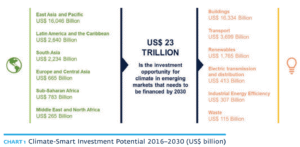
According to the International Finance Corporation, emerging markets could see up to $23 trillion in climate-focused investments by 2030. These investments not only help reduce environmental harm but also offer strong growth potential. GEMS helps investors make a real impact by focusing on these regions. This way, they can support change and enjoy long-term financial growth.

Climate-Smart Investment Potential 2016โ€“2030
Source: IFC Investment Opportunities Report

Many investors now prefer funds that consider Environmental, Social, and Governance (ESG) factors. Globally, ESG-focused investments already exceed $17 trillion. As this trend continues, products like GEMS are appealing to investors. They seek both returns and impact.

How Do Green and Social Bonds Work?

Green bonds raise funds for projects that protect the environment. These may include wind farms, solar panels, or clean transport systems. Social bonds support efforts like building schools, improving access to clean water, and offering affordable health services.

green bond in sustainable bond market Moody
Source: Moody

The GEMS ETF invests in both types. This approach helps the fund tackle environmental and social issues at the same time. The green bond market alone has surpassed $2 trillion, showing strong investor interest. Social bonds are also growing quickly as governments and businesses seek to address social problems more directly.

GEMS takes an active management approach, unlike many passive ETFs. The fundโ€™s team picks and adjusts the bond portfolio. They focus on sustainability goals and future expectations. This strategy helps avoid weak projects and gives the ETF the flexibility to focus on high-quality investments.

Carbon Cuts and Climate Gains: GEMS’ Impact Strategy

Emerging markets often have large carbon footprints because of their heavy use of fossil fuels and rapid development. GEMS helps fight this by investing in clean energy, energy savings, and other projects that lower emissions. These green projects can make a big difference in reducing global carbon levels.

Goldman Sachs uses strict screening methods to make sure the bonds they include actually help the environment. This reduces the risk of โ€œgreenwashing,โ€ where projects claim to be green without real proof.

Social investments also have climate benefits. For example, housing projects in the fund might use energy-saving designs. Better healthcare and education help communities handle extreme weather and other climate-related stresses.ย 

Global Trends in ESG Bond Markets

As climate finance needs reach an estimated $1.3 trillion a year, markets are searching for greater accountability and measurable impact. Sustainable bond markets are expected to play a key role. Emerging markets are taking steps, like ASEAN and Latin American green taxonomies. These initiatives create new chances for different issuers.

GEMS now joins a growing asset class. It helps meet the demand for strong, impact-focused bond investments in high-growth markets.ย Moreover, the GEMS ETF enters the market at a time when sustainable bonds are quickly becoming mainstream investment tools.

Analysts expect that by 2025, about 30% of global bond sales may be green or social. Thatโ€™s a large shift toward combining financial growth with responsibility.

In emerging markets in 2023, green bond issuance grew 45% year-over-year, totalling $135 billion. Meanwhile, broader GSSS issuance exceeded $1 trillion, reaching 2.5% of global bond issuance.

bond issuances Goldman Sachs
Source: Goldman Sachs

Amundi forecasts GSSS bond issuance in emerging markets to grow around 7% annually through 2025. Globally, green bonds outperformed traditional bonds by about 2% in 2024 and reached a record issuance of $447 billion, reaching another milestone in 2024.

What Sets GEMS ETF Apart

GEMS fits this trend by offering diverse exposure to sustainable bonds in fast-growing economies, backed by GSAM’s decade-long ESG and emerging market bond expertise.

GSAM brings over a decade of experience in fixed income and ESG investing. Their skilled team can spot strong projects in places that may carry more risk, such as developing countries. This gives them an edge in finding value while managing potential problems like currency shifts or political changes.

Also, GEMS being listed on major European exchangesโ€”like the London Stock Exchange, Borsa Italiana, and Deutsche Bรถrseโ€”makes it easy to access. It works for both institutional investors and individuals seeking access to emerging markets and sustainable finance.

Why Active ESG Investing Matters

Emerging markets can be unpredictable. Governments may change policies quickly, and local currencies can be unstable. By using an active management strategy, GSAMโ€™s team responds to these shifts and adjusts the fund accordingly.

This hands-on approach is vital for maintaining a strong mix of bonds that aim for both social impact and solid returns. It helps avoid poor-performing investments and directs funds into projects that truly meet ESG standards.

For investors looking for growth, social impact, and environmental gain all in one, GEMS may be worth considering. The ETF balances risk by spreading investments across different countries and sectors in the emerging world. Itโ€™s also competitive from a cost point of view, helping make sustainable investing more accessible.

As more money shifts to ESG goals, sustainability is becoming mainstream in finance. Tools like GEMS will probably have a bigger impact. Investors now have an efficient option for putting their money into the areas of the world that need it most, helping build a more sustainable future while also seeking steady financial performance.

Palantir (PLTR Stock): AI for Carbon Neutrality โ€“ A Software Giant’s Sustainable Footprint in 2025

Palantir Technologies (NYSE: PLTR) has stood out among AI companies by achieving carbon neutrality across its global operations in 2024. Palantir is cutting emissions by 31% from its 2019 baseline. It offsets the rest with high-quality carbon credits.

This achievement shows how software companies can lead in ESG even without making physical products. Its “product-first” strategy helps customers create climate solutions. At the same time, it keeps its own footprint low. This is ideal for investors who care about AI and sustainability. Let’s uncover how Palantir achieves its net-zero goal.ย 

Cutting Code and Carbon: How Palantir Hits Net Zero

Palantir reached a major sustainability milestone in 2024 by achieving carbon neutrality across its global operations. This was made possible by reducing its total greenhouse gas emissions by 31% compared to its 2019 baseline.

In 2024, Palantir reported emissions of 23,018 metric tons of COโ‚‚ equivalent (tCOโ‚‚e), a slight increase of 1.7% from 2023, when emissions were at 22,635 tCOโ‚‚e.

The company attributes the 2024 increase to a gradual return to business travel and operational activity. The trend shows clear progress. Emissions per employee have fallen by 57% since 2019. Now, each employee is responsible for only 6 tCOโ‚‚e.

Palantir Gross Emissions by Scope
Source: Palantir Report

Palantirโ€™s carbon footprint is small compared to companies with physical supply chains or manufacturing. As a software company, it neither owns nor operates production facilities and primarily leases office spaces.

The software giant’s direct (Scope 1 and 2) emissions remain low and are mostly tied to heating and electricity use in its offices. The company partners with utility providers and landlords. This helps them gather better data on energy use, which improves reporting accuracy.

Most of Palantirโ€™s emissions are Scope 3. This includes business travel, employee commuting, cloud computing, and third-party services. Business travel, in particular, has been the largest contributor.

Palantir Scope 3 Emissions Contributors
Source: Palantir Report

To lessen this impact, Palantir urges employees to hold virtual meetings. They can join programs like United Airlinesโ€™ Eco-Skies Alliance. This program helps create sustainable aviation fuel.

Palantir Emissions Intensity Per Capita
Source: Palantir Report

Palantir has made notable progress in reducing emissions from its digital infrastructure. Between 2022 and 2023, the companyโ€™s cloud computing emissions fell by 32%. This decline was largely due to more energy-efficient data centers and software optimization.

The company is looking for partnerships with cloud providers. They focus on renewable energy and high energy-efficiency ratings.

To balance its residual emissions, Palantir purchases and retires verified carbon credits that support projects such as:

  • Landfill gas capture
  • Destruction of ozone-depleting substancesย 
  • Renewable energy development

These projects were chosen for their environmental credibility. They also match the companyโ€™s commitment to long-term sustainability.

In 2023, Palantir formalized its environmental efforts by publishing its first Environmental Policy. The same year, its UK operations released a Carbon Reduction Plan, committing to a 42% cut in emissions by 2029. These steps show a bigger plan to include climate goals in how we operate and share information with the public.

Building Green Tools: Palantirโ€™s Climate-Focused AI Platforms

Palantir not only manages its own environmental impact but also helps other organizations reach their climate and net zero goals. It uses its strong AI and data platforms to do this. The company describes itself as having a “product-first” philosophyโ€”one that gives customers the tools to build climate solutions at scale.

Palantir offers platforms like Foundry, Gotham, and the Artificial Intelligence Platform (AIP). These support many climate-related use cases. These include:

  • Building digital twins of infrastructure to simulate environmental risks
  • Enhancing grid resilience through predictive modeling
  • Planning electric vehicle infrastructure deployment
  • Tracking carbon emissions across supply chains and operations

One of Palantirโ€™s flagship ESG tools is the Agora platform, launched in 2022. Agora enables energy and commodity firms to monitor supply chain emissions in real time.

At the 2023 Asia Pacific Petroleum Conference (APPEC), Palantir showed how Agora helps big partners like bp, Ecopetrol, and Trafigura. They use it to track, analyze, and cut carbon emissions from oil and gas operations.

In July 2024, Palantir teamed up with Tree Energy Solutions (TES). This partnership aims to boost green hydrogen production. TES uses Palantir’s software to model its supply chain, which includes hydrogen production sites and transport logistics. This helps track emissions, optimize energy use, and scale low-carbon fuel projects more quickly.

Palantir also works on internal sustainability initiatives. For example, in its London office, the company partners with Fooditude to reduce plastic and food waste. This partnership has cut single-use water bottles by 80%. It also promotes eco-friendly packaging and food sourcing.

Palantir is growing its AI and data operations. The company is also working hard to make its software and infrastructure more energy efficient. This means creating lighter apps, reducing server strain by optimizing workloads, and choosing cloud providers that use renewable energy.

Palantirโ€™s approach highlights how software companies can impact climate change. They do this not only by reducing their own emissions but also by offering digital tools. These tools help speed up decarbonization in various industries.

Low Footprint, High Ambition

Palantirโ€™s low footprint reflects its business model. It leases offices rather than owning buildings and doesnโ€™t operate factories or own data centers. Even its cloud usageโ€”from AWS, Azure, and Google Cloudโ€”is relatively clean, with a 32% yearโ€‘overโ€‘year drop in cloudโ€‘related emissions from 2022 to 2023.ย 

The company uses market-based accounting for Scope 2 and regularly audits its energy sources to improve accuracy. It invests in computeโ€‘efficiency improvements for its AI platforms as well.

Palantir continues to reduce emissions in every area and offset what remains through verified credits and sustainable aviation fuel. It also submitted its emissions targets to the Scienceโ€‘Based Targets Initiative in 2023 to gain external validation.ย 

Why ESGโ€‘Minded Investors Are Paying Attention

For investors focused on AI and ESGโ€”especially those preferring companies with strong sustainability recordsโ€”Palantir offers a compelling case with these reasons:

  • It proves corporate carbon neutrality is doable even for tech firms with global operations.
  • It features transparent emissions reporting, including perโ€‘employee metrics and absolute reductions.
  • It enables other companies to reduce their own carbon footprints through Palantir-powered analytics.

Palantir shows that software companies can aim for net zero without sacrificing innovation. After reducing emissions by up to 38% since 2019 and offsetting the rest, it remains carbon neutral through 2024. Meanwhile, its AI platforms serve as foundations for climate solutionsโ€”from decarbonizing industry to planning clean energy.

For ESG-conscious investors and industry professionals, Palantir offers proof that advanced AI can support a sustainable futureโ€”not just improve the bottom line. Its path shows how tech giants can help the planet while building value, one code line at a time.

BigBear.ai (BBAI Stock): How This AI Company Can Support Sustainability

Investors are closely watching for companies that help track and manage climate data as the world focuses more on sustainability. One of the major names with potential in this space is BigBear.ai (NYSE:BBAI).ย 

BigBear.ai is not just a software company. It plays a behind-the-scenes role in supporting governments, firms, and ESG managers by making data easier to understand, analyze, and act on. The company has also set its own climate goals, including a net-zero target by 2030.

The companyโ€™s financials are impressive. Revenue grew to $43.8 million in Q4 2024, up 8% year-over-year. It ended the quarter with a $437 million backlog, more than double the $168 million seen in Q3 2023. Its net debt-to-cash ratio improved from 4.0x to 1.2x by the end of 2024. Cash reserves totaled $107.6 million as of Q1 2025.

Letโ€™s take a closer look at how BigBear.ai can help support the ESG and climate analytics space, and why it may interest investors focused on sustainability and AI.

Helping Organizations Make Sense of ESG Data

ESG data is one of the fastest-growing areas in finance and corporate reporting. But many organizations struggle to collect, process, and make decisions from this data because it comes from so many sourcesโ€”satellite imagery, IoT sensors, supply chains, and internal reports.

BigBear.ai can help solve this problem. Its AI tools are designed to handle large and complex datasets. For example, a company trying to measure its carbon footprint across global supply chains can use BigBear.aiโ€™s platform to track emissions in real time. It brings together structured and unstructured dataโ€”like spreadsheets, reports, and live feedsโ€”and turns it into useful insights.

The companyโ€™s software detects patterns and highlights risks, helping ESG teams identify where emissions are high or where human rights concerns might be emerging. By turning raw data into visual dashboards and clear reports, BigBear.ai supports better decision-making in both the private and public sectors.

Supporting Climate and Environmental Data Analysisย 

BigBear.aiโ€™s tools help agencies and organizations manage large datasets to improve operational efficiency and decision intelligence.ย While not specifically focused on climate modeling, its AI tools have the potential to enhance analysis of complex environmental datasets and improve understanding of various operational scenarios.

BigBear.ai modeling solution

BigBear.aiโ€™s technology is being deployed through several significant U.S. government contracts. Under a sole-source, five-year contract valued at approximately $165 million, the company is helping the U.S. Army modernize 15 legacy systems through the Global Force Information Management – Objective Environment (GFIM-OE) project.

Another contract, valued at $13.2 million, supports the Joint Staff Directorate by enabling AI-powered decision-making capabilities that can be applied to a range of operational scenarios, including disaster response and environmental considerations.

BigBear.ai was also named a subcontractor on a $2.4 billion Federal Aviation Administration (FAA) contract aimed at modernizing national IT infrastructure. Its VeriScanโ„ข biometric tools are currently deployed at 14 gates at Denver International Airport and are in use at Heathrow Airport.

These deployments enhance operational efficiency and security in airport environments. These improvements can indirectly support ESG goals by streamlining operations, improving passenger processing, and supporting the airport’s emission reduction goals.

Government and Defense Roots Strengthen Its Tech

BigBear.ai didnโ€™t start as an ESG or climate tech company. It has deep roots in defense and national security, formed from a merger of multiple analytics firms. Its early work with U.S. intelligence agencies gave it experience handling secure, high-stakes data environments.

That background now helps it to potentially offer reliable and secure platforms for ESG and environmental analytics. As more governments apply AI to climate goals, BigBear.aiโ€™s existing relationships in the public sector give it a competitive edge.

In December 2024, the company was awarded a 10-year GSA OASIS+ IDIQ contract covering five areasโ€”including research, logistics, and intelligenceโ€”with applications ranging from environmental forecasting to resilient infrastructure planning. It also won a Department of Defense contract for its Virtual Anticipation Network Environment (VANE), designed to improve geopolitical and environmental threat analysis.

The companyโ€™s international exposure is growing as well. In early 2025, BigBear.ai showcased its predictive analytics tools at the International Defense Conference (IDEX) in the UAE, signaling expanding global interest in its climate modeling solutions.

BigBear.ai has formed strategic partnerships to strengthen its capabilities. Here are some of the major ones.

  • Project ORION โ€“ AI-Powered Decision Support
    In 2024, BigBear.ai secured a $13.2 million U.S. government contract for its J-35 ORION platform. Originally built for military force management and decision support, but it can be used for environmental risk analysis as well.
  • Pangiam Acquisition (2024)
    BigBear.ai acquired Pangiam, a leader in biometric and edge-AI technology. Its tools are for biometric identity verification and secure access solutions.ย 
  • FAA Biometric Deployments โ€“ Denver & Heathrow
    BigBear.aiโ€™s biometric tech is deployed at major airports, helping to reduce congestion and passenger dwell times. While aimed at improving security, the faster processing may also support the airport’s climate goals by lowering emissions at terminals.

The company also teamed up with Palantir to integrate its AI tools with Palantirโ€™s Foundry platform, enabling even broader use in ESG monitoring and climate risk analytics. On top of these initiatives, BBAI is also working with its own environmental and climate goals.ย 

BigBear.ai Charts a Path to Net Zero with Measured GHG Reductions

While BigBear.ai can help others in reaching their ESG goals, it has also committed to its own. The company aims to achieve net-zero greenhouse gas emissions by 2030.

The companyโ€™s 2022 Greenhouse Gas Emissions Report establishes a transparent baseline for its emissions and outlines a science-based strategy for reduction.

2022 Emissions Baseline

In calendar year 2022, BigBear.ai measured its Scope 1 and Scope 2 emissions across all company-leased and controlled facilities. The company calculated its emissions in accordance with the GHG Protocol Corporate Accounting and Reporting Standard, ensuring accuracy and comparability.

Total Scope 1 and 2 emissions amounted to approximatelyย 1.628 metric tons of COโ‚‚ equivalent. The primary sources were electricity used in commercial office spaces, employee business travel, and commuting.

A detailed breakdown shows thatย Scope 2 emissions (primarily from electricity consumption) accounted for 95% of the companyโ€™s total emissions. Meanwhile, Scope 1 emissionsย (mainly from fuel combustion and company-leased vehicles) made up the remaining 5%. Notably, BigBear.aiโ€™s total energy consumption was already low, at just 0.1 GWh for the year.

BigBear.ai GHG emissions
Source: BigBear.ai report

Science-Based Reduction Targets

BigBear.ai is committed to further reducing its climate impact by setting annual reduction targets starting in 2023. The companyโ€™s strategy includes:

  • Eliminating certain real estate holdingsย to reduce Scope 2 emissions associated with office electricity use.

  • Phasing out all company-owned vehiclesย to eliminate Scope 1 emissions from transportation.

By focusing on these short- and mid-term actions, BigBear.ai aims to achieve net-zero emissions by 2030. The companyโ€™s analytical approach and transparent reporting position it as a responsible player in the tech sectorโ€™s transition to a low-carbon future.

Why Investors Are Watching BBAI Stock

BigBear.ai can be seen as a company positioned at the intersection of AI and sustainability. It has the potential to offer its AI infrastructure to support green initiatives across sectors.

The company is still sensitive to quarterly volatility due to its reliance on large government contracts, and analysts have flagged a low Altman Z-score (around 0.14), indicating potential financial risk. However, for long-term investorsโ€”particularly those focused on ESGโ€”BigBear.aiโ€™s sustainability goals and data-driven approach may offer unique upside as the company evolves.

How Lundin Mining (LUN) Plans to Break into the Worldโ€™s Top Ten Copper Producers?

Vancouver-based Lundin Mining Corporation aims to rank among the worldโ€™s top ten copper producers. On June 18, during its Capital Markets Day, the company shared its goal of producing over 500,000 tonnes of copper and 550,000 ounces of gold each year.

The plan includes major expansions at current sites and developing the Vicuรฑa district, one of the richest untapped sources of copper, gold, and silver.

Jack Lundin, President and CEO, commented,

โ€œLundin Mining is entering an exciting new growth phase, underpinned by a clear path to increase copper production through low-cost brownfield expansions at Candelaria, Caserones, and Chapada. These projects are expected to deliver meaningful production gains over the next three to five years. Across all our operations, we see significant exploration upside, including promising opportunities at Eagle that could meaningfully extend the life of mine. In parallel, our Vicuรฑa Project offers transformational long-term growth potential. Backed by a significantly strengthened balance sheet, reduced cash costs, robust free cash flow generation, and a best-in-class team, we are well-positioned to continue returning capital to shareholders whileย advancingย  ambition of becoming a top-ten global copper producer.โ€

Lundin’s Copper Expansion Plans Backed by Operational Strength

Lundin Mining plans to boost copper production by 30,000 to 40,000 tonnes annually within three to five years. The company revealed that these increases will mainly come from brownfield expansions at existing operations.

2025 Production Guidance

Lundin copper
Source: Lundin Mining

Here are some of the strategies for achieving the targets:

Candelariaย 

At Candelaria in Chile, Lundin is shifting its underground expansion to a more cost-effective model. This change will maintain nearly the same output while improving equipment use and speeding up underground development. Lundin expects to increase annual copper output by about 10%, adding around 14,000 tonnes.

Caserones

In Caserones, Chile, better leaching methods are increasing copper cathode production. By maximizing underused plant capacity and accessing more oxide material, Lundin aims to produce an extra 7,000 to 10,000 tonnes of copper each year.

Chapada

In Brazil, the Chapada mine is set for significant growth. A nearby brownfield project, the Saรบva project, could contribute 15,000 to 20,000 tonnes of copper and 50,000 to 60,000 ounces of gold annually. This would boost copper output by 50% and double gold production at Chapada. A prefeasibility study is underway and should be ready by year-end.

Boulderdash Project: U.S.ย 

In the U.S., exploration continues at the Boulderdash project near the Eagle Mine. Lundin has an agreement with Talon Metals for a 70% stake if the project progresses. A successful discovery here could greatly extend the Eagle operationโ€™s life.

Vicuรฑa Project Could Transform Lundinโ€™s Production Profile

Lundin holds a 50% stake in the Vicuรฑa Project, which includes the Filo del Sol and Josemaria deposits. This area is now seen as one of the largest copper, gold, and silver resource regions worldwide.

An integrated development study is in progress, aiming to detail production outlooks and capital needs. Completion is expected in early 2026. If successful, this project could significantly enhance Lundinโ€™s position among global mining leaders.

largest copper mines
Source: Lundin Mining

Copper and Gold Targets Within Reach

In the coming years, Lundin Mining forecasts steady production growth. Copper output is set to rise by up to 40,000 tonnes annually, while gold production could increase by as much as 70,000 ounces.

  • These efforts support the larger goal of achieving annual production levels of over 500,000 tonnes of copper and 550,000 ounces of gold.

Lundin’s Strong Financial Outlook Supports Growth

Another feather in its cap is: Lundin Mining continues to show strong financial performance. The company plans to return $220 million to shareholders each year through dividends and share buybacks.

Lundin copper
Source: Lundin Mining

For 2025, Lundin anticipates revenue around $3.7 billion, assuming a copper price of $4.40 per pound. Adjusted operating cash flow is expected to reach $1.3 billion, with adjusted free cash flow around $800 million.

From 2025 to 2029, Lundin expects to generate $8.1 billion in cumulative EBITDA, $6.5 billion in operating cash flow, and $4.9 billion in free cash flow.

Recent Copper Output and Cost Savings Boost Confidence

Furthermore, in April and May, Lundin produced 53,000 tonnes of copper. Year-to-date copper production through May is 129,800 tonnes. This kept the company on track to meet its annual targets.

Cash costs at the Chapada mine have decreased due to strong gold prices and a weaker local currency in Brazil. Consequently, Lundin has lowered its overall copper cash cost guidance from $2.05โ€“$2.30 per pound to $1.95โ€“$2.15 per pound.

Lundin Mining Powers Up with 100% Renewables in Candelariaย 

Lundin Mining continued to make progress on reducing its greenhouse gas (GHG) emissions in 2024. One of the key steps was at its Candelaria operation, where the company increased its renewable electricity supply from 80% to 100% by updating its power purchase agreement. With this change, all of Lundin Miningโ€™s sites in Chile now run entirely on renewable electricity.

Scope 2 Emissions Drop Despite Overall Rise

  • Since 2019, the companyโ€™s market-based Scope 1 and Scope 2 GHG emissions have dropped by 62%โ€”from 1,543,612 tonnes in 2019 to 953,051 tonnes in 2024.

However, total gross Scope 1 and Scope 2 emissions were slightly higher in 2024 compared to the previous year. This increase was mainly due to including a full year of fuel-related emissions from the Caserones mine. Still, market-based Scope 2 emissions went down by 6%, helped by the shift to fully renewable electricity at Candelaria.

Lundin mining emissions
Source: Lundin Mining

Lundin Mining is on track for a significant increase in copper and gold production. With low-cost expansion and a promising mining district, the company is focused on meeting its growth objectives. Grounded in solid financials and a commitment to shareholder returns, Lundinโ€™s future relies on strong fundamentals and global opportunities.