Lufthansa Group is taking a big step to cut emissions in business travel. It has partnered with Airbus to use Sustainable Aviation Fuel (SAF) for all domestic flights of Airbus employees in Germany. This collaboration, which started on June 1, is key to Lufthansa’s climate neutrality goals.
The press release highlights that this partnership uses Lufthansa’s “Sustainable Corporate Value Fare.” This fare helps companies like Airbus offset CO₂ emissions by using SAF in the airline’s fuel operations.
Dieter Vranckx, Chief Commercial Officer of Lufthansa Group, said,
“Together with our customers and strong partners from the industry, we strive towards greater sustainability. I am particularly pleased and thankful that our long-standing partner Airbus has opted for a corporate fare with SAF, demonstrating its leading role also in the field of sustainability. For many companies and its employees, sustainability is becoming an increasingly important factor in travel decisions. As a leading airline group, we are the partner of choice for companies in achieving their goals with tailor-made solutions.”
How It Works: A Smarter Way to Fly Greener
SAF isn’t used directly in individual flights. Instead, it blends with fossil kerosene before reaching airports. As a “drop-in” fuel, SAF fits easily into existing aircraft and fuel systems. Once purchased, Lufthansa ensures that the equivalent SAF related to the customer’s carbon footprint is used within six months.
This method cuts the emissions impact of flying, even if SAF isn’t used on one flight. Over its lifecycle, SAF made from biogenic waste reduces CO₂ emissions by about 80% compared to traditional jet fuel.
Airbus Walks the Talk: Making Employee Travel Sustainable
By adopting the Sustainable Corporate Value Fare, Airbus is making employee travel within Germany more climate-friendly. This reflects a growing trend where more companies choose climate responsibility in travel.
Raphael Duflos, Vice President Corporate Services Procurement at Airbus, also noted,
“We have been working in close cooperation with Lufthansa Group since early 2024 to customize their ‘Sustainable Corporate Value Fare’ to meet the specific needs of Airbus travelers. They have helped us to create a meaningful offer incorporating Sustainable Aviation Fuels, starting in the German domestic market. We are confident that such ‘Sustainable Corporate Value Fare’ is going to be successful across the Business Travel ecosystem.”
For Lufthansa, this shows that its climate-focused travel products attract business customers.
Supports SAF to Cut Emissions and Drive Industry Growth
Airbus is using SAF as a key solution to reduce its aviation emissions. It is promoting SAF not just through internal use, but also by forming partnerships and making targeted investments.
Airbus Sustainability
Source: Airbus
The aviation giant has been using SAF for nearly a decade and aims to cover at least 30% of its internal fuel use with SAF by 2030. This includes fuel for internal transport and employee business travel. Notably, all current Airbus aircraft can fly on up to 50% SAF.
By 2030, the goal is for all aircraft and helicopters to be ready for 100% SAF. New single-aisle models are already being designed with this goal in mind.
Since 2024, Airbus has purchased SAF options from Air France-KLM for employee flights between Paris and cities like Hamburg, Madrid, Marseille, Munich, and Toulouse.
Pilot Projects with Airlines
To help scale SAF use, the company launched two pilot projects last year. One with easyJet funded 106 tonnes of SAF for flights between Toulouse and Bristol using a 30% SAF blend. The trial showed how airlines and corporate partners can share SAF costs and build demand.
Another trial with Wizz Air included over 50 flights using blended SAF, with Airbus providing technical support.
Long-Term Partnerships
Airbus has also partnered with TotalEnergies, which has supplied SAF for aircraft deliveries in Toulouse since 2016. By 2024, TotalEnergies met over half of Airbus’s SAF needs in Europe. They are also working together on research to enable 100% SAF use.
In recent years, Airbus signed agreements with Neste and OMV to expand access to SAF, encourage new demand, and support new production sites. It also invested in LanzaJet, a leading SAF producer, to help speed up the transition across the industry.
Lufthansa’s Climate Targets: Big Ambitions, Concrete Steps
The airline has clear climate goals. It plans to cut net CO₂ emissions from flights by half by 2030, compared to 2019 levels. It also aims for net-zero by 2050 and carbon neutrality in its home market by 2030.
SAF Use Grows Across Lufthansa’s Network
In 2024, Lufthansa cut 71,952 tonnes of fossil CO₂ by using SAF.
The sustainability report shows that the fuel was sourced through co-processing, where biogenic feedstock is refined alongside fossil crude oil. This method helps scale SAF efficiently while maintaining high quality.
Corporate clients can access SAF in two main ways:
Sustainable Corporate Value Fare: Business travelers can offset up to 30% of their CO₂ emissions through SAF.
SAF Bulk Deals: Companies can invest in larger SAF volumes to maximize their climate impact.
Source: Lufthansa
Expanding Green Fares for Leisure and Business Travelers
Lufthansa’s Green Fares product expanded in December 2024 to include intercontinental routes. On these flights, 10% of emissions are offset using SAF, while 90% through certified climate projects. For continental routes, the mix is even more ambitious: 20% SAF and 80% offsets.
The response has been modest but is growing. In 2024, about 4% of customers chose Green Fares on continental routes and 1.5% on long-haul flights.
These fares led to a total reduction or offset of 143,000 tonnes of fossil CO₂, with 28,000 tonnes saved directly through SAF.
A Multi-Faced Approach to Sustainability
Lufthansa’s climate strategy goes beyond SAF. It combines technology upgrades, operational efficiency, and better ground logistics:
1. Fleet Modernization: The Group has updated its fleet with new aircraft like the Airbus A320neo, A321neo, A350-900, and Boeing 787-9. These planes have new engines and materials that lower emissions and noise.
In 2024, Lufthansa added 18 new aircraft and retired four older models.
By 2025, 30 more new aircraft are expected.
The modernization plan covers around 240 aircraft. 99.6% of the fleet meets ICAO’s Chapter 4 noise standards.
2. Flight Operation Efficiency: Through smarter routing and digital tools, Lufthansa cut 37,000 tonnes of CO₂ in 2024. Innovations like AeroSHARK surface technology saved 12,000 tonnes of kerosene—enough for 142 roundtrips between Munich and New York with an Airbus A350-900.
3. Alternative Transport to Hubs: Lufthansa has reduced short-haul flights by offering over 750 daily connections via rail or bus. In 2024, over 1.1 million passengers chose these low-emission options, cutting unnecessary air traffic.
4. Offsetting Where Necessary: Besides SAF and fuel savings, Lufthansa and its customers actively offset emissions. In 2024, they offset 606,000 tonnes of CO₂ using high-quality climate projects—531,000 tonnes by customers and 75,000 tonnes from Lufthansa’s travel.
Sustainable Travel Becomes Mainstream
The Airbus-Lufthansa agreement signals a shift in aviation’s approach to travel. With scalable SAF programs, new aircraft, and changing passenger expectations, Lufthansa is positioning itself as a sustainability leader.
Real change needs collective effort. For aviation to meet climate goals, it requires increased SAF production and broader adoption by travelers.
Lufthansa and Airbus show that business travel can be planet-friendly. They prove that sustainability can be integrated into flying without sacrificing convenience.
TerraPower, the nuclear energy company founded by Bill Gates, has secured a major $650 million investment to advance its Natrium reactor. This funding round included support from Nvidia’s NVentures, Bill Gates, and HD Hyundai. It brings TerraPower’s private financing to over $1.4 billion.
With $2 billion in federal support from the U.S. Department of Energy, the company now has more than $3.4 billion to speed up the design and building of its first commercial Natrium reactor.
The plant is being built in Kemmerer, Wyoming, at the site of a retiring coal plant. The goal is to have it operational by 2030, with construction that started in 2024. TerraPower has submitted its formal permit application to the Nuclear Regulatory Commission.
This is an important step in the U.S. nuclear approval process. This project is a top example of small modular reactor (SMR) use in the country. It may also serve as a model for future clean energy growth.
Tech Titans Join Nuclear Push for Low‑Carbon, 24/7 Power
Tech companies are turning to nuclear power as data centers and AI technologies using a lot of energy now. Nuclear power offers a clean and stable solution. Unlike solar and wind, which are intermittent, nuclear energy provides consistent electricity around the clock. This makes it ideal for powering servers, cooling systems, and other infrastructure that must run 24/7.
Nvidia’s investment in TerraPower signals a growing interest from the tech sector in long-term energy solutions. AI applications, such as language models and image generators, drive high demand for computing power. This power relies on a steady supply of electricity.
According to estimates, a single AI training run can consume as much power as 100 U.S. homes use in a year. That figure is expected to rise as AI becomes more advanced and widespread. The chart below shows the range of power estimated for U.S. data centers by 2030.
Source: Carbon Direct
TerraPower has also partnered with Sabey Data Centers to explore integrating Natrium reactors directly with new data center builds. The goal is to place advanced nuclear reactors near digital infrastructure. This will provide secure, carbon-free power where it’s needed most. This could help stabilize grids while also reducing emissions from the rapidly growing tech sector.
Other major technology firms like Amazon, Microsoft, and Google are also investigating nuclear energy options. Many companies have net-zero goals due in the next decade. They are starting to see that renewables alone might not be enough.
Advanced nuclear reactors, such as Natrium, provide a flexible option. They complement solar and wind energy, which helps balance the grid and meet peak energy demands.
Natrium’s Secret Sauce: Salt, Safety, and Smarts
The Natrium design features a 345-megawatt sodium-cooled fast reactor. Unlike traditional reactors that use water as a coolant, Natrium uses liquid sodium, which allows the reactor to operate at lower pressures and higher temperatures. This improves efficiency and simplifies construction while enhancing safety.
What makes Natrium especially innovative is its 1-gigawatt-hour thermal energy storage system. This system stores excess heat in molten salt, which can then be released on demand to generate up to 500 megawatts of electricity for several hours. Such flexibility allows the plant to increase output during peak demand. It can also reduce production when renewable sources generate enough power.
Apart from being safer and more adaptable, Natrium is also cleaner than older reactors. It produces less long-lived radioactive waste and is designed to be easier to build and replicate. TerraPower expects future reactors to be constructed in about 36 months, significantly faster than traditional nuclear projects.
Supply‑Chain Partnerships and Global Scale‑Up
To bring Natrium to market quickly and at scale, TerraPower is forming global partnerships. The company is working with HD Hyundai Heavy Industries to manufacture reactor components and vessel systems. It has also teamed up with Spain’s ENSA and South Korea’s Doosan for parts fabrication and engineering services.
TerraPower is also eyeing international markets. It has submitted its Natrium design to the UK’s Generic Design Assessment and is in early discussions with regulators in Japan and South Korea.
As more countries set net-zero goals and look to retire fossil fuel plants, interest in advanced nuclear is growing. TerraPower’s flexible, scalable model could meet that demand in both developed and emerging economies.
A New Nuclear Renaissance for Energy‑Hungry AI and the Grid
We are entering a new phase of global energy transition, one in which AI and data services will become as central to society as manufacturing and agriculture. With that shift comes a steep rise in electricity demand.
Data centers, AI training clusters, and cloud platforms are projected to consume up to 8% of global electricity by 2030—double what they consume today.
EPRI U.S. Data Center Load Projections
Source: EPRI
In response, private investors and governments are turning to small modular reactors as a solution. These reactors can be placed near industrial centers or in remote spots. They produce steady electricity while using little land and also fit well with the current infrastructure.
SMRs also complement wind and solar by filling in gaps when the sun isn’t shining or the wind isn’t blowing. Learn more about this reactor technology in this comprehensive guide.
TerraPower’s Natrium is one of several SMR designs moving forward globally, but it is currently among the best-funded. Including the recent Nvidia-led round, SMR developers worldwide have raised over $3.5 billion in private capital since 2023.
That wave of investment shows a change in how industries and countries see nuclear energy. It’s not just a backup option anymore. Instead, it’s a key solution for decarbonizing power systems. Experts believe that advanced reactors could help meet dual challenges: providing zero-emission baseload energy and supporting the digital economy’s rising demand.
If TerraPower’s Wyoming project succeeds, it may lead to a new generation of nuclear plants that are smaller, safer, and easier to build than their predecessors. This trend is strengthened by the recent nuclear energy deal signed by Oklo with the U.S. Air Force. The DoD picked Oklo to provide clean power to its Eielson Base in Alaska.
Nuclear 2.0: Why TerraPower Could Lead the Charge
TerraPower’s Natrium reactor represents a bold and practical approach to clean energy. Backed by private tech investors like Nvidia and federal agencies, the company is creating a new nuclear power model. This model is safe, adaptable, and meets today’s energy needs.
If the company can deliver on its promise, Natrium may become a blueprint for the future of nuclear power: compact, clean, and ready for the 21st century.
Amazon just revealed its robotaxi plans! The retail giant is charging into the self-driving space through Zoox, its autonomous vehicle arm, aiming to produce up to 10,000 robotaxis annually at a massive new facility near Silicon Valley. This bold move is Amazon’s bid to challenge Waymo’s lead and join in reshaping future transportation.
The new production plant, located in Hayward, California, spans 220,000 square feet — about the size of three and a half football fields. Zoox says this factory is the first of its kind in the U.S., built solely for the serial production of purpose-designed robotaxis.
Before diving into Zoox’s big plans, let’s take a quick look at what robotaxis are all about.
What Exactly Is a Robotaxi?
Robotaxis are fully autonomous ride-hailing vehicles powered by advanced artificial intelligence. Using a mix of LiDAR, cameras, and radar sensors, they can navigate city streets without a human driver. Most are classified as Level 4 autonomous, meaning they can handle all driving tasks within set conditions.
Since Waymo first launched driverless rides in Phoenix in 2020, the concept has shifted from a futuristic experiment to a real-world mobility solution. Now, falling hardware costs and better AI performance are making robotaxis more affordable. In fact, Goldman Sachs estimates the cost per robotaxi could soon drop below $50,000.
Zoox Eyes Vegas Launch in 2025
Amazon acquired Zoox in 2020 for $1.2 billion, and now the company is preparing to launch its first commercial service in Las Vegas later this year. San Francisco is next, followed by additional cities like Austin and Miami in the coming years.
While Waymo has already logged more than 10 million paid robotaxi rides in cities like Phoenix, San Francisco, Los Angeles, and Austin, Amazon’s Zoox is still playing catch-up. Tesla, on the other hand, is betting on a future where its EVs can self-drive using its own Full Self-Driving (FSD) software, though it has yet to officially roll out a robotaxi fleet.
Inside Zoox’s High-Tech Production Factory: Flexible and Modular
The Hayward facility will handle all aspects of Zoox’s robotaxi production, from engineering and software integration to final assembly and quality testing. It is just 17 miles from Tesla’s nearby plant and sits close to Zoox’s Foster City headquarters, which promotes better teamwork between teams.
The facility is flexible by design. As robotaxi technology evolves, the plant can easily adjust to build newer models or add new features. As said before, at full capacity, the factory will be able to churn out over 10,000 robotaxis each year, scaling up as demand grows.
Secondly, Zoox follows a modular production model. From design to deployment, the company manages every part of the process. That means faster development, more quality control, and the ability to quickly scale production if needed.
Human Touch Still Matters
Even in a factory building autonomous vehicles, people play a vital role. Zoox uses robots for precision tasks like adhesive application and moving vehicles along the line. But much of the work, including assembly, is still done manually by skilled workers.
The facility is expected to bring hundreds of new jobs to the Bay Area. Zoox’s current team will help train newcomers as the company expands its operations. The company plans to hire more operators, logistics teams, and assembly experts as its services roll out to more cities.
Zoox Puts Sustainability in the Driver’s Seat
The new plant was designed with sustainability in mind. Zoox skips energy-hungry processes like welding and painting, reducing its overall power use. The company also avoids heavy in-house manufacturing by working with suppliers to preassemble key components, cutting emissions and waste.
To reduce its environmental footprint, Zoox has equipped its facility with low-emission, quiet logistics systems that minimize both air and noise pollution. This effort reflects the company’s broader commitment to sustainable manufacturing and cleaner urban transportation.
Robotaxi Market: Forecast, Trends, and Sustainability
According to a report by Markets and Markets, the global robotaxi market could grow from $0.4 billion in 2023 to $45.7 billion by 2030, at a rate of almost 92%. This shows Amazon’s robotaxi endeavors are on the right track.
If trends keep going, robotaxis might soon be profitable on a large scale. This is key for drawing in long-term investors and speeding up global use.
Source: marketsandmarkets
Furthermore, most people today want safer, easier, and stress-free ways to get around, and that’s driving the rise of robotaxis. Instead of dealing with the hassle of driving, they’re turning to autonomous rides for convenience. Robotaxis also cost less than traditional taxis or owning a private car, making them a more affordable option.
At the same time, trends like ride-sharing and Mobility-as-a-Service (MaaS) are making robotaxis even more appealing. Furthermore, these vehicles also support sustainability goals, ease traffic in crowded cities, and improve road safety by removing human error from the equation.
Moreover, strong government backing, new partnerships, and growing public trust in autonomous tech are helping this market gain momentum. As a result, the robotaxi sector is quickly moving from concept to reality.
So, Amazon’s Zoox is now officially in the robotaxi game. With a world-first production facility, a clear launch roadmap, and a focus on smart, sustainable growth, it’s gearing up to rival both Waymo’s early lead and Tesla’s ambitious promises. Thus, the race to dominate the streets with driverless rides has started shifting gears.
The European Central Bank (ECB) has released its third climate-related financial disclosure, marking steady progress toward its sustainability goals. This year’s report shows that carbon emissions from the ECB’s portfolios keep declining. It also adds a new feature: a metric that measures exposure to sectors linked to nature degradation.
The update shows how the ECB is incorporating climate and nature risks into its financial and monetary policy. This aligns with EU climate neutrality goals and the Paris Agreement.
Corporate Bond Portfolio Sees 38% Drop in Carbon Intensity
The ECB’s €331 billion corporate bond portfolio has significantly reduced its carbon intensity over the past three years. Between 2021 and 2024, the weighted average carbon intensity (WACI) fell by 38%, dropping from 266 to 165 tonnes of CO₂ equivalent per million euros invested. This substantial drop is a direct result of both external emission reductions by issuers and internal policy shifts by the ECB.
Source: ECB
What’s the Tilting Strategy?
One major driver of this shift was the ECB’s tilting strategy. By favoring corporate bond issuers with stronger climate credentials, the ECB was able to help decarbonize its portfolio.
According to the disclosure, the tilting framework alone contributed roughly 26% of the total WACI reduction from 2021 to 2024.
Although reinvestments slowed in mid-2023 and stopped altogether by the end of 2024, the benefits of tilting continued. Bonds purchased under this strategy in 2024 showed 76% lower Scope 1 and Scope 2 emissions compared to purchases made before tilting was introduced.
Nature Loss Now on the Radar
The ECB has added a nature-related financial risk indicator to its annual report for the first time. This new metric shows how much the ECB’s corporate investments rely on natural ecosystems or harm them.
Early findings show that around 30% of the Eurosystem’s corporate bond holdings are in three high-risk sectors: utilities, food, and real estate. These sectors face the highest nature-related risks due to their resource use and impact on ecosystems.
The ECB’s funds and staff pension portfolio have different exposure levels. The largest share is 40% in equity exchange-traded funds (ETFs) linked to nature-sensitive industries. This is an initial estimate. The bank views this nature metric as key for better risk assessments. It also aids in grasping the wider economic effects of biodiversity loss.
ECB’s 7% Annual Emission Cut: What Does It Target?
The ECB wants to further lower its emissions, keeping its long-term goal intact. It targets a 7% annual cut in emissions intensity for corporate bonds in the Asset Purchase Programme (APP) and the Pandemic Emergency Purchase Programme (PEPP).
These targets align investments with the EU’s climate goals and the Paris Agreement. If the holdings deviate, the ECB’s Governing Council will consider corrective actions within the bank’s mandate.
Green Bond Holdings Surge to €6.4 Billion
The ECB is also increasing its exposure to green finance. The press release highlighted that in 2024, the share of green bonds in the ECB’s own funds portfolio rose to 28%, up from 20% in 2023.
This increase translates into over €6.4 billion directed toward green initiatives, and the central bank aims to boost this share to 32% in 2025.
Additionally, the ECB started investing in ETFs that follow EU Paris-aligned benchmarks. These investments reflect the bank’s growing commitment to financing the low-carbon transition and supporting climate-aligned assets.
Meanwhile, the staff pension fund continues to make climate progress. In 2024, the fund cut the carbon footprint of its corporate investments by 20%, keeping it on track to meet its interim climate targets.
Source: ECB
ECB’s Operational Emissions
While investment-related emissions dropped, the ECB’s own operational carbon footprint increased in 2023. According to the bank’s latest Environmental Statement, total Scope 1, 2, and 3 emissions rose by 50.8% compared to 2022.
Scope 1 emissions—those from direct sources like heating—declined by 15.5%, and Scope 2 emissions from purchased energy fell by 3.9%. However, Scope 3 emissions, which include indirect sources such as business travel and purchased goods, surged by 61.4%. This increase reflects a post-pandemic rebound in travel and in-person events.
Source: ECB
The bank set a short-term target to manage the emissions. For instance, in 2024, travel-related emissions had to stay under 60% of 2019 levels. In 2023, this figure reached 69%, signaling the need for stronger controls in operational emissions.
Data Gaps Pose Ongoing Challenge
Despite these advances, data quality remains a hurdle. The ECB pointed out that many companies still report incomplete or inconsistent emissions data, especially when it comes to Scope 3 emissions across value chains. This inconsistency makes it difficult to compare emissions across issuers and time periods.
Additionally, asset classes like covered bonds also suffer from limited emissions data, further complicating the ECB’s assessments. These gaps highlight the urgent need for reliable, standardized reporting rules across all financial sectors and jurisdictions.
The ECB stressed that better data and unified standards are key. These elements are vital for managing risks accurately and taking effective climate action.
Expanding the Climate Agenda: Nature, Physical Risks, and Transition
Building on its 2022 climate agenda, the bank has decided to expand its focus through 2025. It will focus on three major areas:
The economic implications of the green transition
The physical impacts of climate change, such as floods and heat waves
The financial risks posed by nature loss and ecosystem degradation
The ECB and all Eurosystem national central banks have published climate-related financial disclosures every year since 2023. These disclosures follow a unified set of principles based on the Task Force on Climate-related Financial Disclosures (TCFD).
Over time, these annual reports show how the ECB reduces its environmental impact. They also highlight a change in how central banks view climate and nature risks. These are not just environmental issues anymore; they are now seen as key financial risks.
The ECB’s 2025 disclosure makes it clear: central banking is going green, and nature matters. Emissions are dropping, green bonds are increasing, and biodiversity is now a focus. However, data challenges persist, and operational emissions are on the rise. Still, with clear targets and transparent disclosures, the ECB is pushing toward a climate-safe financial future.
Artificial Intelligence (AI) is becoming a central tool in the fight against climate change. From tracking deforestation to verifying carbon credits and forecasting climate risks, AI is being used to reshape how we understand and respond to environmental problems. This article showcases the top six companies using AI for climate, carbon, and nature-based solutions.
Ranging from nimble startups to publicly traded innovators, these companies are using machine learning, geospatial data, and advanced AI analytics to bring speed, transparency, and accountability to environmental and climate action. Before getting to know each one of them, let’s unravel the reasons why AI is crucial in tackling climate issues.
Why AI Matters in the Fight Against Climate Change
The global climate crisis is a problem of speed, scale, and complexity. Greenhouse gas emissions have to be reduced rapidly, and ecosystems need to be restored effectively. But traditional tools can’t keep up with the pace or size of the problem. This is where AI comes in to help.
AI technology helps collect and process large amounts of data. It also automates repetitive tasks and provides real-time insights worldwide.
According to a 2023 report by BCG and BCG Gamma, AI has the potential to help reduce 5% to 10% of global greenhouse gas (GHG) emissions by 2030—equivalent to 2.6 to 5.3 gigatons of CO₂e per year.
This reduction could come from more efficient energy use, smarter agriculture, cleaner transportation systems, and better industrial processes. For example:
AI-driven building energy management systems can lower electricity usage by 10% to 20% by adjusting heating, cooling, and lighting based on occupancy and usage patterns.
In agriculture, precision farming powered by AI can cut emissions from fertilizer use by up to 20%, while boosting yields and reducing water waste.
AI can also improve the accuracy of carbon credit verification and forest monitoring, reducing fraud and ensuring nature-based solutions deliver real climate benefits.
Logistics and transportation optimization through AI can reduce fleet emissions by up to 15%, according to McKinsey.
Key Areas Where AI Is Making a Difference:
Carbon Accounting. Companies can use AI to track emissions and, thus, climate actions more accurately. It helps them monitor supply chains, facilities, and transport networks. According to PwC, AI-enhanced carbon accounting can significantly improve emissions tracking accuracy, helping firms meet ESG reporting standards and avoid greenwashing.
Project Verification. AI, satellite imagery, and drone data can verify carbon offset projects, like reforestation. This ensures they provide the promised environmental benefits. For example, AI-powered verification platforms can reduce carbon offset fraud, according to research from Microsoft’s AI for Earth program.
Climate Forecasting. AI models can simulate extreme weather events, droughts, and climate risks decades into the future. A study by the European Centre for Medium-Range Weather Forecasts found that AI-based models like Google’s GraphCast outperform traditional forecasts by up to 90% of tested metrics.
Deforestation Monitoring. Machine learning tools can spot early signs of illegal logging and land degradation across vast landscapes. Global Forest Watch reports that AI-aided systems can detect deforestation in near real-time, reducing response times from weeks to just hours.
AI also supports nature-based solutions by automating tasks like species recognition, soil monitoring, and forest growth modeling. These innovations are essential in building trust and scalability in carbon markets.
In short, AI isn’t just speeding up climate solutions—it’s making them smarter, more credible, and more scalable. And the companies at the forefront of this AI–climate fusion are shaping the next era of environmental action. Let’s take a closer look at six companies leading this AI revolution.
Veritree – Restoring Nature with Digital Precision
Veritree is a Canadian startup that combines AI, geospatial technology, and blockchain to verify ecosystem restoration projects. Their goal is to make reforestation more transparent, measurable, and accountable.
Veritree works in Kenya, Indonesia, and Madagascar. It partners with planting groups and tracks each tree planted on a digital dashboard. They verify project performance through ground data, satellite imagery, and automated analytics.
The company makes sure the forests planted are thriving. They focus on healthy biodiversity and long-term carbon absorption. Here’s how the company’s AI-driven technology works:
Veritree has helped plant over 100 million trees so far. They partner with more than 300 companies, including the outdoor brand tentree. Veritree uses AI to spot growth trends and threats, such as pests or drought. This helps secure long-term ecological success. Here is the company’s impact in numbers:
In May 2025, Veritree closed a $6.5 million Series A round, led by Pender Ventures, with participation from Garage Capital, Northside Ventures, and Diagram Ventures. This round coincided with a major milestone (over 100 million trees pledged) and supports their goal of planting 1 billion trees by 2030.
Veritree’s Key Initiatives:
The 10 Million Tree Challenge. A corporate reforestation initiative where companies pledge to plant trees to offset emissions.
Verified Impact Platform. Uses satellite data, geospatial analytics, and AI to monitor planted forests over time, ensuring survival rates and ecological success.
Partnership with tentree. Every product purchased funds tree planting via Veritree, backed by real-time dashboards showing impact metrics.
Mangrove Restoration in Kenya & Indonesia. AI tracks coastal resilience benefits, biodiversity, and carbon sequestration metrics.
Treefera – AI Transparency in Supply Chains and Carbon Projects
UK-based Treefera is a fast-growing company that uses satellite imagery and AI to map the “first mile” of agricultural and forestry supply chains. This is the part of the supply chain where environmental and social risks are often highest but least visible.
Treefera’s platform monitors where raw materials come from, such as coffee, palm oil, and cocoa. It makes sure they aren’t tied to deforestation or land degradation. It also helps carbon project developers and buyers check the credibility of land-based offset projects.
With its advanced mapping and verification tools, Treefera supports sustainability compliance and supply chain de-risking. So far, here are the company’s achievements and results in figures:
Source: Treefera
Treefera has had a burst of capital growth. In April 2024, the firm raised $12 million in Series A funding from Albion VC. In June 2025, they secured a $30 million Series B round. Notion Capital led the funding, with help from Albion VC, Endeit Capital, Triple Point, and Twin Path Ventures. This funding is to scale up its services and expand into emerging markets in Africa and Latin America.
More and more ESG-conscious companies use Treefera’s AI tools for climate or nature-based solutions. They want verified carbon claims and ethical sourcing data. Here are the company’s major initiatives:
Carbon Credit Verification for Forest Projects. Provides AI-powered evidence on forest cover changes, biomass, and carbon absorption for voluntary carbon market (VCM) buyers.
Partnership with Satelligence and Google Earth Engine. Integrates with Earth data sources to streamline project due diligence for investors.
Agrifood Traceability Solutions. Used by global food firms to verify sustainable sourcing from cocoa, palm oil, and coffee farms.
Geospatial ESG Monitoring. Detects deforestation and biodiversity loss risks in carbon projects before they happen, reducing greenwashing.
C3.ai – Enterprise-Grade AI for Emissions and Energy
C3.ai is a U.S.-based enterprise software company listed on the NYSE (ticker: AI). Founded in 2009 with a focus on carbon and energy analytics,C3.ai went public via IPO in December 2020. Its founder, Tom Siebel, originally envisioned the firm as a tool to “measure, mitigate, and monetize” corporate carbon footprints.
Post-IPO, the company has continued growing through strategic AI solutions for sustainability. It offers AI-powered platforms to companies in energy, defense, manufacturing, and finance. These tools focus on sustainability and managing emissions.
For climate-focused users,C3.ai offers carbon accounting and optimization tools that automate the tracking of Scope 1, 2, and 3 emissions. These solutions connect with enterprise systems and supply chain platforms. They give a complete view of emission sources.
Moreover, the company helps firms see how different decarbonization plans might play out, with predictive modeling. Below are the company’s customers.
Source: C3.ai
C3.ai has worked with major organizations such as Shell, Engie, and the U.S. Department of Energy. While it serves a wide range of industries, its software is gaining popularity among large enterprises facing pressure to meet net-zero targets and report ESG data transparently. Know more about the company’s AI technology here.
C3.ai’s Major Projects and Efforts:
C3 AI ESG Application. Automates ESG reporting, emissions tracking (Scopes 1–3), and decarbonization recommendations using AI.
Partnership with Shell and Baker Hughes. Used to optimize energy infrastructure and reduce methane leaks through predictive AI.
C3.ai Energy Management Suite. Helps utilities and oil majors lower carbon intensity while boosting operational efficiency.
AI Model Library for Carbon Emissions. Offers prebuilt models that track emissions across supply chains and suggest reduction pathways.
Planet Labs – Satellite Data for Nature and Carbon Intelligence
Planet Labs operates the largest fleet of Earth-imaging satellites and captures daily images of the entire planet. Founded in 2010 and publicly listed on the NYSE (ticker: PL), Planet is transforming how we monitor environmental changes.
Planet Labs has steadily built a robust financial foundation to support its growing fleet of Earth observation satellites. In 2018, Planet secured a $168 million Series D round to scale its hardware and integrate the Terra Bella satellite business, previously acquired from Google.
By 2021, Planet had closed another $95 million Series C round, pushing its total venture capital raised to over $160 million. These investments boosted progress in AI-powered geospatial intelligence. Their AI tech helps in climate, carbon, and environmental monitoring of various companies.
Planet uses machine learning and geospatial analytics to turn raw images into insights. These insights can spot changes in forest cover, illegal deforestation, and land-use patterns.
In the context of carbon credits and nature-based solutions, this is crucial. The image below shows an example of the company’s output using LiDAR, and they can provide a lot more services for forest carbon and other areas.
Recently, Planet has focused on Monitoring, Reporting, and Verification (MRV) tools for the carbon market. It can estimate forest height, biomass density, and carbon absorption over time, offering transparency for offset buyers and project developers.
Governments, NGOs, and environmental asset managers already use their platform. As MRV rules for carbon projects get stricter, Planet’s AI-powered satellite tools will be vital.
Notable Initiatives:
Planetary Variables Product Suite. Tracks vegetation biomass, soil moisture, and canopy height for MRV in carbon markets.
Partnership with NASA, UN FAO & Microsoft. Provides critical deforestation and land-use data for nature-based climate projects.
Forest Carbon MRV Pilot with Verra. Helping carbon registries improve the accuracy of credit issuance using remote sensing.
Global Forest Watch Contributor. Powers near-real-time forest loss alerts used by NGOs and investors to flag risks to carbon projects.
Sylvera – Carbon Credit Ratings with AI Insight
Sylvera is a London-based climate tech company aiming to bring clarity and accountability to the voluntary carbon market. The company uses AI, satellite data, and its own methods to rate carbon offset projects around the globe.
Buyers of carbon credits often struggle to evaluate the effectiveness of a given project. Sylvera solves this problem by scoring projects on additionality, permanence, co-benefits, and data quality. Its analytics help corporations, investors, and even governments make informed carbon purchasing decisions, as explained in the video.
By 2025, Sylvera tracks and rates thousands of carbon offset projects. These projects vary in type, including forest protection, soil carbon, and blue carbon initiatives. The company teamed up with big asset managers and financial platforms. They are adding their ratings to climate investment portfolios.
In January 2022, the company secured $32.6 million in Series A funding, co-led by Index Ventures and Insight Partners. The round raised its total funding to about $39.5 million. This money will help grow its AI-driven carbon credit ratings and tools that boost credibility.
Sylvera’s Key Projects and Initiatives:
Carbon Credit Ratings Platform. Used by major buyers like Salesforce, Bain, and Delta Airlines to assess credit integrity before purchase.
Data Partnership with MSCI. Integrates Sylvera’s ratings into ESG investing platforms to align with sustainable finance standards.
AI-Driven “Quality Score” for Offsets. Evaluates permanence, leakage, additionality, and co-benefits of forest and tech-based projects.
Improving VCM Integrity Initiative. Actively involved in global standards discussions (ICVCM, VCMI) to build trust in offsets.
Pachama – Machine Learning for Forest Carbon Verification
Founded in California, Pachama uses satellite imagery, LiDAR, and machine learning to verify carbon capture in forest-based projects. They aim to improve the quality of nature-based carbon credits. This is especially true for reforestation and forest conservation.
Pachama closed its Series B in May 2022, raising $55 million to bring total funding to around $79 million. In December 2023, the company added $9 million to its Series B funding. This raised the total growth-stage funding to around $88 million. Key investors included Lowercarbon Capital, Breakthrough Energy Ventures, Amazon’s Climate Pledge Fund, and T.Capital.
Pachama monitors forest projects continuously. This helps companies see their carbon credit impact over time. Their AI models can spot forest degradation, tree death, and land-use changes quicker than old field audits.
The company works with top reforestation developers. They provide a marketplace for companies to buy verified, high-quality carbon credits. They aim to make all forest projects auditable, transparent, and trustworthy. These traits are essential for companies that want to invest in offsets to meet their net-zero goals.
With a strong reputation for data transparency and environmental integrity, Pachama is a key player in the next generation of digital carbon platforms. The company’s major initiatives include:
Verified Forest Carbon Marketplace. Features vetted carbon credits from high-integrity forest projects with transparent scoring.
Pachama Monitoring Platform. Uses AI to track canopy cover, deforestation, and biomass over time to validate carbon sequestration claims.
Partnership with Shopify, Microsoft, and Flexport. Trusted provider of forest carbon offsets for top-tier climate-conscious companies.
Pachama Originals. Launching its own AI-verified reforestation projects with rigorous environmental and community co-benefits.
Smart Technology for a Smarter Climate Response
AI is emerging as a crucial ally in climate action. These tools are closing the gap between climate goals and real results. They help monitor forests, track emissions, verify carbon credits, and forecast climate risks.
The six companies featured here—Veritree, Treefera,C3.ai, Planet Labs, Sylvera, and Pachama—are proving that technology can accelerate and enhance nature-based and carbon-driven solutions. They show that with the right data and intelligent tools, we can restore ecosystems, build trust in carbon markets, and support a sustainable future.
As climate challenges grow more complex, expect AI companies to play an even bigger role in creating a planet that’s not only livable but thriving.
Disseminated on behalf of West Red Lake Gold Mines Ltd.
In early 2023, when gold hovered around US$1,970 per ounce and market momentum was weak, most investors played it safe. But West Red Lake Gold Mines Inc. (WRLG) didn’t. Instead, they took a bold, contrarian bet by acquiring the Madsen Mine—a once-prominent gold producer in Ontario’s Red Lake district—for C$6.5 million in cash, 40.73 million WRLG shares, a 1% Net Smelter Return (NSR) royalty, and deferred consideration payments of US$6.8 million.
Contrarian Call Pays Off: Reviving Madsen Mine
The mine had collapsed under its previous owner, Pure Gold Mining, due to a flawed resource model and undercapitalized execution. Despite over C$350 million invested by Pure Gold over seven years, the mine produced disappointing results and eventually went bankrupt. Most investors ran from the wreckage.
Source: WRLG
However, WRLG could foresee the potential of this mine. Madsen had produced over 2 million ounces of gold historically. It sat on high-grade mineralization in one of the world’s richest gold belts. The mine was fully permitted, had most of the required infrastructure in place, and needed the right team to fix past mistakes.
Expertise at Work: Fixing What Others Couldn’t
From mid-2023 to mid-2025, WRLG has done the grind to turn things around. They raised $140 million in tough markets. It was no easy feat, but gold-experienced investors understood the value of WRLG’s deep technical know-how. That know-how showed through in a clear plan for Madsen: rebuild trust, improve the resource model, add some key pieces of missing infrastructure, and prepare Madsen for a clean restart.
Key steps included:
An intensive program of definition drilling to tighten spacing from ~20 meters to ~7 meters, to inform an accurate and high-resolution model of the gold deposit.
Building a mine plan to optimize efficient mine design and mining optionality, two requirements for successful mining
Completing critical infrastructure to support efficient operations, like the 1,448-meter Connection Drift—a major underground haulage route that was completed on time in March 2025 – and the 114-person on-site camp.
Validating the entire approach via a bulk sample test, pulling 15,000 tonnes from six stopes in three parts of the resource to show that actual tonnes, grade, and contained gold on mining aligns very closely with WRLG’s modelled predictions.
WRLG has a strong backup from top mining investment firms like Sprott Lending, Van Eck Funds, and Accilent Capital and renowned mining legend Frank Giustra. Together, they’ve backed the company’s aggressive but carefully executed transformation.
Shane Williams, President and CEO of WRLG said,
“West Red Lake Gold has worked intensely over the last 16 months to greatly improve our knowledge of the orebody and de-risk the project with the objective of executing a successful restart of the Madsen Mine, and this PFS is the culmination of that effort. This initial reserve mine plan only taps well defined and tightly drilled parts of the deposit relatively close to existing workings and still generates robust margins based on a production rate of approximately 70,000 oz. per year that generate almost $400 million in post-tax free cash flow over a 7-year mine life.”
Execution Meets Opportunity: All Set for Production in 2025
Because of all this diligent planning and relentless effort, WRLG restarted the mine on time in late May and will ramp up gold production at the Madsen Mine through the second half of 2025. Achieving a purchase-to-production turnaround in just two years is rare in the mining world. This short timeline speaks volumes about WRLG’s pace and precision.
Source: WRLG
In January 2025, the company released a pre-feasibility mine plan showing strong free cash flow potential. And that’s before even factoring in upside from ongoing exploration. Since acquiring the mine, WRLG has invested CAD$140 million. Add to that the CAD$350 million spent by the previous owner and compare it to WRLG’s current valuation and position on the edge of gold production, and you get an undervalued project with significant built-in advantages.
Most importantly, WRLG is gearing up for production just as the gold market is exploding. Gold prices have hit all-time highs, recently trading above CAD$4,150 per ounce. The second quarter of 2025 set a record for average gold prices, and investors are now moving into gold equities, pushing valuations higher across the board.
WRLG is standing out for the right reasons. It’s a near-term producer sitting on a permitted, high-grade deposit in one of the world’s most proven gold districts. The infrastructure is in place, the plan is clear, and the timeline is short.
Source: WRLG
Smart, Bold, and Ready to Shine
West Red Lake Gold didn’t just pick up a bargain. They saw a failed operation and knew exactly what needed fixing. With vision, technical know-how, and rigorous follow-through, the company has turned a broken asset into a rare opportunity.
They moved in when others backed off and demonstrated with a successful bulk sample that their strategy works. Now, they’re ready to produce gold just as the market is red hot. This perfect mix of timing, talent, and hard work makes WRLG one of the most exciting gold stories unfolding today.
It’s best defined in their words,
“We are visionaries who acted on a coming market, pushed hard to unlock the value in a hated asset, and are now poised to be a rare and desirable new gold mine as gold trades through all-time highs and keeps climbing”.
New Era Publishing Inc. and/or CarbonCredits.com (“We” or “Us”) are not securities dealers or brokers, investment advisers or financial advisers, and you should not rely on the information herein as investment advice. West Red Lake Gold Mines Ltd. made a one-time payment of $30,000 to provide marketing services for a term of 1 month.None of the owners, members, directors, or employees of New Era Publishing Inc. and/or CarbonCredits.com currently hold, or have any beneficial ownership in, any shares, stocks, or options in the companies mentioned. This article is informational only and is solely for use by prospective investors in determining whether to seek additional information. This does not constitute an offer to sell or a solicitation of an offer to buy any securities. Examples that we provide of share price increases pertaining to a particular Issuer from one referenced date to another represent an arbitrarily chosen time period and are no indication whatsoever of future stock prices for that Issuer and are of no predictive value. Our stock profiles are intended to highlight certain companies for your further investigation; they are not stock recommendations or constitute an offer or sale of the referenced securities. The securities issued by the companies we profile should be considered high risk; if you do invest despite these warnings, you may lose your entire investment. Please do your own research before investing,including reading the companies’ SEDAR+ and SEC filings, press releases, and risk disclosures. It is our policy that information contained in this profile was provided by the company, extracted from SEDAR+ and SEC filings, company websites, and other publicly available sources. We believe the sources and information are accurate and reliable but we cannot guarantee it.
CAUTIONARY STATEMENT AND FORWARD-LOOKING INFORMATION
Certain statements contained in this news release may constitute “forward-looking information” within the meaning of applicable securities laws. Forward-looking information generally can be identified by words such as “anticipate”, “expect”, “estimate”, “forecast”, “planned”, and similar expressions suggesting future outcomes or events. Forward-looking information is based on current expectations of management; however, it is subject to known and unknown risks, uncertainties and other factors that may cause actual results to differ materially from the forward-looking information in this news release and include without limitation, statements relating to the plans and timing for the potential production of mining operations at the Madsen Mine, the potential (including the amount of tonnes and grades of material from the bulk sample program) of the Madsen Mine; the benefits of test mining; any untapped growth potential in the Madsen deposit or Rowan deposit; and the Company’s future objectives and plans. Readers are cautioned not to place undue reliance on forward-looking information.
Forward-looking information involves numerous risks and uncertainties and actual results might differ materially from results suggested in any forward-looking information. These risks and uncertainties include, among other things, market volatility; the state of the financial markets for the Company’s securities; fluctuations in commodity prices; timing and results of the cleanup and recovery at the Madsen Mine; and changes in the Company’s business plans. Forward-looking information is based on a number of key expectations and assumptions, including without limitation, that the Company will continue with its stated business objectives and its ability to raise additional capital to proceed. Although management of the Company has attempted to identify important factors that could cause actual results to differ materially from those contained in forward-looking information, there may be other factors that cause results not to be as anticipated, estimated or intended. There can be no assurance that such forward-looking information will prove to be accurate, as actual results and future events could differ materially from those anticipated in such forward-looking information. Accordingly, readers should not place undue reliance on forward-looking information. Readers are cautioned that reliance on such information may not be appropriate for other purposes. Additional information about risks and uncertainties is contained in the Company’s management’s discussion and analysis for the year ended December 31, 2024, and the Company’s annual information form for the year ended December 31, 2024, copies of which are available on SEDAR+ at www.sedarplus.ca.
The forward-looking information contained herein is expressly qualified in its entirety by this cautionary statement. Forward-looking information reflects management’s current beliefs and is based on information currently available to the Company. The forward-looking information is made as of the date of this news release and the Company assumes no obligation to update or revise such information to reflect new events or circumstances, except as may be required by applicable law.
For more information on the Company, investors should review the Company’s continuous disclosure filings that are available on SEDAR+ at www.sedarplus.ca.
Disseminated on behalf of West Red Lake Gold Mines Ltd.
Gold mining has always been tough, but discovering and developing new mines is getting even tougher and rarer. Even when a new deposit is found, production can take years and sometimes decades.
S&P Global reported that gold exploration budgets dropped 7% to $5.55 billion in 2024, marking the lowest share in a decade. While gold still made up 45% of global exploration, the number of explorers fell 8% to 1,235. This decline came as big companies merged and fewer small explorers entered the market.
Source: S&P Global
Even with record-high gold prices, companies are focusing on cutting costs and avoiding risks. Smaller explorers are struggling to get funding, making it harder for new projects to start. This is why there is a “rarity of a new gold mine today”.
Moving forward, the big question is: With a supply deficit and soaring gold prices, are gold stocks still a smart investment? Let’s take a look at how investors are responding to this market.
Gold mining companies, especially those close to production, present strong investment potential. Global macroeconomic and political uncertainty, inflation, and a supply crunch of the metal are all combining to make gold stocks appealing. Add in record gold prices that have not yet lifted gold stock prices and optimism in the market remains high.
With gold prices at record highs and rising economic uncertainty, investors are once again turning to gold equities for big gains. However, not all gold stocks perform the same. Developer-to-producer companies have an advantage: they move from spending money on building a mine to actually producing and selling gold. This shift often triggers a stock re-rating, leading to significant returns for investors.
Investing in a Gold Bull Market
Gold, a traditional safe-haven asset, has surged to repeated record highs in 2025. On April 22, the spot price reached $3,424 per ounce and briefly touched $3,432 in early May before stabilizing around $3,244.
This rally has been driven by escalating trade tensions, a weakening U.S. dollar, and strong demand from both institutional and retail investors. Over the past year, gold has gained nearly 50%, reflecting investors’ search for stability and long-term value amid ongoing market turbulence.
The bullish momentum is further fueled by persistent inflation fears, geopolitical uncertainty, expectations of potential U.S. Federal Reserve rate cuts, and continued buying by central banks and exchange-traded funds (ETFs).
Source: Bloomberg
Moving on, if you’re looking to invest in gold during this bull market, here are your main options:
Major gold miners/indices
These provide steady exposure to gold’s price movements with lower risk. As gold prices rise, miners generate more revenue. However, their stock prices don’t generally give a lot of additional leverage to gold’s moves.
Developer-to-producer companies
These companies offer strong upside potential. Once a mine enters production, the company transitions from burning cash to generating revenue. This often leads to a stock price gain. Most projects that reach the construction phase successfully enter production. This makes them a relatively safe bet compared to exploration stocks.
Gold Mining Companies Gain Value
For years, Western investors ignored gold and favored tech stocks instead. But that’s changing. Rising inflation and new tariffs have pushed investors back to gold as a “safe haven”. Meanwhile, China, India, and the Middle East have been stockpiling gold for years. This has significantly strengthened their influence in the market.
The entire gold mining sector holds a market cap of $600 billion, while the top five tech companies combined are worth $15 trillion. A shift of just 1% of tech investments into gold miners could boost the sector’s market cap by 25%. If investors start to rotate some capital into gold stocks, the growth potential could be massive.
This also shows that as the gold supply tightens, existing mining companies will become more valuable.
A Rare Opportunity: West Red Lake Gold Mines Launching in 2025
Coming out of many years of investor disinterest in gold stocks, in 2025 very few single-asset gold companies will begin production. As per a BMO report from January 2025, West Red Lake Gold Mines (TSXV: WRLG; OTCQB: WRLGF) is the only single-asset company launching production in a tier-one jurisdiction this year.
There are four single-asset North American-listed companies starting up new gold mines this year. But…
Artemis Gold: Already pouring gold and has re-rated.
Two other projects in Mongolia and Guinea: These are riskier due to geopolitical concerns.
Thus, WRLG stands out as a strong opportunity for investors looking for growth in a safe and mining-friendly region.
Reviving the Madsen Gold Mine
West Red Lake Gold Mines Ltd. is a publicly traded company focused on restarting the Madsen Mine and exploring its 47 sq-km land package in Ontario’s Red Lake Gold District.
The Madsen Mine has a strong history, producing 2 million ounces of high-grade gold between 1936 and 1971. However, a recent attempt to restart operations failed due to an inaccurate resource model and lack of funding, leading to low gold production and high costs.
West Red Lake acquired the mine in early 2023 and has been working to fix these issues. The company just restarted the mine and is ramping up production over the second half of the year, aiming to unlock the mine’s full potential.
The Red Lake Gold District in Northwest Ontario is one of the world’s richest gold regions, with over 30 million ounces of high-grade gold mined to date.
Near-Term Producers Offer the Best Returns
West Red Lake Gold Mines believes, “Timing is everything in gold investing”.
The biggest gains typically happen when a company transitions from development to production. This phase is known as the “golden runway” because substantial stock price appreciation often happens. This pattern is illustrated in the Lassonde Curve, which is a roadmap for how mining projects typically grow in value: big value gains on discovery, valuation deterioration as a project slogs from discovery to build, and then often value gains once again as production finally draws near.
WRLG’s Madsen Mine in Ontario is already built and is ready to restart production in H2 2025. Most significantly, the company has already overcome the major hurdles of permitting, financing, and development.
Source: WRLG
Conclusion
As economic uncertainty grows, gold is becoming a top long-term investment. But with fewer new discoveries, future supply looks uncertain.
Investors can find the best opportunities in companies with strong growth potential.
Established gold producers offer stability with proven success.
Developer-to-producer companies like WRLG offer strong potential for major stock jumps.
The biggest gains often come from companies moving into production, where investor interest surges.
With gold stocks back in demand, the potential for big returns is stronger than ever. In a market with few new mines, WRLG could be as a game changer.
New Era Publishing Inc. and/or CarbonCredits.com (“We” or “Us”) are not securities dealers or brokers, investment advisers or financial advisers, and you should not rely on the information herein as investment advice. West Red Lake Gold Mines Ltd. made a one-time payment of $30,000 to provide marketing services for a term of 1 month. None of the owners, members, directors, or employees of New Era Publishing Inc. and/or CarbonCredits.com currently hold, or have any beneficial ownership in, any shares, stocks, or options in the companies mentioned. This article is informational only and is solely for use by prospective investors in determining whether to seek additional information. This does not constitute an offer to sell or a solicitation of an offer to buy any securities. Examples that we provide of share price increases pertaining to a particular Issuer from one referenced date to another represent an arbitrarily chosen time period and are no indication whatsoever of future stock prices for that Issuer and are of no predictive value. Our stock profiles are intended to highlight certain companies for your further investigation; they are not stock recommendations or constitute an offer or sale of the referenced securities. The securities issued by the companies we profile should be considered high risk; if you do invest despite these warnings, you may lose your entire investment. Please do your own research before investing, including reading the companies’ SEDAR+ and SEC filings, press releases, and risk disclosures. It is our policy that information contained in this profile was provided by the company, extracted from SEDAR+ and SEC filings, company websites, and other publicly available sources. We believe the sources and information are accurate and reliable but we cannot guarantee it.
CAUTIONARY STATEMENT AND FORWARD-LOOKING INFORMATION
Certain statements contained in this news release may constitute “forward-looking information” within the meaning of applicable securities laws. Forward-looking information generally can be identified by words such as “anticipate”, “expect”, “estimate”, “forecast”, “planned”, and similar expressions suggesting future outcomes or events. Forward-looking information is based on current expectations of management; however, it is subject to known and unknown risks, uncertainties and other factors that may cause actual results to differ materially from the forward-looking information in this news release and include without limitation, statements relating to the plans and timing for the potential production of mining operations at the Madsen Mine, the potential (including the amount of tonnes and grades of material from the bulk sample program) of the Madsen Mine; the benefits of test mining; any untapped growth potential in the Madsen deposit or Rowan deposit; and the Company’s future objectives and plans. Readers are cautioned not to place undue reliance on forward-looking information.
Forward-looking information involves numerous risks and uncertainties and actual results might differ materially from results suggested in any forward-looking information. These risks and uncertainties include, among other things, market volatility; the state of the financial markets for the Company’s securities; fluctuations in commodity prices; timing and results of the cleanup and recovery at the Madsen Mine; and changes in the Company’s business plans. Forward-looking information is based on a number of key expectations and assumptions, including without limitation, that the Company will continue with its stated business objectives and its ability to raise additional capital to proceed. Although management of the Company has attempted to identify important factors that could cause actual results to differ materially from those contained in forward-looking information, there may be other factors that cause results not to be as anticipated, estimated or intended. There can be no assurance that such forward-looking information will prove to be accurate, as actual results and future events could differ materially from those anticipated in such forward-looking information. Accordingly, readers should not place undue reliance on forward-looking information. Readers are cautioned that reliance on such information may not be appropriate for other purposes. Additional information about risks and uncertainties is contained in the Company’s management’s discussion and analysis for the year ended December 31, 2024, and the Company’s annual information form for the year ended December 31, 2024, copies of which are available on SEDAR+ at www.sedarplus.ca.
The forward-looking information contained herein is expressly qualified in its entirety by this cautionary statement. Forward-looking information reflects management’s current beliefs and is based on information currently available to the Company. The forward-looking information is made as of the date of this news release and the Company assumes no obligation to update or revise such information to reflect new events or circumstances, except as may be required by applicable law.
For more information on the Company, investors should review the Company’s continuous disclosure filings that are available on SEDAR+ at www.sedarplus.ca.
The French Senate has approved a new legislation that puts strict rules on ultra-fast fashion brands like SHEIN and Temu. This bill bans ads for brands that harm the environment and fines those that don’t follow sustainability rules. The goal is to push the fashion industry toward more eco-friendly practices with lower carbon footprint, aiming to do the following:
Bans ads for brands that fail to meet environmental standards.
Imposes rules for transparency.
Fines those who break these rules.
Starting in 2025, brands may face a €5 tax per item, rising to €10 by 2030, based on their environmental impact. A new eco-score labeling system will also rate the sustainability of clothing, helping consumers make informed choices.
The Fast Fashion’s Environmental Footprint
The move responds to the fashion industry’s massive environmental toll. Globally, the sector is responsible for 10% of CO₂ emissions—more than all international flights and maritime shipping combined. It also generates 92 million tons of textile waste each year, with clothes often discarded after just a few uses.
Source: Green Match
Producing a single cotton shirt can consume over 2,700 liters of water. Ultra-fast fashion makes these issues worse. It pushes people to buy cheap, low-quality clothes often.
Between 2000 and 2015, global clothing production doubled, while the average number of times an item is worn fell by 36%. Today, consumers buy 60% more clothes than they did 15 years ago. This “wear once and toss” culture has made fast fashion one of the most polluting industries on the planet.
Source: Earth.Org
The French bill, supported by Senator Estelle Youssouffa, seeks to reverse this trend by holding brands accountable for their ecological impact. It aims to drive transparency, encourage sustainable production, and reduce textile waste. European lawmakers are closely watching this policy as a potential model for broader EU regulations.
The law could reshape the fashion industry. Large fast fashion retailers like Zara and H&M—already investing in sustainability—may find themselves at an advantage.
Meanwhile, brands that rely on volume and low prices must pivot quickly to avoid penalties and reputational damage. Investing in sustainable materials, ethical production, and circular fashion models will be key.
For consumers, clearer product labeling and eco-scores offer greater power to choose sustainable clothing. Studies show over 70% of shoppers are willing to pay more for eco-friendly fashion. France’s new law responds to this shift while pressuring brands to meet rising global standards.
If enforced well, it could drive a worldwide transition toward cleaner, lower carbon footprint, and more responsible fashion.
As scrutiny grows, major players are under pressure to reduce their environmental impact. Let’s uncover and compare the three key companies’ carbon footprint—SHEIN, Temu, and Inditex (Zara)—alongside their net-zero goals, reduction strategies, and carbon offset initiatives.
SHEIN: Big Emissions, Bigger Climate Targets
SHEIN, a China-founded global online fashion retailer, has rapidly grown into one of the most visible names in fast fashion. With that scale comes a high environmental cost.
In 2023, SHEIN reported 16.7 million metric tons of CO₂ equivalent (CO₂e) across its entire value chain—almost double its 2022 footprint of 9.17 million tons. Over 99% of emissions come from Scope 3. This includes raw material sourcing, manufacturing, and international shipping.
Source: Shein 2023 Sustainability Report
Transport alone accounted for 8.52 million metric tons of CO₂e in 2024, a 13.7% increase from the previous year. These figures reflect SHEIN’s global logistics network, which relies heavily on air freight to meet fast delivery times.
To address its growing emissions, SHEIN has committed to science-based targets through the Science-Based Targets initiative (SBTi). The company aims to:
SHEIN is taking action. They are nearshoring production to cut air miles and emissions. Also, they switched to renewable energy at key facilities and invested in energy efficiency programs for suppliers. It has also introduced recycling programs and launched a resale platform called SHEIN Exchange to promote circular fashion.
As for carbon offsets, SHEIN has not detailed any large-scale investment in carbon credits or offset projects. Instead, its strategy focuses more on direct reductions within its supply chain and operations. However, the company has stated it is exploring nature-based solutions as part of its long-term climate roadmap.
Temu, a part of PDD Holdings from China, launched in the global market in 2022. It follows a fast fashion model like SHEIN but also offers electronics and household items. Its business model focuses on ultra-low prices.
The company ships directly from Chinese factories to customers worldwide. This approach contributes significantly to its carbon footprint.
Temu has not released an official greenhouse gas inventory, making its exact carbon emissions unclear. However, third-party estimates place its annual emissions in the range of 4.3 to 5.8 million metric tons of CO₂e. These numbers mostly show the air-freight emissions from sending over 1 million parcels each day to customers in the U.S. and other markets.
One estimation provides the following results, comparing Temu’s 1kg of shipped items to the UK with related carbon-emitting activities:
Source: Green Match
Unlike SHEIN or Inditex, Temu has not disclosed any net-zero goals or emissions reduction targets. It does not have verified science-based climate commitments. It has not also published a corporate sustainability report to date.
However, Temu has made some efforts to promote sustainability. They use recyclable packaging and cut down on extra cardboard in shipments. They also support tree planting in their promotional campaigns. However, there is no verified reporting on the scale, impact, or permanence of these initiatives. Its environmental strategy, if any, remains vague and lacks accountability.
Inditex (Zara): Strong Targets, Measured Progress
Inditex, the parent of popular brands like Zara, Pull&Bear, and Bershka, is viewed as a responsible player in the industry. The fashion company has a major carbon footprint, but it has clear climate goals and shares its progress openly.
In 2023, Inditex reported total emissions of about 18.5 million metric tons of CO₂e, including Scope 1, 2, and 3 emissions. Transport-related emissions made up a smaller share than SHEIN’s, with 2.61 million tons of CO₂e from upstream transport in 2024, up 10% from 2023.
Source: Inditex Report
Inditex has committed to a net-zero target by 2040, supported by the Science-Based Targets initiative. Its climate targets include:
Reducing Scope 1 and 2 emissions by 90% by 2030 (from a 2018 baseline)
Cutting Scope 3 emissions by 51% by 2030, and 90% by 2040
The company is taking multiple steps to meet these goals. It has increased its use of recycled and sustainable materials, with 33% of fibers in 2024 coming from recycled sources, up from 18% in 2023. Inditex has also improved logistics efficiency by optimizing shipping routes, using better container loading techniques, and testing alternative fuels for transport.
Unlike Temu, Inditex also supports carbon offset projects. In its 2023 annual report, the company stated that it is investing in nature-based solutions, including reforestation and forest conservation projects. These offsets are used selectively to neutralize emissions that cannot yet be eliminated, especially in logistics and distribution.
What’s Next for Fast Fashion?
Fast fashion remains a highly polluting sector, but leading brands are starting to address their environmental and carbon footprint. Among the companies reviewed, Inditex appears to be the most advanced in terms of climate strategy and implementation, followed by SHEIN, which has set clear goals but still has much to do.
Temu, meanwhile, must improve its transparency and adopt measurable targets if it wants to be seen as a responsible player in the industry. As consumer awareness grows and regulations tighten, like those of France, companies should act transparently in their environmental and climate goals.
BP has indefinitely paused its carbon capture and storage (CCS) project in Indiana. The plan, aimed at making the state a hub for low-carbon hydrogen, faced strong local opposition. Public safety fears and economic uncertainties have slowed progress. This pause could delay clean energy investments and climate goals across the Midwest.
Why BP Shelved Its Indiana CCS and Blue Hydrogen Plan
BP intended to capture carbon dioxide emissions from its Whiting Refinery and store them underground. This process was crucial for producing blue hydrogen, a cleaner fuel created using fossil fuels paired with carbon capture. This effort was part of its involvement with the Midwest Alliance for Clean Hydrogen (MachH2), with the goal of building a regional hydrogen hub.
But the project hit a wall due to intense local resistance. BP cited several reasons for the pause: economic uncertainty, a slow hydrogen market in the Midwest, a lack of long-term federal support, and one of its main roadblocks—finding a safe site to store the captured carbon
Residents raised concerns about underground CO₂ leaks, water contamination, and long-term environmental risks. Past pipeline accidents in the region heightened these fears. Compounding the issue, Indiana laws allow potential liability to fall on taxpayers if storage sites fail, making investors nervous. As a result, BP shifted focus to its global low-carbon portfolio.
Local Resistance Derails BP’s Low-Carbon Push
Community opposition played a key role in BP’s decision. People living near the proposed storage site feared pipeline ruptures and threats to water, agriculture, and seismic safety. Many voiced a broader distrust of CCS projects, especially when developers fail to fully explain safety protocols.
Environmental justice advocates also challenged why high-risk industrial projects are often sited near low-income or rural communities. Without early and honest engagement, clean energy efforts are likely to stall, even when backed by solid science and funding.
Environmental Setbacks for Indiana and the Midwest Hydrogen Hub
The project would have captured millions of tons of carbon dioxide annually, helping the Whiting Refinery shrink its carbon footprint. This would have positioned Indiana as a key player in the $1 billion U.S. Department of Energy’s Midwest Hydrogen Hub.
However, with the project on pause, those emission reductions—and Indiana’s clean energy leadership—are on hold. The delay puts federal hydrogen funding at risk and could weaken confidence in regional CCS and hydrogen initiatives.
BP believes hydrogen can play a crucial role in achieving a net-zero energy system. When used as a fuel, it reacts with oxygen to produce only water, without releasing any carbon dioxide.
If its production is fully decarbonized, hydrogen becomes an ideal energy solution for hard-to-abate sectors such as iron, steel, and chemical industries. It is also well-suited for heavy transport modes like trucks, ships, and aircraft, which require compact, high-energy fuels.
Source: BP
Even if BP remains committed to global low-carbon projects, Indiana’s setback casts doubt on how quickly blue hydrogen can scale in the U.S. The Whiting Refinery will now continue emitting CO₂ without a capture system, weakening the region’s contribution to federal hydrogen goals.
Going forward, federal agencies may tighten requirements around community engagement before funding new CCS or hydrogen infrastructure. Companies, too, may need to prioritize public education and transparency to gain local approval.
Is Carbon Capture Still a Viable Climate Solution?
BP’s project pause reveals how community pushback can disrupt billion-dollar energy plans. The U.S. government under Biden committed billions to boost hydrogen production and carbon storage. But without local support, these projects struggle to get off the ground.
States like Texas and Louisiana are advancing more smoothly because of clear legal frameworks and stronger public outreach. They may become CCS leaders while regions with legal uncertainty and public skepticism fall behind. Investors are also wary of sudden shifts in strategy, adding to market instability.
Despite setbacks, the carbon capture and storage market is projected to grow.
According to DNV’s 2025 Energy Transition Outlook: CCS to 2050 report, cumulative global investment in CCS could reach $80 billion over the next five years, or by 2030. This represents 270 million tons of carbon dioxide captured (MtCO2) each year.
Wood Mackenzie estimates the U.S. CCUS (carbon capture, utilization, and storage) sector could offer a $196 billion investment opportunity over the next 10 years. This is especially true for the oil, gas, chemical, and power industries.
But Indiana’s experience is a cautionary tale. Legal uncertainties and weak community trust can stop even well-funded, scientifically sound projects. Meanwhile, the blue hydrogen market faces growing competition from green hydrogen, which doesn’t rely on fossil fuels or underground storage.
The pause of BP’s Indiana carbon capture project underscores a critical reality—technical innovation and funding aren’t enough. For carbon capture and hydrogen projects to succeed, companies must build community trust, ensure safety, and operate within clear legal boundaries. Until then, the clean energy transition will remain vulnerable to delays, just when the fight against climate change demands urgency.
Chevron U.S.A. Inc., a subsidiary of Chevron Corporation (NYSE: CVX), has entered the U.S. lithium market by acquiring two major leasehold acreage positions. TerraVolta Resources, backed by an affiliate of The Energy & Minerals Group (EMG), sold the first. East Texas Natural Resources (ETNR) LLC sold the second.
These deals give Chevron control over approximately 125,000 net acres of land across Northeast Texas and Southwest Arkansas. This area covers parts of the Smackover Formation, known for its lithium-rich brine. The acquisition marks Chevron’s first step into commercial-scale lithium production in the U.S.
Chevron Bets on Faster and Emissions-Free Lithium Extraction
Chevron plans to develop the acreage using Direct Lithium Extraction (DLE). This advanced process pulls lithium from subsurface brines faster and more efficiently than traditional methods. It also reduces the environmental footprint of lithium production and is a key technology for decarbonizing the energy sector.
Jeff Gustavson, president of Chevron New Energies, said,
“This acquisition represents a strategic investment to support energy manufacturing and expand U.S.-based critical mineral supplies. Establishing domestic and resilient lithium supply chains is essential not only to maintaining U.S. energy leadership but also to meeting the growing demand from customers. This opportunity builds on many of Chevron’s strengths including subsurface resource development and value chain integration.”
Lithium plays a key role in the shift to electric power. It powers batteries used in electric vehicles (EVs), portable electronics, energy storage, and electric tools. Manufacturers also use lithium minerals directly in ceramics and glass.
The U.S. Geological Survey, Mineral Commodity Summaries revealed that currently, Nevada hosts the only commercial-scale lithium brine operation in the U.S. A second project in Utah, which extracted lithium from magnesium waste tailings, shut down in 2024 due to low lithium prices.
Two U.S. companies still produce lithium compounds like lithium carbonate, chloride, and hydroxide. They rely on both domestic and imported sources. However, the government withheld detailed data to protect proprietary business information.
In November 2023, ExxonMobil announced its first U.S. lithium project in southwest Arkansas, aiming to supply EV batteries under the Mobil Lithium brand. The company targets first production by 2027.
It will use traditional drilling to tap lithium-rich saltwater 10,000 feet underground and apply direct lithium extraction (DLE) to produce battery-grade lithium. The project supports U.S. energy security, manufacturing, and climate goals, marking ExxonMobil’s push into the energy transition.
Soon after, the U.S. Department of Energy (DOE) approved a $225 million grant to support the South West Arkansas (SWA) lithium project. The funding will help build a new processing facility.
In its first phase, the project plans to produce 22,500 tonnes of battery-grade lithium carbonate each year using DLE.
Chevron Aligns with the Government’s Push for Domestic Critical Minerals
On April 18, the Federal Permitting Improvement Steering Council (Permitting Council) took a major step to speed up approvals for domestic mineral production. In response to President Trump’s executive order, Immediate Measures to Increase American Mineral Production, the Council named 10 mining projects that will now benefit from a faster, more transparent federal permitting process.
These projects, targeting minerals like copper, antimony, lithium, and potash, have been granted FAST-41 status. This designation falls under a 2015 federal initiative that streamlines permitting for major infrastructure projects. The White House confirmed more projects will be added soon.
The United States has significant mineral resources but remains heavily dependent on imports for many critical minerals. Thus, the government and companies are taking significant steps to ramp up domestic production and make the nation self-sufficient in the future.
Similarly, Chevron’s lithium acquisition aligns with this national push to boost domestic mineral supplies. As demand for lithium grows and cleaner extraction methods become viable, Chevron is positioning itself as a key player in building a low-carbon, electric future.
To provide the best experiences, we use technologies like cookies to store and/or access device information. Consenting to these technologies will allow us to process data such as browsing behavior or unique IDs on this site. Not consenting or withdrawing consent, may adversely affect certain features and functions.
Functional
Always active
The technical storage or access is strictly necessary for the legitimate purpose of enabling the use of a specific service explicitly requested by the subscriber or user, or for the sole purpose of carrying out the transmission of a communication over an electronic communications network.
Preferences
The technical storage or access is necessary for the legitimate purpose of storing preferences that are not requested by the subscriber or user.
Statistics
The technical storage or access that is used exclusively for statistical purposes.The technical storage or access that is used exclusively for anonymous statistical purposes. Without a subpoena, voluntary compliance on the part of your Internet Service Provider, or additional records from a third party, information stored or retrieved for this purpose alone cannot usually be used to identify you.
Marketing
The technical storage or access is required to create user profiles to send advertising, or to track the user on a website or across several websites for similar marketing purposes.




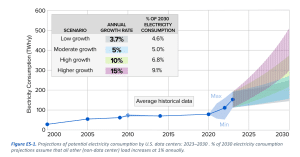


 Wood Mackenzie estimates the U.S. CCUS (carbon capture, utilization, and storage) sector could offer a


