Northern Trust Revolutionizes Carbon Credit Market with Blockchain-Powered Platform

Northern Trust is making a bold move in the voluntary carbon market (VCM) with its innovative digital platform, The Northern Trust Carbon Ecosystem. This groundbreaking system enables project developers to generate, verify, and transact voluntary carbon credits in near real-time, improving efficiency and transparency in the carbon credit lifecycle.

Northern Trust is a global financial institution offering wealth management, asset servicing, asset management, and banking solutions to corporations, institutions, and high-net-worth individuals. Headquartered in Chicago, the company operates in 24 U.S. states and 22 international locations. The company continues to lead in providing cutting-edge solutions in the digital asset and sustainability sectors.

Transforming Carbon Credit Transactions

The VCM has long been burdened by manual processes, leading to inefficiencies in measuring, reporting, and verifying (MRV) carbon credits. Northern Trust aims to change that with its fully digital platform, which leverages blockchain technology to streamline transactions.

The Northern Trust Carbon Ecosystem is powered by the companyโ€™s digital assets platform, Northern Trust Matrix Zenith. This system facilitates seamless tracking, trading, and settlement of carbon credits using a private ledger blockchain.ย 

By eliminating delays and manual intervention, the platform ensures that carbon credits undergo accurate recording and swift transfer to buyers.

Justin Chapman, global head of Digital Assets & Financial Markets, Northern Trust, remarks on this major development in an email to us. He noted that this functionality enables real-time data connectivity with firms that collect and verify project developers’ technical data and recorded credits. It allows them to demonstrate, almost instantly, how much CO2e has been avoided or removed. Specifically, Justin stated that:

โ€œNorthern Trust can now be supplied with real-time verified information from the dMRV’s, allowing credits to be created in the Project Developers account and those credits to be instantly transacted. Importantly, The Northern Trust Carbon Ecosystem also captures on each carbon credit the actual data attributes associated with the avoidance or removal of each tonne of CO2e. This provides more transparency to the buyer of the carbon credits: the buyer can link the individual carbon credit back to the exact time, date, and location that the CO2 was captured and stored. The ecosystem provides enhanced transparency and clarity of the carbon credits we record.โ€

Key Features of The Northern Trust Carbon Ecosystem

  • Real-Time Carbon Credit Generation: Project developers can create verified carbon credits almost instantly.
  • Full Transparency and Traceability: Each credit comes with precise data attributes, including CO2 capture rates, energy consumption, and location.
  • Direct Transactions: The platform connects project developers directly with buyers, reducing the need for intermediaries.
  • Smart Legal Contracts: Agreements are executed through Avvoka, ensuring legal compliance and documentation for each transaction.
  • Secure and Efficient Settlements: Transactions are settled quickly via blockchain, enhancing market trust.

Partnerships Driving Innovation

Northern Trust has been working closely with various project developers and data collection providers to enhance its platformโ€™s efficiency. Notable partnerships include:

InceptionX: This company specializes in real-time carbon measurement using IoT and machine learning. It recently transmitted carbon data from a wastewater recycling project in San Francisco to Northern Trustโ€™s platform for credit creation.

Mangrove Systems: A digital MRV provider that collaborates with Northern Trust to verify carbon credits from The Carbon Removers, a UK-based project developer. Their system collects real-time data from carbon capture plants at a Scottish distillery to validate credit issuance.

Go Balance Limited: A REDD+ project developer supporting the Trocano Araretama REDD+ Project in Brazil. Northern Trustโ€™s platform streamlines administrative tasks, allowing Go Balance to focus on preventing deforestation.

ReGen III: A clean-tech company converting used motor oil into high-grade lubricants. Their recycling facility could prevent 900,000 metric tons of CO2 emissions annually.

Advancing Sustainability and Profitability

The Northern Trust Carbon Ecosystem aligns with global sustainability goals by making carbon credit trading more accessible, reliable, and efficient. By leveraging blockchain, automation, and smart contracts, Northern Trust is improving market operations while ensuring that project developers receive fair value for their credits transparently.

The platform is still in its early stages, but Northern Trust plans to launch 5 live transactions later this year. As the VCM continues to evolve, solutions like this will play a crucial role in fostering trust, reducing fraud, and expediting the transition to a low-carbon economy.

With over 135 years of financial expertise, Northern Trust is positioning itself as a leader in digital carbon markets. It provides a scalable solution that meets the growing demand for verified carbon credits.ย 

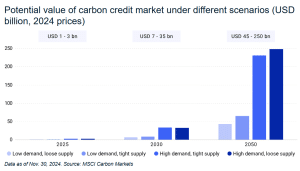
According to industry projections, the VCM will exponentially grow given the near deadline for the short-term net-zero target of businesses. It could reach up to $3 billion this year, then balloon to $35 billion by 2030. Even more, the market could be worth up to $250 billion by 2050, the deadline for the global net-zero goal.ย ย 

carbon credit market value 2050 MSCI

Blockchainโ€™s Role in Enhancing Carbon Market Integrity

The tokenization of carbon credits through blockchain technology is one way to boost integrity and trust in the carbon market. Northern Trustโ€™s digital ecosystem ensures that each credit comes with accurate and verifiable data, reducing the risk of double counting and fraud.

Blockchain technology is increasingly recognized for its potential to enhance the integrity of carbon markets by providing transparent, tamper-proof ledgers for carbon credit transactions. This transparency ensures that each carbon credit gets accurate tracking from issuance to retirement.

By digitizing carbon credits and recording transactions on a blockchain, stakeholders can access real-time data on the creditโ€™s lifecycle, including its origin, ownership history, and environmental impact. This level of detail fosters trust among market participants and supports the credibility of carbon offset claims.
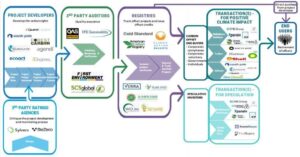
carbon credit lifecycle
Source: Morgan Stanley Research

Moreover, blockchain’s decentralized nature eliminates the need for intermediaries, streamlining the verification and settlement processes. Smart contracts can automate the execution of agreements when predefined conditions are met, further enhancing efficiency and reducing administrative costs.

Other initiatives in the market include:

  • CarbonPlace: A global bank-led trading platform that connects carbon credit buyers and sellers with a $45 million investment.
  • United Nations Development Programme (UNDP) Carbon Registry: A blockchain-based system using QLDB to help countries manage carbon credit trading.
  • UAE’s Blockchain Carbon Registry: A government-backed initiative using the Venom blockchain for transparent credit management.
  • Asiaโ€™s First Digital Carbon Registry: A joint effort by Carbonbase, HBAR Foundation, and ImpactX to bring blockchain-based transparency to Asiaโ€™s carbon market.

As institutional investors and corporations seek reliable ways to offset emissions in their journey to net zero, The Northern Trust Carbon Ecosystem could become a cornerstone in the future of voluntary carbon trading.

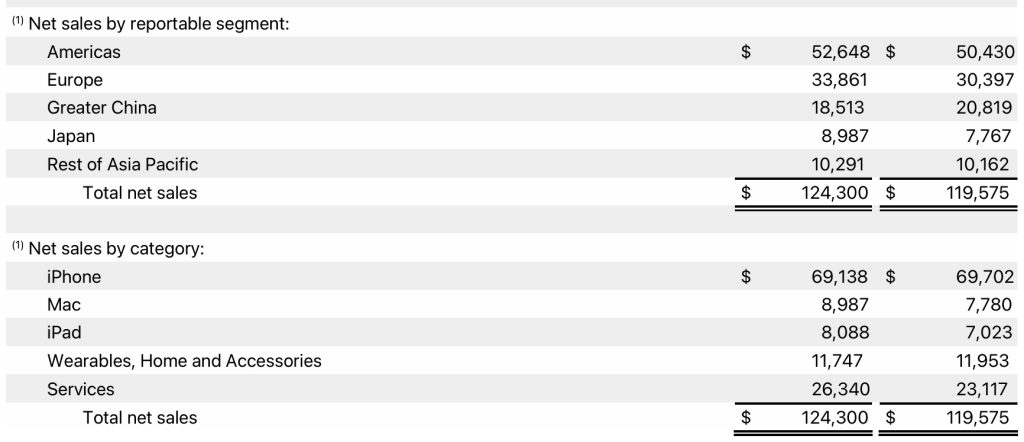
Appleโ€™s Best Quarter Ever: Q1 FY 2025 Revenue Hits $124.3 Billion, Carbon Emissions Drop

Apple revealed its fiscal 2025 first-quarter results on Thursday, showcasing a positive performance. The company reported $124.3 billion in quarterly revenue, marking a 4% increase compared to the same period last year. Additionally, diluted earnings per share rose by 10%, reaching $2.40.

Tim Cook, Appleโ€™s CEO said,

โ€œToday Apple is reporting our best quarter ever, with revenue of $124.3 billion, up 4 percent from a year ago. We were thrilled to bring customers our best-ever lineup of products and services during the holiday season. Through the power of Apple silicon, weโ€™re unlocking new possibilities for our users with Apple Intelligence, which makes apps and experiences even better and more personal. And weโ€™re excited that Apple Intelligence will be available in even more languages this April.โ€

Net Sales Three Months Ended (December 28, 2024 Vs December 30, 2023)

Apple revenue
Source: Apple

Overall Revenue Rises but iPhone Sales Down

Despite the positive growth in overall revenue, iPhone sales were down. The company earned $69.1 billion from iPhone sales during the last quarter of 2024. It reported a significant drop in revenue from the Chinese market compared to the previous year.

Kevan Parekh, Appleโ€™s CFO also noted,

โ€œOur record revenue and strong operating margins drove EPS to a new all-time record with double-digit growth and allowed us to return over $30 billion to shareholders. We are also pleased that our installed base of active devices has reached a new all-time high across all products and geographic segments.โ€

Apple Shares Surge

However, Appleโ€™s shares jumped following the earnings announcement which indicates its future growth trajectory and investor confidence.

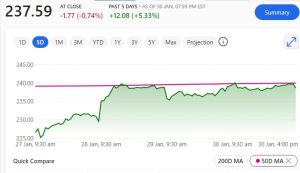
Another turning point for Apple was the release of the Chinese AI DeepSeek R1 recently. The AI tool quickly climbed to the top of the iOS app store, surpassing ChatGPT and even Metaโ€™s AI tools. Consequently, Appleโ€™s shares rose by over 3%, making CEO Tim Cook $23 million richer.

Apple Inc. (AAPL)

Apple shares
Source: Nasdaq

Appleโ€™s Commitment to Carbon Neutrality

Apple aims to achieve carbon neutrality across its entire carbon footprint by 2030. The company has laid out ambitious strategies to cut greenhouse gas emissions across all scopes by 75% compared to 2015 levels.

  • For 2023, Apple’s total net carbon footprint was down to 15,600,000 mtCO2e from 20,300,000 mtCO2e in 2022.ย 

In 2020 the company became carbon neutral for its corporate operations. They achieved this huge milestone by:

โ€ข Improving energy efficiency by sourcing 100% renewable electricity for all facilities,
โ€ข Offsetting emissions that were harder to eliminate with high-quality carbon credits.

Renewable Energy Adoption

Apple continues to prioritize clean energy. In 2023, the companyโ€™s suppliers procured 16.5 gigawatts of renewable energy, generating 25.5 million megawatt-hours of clean power.

โ€ข Notably these efforts helped avoid 18.5 million metric tons of greenhouse gas emissions in 2023โ€”a 6.5% improvement over 2022.

Additionally, Appleโ€™s offices, retail stores, and data centers are powered entirely by renewable electricity, with energy efficiency measures constantly optimized.

The companyโ€™s efforts extend beyond facilities. Apple also focuses on its product designs and materials, actively working to reduce the carbon intensity of its products and increase the use of recycled materials.

In 2023, 22% of materials used in Apple products came from renewable or recycled sources. But Apple wants to transition to 100% recycled cobalt, tin, gold, and rare earth elements by 2025.

ย  ย  Appleโ€™s comprehensive carbon footprint 2023

Apple emissions
Source: Apple

Energy Efficiency in Products

Product energy use accounts for 29% of Appleโ€™s overall carbon footprint. To address this, Apple designs its hardware and software with energy efficiency in mind. For instance, the Mac devices powered by Apple silicon have significantly improved energy performance. Chips introduced in 2023 enabled Mac devices like the Mac mini with M2 to consume less power while delivering higher performance.

Investing in Nature-Based Solutions

Appleโ€™s Restore Fund highlights its commitment to nature-based carbon removal. In March 2024, key manufacturing partners, including Taiwan Semiconductor Manufacturing Company (TSMC) and Murata, joined Appleโ€™s $280 million investment in the fund. Managed by Climate Asset Management, this initiative not only aims to scale carbon removals but also supports local communities through economic development and ecological benefits.

Appleโ€™s Investment in High-Quality Carbon Credits

Apple continues to offset emissions through high-quality carbon credits, supporting projects that restore ecosystems and benefit local communities.

Protecting Kenyaโ€™s Chyulu Hills

The Chyulu Hills REDD+ Project spans 410,000 hectares in southeastern Kenya, focusing on forest conservation and biodiversity restoration. It protects wildlife while creating sustainable livelihoods for Indigenous and local communities. In 2023, Apple retired 230,000 mtCO2e credits from this project, contributing to climate change mitigation.

Reforesting Chinaโ€™s Barren Lands

The Guinan Afforestation Project in Guizhou, China, plants trees across 46,000 hectares of degraded land. This initiative enhances biodiversity, conserves soil and water, and provides jobs for local communities. Apple retired 255,000 mtCO2e credits from the 2019โ€“2021 vintages.

ย  ย  ย  ย  ย  ย  ย  ย  ย  ย  ย  Apple’s progress toward carbon neutrality

Apple carbon neutrality
Source: Apple

These projects showcase Appleโ€™s commitment to impactful carbon removal and sustainable development. Through these comprehensive initiatives, Apple continues to march toward a sustainable future and achieve its 2030 net zero goals.

All in all, with a revenue boom and low emissions, Apple shines in 2025.

FURTHER READING:

Nornickelโ€™s 2025 Nickel Target: Will Production Hit New Highs?

Disseminated on behalf of Alaska Energy Metals Corporation.

Nornickel, Russia’s largest mining company, and the worldโ€™s leading nickel producer announced its consolidated production results for nickel in 2024. The company exceeded its production guidance for this metal which was driven by operational efficiency improvements and capital upgrades.

Nornickelโ€™s Nickel Production Exceeds All Expectations

In 2024, Nornickel produced 205 kt of nickel, slightly above its target range of 196โ€“204 kt. This marked a 2% decline year-over-year due to scheduled repairs but still showcased robust performance. Notably, all nickel output originated from the company’s Russian feedstock.

Senior Vice-President โ€“ Operating Director, Alexander Popov commented on the production results,

โ€œIn 2024, the output of all key metals exceeded our production guidance as a result of improved operating efficiency

Significantly, completing a major reconstruction project at the Nadezhda Metallurgical Plantโ€™s smelting furnace #2 played a pivotal role. This upgrade boosted the furnace’s smelting capacity by 25% and was completed in just 60 daysโ€”30 days ahead of schedule.

The company also increased production of premium nickel products catering to Chinaโ€™s electroplating market, alongside advancements in developing specialized nickel powders Kola Division. This carbonyl nickel department was successfully launched after
annual schedule capital maintenance.ย 

Nickel Outlook for 2025

For 2025, Nornickel expects nickel production to range between 204โ€“211 kt and copper output from its Russian feed to reach 353โ€“373 kt. This reflects the companyโ€™s focus on maintaining strong production levels while continuing to modernize facilities and diversify its product portfolio.

Notably, the mining giant aims to boost nickel and copper production by 20โ€“30% and increase platinum group metals (PGMs) output by 40โ€“50% by 2030.

Nornickel

Copper Output Sees Steady Growth

Nornickelโ€™s total copper production reached 433 kt in 2024, reflecting a 2% year-on-year increase. This growth stemmed from process optimizations to improve copper cathode quality and meet customer requirements. Copper output from its Russian feedstock, excluding the Trans-Baikal Division, exceeded guidance, totaling 363 kt.

The Trans-Baikal Division also delivered a strong performance, producing 70 kt of copper in concentrate, surpassing its target range of 64โ€“68 kt. This growth was also attributed toย increased ore volumes and enhanced operational efficiency.

Nornickel’s Strategy for Sustainable Mining

Nornickel has adopted a long-term sustainable development strategy that emphasizes environmentally friendly production. The company is modernizing production assets with clean technologies, reducing its carbon footprint, improving energy efficiency, and building resilience to climate risks.

In 2022โ€“2023, Nornickel collaborated with the Institute of Atmospheric Physics of the Russian Academy of Sciences to better understand climate risks. The partnership analyzed historical climate data from the 1960s and modeled scenarios to predict climate risk factors through 2050. These scenarios were adapted to the specific regions where Nornickel operates, enabling targeted solutions to local challenges.

Impressive Results

Nornickel has one of the lowest carbon footprints among global mining companies. Key achievements include:

  • 9.7 million tons of Scope 1 and 2 greenhouse gas (GHG) emissions, reflecting the companyโ€™s commitment to reducing direct and indirect emissions.
  • 5.1 million tons of CO2 equivalent Scope 3 emissions as of 2023, which represent emissions across the value chain.
  • A carbon footprint of 8.5 kg of CO2 per kg of nickel, is calculated in line with international standards such as ISO 14040, 14044, and 14067.

Reducing Emissions with Sulfur Program 2.0

The Sulfur Program 2.0 revolves around Nornickelโ€™s efforts to minimize greenhouse gas (GHG) emissions and improve air quality in the Norilsk region. The companyโ€™s emissions include contributions from electricity and heat supply to the Norilsk industrial region through JSC NTEK, as well as carbon dioxide from the Sulfur Program.

Nornickel calculates its GHG emissions by the GHG Protocol methodology. The assessment covers emissions from carbon dioxide (CO2), nitrogen oxide (N2O), and methane (CH4). Gas transportation units and energy supplies primarily generate these gases.ย 

Nornickel emissions

The company has also standardized its approach to identifying GHG emission sources to reduce uncertainty in upstream Scope 3 emissions calculations.

The completion of the Sulfur Program 2.0 and the use of cleaner energy from JSC NTEK shows its dedication to reducing its environmental impact. At the same time, the company continues to invest in innovation and data-driven strategies to enhance energy efficiency and meet long-term climate goals.

In conclusion, Continued investments in modernization and sustainable mining will help Nornickel meet rising global demand for nickel and copper while supporting decarbonization goals.

Meta Vs. Microsoft: Whoโ€™s Leading the Q4 Revenue Game and Net Zero Goals?

Meta and Microsoft have kicked off 2025 with record-breaking financial results in the quarter ending last year. They have showcased their dominance in the tech world. Metaโ€™s advertising boom and strong user engagement fueled its revenue surge, while Microsoftโ€™s AI and cloud innovations drove its impressive growth.

Both tech giants are riding high, but whose numbers truly steal the show? Letโ€™s dive into their revenue battle to find out.

Meta’s Revenue Boom Powered by Ads

Meta Platforms, Inc. (META) saw a significant boost in both revenue and profit for the fourth quarter and the full year ending December 31, 2024, driven by strong advertising performance across its platforms. Despite increasing its projected expenses for AI investments, the companyโ€™s shares surged in after-hours trading.
Performance Summary

  • Profit of $20.83 billion for Q4, marking a 49% increase from $14.02 billion in the same period last year.
  • This translated to earnings of $8.02 per share, up from $5.33 per share a year ago. Revenue for the quarter grew by 21%, reaching $48.39 billion, compared to $40.11 billion in Q4
  • For the entire 2024, revenue reached $164.5 billion, a 22% increase compared to 2023. Higher ad impressions and an increase in the average price per ad drove this growth.

Meta’s Family of Apps, including Facebook, Instagram, and WhatsApp, saw strong user engagement. Daily active users reached 3.35 billion in December, marking a 5% year-over-year growth.

Meta
Source: Meta

Rising Costs and AI Investment

While revenue soared, expenses also increased. Costs and expenses for the full year rose by 8% to $95.12 billion. In Q4 alone, Meta reported $25.02 billion in costs, including a $1.55 billion reduction in legal losses, which offset some expenses. Capital expenditures for the year totaled $39.23 billion.

CEO Mark Zuckerberg expressed himself on Meta’s solid performance. He said,

โ€œI expect 2025 to be the year when a highly intelligent and personalized AI assistant reaches more than 1 billion people, and I expect Meta AI to lead the way.”

Meta’s strong Q4 results reflect its ability to leverage advertising growth and user engagement while navigating rising costs. However, with significant investments in AI on the horizon, 2025 will be a key year for the companyโ€™s long-term vision.

Microsoft’s Robust Results Driven by AI and Cloud Growth

Microsoft also posted its financial results for the quarter ending December 31, 2024, fueled by strong performance in its AI and cloud segments. The performance snapshot is explained below:

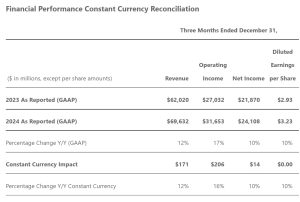
  • Revenue reached $69.6 billion, a 12% increase compared to the same period in 2023.
  • Operating income grew 17% to $31.7 billion. Net income rose 10% to $24.1 billion, with earnings per share at $3.23.

Satya Nadella, chairman and CEO of Microsoft noted,

โ€œWe are innovating across our tech stack and helping customers unlock the full ROI of AI to capture the massive opportunity ahead. Already, our AI business has surpassed an annual revenue run rate of $13 billion, up 175% year-over-year.โ€

microsoft revenue
Source: Microsoft

Key Business Highlights

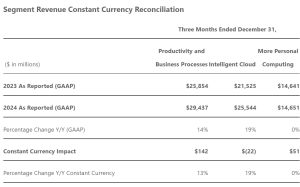
  • The Productivity and Business Processes segment reported $29.4 billion in revenue, a 14% increase driven by strong demand for Microsoft 365 and Dynamics 365.
  • Intelligent Cloud revenue grew 19% to $25.5 billion, with Azure and other cloud services leading the growth with a 31% increase.
  • The More Personal Computing segment remained flat at $14.7 billion, although search and advertising revenue grew by 21%, and Windows OEM revenue increased by 4%.
microsoft earning
Source: Microsoft

Cloud and AI Lead the Way

Amy Hood, executive vice president and chief financial officer of Microsoft said,

โ€œThis quarter Microsoft Cloud revenue was $40.9 billion, up 21% year-over-year. We remain committed to balancing operational discipline with continued investments in our cloud and AI infrastructure.โ€

Looking ahead, Microsoft expects Azure growth of 31-32% for the third fiscal quarter. At the same time, Hood also highlighted challenges with capacity constraints but remains optimistic about future growth opportunities.

In conclusion, Meta’s revenue grew by 21%, while Microsoft’s increased by 12% in the last quarter of 2024 compared to the same period in 2023. Thus, Meta performed better!

Meta Vs Microsoft: Comparative Analysis of Emission Reduction and Net Zero Goals

Both Microsoft and Meta are committed to reducing their greenhouse gas (GHG) emissions, with ambitious goals aimed at achieving net-zero across their global operations and value chains. However, their emissions profiles and strategies show some key differences.

Metaโ€™s Commitment to Net Zero Emissions

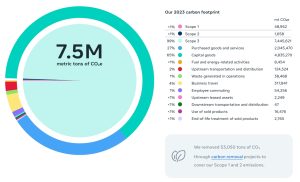
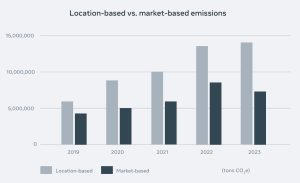
As per its latest sustainability report, in 2023, Meta’s net emissions equaled 7.4 million metric tons of CO2. Key commitments include:

  • Reducing Scope 1 and 2 emissions by 42% by 2031, compared to a 2021 baseline, and ensuring maximum suppliers adopt science-aligned GHG reduction targets by 2026.
  • Keep Scope 3 emissions at or below 2021 levels by 2031.
  • Since 2020, Meta has successfully maintained net zero emissions in its operations, and it is on track to achieve net zero across its entire value chain by 2030.

To address residual emissions, Meta is investing in both nature-based and technological carbon removal projects, which help mitigate climate change and provide broader environmental benefits, including enhanced biodiversity.

META EMISSIONS
Source: Meta

Scaling Renewable Energy

Renewable energy has played a pivotal role in Metaโ€™s emissions reduction strategy.

  • In 2023 alone, the companyโ€™s renewable energy initiatives helped cut operational emissions by 5.1 million tons of CO2e, while value chain emissions were reduced by 1.4 million tons of CO2e.
Meta
Source: Meta

Through strategic partnerships with utilities such as Pacific Power and Dominion Energy, Meta has facilitated the addition of 2,600 MW of new wind and solar capacity in the U.S., making clean energy more accessible.

  • As of 2023, Metaโ€™s global renewable energy portfolio exceeded 11,700 MW, with over 6,700 MW of that capacity online in the U.S.

Data Center Efficiency and Carbon Removal Solutions

Metaโ€™s data center facilities have achieved LEED Gold Certification or higher and are powered by 100% renewable energy to meet their electricity needs.

In addition, 91% of the construction waste generated by Metaโ€™s data centers was recycled in 2023. Additionally, it reduces embedded carbon by extending hardware lifespan and using recycled plastics and metals, promoting a circular model to cut waste and carbon impact.

Meta also uses “green tariffs”, which allow the company to purchase renewable energy directly from electricity providers. This not only supports clean energy projects but also increases the accessibility of renewable resources to a wider customer base.

Microsoft’s Net Zero Goals: Renewable Energy and Carbon Removal Gains

In 2023, Microsoft made significant strides in its commitment to sustainability, expanding its contracted renewable energy portfolio to over 19.8 GW across 21 countries.

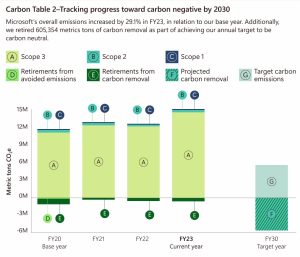
The company secured 5 million metric tons of carbon removal to reach net zero by 2030, balancing low, medium, and high-durability projects to meet long-term targets.

Scope Emissions

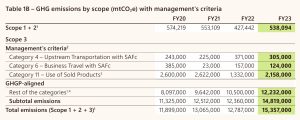
  • Scope 3 emissions which account for over 96% of Microsoftโ€™s total emissions rose by 30.9% in 2023.
  • Overall greenhouse gas (GHG) emissions were 15.4 MtCOโ‚‚e in 2023, a 29.1% rise as compared to the 2020 baseline.
microsoft emissions
Source: microsoft

This increase was largely driven by upstream purchased goods and services and downstream use of sold products. However, as per Microsoft, it has achieved a 6% reduction in Scope 1 and 2 emissions compared to its 2020 baseline by adopting renewable energy and energy efficiency initiatives.

microsoft emission
Source: Microsoft

Data Centers Efficiency and Fleet Electrification

In its data centers, Microsoft has focused on maximizing energy efficiency. In 2023, its data centers achieved a Power Usage Effectiveness (PUE) score of 1.12, demonstrating the company’s commitment to minimizing energy use while optimizing operations.

Additionally, the company reduced its Azure hardware needs by 1.5%, minimizing embodied carbon in the process. It is alsoย transitioning to a 100% electric fleet by 2030, with infrastructure development already underway at its Redmond headquarters.

Overall, both companies are taking significant steps toward reducing their carbon footprint. Meta is focused on keeping Scope 3 emissions steady while scaling renewable energy adoption, whereas Microsoft faces a rise in Scope 3 emissions which is a matter of concern.

Additionally, Microsoft’s total GHG emissions are significantly higher than Meta’s. Yet it’s continuing to prioritize its energy efficiency in its operations and decarbonize its supply chain to achieve its net zero goals.

Tesla’s Carbon Credit Revenue Soars to $2.76 Billion Amid Profit Drop

Teslaโ€™s profits took a hit in 2024, dropping 23%. But one revenue stream kept surgingโ€”carbon credit sales. The carmaker reached a new record in selling regulatory credits, recording a 54% jump from 2023. As the EV market evolves and emissions rules tighten, can Tesla keep profiting from carbon credits?

Teslaโ€™s 2024 Performance: Profits Slide, Credits Rise

Tesla wrapped up 2024 with another year of declining profits, reporting $8.4 billion in net income attributable to common stockholdersโ€”a 23% drop from 2023 and a steep 40% decline from its 2022 record of $14.1 billion.ย 

In Q4 alone, Tesla generated $25.7 billion in revenue, missing analyst expectations of $27.3 billion. Despite this, the companyโ€™s annual revenue still saw a slight 1% increase, reaching $97.7 billion.

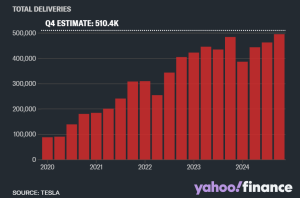
In terms of delivery, Tesla delivered 1.78 million vehicles in 2024, a 1% drop and its first year-over-year decline. Rising competition, shifting demand, and economic conditions may be impacting the companyโ€™s growth.

Tesla vehicle deliveries 2024
Chart from Yahoo

Looking ahead, Tesla expects its core vehicle business to return to growth in 2025. It also announced plans to begin production of its driverless “Cybercab” taxi and more affordable EV models in the first half of the year.

  • While Tesla shares initially dropped 5% after the earnings release, they later rebounded by 3% as investors reacted to the companyโ€™s long-term growth plans.ย 

Analysts remain cautiously optimistic, predicting an 80% surge in free cash flow by 2025 and a further 50% rise in 2026. While Teslaโ€™s profits declined, one revenue stream remained a powerful lifelineโ€”carbon credit sales.

Teslaโ€™s Carbon Credit Boom: How Emissions Trading Kept Cash Flowing

In Q4 2024 alone, Tesla earned $692 million from selling regulatory credits or carbon credits, accounting for nearly 30% of its quarterly net income of $2.33 billion.ย 

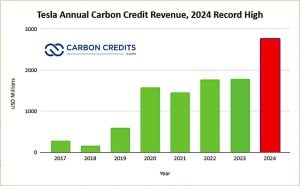
More impressively, the companyโ€™s total carbon credit revenue for 2024 surged to $2.76 billion, marking a 54% year-over-year increase from $1.79 billion in 2023. This substantial boost underscores the ongoing demand for emissions credits as legacy automakers struggle to meet regulatory targets.

Tesla annual carbon credit revenue in 2024
Source of data: Tesla

Since 2017, Teslaโ€™s total earnings from these transactions have soared to over $10.4 billion. It has become one of the most lucrative aspects of its business.

This revenue comes at a minimal cost to Tesla, making it a near-pure profit stream. Unlike other automakers that must purchase credits to comply with emissions regulations, Tesla generates them simply by selling zero-emission vehicles.ย 

Amid declines in profit margins, the sharp rise in carbon credit revenue came to the rescue, highlighting the importance of this business model to Teslaโ€™s financial health.

Defying Expectations: The Carbon Credit Marketโ€™s Resilience

Many analysts once predicted that Teslaโ€™s carbon credit windfall would shrink as other automakers ramped up EV production. In 2020, then-CFO Zachary Kirkhorn warned investors against relying too heavily on regulatory credit revenue.ย 

Yet, contrary to expectations, Teslaโ€™s earnings from this segment have remained strong, surpassing previous records and hitting new highs.

This resilience is due in part to the slow transition of legacy automakers to electric vehicles. While companies like Ford and General Motors have made strides in EV production, many still rely on Teslaโ€™s credits to meet tightening emissions standards in the U.S., Europe, and China.ย 

With increasingly stringent regulations worldwideโ€”such as the European Unionโ€™s plan to ban new gasoline and diesel car sales by 2035โ€”the demand for carbon credits is unlikely to disappear anytime soon.

In fact, Teslaโ€™s carbon credits are helping automakers meet strict EU emission targets. Companies like Stellantis, Toyota, Ford, Mazda, and Subaru buy Teslaโ€™s credits to offset their emissions and avoid hefty fines.ย 

With EU regulators imposing penalties of up to โ‚ฌ300 million per missed EV sales percentage, pooling with Tesla provides a financial lifeline. This strategy enables automakers to comply while transitioning to electric models, ensuring a smoother shift toward sustainability.ย 

Meanwhile, stricter emissions rules in Europe and the U.K., combined with increased federal funding for EV infrastructure in the U.S., could accelerate the adoption of electric vehicles across the industry. If competitors produce enough zero-emission vehicles to meet compliance requirements, Teslaโ€™s carbon credit revenue could decline.

However, Tesla is not solely reliant on carbon credits for future growth.ย 

Supercharged Sustainability: Teslaโ€™s Energy, AI Breakthroughs, and Emission Reductions

Beyond carbon credit sales, Tesla remains a leader in sustainability efforts. The companyโ€™s mission is to accelerate the worldโ€™s transition to sustainable energy, and its initiatives go beyond just producing EVs.

Renewable Energy and Energy Storage

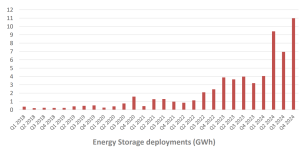
Teslaโ€™s energy business achieved record deployments in 2024, with Powerwall and Megapack installations reaching a combined 11.0 GWh as shown below. This milestone resulted in record gross profit in Q4, driven by lower material costs at the Lathrop Megafactory. As demand for energy storage products grows, Tesla plans to ramp up production at its new Shanghai Megafactory in Q1 2025.

Tesla energy storage deployment
Chart from Tesla

Teslaโ€™s Supercharger network also saw rapid expansion. In 2024, Tesla added over 10,000 new Supercharger stalls, growing the network by 19% year-over-year to surpass 65,000 stalls globally.

  • The company delivered 5.2+ TWh of energy through its network, offsetting more than 5.5 billion kg of COโ‚‚ emissions and replacing 2.4 billion liters of gasoline.

Additionally, Tesla unveiled its V4 Supercharger, capable of charging passenger vehicles at up to 500 kW and Tesla Semis at 1.2 MW. The EV giant continued to welcome more automakers to its North American Supercharger network, integrating the NACS charging standard into new vehicles.

Teslaโ€™s AI Advancements and Manufacturing Innovations

Tesla made significant strides in AI and vehicle software in Q4. The company deployed Cortex, a 50,000-unit H100 training cluster, at Gigafactory Texas, powering FSD V13 (Supervised) with a 4.2x increase in data and improved safety features. Teslaโ€™s Autopilot vehicles achieved 5.94 million miles between accidents, the best Q4 on record.

On the manufacturing side, Tesla processed its first spodumene lithium concentrate just 18 months after breaking ground on its lithium refinery. The company also ramped up production of its in-house 4680 battery cells, reaching a rate exceeding 2,500 Cybertrucks per week.

Teslaโ€™s Full Self-Driving (FSD) technology plays a role in sustainability by optimizing traffic flow and reducing idle time, which can lead to lower energy consumption. The companyโ€™s AI-driven approach aims to improve transportation efficiency, reducing congestion and unnecessary energy use.

Emissions Reduction Impact

Teslaโ€™s EVs have prevented over 20 million metric tons of COโ‚‚ emissions from entering the atmosphere since their introduction. The company reported that in 2023 alone, its vehicles helped avoid 5 million metric tons of COโ‚‚ emissions.

Tesla also leads in vehicle efficiency, with the Model 3 achieving an energy consumption rate of 13.1 kWh per 100 km, making it one of the most efficient EVs on the market. Meanwhile, Teslaโ€™s semi-truck fleet is projected to cut freight emissions by 50% compared to diesel trucks.

Overall, Teslaโ€™s carbon credit business remains a financial powerhouse, providing billions in revenue that bolster its bottom line amid declining profit margins. Whether this revenue stream continues to thrive will depend on the pace of EV adoption by other automakers and the evolution of global emissions policies. For now, Teslaโ€™s carbon credit sales remain a critical pillar of its financial success.

Powerbank Unveils 2024 Milestones: US$67.5 Million and a Bold AI Energy Bet

Disseminated on behalf of Powerbank Corporation.

Powerbank Corporation (formerly Solarbank) (Nasdaq: SUUN) (Cboe CA: SUNN) (FSE: GY2) has marked a successful 2024 with major financial transactions, strategic acquisitions, and key project developments. The company continues to expand its role in clean energy, delivering reliable and sustainable power across North America.

PowerBank is an independent renewable energy developer specializing in distributed and community solar projects across Canada and the U.S. The company focuses on solar, battery energy storage, and EV charging solutions, serving utilities, commercial entities, municipalities, and residential customers.ย 

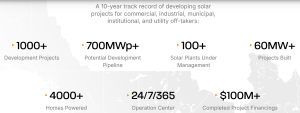
With a pipeline exceeding one gigawatt and over 100 megawatts of completed projects, Powerbank continues to drive the clean energy transition forward. Dr. Richard Lu, CEO of Powerbank , highlighted the companyโ€™s achievements last year, stating,ย 

โ€œWe experienced another year of tremendous growth and accomplishments in 2024 with a number of significant milestones achieved, including project completions, major acquisitions, execution on the development pipeline, major project sales and senior stock exchange listings. We predict continued forward momentum on these projects and new initiatives, on all of which we will provide ongoing updates as appropriate.โ€

Big Money Moves: Powerbank Key Financial Transactions and Acquisitions

Powerbank secured over US$ 67.5 million in financial commitments from strategic and financial partners. Among the key deals are:

  • $49.5 million transaction with Qcells for the sale and construction of four solar projects in New York. These projects will use U.S.-manufactured Qcells solar modules, aligning with the broader $2.8 billion investment by Qcells in U.S. solar manufacturing.
  • $25.8 million project finance facility from the Royal Bank of Canada to fund two battery energy storage projects acquired through Solar Flow-Through Funds Ltd.
  • $45 million acquisition of Solar Flow-Through Funds Ltd. (SFF), strengthening Powerbankโ€™s portfolio and expanding its renewable energy footprint.

SEE MORE: SolarBankโ€™s $49.5M Qcells Deal Accelerates U.S. Solar Growth โ€“ Exclusive Interview with CEO Dr. Richard Lu

Corporate Growth and Market Presence

Powerbank has strengthened its corporate presence through stock exchange listings and leadership expansion. The company made a significant leap in market positioning when it began trading on the Nasdaq Global Market on April 8, 2024. It achieves qualification under the second-highest tier of eligibility requirements. This move not only enhances SolarBankโ€™s visibility but also provides greater access to capital markets.

Earlier in the year, on February 14, 2024, Powerbank secured a listing on Cboe Canada, a trading platform that handles over US$ 67 billion in average daily trading volume. This dual listing underscores the companyโ€™s growing reputation and financial stability.

SolarBank solar energy battery energy storage
Source: SolarBank

In addition to market expansion, Powerbank has reinforced its leadership team. Chelsea L. Nickles, a renewable energy expert with over 20 years of experience, joined the board as an independent director. Her background includes significant contributions to offshore wind projects for ร˜rsted, a global leader in the sector, positioning her as a valuable asset to Powerbankโ€™s strategic vision.

The Data Center Pivot: Eyeing AI-powered Solutions

In addition to solar energy, Powerbank is venturing into the growing data center sector. The company aims to become a developer, owner, and strategic partner in data center infrastructure, integrating sustainable energy solutions to support artificial intelligence (AI) and high-performance computing.ย 

While no data center projects are under development yet, Powerbank is actively exploring opportunities and plans to provide updates on future agreements.

Key Solar Projects and Developments

Powerbank has made significant progress in expanding its renewable energy portfolio with multiple projects across North America. Notable developments include:

  • $41 million transaction with Honeywell International Inc.: Powerbank reached mechanical completion on three community solar projects under an Engineering, Procurement, and Construction (EPC) contract with Honeywell. The company expects to retain operations and maintenance responsibilities post-construction.
  • Fiera Real Estate Pilot Project: Construction began on a 1.4 MW rooftop solar project in Alberta for Fiera Real Estate. The company manages over US$7 billion in commercial real estate.

Other major solar projects in the pipeline include:

  • Geddes Solar Project (3.7 MW DC) in New York: Expected to provide green energy to 500 homes.
  • Greenville, NY Community Solar (14 MW DC total): Expected to serve 1,600 homes.
  • Nassau, NY Solar Project (3 MW DC): Designed to supply energy to 350 homes.
  • Skaneateles & Lewiston, NY (19.3 MW DC total): Three community solar projects expected to power 2,260 homes.
  • Camillus, NY Solar Project (3.15 MW DC): Designed to provide energy to 360 homes.
  • Nova Scotia Community Solar Program (31 MW DC total): Projects developed in partnership with TriMac Engineering to supply green energy to 4,000 homes.
SolarBank achievements in numbers
SolarBank in numbers

Ongoing and Future Projects

Powerbank continues to expand with new developments across multiple locations. Some key upcoming projects include:

  • Oak Orchard Project (7 MW DC) in Clay, NY.
  • Boyle Project (5.4 MW DC) in Broome County, NY, incorporating agrivoltaics, where solar panels share land with agricultural activities.
  • Hwy 28 Project (7 MW DC) in Middletown, NY.
  • Silver Springs Project (2.9 MW DC) in Gainesville, NY.
  • Three Pennsylvania Community Solar Projects (24.8 MW DC total), pending state legislative approval.
  • North Main Project (7.2 MW DC) in Wyoming County, NY.
  • West Petpeswick Project (3.1 MW DC) in Nova Scotia.
SolarBank projects
Image from SolarBank

Future-Proofing Growth: Risks, Rewards, and Whatโ€™s Next for Powerbank

Despite its strong progress, Powerbank faces several risks that could impact its growth trajectory. The completion of solar projects depends heavily on third-party financing, which may introduce delays or unforeseen construction challenges.ย 

Additionally, regulatory and policy uncertainties could affect the economic feasibility of future developments and solar growth, as government incentives play a crucial role in clean energy investments.

Powerbankโ€™s planned entry into the data center market also comes with risks. While the company sees significant potential in this sector, no agreements have been finalized, and the initiative remains in the exploratory phase. The success of this venture will depend on securing viable partnerships and developing infrastructure that aligns with sustainability goals.

Powerbankโ€™s rapid growth in 2024 highlights its strong position in the renewable energy sector. With successful financial deals, key acquisitions, and a growing project portfolio, the company is well-positioned to capitalize on clean energy demand.ย 


Disclosure: Owners, members, directors, and employees of carboncredits.com have/may have stock or option positions in any of the companies mentioned: SUUN.

Carboncredits.com receives compensation for this publication and has a business relationship with any company whose stock(s) is/are mentioned in this article.

Additional disclosure: This communication serves the sole purpose of adding value to the research process and is for information only. Please do your own due diligence. Every investment in securities mentioned in publications of carboncredits.com involves risks that could lead to a total loss of the invested capital.

Please read our Full RISKS and DISCLOSURE here.

Global Solar Growth to Stabilize at 493 GW in 2025, Predicts Wood Mackenzie

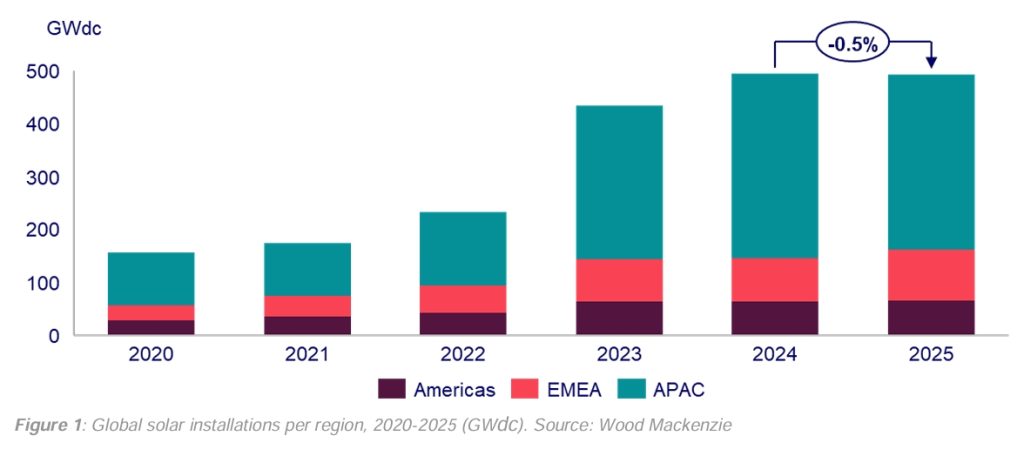
The global solar industry witnessed strong growth in 2024, reaching a record 495 GWdc of installed capacity. It reflected a 14% year-on-year increase. The main reasons behind the solar boom were the rising demand for renewable energy from data centers and electrification trends.

But anticipation is looming large over the solar industry this year, despite significant demand. Wood Mackenzie recently revealed a global solar report predicting a slight contraction, forecasting new installations to reach 493 GWdc in 2025. So, is the solar industry embracing a storm? Letโ€™s weigh in on the potential opportunities and challenges ahead.

global solar growth
Source: Wood Mackenzie

Data Center to Drive Solar Industry Boom

This year, the solar industry will mainly be driven by rising electricity demand from data centers and AI language models. The study reveals that more than 100 GW of new data center capacity has been proposed in the U.S., and even if half of this is built over the next five years, electricity demand in some regions could rise by 10-20%.

  • According to EIA, The electric power sector will add 26 gigawatts (GW) of new solar capacity in 2025 and 22 GW in 2026. These additions will boost U.S. solar generation by 34% in 2025 and 17% in 2026.

But the question is how will solar meet the demand surge. The Wood Mackenzie report highlighted some ways the industry will adapt. They are:

  • Solar energy has to replace fossil fuels and scale up to meet new demand from data centers.
  • Solar developers will have to innovate by pairing solar with storage, wind, and natural gas to provide reliable, zero-emission power.

In another scenario, data center developers will compete with traditional buyers for solar assets. This competition will push solar PPA prices higher and force solar developers to change their strategies. This will drive market shifts and possible price increases.

Solar companies able to manage large-scale, multi-GW projects will thrive in this environment. This trend may lead to market consolidation and more transactions, as firms strive to secure their place in the changing energy landscape.

In todayโ€™s evolving solar landscape SolarBank, a leading North American solar company holds immense promise. It is playing a pivotal role in developing commercial, industrial, and community solar projects in the U.S.

Solar Panel Prices Set to Rise

For the past two years, solar panel prices have reached record lows due to global overcapacity and intense competition among manufacturers. While this was a win for buyers, it raised concerns about the long-term impact on the solar manufacturing industry.

However, a shift is expected in 2025, with prices projected to rise to around $0.15/W FOB Chinaโ€”a level unseen since 2021. Despite the persistent overcapacity in module component manufacturing, key players in the industry are taking steps to address the issue. Simply put, oversupply won’t be a permanent thing.ย 

For instance, polysilicon giants GCL and Tongwei have pledged to scale back production. Similarly, major module manufacturers are working together to stabilize the market by limiting output and setting minimum prices.

China Will Dominate Despite Challenges

China, the worldโ€™s largest solar market, is grappling with its own challenges. Unclear policies under its 14th Five-Year Plan have created uncertainties. Rising curtailment of solar power and revenue risks are likely to slow the industry’s expansion, bringing a period of stabilization instead.

Despite these hurdles, China will remain a global leader in solar manufacturing, holding 75% (1.2 TW) of the worldโ€™s operational capacity for key module components.

Apart from the top economies, other regions are also ramping up solar manufacturing with government support. India is expanding cell production with its Approved List of Cell Manufacturers to cut reliance on Chinese imports.

The Middle East is becoming a solar hub, with Saudi Arabia, Oman, the UAE, and Egypt attracting major investments in polysilicon, wafer, and module production. Chinese manufacturers are setting up facilities there, driven by incentives and the need to bypass Southeast Asian tariffs while meeting global demand.

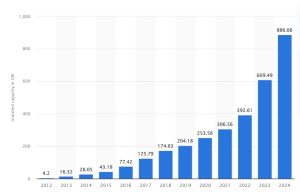
Cumulative installed solar power capacity in China from 2012 to 2024

China solar capacity
Source: Statista 2025

Solar Tech Shifts for Greater Efficiency

The solar industry is gearing up for major advancements in technology that will boost efficiency and reduce costs. The study shows:

  • TOPCon and HJT Cells: These technologies will replace p-type PERC in utility-scale solar, offering better efficiency and higher power density.
  • Higher Panel Ratings: Modules with ratings over 650 Wp are common, with some exceeding 750 Wp. By 2025, wattages could surpass 800 Wp.
  • Land Use Reduction: Larger modules can cut land use by 15%, saving 5-10% on project costs, though size increases installation and transportation challenges.

Additionally, inverters can shiftย towards more efficiency up to 2000ย Vdc. This change will allowย longer strings of powerful modules. This will furtherย lowerย costs andย boostย scale.ย Also,ย smart AI-powered trackers willย enhanceย production byย 2-6%. They willย help protect againstย the weather too. Companiesย like Nextracker and GameChange Solarย are leading this trend.

Policy Uncertainty to Cloud Global Solar Projects

Last year elections have reshaped governments worldwide, introducing policy changes that are causing uncertainty for the solar sector. A stellar example is the United States where the Trump administration has questioned the future of renewable energy incentives. It includes tariffs on solar imports and a lack of clarity on tax credits. These uncertainties are creating significant concerns for developers, making long-term solar investments appear riskier.

Amid these policy shifts, the U.S. is still witnessing a surge in solar manufacturing projects. Tariffs on solar products from Cambodia, Malaysia, Thailand, and Vietnam are driving investments in local module, cell, and wafer production.

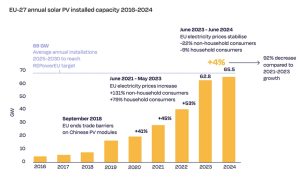
Europeโ€™s Strained Incentives

In Europe, declining financial incentives are impacting the economics of solar projects. In Germany, reductions in capital expenditure rebates and export compensation for distributed solar projects pose significant financial barriers. Similarly, policy shifts in the Netherlands and Italy are expected to dampen growth in distributed solar energy.

Furthermore, some countries like South Africa are projecting protectionist policies that prioritize local content mandates. Such policies only increase costs, delay solar project development, and create hurdles for international market growth.

solar europe
Source: SolarPower Europe

Transmission Bottlenecks: A Major Setback for Solar

In 2025, transmission and interconnection bottlenecks might throw crucial challenges. As solar energy production continues to rise, many regions are struggling to upgrade their grid infrastructure to meet the growing demand for renewable energy.

These delays in expanding transmission capacity are holding back new solar projects, creating a gap between the available energy supply and the demand for it. As a result, solar power can’t reach consumers as quickly as itโ€™s being produced, slowing progress in the transition to cleaner energy.

The Bottom Line: 2025 Will be a Transition Year for the Solar Industry

The above analysis shows a crucial turning point for the global solar industry. While the demand for renewable energy is stronger than ever, the sector is facing several challenges that could slow its progress.

Despite these hurdles, the long-term future for solar energy remains bright. The industry is at a pivotal moment where smart adaptation, strategic planning, and support for stable policies will be key. As nations work to meet decarbonization goals, overcoming these obstacles will be essential for solar to continue driving the global energy transition.

Starbucks Rakes in $1.9B International Revenue Amid Sales Dip: But how is its Sustainability Brewing Up?

Starbucks has brewed up a moderately strong performance in Q1, raking in $1.9 billion in international revenue. Yet, despite its global success, peopleโ€™s go-to coffee brand has experienced a dip in sales in key markets like North America and China.

Beyond its global growth, the coffee giant is deeply committed to brewing a sustainable future, with a wide array of green initiatives driving its mission forward.

A Closer Look at Starbucks’ Q1 FY25 Financial Results

At present, Starbucks has 40,576 stores worldwide. It’s a 5% growth year-over-year. Of these, 53% are company-operated, while 47% are licensed. It added 377 net new stores during this sole quarter. The U.S. and China remain critical to Starbucksโ€™ portfolio, comprising 61% of global stores.

Brian Niccol, chairman and chief executive officer of Starbucks remarked on the first quarter’s performance noting,

โ€œWhile weโ€™re only one quarter into our turnaround, weโ€™re moving quickly to act on the ‘Back to Starbucks’ efforts and weโ€™ve seen a positive response. We believe this is the fundamental change in strategy needed to solve our underlying issues, restore confidence in our brand and return the business to sustainable, long-term growth.”

Starbucks Global Sales Decline

This quarter revealed a sales drop of 4% globally, driven by a 6% drop in customer transactions. However, a 3% increase in average ticket size helped soften the decline. Revenue for the quarter remained flat at $9.4 billion compared to Q1 FY24.

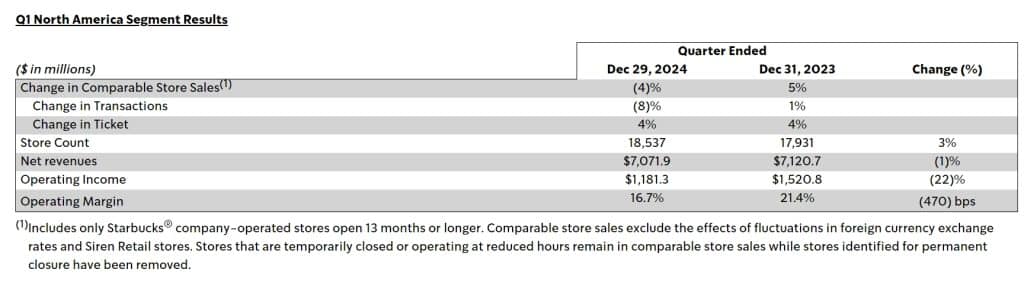
North Americaย 

Sales declined by 4%, primarily due to an 8% drop in transactions. A 4% increase in ticket size was insufficient to offset lower foot traffic. Net revenues in the region dropped 1% year-over-year to $7.1 billion, partially due to a decline in the licensed store business.

Starbucks sales
Source: Starbucks

International Markets

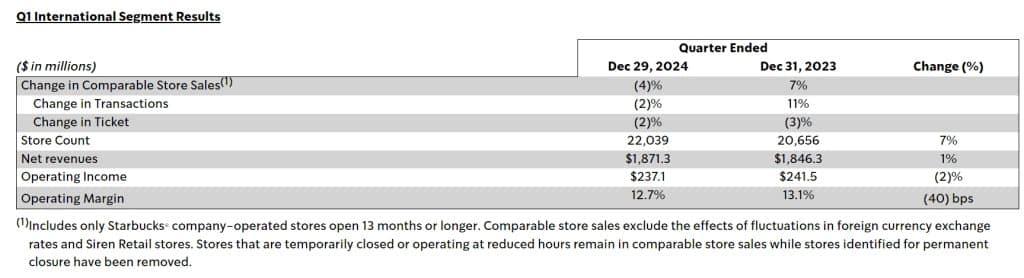
Sales decreased by 4%, as both average ticket size and customer transactions fell by 2%. Despite this, net revenues increased 1% to $1.9 billion, driven by 9% store growth and incremental revenue from acquiring a U.K. licensed business partner.

Starbucks
Source: Starbucks

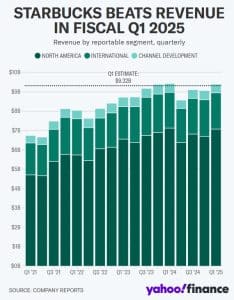
China

Starbucks’ second-largest market saw a sharper decline, with sales down 6%. Average ticket size fell by 4%, while transactions dipped by 2%.

Starbucks
Source: Yahoo Finance

Operating Margin and Earnings Shrink

Operating margin dropped by 390 basis points to 11.9%, down from 15.8% from the last year. This was due to increased investments in the “Back to Starbucks” initiative, supporting partner wages and benefits, as well as the removal of the non-dairy milk charge.

  • In North America, operating income dropped to $1.2 billion, while the international segment also saw a decline, with operating income reaching $237.1 million.

Furthermore, Channel Development revenue fell 3% to $436.3 million, driven by SKU optimization and a decline in ready-to-drink sales. However, operating margins improved slightly to 47.7% due to lower product costs and changes in the product mix.

Loyalty Program Offers Relief

The Starbucks Rewards program showed modest growth, with U.S. 90-day active members reaching 34.6 million, a 1% year-over-year increase. This indicates that while customer transactions are down, loyal customers continue to engage with the brand.

While sales in key markets like North America and China are still under pressure, Starbucks is working on improving operational efficiency and making pricing adjustments to help recover in the coming quarters. In the next section, we will study the companyโ€™s sustainability efforts and how it’s tackling its carbon footprint across global operations.

Starbucksโ€™ Climate Commitment for a Greener Future

Starbucks aims to cut its water and carbon footprint by 50% by 2030. To achieve this, it is adopting greener practices and building resilience to environmental challenges. The company is tackling climate risks by forecasting supply chain disruptions and resource shortages. By addressing issues like carbon pricing and physical risks it wants to secure a sustainable future for its coffee operations.

Additionally, they are taking environmental efforts further by partnering with Mercedes-Benz to expand electric vehicle (EV) charging at its stores.

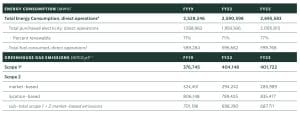
Scope 1, 2, and 3 Emissions

Starbucksโ€™ total greenhouse gas (GHG) emissions across Scope 1, 2, and 3 categories reached 13.5 million metric tons as of the latest report. This marks an 8% increase in emissions compared to the 2019 baseline.

Notably fluid dairy purchases accounted for 18% of these emissions, while green coffee purchases contributed another 11%.

Starbucks emissions

Sustainable Initiatives

  • Support sustainability through reforestation, regenerative agriculture, and waste reduction.
  • Prioritize eco-friendly sourcing for coffee, timber, and cocoa
  • Collaborate closely with suppliers and farmers to lessen its environmental impact.
  • Reduce its carbon footprint by streamlining operations, using renewable energy, and cutting emissions.
  • Address waste management by recycling, reusing, and reducing food waste
  • Use reusable and compostable packaging material made from recycled content.

Starbucsk

Starbucks
Source: Starbucks

Greener Stores Leading the Way

By April 2023, Starbucks had over 3,500 certified “Greener Stores” globally. This brings the company closer to its goal of 10,000 Greener Stores by 2025. These stores meet 25 standards for energy, water, and waste efficiency.

The certification, developed with the World Wildlife Fund and SCS Global Services, is verified by external auditors. This is how Starbucks ensures these stores follow sustainable practices throughout their lifecycle.

Starbucksโ€™ ability to adapt to shifting consumer trends will play a key role in its recovery and long-term growth. As the company continues to enhance its sustainable practices, itโ€™s not only shaping a more environmentally responsible business but also offering consumers a healthier, eco-conscious way to enjoy their favorite cup of coffee.

Boeingโ€™s $11.8 Billion Annual Loss: A Path to Recovery and Net-Zero Ambitions

Boeing is navigating turbulent times, grappling with a staggering $11.8 billion annual loss in 2024 while working to stabilize production. Despite these challenges, the company is investing heavily in sustainability, showing its commitment to reaching net-zero emissions and driving greener skies in the aviation industry.

Turbulence Ahead: Boeingโ€™s Financial Freefall in 2024

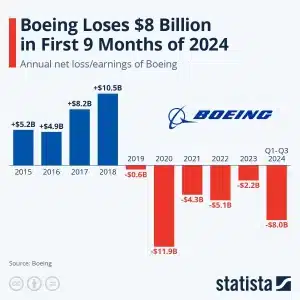
Boeing faced a rough flight in Q4 2024, reporting a $3.86 billion net loss for the quarter and a 31% revenue drop compared to the same period last year. The companyโ€™s revenue stood at $15.24 billion, below analystsโ€™ expectations of $16.21 billion. This marked Boeing’s sixth consecutive annual loss, with 2024’s total loss reaching $11.83 billionโ€”the largest since 2020.

Boeing annual losses 2024
Chart from Statista

Production inefficiencies stemming from a nearly two-month machinist strike significantly affected operations. The strike halted work on most aircraft, causing delivery delays and contributing to a $3.5 billion cash burn for the quarter.ย 

Boeing’s commercial aircraft unit revenue dropped 55% to $4.76 billion, while the defense unit’s revenue fell 20% to $5.4 billion, with $1.7 billion in pretax charges.

CEO Kelly Ortberg expressed optimism about Boeing’s recovery efforts despite these setbacks, emphasizing stabilizing production and focusing on core businesses. Ortberg specifically noted in a memo:ย 

โ€œWhile it was a challenging year, we are seeing encouraging signs of progress as we work together to turn around our company.โ€

Deliveries of Boeing’s 737 MAX increased, with numbers expected to reach the โ€œupper 30sโ€ in January 2025, up from just 17 in December 2024. Ortberg also highlighted plans to turn cash-flow positive in Q2 of 2025 after burning through $14 billion in 2024.

Despite financial mishaps, the plane maker is investing in its core businesses and working to address operational challenges. Efforts include certifying the Max 7 and Max 10 models, restarting test flights of the 777X, and addressing cultural and operational issues within the company.

Boeing remains focused on its long-term vision, despite the recent financial hiccup, which goes beyond balancing the books. The company is doubling down on sustainability efforts, recognizing the critical need to address its environmental impact while navigating challenges.

Greener Skies: Boeingโ€™s Bold Sustainability and Net-Zero Roadmap

Boeing is a leader in aerospace innovation and a proactive advocate for environmental sustainability. The company has made significant strides in addressing climate change, aligning its operations with the goals of the Paris Agreement.ย 

For the fourth consecutive year in 2023, Boeing achieved net-zero carbon emissions across Scope 1, Scope 2, and parts of Scope 3 (business travel) by combining renewable energy investments, conservation efforts, and verified carbon offsets.

Decarbonizing Operations: A Multifaceted Approach

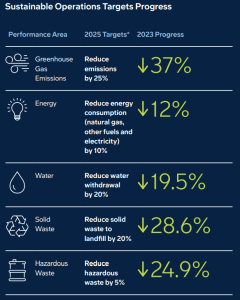
Boeing prioritizes avoiding and reducing greenhouse gas (GHG) emissions across its manufacturing sites and facilities. The companyโ€™s decarbonization strategy focuses on:

  1. Efficiency Improvements: Upgrading heating, cooling, and lighting systems to reduce energy consumption.
  2. Renewable Energy Procurement: Expanding the use of renewable electricity sources across its global operations.
  3. Carbon Offsetting: For emissions that cannot yet be avoided, Boeing invests in certified carbon offsets verified by top organizations. These offsets adhere to strict criteria, including independent verification and global registration.

Boeing sustainable operations targets

By actively tracking emissions and energy usage, Boeing ensures that its operations remain aligned with a 1.5ยฐC pathway. The plane manufacturer continuously monitors performance at its Core Metric Sites, which account for 70% of its operational carbon footprint, using validated data from utility bills and third-party assurance processes.

A Future-Focused GHG Strategy

Boeingโ€™s โ€œAvoid First, Remove Secondโ€ strategy emphasizes preventing emissions before they occur. This approach includes:

  • Increasing the use of renewable energy sources such as sustainable aviation fuel (SAF).
  • Investing in energy-efficient infrastructure and conservation practices.
  • Transitioning to permanent carbon removal solutions to complement traditional offset projects.

RELATED: Boeingโ€™s Big Move: Boosting EU Aviation with Norsk e-Fuelโ€™s SAF

By 2024, Boeing plans to reduce its reliance on offsets for Scope 1 and Scope 2 emissions, focusing instead on long-term carbon management strategies. However, offsets will continue to play a role, particularly for business travel emissions and supporting voluntary carbon markets.

Sustainability in Aviation: The Cascade Climate Impact Model

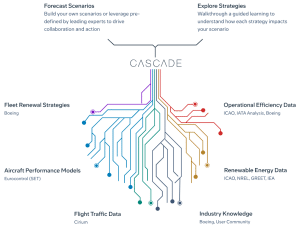
In May 2023, Boeing launched the Cascade Climate Impact Model to support the decarbonization of commercial aviation. Cascade is a comprehensive data modeling tool that evaluates various pathways to reduce aviationโ€™s carbon footprint.

The tool considers factors such as:

  • Fleet renewal with more fuel-efficient aircraft.
  • Operational efficiencies like improved flight routing.
  • The production, distribution, and use of renewable energy sources.
  • Innovations in future aircraft designs and market-based mechanisms.
Boeing Cascade Climate Impact Model
Image from Boeing website

Cascade is available to the public, enabling stakeholders to explore the environmental impact of different aviation strategies. Founding members of the Cascade User Community, including NASA, IATA, and top academic institutions, contribute insights and feedback to enhance the toolโ€™s functionality.

Boeing actively engages with the Cascade User Community to evolve the platform, ensuring it remains a valuable resource for guiding the aviation sectorโ€™s net-zero ambitions.

Carbon Offsetting: A Critical Component of the Transition

Climate change poses risks beyond carbon emissions, and Boeing is preparing for these challenges through a robust business continuity program. The company also recognizes the importance of carbon credits in tackling its environmental footprint.

Since 2020, Boeing has voluntarily offset emissions from its Scope 1 and Scope 2 operations, as well as Scope 3 business travel. The companyโ€™s offsets are certified by global verification organizations and meet rigorous criteria, ensuring their integrity and impact.

Boeing also incorporates the Carbon Offsetting and Reduction Scheme for International Aviation (CORSIA) credits for business travel offsets. Moving forward, the company aims to diversify its offset portfolio with a greater emphasis on permanent carbon removal solutions.

Empowering Global Sustainability Goals

Boeingโ€™s efforts to decarbonize extend beyond its own operations. By advancing renewable energy technologies, promoting SAF, and developing tools like Cascade, the company plays a pivotal role in driving sustainability across the entire aviation industry.

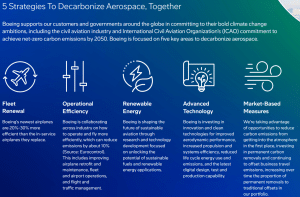
Through these initiatives, Boeing aligns with the commercial aviation industryโ€™s collective goal of achieving net-zero carbon emissions by 2050. By fostering collaboration among stakeholders, the airline uses these five strategies to help decarbonize aerospace.

Boeing plan to decarbonize aerospace
Image from Boeing sustainability report

Boeingโ€™s journey through financial challenges and environmental initiatives reflects a company striving to balance recovery with responsibility. As it works to stabilize operations and embrace sustainable practices, Boeing aims to redefine its future while contributing to a greener aviation industry.

SolarBank Sparks Solar Surge: A Bright Future for U.S. Renewable Energy

Disseminated on behalf of SolarBank Corporation.

Solar energy is experiencing a remarkable surge in the U.S., driven by significant new installations and strong policy support. This growth is largely due to developers completing projects in the last year and opening new opportunities in 2025. Amid this surge, SolarBank, a leading North American solar company, is pivotal in developing commercial, industrial, and community solar projects in the U.S.

Thus, as the U.S. energy landscape undergoes a major shift, wind and solar are set to lead the charge in powering the nationโ€™s future. With this transformation underway, solar energy will play an even bigger role in the coming years.

Solar Power Fuels Americaโ€™s Clean Energy Boom

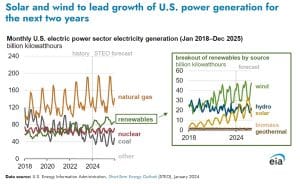
According to recent EIAโ€™s Short-Term Energy Outlook projections, solar power generation is set to experience remarkable expansion, rising 75% from 163 billion kilowatt-hours (kWh) in 2023 to 286 billion kWh by 2025.

Supply chain issues, grid connection delays, and tariff increases on imported modules pose challenges, but federal and state incentives continue to support solar’s momentum. While obstacles remain, reforms and incentives offer hope for accelerated growth in the coming years.

In 2023, renewablesโ€”including wind, solar, hydro, biomass, and geothermalโ€”accounted for 22% of the U.S.’s 4,017 billion kWh of electricity generated, amounting to 874 billion kWh.

solar US power

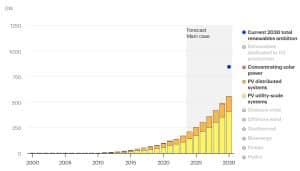
Moving on, IEA says, the U.S. is set to add significant solar PV capacity, leading the renewable energy surge with nearly 500 GW projected by 2030. Utility-scale solar sees steady growth, driven by the Inflation Reduction Act (IRA) and federal tax credits, even as residential expansion slows due to California’s new net-metering rules and high interest rates.

IEA U.S. Solar Energy 2030 Forecast

Solar forecast
Source:: IEA

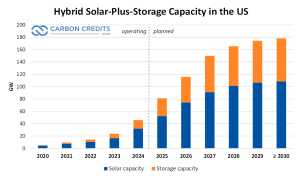
Nonetheless, Americaโ€™s solar sector continues to expand rapidly, with significant growth in both stand-alone utility-scale solar capacity and hybrid solar-plus-storage installations.


Hybrid Solar-Plus-Storage

The hybrid solar-plus-storage segment is also experiencing remarkable progress. Data from S&P Global indicates that by October 1, 2024 (YTD), annual additions in this category include 6,257.2 MW of solar capacity and 2,814.8 MW of storage capacity. These additions bring the total operating hybrid solar capacity to 22,826.2 MW and the total storage capacity to 9,925.7 MW.

This growth reflects the increasing integration of energy storage systems with solar installations, which enhances grid reliability and enables efficient energy use.

The expansion of both stand-alone and hybrid solar capacities demonstrates solarโ€™s critical contribution to the U.S. energy transition and its ability to support a cleaner, more sustainable power grid

hybrid solar plus

The Solar Industry Thrives Amid Federal Policy Shifts

A report from PV Magazine sheds light on the current hurdles in the U.S. solar industry as federal policy debates intensify. There are ongoing discussions about scaling back the Inflation Reduction Act (IRA) and cutting support from the Department of Energyโ€™s Loan Programs Office, which has raised concerns within this sector.

New tariffs on Chinese imports could increase the cost of solar projects, potentially slowing installations in the short term. However, the rapid growth of the domestic solar supply chain offers a silver lining. This growth, particularly in Republican-majority states, highlights the bipartisan support for clean energy investments.
Local Momentum and Distributed Solar Opportunities

Moreover, this expansion of local manufacturing could play a key role in reducing the impact of potential policy rollbacks. As a result, the long-term growth prospects of the solar industry remain strong, and it continues to be a vital part of the nationโ€™s renewable energy future.

Notably, renewable energy projects have already brought in $106 billion in investments and created thousands of jobs across U.S. communities. Public demand for affordable, clean energy remains strong, especially in areas benefiting from solar projects. This local momentum will likely keep solar growing, even if federal incentives face cuts.

Furthermore, distributed solar systems offer a major opportunity. These systems deliver power where it’s needed. This reduces costs and boosts energy independence. Federal incentives, like the IRAโ€™s domestic content bonus, have encouraged developers to use local materials, supporting the industryโ€™s growth.

Looking forward, many solar projects will focus on energy communities. This shift signals continued solar expansion and a bright future for the industry in the U.S., with solar playing a key role in sustainable, localized energy solutions. One such company, leading by example is SolarBank.

SolarBank: Powering a Sustainable Future with Innovative Solar Solutions

In the age of solar, SolarBank is delivering clean and renewable energy solutions for the digital age. Listed on NASDAQ as SUUN, the company believes in โ€œharnessing the power of the sun to provide sustainable energy as long as it shines.โ€

With a market cap of $53.33 million and an enterprise value of $53.60 million, SolarBank focuses on driving sustainable profit growth. Its top solar projects include Ontario’s small FIT solar gardens and New York’s community solar farms, which will expand into large-scale data center projects over 100 MW.

  • It projects the North American solar PV market to grow to $120.74 billion by 2027, with a remarkable compound annual growth rate (CAGR) of 21.7% from 2020 to 2027.

This strong growth highlights the increasing demand for solar energy solutions across the region. Furthermore, the company strategically targets carbon-intensive markets with high electricity costs and favorable renewable energy policies.

It is expanding its expertise in rooftop and ground-mount solar. It is also moving into commercial and industrial behind-the-meter projects, battery storage, EV charging stations, and data center power solutions. These efforts meet the rising demand for low-carbon digital infrastructure.

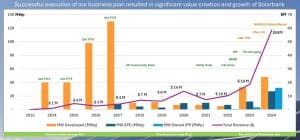
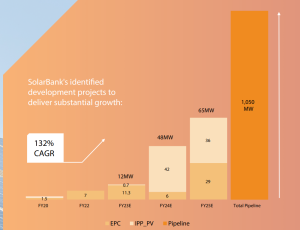
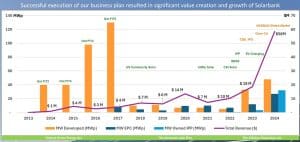
More Than a Decade of Strong Revenue Growth

SolarBank
Source: SolarBank

Source: SolarBank

Advancing Community Solar Initiatives

As mentioned earlier, community solar is significantly reshaping the U.S. energy landscape. As of 2023, 23 states and the District of Columbia have implemented policies supporting community solar projects.

These efforts have resulted in over 8 GW of installed capacity, with projections indicating growth to 14 GW by 2028, driven by an annual expansion rate of 1.5 GW. Moreover, the deployment of community solar-plus-storage systems is expected to rise by 219% by 2028.

Notably, SolarBank is also developing community solar projects in New York and Maryland, with over 250 MW currently in progress.

SolarBankโ€™s $49.5M Qcells Deal

The company recently announced a $49.5 million deal with Qcells, a subsidiary of South Korea’s Hanwha Solutions, to sell four solar projects in upstate New York. These ground-mount projectsโ€”Gainesville, Hardie, Rice Road, and Hwy 28โ€”have a combined capacity of 25.577 MW and have passed the CESIR process, confirming grid connection feasibility.

Under engineering, procurement, and construction (EPC) agreements, Qcells will develop the sites. SolarBank will manage operations and maintenance post-construction, with the projects serving as community solar systems, providing shared clean energy benefits without the need for home installations.

Supporting Renewable Energy for Data Centers

Electricity use from cloud computing, AI, and cryptocurrency is set to double by 2026, pushing companies to invest heavily in clean energy. And this rising demand is adding about 15 GW of renewable energy capacity each year.

These investments not only meet power needs but also boost brand image, improve resilience, and comply with stricter regulations. SolarBank supports this shift by delivering tailored energy solutions for modern industries.

Expands into BESS with $3M Boost

SolarBank Corporation is advancing its clean energy strategy by entering the battery energy storage market with $3 million in financing from RE Royalties Ltd. The funds will support three 4.99 MW Battery Energy Storage System (BESS) projects in Ontario.

The company got involved in the projects through its $45 million acquisition of Solar Flow-Through Funds Ltd., which was completed in July 2024. It aims to capitalize on the market forecast by Fortune Business Insights that predicts project growth at a 16.3% annual rate and reaching $31.2 billion by 2029. Thus, this acquisition expanded the companyโ€™s renewable energy assets and opportunities in energy storage.

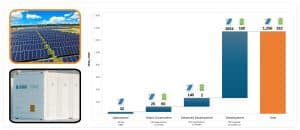
SolarBankโ€™s Strong Visibility to Continued Growth

SolarBank
Source: SolarBank

In conclusion, solar energyโ€™s rapid expansion is crucial to the U.S. energy transition, offering a reliable path to decarbonize the power sector. SolarBank, through its focus on commercial, industrial, and community solar projects, is playing a key role in this shift. As technology advances and supportive policies continue, solar’s growing influence will help shape a cleaner and more sustainable energy future


Disclosure: Owners, members, directors, and employees of carboncredits.com have/may have stock or option positions in any of the companies mentioned: SUUN.

Carboncredits.com receives compensation for this publication and has a business relationship with any company whose stock(s) is/are mentioned in this article.

Additional disclosure: This communication serves the sole purpose of adding value to the research process and is for information only. Please do your own due diligence. Every investment in securities mentioned in publications of carboncredits.com involves risks that could lead to a total loss of the invested capital.

Please read our Full RISKS and DISCLOSURE here.