Oasification – Solving Water Shortages with Carbon

The rise and fall of countless civilizations are due to access to two things: water and carbon. Both are essential for sustaining flora and fauna.

When arable regions become a desert wasteland, it shifts capital and populations. The world will soon surpass 8 billion people, and in the next 15 years it is expected to grow by another billion people.

Being able to reverse desertification will unlock new regions for development.

While turning a desert wasteland into a lush green carbon oasis seem like a massive undertaking, it’s already happening across the globe.

First some basics.

Desertification is the long-term degradation of dryland ecosystems by human activities, indirectly through climate change or directly through bad land management or overuse.

  • +75% of the Earth’s land area is degraded
  • +90% could become degraded by 2050.
  • By 2050, the global economy could lose US$23 trillion through land degradation.
  • Globally, the world loses arable land the size of Saudi Arabia each year.
  • Climate change is estimated to reduce global crop yields by about 10% by 2050. Parts of Asia and MENA (Middle East and North Africa) could see their crop production cut in half.

Desertification is a causing factor in the early human migration off of Africa. They followed the water and trees, much like the animals did.

Desertification has been identified as one of the top 3 environmental challenges back in 1992.

About 1/3rd of the Earth’s land is covered by desert (as determined by precipitation). All continents have deserts, yet their types and sizes vary widely.

Deserts are frequently among the least populated places on earth since they are thought to have challenging living conditions.

The 5 Largest Deserts Regions In The World

  • Antarctic & Artic – 10.9 million square miles
  • MENA Region (Sahara, Arabian, and Syrian deserts) – 4.7 million square miles
  • North America’s “Big 4” (Great Basin, Mohave, Chihuahuan, and Sonoran) – 0.5 million square miles
  • Asia’s Gobi – 0.5 million square miles

The biggest non-polar region is the Middle East and Northern Africa (MENA), the host of the largest subtropic deserts in the world – the Sahara.

The Sahara Desert has grown by 10% since 1920, and a third of its current size is due to climate change.

The overall MENA region is divided into the have or have nots – minerals reserves, oil reserves, carbon reserves (vegetation), and water reserves.

The region is surprisingly flush with water resources although it’s deep underground.

  • The overall volume of “fossil water” is estimated to be over 4 billion barrels. That is over 100 times the annual renewable freshwater resources and 20x the freshwater stored in African lakes.

To get to this will need massive water drilling programs. Libya is building the “Great Man-Made River” the world’s largest underground network of pipes and aqueducts.

To extract this water resource, it needs to be economically viable, and carbon credits help tip the scales.

Water can help turn the deserts back into arable lands, this opens the immense potential for carbon credit generation from all the new greenery.

Carbon credit and biodiversity credits can improve the quality of life (in their region).

How do you control the temperature and climate?

The MENA region was once green and lush, but over time desertification occurred. There only remains a few oases serving as a reminder of the region’s former glory.
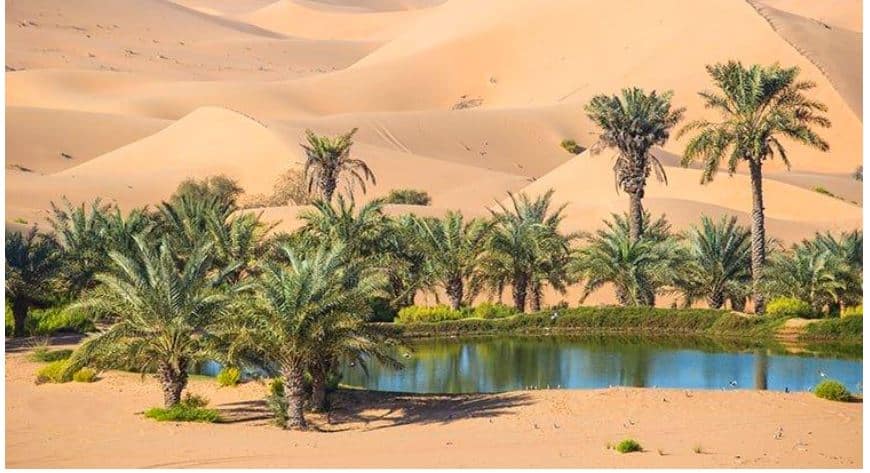
sahara desert

Fortunately, turning deserts back into arable regions can happen with proper planning and implementation of technology and nature-based solutions.

To stop the “spreading cancer” known as the Sahara Desert, a massive oasification project is already underway called the “African Great Green Wall”.

It’s an ambitious plan to develop a wide wall of trees to hold back the expanding Sahara Desert.

This 8,000 km natural wonder would cut across the whole continent of Africa from Senegal to Djibouti, affecting 11 countries along the way.
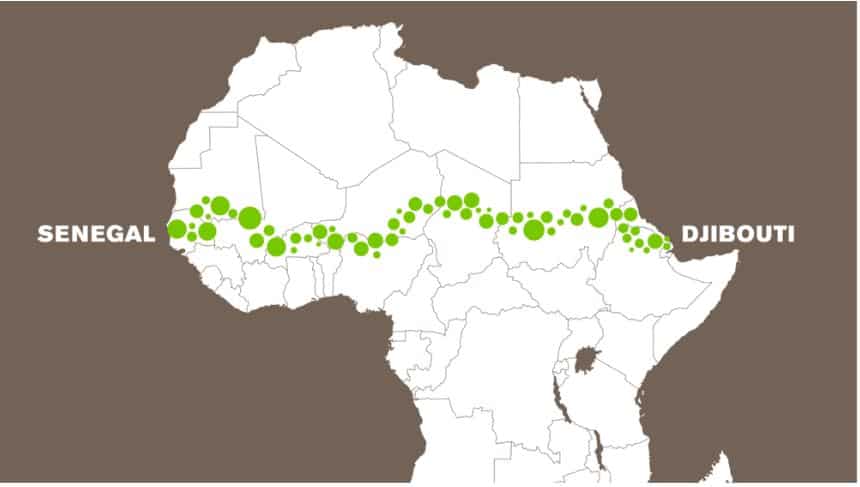
African Great Green Wall

If completed, it would be the largest living structure on the planet. It’s 3x the size of the Great Barrier Reef.

The hope is that the trees will slow soil erosion, slow wind speeds, and help rainwater filter into the ground.

More fertile soils will help communities across the Sahel with land grazing and agriculture.

The African Green Wall hopes to reach its goal by 2030, but with funding drying up and regional disputes, its future remains in limbo.

African Great Green Wall’s execution has not gone as well as planned, with over 80% of the planted trees have died. Researcher Chris Reij stated:

“If all the trees that had been planted in the Sahara since the early 1980s had survived, it would look like Amazonia.”

Another MENA nation that is making major moves towards bringing back arable land is oil-rich Saudi Arabia.

Not too long ago the Middle East was a tropical paradise, and Saudi Arabia is working toward bringing it back to its former glory.

Saudi Arabia is the 9th most powerful nation in the world and one of the most water-scarce nations on the planet.

Surprisingly Saudi Arabia is behind only the U.S. and Canada for per capita water consumption. The Kingdom uses 4 times as much water as it can renew. Plus, it uses 2x the water of an average nation per capita.

Major conservation efforts are at work to protect their other vital resource as water is essential for making the region green again – and to go net zero.

  • Saudi Arabia has also announced “Vision 2030”, a project to diversify the economy and move away from its dependency on oil.

With the proceeds of their remaining oil, Saudi Arabia is now starting to drill for their next precious resource behind oil – water.

The more water they stockpile the greener their country and economy can be.

The image below looks like an alien crop circle, but these are essentially carbon crop circles.

This “Center Pivot Irrigation” technology was developed in the US and requires less water, resources, and maintenance.

Water is pumped up from underground river channels and aquifers from depths of 1km (0.6 mile).

Each circle will be able to generate carbon credits after the soil begins to take root again and as they begin to store more carbon (and water) in the plants and soil.

To give some context, in 1971, Saudi Arabia had only 3.5 million acres of arable land (0.7% of its total land mass). But in 2020, that ballooned up to 8.5 million acres – that growth is roughly the size of Slovenia.

Yet, they will run out of water underground eventually, so they need new sources of water.

Making Water from the sea and the sky

Constructing dams can capture the rainfall surges from storms to be used later. Countries have also been exploring making their own storms using “Cloud Seeding”.

Cloud seeding works by shooting salt flares into the clouds. As salt naturally attracts water, the water particles collide with others to help with rainfall.

  • Saudi Arabia is also the world’s biggest user of desalinating plants which turn seawater into freshwater.

They have announced the world’s first Solar Power Desalination Plant. This cutting-edge technology is the most efficient desalination project yet.

Carbon credits are now available for desalination plants that switch to renewable power.

Scientists are even working on creating carbon-negative desalination plants, so they suck up more carbon than they emit.
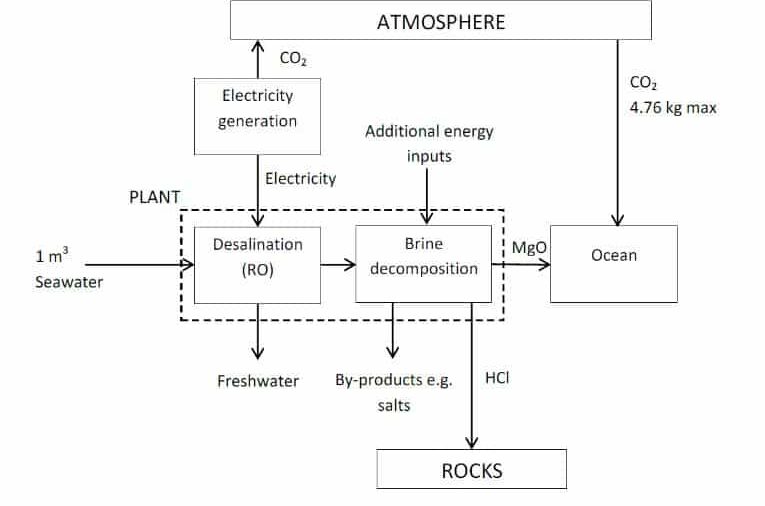
carbon negative desalination

The concept is to take advantage of the magnesium by-product in the concentrated brine which the desalination plant rejects. This is still in the very experimental stages, but it could show some promise in the future.

Wind & Solar

Using large-scale solar and wind farms can create microclimates.

Large wind farms mix hotter air from above with cooler air below, which brings slightly more initial heat to the ground. The turbines also interrupt the smoothness of the desert wind. This slows the wind speed and traps that heat further.

The trapped heat changes the atmospheric conditions above and can double the typical rainfall (in lab simulations).

The rain helps plants grow, and as they begin to take root, they also provide more green cover. The green cover lowers the amount of sun reflected off the desert surface. And so, it helps bring in more rain.

Solar farms can decrease the amount of sun bounced back into the atmosphere even more.

By combining large-scale solar and wind projects, has the potential to change the local climate.

And Saudi Arabia recently announce they are doubling its investment in renewables.

They are planning massive projects using clean energy such as the world’s biggest solar thermal plant and the region’s largest wind farm.

These initiatives will heat up the ground temperature in the remote agricultural/carbon farm areas. They’ll also produce more rainwater, making it more and more like the lush tropics.

They’re also planning to create a massive climate-controlled futuristic and green megacity called NEOM, in another region of the country. This NEOM project will be carbon neutral and net zero water – more on the NEOM project here.

With the ability to purchase and fund carbon projects across the world, it raised the question “Are local carbon credits better?”.
Climate Action Data Trust Launched

The World Bank, along with the International Emissions Trading Association (IETA) and the government of Singapore, launched a new carbon credit platform “CAD Trust” to clean up the market and integrate several registries.

The founding partners call the new global tracking system Climate Action Data Trust or CAD Trust. The goal is to bring transparency to the carbon credits market and aid countries to raise climate finance faster and more affordable.

President and CEO of IETA Dirk Forrister remarked:

“Today’s launch of the CAD Trust marks a significant step in the evolution of carbon markets. It will lead to the creation of a centralised, accessible and secure digital infrastructure that national governments and private businesses can rely upon as they expand carbon markets to meet their net zero goals. This system will provide the integrity and public trust necessary for scaling up investment in climate action…”

The Need for Transparency

Polluters can offset their emissions to achieve their net zero targets. Offsetting means buying carbon credits generated from projects that avoid or remove carbon from the air.

Governments have been struggling to come up with rules for trading compliance carbon credits. Still, projects are developed to produce those credits and governments are establishing registers to track them.

In the private sector, many initiatives have emerged to deliver credits for the voluntary carbon markets (VCM). Nonprofit registries like Verra and Gold Standard are accrediting and monitoring the credits.

But critics of the market continue to raise concerns over poor transparency, limited supply, and quality of the projects.

Enter the new carbon credit database and tracking system – the CAD Trust.

The Climate Action Data Trust (CAD Trust)

The CAD Trust seeks to fix those issues by integrating all the carbon credit project’s data in one place and making it available to the public for free. Its launch comes as the latest round of global talks on rules for carbon markets under the Paris Agreement’s Article 6 at the COP27 summit ended in deadlock, again.

Speculators warned that some countries are pushing for frameworks that can’t prevent double counting carbon credits towards climate goals.

Chandra Shekhar Sinha, Adviser of the Climate Change Group at the World Bank said:

“… We hope that CAD Trust becomes a critically important source of data by connecting registry systems of the voluntary and compliance carbon markets to bolster transparency and accountability in these markets to meet corporate needs and to further the implementation of the nationally determined contributions that sit at the heart of the Paris Agreement…”

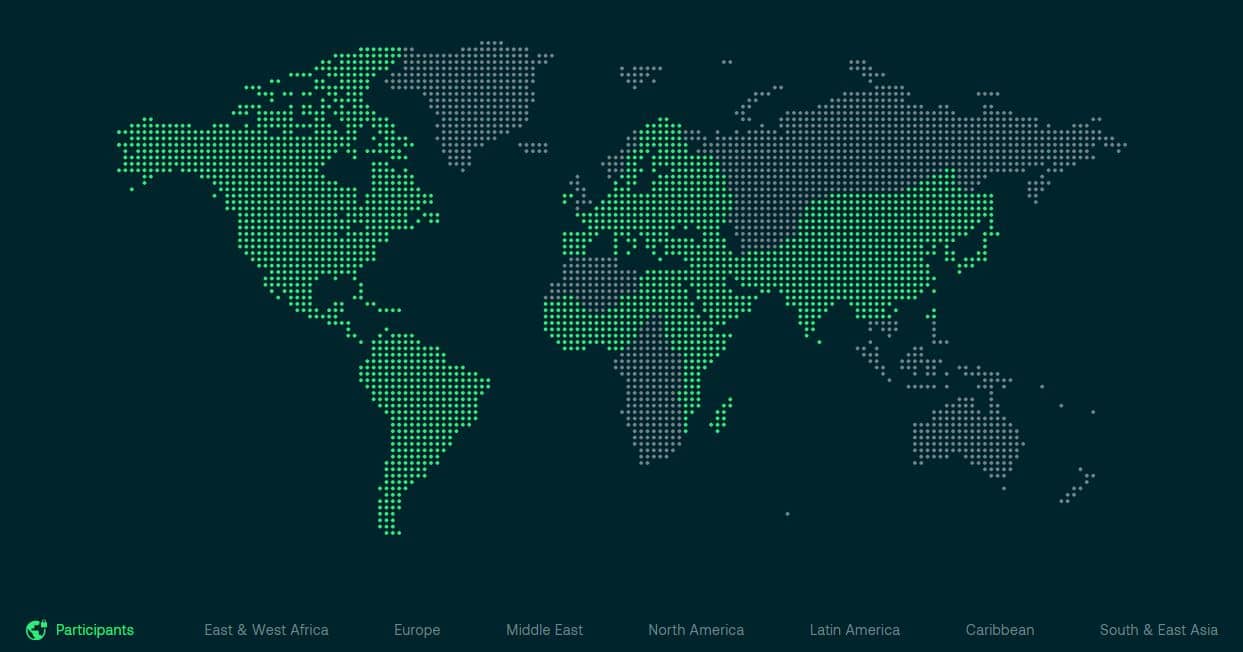
CAD Trust evolved out of the Climate Warehouse initiative developed and managed by the World Bank. It’s a culmination of 3 years of work and prototyping of a series of simulations of carbon data aggregation. That involves 30 participating organizations, 11 national governments, and 58 testing sessions.

world bank CAD trust simulation participants

CAD Trust uses distributed ledger technology to create a decentralized record of carbon market activity. The aim is threefold:

  • avoid double counting
  • increase trust in carbon credit data, and
  • build confidence in carbon markets

The new initiative will engage with various governments as well as private organizations.

Their collaboration will help set the specifications for an open-source metadata system that can share information about carbon credits and projects across various digital platforms. This is to ease the future integration of multiple registry systems and make it easier for companies and countries to share data.

For instance, the new carbon credit platform will allow Bhutan to save around $1 million in market access costs. One of Bhutan’s Ministry of Economic Affairs officers said that “It really helps us leapfrog the entire learning process.”

He also added that using the CAD Trust of the World Bank means Bhutan can begin selling carbon credits in 2023. That’s one year earlier than if the nation hadn’t accessed the system.

The CAD Trust Council

The World Bank and partners also announced the formation of the CAD Trust Council. It will be in Singapore tasked to guide the strategic direction of the CAD Trust.

The Council consists of representatives from the following countries and registries:

  • Bhutan,
  • Chile,
  • Japan,
  • Senegal,
  • Singapore,
  • United Kingdom,
  • Verra,
  • Gold Standard,
  • American Carbon Registry, and
  • Global Carbon Council.

They will work closely with CAD Trust, give it strategic direction, and ensure it achieves its goals. A big part of that goal is to ensure that carbon credits are delivering promised emissions reductions.

Voluntary Carbon Market Prices Collapse & Vanguard Exit Net Zero

Prices for carbon offsets in the voluntary carbon market had one of the worst days in their short history.

  • Nature Based Offsets (N-GEO) down over 20%.
  • Aviation (CORSIA Credits) down 8%.
  • Tech-Based Offsets down 22%.

After enjoying record-breaking carbon prices earlier in the year, liquidity is drying up in the carbon sector.

Vanguard, which oversees $7.1 Trillion in assets, also announced that they pulled out of the Net Zero Asset Managers Initiative (NZAMI).

NZAMI had 3 major goals with its initiative:

  1. Work in partnership with asset owner clients on decarbonization goals. That’s consistent with an ambition to reach net zero emissions by 2050 or sooner across all assets under management (‘AUM’).
  2. Set an interim target for the proportion of assets in line with reaching net zero emissions by 2050 or sooner.
  3. Review our interim target at least every five years. Plus, a view to ratcheting up the proportion of AUM covered until 100% of assets are included.

In a statement, Vanguard said:

“We have decided to withdraw from NZAM so that we can provide the clarity our investors desire about the role of index funds… And about how we think about material risks, including climate-related risks—and to make clear that Vanguard speaks independently on matters of importance to our investors.”

Vanguard’s decision to walk out of the world’s largest climate-finance alliance marks the biggest defection to date. Earlier this year, pension firms and an investment consulting firm exited GFANZ.

After that, JPMorgan Chase & Co., Bank of America Corp. and Morgan Stanley were considering defection after Race to Zero, a UN-backed entity that underpins GFANZ, mandated members to “phase down and out unabated fossil fuels, including coal.”

Vanguard’s move was made after a “considerable period of review.” And that’s based on a desire to maintain the freedom not to restrict its investment options, they added.

Legal Risks of Failing to Meet Net Zero

Concerns on legal risks are justified because if firms fail to reach their net zero pledges, they could face serious consequences. That may be in the form of significant litigation costs, huge financial penalties, and negative publicity, according to legal advisors.

A founding partner of the NZAMI, VP of Ceres Investor Network commented on this saying:

“It is unfortunate that political pressure is impacting this crucial economic imperative and attempting to block companies from effectively managing risks — a crucial part of their fiduciary duty.”

It will be critical to see which companies follow Vanguard’s exit, or whether they maintain their commitments. And how that will further impact voluntary carbon market prices.

London Stock Exchange Names First Fund to Trade Carbon Credits

The London Stock Exchange (LSE) welcomes the first fund to use its new market framework for carbon credits, the Foresight Sustainable Forestry Co., to raise capital and transparency to the market.

The LSE is the first exchange to use a public carbon market framework to drive funding into climate mitigation projects that create carbon credits. It offers access for investors and companies wanting to buy carbon credits to offset emissions.

The Exchange has issued its first Voluntary Carbon Market (VCM) designation to Foresight Sustainable Forestry Company. It’s an investment company offering direct and liquid access to UK forestry and afforestation projects, with future exposure to the VCM.

London Stock Exchange Carbon Credits Framework

Individuals and companies can get carbon credits through intermediaries like brokers. But some of them find it hard to source information about the project and its developers. They may also be struggling to identify certain projects that suit their requirements and preferences.

This is why the London Stock Exchange launches its VCM to give investors easier access to information about carbon credits they seek to buy. The Exchange’s head of sustainable finance for capital markets division Claire Dorrian said:

“I think the overarching principle behind all of this is transparency through disclosure.”

The LSE VCM platform gives entities and individuals a means to raise funds and use the money on projects that cut GHG emissions. In return for their investments, investors and firms can get carbon credits in place of cash dividends. They can then use those credits for offsetting purposes and meeting net zero targets.

  • Demand for carbon credits in the VCM is growing as firms pledge to reach net zero and help abate climate change. The volume of credits traded last year is up more than 3x, from $520 million to about $2 billion.

LSE First VCM Designation

Foresight Sustainable Forestry Co. (FSF), a London-based investment firm, is the first to take part in the LSE new VCM platform. FSF invests in developing land for commercial forests, primarily in the U.K.

The firm’s current portfolio consists of about 9,700 hectares of UK standing forestry and afforestation assets. The carbon sequestered by its 27 afforestation sites equals to around 800,000 carbon credits under the Woodland Carbon Code.

If the current capital is deployed, FSF can create about 1 million carbon credits in its first wave of afforestation deployment. And in the year ahead using its LSE first VCM designation, the shareholders can elect to get carbon credits instead of cash dividends.

Foresight’s co-head Richard Kelly remarked that:

“We’d be looking to attract companies, and ideally companies with science-based, net-zero pledges, to join us as shareholders… By connecting investors with net zero ambitions to entities such as FSF that generate voluntary carbon credits, the launch of the VCM is a major milestone in the UK’s fight against climate change.”

He also added that the VCM designation means that the ever-growing number of climate-minded investors can easily and confidently identify sustainable solutions.

Investing in LSE’s Carbon Credit Market

Operating companies or investment funds on the LSE are eligible for the VCM. But they must meet all other requirements for the market on which they are listed. The Exchange operates the FTSE 100 and FTSE 250 indexes and provides financial data.

The LSE VCM designation requires issuers to perform disclosures relating to the projects they are directly or indirectly financing.

In particular, developers must disclose the percentage of their total assets invested in climate mitigation projects. They must also disclose the industry standards they follow to certify those projects.

Yet, LSE new VCM may come with challenges for those looking to invest in carbon credits. For example, they may find it difficult to make the narratives about their green investments if the credits they buy are linked to multiple underlying projects. In this case, disclosing information related to the project may be hard.

But the new market in the Exchange can address that challenge and how entities buy carbon credits. Yet, it may take some time for companies to raise funds.

As per Dorrian’s words “it’s going to take, I think, a little bit of time for the market to digest”.

Hess Signs $750M REDD+ Carbon Credits Deal with Guyana

US-owned Hess Corporation entered a deal with Guyana to buy $750 million worth of REDD+ carbon credits from the South American nation in the next decade to support efforts in protecting its Amazonian rainforests.

Hess Corporation is a global energy company specializing in the exploration and production of crude oil and natural gas. It’s an industry leader in environmental, social and governance (ESG) performance and disclosure.

Hess is a major partner with ExxonMobil and CNOOC of China in Guyana’s offshore project, the “Stabroek Block”. It’s one of the world’s largest oil and gas discoveries near Suriname’s border.

The multi-year agreement with Guyana that runs from 2022 to 2032 is under the UN Reducing Emissions from Deforestation and Forest Degradation program (REDD+). It involves Hess’ purchase of 37.5 million REDD+ jurisdictional carbon credits (current and future issuances).

This is the second major deal the country has entered in the past decade. In 2009, Norway had agreed to provide $250 million to help ensure Guyana’s 18 million hectares of forest remains intact.

Guyana REDD+ Carbon Credits

The REDD+ carbon credits will be under the ART (Architecture for REDD+ Transactions) registry. ART operates a robust, secure, transparent electronic system to register REDD+ programs. It also records the issuance, transfer, and retirement of serialized verified credits.

The initiative seeks to incentivize governments to reduce emissions from deforestation and forest degradation, restore forests, and protect intact forests.

The REDD+ carbon credits Hess will buy from Guyana will be issued under ART’s REDD+ Environmental Excellence Standard 2.0 (TREES). The program quantifies, monitors, reports, and verifies emission reductions from REDD+ activities at a jurisdictional and national scale.

Remarking on the partnership, President Irfaan Ali said:

“As one of only nine national jurisdictions in the Amazon Basin, we said long ago that national or jurisdiction-scale action on forests, coupled with access to global private finance, could create solutions that benefit the peoples of forest-rich countries while also achieving global climate goals…”

He further noted that the deal represents a massive step forward in “showing the world that developing countries can lead the way to global solutions”.

  • The government also says it will pursue efforts to attract more partners in the carbon credits market as Guyana works to reduce harvests of forest resources in a country the size of Britain with less than 1 million population.

Avoiding deforestation is critical to the Paris Agreement’s goal to limit the global temperature rise to well below 2°C. It’s one of the major commitments at the COP26 summit where 130+ countries, including Guyana, pledged to end deforestation by 2030.

Officials in the U.S. recently announced plans to sanction Amazon deforesters.

Low Carbon Development & Net Zero

The deal is also part of Guyana’s Low Carbon Development Strategy (LCDS) 2030. It outlines how the country’s rainforest resources can help combat climate change while promoting a sustainable, low carbon economy.

Guyana’s ~18 million hectares of forests that can store about 20 billion tonnes of CO2e. Its LCDS 2030 serves as the small nation’s roadmap for preserving its forests while growing its economy, too.

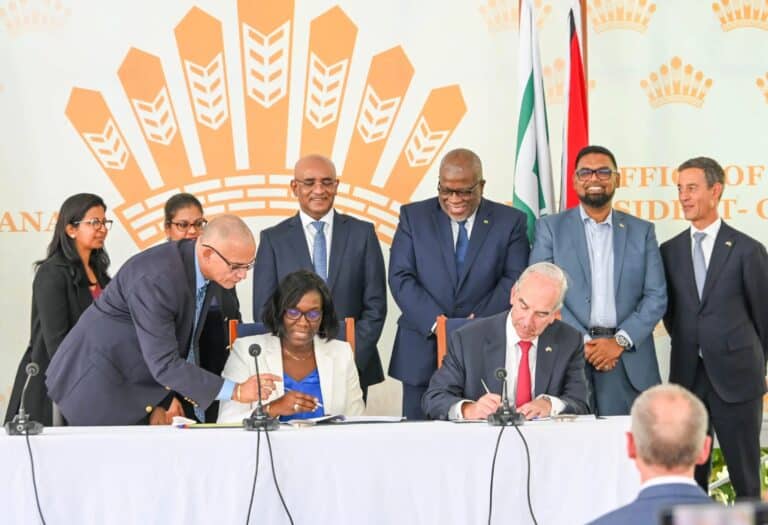
At the signing ceremony, Hess Corp. CEO John Hess commented:

“Guyana is one of the most heavily forested countries in the world. We admire the efforts that Guyana has undertaken for years to protect the country’s forest, and provide a strong model for other countries, other businesses and other governments… We are pleased to support the country’s efforts to advance sustainable development and enhance the quality of life for its people.”

Buying REDD+ carbon credits from Guyana is a major part of Hess’ commitment to help address climate change. It’s also important for the company’s net zero emissions target by 2050. The deal adds to the company’s ongoing and successful emissions reduction efforts as laid out in its sustainability reports.

Around 30% of the $750 million investment from Hess will be for developing the Indigenous Amerindian communities. There are nine such tribes in Guyana which accounts for almost 10% of its total population.

Investments in Nature-based Solutions Need $674B a Year by 2050

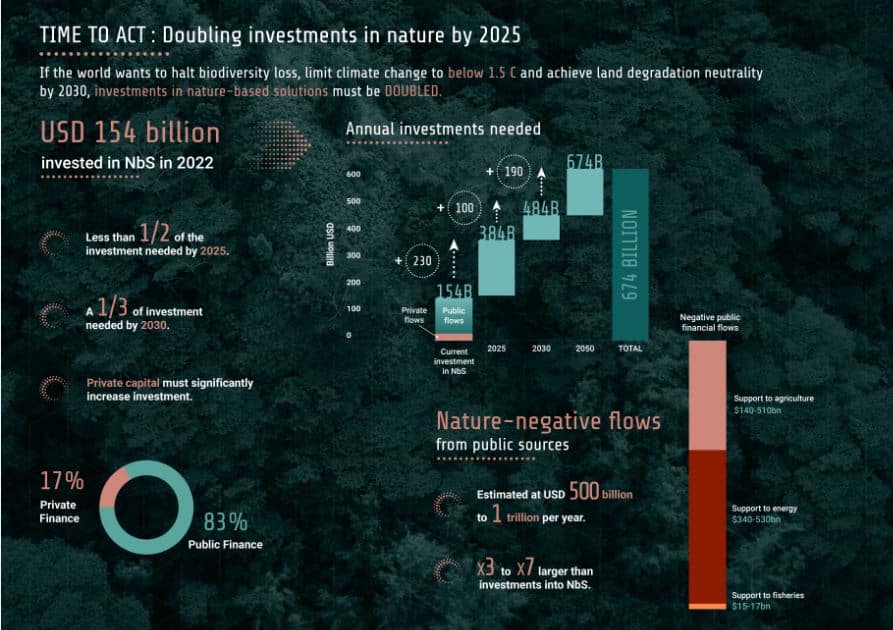
Investments into Nature-Based Solutions (NBS) have to be more than double their current levels, reaching $384 billion a year by 2025 and $674 billion by 2050 to deal with the global crises of climate change, biodiversity loss and land degradation, according to a UN report.

The UN report entitled the “State of Finance for Nature” said that doubling investments into protecting and managing the world’s ecosystems is the key to address those triple crises. The authors reveal that NbS are still significantly under-financed.

The report comes 10 days after the end of the COP27 and a week before the start of the UN Conference on Biodiversity (COP15 CBD) in Montreal, Canada. COP15 is where nations will try to agree on a deal to protect nature and wildlife from further losses and degradation.

Authors of the report said in a statement that UNEP urges governments to come up with an agreement at COP15 mandating countries to require the financial sector to align investments with nature-positive goals.

Investments in Nature-Based Solutions (NBS)

According to one of the authors who is the director of McKinsey & Company Robin Smale, Nature-based Solutions refer to:

“Actions to protect, conserve, restore, sustainably use and manage natural or modified terrestrial, freshwater, coastal and marine ecosystems, which address social, economic and environmental challenges effectively and adaptively, while simultaneously providing human well-being, ecosystem services and resilience and biodiversity benefits are all considered as nature-based solutions…”

The current global investments in NB$&%S are around $154 billion per year. But that amount has to increase to $384 billion by 2025 to tackle the triple crisis of land degradation, climate, and nature as the chart shows.

doubling investments in nature-based solutions

Last year, investments into nature-based solutions was at around $133. But this estimate will be altered as the scope of NbS and how they’re assessed keeps on changing, too. Take for instance the case of marine NbS; they are the newest inclusion to the report’s latest edition.

  • In contrast, investments from governments in economic activities that pollute the air are 3x to 7x higher than financing for NbS.

These subsidies are highest in the sectors of energy and agriculture estimated at $340 billion – $530 billion a year and $500 billion a year, respectively. The report suggested phasing out of these investments.

Nature and The Economy

The authors of the report further noted that:

“This report is a reminder that lots of short-term efforts to boost gross domestic product (GDP) by Governments… without paying attention to the fact that nature underpins many economies, will impose greater costs for both present and future generations in the years to come.”

In fact, about 50% of global GDP is dependent on healthy and well-functioning ecosystems. So, countries have to go beyond just the economics of GDP and consider the principles of natural capital accounting and circular economy.

According to one author, there are already trends pointing to that direction and considering nature in making investment decisions.

Meanwhile, the report also found that governments spend $500 billion-$1 trillion a year on potentially damaging subsidies. And with ~100 parties to last year’s biodiversity summit in Kunming, China, they weren’t able to agree to fund nature conservation efforts in poorer countries.

Over a decade ago in Japan, world leaders who signed a biodiversity pact in 2010 have set targets to cut loss by 2020. Unfortunately, none of those goals were also met.

NbS and Carbon Markets

The third major point of UNEP’s report was the need for private investments in nature-based solutions.

Financing from the private sector accounts for only 17% despite their pledges to reduce deforestation and carbon emissions. With this, the report recommended that private investors will have to “combine ‘net zero’ with ‘nature positive’.”

That means they must do the following actions:

  • Create a sustainable supply chain
  • Reduce activities that negatively impact climate and biodiversity,
  • Offset any unavoidable activities through high-integrity nature markets,
  • Pay for ecosystem services, and
  • Invest in nature-positive activities.

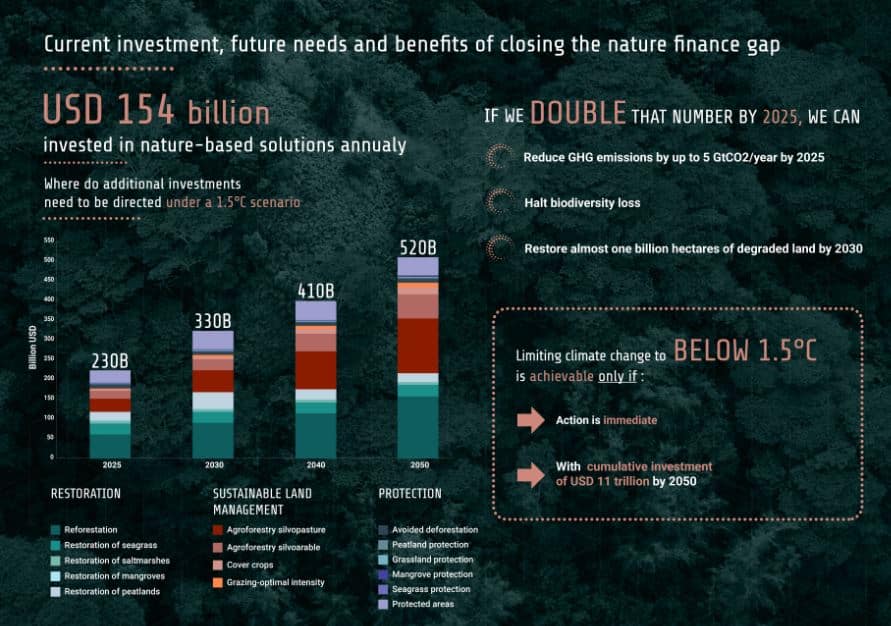
Closing the nature-finance gap means directing additional investments in ecosystem restoration, protection, and sustainable land management. The chart below shows how much financing NbS requires to meet the 1.5 degree scenario.

closing the nature finance gap

Carbon markets have a role to play in propelling private financing for NbS. And public investments can’t scale up soon due to several issues that governments face, said the report. So working on creating standards and ensuring integrity in carbon markets is crucial.

An officer from the UNEP noted that including NbS in the COP climate summit agenda wasn’t possible before. Making it to the cover text of COP27 and the upcoming COP15 in Montreal is a success.

Discussions on mitigation finance were still not enough but “ambition without finance does not lead to action” the officer said. Financial commitments are vital for negotiations to be in good faith, she added.

The report was released by the UNEP along with the Federal Ministry for Economic Cooperation and Development (BMZ) of Germany, the UN Convention to Combat Desertification (UNCCD) and the European Commission.

Manulife Launches Forest Climate Fund to Raise $500 Million

Manulife Investment Management launched its Forest Climate Fund (FCF) which aims to raise $500 million to buy sustainably managed forests that sequester carbon.

Manulife is branching out into forest carbon credit markets. The world’s biggest timberland investment manager is raising funds to buy sustainably managed forests where capturing carbon in standing trees is more important than cutting them down for profits.

Manulife Investment manages about 6 million acres of timberland in the Americas and Oceania on behalf of investors. The firm said it will raise the $500 million fund from its parent company, Toronto insurance and financial-services firm Manulife Financial Corp., and other institutional investors.

The managing director of Manulife Investment Management’s impact investing Eric Cooperström said:

“We are excited to bring a product to investors that we have developed by capitalizing on our decades of experience in sustainable timberland management and on our carbon market expertise…”

The Manulife Forest Climate Fund

With the launch of its Forest Climate Fund, Manulife is the latest financier to use forest carbon credits in its climate strategy.

It joins the likes of Oak Hill Advisors LP, a subsidiary of T. Rowe Price Group Inc., which paid $1.8 billion for 1.7 million acres of forests to harvest carbon offsets. Last year, J.P. Morgan Asset Management also bought timberland manager Campbell Global LLC. eyeing the carbon markets.

  • The FCF is a closed-end fund that allows investors to promote climate change mitigation through sustainably managed forest assets.

The Fund seeks to include investors from other jurisdictions apart from the U.S. such as the EU to invest in forest carbon credits or offsets. But once offered outside the US, investors must follow the Article 9 of the EU Sustainable Finance Disclosure Regulation requirements.

Carbon credit markets have boomed as more firms pledge to reduce their unavoidable emissions via offsetting. Buyers are pressuring sellers to ensure that offsets represent actual changes in timber harvesting.

Tom Sarno, Manulife Investment global head of timberland investments, commented:

“We believe high-integrity, verified carbon credits will continue to be viewed as premier decarbonization instruments and that, in time, such carbon markets will eventually come to resemble that of more traditional commodities…”

The Manulife Forest Climate Fund will deliver durable, high-quality carbon value to investors through carbon credits. FCF will focus on forests with strong carbon potential, high conservation value, and sustainable management plans.

The fund will provide investors with high-integrity climate benefits and financial returns by using:

  • carbon credits,
  • conservation easements,
  • value-added strategies, and
  • limited timber harvests.

Manulife Sustainable Timberland Management

Manulife has a long history of timberland management that began in the 1980s. It was before known as the Hancock Timber Resource Group.

Today the company is the largest in the world, by acreage, of Timberland Investment Management Organizations. They are like private-equity firms that use raised cash to buy forestlands instead of companies.

Last year, the firm bought 89,000 acres in northern Maine to be a model for the type of properties that Manulife Forest Climate Fund will buy. It has reserved the option to sell the credits from the forests or hold them and use them toward its parent company’s efforts to slash its own footprint.

  • FCF investors will also have the same choice – either to receive the cash from returns or use carbon offsets.

The Fund is part of Manulife’s approach it calls “sustainability and responsible investing (SRI)”. Through it, the firm integrates environmental, social, and governance (ESG) factors through all aspects of its business.

Sustainable timberland management is under one of its five sustainability priorities: climate stability. To date, Manulife’s integrated timberland management operations comprise about 6 million acres across 6 countries and ~100 individually managed properties. The firm was able to achieve these results:

  • 100% of its forests globally are certified sustainable
  • 2.7 million tons of CO2 removed by its forests annually (5-year trailing average)
  • 6.1 million carbon credits sold

Forestry Assets and The Carbon Market

The firm’s current portfolio of sustainably managed forestry assets is internationally diversified across the U.S., Canada, Australia, New Zealand, and South America.

But its forests are mostly in the U.S., which represents over 95% of improved forest management carbon credits issued and retired to date.

Forestlands have been one of the most valuable nature-based solutions to combat climate change. Climate investors find that protecting forests (REDD+) is crucial in winning the fight and so they’ve been betting on carbon credits as forestry assets. 

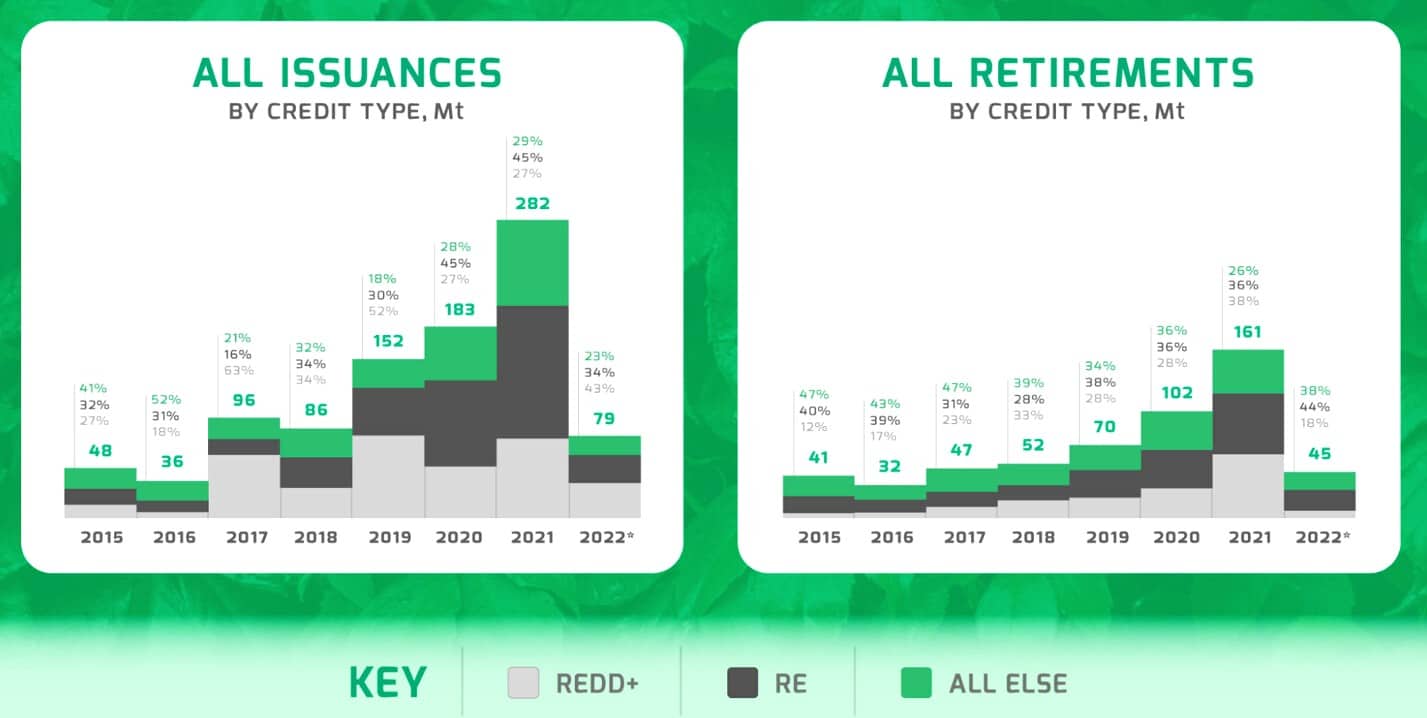
The chart below shows the issuances and retirements of carbon credits by type (April 2022 year to date). In 2021 alone, REDD+ accounted for one of the major issuances (27%) and retirements (38%).

carbon credits issuances and retirements 2022
Source: Carbon Direct

A lot of similar efforts are in place today that generate forest carbon credits. Each credit represents one tonne of carbon sequestered by the trees.

For instance, Everland’s Forest Plan seeks to stop deforestation by 2030 by developing up to 75 forest conservation (REDD+) projects around the world. Some startups were also raising funds to develop technologies for forest management where carbon credits help fund their projects.

Manulife intends to make its Forest Climate Fund open to institutional investors globally while being subject to local ESG regulations.

The firm is pitching typical timberland fund investors. These include pensions, endowments and wealthy families, as well as companies that aim to reduce emissions via offsets.

Batteries From Wood: A Renewable Energy Storage Solution

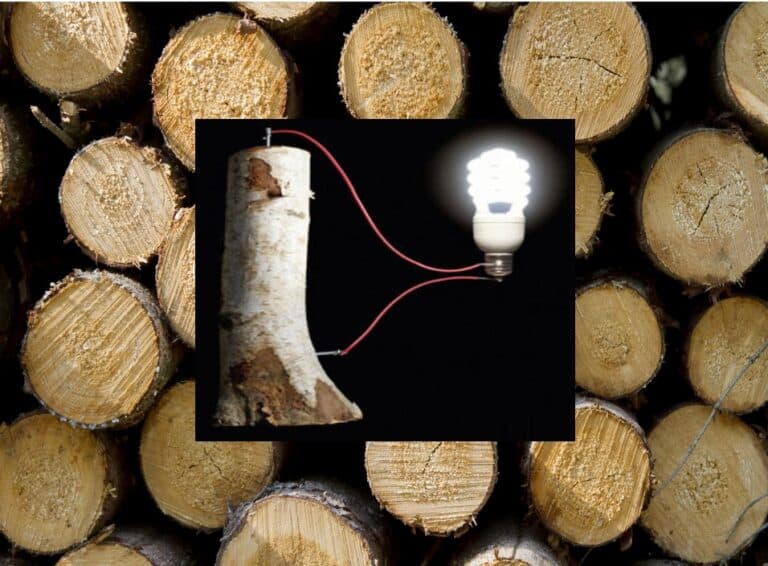
Companies worldwide are working on a sustainable power storage solution using renewable biowaste called lignin to make wood batteries.

One of the largest private forest owners in the world, Stora Enso, recently built a production facility worth €10 million to create bio-based carbon by turning trees into batteries.

Producing these wood batteries is possible by using a biomaterial known as lignin.

How Lignin is Made to Create Wood Batteries

Lignin is one of the most common organic polymers, second to cellulose, that’s abundant in the cell walls of some plants. It makes the structure of the plant firm and doesn’t easily rot.

This biomaterial makes up about 30% of the wood’s total composition. In fact, it’s present in all vascular plants and can have a carbon content as high as 60%.

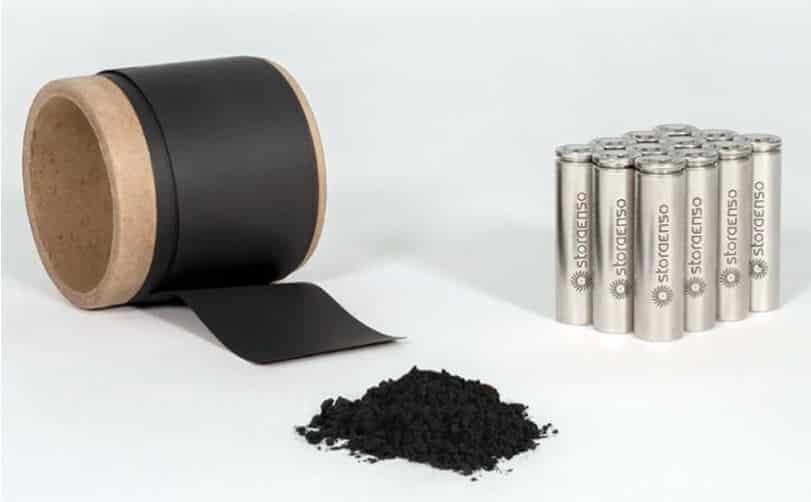
Lignin separates from wood during the production of cellulose fibers from its pulp. After extraction, the by-product is turned into a fine carbon powder.

lignin powder

The powder is then made into electrode sheets and rolls. The sheet can then go with other battery parts, replacing mined graphite, which has a much larger carbon footprint.

stora enso wooden batteries

Advocates believe that the carbon found in lignin would be enough to end the use of fossil fuels and mined metals in making lithium-ion batteries that need graphite to work.

Here is the process of making batteries from lignin.

According to Stora Enso:

“With Lignode, we can provide a bio-based, cost-competitive and high-performance material to replace the conventionally used graphite… To serve the fast-growing anode materials market, we are now exploring strategic partnerships to accelerate scale-up and commercialisation in Europe.”

The Northvolt Deal

Stora Enso is joining forces with Volkswagen-backed battery developer Northvolt to produce lignin-based batteries. The source for the wood batteries will be from Nordic forests under sustainable management.

Through the partnership, Northvolt will be responsible for cell design, production process development, and scale-up of the technology. While Stora Enso will provide the wood-based anode material lignin.

The deal comes when critical mineral availability poses a significant barrier in sustainable battery and energy storage systems. The creation of renewable batteries offers a greener alternative to the critical mineral geopolitical chess game.

Apart from being one of the largest renewable sources of carbon, the use of lignin in producing wood batteries brings many benefits.

Key Benefits of Lignin-Based Wood Batteries

Graphite has been the main source of making lithium-ion batteries used in making electric cars. For Tesla to make its annual target of 20 million EVs, it has to mine ~1 million tonnes of graphite.

Add to this the future demand for electric airplanes and almost all other portable electronic devices. Hence, engineers find it bothersome how the world can meet those future demands for e-mobility.

Wood Batteries offer 5 major benefits as a renewable energy technology:

Scalability: viable to produce wooden batteries commercially due to the wide availability of the resource needed to make them – trees.

Sustainability: By sourcing raw materials from sustainability-certified forests.

Renewability: By using natural resources removes the need to source battery manufacturing in China and other regions that have a higher carbon intensity.

Faster charging: a fully functional wood battery can charge at a faster rate than fossil-fuel derived graphite.

Better performance at lower temperatures: the battery is operational under cooler temperatures, making it possible to for a wider range of operations .

Lignin-based carbon is applicable in storing energy for a wide variety of uses, power automotive systems. This industry has seen tremendous growth after the pandemic with a 46% increase in sales of EVs such as scooters and e-bikes.

Nestlé and Fonterra to Develop NZ’s First Net Zero Dairy Farm

Nestle and New Zealand’s largest milk processor, Fonterra have partnered to develop the country’s first net zero carbon emissions dairy farm.

The net zero milk project will assess the dairy farm’s total carbon emissions and will run for 5 years with co-partner Dairy Trust Taranaki.

It aims to reduce emissions by 30% by mid-2027 and achieve net zero emissions in 10 years.

The pilot project will be on a 290-hectare property, and any insights and activities will be shared with other farmers to increase adoption. Farmers can then adopt techniques and technologies most suitable for their own farms.

Reducing New Zealand’s Dairy Emissions

The agricultural industry makes up 48% of New Zealand’s overall emissions. Methane, nitrous oxide (N2O), and CO2 are the key components of the livestock industry’s total emissions.

  • The Institute for Agriculture and Trade Policy (IATP) says 15 of the largest dairy companies in the world (including Fonterra) are responsible for 3.4% of global methane emissions and 11% of total global livestock emissions.

Last month, New Zealand sought to levy farmers for the emissions of their cows. But apart from the cows’ own emissions, the dairy ingredients they provide also emit pollution.

The country has the lowest carbon footprint for milk in the world. Still, dairy contributes about 50% of the country’s agricultural livestock emissions. And about a quarter comes from dairy biological emissions (N2O and methane).

Commenting on the partnership, Fonterra chief executive Miles Hurrell said in a statement:

“New Zealand already provides some of the most sustainable nutrition in the world through its pasture-based dairy system. This new partnership will look at ways to further reduce emissions, increasing the country’s low-emissions advantage over the rest of the world…”

Fonterra is one of the largest dairy producers in the world, and this net zero milk project will help lower emissions with its pasture-based farming systems, ideal climate, and efficient producers.

The announcement comes after Fonterra told dairy farmers earlier this month that it’s planning to set a target for Scope 3 emissions. This source includes farm emissions which are critical in meeting sustainability expectations from customers and export markets.

This New Zealand pilot scheme will hopefully be the first of many global projects. The dairy farm project will help both Nestle and Fonterra in achieving their climate goals. Both aim to achieve net zero emissions by 2050.

On their Way to Net Zero

Nestle New Zealand CEO Jennifer Chappell said that the project would build on the food giant’s work worldwide to help transform the dairy industry.

Nestle has over 100 pilot projects globally, with 20 farms working out their net zero targets. She also added that:

“Dairy is our single biggest ingredient, and our vision is that the future for dairy can be net zero… To reduce our Scope 3 emissions, it’s critical we work with dairy farmers and their communities. Working towards a net zero farm means looking at all aspects of the farm, from cow nutrition to sequestering carbon.”

She hopes that this top-down approach of reaching their broader climate goals will only work by closely looking at the details of dairy farming.

Every farm is different so there’s a need to look for specific levers that might work within each farm to keep monitoring and adapting for the conditions on that farm. They will share any lessons learned along the line to mainstream on-farm practices that can slash emissions from dairy production.

Dairy and livestock farming account for around 33% of Nestle total emissions. So to meet their climate goals, the company must support dairy farming to change its means of production.

  • The dairy farm project with Fonterra will help Nestle meet its goals to reduce emissions by 20% by 2025, 50% by 2030, and net zero by 2050.

Aiming to decarbonize by the same period, Fonterra echoes the food company’s outlook. Miles Hurrell noted that their partnership will enable their customers to also reduce their footprint.

The CEO further said that working with Nestlé will help their farmer-owners discover solutions to the industry challenges.

“Working with partners like Nestlé is our best opportunity to create innovative solutions to local and global industry challenges.”

Cutting On-farm Dairy Emissions

The partnership also involves launching a support program for dairy farmers. Farms enrolled in the project will get additional support from Fonterra to allow reductions in on-farm emissions.

Solutions may include improved management of feed and pasture and enhanced milk production efficiency. The pilot will begin with about 50 farms and be scaled up over the next 3 years.

In the U.S., Neutral Foods is a company that tracks and buys carbon credits to neutralize emissions from dairy farms. It’s also partnering with farmers to help them cut their own emissions at the source.

Neutral Foods measures the emissions of its dairy products’ entire lifecycle. Then the company buys carbon credits for the emissions it wanted to offset.

TPG-Backed Carbon Credit Firm Rubicon to Raise $1B

A TPG-backed carbon credit firm Rubicon Carbon announced it would raise $1 billion in capital and be run as a separate entity.

Rubicon Carbon was initially backed by a leading alternative asset manager TPG Rise Climate with $300 million. The carbon credit firm seeks to source and fund projects that remove carbon and sell the credits to other companies.

Rubicon was developed by TPG’s impact investing strategy to deliver innovation and greater scale in the carbon market. It is also to meet the growing demand for high-integrity emissions reduction solutions.

Bank of America, JetBlue Ventures, and NGP ETP will be among the major co-investors in Rubicon’s initial equity financing. With their funds and TPG Rise contributions, the carbon credit firm targets a total capital raise of $1 billion.

TPG will remain the majority owner of Rubicon after the funding but there’s no disclosure on how much is the stake.

Making Access to the VCM Easier

The voluntary carbon market (VCM) is an important mechanism for ramping climate actions. Trading in this market reached around $2 billion in 2021, according to Ecosystem Marketplace. And that could hit $50 billion by 2030, as per McKinsey estimations.

But despite the addition of new carbon credit marketplaces, rating agencies, brokers, and exchanges, some issues remain persistent.

In particular, insufficient project financing, limited supply, and lack of accessibility cause problems in the VCM. To help fix this, Rubicon aims to provide easier access to the carbon market by vetting projects and their credits.

More importantly, the firm will provide a technology-driven method of analyzing, monitoring, and reporting that lowers costs for companies.

Rubicon’s initial product, the Rubicon Carbon Tonne (RCT), provides enterprise customers access to proprietary sets of both nature-based and industrial-based carbon credits. RCTs will be backed by an initial inventory of verified carbon credits amounting to 20 million tonnes of CO2 removed from the air.

  • All RCTs will include a suite of services, offering a unique end-to-end solution that reduces costs of producing credits.

Moreover, the carbon credit company is developing a financing solution called Rubicon Carbon Capital. This will enable the firm to work with developers and help fund new projects. A portion of the $1 billion will be for establishing this initiative.

According to the firm’s Chairwoman, Anne Finucane, former Bank of America Vice Chair:

“Rubicon is designed to be the market-based solution that allows both the supply and demand side of the global carbon market to scale responsibly. We look forward to working in cooperation with a growing consortium of businesses, governments, and foundations to accelerate the flow of capital to real emissions reduction solutions.”

Rubicon will be partnering with Anew Climate, Pixxel, Planet Labs PBC, and Rialto Markets.

Leading the Carbon Credit Team

Chief Executive Tom Montag, the former chief operating officer of Bank of America, will led Rubicon’s management team.

Remarking on the announcement, Montag said:

“To deliver on net zero and… to balance any remaining emissions that cannot otherwise be eliminated right now, we must scale high-quality carbon credits in parallel. Rubicon addresses several market pain points and offers exceptional ease-of-access to vetted, high-integrity credits to further accelerate emissions reduction globally…”

Dr. Jennifer Jenkins, who won a Nobel Peace Prize on climate change, will be the Chief Sustainability Officer. She noted that as demand for carbon credits grows, “so too should the size and quality of the projects that underpin the carbon market.”

Rubicon joins TPG Rise’s diverse portfolio of climate solutions focused on carbon credit reductions and removals. These include collaboration with Anew, the leading developer and marketer of carbon credits in North America. Anew is Rubicon’s supply partner and manages sourcing and procurement for the firm’s carbon credit inventory.

The company also formed a coalition of corporate sustainability leaders to help guide its platform and product development. They include Aon, Bain & Company, Cushman & Wakefield, Dow Inc., J.P. Morgan, Kirkland & Ellis LLP, McKinsey & Company, SMBC, among many others.

Rubicon Carbon is not a replacement for aggressive carbon emissions reduction, according to the founding partner of TPG Jim Coulter. Instead, it’s an end-to-end solution for entities that choose to include high-quality carbon credits as part of their net zero strategy.