X-Energy, a leading company in advanced nuclear reactor and fuel technology, closed a $700 million Series C-1 financing round. This increase follows a $500 million raise in October 2024. The new funds will speed up the growth of their Small Modular Reactor (SMR) technology. The company’s Xe-100 reactor, which could transform the future of clean energy, is at the center of this push.
X-Energy: Powering the Future with Next-Gen Reactors
Founded in 2009, X-Energy is located in Rockville, Maryland. The company leads in nuclear technology, creating reactors and fuel systems for clean energy.
Amazon-backed X-Energy raised $700 million from various investors, such as Segra Capital Management, Jane Street, Ares Management, Emerson Collective, and Amazon’s Climate Pledge Fund. This funding is key for the company’s goals, including the following:
complete reactor designs,
obtain licenses, and
build the TRISO-X fuel facility in Oak Ridge, Tennessee.
Kam Ghaffarian, Ph.D., Founder and Executive Chairman of X-Energy, emphasized the importance of the raise, stating,
“We are proud to have gained the additional support from our industry, government, and investment community… We look forward to continuing to advance and scale our technology and realize our vision of fulfilling the growing energy needs of future generations.”
X-Energy’s TRISO-X fuel is a key component of its SMR technology. This innovative fuel uses uranium particles with a tough shell. It can handle high temperatures without melting. This makes the Xe-100 reactor safer and more efficient than old reactors. It removes the need for large containment systems. Plus, the reactor can run continuously for up to 60 years.
Xe-100 Reactor: Revolutionizing the SMR Landscape
The Xe-100 reactor, which is powered by the TRISO-X fuel, is one of the most advanced Small Modular Reactors in development today.
Each unit produces 80 megawatts of electricity, with plants typically consisting of multiple units to generate between 320 MW to 960 MW.
The modular design of the Xe-100 reactor is particularly attractive because it allows for easier transportation, faster construction, and more predictable costs. The technology also supports high-temperature steam production, ideal for both power generation and industrial uses, such as in chemical plants and data centers.
X-Energy is deploying its first Xe-100 plant at Dow’s UCC Seadrift Operations in Texas. This will be the first grid-scale advanced nuclear reactor in North America. The U.S. Department of Energy’s Advanced Reactor Demonstration Program supports it. The plant will deliver zero-carbon electricity and high-temperature steam for industrial use.
The company teams up with Amazon to add over 5 gigawatts of clean power by 2039. This partnership is vital for making SMRs a common energy source. Amazon’s investment supports its goal of reaching net-zero carbon emissions by 2040. This shows a rising interest in SMRs as a dependable, low-carbon energy option.
Small Modular Reactors are poised to change the nuclear energy landscape. With a smaller footprint than traditional nuclear plants, SMRs can be deployed more quickly and at lower costs. This modular approach speeds up deployment. It’s faster than the multi-year timelines of larger reactors.
The flexibility of SMRs makes them an attractive option for a variety of applications. SMRs can power remote locations and industrial sites. They also boost renewable energy like solar and wind. As energy demand rises, especially in cloud computing, SMRs are viewed as a solution. Large data centers need stable and high energy output.
X-Energy’s Xe-100 reactor exemplifies the potential of SMRs. The modular design speeds up deployment and cuts down on construction risks and costs. This makes SMRs appealing to utilities and companies like Amazon. They need to meet rising energy demands while sticking to budgets and reducing environmental impact.
Billions Flow into SMRs as Demand Soars
The $700 million raised by X-Energy is part of a broader trend in the nuclear industry toward smaller, more affordable nuclear solutions. Interest in SMRs is rising worldwide.
Governments and businesses want energy security and lower carbon emissions. Estimates suggest we could see up to 25 gigawatts of SMR capacity by 2030. By 2050, this could grow to 40 gigawatts if current policies stay in place.
SMRs are expected to play a crucial role in meeting the world’s energy needs while addressing climate change. They provide a low-carbon choice instead of fossil fuels. Their small size suits smaller grids or industrial sites.
The International Atomic Energy Agency (IAEA) sees SMRs as a key technology for clean energy production. They can help produce reliable electricity to meet global energy needs.
In fact, a significant investment jump is anticipated in the coming years. From the current $5 billion market today, SMR investments could grow to $25 billion by 2030, totaling $670 billion by 2050.
Chart from the IEA
If SMR construction costs go down as expected, total capacity may reach 190 gigawatts by mid-century. This could lead to $900 billion in global investment.
The Road Ahead for SMRs
While SMRs offer immense potential, challenges remain. To unlock the full potential of SMRs, there’s a need to streamline regulations and cut construction costs. With ongoing investments from firms like X-Energy and rising support from governments and private sectors, SMRs will likely be vital in the future of nuclear energy.
X-Energy’s $700 million funding raise is just the beginning. As the company continues to develop and deploy its Xe-100 reactor technology, it will help pave the way for a new era in nuclear energy—one that is clean, safe, and reliable.
Ford Motor Company ended 2024 with strong fourth-quarter results. This shows its growth and financial strength. However, the performance of its EV segment fell short of expectations.
Given that electric vehicles are central to Ford’s net-zero strategy, this raises an important question: Is Ford falling behind in its sustainability goals? Let’s study the revenue report and its sustainability outlook in detail.
Ford Closes 2024 with Strong Fourth-Quarter Performance
Revenue surged to $48.2 billion, marking a $2.2 billion increase from the same quarter in 2023. The company reported a net income of $1.8 billion, with adjusted EBIT reaching $2.1 billion. Operating cash flow came in at $3.0 billion, while adjusted free cash flow stood at $0.7 billion, highlighting its steady financial footing.
For the full year, Ford’s revenue rose by 5% to $185 billion.
The company finished the year with over $28 billion in cash and nearly $47 billion in liquidity. This gives them flexibility in an unpredictable market. However, there was disappointment in the stock market as shares fell after the Q4 earnings release.
Ford’s President and CEO Jim Farley said,
“Ford is becoming a fundamentally stronger company. We finished 2024 with a solid fourth quarter, capping the highest revenue year in Ford’s history. Our product portfolio offers the broadest powertrain choice. And Ford Pro, with its mid-teen margins, leading market position, and growing service and repair revenue, provides unique advantages for continued growth.”
Source: Ford
Ford Pro Excels, Ford EV Disappoints
Ford Pro performed well, with revenue increasing by 15% to $66.9 billion. It earned $9.0 billion in profits, achieving a solid 13.5% margin. Software subscriptions increased by 27%, hitting close to 650,000 users. Also, telematics usage nearly doubled.
In 2024, Ford Blue’s revenue stayed the same at $101.9 billion. Higher prices made up for a 2% drop in sales after cutting low-profit products. The segment earned $5.3 billion in profits.
Ford’s EV segment struggled, losing $1.4 billion in the fourth quarter and $5.1 billion for the year. Despite selling about 105,000 EVs, generating $3.9 billion in revenue, losses exceeded sales.
Ford’s 2025 Outlook: Modest Earnings and Cash Flow
Ford is expecting adjusted EBIT for 2025 to be between $7.0 billion and $8.5 billion, with adjusted free cash flow ranging from $3.5 billion to $4.5 billion. Capital spending is forecasted to be between $8.0 billion and $9.0 billion.
However, the company is preparing for some challenges due to market conditions. In the first quarter, Ford expects its adjusted EBIT to be nearly zero. This is because of lower sales, a less favorable product range, and ongoing launches at key U.S. plants like Kentucky Truck and Michigan Assembly.
Farley further added,
“In 2025, we expect to make significantly more progress on our two biggest areas of opportunity – quality and cost – as we enter the heart of our Ford+ transformation. We control those key profit drivers, and I am confident that we are on the right path to create long-term value for all our stakeholders.”
Ford’s Carbon Reduction Strategy for a Sustainable Future
Ford aims to cut greenhouse gas (GHG) emissions by boosting operational efficiency. Its Carbon Reduction Strategy aims to cut Scope 1 and 2 emissions by 76% by 2035, compared to 2017 levels.
To track progress, Ford also set a shorter-term goal to reduce these emissions by 18% from 2017 levels by 2023, focusing on its manufacturing operations.
Source: Ford
In 2023, Ford exceeded its target, achieving a 49% reduction in manufacturing emissions, and a total of 47% across all facilities. These efforts are helping Ford stay on track to meet its 2035 target.
Additionally, its carbon-free electricity now accounts for 70.5% of its global manufacturing operations.
Source: Ford
Fuel Efficiency and Emission Cuts in Ford’s Vehicle Portfolio
Ford’s vehicle portfolio is increasingly focused on models with the greatest potential for reducing emissions. The company is working on improving fuel efficiency for its light- and medium-duty trucks while also offering fully electric and hybrid versions of popular models. Simply put EV adoption is an important element of its long-term decarbonization strategy
Data from the U.S. EPA shows that the real-world CO2 intensity of Ford’s light-duty vehicles in the U.S. improved by 21% for cars and 10% for trucks from 2017 to 2022.
One of Ford’s major projects includes developing hydrogen fuel cell technology for its medium- and heavy-duty vehicles. The company had partnered with the U.S. Department of Energy, to develop hydrogen fuel cell-powered Class-5 Super Duty trucks as part of the SuperTruck 3 program.
Source: Ford
Ramping Up EV Production for Bigger Emissions Wins
Despite facing a drop in EV revenue, Ford would continue focusing on boosting its EV fleet. The plan includes battery-electric vehicles, hybrids, and fuel-efficient internal combustion engine (ICE) models. These options will help in areas where EV infrastructure is still growing.
Ford highlights that driving a Ford EV, using average U.S. grid power can cut GHG emissions by up to 62% when compared to a similar ICE vehicle.
This reduction occurs for two main reasons: the energy used to charge the vehicle and the lower emissions than regular gasoline cars.
In 2023, Ford sold nearly 280,000 hybrid vehicles, marking a 20% increase from the previous year. This growth shows that hybrids are becoming more popular. They are a lower-carbon choice compared to traditional vehicles.
Looking ahead, the shift toward EVs is expected to lead to even greater GHG savings as the electric grid becomes cleaner. As EVs become more affordable compared to traditional vehicles, it will also boost Ford’s market share in the low-emissions automobile domain.
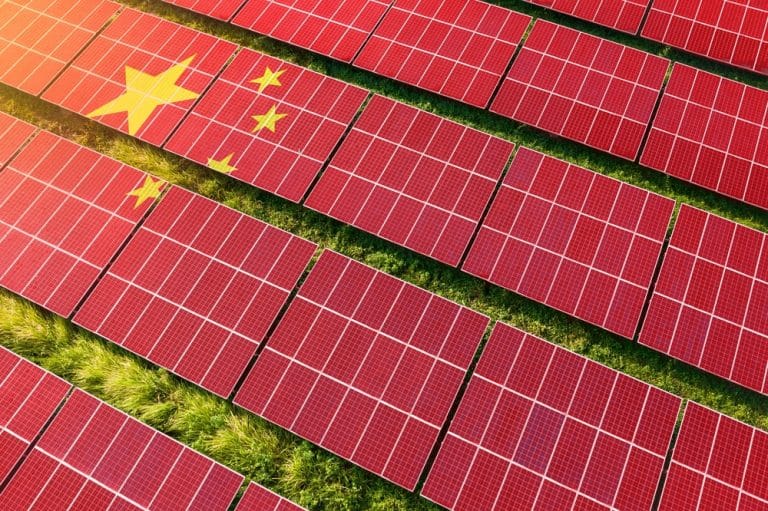
China is making record-breaking progress in renewable energy. The country has already achieved its 2030 clean energy goal six years early. With massive investments and policy support, China is set to remain the global leader in renewable energy expansion. But can it sustain this rapid momentum while balancing energy security and economic growth?
Beating the Clock on Clean Energy: Surpassing Renewable Energy Targets
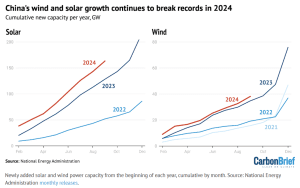
In 2020, China set a goal to install at least 1,200 gigawatts (GW) of solar and wind power by 2030. By the end of 2024, China had already surpassed this target, reaching this milestone 6 years ahead of schedule. This was made possible by aggressive investments, government policies, and a surge in solar and wind installations.
China’s solar capacity grew by an incredible 45.2% in 2024, adding 277 GW. Wind capacity also saw a strong increase of 18%, with an additional 80 GW installed. Overall, total power generation capacity rose by 14.6% in 2024, driven mainly by renewables.
One major milestone was the completion of the Ruoqiang photovoltaic (PV) project. This massive 4-GW solar farm in the Taklamakan Desert is one of the world’s largest solar power projects. It is part of China’s broader strategy to peak emissions before 2030 and transition toward cleaner energy sources.
This rapid progress is due to strong government support, record investments, and local manufacturers producing affordable solar and wind components.
Leading the World in Renewable Investments
China is the world’s largest market for low-carbon energy investment. In 2024, the country attracted $818 billion in clean energy investments—more than the combined total of the U.S., the European Union, and the UK. This accounted for ⅔ of the global increase in clean energy investments that year.
The world’s biggest carbon emitter’s commitment to renewables is reshaping its energy mix. In June 2024, wind and solar power combined surpassed coal in installed capacity for the first time.
China’s 14th Five-Year Plan set a goal for renewables to supply 33% of its electricity by 2025. By 2026, solar capacity alone is projected to overtake coal as China’s leading energy source, with 1.38 terawatts (TW) of solar power expected—150 GW more than coal.
Remi Eriksen, CEO of energy consultancy DNV, once remarked that:
“Intense policy focus and technological innovation are transforming China into a green energy powerhouse.”
And one of these innovations is in the field of nuclear power.
Nuclear Power and SMRs: A Game-Changer for China’s Energy Future?
China is also investing heavily in nuclear power, with 29 reactors under construction, totaling 33 GW of capacity. This makes up nearly half of all new nuclear projects worldwide. By 2030, China will surpass the U.S. as the largest nuclear power producer, with a projected capacity reaching up to 320 GW by 2050.
Small Modular Reactors (SMRs) are a key part of China’s nuclear strategy. The country’s first SMR, a high-temperature gas-cooled reactor (HTR-PM), began operations in 2023. Other SMR designs, including the ACP100 and NHR200, are under development.
These compact reactors will support industrial heating, electricity supply, and district heating. By 2050, China’s SMR capacity is expected to reach 35 GW, making it the leading global market for this next-generation nuclear technology.
China is quickly growing its renewable energy and advancing nuclear power. This makes it a leader in clean energy worldwide. Even though it still uses coal, the focus on renewables and nuclear is cutting carbon emissions a lot.
The Road to Net Zero: Can China Meet its 2060 Goal?
China has set ambitious climate goals. The country aims to peak its carbon emissions by 2030 and reach net zero by 2060. A key driver of this transition is energy independence, as China seeks to reduce reliance on imported fossil fuels.
A recent report from DNV highlights China’s rapid progress. The country had 1.45 TW of renewable energy capacity online by the end of 2024 and is on track to increase its clean energy capacity fivefold by 2050.
By that time, renewables are expected to supply 60% of China’s energy needs, although fossil fuels will still account for around 40% of the mix.
Challenges and the Role of Coal
Despite this rapid progress, coal remains a significant part of China’s energy system. The country still consumes over 50% of the world’s coal and continues to build new coal-fired power plants. In 2022, China approved 6x more new coal capacity than the rest of the world combined.
The heavy reliance on coal is partly due to energy security concerns. Events like Russia’s invasion of Ukraine and reduced rainfall affecting hydropower have made alternatives like gas and hydroelectric power more expensive.
Coal remains a backup energy source to support the country’s rising electricity demand, which increased by 6.8% in 2024.
However, China’s long-term goal is to reduce this dependence. The government is implementing policies to phase out fossil fuels gradually while ensuring energy stability. By 2050, China’s emissions are expected to drop by 70% compared to current levels, marking significant progress in its clean energy transition.
Future Outlook: A Renewable Superpower
China’s energy transition is at a critical turning point. The country’s investments and policy shifts indicate a strong commitment to clean energy. By 2030, China’s total energy consumption is expected to peak and then decline by 20% in 2050 due to increased efficiency and electrification.
China aims for net zero by 2060, which is ten years later than the UN’s 2050 target to keep global warming under 1.5°C. So, while progress is strong, more efforts are needed to speed up the shift from fossil fuels.
Overall, China is leading the world in renewable energy expansion, breaking records in solar and wind installations. The country’s rapid growth in clean energy capacity is reshaping its power mix and reducing its reliance on coal.
SolarBank Corporation (NASDAQ: SUUN; Cboe CA: SUNN, FSE: GY2) develops renewable energy projects in Canada and the USA. It recently announced the commencement of construction of its first Battery Energy Storage System (BESS) project in Ontario. Construction of the SFF-06 project in Cramahe will start the week of February 10, 2025. This project is a key step for SolarBank as it enters the growing battery storage market.
SolarBank Locks in Lucrative Deals for Its BESS Project
The press release highlights that the Royal Bank of Canada (RBC) is supporting the SFF-06 project and another, Project 903, with a $25.8 million loan. RBC acts as the lender, administrative agent, collateral agent, and agent for green loan structuring. Its involvement is critical for advancing these renewable energy efforts.
SolarBank is developing the Project through its partially owned subsidiary 1000234763 Ontario Inc. (“ProjectCo”), which owns the projects and borrows under the loan agreement. SolarBank’s link to ProjectCo comes from acquiring Solar Flow-Through Funds Ltd. in July 2024 at a $45 million valuation. This move strengthens SolarBank’s position in the fast-growing BESS market.
Project Execution
For the SFF-06 project, SolarBank has chosen Anvil Crawler Development Corp., a subsidiary of Skyline Group of Companies. Anvil Crawler has a $1.85 million contract for civil and electrical work.
Skyline is a key player in asset management and development. They manage over $5.4 billion in assets and have 20 years of experience. Their focus is on building sustainable communities in Canada.
The IESO Contract
In July 2023, the SFF-06 project won a 22-year contract with the Independent Electricity System Operator (IESO). This is part of the Expedited Long-Term RFP (E-LT1 RFP).
This agreement promises a fixed capacity payment of $1,221 per megawatt (MW) per business day. This rate is much higher than the $876/MW average for other projects in the same program.
Once operational, the project will provide a daily capacity of 4.74 MW for 251 business days each year.
This setup ensures a steady revenue stream for ProjectCo, making it a strong investment.
Strong Visibility to Continued Growth
Source: SolarBank
Tax Incentives and Strategic Stakes
The project will benefit from Canada’s Clean Technology Investment Tax Credit, introduced in 2024. This refundable credit covers up to 30% of eligible capital costs for new clean tech projects. With this support, SolarBank can boost the project’s finances and move forward with its renewable energy goals. Government backing can enhance returns and speed up efforts for a greener future.
SolarBank also holds an indirect 50% stake in ProjectCo. A partnership of First Nations communities in Ontario owns the other half. This partnership shows SolarBank’s dedication to inclusive growth that would bring economic and social benefits to local communities.
The SFF-06 project shows promise but faces challenges. It needs to secure permits, maintain third-party financing, and address construction hurdles to stay on schedule. Battery storage systems can degrade over time, which may impact capacity and efficiency.
Government policy changes or cuts to BESS incentives could jeopardize long-term success. So, SolarBank must actively implement maintenance plans and track policy changes to protect the project’s future.
Source: SolarBank
SolarBank’s BESS Vision: Paving the Way for a Low-Carbon Future
SolarBank leads in clean energy, specializing in solar power and EV charging. It serves utilities, businesses, municipalities, and homes throughout North America. Its portfolio includes utility partnerships, community solar projects, and virtual net metering initiatives.
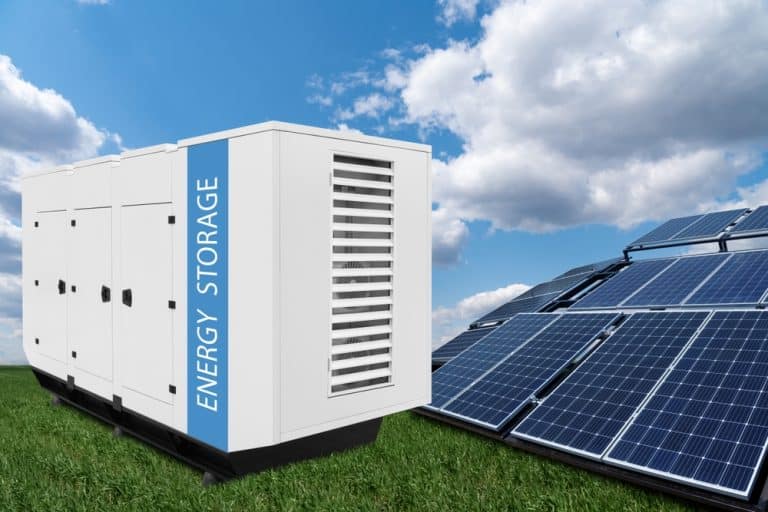
As the global energy market shifts to BESS, this sector is growing rapidly. Organizations and governments want BESS technology to cut carbon emissions. Energy storage is becoming essential. BESS allows renewable energy, such as solar and wind, to be stored for later use, helping meet peak demand and ensuring a steady energy supply.
In 2023, the global BESS market was valued at $18.2 billion, projected to reach $114.05 billion by 2032, with a CAGR of 20.88%.
In the U.S., the market is expected to grow at 16.3%, reaching $31.2 billion by 2029.
Source: Fortune Business Insights
SolarBank is entering the BESS market at a crucial time when energy storage is essential for meeting rising electricity demands and reducing emissions. The potential development pipeline exceeds one gigawatt. Additionally, the company has over 100 megawatts of completed renewable projects. The SFF-06 project will be an important step in Ontario’s clean energy transition.
Disclosure: Owners, members, directors, and employees of carboncredits.com have/may have stock or option positions in any of the companies mentioned: SUUN.
Carboncredits.com receives compensation for this publication and has a business relationship with any company whose stock(s) is/are mentioned in this article.
Additional disclosure: This communication serves the sole purpose of adding value to the research process and is for information only. Please do your own due diligence. Every investment in securities mentioned in publications of carboncredits.com involves risks that could lead to a total loss of the invested capital.
The iconic luxury carmaker posted stellar growth in the fourth quarter while driving forward its sustainability goals. Ferrari’s exceptional financial performance in 2024, was fueled by strong revenues and effective market strategies.
Benedetto Vigna, CEO of Ferrari remarked on their glorious performance noting,
“Quality of revenues over volumes: I believe this best explains our outstanding financial results in 2024, thanks to a strong product mix and a growing demand for personalizations. On these solid foundations, we expect further robust growth in 2025, that will allow us to reach one year in advance the high-end of most of our profitability targets for 2026”
He further added,
“Last year’s results reflect a great teamwork that involved all our Company’s souls. This teamwork was also visible in a very competitive racing season. The will to progress that has always characterized Ferrari has led to innovation in our infrastructure, with the inauguration of the e-building; in our products, best highlighted by the new supercar, the Ferrari F80; and in R&D, with the new E-Cells Lab that will further strengthen our electrochemical knowledge to prepare us for the future. And we will reveal more of our future on 9 October at our Capital Markets Day.”
Ferrari Reports Strong Growth in 2024 Earnings and Revenue
Ferrari’s net revenue surged to €6,677 million in 2024, an 11.8% increase compared to the previous year. Its net Q4 revenue was €1,736 million. The contributing factors for revenue boom were:
Cars and Spare Parts: Generated €5,728 million, up 11.9%, driven by a richer product mix, strong demand, and personalized options.
Sponsorship and Brand Revenues: Rose 17.1% to €670 million, thanks to new sponsorship deals and lifestyle initiatives.
Other Revenue: Stayed stable. Higher-income from financial services balanced the end of the Maserati contract in 2023.
The company reported an industrial free cash flow of €1,027 million. This shows its strong operational efficiency.
Source: Ferrari
Higher Profit Margins
Ferrari achieved an operating profit (EBIT) of €1,888 million, a 16.7% increase over the previous year, with an EBIT margin of 28.3%. Net profit climbed to €1,526 million, and diluted earnings per share (EPS) stood at €8.46.
The company’s EBITDA rose 12.1% to €2,555 million, maintaining a robust margin of 38.3%.
Rise in Shipments
Ferrari shipped 13,752 cars in 2024, reflecting a modest 0.7% growth compared to the previous year. The increase was driven by strategic allocation across regions. Shipments in the EMEA region rose by 141 units, while the Americas added 192 units. However, this growth was partially offset by a decline of 328 units in Mainland China, Hong Kong, and Taiwan.
Meanwhile, the Rest of APAC region saw a slight increase of 84 units. The deliveries had ten internal combustion engine (ICE) models and six hybrid models. Hybrids made up 51% of the total shipments. This balance highlights Ferrari’s focus on innovation and sustainability while maintaining its signature performance.
Source: Ferrari
Ferrari’s 2024 results showcase its ability to grow revenues, profits, and cash flow while maintaining exclusivity and innovation in its offerings. The company remains a benchmark in luxury performance.
EV Debut: What’s Next for the Iconic Brand?
Reuters reported that Ferrari will launch its first fully electric car on October 9 at its Maranello headquarters in Italy. CEO Benedetto Vigna announced the landmark debut, marking a bold shift from the brand’s signature petrol-powered engines. The event will take place during a capital markets day, kicking off the fourth quarter as planned.
The highly anticipated EV is one of six new models Ferrari plans to roll out this year. Despite global uncertainties, including U.S. trade policies, Vigna emphasized that the company’s plans remain on track.
China is a booming market for electric vehicles due to lower taxes and strong demand. This offers significant potential for Ferrari’s new EV. Ferrari’s new EV stands to benefit greatly. Vigna hinted that Ferrari’s sales cap policy changes in China will be announced at the October event. This could open up more opportunities in this important market.
Ferrari hopes to increase revenue and core earnings by at least 5% this year with this launch. This shows their confidence in an electrified future.
Ferrari, a name synonymous with speed is also driving toward sustainability. It aims to be carbon neutral by 2030 by primarily cutting greenhouse gas (GHG) emissions in operations and the supply chain. It also embraces renewable energy and encourages community involvement.
Emission Reduction Goals
As per its latest sustainability report, in 2023, the company achieved a 7% reduction in Scope 1 emissions compared to 2022 with the electrification of its Maranello plant. Scope 2 emissions (market-based) stayed the same. This was due to ongoing investments in renewable energy. However, switching from natural gas to electricity caused location-based emissions to rise.
In total, Ferrari’s direct and energy-related emissions i.e. Scope 1 and Scope 2 amounted to 77,691 tCO₂eq in 2023, down from 84,012 tCO₂eq in 2022. Additionally, the company is focused on improving energy efficiency and these reductions show its commitment to eco-friendly practices at its production sites.
Source: FerrariSource: Ferrari
Other key air emissions come mainly from volatile organic compounds (VOCs) released during vehicle production. The company also keeps a close watch on emissions of nitrogen oxides (NOx), sulfur oxides (SOx), and dust to ensure continuous monitoring and control.
Source: Ferrari
Its decarbonization efforts go beyond its factories. They also tackle Scope 3 emissions from raw materials and vehicle use. The strategy includes:
By 2030, at least 50% of Ferrari’s vehicle offerings will be hybrid or electric, reducing CO2 emissions per car by half.
The company plans to use recycled aluminum to cut raw material emissions by 30%.
Green Energy and Carbon Reduction Initiatives
Ferrari is integrating cutting-edge technology to lower its carbon footprint:
Fuel Cell Technology: In June 2023 it installed a 1 MW solid oxide fuel cell plant at its Maranello facilities, powering 5% of Ferrari’s production. This cuts gas use by 20% and reduces smog-causing pollutants by more than 99%.
Photovoltaic Systems: In July 2022, Ferrari collaborated with Enel X to expand solar energy production. They planned to install a new solar power system on the roofs of their Maranello factory. This system used 3,800 panels that were capable of generating 1,626,802 kWh annually, saving 740 tonnes of CO2 emissions per year.
Renewable Energy Community (REC): In May 2023, Ferrari launched Italy’s first Renewable Energy Community (REC) in Maranello and Fiorano with Enel X. A 1 MW solar system on Ferrari’s land will supply clean energy to help local communities and promote sustainable development.
Source: Ferrari
Replacing Gas with Renewables
Ferrari’s decarbonization journey doesn’t stop here. Last year in October it retired its gas-powered trigeneration plant three months early. This facility has supplied electricity, heat, and cooling energy since 2009. Notably this closure will reduce methane gas consumption by 70% and cut Scope 1 and 2 emissions by 60% annually.
The luxury car maker also plans to double its solar power systems. This will help it reach a peak capacity of 10 MW by 2030. This move will cut down its reliance on fossil fuels even more.
Ferrari’s Verra-Certified Carbon Credit Strategy
Carbon credits play a key role in supporting its 2030 carbon-neutral target. Ferrari invests in Verra-certified projects that follow the Verified Carbon Standard (VCS). This ensures its offsetting efforts are credible, clear, and effective.
The company teamed up with ClimateSeed for a carbon avoidance project in Quebec, Canada. This project includes over 800 local micro-projects. It involves SMEs, NGOs, and municipalities working together to reduce greenhouse gas (GHG) emissions. They work on boosting energy efficiency, redirecting landfill waste, and using cleaner fuels.
In addition to carbon credits, Ferrari launched Bosco Ferrari, an initiative to establish a forest in Italy. This project promotes biodiversity and offsets emissions locally, complementing its global decarbonization efforts.
Economic growth from environmental impact
Source: Ferrari
All these efforts show how seriously the carmaker takes climate action. Ferrari takes climate action seriously, setting a standard for sustainability in the automotive industry. At the same time keeping their legacy of excellence.
Alphabet, Google’s parent company, posted strong Q4 earnings, but its cloud revenue missed expectations. While AI and data center expansion drive growth, emissions are rising. Can Google keep up its net-zero goal while scaling its tech ambitions?
Alphabet’s Financial Snapshot: A Strong Q4 with a Cloud Slip
Alphabet had a great fourth quarter. Their earnings per share (EPS) were $2.15, beating Wall Street’s estimate of $2.13. The company’s total revenue reached $96.4 billion, slightly below the expected $96.6 billion.
Advertising is still Alphabet’s main source of income. It brought in $72.4 billion, which is more than the expected $71.7 billion.
However, Google’s cloud segment fell short, earning $11.9 billion instead of the expected $12.1 billion. This shortfall hurt investor confidence, causing Alphabet’s stock to drop 7% in early trading.
Chart from Yahoo
Despite this, Alphabet is boosting investments in artificial intelligence (AI) and cloud services. The company will raise capital spending from $57.9 billion to $75 billion by 2025. This will focus on AI-driven products and expanding data centers. This move aligns with competitors like Meta and Microsoft, which are also betting heavily on AI to enhance user engagement and ad revenue.
Alphabet’s cloud growth is crucial as it competes with Amazon Web Services (AWS) and Microsoft Azure. While Microsoft’s cloud revenue grew 21% year over year to $40 billion, it still fell short of Wall Street’s $41.1 billion forecast.
Google aims to be one step ahead by enhancing its cloud offerings and leveraging AI to attract enterprise clients. Remarking on this during the earnings call, CEO Sundar Pichai stated:
“Our sophisticated, global network of cloud regions and data centers provides a powerful foundation for us and our customers, directly driving revenue. We have a unique advantage because we develop every component of our technology stack, including hardware, compilers, models and products. This approach allows us to drive efficiencies at every level, from training and serving, to developer productivity.”
The company is facing more competition in AI from DeepSeek, a China-based firm. Their new models are cost-effective and very capable. DeepSeek’s rise has sparked worries about Alphabet’s AI leadership. This new technology could shake up the industry.
Even with these challenges, Alphabet’s stock rose by 41% in the past year. This beats Amazon’s 39% gain and far surpasses Microsoft’s 2% increase.
As Alphabet expands its AI and cloud businesses, its energy use keeps growing. To meet its net-zero goals, Google must find cleaner ways to power its data centers.
Google’s Path to Net Zero: Can It Deliver by 2030?
Google aims to achieve net-zero emissions across its operations and value chain by 2030. They have two key strategies: reducing emissions and handling leftover emissions through carbon removal.
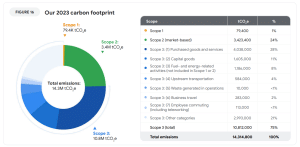
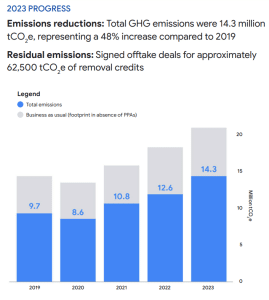
In 2023, total GHG emissions reached 14.3 million tCO₂e. This marks a 13% increase from last year, but it’s slower than in the past two years. This increase was mainly due to increased data center energy consumption and supply chain emissions.
Google’s Scope 1 emissions were about 79,400 tCO2e, making up 1% of their total carbon footprint. Scope 2 (market-based) emissions reached 3.4 million tCO2e or 24%. Finally, their Scope 3 emissions were 10.8 million tCO2e, which is 75%.
Charts from Google’s 2024 Environmental Report
Progress Toward Net Zero
Google has improved in many areas. However, their total GHG emissions went up in 2023. This shows the difficulty of reducing emissions while also boosting compute power and investing in infrastructure.
The company’s goal is to cut emissions by 50% by 2030, using 2019 as the base year. However, recalculations changed their progress. Now, it shows a 48% increase from the 2019 baseline instead of a decrease.
The company knows that reaching net zero by 2030 is an ambitious goal. It also faces many uncertainties, especially about how AI will affect the future. Yet, the tech giant stays committed to reducing its emissions through several means.
Emissions Reduction Efforts
Renewable Energy
Google has matched 100% renewable energy for seven years in a row. However, this doesn’t reduce their Scope 2 emissions. This is because the GHG Protocol considers regional clean energy sourcing. They aim for 24/7 carbon-free energy (CFE) across all grids by 2030, reaching 64% in 2023.
The tech giant has signed contracts for about 4 GW of clean energy capacity. Despite rising electricity demand, they kept a 64% CFE average in data centers and offices.
Energy Efficiency
Google’s data centers use much less energy than regular enterprise data centers. They are 1.8 times more efficient. In 2023, their average Power Usage Effectiveness (PUE) is 1.10. In comparison, the industry average PUE is 1.58.
They are always making AI hardware more power-efficient. For example, TPU v4 is 2.7 times more energy-efficient than TPU v3. They also use AI-driven optimizations. They’ve also piloted demand response capabilities to reduce power consumption during high-stress periods.
AI for Sustainability
Google found ways to cut the energy used to train AI models by up to 100 times, lowering emissions by as much as 1,000 times. Gemini 1.5 Pro achieves comparable quality to Gemini 1.0 Ultra while using less compute. Their Go Green Software guide helps developers reduce their digital footprints.
Google is actively using AI to accelerate climate action. This includes:
Fuel-efficient routing, which has reduced emissions by about 2.9 million metric tons since 2021.
Flood forecasting, offering predictions in more than 80 countries.
Optimizing traffic signals through the Green Light initiative.
They’re also developing AI-powered tools for predicting extreme heat, identifying cool roofs, and monitoring methane emissions. These examples show the transformative potential of AI in addressing environmental challenges.
Google’s approach to achieving net-zero emissions by 2030 includes a crucial element: managing residual emissions through carbon removal. After prioritizing emission reductions, the company will offset remaining emissions using high-quality carbon removal credits. The tech giant’s carbon removal efforts include both technology-based and nature-based solutions.
Technology-based removals:
The main challenge here is the lack of scale – these solutions are currently expensive and mostly exist as small pilots. Google pledged $200 million to Frontier.
Google backs nature-based removals to tackle scale and certainty issues. They’ve helped boost carbon markets through Google.org, giving over $7 million to groups like The Gold Standard and the ICVCM.
By the end of 2023, Google signed three deals for carbon credits with Charm Industrial, Lithos Carbon, and CarbonCapture. This means they will buy about 62,500 tCO2e of removal credits, set for delivery by 2030.
In 2024, Google took big steps in carbon removal to reach net-zero emissions. In December, the company revealed a deal to buy 200,000 tonnes of carbon removal credits from Terradot. This startup uses enhanced rock weathering to capture CO₂ in crushed rocks and store it in soil.
The big tech company promised to buy 50,000 metric tons of carbon removal credits from the Brazilian startup Mombak by 2030. Mombak works on reforestation in the Amazon rainforest.
Google also made a deal with climate tech startup Holocene. Together, they plan to capture 100,000 tons of CO₂ by 2032. These initiatives reflect Google’s commitment to investing in innovative carbon removal solutions as part of its broader environmental strategy.
Overall, Google’s efforts demonstrate a significant commitment to sustainability. Still, its environmental data shows that big tech needs more progress in reducing carbon emissions alongside carbon removal initiatives.
Palantir Technologies Inc. (NASDAQ: PLTR) released its financial results for the fourth quarter ending December 31, 2024. The company showed strong growth in key areas. Its success mainly came from its artificial intelligence (AI) solutions, which integrate advanced technology into commercial and government sectors.
Their core work revolves around combining AI and machine learning, helping clients analyze data more efficiently and make smarter decisions. They work closely with the U.S. Department of Defense, intelligence agencies, and global allies to improve data management, strengthen decision-making processes, and enhance security. This is how it plays a vital role in both the public and private sectors.
Alexander C. Karp, Co-Founder and Chief Executive Officer of Palantir Technologies Inc. said,
“Our business results continue to astound, demonstrating our deepening position at the center of the AI revolution. Our early insights surrounding the commoditization of large language models have evolved from theory to fact. I would also like to congratulate Palantirians for their extraordinary contributions to our growth. They have earned every bit of the compensation from the delivery of their market-vesting stock appreciation rights (SARs).”
U.S. Market Fuels Palantir’s Strong Q4 Performance
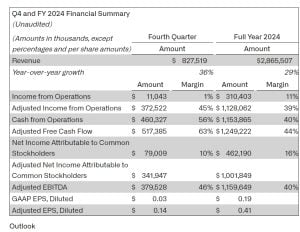
Total revenue reached $828 million, a 36% year-over-year increase and 14% growth from the previous quarter.
U.S. revenue alone surged 52% compared to the prior year, hitting $558 million.
In the commercial sector, U.S. revenue climbed 64% year-over-year, reaching $214 million, while government revenue grew by 45% to $343 million. The company also set a record by closing $803 million in total contract value (TCV) for U.S. commercial deals, marking a 134% increase year-over-year.
Karp also noted,
“The demand for large language models from commercial institutions in the United States continues to be unrelenting. Every part of our organization is focused on the rollout of our Artificial Intelligence Platform (AIP), which has gone from a prototype to a product in months. And our momentum with AIP is now significantly contributing to new revenue and new customers.”
Financial Highlights in Q4
The company achieved impressive operational and financial results during the quarter which further indicated a strong performance. The key success parameters were:
Generated $460 million in cash from operations, reflecting a healthy 56% margin. Additionally, its adjusted free cash flow climbed to $517 million, with a higher margin of 63%.
On the earnings front, Palantir reported a GAAP net income of $79 million, equivalent to $0.03 per share.When excluding one-time stock-related expenses, net income significantly increased to $165 million, or $0.07 per share. Furthermore, the company’s adjusted earnings per share (EPS) rose to $0.14, which drove its shareholder value.
Source: Palantir
Expanding Customer Base and Key Deals
Palantir added new customers at a rapid pace, with its customer base growing 43% compared to the previous year. The company closed 129 deals worth at least $1 million, 58 deals valued at $5 million or more, and 32 deals exceeding $10 million.
The company’s remaining deal value (RDV) for U.S. commercial contracts rose to $1.79 billion, nearly doubling from the prior year. These figures highlight Palantir’s growing influence across industries.
Fiscal Year 2024 Was All About Sustained Growth
Palantir delivered strong results for the full year, with total revenue reaching $2.87 billion—an impressive 29% growth compared to the previous year.
The U.S. market played a key role, contributing $1.9 billion to the total. Commercial revenue saw remarkable growth, surging 54% to $702 million, while government revenue increased 30%, reaching $1.2 billion.
Other significant revenue drivers were:
Robust cash flow that generated $1.15 billion from operations with a solid 40% margin.
It reported an annual net income of $462 million. It reflected a 16% margin with sustainable profitability.
With $5.2 billion in cash and short-term investments, Palantir envisions growth and expansion in the future.
Palantir’s 2025 Outlook: Strong Growth Ahead
The company is already envisioning strong financial expectations for 2025, projecting solid growth across several key areas. For the first quarter of 2025, the company anticipates:
Revenue between $858 million and $862 million.
Adjusted operating income between $354 million and $358 million.
For the full year 2025, Palantir anticipates total revenue between $3.741 billion and $3.757 billion, driven by a growth rate of at least 54% in U.S. commercial revenue, which is expected to exceed $1.079 billion.
The company is also projecting adjusted operating income to range between $1.551 billion and $1.567 billion, with adjusted free cash flow between $1.5 billion and $1.7 billion. It will also continue to report GAAP operating income and net income each quarter, ensuring transparency while navigating the ambitious targets.
Committed to achieving Net Zero, Palantir is focused on reducing emissions further and aligning with the UK Carbon Reduction Plan that focuses on limiting global warming to 1.5°C.
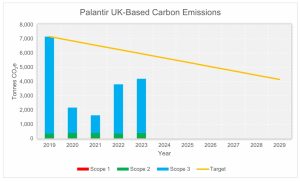
Total Carbon Emissions 2023
While Palantir acknowledges that its direct emissions—Scope 1, 2, and 3—are relatively small on a global scale, it believes its greatest contribution lies in empowering its customers. In this perspective, the company helps businesses track and reduce emissions, particularly within complex supply chains.
Its tools are already enabling companies to transition to clean energy and adopt e-mobility solutions, paving the way for a Net Zero future.
In 2023, Palantir reported emissions totaling 4,196 tCO2e, a significant drop from its baseline year emissions of 7,161 tCO2e in 2019.
Source: Palantir
Renewable Energy Goals
Palantir has joined forces with leading organizations to accelerate global sustainability efforts. The company plays a vital role in helping its partners decarbonize supply chains, enhance grid resilience, and roll out EV networks. Its innovative Agora platform, launched in 2022, enables global commodity companies to track and reduce emissions across the value chain.
The company also supports renewable energy projects and uses digital twin technology to improve efficiency in energy-intensive industries.
Mitigating Cloud Compute and Data Center Emissions
Cloud computing has been one of Palantir’sbiggest sources of carbon emissions. However, advancements in cloud efficiency and the use of sustainable energy by partners like AWS, Microsoft Azure, and Google Cloud have significantly reduced this impact.
In 2023, Palantir cut cloud-related emissions by 32% compared to the previous year.
This progress came from improved compute efficiency in its platforms—Foundry, Gotham, Apollo, and the Artificial Intelligence Platform (AIP)—along with ongoing engineering efforts.
The company’s teams are continuously finding new ways to optimize cloud usage. By balancing efficiency with business growth, Palantir stays on track with its sustainability goals.
Slashing Travel Emissions with SAF
As a global company, business travel is essential to Palantir’s operations which also impacts its Scope 3 emissions. To reduce this impact, Palantir encourages employees to opt for virtual meetings when possible and carefully considers the need for in-person meetings to balance environmental and business needs.
In 2023, Palantir also continued its partnership with United Airlines’ Eco-Skies Alliance, committing to the use of sustainable aviation fuel (SAF) for its air travel. This initiative aims to lower its travel-related emissions while still supporting face-to-face collaboration.
Palantir’s impressive financial results in 2024along with its reduced carbon emissions, highlight its commitment to both growth and sustainability. The company is on track to continue innovating and expanding, setting itself up for long-term success.
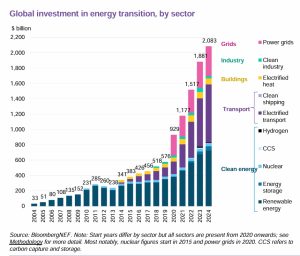
Global investment in energy transition technologies reached an all-time high of $2.1 trillion in 2024, according to BloombergNEF. This marked an 11% increase from the previous year, driven by EVs, renewable energy, and advanced grid infrastructure. While the record-breaking investment highlights growing momentum toward cleaner energy solutions, experts caution that current funding levels fall far short of what’s needed to meet global climate targets.
Countries are ramping up investments in low-carbon energy to tackle climate change and meet Paris Agreement targets. However, experts warn that the current spending pace isn’t enough.
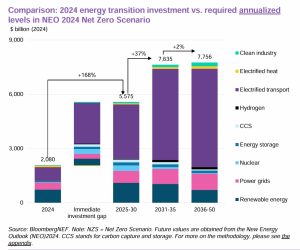
Bloomberg’s latest Energy Transition Investment Trends report shows that to hit net-zero emissions by 2050, global investment needs to triple to $5.6 trillion annually between 2025 and 2030. The gap is massive, highlighting the urgent need for bigger commitments and faster action.
Why do Energy Transition Investments Matter for Net Zero?
The energy sector plays a crucial role in addressing climate change as it contributes to approximately 75% of global greenhouse gas emissions. With temperatures rising every year, this transition to clean energy has become increasingly urgent.
Countries have committed to reducing emissions sustainably, aiming to keep global temperature rise below 2°C and limiting it to 1.5°C. The Paris Agreement target would be fulfilled only when the energy sector can reach net zero emissions by 2050.
This transition significantly requires phasing out fossil fuels fairly and systematically while eliminating inefficient fossil fuel subsidies that hinder transition.
Closing the Funding Gap
Now talking about the key factor i.e. investments. Governments and businesses are focusing on sustainable solutions like electric vehicles (EVs) and renewable energy. This certainly gives a positive signal towards developing a low-carbon economy.
However, there’s a funding gap. As said before, global investments in energy transition technologies reached $2.1 trillion. Yet, this amount is only 37% of the annual $5.6 trillion required from 2025 to 2030 to meet net-zero targets.
Achieving the net zero target will require not only increased funding but also bold policies and stronger international cooperation. Governments will need to be more decisive in scaling up efforts, remove barriers, and foster innovation across energy sectors.
For instance,accelerating progress in renewable energy, electrified transport, and grid modernization. With faster progress the funding gap can close and combating climate change will be easier.
The report revealed that last year electrified transport topped the charts, pulling in $757 billion in funding. This includes investment in electric cars, commercial EV fleets, public charging networks, and fuel cell vehicles. With the EV market booming, it’s clear the world is betting big on cleaner mobility solutions.
Renewable energy also performed well. Globally $728 billion was invested in wind, solar, biofuels, and other green power sources. Additionally, power grid modernization secured $390 billion for upgrades like smarter grids, improved transmission lines, and digital tools to manage energy demand. Nuclear investment was flat at $34.2 billion.
In contrast, investment in emerging technologies, like electrified heat, hydrogen, carbon capture and storage (CCS), nuclear, clean industry and clean shipping, reached only $155 billion, for an overall drop of 23% year-on-year.
Investment in these sectors was hampered by affordability, technology maturity, and commercial scalability. Thus, the public and private sectors must work together to progress these technologies to reduce emissions.
Mature vs. Emerging: Where Clean Energy Investments Stand
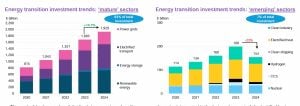
Bloomberg further categorized investments into “mature” and “emerging” sectors. Mature technologies like renewables, energy storage, EVs, and power grids dominated funding while emerging sectors such as hydrogen, CCS, electrified heating, clean shipping, nuclear, and sustainable industries lagged.
The mature Sector attracted $1.93 trillion in investments, accounting for the bulk of global energy transition funding.
The emerging sector closed $154 billion in investments, making up just 7% of the total.
Despite facing challenges like higher interest rates and changing policies, mature technologies saw steady growth, increasing by 14.7% compared to the previous year. Their proven scalability and established business models make them trustworthy for governments and investors.
In contrast, emerging technologies faced significant setbacks. Investment in these sectors dropped by 23%, mainly due to high costs, unproven scalability, and limited commercial readiness. These challenges continue to slow their progress and hinder their potential to scale effectively
Source: Bloomberg
China Leads the Energy Investment Race
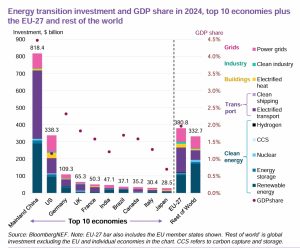
In 2024, mainland China emerged as the top market for energy transition investment, contributing $818 billion—a 20% rise from the previous year. This growth accounted for two-thirds of the global increase, with sectors like renewables, energy storage, nuclear, EVs, and power grids seeing robust development. China’s total investment surpassed the combined contributions of the US, EU, and UK.
Notably, China’s energy investment now equals 4.5% of its GDP, outpacing other nations like the EU and the US. While the US remains the second-largest market with $338 billion, Germany took third place, investing $109 billion in clean energy.
Other players like India and Canada also contributed to the global growth story, increasing investments by 13% and 19%, respectively.
2035 Forecast: A 3.6X Surge in Clean Energy Spending
To conclude Bloomberg came up with an investment forecast for 2030. The report says clean energy spending is set to rise sharply after 2030.
Between 2031 and 2035, annual investments are projected to reach $7.6 trillion—3.6 times higher than 2024 levels.
This marks a 37% increase compared to the annual spending expected between 2025 and 2030.
Electrified transport, including EVs and charging infrastructure, will continue to dominate investments during this period. As demand for clean mobility grows, funding for these technologies is likely to accelerate further, supporting the transition to a low-carbon future.
Thus, this steep rise in renewable energy spending after 2030 highlights the necessity for quick action. However, this year with Trump taking over, his stance on clean energy investment has been mixed. He has continued to promote traditional energy sources over clean energy, aligning with his “America First” agenda.
For 2025, the world is yet to get a clear picture of trade tariffs and clean energy funding with shifting political priorities and global economic uncertainties.
Aluminum is everywhere, from cars to cans, but its production is a major carbon polluter. With global aluminum demand soaring, Rio Tinto and Hydro will $45 million in carbon capture tech to cut emissions. Could this be the breakthrough the industry needs?
The Carbon Footprint of Aluminum: A Heavyweight Problem
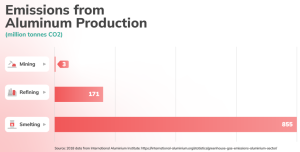
Aluminum production accounts for about 2% of global carbon emissions. The industry emits about 1.1 billion metric tons of CO₂ per year. That’s the same as the emissions from 150 million U.S. homes.
The electrolysis process alone is responsible for 791 million metric tons. Electrolysis is the main step in aluminum smelting. It uses carbon anodes, which release CO₂ during the process. This stage accounts for around 75% of a smelter’s direct CO₂ emissions.
With transportation, construction, and packaging relying on aluminum, we must reduce its environmental impact. Many aluminum producers are now seeking ways to cut emissions and reach net-zero targets.
A $45 Million Push for Carbon Capture
To tackle this, Rio Tinto and Hydro will invest $45 million over the next five years to develop carbon capture technologies for aluminum smelting. Smelting takes up most of the total GHG emissions of aluminum production.
Source: Carbon Chain
The partnership focuses on finding, testing, and scaling up methods to capture and store CO₂ emissions from the electrolysis process. The initiative includes:
Testing carbon capture technologies from laboratory research to real-world applications.
Running pilot projects at Rio Tinto’s facilities in Europe and Hydro’s sites in Norway.
Sharing research, costs, and expertise to accelerate progress.
Why Carbon Capture Is Difficult in Aluminum Smelting
Capturing carbon in aluminum production is more challenging than in other industries like power generation. This is because CO₂ levels in aluminum smelter emissions are extremely low (only about 1% by volume). This makes conventional carbon capture methods less effective.
There are two main approaches to capturing CO₂ from aluminum smelters:
Point source carbon capture: This technology captures emissions at the source but must be adapted for lower CO₂ concentrations.
Direct air capture (DAC): While typically used to remove CO₂ from the atmosphere, DAC could be modified to work in aluminum smelters.
Both methods need significant development to move from the lab to full-scale commercial use. This is where Rio Tinto and Hydro’s investment plays a key role in advancing these technologies.
Racing Toward Net-Zero: Can They Pull It Off?
This partnership is part of a broader push toward decarbonizing aluminum production. Both companies have already been working on independent initiatives, including:
ELYSIS (Rio Tinto & Alcoa): A joint venture focused on developing carbon-free aluminum smelting technology.
HalZero (Hydro): A new smelting process that eliminates CO₂ emissions from aluminum production.
While these long-term projects aim to create zero-emission aluminum, carbon capture can help reduce emissions from existing smelters. By combining their expertise, Rio Tinto and Hydro hope to make these technologies commercially viable sooner.
As industries transition toward sustainable materials, demand for low-carbon aluminum is rising. Companies in automotive, construction, and packaging are seeking greener alternatives to meet climate targets.
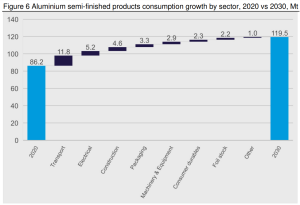
Global aluminum demand is projected to rise nearly 40% by 2030, according to CRU International’s report for the International Aluminium Institute (IAI). The industry must produce an extra 33.3 million metric tons (Mt), increasing from 86.2 Mt in 2020 to 119.5 Mt in 2030. Key drivers of this growth include transportation, construction, packaging, and the electrical sector, which will account for 75% of total demand.
Source: CRU
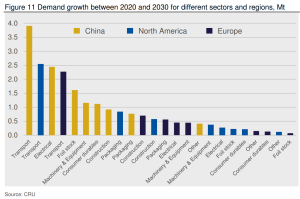
China will remain the largest consumer of semi-finished aluminum products by 2030. The Asian country makes up for over 45% of the market since 2015.
As industries push for lighter, more sustainable materials, aluminum’s role in global manufacturing will expand. This emphasizes the need for efficient production and decarbonization efforts to meet the rising demand sustainably.
Regulations are also pushing aluminum producers to reduce emissions. Governments worldwide are setting stricter carbon limits and introducing carbon pricing mechanisms that penalize high-emission industries. Carbon capture for aluminum production could give Rio Tinto and Hydro a competitive edge in this evolving market.
Beyond Carbon Capture: Other Ways to Cut Emissions
Beyond carbon capture, the aluminum industry is exploring other solutions to reduce emissions and energy use:
Recycled Aluminum: Producing aluminum from recycled materials uses 95% less energy than primary production. Expanding aluminum recycling can significantly cut industry-wide emissions.
Inert Anodes: Traditional carbon anodes release CO₂ during electrolysis, but inert anodes could eliminate these emissions. This technology is still in development but shows great potential.
Renewable Energy-Powered Smelters: Switching from fossil fuels to solar, wind, or hydroelectric power can drastically reduce emissions from aluminum production.
By combining these strategies with carbon capture, the industry can move closer to achieving net-zero emissions.
Rio Tinto and Hydro’s partnership marks a major step toward decarbonizing aluminum smelting. If successful, their investment could lead to groundbreaking advancements that benefit the entire sector. By working together, they are taking a critical step toward making low-carbon aluminum a reality—a move that aligns with global climate goals and industry sustainability efforts.
Carbon credit projects are gaining significant attention as businesses aim to reduce greenhouse gas (GHG) emissions while maintaining profitability. These projects offer a pathway for companies to offset emissions, improve sustainability, and tap into new revenue streams.
But how do they do that? This guide explores the types, benefits, challenges, and future trends of carbon credit projects, helping businesses navigate this critical climate solution.
5 Key Types of Carbon Credit Projects
Carbon credit projects include a range of activities designed to either reduce or capture GHG emissions. Here are the five primary types, each with specific mechanisms and benefits:
1. Reforestation & Afforestation
Reforestation involves replanting trees in deforested areas, while afforestation refers to planting trees in regions that have not been forested for extended periods. These projects sequester carbon dioxide (CO₂) from the atmosphere as trees absorb CO₂ during photosynthesis, storing carbon in their biomass and soil.
Reforestation and afforestation projects continue to play a crucial role in carbon sequestration. Some large-scale reforestation projects are financially backed by multinational corporations such as this Amazon reforestation initiative by Mombak.
However, there are also a lot of small nature conservation projects worldwide that need funding to scale up. Some of them are still in the development stage but offer innovative approaches to reforesting degraded lands.
One example in Asia is a re-greening project that aims to reforest hectares of deforested land. Using innovative seed ball technology and drone deployment, the project will disperse seeds across vast areas, promoting large-scale forest restoration. This initiative will not only sequester CO₂ but also support local biodiversity and provide economic opportunities for surrounding communities.
Reforestation and afforestation projects are pivotal in global carbon sequestration efforts. According to the Food and Agriculture Organization (FAO), forests absorb approximately 2.6 billion tonnes of CO₂annually. This figure offsets about ⅓ of the CO₂ released from burning fossil fuels. Such projects also contribute to biodiversity conservation, soil preservation, and the enhancement of water resources.
2. Renewable Energy Projects
Renewable energy projects involve the development of energy sources that do not emit GHGs during operation. Common examples are wind, solar, and hydroelectric power. By replacing fossil fuel-based energy generation, these projects significantly reduce CO₂ emissions.
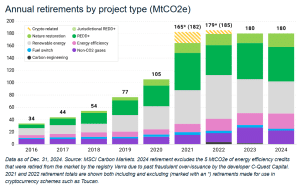
Renewable energy projects remain a significant source of carbon credits. In 2024, renewable energy credits represented 31% of total retirements, with 51.1 million credits retired. This result indicates a continued commitment to clean energy initiatives.
For instance, one of the world’s largest solar energy projects, the Noor Ouarzazate Solar Complex in Morocco covers 3,000 hectares. It has a total capacity of 580 MW, supplying power to over a million people. The project reduces CO₂ emissions by approximately 760,000 tonnes annually.
The Gansu Wind Farm in China is another example. It is one of the world’s largest wind power projects, with a planned capacity of 20 GW. Located in the Gobi Desert, it currently produces over 8 GW of electricity, powering millions of homes. The project reduces CO₂ emissions by millions of tonnes annually and plays a crucial role in China’s renewable energy expansion.
Since 2010, over 750 million voluntary carbon credits have been issued by over 1,700 renewable energy projects worldwide. Wind projects contribute 40% of these credits, followed by hydro (30%) and solar (15%). These projects play a crucial role in diversifying energy portfolios and reducing reliance on fossil fuels.
3. Methane Capture & Destruction
Methane (CH₄) is a potent GHG with a global warming potential about 28 times greater than that of CO₂ over a 100-year period. Projects that capture methane aim to collect and use or destroy methane emissions from sources like landfills, agricultural activities, and wastewater treatment facilities.
In the U.S., numerous landfill gas-to-energy projects have been established to capture methane produced by decomposing organic waste. The captured methane is then used to generate electricity or heat, thereby reducing GHG emissions and providing a renewable energy source.
As of 2024, the U.S. Environmental Protection Agency (EPA) reports 542 operational landfill gas (LFG) energy projects nationwide. These projects harness methane emissions from landfills to generate energy, thereby reducing GHG emissions and providing a renewable energy source.
One company, Zefiro Methane, focuses on sealing abandoned oil and gas wells across the U.S. to prevent methane leaks. By capping and properly decommissioning these wells, Zefiro reduces emissions and generates carbon credits that can be traded in voluntary markets. Their work supports climate goals while addressing the millions of abandoned wells contributing to methane pollution.
The Global Methane Pledge, launched in 2021, aims to reduce global methane emissions by at least 30% from 2020 levels by 2030. Achieving this target could reduce warming by at least 0.2°C by 2050, demonstrating the significant impact of methane capture initiatives.
4. Carbon Capture & Storage (CCS)
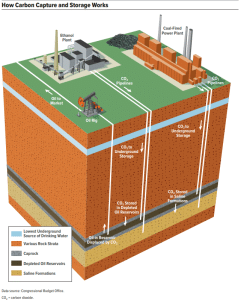
Carbon Capture and Storage (CCS) involves capturing CO₂ emissions from industrial processes or directly from the atmosphere and storing them underground in geological formations. This technology prevents CO₂ from entering the atmosphere, thereby mitigating climate change.
Image from Congressional Budget Office
CCS technologies have seen advancements, with increased investments in projects aimed at capturing CO₂ emissions from industrial processes. In 2024, significant policy developments, including breakthroughs on Article 6 at COP29, are expected to shape the global market for carbon credits, potentially influencing the implementation of CCS projects.
A popular example of CCS is Northern Lights, a joint venture by Equinor, Shell, and TotalEnergies. It is a large-scale carbon capture and storage project in Norway.
It captures CO₂ emissions from industrial sources, liquefies them, and transports them for permanent storage under the North Sea. The project aims to store up to 1.5 million tons of CO₂ annually in its first phase, with expansion plans for up to 5 million tons per year, helping industries decarbonize while generating carbon credits.
As of 2024, the global CCS landscape has seen significant growth. There are now 50 operational CCS facilities worldwide, capturing around 50 million tonnes of CO₂ annually. Additionally, 44 facilities are under construction, and 534 are in various stages of development, indicating a robust expansion in CCS initiatives.
The International Energy Agency (IEA) emphasizes that to achieve net-zero emissions by 2050, CCS capacity needs to increase to 1.6 billion tonnes of CO₂ annually by 2030.
5. Community & Land Management Initiatives
These projects focus on sustainable land use practices, conservation, and community-driven efforts to enhance carbon sequestration and support local economies.
Community-driven projects focusing on sustainable land management have been instrumental in generating carbon credits. These initiatives often involve agroforestry and conservation efforts that not only sequester carbon but also provide socio-economic benefits to local communities.
A great example is the Kasigau Corridor project protects over 200,000 hectares of dryland forest in southeastern Kenya. By preventing deforestation and promoting sustainable land management, the project has generated over 1 million carbon credits. It also provides employment opportunities, supports education, and funds community development initiatives, benefiting approximately 100,000 local people.
Community and land management projects are integral to the Reducing Emissions from Deforestation and Forest Degradation (REDD+) program under the United Nations Framework Convention on Climate Change (UNFCCC). These initiatives sequester carbon as well as promote biodiversity conservation and enhance the livelihoods of local communities
4 Benefits of Carbon Credit Projects for Businesses
Environmental Impact & Carbon Reduction
Participating in carbon credit projects enables businesses to offset their carbon footprint effectively. In 2023, global carbon pricing revenues reached a record $104 billion, reflecting increased corporate engagement in emission reduction initiatives.
Beyond compliance, carbon credit projects play a crucial role in meeting global climate goals. According to the IEA, the world must cut emissions by 45% by 2030 to limit global warming to 1.5°C. Businesses that invest in high-quality credits contribute to this target while mitigating their own climate risks and cutting carbon emissions.
Additionally, some programs, like REDD+ help protect biodiversity and improve land-use practices, making them doubly beneficial.
Financial Benefits & Revenue Streams
The carbon credit market has become a substantial financial avenue for businesses. In 2024, credits worth a total of $1.4 billion were utilized by corporations, underscoring the market’s potential for generating additional revenue streams.
Companies not only purchase credits to offset emissions but also develop their own projects to sell verified carbon offsets.
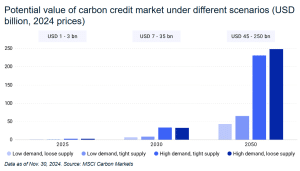
For instance, major corporations like Microsoft and Shell invest in carbon capture projects to generate high-value credits. According to Allied Market Research, the global voluntary carbon market is projected to reach $100 billion by 2030, presenting lucrative opportunities for businesses that engage early. While MSCI data suggests that voluntary carbon credit market could reach up to $250 billion by 2050.
Enhancing Corporate Reputation
Engaging in carbon credit projects enhances a company’s reputation by demonstrating a commitment to sustainability. This proactive approach improves brand image and fosters customer loyalty, as consumers increasingly prefer environmentally responsible companies.
A 2023 survey by IBM found that 70% of consumers are willing to pay a premium for sustainable brands, highlighting the competitive advantage of climate-conscious business strategies.
Moreover, ESG (Environmental, Social, and Governance) investing has surged, with global ESG assets expected to surpass $40 trillion by 2025. Companies that actively reduce their carbon footprint through verified credit projects are more likely to secure funding from institutional ESG-focused investors.
Regulatory Compliance & Market Demand
With the implementation of stricter environmental regulations worldwide, carbon credits assist businesses in complying with emission targets. The expansion of carbon pricing instruments, now totaling 75 globally, indicates a growing market demand for sustainable practices.
Governments are tightening emission policies, making carbon credits a crucial tool for avoiding hefty fines and maintaining operations.
The European Union’s Carbon Border Adjustment Mechanism (CBAM), set to be fully implemented by 2026, will require importers to pay for embedded emissions in products like steel and cement. Similarly, the U.S. Inflation Reduction Act (IRA) includes billions in incentives for clean energy projects and carbon capture. These policies create a clear incentive for companies to invest in carbon credits to maintain regulatory compliance and gain a competitive edge.
3 Steps To Implementing A Successful Carbon Credit Project
If you’re planning or simply thinking about how to have a carbon credit project that emerges successfully, here are the three major steps to follow:
1. Identifying Project Scope & Goals
Start by defining your carbon credit project’s objectives. What are you aiming to achieve? This could range from reducing carbon emissions to generating new revenue streams or ensuring compliance with regulatory frameworks. Each objective should be clear and measurable to track progress.
Once your goals are set, choose the right project type. Whether it’s reforestation, renewable energy generation, or methane capture, aligning your project’s nature with your goals is essential. For instance, if emission reductions are a priority, a renewable energy project may be the best fit. Careful selection of the project type will streamline efforts and maximize impact.
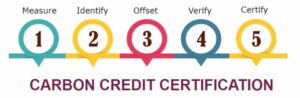
Next, focus on obtaining certification for the carbon credits you generate. Certification from established, recognized standards—such as the Gold Standard or Verra—validates the legitimacy of your carbon credits. Stick to proven methodologies and ensure full transparency in your project’s implementation.
Rigorous monitoring and reporting will ensure that your carbon credits are verified correctly and gain credibility in the marketplace. Remember, the higher the standard of certification, the more trustworthy your credits will appear to buyers, enhancing their marketability.
3. Market Engagement & Carbon Credit Trading
Finally, engage with carbon credit trading platforms to bring your credits to market. Established marketplaces, such as those launched by governments or private entities, allow for easy buying and selling of carbon credits. For example, Indonesia’s entry into the global carbon market in 2024 was a significant step toward green energy funding.
By listing your credits on such platforms, you can contribute to the global effort against climate change while monetizing your efforts. The carbon trading landscape is growing, making it crucial for businesses to stay informed and ready to leverage these platforms for maximum impact.
5 Challenges in Managing Carbon Credit Projects
After knowing the benefits of and the steps needed to implement a carbon credit project, it’s also wise to learn the challenges involved.
Ensuring Project Validity & Monitoring
Rigorous monitoring and validation are necessary to maintain project integrity and avoid issues like double counting. This ensures that emission reductions are genuinely achieved.
Avoiding Double Counting
Implementing robust tracking systems is crucial to prevent the same carbon credit from being counted multiple times, preserving the credibility of carbon offset claims.
Managing Volatile Market Prices
The carbon credit market can experience price fluctuations, impacting the financial sustainability of projects. Staying informed about market trends and diversifying project portfolios can help mitigate these risks. Go over this carbon price page to stay informed.
Meeting Strict Regulatory Standards
Compliance with evolving environmental regulations requires businesses to stay updated. Engaging with policy developments, like the breakthroughs in Article 6 at COP29 in 2024, ensures projects align with international standards.
Securing Long-Term Financing
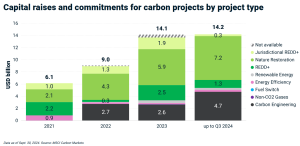
Attracting and maintaining investment for carbon credit projects can be challenging. However, by the end of the third quarter of 2024, $14 billion had been raised or committed, reflecting increasing investor interest and confidence in the market.
3 Future Trends in Carbon Credit Projects
Finally, it helps to know what trends are unfolding in the market and learn how to leverage them, namely:
Innovations in Carbon Capture Technologies
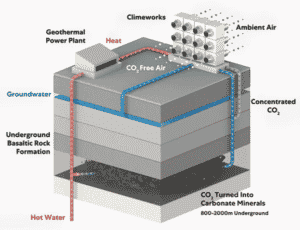
As carbon capture technologies evolve, they are expected to significantly improve the efficiency and scalability of emission reduction efforts. Innovations like Direct Air Capture (DAC) are poised to capture carbon dioxide directly from the atmosphere, making it easier to offset emissions from difficult-to-decarbonize sectors.
Climeworks DAC technology
These advancements will drive the development of high-quality carbon credit projects that can scale rapidly to meet global climate goals. The global carbon capture market could reach $7.3 billion by 2030, highlighting its growing potential as a major player in carbon credit generation.
Expansion of Carbon Credit Marketplaces
The emergence of new carbon credit marketplaces is a key trend shaping the future of carbon trading. Platforms like Indonesia’s IDX Carbon, launched in 2024, are increasing global participation in emission reduction initiatives. Such marketplaces are making carbon credit trading more accessible, especially for emerging economies looking to fund sustainability projects through carbon sales.
There are over 60 carbon trading platforms now active worldwide. The expansion of these digital platforms is expected to drive greater liquidity and efficiency in the carbon market, enabling more businesses to engage in carbon offsetting.
Increasing Focus on Quality & Additionality
Looking ahead, the carbon credit market will place an increasing emphasis on the quality of credits and additionality. Additionality ensures that carbon reduction projects would not have happened without the credit system, proving their real-world impact.
The Integrity Council for the Voluntary Carbon Market (ICVCM) is leading efforts to create new benchmarks for high-quality carbon credits. As sustainability-conscious investors and businesses seek reliable offsets, there will be a stronger demand for verified, additional, and impactful carbon credit projects.
Conclusion
Carbon credit projects are vital tools for achieving sustainability and profitability in today’s business landscape. By understanding the different types, benefits, and challenges, companies can effectively implement these projects to reduce their carbon footprint, meet regulatory standards, and enhance their market position. With innovations and growing market opportunities, these projects would be pivotal in the global effort to combat climate change.
To provide the best experiences, we use technologies like cookies to store and/or access device information. Consenting to these technologies will allow us to process data such as browsing behavior or unique IDs on this site. Not consenting or withdrawing consent, may adversely affect certain features and functions.
Functional
Always active
The technical storage or access is strictly necessary for the legitimate purpose of enabling the use of a specific service explicitly requested by the subscriber or user, or for the sole purpose of carrying out the transmission of a communication over an electronic communications network.
Preferences
The technical storage or access is necessary for the legitimate purpose of storing preferences that are not requested by the subscriber or user.
Statistics
The technical storage or access that is used exclusively for statistical purposes.The technical storage or access that is used exclusively for anonymous statistical purposes. Without a subpoena, voluntary compliance on the part of your Internet Service Provider, or additional records from a third party, information stored or retrieved for this purpose alone cannot usually be used to identify you.
Marketing
The technical storage or access is required to create user profiles to send advertising, or to track the user on a website or across several websites for similar marketing purposes.