


Kenya is taking another step to grow its carbon market. The government plans to launch a national carbon exchange by 2027, creating a marketplace where verified carbon credits can be traded more efficiently.
The move comes as global demand for high-quality carbon credits continues to grow. It also supports Kenya’s goal of attracting more climate finance while helping businesses and communities reduce emissions. If successful, the exchange could strengthen Kenya’s position as one of Africa’s leading carbon market hubs.
Kenya Lays the Foundation for a National Carbon Exchange
Kenya already has one of Africa’s most active carbon markets. The new exchange aims to bring buyers, sellers, project developers, and investors together under one transparent platform.
The government claims the exchange will help with price discovery. It will boost market confidence and simplify trading verified carbon credits. The platform aims to draw more international investment. It will focus on projects that protect forests, restore ecosystems, expand renewable energy, and support local communities.
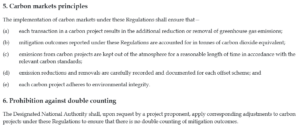
The exchange builds on Kenya’s Carbon Markets Regulations, which came into force in 2024. The rules set standards for carbon projects, benefit sharing, and government oversight. They also prepare Kenya to participate in international carbon trading under Article 6 of the Paris Agreement.
Many African countries are still building their carbon market rules. Kenya’s earlier policy work gives it a head start as demand for carbon credits grows.
Kenya Already Has Strong Climate Credentials
Kenya enters the market with an important advantage. Its electricity system is already one of the cleanest in Africa.
According to the International Energy Agency (IEA), more than 90% of Kenya’s electricity comes from renewable sources. Geothermal power provides the largest share, followed by hydropower, wind, and solar energy.
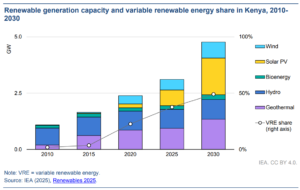
The country has installed over 950 megawatts (MW) of geothermal capacity. This makes it a top producer of geothermal electricity worldwide. This cleaner power mix helps reduce emissions while supporting economic growth.
Kenya has also set ambitious climate goals. The country plans to reduce greenhouse gas emissions by 32% by 2030. This goal is set in its updated Nationally Determined Contribution (NDC) compared to the business-as-usual scenario. The plan covers key sectors such as energy, transport, agriculture, forestry, and waste.
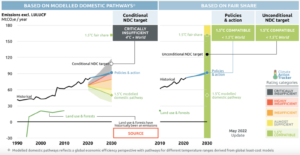
The government estimates it will need about US$62 billion between 2020 and 2030 to deliver its climate plan. Around 87% of that funding is expected to come from international support and private investment. Carbon markets could become an important source of that financing.
Carbon Credits Could Help Protect Kenya’s Natural Resources
Kenya has some of Africa’s most valuable natural carbon sinks. Its forests, mangroves, grasslands, and wildlife landscapes can store large amounts of carbon while supporting biodiversity and local livelihoods.
The country is already one of Africa’s largest carbon credit producers. Kenya has issued over 70 million verified carbon credits from more than 100 projects. This makes it a top supplier in Africa, according to Ecosystem Marketplace and AlliedOffsets.
- Kenya accounts for roughly 15% of all carbon credits issued in Africa, second only to a handful of larger markets.

According to AlliedOffsets, Kenya could generate up to US$170 million by exporting 40 million tonnes of ITMOs under Article 6 at US$30 per tonne. This includes about US$160 million from corresponding adjustment fees, US$8 million in ITMO issuance fees—half of which goes to the Climate Change Fund—and US$2 million for domestic benefit-sharing.
Kenya’s Carbon Markets Regulations also require project developers to pay application fees of KES 150,000–300,000 (US$1,140–2,280), issuance fees of US$0.10–0.20 per tonne, and a US$4 corresponding adjustment fee for each authorized ITMO.
The African nation’s VCM could contribute about 202 million tonnes of CO₂ reductions during its NDC period. Around 75 MtCO₂e had already been issued as verified carbon credits by 2025, while another 141 MtCO₂e is expected by 2030.
Meanwhile, carbon projects could generate roughly 20 MtCO₂e in emissions reductions each year. The report says clear rules on credit quality and NDC accounting will be essential to maintain demand and support future compliance markets.
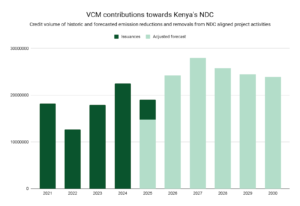
The carbon projects cover forest conservation, landscape restoration, clean cooking, renewable energy, regenerative agriculture, and community-based initiatives. Most are certified by well-known standards like Verra and the Gold Standard.
Major buyers of Kenya’s credits are big names like Microsoft, Netflix, Meta, Shell, and Air France. They, along with other companies, seek high-quality carbon credits to meet their climate goals.
The government sees carbon finance as a way to protect these natural resources while creating jobs and new income for local communities. A national carbon exchange could help Kenya capture more of the growing regional credit demand.
It would also help international buyers more easily find verified Kenyan carbon credits. A clearer and better marketplace would make this possible.
Africa’s Carbon Market Is Set for Rapid Growth
Kenya’s plans come as Africa’s carbon market gains momentum. The African Carbon Markets Initiative (ACMI) plans to create 300 million carbon credits yearly by 2030. By 2050, it aims for 1.5 billion credits each year.
The initiative estimates this could unlock more than US$6 billion in revenue by 2030 and over US$120 billion by 2050. It could also support 30 million jobs across the continent by mid-century.
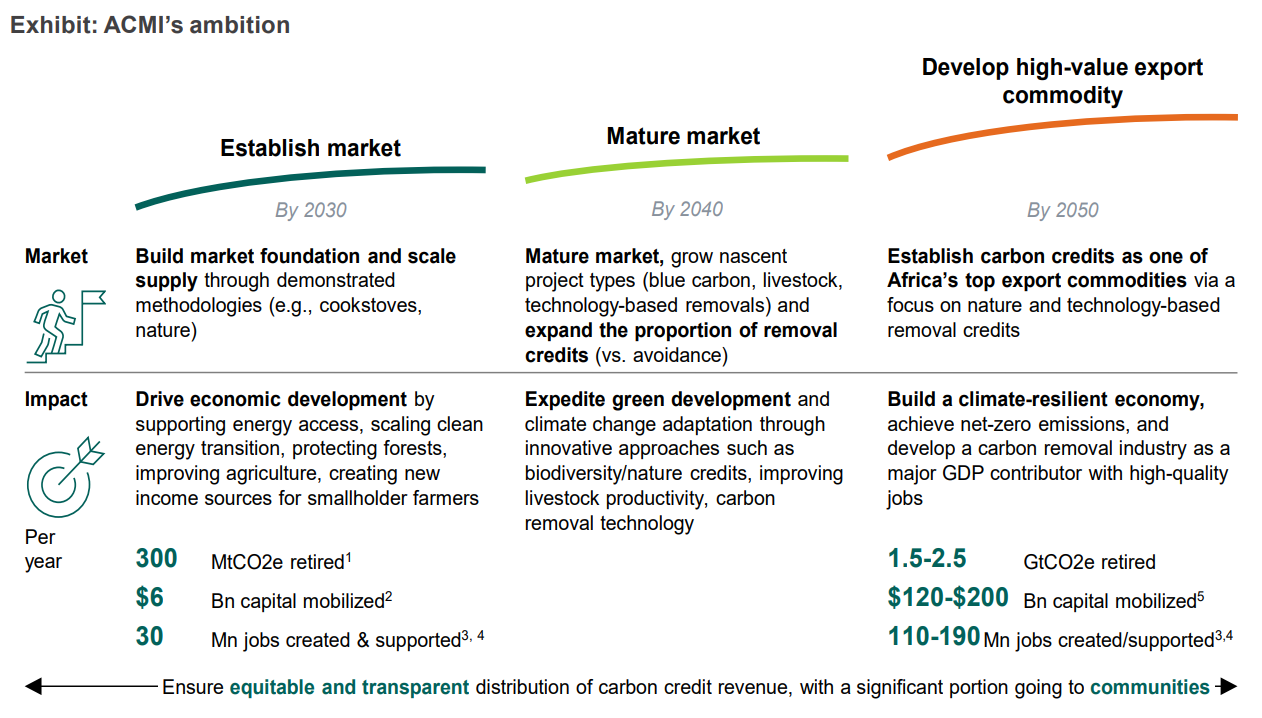
Africa has a strong natural advantage. The continent holds vast forests, wetlands, grasslands, and mangroves that can store large amounts of carbon. Yet it currently supplies only a small share of the global carbon market. Many experts believe that could change as countries strengthen their carbon market rules and attract more investment.
Kenya hopes its planned exchange will help position the country at the center of this growth.
High-Integrity Credits Will Be Key
The opportunity is large, but so are the expectations.
In recent years, buyers have become more selective about the carbon credits they purchase. They want projects that deliver real and measurable emissions reductions while protecting biodiversity and supporting local communities.
Groups like the Integrity Council for the Voluntary Carbon Market (ICVCM) and the Voluntary Carbon Markets Integrity Initiative (VCMI) have released new guidance. This aims to enhance market quality and boost buyer confidence.
Kenya’s carbon market regulations include rules on project approval, monitoring, benefit sharing, and government oversight. These safeguards aim to boost transparency and ensure communities receive a fair share of project revenues.
Strong governance will be important if Kenya wants to attract long-term international buyers.
Carbon Finance Can Support Kenya’s Climate Goals
A carbon exchange is more than a new trading platform. It is part of Kenya’s broader plan to become a regional leader in climate finance.
The country continues to invest in renewable energy, forest restoration, climate-smart agriculture, and clean transport. It also aims to increase national tree cover to at least 30% by 2032. Carbon finance can help fund these efforts while creating jobs and supporting local communities.
Kenya already has strong renewable energy resources, clear carbon market rules, and a growing pipeline of high-quality projects. A national exchange could attract more investors, improve market transparency, and connect Kenyan credits with global buyers.
As demand for high-integrity carbon credits grows, countries with trusted policies and credible projects will be best placed to benefit. Kenya is positioning itself to become one of Africa’s leading carbon market hubs while advancing its climate and economic goals.