

Apple (NASDAQ: AAPL) delivered another strong quarter, beating Wall Street expectations as iPhone sales rebounded and services reached another record. However, the company’s biggest long-term story may not be its latest devices. It is building a business that aims to grow while cutting its carbon footprint.
That strategy is becoming more important as technology companies invest billions of dollars in artificial intelligence (AI), cloud computing, and advanced chips. These technologies need more electricity, more data centers, and more raw materials.
Investors are now watching not only how fast companies grow, but also how they manage rising energy use and emissions. Apple believes it can do both.
Apple Beats Expectations as Revenue Reaches New High
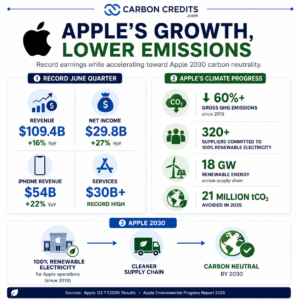
The iPhone maker reported $109.4 billion in revenue for its fiscal third quarter ended June 27, 2026, up 16% from a year earlier. It was the company’s highest June-quarter revenue ever, as shown in its financial statement below.
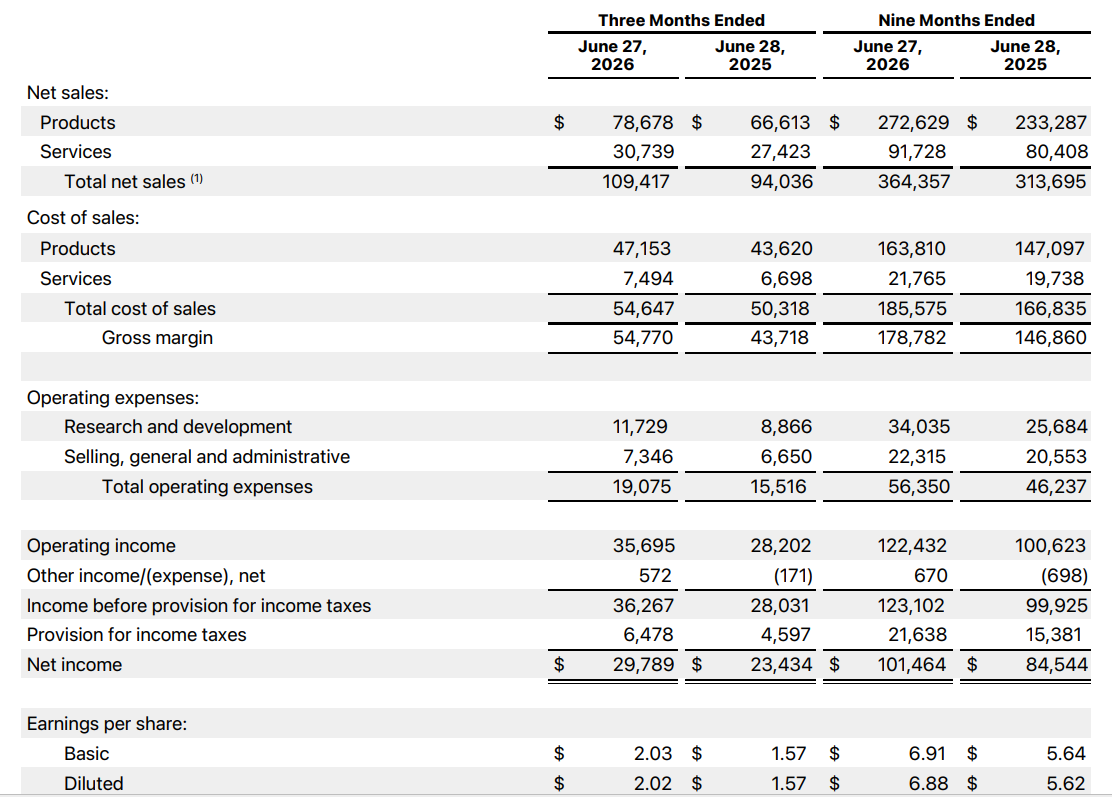
Net income also climbed 27% to $29.8 billion, while diluted earnings per share (EPS) increased 29% to $2.02, both setting new June-quarter records. The results were stronger than Wall Street expected, driven by solid growth across most of Apple’s major businesses.
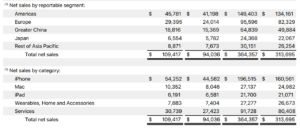
Growth was broad across Apple’s global business. Revenue rose in all regions:
- Americas: $45.8 billion
- Europe: $29.4 billion
- Greater China: $18.8 billion
- Japan: $6.6 billion
- Rest of Asia Pacific: $8.9 billion
The iPhone remained Apple’s biggest source of revenue, generating $54 billion, up 22% from the same quarter last year. Services reached another all-time high at over $30 billion, growing 12% year over year.
Chief Executive Officer Tim Cook remarked:
“Today, Apple is proud to report our strongest June quarter ever, with double-digit revenue growth across iPhone, Mac and Services, and in every geographic segment.”
He also highlighted continued progress in Apple Intelligence, saying the company is expanding AI features across more products and platforms.
How Apple Stock Reacted
Investors welcomed the results. Apple (AAPL) stock went up in after-hours trading after the earnings release. The revenue and earnings were better than expected, easing worries about slowing consumer demand.
However, the gains did not last. Apple shares dropped in after-hours trading. Management warned that supply limits on advanced memory chips might affect iPhone production in the next quarter.
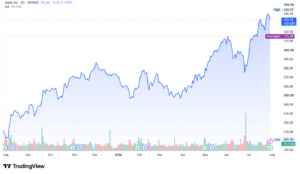
The company also projected September-quarter revenue growth of 9% to 11%, below Wall Street’s expectations of about 12%. Investor sentiment was weighed down by concerns about slower Services growth, despite Apple’s record revenue and earnings in the June quarter.
Why Apple’s Climate Strategy Is Also a Growth Strategy
Apple’s strong financial results come as the company continues to make progress toward its climate goals.
Apple aims to cut emissions not just in its offices, but throughout its entire value chain. This sets it apart from many tech companies that only focus on their own operations. That includes suppliers, manufacturing, transportation, product use, and recycling.
The company reports a reduction of over 60% in its gross greenhouse gas emissions since 2015. This progress helps it move closer to its Apple 2030 goal of achieving carbon neutrality across its business, supply chain, and product life cycle.
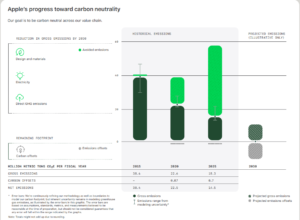
Much of that progress comes from cleaner manufacturing.
According to Apple’s latest Environmental Progress Report, more than 320 suppliers have committed to using 100% renewable electricity for Apple production. Together, they now support over 18 gigawatts of renewable energy worldwide.
The big tech estimates these projects avoided more than 21 million metric tons of greenhouse gas emissions in 2025 alone.
The company is also expanding its use of recycled materials. Many Apple products now include recycled aluminum, cobalt, rare earth elements, gold, lithium, and steel. These efforts reduce demand for newly mined materials while lowering emissions from manufacturing.
Apple has powered its own corporate operations with 100% renewable electricity since 2018. Today, the bigger challenge is helping suppliers make the same transition, because manufacturing remains the largest source of the company’s emissions.
That strategy reflects a broader shift across the technology industry. As companies enhance AI systems and create advanced devices, cutting emissions in global supply chains is now as crucial as boosting product performance.
Using Carbon Credits for Remaining Emissions
Apple also uses carbon credits, but only after reducing as many emissions as possible. The tech giant reported that it retired high-quality, nature-based carbon credits in 2025 to offset a small share of emissions that it cannot yet eliminate.
The company’s portfolio includes:
- The Lumin/Eucapine reforestation project in Uruguay, which retired 422,395 metric tons of CO₂e (2020 vintage), and
- The Windrock Improved Forest Management project in the United States, which retired 319,785 metric tons of CO₂e (2022 vintage).
These projects restore forests, improve land management, and increase long-term carbon storage while protecting biodiversity.
Apple says its priority remains cutting emissions at the source through renewable electricity, recycled materials, lower-carbon manufacturing, and cleaner supply chains. Carbon credits are used only to address the limited emissions that remain as the company works toward its goal of becoming carbon neutral across its entire value chain by 2030.
The Electronics Industry Is Under Pressure to Cut Emissions
Apple is not the only technology company working to lower emissions. The industry faces growing pressure as demand rises for AI devices, smartphones, and cloud services.
According to the International Energy Agency, electricity use from data centers could more than double by 2030, reaching about 945 terawatt-hours (TWh) each year. At the same time, electronics manufacturing depends on energy-intensive materials such as lithium, cobalt, copper, and rare earth elements.
Apple is responding by focusing on its supply chain, where most of its emissions occur. More than 320 suppliers have committed to using 100% renewable electricity for Apple production. This supports over 18 gigawatts of clean energy worldwide.
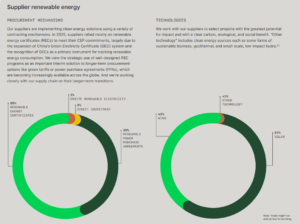
Apple reports that these projects avoided over 21 million metric tons of greenhouse gas emissions in 2025. This effort helped reduce emissions and improved the efficiency and resilience of its supply chain.
Can Apple Reach Carbon Neutral by 2030?
Apple has made significant progress, but its biggest challenge still lies ahead.
Most of the company’s emissions come from manufacturing and suppliers rather than its own offices. That means reaching its 2030 carbon-neutral goal will depend heavily on thousands of suppliers around the world continuing to reduce emissions.
The company has already shown that progress is possible. Gross greenhouse gas emissions have fallen by more than 60% since 2015, even as Apple has continued to grow its business.
Revenue hit a record high this June quarter. The company also grew its renewable energy, increased recycled materials, and partnered with more suppliers to reduce emissions.
For Apple stock investors, that sends an important message. The company’s latest earnings show that financial growth and climate action can move together.
Apple believes that building a lower-carbon business is not separate from growth—it is becoming one of the ways to achieve it.