

Vietnam and Singapore have agreed on a carbon credit deal. This brings them closer to starting cross-border carbon trading under Article 6 of the Paris Agreement.
The Vietnamese Government issued Resolution 235/NQ-CP, approving the Implementation Agreement on carbon credit cooperation with Singapore. It also assigned the Ministry of Foreign Affairs to complete the required procedures and notify the agreement’s entry into force.
The move gives Vietnamese companies and project developers a clearer legal path to generate carbon credits for transfer to Singapore.
The two countries originally signed the agreement on September 16, 2025. Singapore’s government states that the pact sets up a legal framework. This framework helps generate and transfer carbon credits from projects that follow Article 6.
Vietnam Moves Singapore Carbon Pact Toward Implementation
The August 2026 approval is an important step because the agreement now moves closer to actual implementation. The pact allows eligible mitigation projects in Vietnam to generate outcomes that can become internationally transferred mitigation outcomes (ITMOs). Vietnam can then authorize those outcomes for transfer to Singapore.
Article 6.2 provides the rules for countries to cooperate on these transfers. It also requires strong accounting to ensure that countries do not count the same emissions reduction twice.
Singapore’s carbon market platform states that its Implementation Agreements set up a two-way framework. This framework covers project approval, reporting, and necessary adjustments. These agreements also allow private companies to develop projects that can generate ITMOs.
For Vietnam, the framework could help connect domestic climate projects with international buyers and financing.
Projects Must Meet Carbon Credit Rules
The agreement does not allow every carbon credit from Vietnam to enter Singapore’s market. Project developers must follow the rules of both countries and meet the requirements of the bilateral agreement. Singapore has also set environmental integrity rules for international carbon credits.
These rules cover issues such as double counting and leakage. Singapore requires eligible credits to meet Article 6 requirements and represent verified emissions reductions or removals.
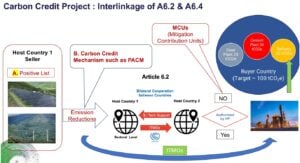
The Singapore-Vietnam framework also sets out a formal process for project approval, ITMO issuance, and transfer. Singapore’s current Vietnam framework says the Joint Committee will oversee the agreement. The committee includes representatives from Singapore’s National Environment Agency and Vietnam’s Ministry of Agriculture and Environment.
However, some operational details remain under development. Singapore will share more details soon on the documents and steps required for Article 6 authorization. The August approval makes it legal, but developers still need to finish the detailed approval process to transfer credits.
Corresponding Adjustments Protect Market Integrity
Corresponding adjustments form a key part of the agreement. When Vietnam approves an ITMO transfer to Singapore, it must adjust accordingly when the parties make that transfer. The agreement requires Vietnam to follow the Article 6.2 guidance adopted under the Paris Agreement.
This accounting step stops Vietnam from using the same emissions reduction for its climate target after sending it to Singapore. Singapore can then recognize the transferred mitigation outcome for an approved purpose.
The agreement also requires both countries to meet reporting obligations under the Paris Agreement. This includes reporting under Article 6.2 and Article 13.
These rules matter because the growth of international carbon markets depends on credible accounting. Without these safeguards, the same emissions cut might back multiple climate claims.
Singapore’s Carbon Tax Creates Demand for New Credits
Singapore has a strong policy reason to develop a supply of high-quality international carbon credits. The country introduced its carbon tax in 2019. The rate reached S$45 per tonne in 2026 and 2027, and Singapore aims to raise it to S$50 to S$80 per tonne by 2030.
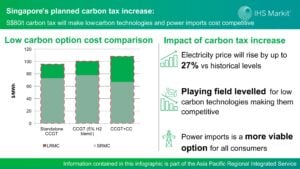
Since January 2024, facilities that owe carbon tax can use eligible international carbon credits. They can offset up to 5% of their taxable emissions. This creates potential demand for eligible credits from Vietnam.
However, supply remains limited. Singapore’s National Environment Agency says carbon credit projects typically take up to four years to generate credits. It also said stronger market focus on credit integrity and changing international rules have slowed the supply of eligible credits.
Vietnam could be a key future supplier if projects get approved. This would allow them to earn credits that meet Singapore’s needs.
The Deal Adds Climate Benefits Beyond Carbon Trading
The wider Singapore Article 6 framework also includes measures to support climate action in host countries. The country requires carbon credit developers to contribute 5% of the value of authorized Article 6 carbon credits under its Implementation Agreements. The money supports adaptation efforts in host countries and/or the UNFCCC Adaptation Fund.
Singapore also requires 2% of Article 6-authorized carbon credits to be canceled at issuance. These credits cannot enter the market, helping contribute to an overall reduction in global emissions.
The Singapore-Vietnam agreement itself gives its Joint Committee a role in determining additional contributions to overall mitigation and adaptation at the time of issuance. These measures aim to extend the climate benefits of carbon trading. They go beyond just transferring emissions reductions between countries.
Vietnam Could Unlock New Climate Finance
Vietnam’s approval could create new opportunities for investment in emissions reduction projects. The two countries have previously highlighted potential cooperation in areas such as clean energy, sustainable agriculture, technology and the circular economy. Vietnam has also sought Singapore’s experience in operating carbon credit markets and exchanges.
The agreement can help Vietnamese project developers reach international buyers. It may also attract financing for projects that cut or eliminate greenhouse gas emissions.
However, the agreement does not guarantee a certain volume of carbon credits or a specific price. Developers still need to secure project approvals, meet methodology requirements, and complete verification. They must also find buyers for the resulting credits.
The timing depends on how quickly Vietnam and Singapore finish the procedures. It also relies on how fast eligible projects move through the system.
Singapore Builds a Growing Article 6 Carbon Network
The Vietnam pact forms part of Singapore’s wider strategy to build a network of bilateral carbon market agreements. As of June 2026, Singapore had signed 11 Implementation Agreements with countries including Vietnam, Mongolia and the Philippines. The full list also includes Papua New Guinea, Ghana, Bhutan, Chile, Peru, Rwanda, Paraguay and Thailand.
Singapore has signed 20 memorandums of understanding with over 20 countries, said Trade and Industry Minister of State Alvin Tan. The government is working with businesses to develop projects that can generate Article 6 credits.
Singapore’s carbon tax and international credit framework give these partnerships a potential source of demand. At the same time, the government says it needs more projects to build the supply of eligible credits.
Vietnam’s approval therefore comes at an important time for both countries. For Vietnam, the agreement could help channel more international finance into emissions reduction projects. For Singapore, it could expand its future supply of high-integrity international carbon credits.
The next step will be implementation. As Vietnam completes the remaining procedures and both governments operationalize the project approval process, the pact could turn into a new channel for Article 6 carbon trading and climate finance in Southeast Asia.