

Carbon credits do not have one fixed price. Their value can range from less than $1 to hundreds or even thousands of dollars per metric ton of carbon dioxide equivalent (tCO₂e), depending on the type of credit, its quality, and market demand.
This wide price range can make carbon credits difficult for newcomers to understand. Why does one credit cost a few dollars while another can cost hundreds?
The answer is that carbon credits are not interchangeable products. They can represent different types of emissions reductions or carbon removals, come from different locations and years, and have different levels of environmental integrity.
Understanding these factors is important for companies, investors, and other buyers looking to purchase carbon credits.
What Is the Average Price of a Carbon Credit?
There is no single global carbon credit price because the voluntary carbon market (VCM) includes credits from thousands of different projects.
In 2025, the MSCI Global Carbon Credit Price Index averaged $3.50 per tCO₂e, down from $4.30 in 2024. However, credits rated BBB or above averaged $6.80/tCO₂e, showing the premium buyers can pay for credits with stronger quality characteristics.
Prices can vary even more by project type. MSCI’s data showed many voluntary carbon credits trading from below $1/tCO₂e to nearly $50/tCO₂e. Engineered carbon removal credits can cost far more, with some selling for more than $1,000/tCO₂e.
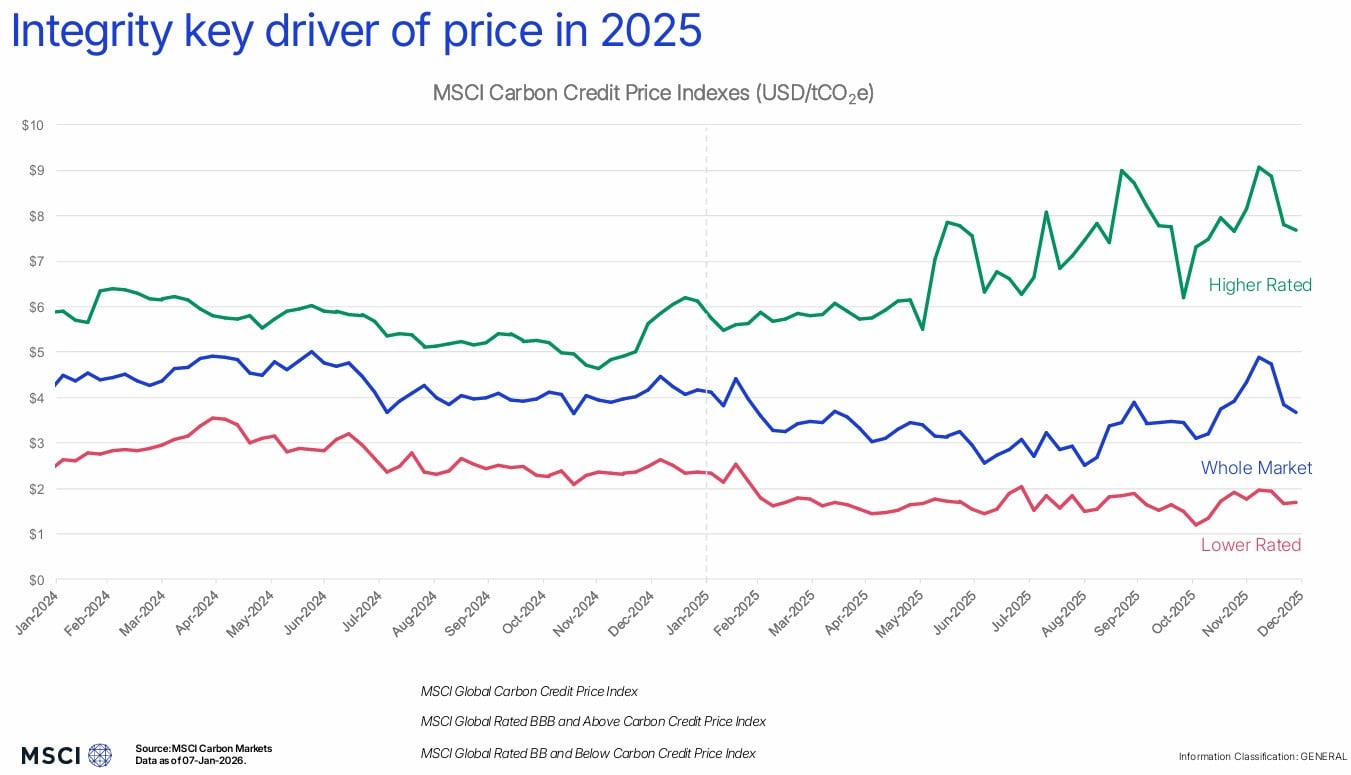
These figures show why an “average carbon credit price” can be misleading. The type and quality of the credit matter greatly.
What Determines the Price of a Carbon Credit?
Several factors influence how much buyers are willing to pay.
Project Type
The type of project generating the credit is one of the biggest pricing factors.
Some projects focus on avoiding or reducing emissions. Examples include methane capture, renewable energy, and clean-cooking projects. Others remove carbon dioxide from the atmosphere, such as reforestation, biochar, direct air capture, and other carbon removal technologies.
Removal credits can command higher prices because they physically remove carbon from the atmosphere. Some removal methods also require significant investment, energy, or specialized technology.
Credit Quality
Quality is becoming one of the most important factors in carbon credit pricing.
Buyers increasingly assess whether a project creates a real, measurable, and additional climate benefit. They may also consider how long the carbon remains stored, how accurately the emissions reduction or removal is measured, and whether the project creates risks of leakage or double counting.
Credits that perform better on these factors can command a premium.
Market data found that the price gap between higher- and lower-rated carbon credits widened significantly in 2025. This suggests that buyers are becoming less willing to treat all carbon credits as equivalent.
Why Do Carbon Removal Credits Cost More?
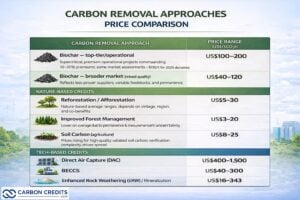
Carbon removal is particularly important to the future of the carbon market, but removing carbon from the atmosphere is often more expensive than avoiding or reducing emissions.
For example, a forest restoration project may remove carbon through natural growth, while direct air capture uses specialized equipment to extract carbon dioxide directly from the atmosphere.
These approaches have very different costs and technical requirements. As a result, some engineered carbon removal credits can cost more than $1,000/tCO₂e, compared with less than $1 for some conventional carbon credits.
However, higher prices do not automatically mean a project is better. Buyers still need to examine the project’s methodology, measurement, permanence, verification, and other quality factors.
Does Location Affect Carbon Credit Prices?
Yes. The location of a project can influence its price because different regions have different project costs, risks, regulations, supply levels, and buyer preferences.
Projects can also generate additional environmental or social benefits. For example, a forest project may protect biodiversity and support local communities in addition to reducing or removing emissions.
These benefits can make certain credits more attractive to buyers, particularly companies looking to support broader environmental or social goals.
However, a credit should not command a higher price simply because it comes from a particular country or region. Buyers should assess the actual quality and impact of the project.
Does the Vintage of a Credit Matter?
The vintage refers to the year in which the underlying emissions reduction or carbon removal occurred.
Vintage can affect price because buyers may prefer newer credits or credits from particular years. Older credits may trade at discounts depending on the project type, market demand, and buyer requirements.
However, newer does not automatically mean better. The quality of the underlying project remains more important than the vintage alone.
How Does Supply and Demand Affect Carbon Prices?
Like other markets, carbon credit prices are influenced by supply and demand.
If many buyers want a limited supply of credits from a particular project type, prices can rise. Conversely, credits with abundant supply and limited demand may trade at lower prices.
Demand is also becoming more selective. Rather than simply looking for the cheapest available credit, some companies are seeking higher-quality credits and durable carbon removals.
This is contributing to a more differentiated market in which credits with different characteristics can command very different prices.
Are VCM Prices Higher or Lower Than Compliance Carbon Prices?
Voluntary carbon credit prices should not be directly compared with compliance market prices because the two markets use different instruments and operate under different rules.
The VCM is largely driven by voluntary corporate and institutional demand. Compliance markets, such as emissions trading systems (ETSs), create demand through legal emissions obligations.
The World Bank reported an average direct carbon price of nearly $21/tCO₂e in 2026 across implemented carbon taxes and ETSs. But individual compliance markets can be significantly higher or lower than this average.
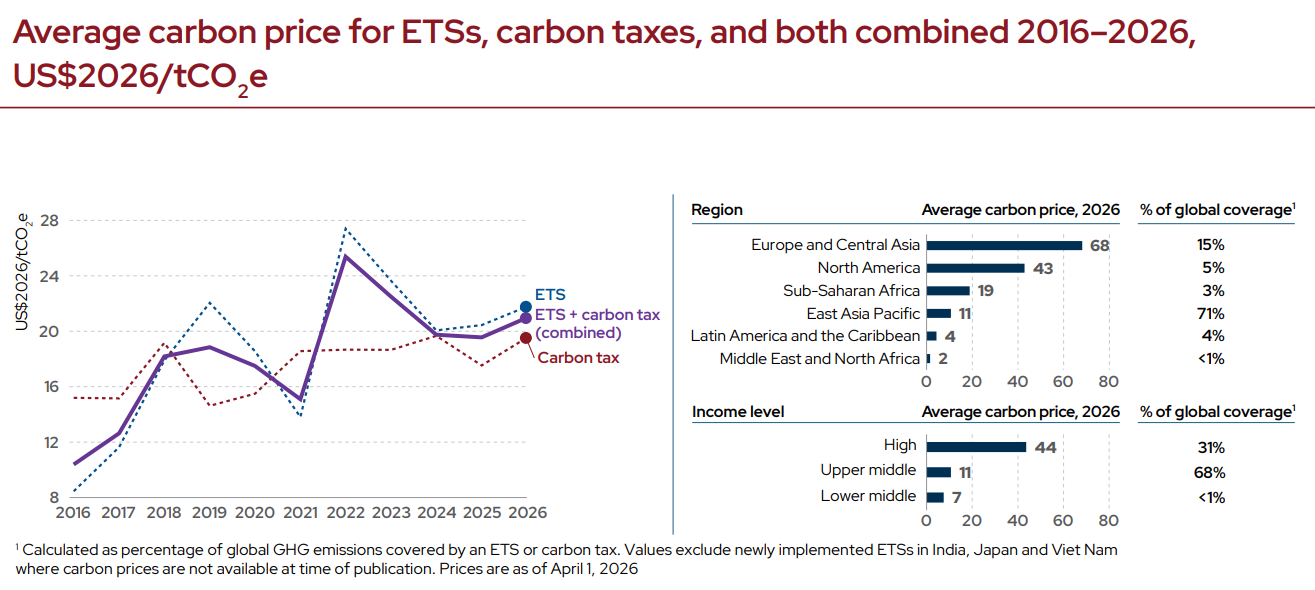
This means it is incorrect to say that compliance carbon is always more expensive than voluntary carbon, or vice versa.
Does a Higher Price Mean a Better Carbon Credit?
Not necessarily.
Price can provide a useful signal, but it should not be the only factor buyers consider. A more expensive credit may represent a high-quality removal project, but buyers still need to examine the evidence behind its claimed climate benefit.
Before purchasing a credit, buyers should consider:
- Additionality: Would the emissions reduction or removal have happened without carbon-credit revenue?
- Permanence: How long will the carbon remain stored?
- Measurement: How accurately are emissions reductions or removals quantified?
- Verification: Has an independent body assessed the project’s reported results?
- Leakage: Could emissions simply shift elsewhere because of the project?
- Double counting: Is the same emissions reduction or removal being claimed more than once?
These factors help buyers understand what they are actually purchasing rather than relying on price alone.
The Bottom Line
Carbon credit prices vary because carbon credits are not all the same. Project type, quality, location, vintage, supply and demand, and the durability of carbon removal can all affect value.
In 2025, the average price across the MSCI Global Carbon Credit Price Index was $3.50/tCO₂e, but higher-quality credits averaged $6.80, while some engineered carbon removal credits cost more than $1,000/tCO₂e.
As the carbon market develops, buyers are increasingly looking beyond the cheapest available credits. Quality, transparency, and the strength of the underlying climate benefit are becoming increasingly important factors in determining what a carbon credit is worth.