

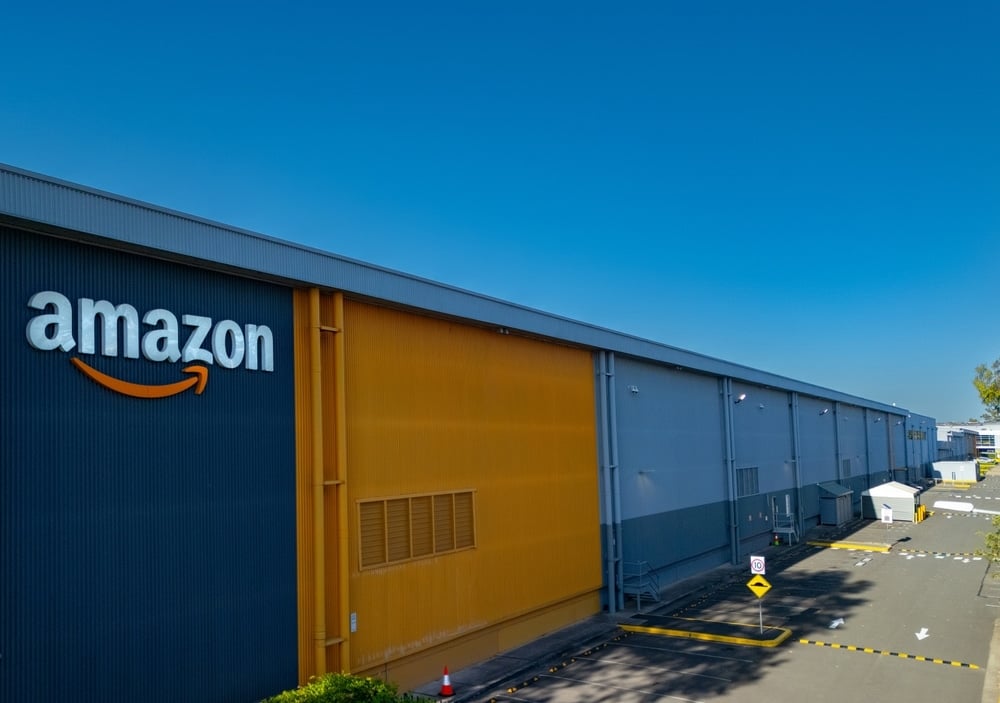
Amazon (AMZN stock) is expanding its clean-energy strategy in Australia with a move that could become increasingly important as renewable power takes a larger role in the country’s electricity system. It has signed its first standalone battery storage agreement globally for the 50-megawatt Bairnsdale battery energy storage system (BESS) in Victoria. It is also the first standalone battery agreement signed by a non-energy company in Australia.
The project marks a shift in how Amazon approaches renewable energy. Rather than focusing only on adding wind and solar generation, the company is investing in infrastructure that can help manage when electricity is produced and when it is needed.
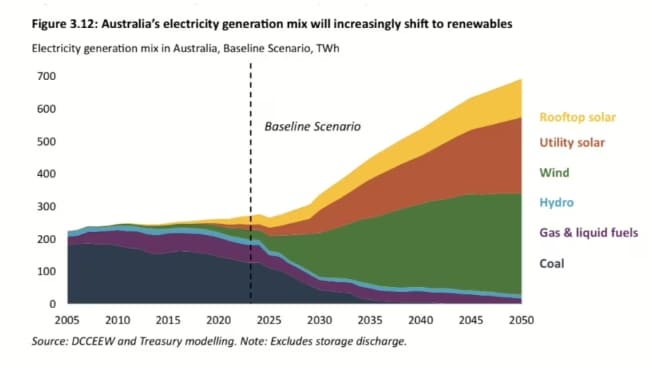
That distinction matters because Australia’s renewable energy system is producing more electricity at certain times than the grid can immediately use.
Why Amazon Is Investing in Battery Storage
The Bairnsdale battery is not directly connected to a solar or wind farm. Instead, it connects to the national electricity grid. This allows the battery to operate independently of a specific renewable project. When electricity supply is high and demand is relatively low, the system can store power. Later, when demand increases, it can send electricity back into the grid.
The timing is particularly important for solar power. Solar farms can produce large amounts of electricity around midday, when sunlight is strongest. However, electricity demand often rises later in the day as households return home, businesses remain active and solar generation begins to decline.
Battery storage helps bridge this gap.
Instead of curtailing surplus renewable electricity, the grid can store some of it and use it during periods of higher demand. In turn, this can reduce pressure on the electricity system, improve grid flexibility and make renewable generation more valuable.
- Australia produced an estimated 7.2 terawatt-hours of surplus wind and solar electricity in 2025. Much of this electricity was generated at times when the grid did not need all of the available supply.
Consequently, batteries are becoming a critical part of Australia’s energy transition.
Amazon’s Growing Energy Portfolio in Australia
Bairnsdale is only one part of Amazon’s expanding energy investments in Australia. The company has invested in seven battery projects in Victoria and 10 battery projects across Australia. Once completed, the projects are expected to provide a combined 368 MW of battery capacity.
At the same time, the retail giant continues to develop a broader portfolio of renewable energy projects.
- Since 2020, the company estimates that it has invested about A$2.8 billion in carbon-free energy projects across Australia. Its portfolio includes solar, wind and battery storage.
- It expects its 20 Australian carbon-free energy projects to eventually provide almost 1 GW of new renewable capacity. The company estimates the electricity generated will be equivalent to the annual consumption of more than half a million Australian households.
The scale of this investment highlights an important change in corporate renewable energy procurement. Large companies are no longer simply looking for enough renewable electricity to match their consumption. Increasingly, they are looking at how their investments can support the wider electricity system.
Carbon Footprint Adds to this Context
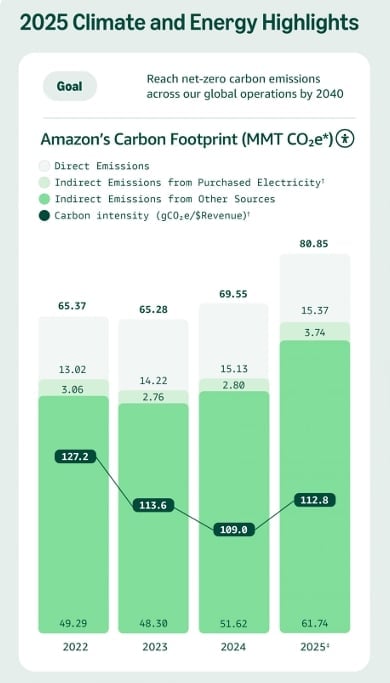
Amazon’s renewable energy investments also need to be viewed against the scale of its overall carbon footprint.
The company’s emissions come from a broad global operation that includes data centers, transportation, warehouses, buildings, purchased electricity, and its supply chain. As its logistics network and cloud computing business continue to expand, reducing emissions across these activities remains a significant challenge.
Amazon has committed to reaching net-zero carbon emissions across its operations by 2040 through The Climate Pledge. The company says its approach starts with reducing emissions across its operations and supply chain. It also plans to address remaining emissions through measures such as carbon removal, nature-based solutions and other forms of carbon neutralization.
Closing the Emission Gap
Renewable energy is therefore only one part of the strategy. Battery storage is becoming relevant because it can help Amazon address electricity-related emissions while also supporting a more flexible grid.
Amazon reached its goal of matching 100% of the electricity consumed by its global operations with renewable energy in 2025, five years earlier than its original 2030 target. However, matching electricity consumption with renewable energy does not eliminate all of the company’s emissions.
“According to BloombergNEF, Amazon was the largest corporate purchaser of carbon-free energy in Australia in 2025.”
Its wider carbon footprint means Amazon still needs to reduce emissions from transportation, buildings, manufacturing, suppliers and other parts of its value chain.
Data Center Demand Makes Grid Investment More Important
The battery investment comes as electricity demand is expected to rise. Amazon Web Services operates data centers in Australia, while demand for cloud computing and artificial intelligence continues to grow globally. Data centers require large and reliable supplies of electricity, making access to clean and dependable power increasingly important.
This creates a complicated challenge.
Adding more solar and wind capacity can reduce the carbon intensity of electricity, but these resources do not produce power continuously. At the same time, data centers require electricity around the clock. Battery storage can help manage short-term fluctuations by shifting electricity from periods of abundant supply to periods of stronger demand.
- Thus, industry forecasts predict the Australian battery market will grow from $4.8 billion in 2026 to $16.36 billion by 2035, with a CAGR of 14.6%.
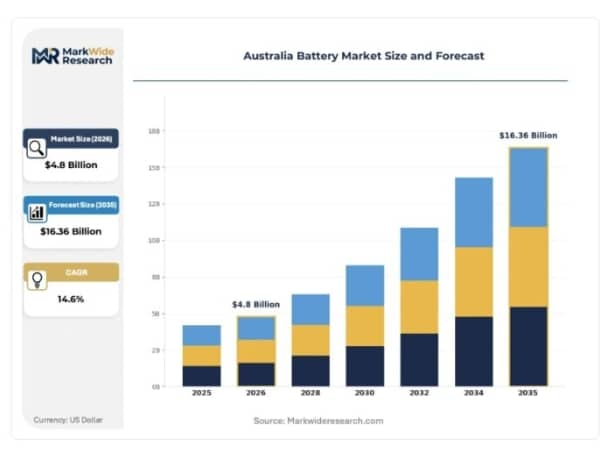
For Amazon, this creates a potential double benefit. The company can increase its access to carbon-free electricity while supporting infrastructure that makes the broader grid more capable of absorbing renewable generation.
A Bigger Global Energy Strategy
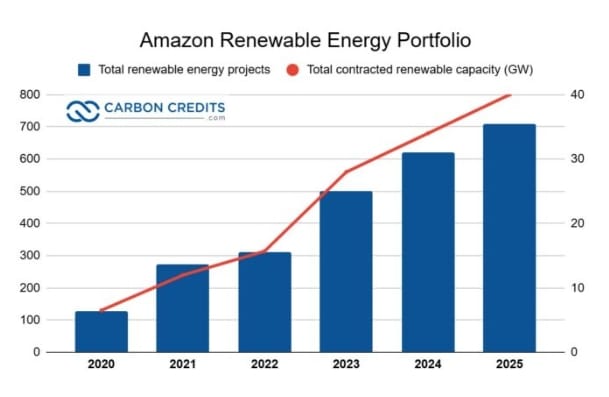
Amazon’s global clean-energy portfolio has grown rapidly. As of January 2026, the company had supported more than 712 carbon-free energy projects across 30 countries. Together, the projects represented about 42 GW of carbon-free energy capacity.
The portfolio includes wind, solar, hydroelectric, geothermal, nuclear power and battery storage.
Amazon says these investments are designed not only to support its own operations but also to bring new energy capacity to the grids where its employees, customers and communities operate.
For investors, the broader trend is worth watching.
The next stage of the energy transition will require more than building wind and solar farms. It will also require batteries, transmission infrastructure, grid connections and other technologies capable of balancing supply and demand.
And the Bairnsdale agreement clearly illustrates this shift.
Extending to Europe
The approach to clean energy also extends well beyond Australia. In Germany, the company has signed an agreement to purchase 600 MW of carbon-free electricity from the Gennaker offshore wind farm in the Baltic Sea. The long-term power purchase agreement gives developer Skyborn Renewables greater certainty over future revenues.
For large renewable projects, such commitments can help developers secure financing and move from planning to construction.
Gennaker is expected to generate enough electricity to power the equivalent of more than one million German households annually once operational.
Amazon has also signed four new power purchase agreements in Sweden. The deals bring its carbon-free energy capacity in the country to nearly 1 GW and increase its portfolio to nine utility-scale wind projects.
These agreements show how corporate buyers can influence renewable energy development beyond their own electricity consumption.
The company is moving from simply purchasing renewable electricity toward investing in the infrastructure needed to make carbon-free power more reliable and useful. As electricity demand from data centers, artificial intelligence and broader electrification grows, that flexibility could become increasingly valuable.
Ultimately, Amazon’s battery investment is not just a clean-energy procurement decision. It reflects a wider shift in the corporate energy market, where companies are increasingly looking beyond renewable generation and toward the infrastructure required to build a more reliable, flexible and lower-carbon electricity system.