


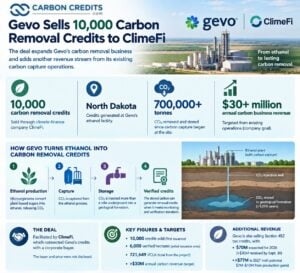
Gevo is expanding its carbon removal business after completing a sale of 10,000 carbon removal credits through climate-finance company ClimeFi. The deal gives the U.S. renewable fuels producer another way to earn revenue from its existing carbon capture operations.
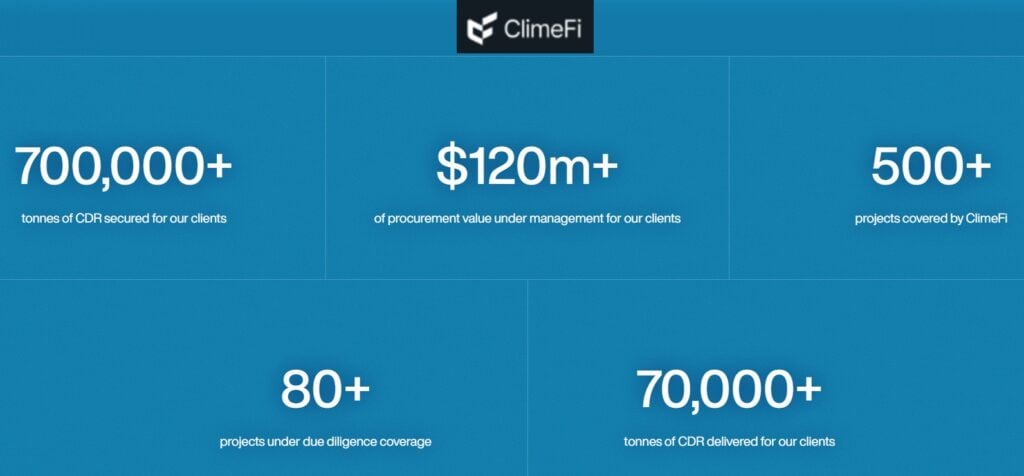
Announced on October 8, 2026, the transaction involved credits generated at Gevo’s North Dakota ethanol facility. Gevo says the site has produced more than 700,000 tonnes of carbon dioxide removal since carbon capture and storage began.
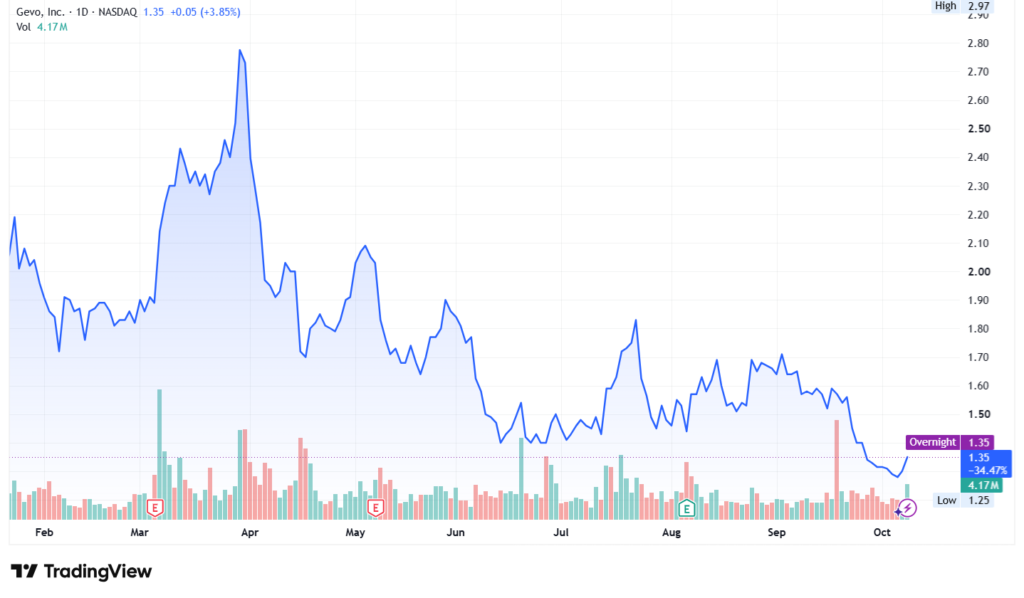
The announcement came as Gevo shares gained 5.13% in European trading. The report cited a move from €1.17 to €1.23 on the Lang & Schwarz platform. This was not necessarily the closing price of Gevo shares on Nasdaq, and the timing alone does not prove the deal caused the increase.
Gevo is targeting more than $30 million in annual carbon business revenue from existing operations. That remains a company target, not revenue already achieved. The latest sale provides another example of how Gevo plans to turn carbon capture into a source of income alongside renewable fuels.
How Gevo Turns Ethanol Production Into Carbon Removal Credits
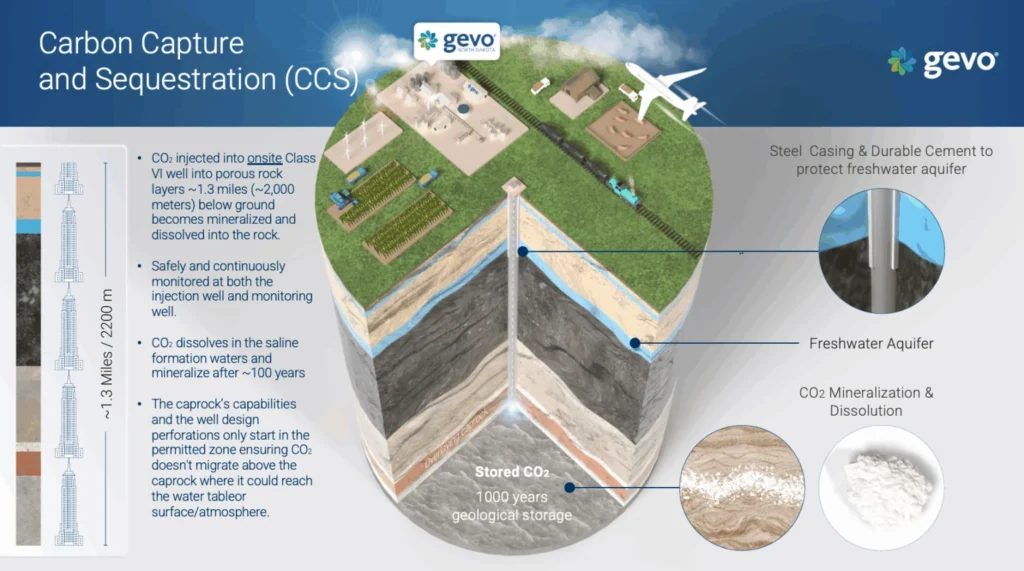
Gevo’s project captures carbon dioxide released during ethanol production and stores it underground. Ethanol plants use microorganisms to convert plant-based sugars into alcohol. This process releases carbon dioxide. Gevo captures that gas and injects it into a geological formation more than a mile beneath its North Dakota facility.
The process is known as bioenergy with carbon capture and storage (BECCS). It combines fuel production from biological material with carbon capture and long-term storage.
Gevo says the stored carbon can remain underground for more than 1,000 years. The company uses its existing ethanol plant, capture equipment, and storage well to support the process.
The captured carbon can generate carbon removal credits when the project meets the required monitoring and verification standards. Each credit represents one tonne of carbon dioxide removed from the atmosphere and stored.
However, capturing biogenic carbon does not automatically guarantee a net climate benefit. Project assessments must account for emissions from growing and transporting feedstock, operating the facility, and storing the carbon. The overall process must demonstrate that it delivers genuine net removals.
Gevo says its North Dakota operation is among the first commercial-scale BECCS projects in the United States to deliver verified carbon removal credits to the voluntary market.
Gevo Chief Executive Officer Paul Bloom:
“With proven sequestration infrastructure, commercial operations and access to both compliance and voluntary carbon markets, we believe our existing operations can support a growing carbon business and create a meaningful contributor to earnings, cash generation and shareholder value.”
ClimeFi Helps Connect Gevo With Buyers
ClimeFi facilitated the transaction and helped connect Gevo’s credits with a corporate buyer. The companies did not publicly identify the buyer or disclose the sale price.
Intermediaries such as ClimeFi help carbon removal suppliers reach companies seeking verified climate solutions. They can also help buyers assess projects, compare removal technologies, and manage credit purchases.
Carbon removal differs from credits that represent avoided emissions. A removal credit represents carbon taken out of the atmosphere and stored. Avoidance credits generally represent emissions that a project prevents from being released.
Durable carbon removal can be more expensive because projects must capture carbon and demonstrate that it remains stored over time.
Gevo has previously reported carbon credit sales involving buyers such as Nasdaq and Whirlpool. The ClimeFi transaction adds another completed sale to its commercial record.
However, without a disclosed price, the transaction does not establish how much revenue Gevo earned per credit. It also does not provide a reliable price benchmark for the wider carbon removal market.
Gevo Targets $30 Million in Annual Carbon Revenue
Gevo wants to build a carbon business alongside its renewable fuels operations. Its target of more than $30 million in annual carbon business revenue would create another income stream from existing facilities.
The company is also earning money through U.S. clean fuel tax incentives. These incentives are separate from carbon removal credit sales.
On October 1, Gevo announced that it had sold substantially all the Section 45Z tax credits it expected to generate from its ethanol and renewable natural gas facilities in 2026. The expected total was $70 million.
Gevo had received more than $30 million in cash from those sales by September 30. It expected to receive the remaining proceeds over the following six months.
The company also forecast more than $77 million in Section 45Z credits for 2027. Planned production improvements at its North Dakota facility could add an estimated $7 million to $10 million to that amount.
These tax credits are not carbon removal credits. Section 45Z is a government incentive for qualifying low-emission transportation fuels, while carbon removal credits are sold to buyers seeking verified emissions removals.
Both can support Gevo’s finances, but they depend on different rules and markets. The company’s ability to grow its carbon business will depend on future credit sales, buyer demand, verification requirements, and operating costs.
Durable Carbon Removal Demand Surges, But Delivery Lags
Gevo’s deal comes as buyers show growing interest in durable carbon removal. However, the market still faces a gap between credits purchased for future delivery and removals already delivered.
CDR.fyi reported that buyers contracted for 2.3 million tonnes of durable carbon removal in the first quarter of 2026. That was about 560% higher than in the first quarter of 2025.
The market also recorded approximately 145,000 tonnes delivered in the first quarter of 2026, a 67% increase from a year earlier. These figures cover the wider durable carbon removal market, not just BECCS projects.
The difference between contracted and delivered volumes remains substantial. Contracts can cover removals that will occur years later, while delivered credits represent a more advanced stage of project execution.

That makes Gevo’s completed transaction important. It shows that the company has moved beyond developing carbon capture infrastructure to selling credits from its operations.
Still, one transaction does not prove that the market can sustain rapid growth. Future demand will depend on corporate climate commitments, credit quality, prices, and confidence that projects deliver measurable, durable removals.
What the Stock Gain Means
Gevo shares gained 5.13% in European trading on October 8, rising from €1.17 to €1.23 on the Lang & Schwarz platform, according to AD HOC News.
Investors may see the sale as a positive sign for Gevo’s carbon business. However, a single day’s share-price movement does not establish that the transaction caused the increase.
The company’s wider progress also matters. Gevo is working to improve production at its North Dakota facility and increase the value it earns from renewable fuels, tax incentives and carbon products.
The 10,000-credit transaction provides evidence that Gevo can sell removals from its existing operations. The next challenge is to repeat those sales at prices and volumes that make carbon removal a reliable source of revenue.
One Credit Sale, a Bigger Carbon Business Ambition
Gevo’s sale through ClimeFi shows how an ethanol plant can generate revenue from both fuel production and carbon removal.
The company says its North Dakota facility has generated more than 700,000 tonnes of carbon dioxide removal. It is now seeking to grow its carbon business to more than $30 million in annual revenue.
The latest sale advances that goal, but the undisclosed price means the transaction’s financial contribution remains unclear.
For the carbon market, the deal highlights the importance of actual delivery. Buyers need projects that can capture carbon, store it securely, and support credits with credible monitoring and verification.
If Gevo can expand its credit sales while maintaining reliable storage and emissions accounting, carbon removal could become a more important part of its business. For now, the 10,000-credit deal is a concrete step toward that target—not proof that the company has already achieved it.