

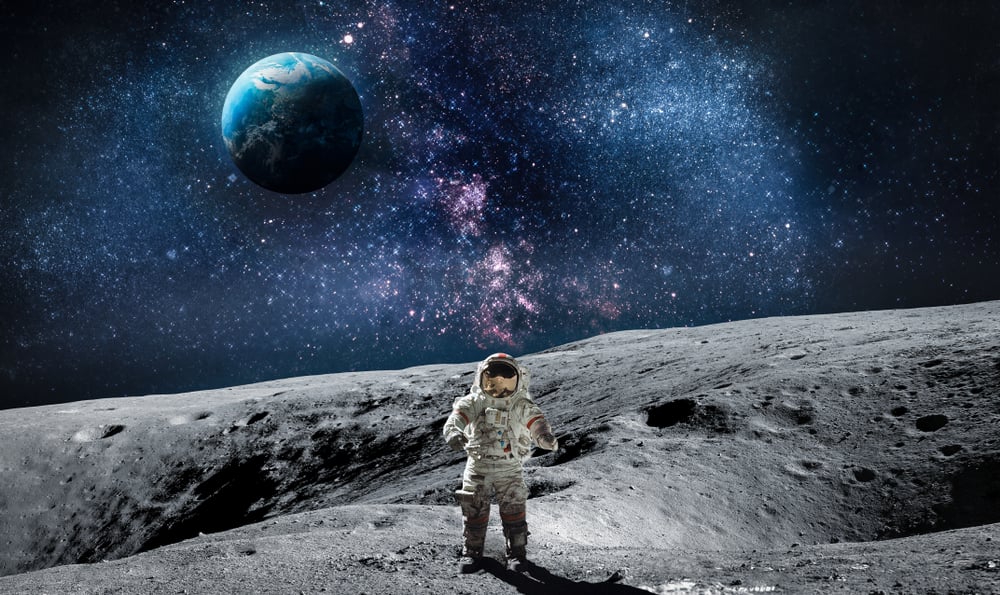
NASA and the U.S. Department of Energy (DOE) have signed an agreement to accelerate the development of nuclear power and propulsion technologies for future space missions. The partnership aims to help spacecraft travel farther, operate longer, and support a sustained human presence on the Moon.
The agreement, announced on October 8, 2026, establishes a framework for cooperation in nuclear research, fuel production, testing and mission development. It also supports U.S. efforts to strengthen its leadership in advanced nuclear technology.
The deal comes as electricity demand rises across the United States, driven by data centers, artificial intelligence, manufacturing and wider electrification. Although the agreement focuses on space exploration, advances in nuclear science and engineering could create opportunities for wider energy innovation.
NASA and DOE Team Up on Space Nuclear Technology
The partnership combines NASA’s space exploration expertise with DOE’s experience in nuclear science, reactor development, and fuel technology.
Nuclear power could help solve some of the biggest challenges facing deep-space missions. Solar panels become less effective when spacecraft travel far from the Sun or operate in areas with limited sunlight. On the Moon, long periods of darkness make solar power alone unreliable.
Nuclear systems can provide a steady source of energy for spacecraft, scientific equipment, and lunar facilities. They could also support advanced propulsion systems designed to improve future space travel.
The agreement covers two main technologies:
- Nuclear fission: These systems generate energy by splitting atomic nuclei. They could power spacecraft, provide electricity to lunar bases, and support nuclear propulsion.
- Radioisotope power systems: These convert heat from radioactive decay into electricity or provide heat to protect equipment in extremely cold environments.
By coordinating research, testing, and mission planning, NASA and DOE aim to move these technologies closer to practical use.
Space Reactor-1 and Lunar Reactor-1 Advance the Plans
One of NASA’s planned missions is Space Reactor-1 Freedom, which is scheduled for launch in 2028. The mission is expected to advance nuclear-powered space exploration and demonstrate technologies for future deep-space operations.
The agencies are also working toward Lunar Reactor-1, a planned fission power system intended to supply electricity to future lunar infrastructure. The U.S. objective is to have a lunar surface reactor ready for launch by 2030.
Reliable electricity will be essential for a long-term human presence on the Moon. Future facilities could need power for habitats, communications, scientific instruments, rovers, and equipment used to process local resources.
- Nuclear power could help these systems operate through extended periods of darkness. It may also support future missions to Mars, where long distances and demanding conditions make reliable energy supplies important.
- Radioisotope technology will remain another part of NASA’s plans. Its Dragonfly mission to Saturn’s moon Titan, scheduled for launch in 2028, will use a radioisotope generator to produce electricity and heater units to keep equipment warm.
NASA and DOE also plan to provide 24 radioisotope heater units for the European Space Agency’s Rosalind Franklin Mars rover.
Rising U.S. Electricity Demand Keeps Nuclear Power in Focus
Although the NASA-DOE agreement focuses on space, it comes as the United States faces growing electricity demand.
- According to the U.S. Energy Information Administration (EIA), U.S. electricity generation reached approximately 4,430 billion kilowatt-hours in 2025, an increase of 2.8% from 2024. The agency expects generation to continue rising in 2026 and 2027.
- The EIA’s September 2026 Short-Term Energy Outlook projects U.S. electricity sales of 4,135 billion kilowatt-hours in 2026 and 4,211 billion kilowatt-hours in 2027. These figures measure electricity sold to end users, rather than total generation.
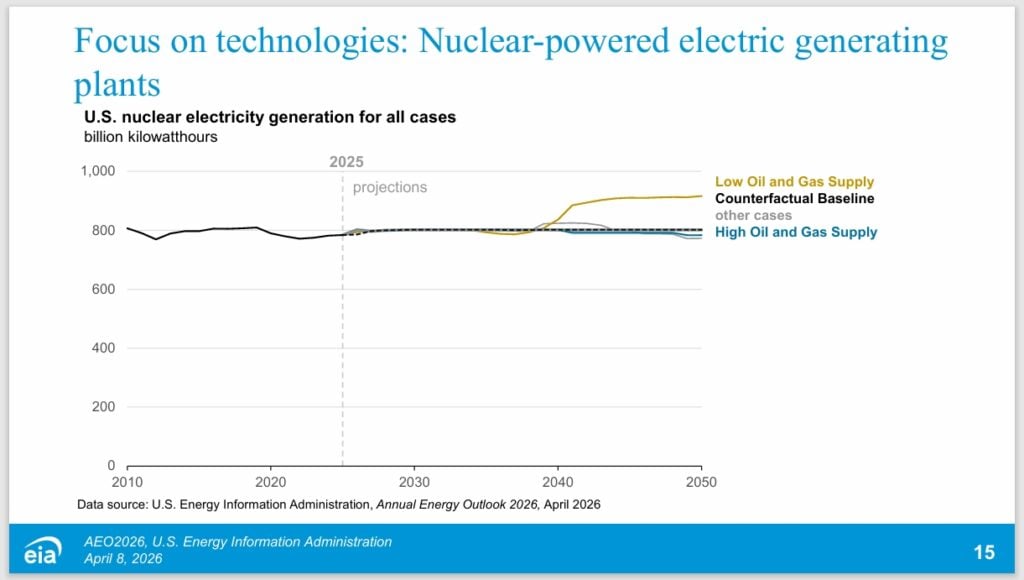
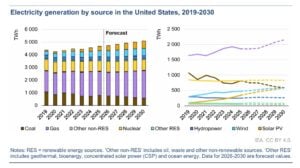
Nuclear energy remains a major source of U.S. electricity. It supplied about 18% of utility-scale electricity generation in 2025, while fossil fuels accounted for approximately 58%.
The International Energy Agency (IEA), in its Electricity 2026 report, expects U.S. electricity demand to grow by close to 2% annually between 2026 and 2030. Data centers are expected to drive around half of the increase in U.S. electricity demand over this period.
These trends highlight the need for reliable electricity supplies. Nuclear plants can generate power around the clock, complementing variable sources such as wind and solar. However, meeting future demand will also require investment in renewable energy, storage, transmission networks, and other power sources.
The NASA-DOE agreement will not directly increase electricity generation on the U.S. grid. Instead, it focuses on developing nuclear technologies for space missions.
Could Space Nuclear Research Support Clean Energy?
Nuclear power is an important low-carbon energy source because reactors generate electricity without directly releasing carbon dioxide during operation. It could help reduce dependence on fossil fuels as electricity demand grows.
However, the benefits of the NASA-DOE agreement for clean energy on Earth will be indirect. Space reactors must meet different requirements from commercial nuclear power plants, so technologies developed for space cannot automatically be used in the electricity sector.
Still, the partnership could strengthen nuclear research, specialized fuel production, materials testing, and engineering capabilities. Some advances could eventually benefit other nuclear applications, depending on their technical and commercial suitability.
The agreement may also support workforce development and domestic supply chains for advanced nuclear technology. These capabilities could become valuable as the United States explores new ways to provide reliable, low-carbon energy.
Safety will remain essential. Nuclear systems used in space must meet strict requirements for fuel handling, reactor performance, launch integration, and reliable operation.
- ALSO SEE: DOE’s Nuclear Fuel and Fusion Partnership Signals a New Era for U.S. Power Markets • Carbon Credits
A New Frontier for Nuclear Innovation
The NASA-DOE partnership marks another step toward using nuclear technology to explore the Moon, Mars and beyond. Its immediate goal is to develop dependable power and propulsion systems for future missions.
At the same time, rising electricity demand is increasing the need for reliable, low-carbon energy sources in the United States. Nuclear power could help meet that need alongside renewables, energy storage and grid upgrades.
The agreement is not a direct clean-energy deployment program, and its broader benefits will depend on further research and testing. However, by advancing nuclear science and engineering, it could create opportunities that extend beyond space exploration.
In the long term, the partnership could help strengthen U.S. nuclear capabilities for both space missions and future energy innovation on Earth.