

Occidental Petroleum (NYSE: OXY) has signed long-term carbon dioxide (CO₂) offtake agreements with two project developers to secure captured emissions for its enhanced oil recovery (EOR) operations in the Permian Basin. The agreements will support the development of carbon capture infrastructure in the Delaware Basin, a major oil and natural gas-producing region in West Texas and southeastern New Mexico.
The two projects are expected to capture and transport approximately 2 million metric tons of CO₂ annually from existing and new natural gas processing facilities. Their combined capacity could eventually increase to 4 million metric tons per year.
The project developers will finance and build the required capture facilities and transportation infrastructure. Occidental expects the first CO₂ deliveries in 2029, subject to final investment decisions.
The agreements mark another step in Occidental’s efforts to secure reliable CO₂ supplies for its oil recovery operations while expanding its carbon management business.
Occidental Expands CO₂ Supply with New Pipeline Infrastructure
Under the agreements, the two project developers will establish nearly 100 miles of new CO₂ pipelines across the Delaware Basin.
These pipelines will connect with Occidental’s existing CO₂ transportation network, which supplies its enhanced oil recovery operations across the wider Permian Basin. The additional infrastructure will also allow other natural gas processing facilities and industrial CO₂ sources to connect to the network.
This could create opportunities to bring more captured carbon into the region and support future oil recovery projects.
Occidental expects the agreements to diversify its CO₂ supply and improve access to more cost-effective sources. The company also highlighted federal 45Q tax incentives as an important factor supporting these investments.
The agreements follow Occidental’s broader strategy of securing third-party CO₂ supplies rather than relying entirely on naturally occurring underground sources.
- SEE MORE: Sweden Awards €840 Million to Three Carbon Capture Projects to Store 5.75 Million Tonnes of CO₂
Why the Permian Basin Matters for Occidental
The Permian Basin plays a central role in the US energy industry. It is the country’s largest oil-producing region and an important source of natural gas.
- According to the US Energy Information Administration (EIA), the basin produced approximately 6.6 million barrels of crude oil per day in 2025. This represented around 48% of total US crude oil production.
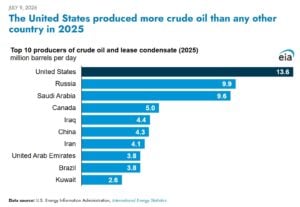
Natural gas production has also expanded rapidly. The EIA reported that marketed natural gas output in the Permian reached 27.6 billion cubic feet per day in 2025, up approximately 60% from 2021.
This concentration of oil and gas infrastructure makes the region an important market for carbon capture, transportation, and utilization.
CO₂ plays a key role in enhanced oil recovery. Operators inject it into underground reservoirs to increase pressure and help move trapped oil towards production wells. The process can improve recovery from mature fields that have already produced a significant portion of their original reserves.
For Occidental, access to a dependable CO₂ supply can help extend the productive life of existing oil fields and improve recovery from conventional and unconventional resources.
However, using captured CO₂ for EOR does not automatically make the resulting oil production carbon-neutral. The overall climate benefit depends on how much CO₂ remains stored underground, the emissions associated with capture and transportation, and the lifecycle emissions from the additional oil produced.
Carbon Capture Market Gains Investment Momentum
Occidental’s agreements come as the global carbon capture and storage (CCS) industry attracts more investment and new project development.
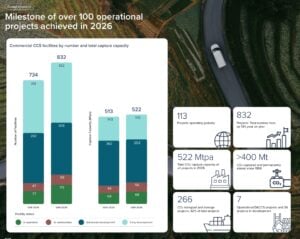
According to the Global CCS Institute’s 2026 data, the industry had 113 commercial CCS projects operating worldwide as of July 31, 2026. Their combined operational capture capacity reached 68 million metric tons of CO₂ annually.
- Another 56 million metric tons per year of capture capacity was under construction. Once these projects become operational, global capacity could exceed 100 million metric tons annually.
- More than 400 million metric tons of CO₂ have been captured and permanently stored globally since 1996. This figure represents cumulative storage, not annual capture capacity.
Investment is also increasing. The International Energy Agency (IEA), in its 2026 report Financing CCUS at Scale, reported that investment in carbon capture, utilization and storage (CCUS) exceeded $5 billion in 2025. This represents more than a 15-fold increase since 2020.
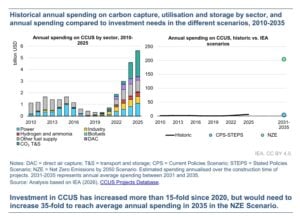
The IEA also noted that more than 30 carbon capture and storage projects reached final investment decisions over the previous two years. The pipeline of projects under construction points to a near doubling of operational capture capacity by 2030.
These developments reflect growing interest in carbon management across industrial sectors, including natural gas processing, cement, steel, power generation, and hydrogen production.
Occidental Builds Its Carbon Management Business
The new agreements strengthen Occidental’s position in the carbon management market. The company is expanding beyond traditional oil and gas production through investments in carbon capture, transportation, utilization, and storage.
Its strategy includes securing third-party CO₂ supplies and developing infrastructure that can connect additional industrial emission sources to its existing network.
The Delaware Basin projects could therefore provide more than a dedicated supply for Occidental’s EOR operations. Their pipeline infrastructure could also support future carbon capture projects across the region.
However, the agreements remain subject to final investment decisions, construction, and regulatory approvals. Initial deliveries are not expected until 2029.
As global investment in carbon capture continues to grow, Occidental’s latest agreements highlight how existing energy infrastructure can support the development of a larger CO₂ transportation and utilization market. The long-term commercial opportunity will depend on project economics, reliable CO₂ supplies, and the ability to demonstrate measurable and lasting emissions reductions.