


Australia is closing one of its best-known carbon offset programs. The federal government has announced that it will shut down Climate Active, the voluntary certification program that allowed businesses, products, buildings, and events to claim they were carbon neutral.
The move follows years of criticism over the program’s credibility. It also comes as governments, investors, and regulators demand stronger proof behind corporate climate claims.
The decision marks a major change for Australia’s voluntary carbon market, but it does not mean carbon offsets are disappearing. Instead, it shows how the market is shifting toward higher standards and greater transparency.
The End of Australia’s Carbon Neutral Label
Climate Active launched in 2019, replacing the National Carbon Offset Standard (NCOS). The Department of Climate Change, Energy, the Environment and Water (DCCEEW) managed the program.
To earn certification, organizations had to measure their greenhouse gas emissions, reduce them where possible, and offset the rest using approved carbon credits. These included Australian Carbon Credit Units (ACCUs) and some international credits.
Over the years, Climate Active certified more than:
- 620 businesses and organizations,
- More than 1,000 products and services,
- More than 100 buildings and precincts, and
- Dozens of events and public institutions.
The program attracted companies from many industries, including finance, retail, property, tourism, manufacturing, and professional services.
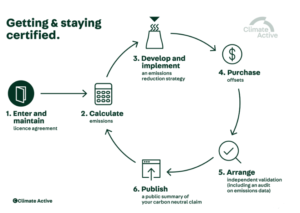
The government has now stopped accepting new applications. Existing certifications will stay in place during a transition period while officials decide what comes next. Climate Active wrote:
“The Australian Government has introduced a comprehensive suite of energy and climate policies that are helping businesses reduce their emissions, guided by a legislated target of net zero emissions by 2050. Climate Active helped fill a gap in the domestic market. But there is now less need for government certification to incentivise voluntary climate action.”
The government hasn’t announced a replacement program yet. However, future policy will focus more on cutting emissions directly and improving climate reporting.
Why the Program Faced Growing Criticism
Climate Active helped many companies begin measuring and managing their emissions. But over time, critics argued that it relied too heavily on carbon offsets.
One of the strongest critics has been the Climate Council, which welcomed the decision to close the program. The group argued that some companies were able to promote themselves as “carbon neutral” even while their operations still produced large amounts of emissions.
Climate Council Senior Advisor Ben McLeod remarked:
“…Climate Active gave the green tick of approval to everything from polluting gas corporations to petrol at the bowser. It was always a distraction from the real job: cutting climate pollution at the source. With Climate Active headed to the scrap heap, it’s time for the Albanese Government to strengthen the Safeguard Mechanism and end the free ride for Australia’s biggest polluters.”
The debate goes beyond Australia.
Around the world, regulators are taking a closer look at climate claims. In Australia, both the Australian Securities and Investments Commission (ASIC) and the Australian Competition and Consumer Commission (ACCC) have increased actions against greenwashing.
Companies need to clearly explain how they measure emissions. They should also detail how they use offsets and support their net-zero targets.
Australia’s Carbon Market Is Entering a New Phase
The end of Climate Active does not mean Australia’s carbon market is slowing down. Instead, it marks a shift from voluntary carbon-neutral claims to a market driven more by regulation, compliance, and higher-quality carbon credits.
The biggest force behind that change is Australia’s Safeguard Mechanism, the country’s main industrial carbon policy. It covers about 220 of Australia’s largest industrial facilities, including mines, oil and gas operations, manufacturers, and heavy industries. Together, these facilities produce nearly 30% of Australia’s greenhouse gas emissions.
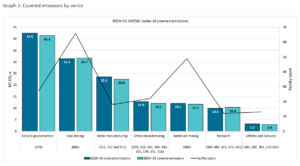
Under the policy, emissions limits become stricter each year. Companies that exceed their limits must either reduce emissions or buy Australian Carbon Credit Units to comply.
This has created a much stronger source of demand for carbon credits than voluntary carbon-neutral programs alone.
The market’s growth reflects that shift. The Clean Energy Regulator reports that 18.9 million ACCUs were issued in the 2024–25 financial year. This is the highest annual total since the scheme started. More than 41 million ACCUs were traded during the same period, showing strong liquidity and active participation across the market.
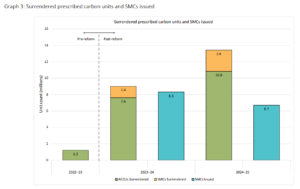
Australia’s supply pipeline is also expanding. The regulator oversees over 300 carbon projects, including:
- Native forest regeneration,
- Human-induced regeneration,
- Savanna fire management,
- Landfill methane capture, and
- Soil carbon.
Safeguard Mechanism Drives Australia’s Net-Zero Push
Australia’s broader climate policy remains firmly focused on cutting emissions. Under the Climate Change Act, the country aims to reduce greenhouse gas emissions by 43% below 2005 levels by 2030 and reach net zero by 2050.
The Safeguard Mechanism is central to that plan. It sets declining emissions limits for Australia’s largest industrial facilities.
The latest data show the policy is making progress. During 2024–25, net emissions from safeguard facilities fell 5.5% year over year to 120.3 MtCO₂-e, while gross covered emissions declined 2.3% to 132.8 MtCO₂-e.
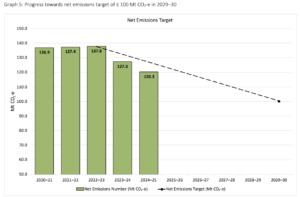
These results suggest Australia’s biggest industrial emitters are beginning to move in line with the country’s long-term climate goals.
Climate Active may be ending, but the market itself continues to grow under a more robust framework.
Higher Standards Are Becoming the New Normal
Australia is not the only country raising the bar for carbon markets. Around the world, governments and businesses are putting more focus on credit quality rather than credit volume.
Global standards are also becoming stricter.
The Science Based Targets initiative (SBTi) says companies should first reduce emissions across their operations and supply chains. Carbon credits should only be used for emissions that cannot yet be avoided.
At the same time, the Integrity Council for the Voluntary Carbon Market (ICVCM) has introduced the Core Carbon Principles (CCPs) to improve credit quality. Recent market data show that 13% to 15% of new carbon credits now have the CCP label. This share is growing as buyers seek higher-quality credits.
Credits that meet high-quality standards are also selling at a premium. According to the MSCI Global CCP Carbon Credit Price Index, CCP-labelled credits have traded at an average 19% price premium over the broader voluntary carbon market since mid-2024.
Together, these changes have raised the bar for corporate climate action. Buying offsets alone is no longer enough. Companies are increasingly expected to cut emissions first and back up any climate claims with clear, transparent reporting.
Trust Will Shape the Next Carbon Market
Climate Active helped introduce many Australian businesses to carbon accounting and carbon offsets. For years, it gave companies a simple way to measure emissions and communicate their climate efforts.
Today, expectations are much higher. And Australia’s carbon market is adapting to that new reality.
The end of Climate Active does not signal the end of carbon offsets. Instead, it reflects a broader shift toward stronger standards, better oversight, and higher-quality credits.
As compliance demand grows and international integrity standards continue to develop, Australia’s carbon market looks set to become more mature, more transparent, and more trusted than before.