

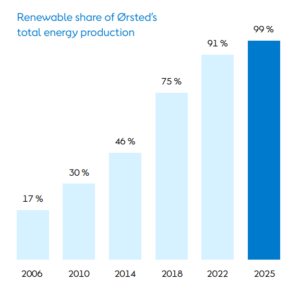
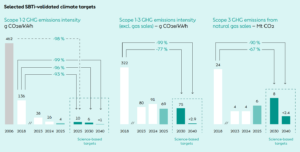
Danish renewable energy company Ørsted, the world’s largest developer and operator of offshore wind, has achieved one of the biggest emissions reductions in the global power sector. Since 2006, the company has reduced emissions from its power generation and operations by 98%. This change has turned it from one of Europe’s most coal-heavy utilities into a global leader in offshore wind.
Now, Ørsted is taking on an even bigger challenge. The company has launched a new decarbonization strategy called “The Next Zero,” shifting its focus to emissions across its value chain. Scope 3 emissions come from making the steel, copper, vessels, cables, and other materials used to build and run renewable energy projects.
Ørsted aims to reach net-zero emissions across its entire value chain by 2040. This goal relies more on suppliers, manufacturers, shipping companies, and policymakers than on the company’s own efforts, unlike previous emissions cuts.
The announcement highlights a growing challenge across the clean energy industry. Renewable electricity has low carbon emissions when in use. However, creating the necessary infrastructure involves a lot of materials that generate high emissions.
The Supply Chain Is Now Offshore Wind’s Biggest Carbon Challenge
Ørsted’s latest report shows how much its emissions profile has changed. Today, most of the company’s remaining emissions no longer come from generating electricity. Instead, they come from the supply chain that supports offshore wind projects.
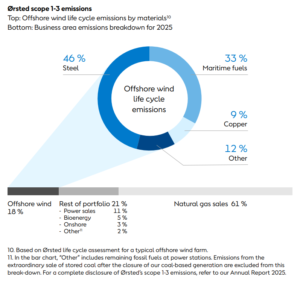
For a typical offshore wind farm, about 75% of life-cycle emissions occur during development and construction, while only 25% come from operations. The report also identifies three major emissions hotspots that account for 88% of the total life-cycle footprint:
- Steel: 46%
- Maritime fuels: 33%
- Copper: 9%
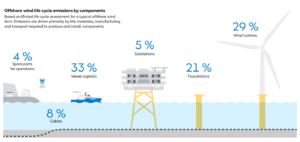
Steel remains the biggest challenge. Offshore wind foundations and turbine towers need thousands of tons of steel. This steel must endure tough ocean conditions for many years.
Construction vessels mainly use conventional marine fuels. Copper is vital for cables and electrical systems. These connect offshore wind farms to the grid.
These materials are hard to replace, making decarbonizing the supply chain more complex than simply switching from coal to renewable energy. Patrick Harnett, Ørsted’s Chief Construction Officer, says:
“Our sights are firmly set on achieving net zero across our full value chain by 2040. The most impactful and immediate stepping stone is industrial electrification. But it will also require technical ingenuity in engineering, innovation in design and construction, and not least close collaboration across the supply chain.”
Offshore Wind Remains One of the Cleanest Energy Sources
Despite these remaining emissions, offshore wind remains one of the world’s lowest-carbon sources of electricity.
According to Ørsted’s life-cycle assessment, offshore wind produces electricity with an emissions intensity of just 8–12 grams of CO₂ equivalent per kilowatt-hour (gCO₂e/kWh).
For comparison:
- Utility-scale solar: 10–50 gCO₂e/kWh
- Natural gas: 450–630 gCO₂e/kWh
- Coal: 820–990 gCO₂e/kWh
That means offshore wind can produce electricity with life-cycle emissions up to 99 times lower than fossil fuel power.
The International Energy Agency (IEA) predicts that global electricity demand will continue to rise until the end of the decade. This increase will be fueled by electric vehicles, data centers, artificial intelligence, and industrial electrification. At the same time, renewable energy is expected to provide almost all growth in global electricity generation.
Meeting that demand will require a major expansion of offshore wind. The European Union aims to increase offshore wind capacity to 300 gigawatts (GW) by 2050, up from about 37 GW today. Reaching that goal will require major investment not only in turbines but also in cleaner industrial supply chains.
Investors responded positively to Ørsted’s latest decarbonization update. The company’s shares rose slightly after the announcement, which shows confidence in its long-term climate strategy. The rise comes after tough years filled with project issues, higher financing costs, and challenges in the offshore wind market.
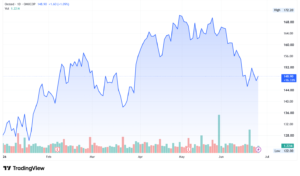
Ørsted’s stock has bounced back in 2026, up about 28% this year. Investors are happy due to better operations, progress on key offshore wind projects, and a clearer plan to cut emissions in its value chain.
How Ørsted Plans to Cut Scope 3 Emissions
Ørsted aims to cut emissions by redesigning offshore wind projects. They will focus on how these projects are built and supplied instead of relying on carbon offsets.
The company has worked with more than 50 strategic suppliers since launching its supply chain decarbonization program in 2020. It encourages suppliers to adopt science-based climate targets, switch to renewable electricity, and report emissions through CDP.
Yet, steel remains the top priority.
Ørsted has signed an offtake agreement with German steel producer Dillinger to develop low-emission heavy steel plates for offshore wind foundations. The company estimates the new production method could cut embodied emissions from foundation steel by about 55%.
It is also partnering with the University of Oxford to enhance monopile designs. This will cut emissions from each foundation by another 3% by using materials more efficiently.
Beyond Steel: Shipping, Copper, and the Hidden Carbon Footprint
Steel is Ørsted’s largest emissions hotspot, but maritime fuels and copper are also major sources. To cut these emissions, Ørsted is deploying hybrid-electric and methanol-powered vessels, which can reduce emissions by up to 85% and 80%, respectively.
It is also using lower-carbon copper cables at the Hornsea 3 wind farm, reducing embodied emissions by about 50%.
The company is also expanding circular practices. In 2025, it refurbished 80% of key turbine parts and promised to send no blades or solar panels to landfills. Plus, it extended the life of older wind farms by as much as 15 years.
These efforts can lower a wind farm’s life-cycle emissions by more than 30%. Beyond offshore wind, Ørsted is building two CCS facilities in Denmark that will capture 430,000 metric tons of CO₂ annually starting in 2026.
All these initiatives could help the energy company reach its SBTi climate targets:
A Bigger Challenge for the Renewable Energy Industry
Ørsted’s strategy reflects a broader challenge for the renewable energy sector. As power generation becomes cleaner, emissions from manufacturing and construction are becoming a larger share of the industry’s carbon footprint.
The IEA says global renewable energy capacity must nearly triple by 2030 to meet climate goals. That growth will require huge amounts of steel, cement, copper, and other materials. Unless these industries also decarbonize, supply-chain emissions could slow progress toward net zero.
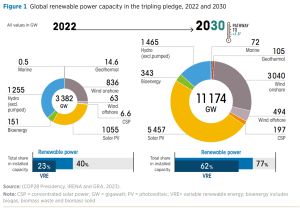
Ørsted believes stronger policies such as the EU ETS and CBAM, together with closer cooperation across supply chains, will help speed up the shift to low-carbon materials and cleaner industrial production.
The Next Stage of Net Zero
Ørsted has already transformed itself from one of Europe’s most coal-intensive utilities into a global renewable energy leader. Cutting emissions from its own power generation by 98% is one of the industry’s biggest decarbonization achievements.
The next stage will be much harder. Instead of replacing coal plants with wind farms, the company must now reduce the emissions embedded in every turbine tower, monopile foundation, vessel, cable, and supply chain contract.
Success will depend not only on new technologies but also on stronger partnerships across industries.
If the company succeeds, it could provide a roadmap for the wider renewable energy industry. As countries expand offshore wind to meet climate goals, the next frontier of decarbonization may not be the turbines themselves, but everything needed to build them.