Ferrari and Shell Sign Renewable Energy Deal, Powering Ferrari’s Carbon Neutrality by 2030 Goal

Ferrari has signed a ten-year agreement with Shell to purchase renewable electricity. The deal will provide 650 gigawatt-hours (GWh) of clean power through 2034. This is enough to cover nearly half of the energy needs at Ferrari’s main production plant in Maranello, Italy.

The plant uses around 130 GWh of electricity each year. The remaining electricity will be supplied through additional renewable energy and certificates.

The agreement is part of Ferrari’s plan to reduce carbon emissions and shift toward cleaner energy in its operations. Davide Abate, Chief Industrial Officer at Ferrari, remarked:

“This agreement represents a further step forward in our journey towards decarbonizing the Maranello plant. The collaboration with Shell Energy Italia to supply renewable energy represents a concrete contribution to our goal of reducing Scope 1 and 2 emissions by at least 90% in absolute terms by 2030.”

For Shell, the deal demonstrates its growing role in supplying green power to large industrial customers. The oil giant is also increasing the scale of its renewable power generation. The electricity for Ferrari will come from a dedicated solar plant located in Italy, which improves supply reliability.

Gianluca Formenti, CEO of Shell Energy Italia, noted:

“In line with our strategy of producing more energy with fewer emissions, this agreement is a tangible example of our commitment to providing energy solutions to support our customers and partners in achieving their decarbonization goals.”

What are the Key Features of the Deal?

The PPA, or power purchase agreement, will deliver renewable electricity for ten years. Shell will provide most of the energy directly from a dedicated plant. The remainder will come from renewable energy certificates (RECs). These certificates allow Ferrari to claim that its energy consumption is backed by clean power, even if the electricity does not flow directly from the plant.

This combination ensures that Ferrari’s operations in Italy rely heavily on renewable sources. By securing long-term renewable energy, the luxury carmaker reduces its exposure to volatile energy prices.

The PPA includes fixed-pricing elements. This helps Ferrari avoid sudden jumps in energy costs. It also strengthens its ability to meet climate targets for carbon emissions.

The deal covers:

  • 650 GWh of electricity from renewable sources over 10 years.
  • Nearly 50% of Ferrari’s energy needs at Maranello.
  • Additional RECs and green power to cover the remaining electricity use.

Ferrari’s Carbon Reduction Goals and Renewable Energy Strategy 

Ferrari has committed to reducing Scope 1 and Scope 2 emissions by 90% by 2030. Scope 1 emissions come from Ferrari’s direct activities. This includes heating, production equipment, and company vehicles. Scope 2 emissions come from purchased electricity. Below are the ways the company uses to achieve its 2030 carbon neutrality goal.

Ferrari CARBON NEUTRALITY BY 2030
Source: Ferrari

The automaker reported several thousand metric tons of CO₂-equivalent emissions from operations in recent years. Progress has already begun as energy systems switch to cleaner power.

Switching to renewable electricity helps Ferrari cut Scope 2 emissions. The company has also invested in efficiency measures to reduce energy use across its facilities.

Moreover, it aims to streamline operations. They want to keep producing high-performance cars while using less energy overall. The company says some efficiency projects can reduce factory electricity use by 10–15% over time.

In recent years, Ferrari has been working on its energy mix. In 2024, it shut down a gas-fired trigeneration plant at Maranello. This plant had generated electricity, heat, and cooling from natural gas. By closing it, Ferrari reduced fossil fuel use and emissions.

However, the chart below shows that while Scope 1 and Scope 2 emissions show a gradual reduction, the total emissions show a steady increase. This is mostly due to growth in the company’s value chain activities.

Ferrari Carbon Footprint 2021-2024

Scope 3 emissions—mainly from the supply chain, purchased goods, and product use—are the dominant source, over 90%, and consistently drive the company’s total footprint.

Fueling Renewable Energy Expansion 

The Italian luxury sports carmaker is expanding its use of solar energy. It plans to increase photovoltaic (PV) capacity to around 10 megawatts peak (MWp) by 2030. Solar panels are installed on factory rooftops and other company-owned spaces. These panels already cover part of the factory’s daytime electricity consumption.

The company also partnered with Enel X to create a Renewable Energy Community (REC). This community lets nearby businesses, residents, and public institutions use clean power from Ferrari’s solar installations. It helps spread the benefits of renewable energy beyond Ferrari itself. The community has dozens of participants and supports local energy independence.

Ferrari has invested in energy-efficient transformers and storage systems. These upgrades improve the efficiency of electricity use and reduce energy waste. Combined with the new PPA, Ferrari’s approach is designed to achieve both emissions reduction and cost stability.

Offsetting the Unavoidable: Ferrari’s Carbon Credit Strategy

Ferrari tackles residual greenhouse gas (GHG) emissions. They support certified carbon avoidance projects by buying carbon avoidance credits. By using this method with direct emission cuts, the company reached carbon neutrality for Scope 1 and Scope 2 emissions in 2021, 2022, and 2023 across all its operations.

In 2024, Ferrari cancelled 77,691 metric tons of CO₂-equivalent carbon credits. These credits came from the Sustainability Community Project in Canada. They were certified by the Verified Carbon Standard (VCS) – Verra. This project combines over 800 carbon-reduction micro-projects from SMEs, municipalities, and NGOs. It includes more than 1,000 buildings in Quebec.

Ferrari carbon credits used
Source: Ferrari

The goal is to reach up to 10,000 customer facilities in a sustainable community. The GHG reductions come from activities such as improved energy efficiency, waste diversion, and fuel switching.

Also, Ferrari partners with ClimateSeed. This ensures that the projects follow strict environmental, social, and financial standards. The company hasn’t developed its own GHG removal or storage projects yet. However, it adjusts its carbon credit purchases each year. This helps offset unavoidable emissions and meet its carbon neutrality goals.

Industry Implications: Luxury Cars Join the Clean Energy Race

This deal reflects a growing trend among manufacturers in Europe. Companies are signing long-term renewable energy deals. This helps them cut emissions and stabilize energy costs.

For automakers, energy use is becoming an important part of environmental responsibility. Reducing emissions is not just about electric or hybrid cars. It also depends on how factories are powered.

Other car manufacturers are also pursuing renewable energy. BMW, Mercedes-Benz, and Porsche have all made deals to source clean power for major facilities. Ferrari’s agreement shows that luxury car makers are now also integrating renewable energy into their main operations.

Driving Forward: A Sustainable Shift for Ferrari

Ferrari’s renewable energy agreement with Shell is expected to have a lasting impact on its operations. It ensures a stable supply of clean energy and supports broader climate goals. It also ensures alignment between how Ferrari builds cars and the electric models it plans to sell in the future.

The partnership also strengthens Shell’s position in providing renewable solutions to industrial clients. It shows that legacy energy companies can play a role in helping others transition to cleaner power.

As Italy and other European countries aim to increase renewable energy use, long-term agreements like this one may become more common. Companies can benefit from cost predictability, emission reductions, and support for their sustainability goals.

Microsoft (MSFT) Signs Solar Deal with Zelestra to Power Data Centers in Spain, Supporting Community Projects

Microsoft (MSFT) has signed a long-term Power Purchase Agreement (PPA) with Zelestra for 95.7 MWAC of solar power. The energy will come from two new solar farms in Aragón, Spain — Escatrón II and Fuendetodos II, both under construction. This clean energy will help power Microsoft’s data centers and operations in the region. It also supports Microsoft’s wider climate goals.

A Solar Deal That Shines Beyond Power

Beyond simply buying solar power, Microsoft is tying this deal to benefits for the local community. The non-profit ECODES will run a “Community Fund” financed by this PPA. ECODES plans to use this fund to support sustainability projects in Aragón. They will invest in local infrastructure, social inclusion, and environmental education.

Zelestra calls its strategy “3 Es”: Education, Energy, and Environment. Microsoft sees this as part of its “Datacenter Community Pledge,” which aims to ensure its operations help local areas as well as reduce its carbon footprint.

Why Microsoft’s 95.7 MW Bet Matters

This solar agreement matters for several reasons:

  1. Reliable clean energy: The 95.7 MW solar supply gives Microsoft a stable source of renewable power.
  2. Social benefits: ECODES will channel money into projects that help local people and ecosystems.
  3. Long-term local commitment: Zelestra intends to stay in Aragón and work with communities for years.

This structure shows how a big company can use a clean energy deal not just for itself, but for shared community value.

Spain’s Solar Boom and Zelestra’s Expanding Footprint

Solar power in Spain is booming. In the last few years, the country has added thousands of megawatts of solar capacity. According to Informa’s DBK report, solar energy grew by 6,000 MW in just one year, reaching 32,350 MW by 2024.

Red Eléctrica (the Spanish grid operator) data shows that by early 2025, solar PV installed capacity passed 32,000 MW, making solar the largest source of power capacity in Spain.

This growth reflects a major shift in Spain’s energy mix. In 2024, solar PV generated a record 44,520 GWh of electricity, about 17% of the country’s total electricity output.

At the same time, renewables now make up around 66% of Spain’s total power generation capacity. These numbers show how central solar power has become to Spain’s energy transition.

The outlook is even more ambitious. According to GlobalData, Spain’s solar capacity could reach 152.8 GW by 2035, driven by strong policy support and growing investor confidence. To fuel this, many new projects are already in the permitting stage.

Spain renewable power market 2035

In 2025 alone, more than 5 GW of solar projects were submitted for environmental approval. Castilla‑La Mancha is a major one of those major regions, and it stands out in Zelestra’s portfolio.

Zelestra is a major player in this growth. In 2025, it secured €146.6 million to build six solar plants in Castilla‑La Mancha, totaling 237 MWdc. These projects will create jobs, generate around 467 GWh of clean energy per year, and avoid over 84,000 tons of CO₂ emissions annually.

Zelestra is also expanding its corporate partnerships, providing renewable electricity for companies like Microsoft and Graphic Packaging International. Its portfolio in Spain exceeds 6 GW, showing its strong commitment to the country’s clean energy transition and its role as a key developer of large-scale solar projects.

Inside Microsoft’s Push Toward Carbon Negativity

Microsoft has set strong climate goals. In 2020, it announced its plans to be carbon negative by 2030. That means by then, it wants to remove more carbon from the atmosphere than it emits.

To reach this, the tech giant is doing several things:

  • It has contracted 34 GW of new renewable energy across 24 countries.
  • It aims to match 100% of its electricity use with zero‑carbon power by 2025.
  • It invests in carbon removal. In fiscal year 2024, Microsoft signed contracts for nearly 22 million metric tons of carbon removal.
  • It uses a $1 billion Climate Innovation Fund to support new technologies.

Progress and Challenges in Emissions

Microsoft has made real progress, but it also faces big challenges. Its Scope 1 and Scope 2 emissions (those from its own operations and electricity use) dropped 29.9% compared to 2020.

Microsoft carbon emissions
Source: Microsoft

But its total emissions (including its supply chain, or “Scope 3”) rose by 23–26% since 2020. This increase comes mainly from its rapid growth in data centers and cloud services.

Because it makes a lot of servers, chips, and hardware, Microsoft’s construction and supply chain also generate emissions. To cut those, it is working with its suppliers. By 2030, Microsoft plans to require high-volume suppliers to use 100% carbon‑free electricity.

Microsoft’s clean energy capacity has grown steadily since 2013, starting with wind projects in the U.S. By 2022, capacity reached 900 MW with wind and solar projects in Europe and the U.S.

Microsoft Clean Energy Contracts (Capacity, MW)
Notes: Clean energy deals include solar and wind projects

In 2024, Microsoft signed the largest corporate clean energy deal for 10.5 GW with Brookfield Renewable, delivering by 2030. This reflects Microsoft’s goal to power all operations with 100% renewable energy by 2030, underscoring its leadership in global sustainability efforts.​

Carbon Removal and Long-Term Risks

Microsoft is not just cutting emissions, it is also removing carbon. It invests in two big types of removal:

  • Nature-based removal: Microsoft has a deal with Chestnut Carbon to buy over 7 million tons of forest-based carbon credits.
  • Advanced removal: Microsoft supports projects like bioenergy with carbon capture and storage (BECCS). It recently backed a project in Louisiana that could capture 6.75 million tons of CO₂ over 15 years. 

Still, some experts warn that Microsoft’s climate strategy lacks targets beyond 2030. That could challenge its long-term impact.

SEE MORE on Microsoft: 

How the Solar Deal Fits into Microsoft’s Strategy?

The 95.7 MW deal in Spain ties directly into Microsoft’s overall carbon-negative goal. Here’s how it fits:

  • It adds zero-carbon electricity to Microsoft’s grid mix.
  • It supports Microsoft’s plan to match all its power use with clean energy.
  • The deal’s community fund reinforces Microsoft’s aim to pair climate action with social value.
  • It strengthens Microsoft’s global clean energy portfolio.

This helps Microsoft reduce its operational emissions (Scope 1 & 2) and supports its broader mission to remove carbon.

What’s Next for Microsoft, Zelestra, and Local Communities?

If all goes well, the two solar farms in Aragón will come online and deliver power to Microsoft for many years. The ECODES fund should start giving out grants to local groups, helping build greener projects in the community.

The tech giant must also keep pushing its carbon removal work and supplier engagement. It needs to make sure its long-term investments bring real, measurable climate impact.

Zelestra, for its part, will prove whether it can deliver reliable solar and meaningful social impact. If the model works, more companies may use similar “clean energy + community” contracts.

The agreement is more than just about cutting emissions — it’s also about helping local communities. At the same time, Microsoft’s push to be carbon negative by 2030 is ambitious and complex. It involves clean power, carbon removal, and changes in its entire supply chain.

This Spanish solar deal adds a new piece to Microsoft’s climate puzzle. It strengthens its clean energy supply and shows how corporate climate goals can benefit more than just the bottom line.

EV Boom Pushes U.S. Clean Energy Investment to New High: $75B in Q3

Clean energy investment in the United States reached $75 billion in the third quarter of 2025, setting a new record. This is 9% higher than last quarter and 8% higher than the same time last year. The rise came mostly from spending on electric vehicles (EVs), home solar panels, and heat pumps.

This data comes from the Clean Investment Monitor (CIM). CIM tracks clean energy spending across the country. It covers more than 22,000 individual facilities, 5 million zero-emission vehicle registrations, 28 million heat pump sales, and 4.5 million distributed energy systems such as rooftop solar and home batteries. These numbers show the large scale of clean energy adoption in the U.S.

The CIM groups investment into three major segments:

  1. Manufacturing: Building factories that make clean tech, such as batteries, solar panels, and EV components.

  2. Energy and Industry: Utility-scale projects such as solar farms, wind farms, storage systems, and industrial decarbonization.

  3. Retail: Consumer purchases, including EVs, rooftop solar, home batteries, and heat pumps.

The report covers technologies that qualify for the Inflation Reduction Act (IRA) tax incentives. This means the spending tracked is closely tied to U.S. climate policy and its effects on the market.

Electric Vehicles Lead the Growth

Electric vehicles were the main driver of the record investment. Of the $75 billion total, $41 billion came from the retail segment. Most of this came from EV purchases, which alone reached $31 billion. That is about 40–42% of all clean energy investment in the quarter.

Retail investment by technology CIM report

EV spending grew 32% from last quarter and 30% from last year. A key reason was the expected end of federal EV tax credits in September 2025. Many buyers rushed to purchase vehicles before the deadline. Because the IRA includes EVs as eligible technologies, the tax credit played a direct role in the surge.

CIM calculates retail EV spending using state vehicle registration data and average vehicle prices (MSRP). This method gives a clearer picture of what consumers actually spend.

The jump in EV spending also reflects broader trends. Battery technology is getting better. More EV models are available. Charging networks are expanding. Prices are falling. These changes make EVs easier to buy and easier to use.

Trends Across Manufacturing and Utility-Scale Investment

Even with strong EV demand, the other sectors saw slower growth.

Manufacturing investment fell to $10 billion, a drop of 10% from the last quarter and 26% from last year. Most of this spending is still focused on the EV supply chain.

Clean investment by segment CIMI report

About $8 billion of manufacturing investment went to EV-related factories. Battery manufacturing alone reached $6 billion, but this was still down 23% from last quarter.

These numbers reflect challenges in large-scale production. High costs, material shortages, and longer permitting times slow project progress. CIM tracks manufacturing projects from the announcement, through groundbreaking, until operation. This helps separate what is promised from what is actually happening.

This matters because many projects do not become real investments. In industrial decarbonization, especially, only about $1 out of every $10 announced turns into real capital spending. In contrast, clean electricity and manufacturing have much higher rates of actual project completion.

Energy and Industry investment, which includes utility-scale solar, storage, and industrial decarbonization, reached $25 billion. That is 3% higher than last quarter and 15% higher than last year. Of that, $24 billion went to clean electricity generation.

Solar and storage were the main focus. Only $1 billion went to industrial decarbonization, showing slow progress in that area.

Electric power investment by technology

About $2 billion in projects were canceled across manufacturing and energy. Canceled projects point to the risks developers face, such as rising costs and long approval timelines.

How Policy Drives Investment

Government incentives played a major role in shaping Q3 investment. The expected end of the EV tax credit pushed many buyers to act. CIM tracks technologies supported by the IRA, which makes it clear how policy affects spending.

Strong state policies also played a part. Many states offer incentives for rooftop solar, home batteries, and energy-efficient appliances. These programs support the retail segment by lowering the cost for homeowners.

Stable and long-term policy is especially important for manufacturers and large project developers. They invest more when they know incentives will stay in place. This link between policy certainty and investment activity is seen across clean electricity, batteries, and industrial projects.

CIM’s Methods for Tracking Investment

CIM reports reflect actual dollars spent in the quarter, not future promises.

Manufacturing and energy projects are tracked through all phases, from planning to operation. Moreover, retail investments, such as EVs and solar panels, use direct sales figures, state vehicle registrations, and national-to-state scaling models.

Heat pump spending is estimated using national sales data downscaled to states based on climate and housing patterns. Distributed energy (like rooftop solar) uses installation counts and verified average system prices. This careful method helps produce reliable and detailed investment estimates.

U.S. Trends Align with Global Growth in Clean Energy

The U.S. growth fits into a global trend. In 2024, worldwide investment in the energy transition reached $2.1 trillion, an 11% increase from 2023. Electrified transport, like EVs and charging stations, was the biggest contributor. It drew about $757 billion worldwide.

The International Energy Agency predicts global energy investment will hit $3.3 trillion by 2025, led by China. Of that, $2.2 trillion will go to clean energy technologies. These figures show that the clean energy sector is growing fast around the world. However, investment levels often rely on national policies and incentives.

global energy investment in 2025

Global trends also show that improving technology, falling costs, and rising public awareness are driving adoption. Battery prices are falling. Renewable energy is getting more competitive. Also, governments have set bold carbon reduction goals. These factors together make clean energy projects more appealing to both consumers and investors.

What the Latest Data Means for Future Investment

The third-quarter data reveal several important trends in the clean energy sector. Consumer spending, particularly on EVs, is a powerful driver of growth. Policy incentives can boost investment for a while. However, to maintain long-term growth, there is a need for ongoing support and stable markets.

Manufacturing and industrial investments have been slower, reflecting challenges in production and scaling. Utility-scale projects like solar and energy storage are growing steadily. However, industrial decarbonization is still limited.

Worldwide, the trend matches that of the U.S. Transport and electricity generation draw the most investment.

A few key points summarize the main observations:

  • EVs and consumer clean technologies drove more than half of the total investment.

  • Manufacturing investments, especially in batteries, fell compared to previous quarters.

  • Utility-scale projects grew steadily, but at a slower pace.

  • Policy incentives strongly influenced spending patterns.

  • Global clean energy investment continues to rise, reinforcing U.S. trends.

The CIM data shows a clean energy market that is large, growing, and strongly influenced by policy. With clean technologies now making up nearly 5% of all private investment in major goods and structures, the sector is becoming a bigger part of the U.S. economy. Continued investment in manufacturing, industrial decarbonization, and clean electricity will help keep this momentum moving forward.

X-energy Lands $700 Million Nuclear Deal to Scale SMRs Across the U.S. and U.K.

X-energy, a fast-rising advanced nuclear company backed by Amazon, closed a massive $700 million funding round, one of the largest ever raised by a nuclear reactor developer. The round was led by Jane Street and brought in new investors, including ARK Invest, Galvanize, Hood River Capital Management, Point72, Reaves Asset Management, and XTX Ventures.

The press release highlighted that with this raise, X-energy has now secured $1.4 billion in just 13 months, showing how strongly investors believe nuclear energy will power the next wave of data-hungry technologies, especially artificial intelligence.

The company plans to use the fresh capital to expand its supply chain and support its commercial pipeline. X-energy already holds an order book of more than 11 gigawatts, equal to roughly 144 small modular reactors across the U.S. and the U.K.

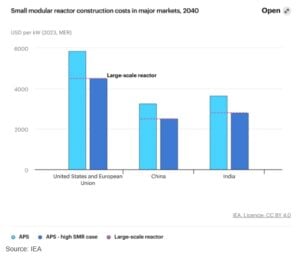
smr IEA

Why SMRs Are Stealing the Spotlight

Small modular reactors have moved from niche energy tech to mainstream climate and industrial solutions. Unlike traditional nuclear plants, SMRs are factory-built, compact, and can be added in increments. They sit close to industrial sites, blend easily with renewable grids, and deliver firm, zero-carbon power around the clock.

According to recent market studies, the global SMR sector was valued at $7.49 billion in 2025, and it is expected to grow to $16.13 billion by 2034, a strong 8.9 percent CAGR. The surge is driven by more reactor designs clearing regulatory reviews and moving toward full deployment.

SMR MARKET SIZE

X-energy stands out in this fast-growing market because its design solves several challenges that renewables and large reactors struggle to address. Its systems support industrial heat, provide grid stability, and allow flexible siting.

Three Major Deals: Amazon, Dow, and Centrica

X-energy is advancing its Xe-100 advanced SMR alongside its in-house TRISO-X nuclear fuel. The company has three major anchor partnerships that position it for large-scale deployment.

  1. The first is with Dow Inc. X-energy plans to build a four-unit Xe-100 plant at Dow’s Seadrift facility in Texas. The project is backed by the U.S. Department of Energy’s Advanced Reactor Demonstration Program and is under review by the Nuclear Regulatory Commission.
  2. The second is with Amazon. The company announced options to deploy more than 5 gigawatts of Xe-100 reactors across the United States by 2039. The first site will be the Cascade Advanced Energy Facility in Washington state, developed with Energy Northwest. This deal signals Amazon’s shift toward securing long-term, clean, reliable power for cloud services and AI operations.
  3. The third is with Centrica in the United Kingdom. Through this partnership, X-energy plans to develop 6 gigawatts of advanced nuclear capacity. The deal positions SMRs as an important part of the U.K.’s clean power and energy-security strategy.

Together, these partnerships give X-energy a long runway for scaling its technology and building commercial fleets.

Kam Ghaffarian, Ph.D., Founder and Executive Chairman of X-energy, said:

“The response and commitment from the participants in this financing round is a strong affirmation of the role X-energy expects to play in shaping the future of energy. When I founded X-energy, I envisioned a company that could redefine how to make advanced nuclear energy accessible, affordable, and essential to an energy-abundant future. With the support of our investors, both new and existing, we are closer to realizing that vision.”

Inside the Xe-100: How the Technology Works

The Xe-100 is an advanced, high-temperature, gas-cooled reactor that uses helium as coolant and graphite as moderator. These design choices improve safety and performance. Each module produces 80 megawatts of electricity. Several modules can work together in a four-pack, reaching 320 megawatts or more.

One of the Xe-100’s defining features is its high thermal efficiency, which reaches the mid-40 percent range. That is significantly higher than many traditional light water reactors. Because it runs hotter and more efficiently, it can support a wide range of applications. These include electricity generation, industrial heat, hydrogen production, chemical manufacturing, refining, and steelmaking. This makes the reactor useful not only for clean electricity but also for decarbonizing heavy industry, something renewables alone cannot accomplish.

Watch the video: 

TRISO-X Fuel: A Built-In Competitive Advantage

Xe-100 is TRISO fuel, a highly durable nuclear fuel made of tiny coated particles. U.S. government agencies often describe TRISO as one of the safest and most resilient fuel forms ever developed. X-energy produces its own version, called TRISO-X, through a fully owned subsidiary. The company is also building a first-of-its-kind fuel fabrication facility in the United States.

This vertical integration gives X-energy several major advantages. It allows strong supply chain control because the company will not rely on external fuel suppliers. It also creates a barrier to entry for competitors because TRISO production requires tough qualification standards, specialized equipment, and strict safety protocols. Few reactor developers can match this quickly.

Another advantage is recurring revenue. While reactor vendors traditionally earn money from equipment sales, fuel production creates ongoing income similar to a subscription business model. Finally, domestic TRISO capacity supports national energy security goals. It may also serve defense or remote power applications that require resilient, long-lasting fuel.

Together, these factors turn X-energy from a simple reactor manufacturer into a full-scale nuclear platform with long-term economic potential.

X-energy CEO J. Clay Sell noted,

“We are highly focused on building a world-class project and technology delivery platform to accelerate the commercialization of our Xe-100 reactor and TRISO-X fuel. The success of this financing round allows us to deepen partnerships with critical deployment partners and invest in a robust and reliable supply chain to successfully deliver projects with our customers.”

The Climate Angle: Coal-to-Nuclear Swaps

As coal plants retire across the United States, the United Kingdom, and Europe, SMRs are emerging as strong replacement options. Coal sites already have grid interconnections, cooling water access, and trained workers. Studies show that replacing a coal boiler with an SMR module can cut emissions dramatically while reusing existing infrastructure and protecting local jobs.

SMRs also help in regions where wind or solar cannot scale because of weak resources or limited land availability. High-temperature reactors like the Xe-100 extend the decarbonization potential even further by providing stable heat to industrial clusters. Many sectors, such as chemicals, fertilizers, steel, and refining, cannot be electrified easily. SMRs offer a low-carbon path that works without interruption. This matters for companies trying to cut Scope 1 and Scope 2 emissions under tightening climate rules.

Why Investors Are Paying Attention

X-energy’s fundraising momentum reflects broader shifts in the clean energy landscape. Policy-aligned technologies that match government climate goals continue to attract capital, even in a higher interest rate environment.

At the same time, expectations for nuclear energy are changing. Investors now value modular construction, flexible siting, compatibility with renewables, supply chain strength, and clear commercial pathways. X-energy is positioning itself at the intersection of these requirements.

Another major trend is the shift from grant-funded R&D to full project finance for advanced nuclear. The sector is moving toward long-term offtake agreements and utility-scale deployments, similar to those in solar, wind, and battery storage. Investors who once focused on carbon credits are now looking at firm, zero-carbon electricity and clean industrial heat as valuable assets on their own. This is especially true for companies running AI data centers, large cloud operations, and energy-intensive manufacturing.

The Big Picture

X-energy’s $700 million raise shows how the energy transition is entering a new phase. Renewables remain vital, but they need support from reliable, around-the-clock, zero-carbon power. SMRs, especially advanced designs like the Xe-100, offer that critical blend of reliability, flexibility, and scalability.

With Amazon, Dow, and Centrica already on board, X-energy is shifting from a promising nuclear innovator to a major commercial player. For investors and policymakers, the message is clear: advanced nuclear is no longer a distant experiment. It is becoming a central pillar of the net-zero strategy and a key part of the future clean energy system.

Constellation Secures $1B DOE Loan to Restart Crane Clean Energy Center and Boost America’s Nuclear Energy Future

U.S. Secretary of Energy Chris Wright announced on November 18 that the Department of Energy’s Loan Programs Office has finalized a $1 billion loan to help lower energy costs and restart a Pennsylvania nuclear power plant. The funding will support Constellation Energy Generation, LLC in financing the Crane Clean Energy Center, an 835 MW facility located on the Susquehanna River in Londonderry Township, Pennsylvania. This loan marks a major step toward restoring reliable, carbon-free power to the region.

Energy Secretary Wright highlighted further,

“Thanks to President Trump’s bold leadership and the Working Families Tax Cut, the United States is taking unprecedented steps to lower energy costs and bring about the next American nuclear renaissance. Constellation’s restart of a nuclear power plant in Pennsylvania will provide affordable, reliable, and secure energy to Americans across the Mid-Atlantic region. It will also help ensure America has the energy it needs to grow its domestic manufacturing base and win the AI race.”

Constellation (Nasdaq: CEG) is the first company to receive a simultaneous conditional loan commitment and financial close from the DOE Loan Programs Office. Its strong finances and credit rating allowed the process to move quickly. The loan, provided through the Energy Dominance Financing Program, will lower financing costs and attract private investment to restart the plant. In addition, DOE noted the project will help the U.S. stay competitive in the global AI and digital economy, which is driving higher electricity demand.

Crane Clean Energy Center: Returning 835 MW of Carbon-Free Power

The Crane Clean Energy Center is an 835-megawatt nuclear plant on the Susquehanna River. Previously known as Three Mile Island Unit 1, it has a long and historic legacy. In March 1979, Three Mile Island Unit 2 suffered a partial meltdown and has remained in monitored storage ever since. Unit 1, however, continued operating safely for four decades before being shut down in September 2019 due to market conditions rather than safety concerns.

In September 2024, Constellation signed a 20-year power purchase agreement with Microsoft, which allows the tech giant to buy the carbon-free electricity generated by the restarted plant. Following the agreement, Constellation rebranded the facility as the Crane Clean Energy Center. As said before, once operational, the plant will provide 835 MW of nuclear energy.

DOE Loan Accelerates the Restart

Constellation (Nasdaq: CEG) is the first company to receive a simultaneous conditional loan commitment and financial close from the DOE Loan Programs Office. Its strong finances and credit rating allowed the process to move quickly. The loan, provided through the Energy Dominance Financing Program, will lower financing costs and attract private investment to restart the plant. In addition, DOE noted the project will help the U.S. stay competitive in the global AI and digital economy, which is driving higher electricity demand.

DOE stated that the Crane loan aligns with President Trump’s Executive Order on Reinvigorating the Nuclear Industrial Base. The project is the first under this administration to receive a simultaneous conditional commitment and financial close.

Because the reactor was never fully decommissioned, restarting it is faster and more cost-effective than building a new plant. The loan will fund equipment inspections, system upgrades, workforce training, and regulatory compliance. Once approved by the Nuclear Regulatory Commission, the plant will supply enough electricity to power about 800,000 homes across the PJM Interconnection region. It will help lower electricity costs, strengthen grid reliability, and create hundreds of jobs.

clean energy investment U.S. nuclear

READ MORE:

Pennsylvania Leads in Clean Energy and AI Power

Senator Dave McCormick praised the DOE loan, saying Pennsylvania is leading the nation in energy independence and AI innovation. He highlighted that the restart will deliver more than 800 MW of carbon-free electricity and create 3,400 direct and indirect jobs.

McCormick also noted Constellation’s ongoing investments across the state, including commitments announced at the Pennsylvania Energy and Innovation Summit. The restart comes amid unprecedented electricity demand from AI, cloud computing, and expanding data centers.

A Goldman Sachs report predicts that AI could increase data-center power demand by 160 percent. AI queries, like those used by tools such as ChatGPT, require nearly ten times more electricity than a standard Google search. Nuclear power is vital to meet this growing demand reliably.

AI energy demand

Extending Nuclear Plant Life: Constellation’s Strategy for Reliable Power

Constellation has invested in local communities by committing over $1 million in charitable contributions over five years. In 2025 alone, the company donated $200,000 to support nonprofits, workforce programs, and local initiatives.

Significantly, restarting Crane is part of Constellation’s larger multi-billion-dollar plan to extend the life of America’s nuclear fleet, increase output, and ensure reliable power for decades.

The Crane Clean Energy Center is expected to deliver significant economic benefits to Pennsylvania. An analysis by the Pennsylvania Building and Construction Trades Council projected that the restart would create thousands of direct and indirect jobs. It could add more than $16 billion to the state’s GDP and generate over $3 billion in state and federal tax revenue.

The plant is already more than 80 percent staffed, with over 500 employees, including engineers, mechanics, technicians, and licensed operators. Regulatory reviews and technical inspections remain on schedule.

Joe Dominguez, president and CEO of Constellation, said:

“DOE’s quick action and leadership is another huge step towards bringing hundreds of megawatts of reliable nuclear power onto the grid at this critical moment. Under the Trump administration, the FERC and DOE have made it possible for us to vastly expedite this restart without compromising quality or safety. It’s a great example of how America first energy policies create jobs, growth and opportunities and make the grid more reliable. Utilities and grid operators are moving too slowly and need to make regulatory changes that will allow our nation to unlock its abundant energy potential. Constellation and nuclear energy are helping to lead the way and we are thankful to President Trump and Secretary Wright for putting the ‘energy’ back into DOE.”

Nuclear Power for America’s Clean Energy Future

The surge in AI, electrification, and cloud computing has made nuclear energy more critical than ever. Small modular reactors and advanced technologies are gaining interest from utilities and data-center developers.

The U.S. produces about 30 percent of the world’s nuclear electricity. Ninety-four reactors supply steady, clean power to millions of homes and industries nationwide. According to the World Nuclear Association, U.S. reactors generated 779 terawatt-hours in 2023, accounting for 19 percent of the nation’s total electricity output.

The administration aims to quadruple U.S. nuclear capacity to 400 gigawatts by 2050. The International Energy Agency projects 35 GW of new capacity by 2035 and 200 GW by 2050, nearly triple current levels. Restarting Crane contributes to this goal while providing reliable baseload power, supporting AI and digital growth, and boosting the economy.

Electricity generation for data centres by fuel in the United States, Base Case, 2020-2035

US data center nuclear energy

The Crane Clean Energy Center restart is a key step toward clean, reliable energy. It shows how nuclear power can meet rising electricity needs, support innovation, and strengthen local economies.

Waymo Hits 2,500 Robotaxis in US, Shaping the Future of Driverless Rides

Waymo is operating around 2,500 robotaxis in the United States as of November 2025. This growth makes the company one of the largest driverless fleets in the world. It shows that autonomous cars are moving from testing to real commercial use.

However, it also raises questions about safety, rules, and how these vehicles will affect cities and public transportation. This article looks at Waymo’s expansion, where it operates, the types of vehicles in its fleet, ridership, safety, regulations, competition, and environmental impact.

A Rapidly Expanding Waymo’s Robotaxi Network

Waymo has been working on self-driving technology for over ten years. The company started as Google’s self-driving car project with early prototypes on California roads and logged thousands of supervised test miles. These tests helped improve the system before launching public robotaxi services.

Most recently, Waymo operates in five U.S. cities: Phoenix, San Francisco, Los Angeles, Austin, and Atlanta.

Testing is also happening or planned in Las Vegas, San Diego, and even Tokyo. The fleet is roughly 800–1,000 vehicles in San Francisco, 700 in Los Angeles, 500 in Phoenix, 200 in Austin, and about 100 in Atlanta. Analysts expect the fleet could reach 3,500 vehicles by 2026.

Waymo uses electric Jaguar I-Pace SUVs and the newer Zeekr RT platform. The Zeekr RT is designed for future autonomous vehicle (AV) technology but is not yet widely deployed. Currently, all vehicles still have steering wheels and pedals.

What Riders Are Seeing

Riders use a mobile app to hail Waymo robotaxis. They select a destination and wait for the vehicle. These trips are fully autonomous, and there’s no human driver on board.

Waymo has seen strong growth in rides. By mid-2025, the company offered about 250,000 paid trips per week across all its cities. Phoenix, the biggest market, handles tens of thousands of trips weekly. San Francisco and Los Angeles also show steady growth.

Higher fleet numbers reduce wait times and let Waymo reach more neighborhoods. More vehicles also help the system collect data to improve safety and navigation.

City-Spotlight: How the States Shape AV Deployment

Each city plays a different role in testing and deploying Waymo’s service:

  • Phoenix: The largest and most mature market. Wide streets and good weather make it easier to run many trips.

  • San Francisco: Narrow streets, steep hills, and heavy traffic make it a tough place for robotaxis. Expansion here helps Waymo test in dense urban areas.

  • Los Angeles: Long, multi-lane roads with heavy traffic give an experience in car-dependent cities.

  • Austin: A fast-growing, tech-friendly city. It allows Waymo to test in a new type of urban market.

  • Atlanta: An emerging market. It lets Waymo expand into suburban areas with varied traffic patterns.

Together, these cities give Waymo diverse road and traffic conditions. This helps improve the system and provides data to regulators.

Safety and Regulation

Safety is a top concern. Waymo recalled 1,212 vehicles to fix a software problem. It caused low-speed collisions with gates, chains, and similar objects. No one was injured. NHTSA investigated and closed the review after 14 months.

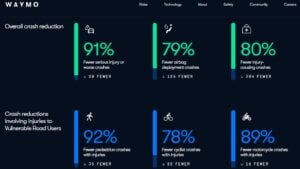
Waymo reports 96 million “rider-only” miles driven. Its crash rate per mile is lower than human-driven ride-hailing services.

The vehicles have advanced sensors, real-time maps, and strict safety rules to detect hazards early. Academic research confirms that Waymo’s crash rates are lower than human drivers across millions of miles.

Waymo safety performance
Compared to an average human driver over the same distance in our operating cities. Source: Waymo

Moreover, regulations differ by state. Waymo has approvals for paid rides in Arizona, California, Texas, and now Atlanta. Each city has its own rules for safety, reporting, and emergency vehicle interaction—federal rules in 2025 aim to simplify reporting while keeping safety standards high.

Competition and Market Landscape

Waymo leads in fleet size and data collection, but the market is growing. Key competitors include Cruise, Zoox, Motional, and Tesla.

  • Cruise: Urban-focused fleet; regulatory issues have slowed growth.

  • Zoox: Short-trip robotaxis designed for cities.

  • Motional: Works with Uber and Lyft.

  • Tesla: Expanding autonomous features in consumer vehicles.

These competitors have different vehicle types, geographic strategies, and business models. Waymo still leads in scale but faces pressure from innovation and partnerships.

Green Miles: How Waymo’s Electric Fleet Cuts CO₂

As of November 2025, Waymo’s robotaxi fleet is fully electric. This means the vehicles produce zero tailpipe emissions, which helps reduce air pollution in the cities where Waymo runs.

According to Waymo’s own sustainability reporting, its shared electric fleet supports cleaner rides and healthier communities.

The company estimates that its robotaxi service delivers more than 250,000 electric rides per week. With that many rides, they say they prevent around 315 tons of CO₂ emissions every week, based on their emissions‑avoidance methodology.

The chart below shows the estimated CO₂ emissions avoided per week by Waymo’s fully electric robotaxi fleet in each city using the company’s data. San Francisco leads with 126 tons avoided weekly, followed by Los Angeles at 88 tons and Phoenix at 63 tons.

Waymo Robotaxi Fleet and CO₂ Avoidance by City

Smaller markets like Austin and Atlanta contribute 25 and 13 tons, respectively. Overall, this output highlights the environmental impact of scaling electric autonomous ride services across urban areas.

On the mileage front, the Waymo driver (its autonomous system) has driven 96 million “rider-only” miles (without any human driver) through June 2025. This is important: more electric, driverless miles means a bigger environmental impact (CO₂ avoidance) as the fleet scales up.

In 2024, Waymo’s all-electric autonomous fleet drove over 25 million miles, contributing to the completion of over 4 million fully driverless rides. This resulted in an estimated avoidance of over 6,000 metric tons of CO₂ emissions. It reflects the environmental benefits of their electric-powered robotaxi service.

Who’s Using Waymo? Riders and Adoption Patterns

Waymo’s users are a mix, but early data and studies give this picture:

  • Many riders are urban commuters. In dense cities like San Francisco and Los Angeles, people use Waymo for daily trips, work commutes, and short errands.

  • There is also a strong presence of tech‑savvy users. These are people who are comfortable with apps, early adopters of new technologies, and willing to try a robotaxi service.

  • Suburban residents also use Waymo, especially where public transport is limited. In these areas, robotaxis offer a cleaner and more flexible alternative to owning a car or relying on inefficient transit.

Research helps support this. A study on automated vehicle adoption found that “tech mavens/travelers” — people who are comfortable with technology and use their commute time well — are among the most likely to use self-driving ride services. This fits what people expect. Early adopters of AV (autonomous vehicle) ride-hailing often value technology and efficiency.

Public Acceptance and Future Growth

Waymo operating 2,500 robotaxis across five U.S. cities shows the company is moving from testing to large-scale operations. The fleet provides hundreds of thousands of weekly rides. It also gathers data to improve safety and efficiency.

However, Waymo still faces challenges with safety, regulation, and public acceptance. Competition from other autonomous companies is also growing. But the company’s growth shows that autonomous vehicles are becoming a real part of urban transportation, shaping the future of driverless mobility.

COP30 Ends in Belém: Big Money for Adaptation, Big Misses on Fossil Fuels

The 30th United Nations Climate Change Conference (COP30) concluded last Friday in Belém, Brazil. Countries met to discuss how to respond to climate change and support global climate goals. The meeting produced some progress, especially in climate finance. However, it did not include binding commitments to end fossil fuel use or stop deforestation.

The outcome, inked by 194 nations, showed both achievements and limits. It also highlighted the challenges that come with global climate talks that need agreement from almost 200 countries.

Adaptation Finance Gets a Lift — But Not Enough

One major result of COP30 was the agreement to increase support for countries affected by climate change. The final text calls for a large boost in adaptation finance. This includes a plan to scale up support to around US$120 billion per year by 2035, which is about 3x more than the current pledge. This money will help nations prepare for floods, storms, droughts, and other climate impacts.

Developing countries welcomed this boost. They often face the worst climate impacts but have fewer resources to respond. The extra funding helps communities in several ways. It builds infrastructure, improves disaster response, supports farmers, and protects vulnerable groups.

However, experts note that the global adaptation finance gap is still over US$300 billion per year. This means the new target still falls far short of what vulnerable countries need. While COP30 showed progress in financial support, the scale of funding challenges remains large.

Comparison of adaptation financing needs UNEP
Source: UNEP

The agreement also encourages countries to improve the reporting and tracking of adaptation funds. This aims to make the money more predictable and effective. Although the increase is significant, the exact details of how funds will be distributed are still being finalized.

Fossil Fuel Talks: Big Ambition, Small Commitments

COP30 introduced voluntary roadmaps for two important areas: fossil fuels and deforestation. Countries agreed to discuss long-term plans to reduce fossil fuel use and protect forests.

However, these roadmaps are not binding. They do not set legally enforceable targets. Countries can join voluntarily and report their progress, but there are no penalties for failing to meet the goals.

More than 80 countries supported the fossil fuel transition roadmap, including Brazil, South Korea, Germany, France, Colombia, Chile, Kenya, and Mexico. These countries said they were willing to explore pathways toward cleaner energy systems.

But some major fossil fuel producers opposed binding language. Countries such as Saudi Arabia, Russia, India, and China pushed back against any formal agreement to phase out fossil fuels. Because of this opposition, the roadmap remains voluntary and sits outside the official COP30 text.

Wopke Hoekstra, EU Commissioner for Climate, Net Zero and Clean Growth, posted:

“However, a group of mainly oil-producing countries did everything to block the reference to phasing out fossil fuels in the unanimous agreement. Instead, on an initiative led by Brazil, we will form a large coalition of the willing committed to a concrete roadmap for phasing out fossil fuels.”

The forest roadmap is also voluntary. It focuses on protecting and restoring forests, especially in important regions like the Amazon. The Amazon plays a major role in storing carbon, supporting biodiversity, and regulating weather patterns. But countries differed widely on how quickly deforestation should be reduced, which made it difficult to reach a binding agreement.

These voluntary roadmaps show how challenging it is to reach an agreement among nearly 200 nations. Different national priorities, economic pressures, and political interests shaped the final outcome. The voluntary nature of the roadmaps was a compromise to keep all countries involved in the process.

Limited Progress on Emissions Reduction

COP30 placed much of its emphasis on adaptation finance and voluntary initiatives. However, the conference did not make any binding commitments to reduce fossil fuel use. This created a large gap between scientific recommendations and political agreements.

Global warming continues to speed up. Scientists explain that the world must sharply cut carbon emissions in the next decade to keep global temperature rise below 1.5 °C. Passing this threshold increases the risk of extreme climate impacts, including stronger storms, hotter heatwaves, and ecosystem loss.

The chart shows the large difference between where emissions are projected under current climate plans and where they need to be in order to stay on track for 1.5°C. The gap is huge — more than a third of current projected emissions.

Emissions Gap Relative to 1.5 °C Pathway
Data source: UNEP

COP30 did not introduce new binding measures to support the 1.5 °C pathway. Instead, delegates stressed the importance of national climate plans, or NDCs (Nationally Determined Contributions). Countries were encouraged to update their NDCs with higher ambition.

Before COP30, some countries submitted stronger NDCs. South Korea, for example, announced a plan to cut greenhouse gas emissions by 53% to 61% by 2035, compared to 2018 levels.

More than 120 countries also updated or strengthened their NDCs ahead of the conference. These updates show a willingness to act but still rely heavily on voluntary action without enforcement mechanisms. Scientists say this gap makes it difficult to meet global climate targets.

Forest Protection Goals Remain Voluntary

Deforestation was another major issue where COP30 did not deliver a binding result. The final text did not include a global commitment to end forest loss by a specific date. Instead, the forest roadmap remains voluntary, leaving each country to decide its own pace.

This outcome is notable because the Amazon rainforest, where COP30 was held, is one of the world’s most important ecosystems. It stores large amounts of carbon dioxide and contains rich biodiversity. Scientists warn that losing more of the Amazon could push parts of the forest toward a “tipping point,” where it can no longer recover from damage.

Some countries announced national programs and partnerships to reduce deforestation. Others introduced local community agreements and government-company collaborations. These efforts are helpful but limited without a binding global target. As a result, the overall potential impact remains uncertain.

Key Decisions and Frameworks

Despite the gaps, COP30 reached several agreements and introduced frameworks that could support future action. Key decisions include:

  • Tripling adaptation finance for vulnerable nations.
  • Launching voluntary roadmaps for fossil fuels and forests.
  • Strengthening mechanisms to monitor and report climate finance.
  • Encouraging countries to enhance NDCs and other climate plans.
  • Creating new dialogues on trade and climate policy.

These measures aim to keep international cooperation on track. They also provide tools for tracking progress and sharing knowledge. While not legally binding, they may help countries coordinate and plan their next steps.

Why Global Climate Politics Remain Stuck: The Road After COP30

COP30 highlighted several challenges facing global climate negotiations. Political divisions made it difficult to reach strong agreements. Countries have different priorities, depending on their economic structure, natural resources, and development needs. Some focus on adaptation finance, others on fossil fuel transition, and others on forest protection.

Another major challenge is the COP process itself. With almost 200 countries involved, decisions must be made by consensus. This means that even a small number of countries can block stronger language. As a result, many proposals were softened to achieve agreement, especially those related to fossil fuels.

Future steps will focus on how countries turn voluntary plans into clear actions. Governments are expected to update their NDCs, implement adaptation projects, and improve transparency in reporting. Civil society groups, local governments, and the private sector are also expected to help track progress and hold governments accountable.

Experts say that future COP meetings will need to build on COP30’s progress and address its gaps. Stronger and more coordinated commitments, especially on fossil fuels and forest protection, will be crucial to staying within global climate goals. COP30 was another step in a long process, but much more work is needed to secure a safer and more stable climate future.
Boeing Partners With Charm Industrial to Remove 100,000 Tons of CO₂

Boeing has taken a major step toward its long-term climate goals by signing a large offtake agreement with Charm Industrial. Under this deal, Charm will remove up to 100,000 metric tons of carbon dioxide from the atmosphere. The agreement marks Boeing’s first major purchase of permanent carbon removals and signals a shift in how aviation plans to reduce emissions. As pressure increases for airlines and aircraft manufacturers to curb their climate impact, this partnership shows how the sector is beginning to rely on new technologies rather than traditional offsets.

This deal also stands out as one of the aviation industry’s biggest carbon removal purchases to date. Although carbon removal remains a young sector, companies like Charm Industrial are scaling quickly as demand grows from large corporate buyers looking for durable climate solutions.

Jeff Shockey, Boeing executive vice president of Government Operations, Global Public Policy & Corporate Strategy, said:

“The aviation industry has set goals to reduce emissions to support long-term global demand for air travel and meet regulatory requirements. Boeing is excited to team up with Charm Industrial to support American innovation in carbon removals to help meet these needs.”

Aviation’s Struggle with Emissions

The aviation sector has made aircraft more fuel-efficient over the years, yet absolute emissions continue to rise. Growing demand for flights and global travel has offset many of the efficiency gains. According to the International Energy Agency, sustainable aviation fuel (SAF) accounts for less than 1% of the world’s jet fuel supply. Even worse, SAF still costs two to ten times more than conventional jet fuel, which limits its adoption.

Aviation contributes about 2% to 3% of global CO₂ emissions, but its overall climate impact is even larger. When scientists add the warming effects of contrails and other non-CO₂ emissions, the sector’s footprint increases significantly. Because of this, airlines face growing pressure from governments, investors, and passengers to show progress on climate goals.

However, without affordable SAF or next-generation aircraft, aviation must rely on other tools. This is where permanent carbon removal becomes important.

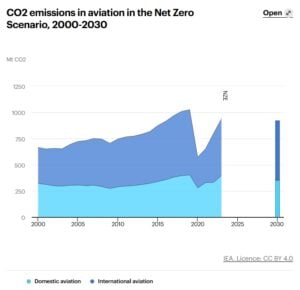
aviation emissions

How Charm Industrial’s Carbon Removal Process Works

Charm Industrial offers a carbon removal method that blends natural carbon capture with engineered storage. The company:

  • Collects agricultural and forestry residues, such as crop waste or wood scraps that would otherwise decompose or burn.
  • It heats this waste in the absence of oxygen and converts it into bio-oil through a process called pyrolysis.

This bio-oil is thick, carbon-rich, and stable, and is then injected deep underground into old oil wells or EPA-regulated storage sites. Once underground, the bio-oil solidifies and remains trapped for hundreds or even thousands of years. Because the stored carbon is no longer exposed to fires, erosion, or land-use change, it becomes a form of permanent carbon removal.

This method differs from tree planting or traditional offsets. While forests can burn or be cut down, Charm’s storage approach avoids those risks. In addition, the process works year-round and does not depend on long-term maintenance.

Charm has already proven its capability at a commercial scale. Two years ago, the company delivered 112,000 tons of carbon removal to Frontier—a buyer coalition backed by companies like Stripe, Microsoft, and Alphabet. That deal was worth $53 million, with an approximate price of $470 per ton.

Over time, the company hopes to drive this cost down to around $50 per ton, which would make carbon removal accessible to a wider range of industries.

Peter Reinhardt, CEO of Charm Industrial, said,

“This collaboration helps scale our carbon removal technology while creating new jobs in rural communities and other locations.”

A Growing Customer List and New Projects

Charm Industrial’s client list now includes Google, JPMorgan Chase, and Microsoft. These companies are among the world’s largest purchasers of carbon removal and play a key role in scaling the industry. Their early investments help reduce costs and allow startups to build more storage capacity.

Recently, it expanded into Louisiana, where it converted an abandoned oil and gas well into a storage site capable of holding 500,000 tons of carbon. This move also supports local communities and uses existing industrial infrastructure in new ways.

As the model relies on materials like crop residues, it offers farmers new revenue streams. Instead of burning waste or leaving it unused, farmers can sell residues to Charm. This shift creates economic opportunities in rural regions and strengthens the link between agriculture and climate technology.

Economic Benefits Beyond Climate

The carbon removal sector is still developing, but it is already creating new types of jobs. Charm’s operations rely on rural workers who have experience with agricultural equipment, heavy vehicles, and industrial machinery. The company hires locally to run injection sites and manage biomass logistics. As carbon removal scales, it will bring more investment to the energy, forestry, and agriculture sectors.

Boeing’s agreement supports this emerging ecosystem. By signing long-term contracts with companies like Charm, Boeing helps create predictable demand, which is essential for climate startups planning to expand their supply chain and storage networks.

Boeing Targets Net Zero With SAF and Carbon Removals

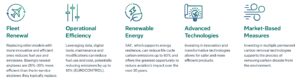
Boeing has been updating its environmental strategy as global pressure increases on aviation to reach net-zero emissions. The company follows an “avoid first, remove second” approach. This means Boeing prioritizes cutting emissions directly through efficiency improvements, renewable energy, and sustainable fuel use. After reducing what it can, Boeing uses permanent carbon removal for emissions that remain hard to eliminate.

Operational Emissions Targets

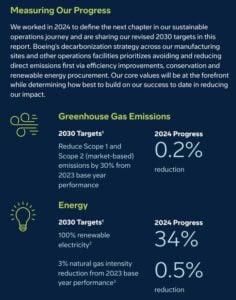
Boeing aims to cut Scope 1 and Scope 2 market-based emissions by 30% by 2030 from a 2023 baseline.

  • Move toward 100% renewable electricity.

  • Lower natural gas intensity across its facilities.

In 2024, Boeing made progress by achieving 34% renewable electricity through direct purchases and renewable energy credits. It also reduced its natural gas intensity by 0.5% reduction from 2023 levels.

boeing
Source: Boeing

Innovation and Sustainable Fuel

By 2030, Boeing wants all new commercial airplanes to be compatible with 100% SAF. The company co-led an international workgroup assessing how pure SAF affects aircraft structures, fuel systems, and components. It has also purchased 6.4 million gallons of blended SAF for U.S. operations.

Still, because SAF remains expensive and limited, Boeing understands that carbon removal must support its transition. Therefore, the company expects to sign more removal agreements in the coming year.

BOEING Carbon removal SAF
Source: Boeing

A Major Step Toward Scalable, Durable Climate Solutions

The Boeing–Charm Industrial partnership illustrates how aviation is beginning to support large-scale carbon removal. As clean fuels expand slowly and new aircraft technologies take years to reach the market, carbon removal helps bridge the gap between today’s operations and future net-zero targets.

Charm’s model brings together waste-to-carbon technology, permanent storage, rural job creation, and carbon-negative industrial processes. Meanwhile, Boeing’s investment provides financial stability to help the carbon removal sector grow.

Together, this agreement moves both companies—and the aviation industry—closer to a low-carbon future built on durable climate solutions, innovative technology, and long-term environmental responsibility.

SQM Bets Big With $2.7 Billion Expansion as Lithium Prices Rebound and Demand Surges

Sociedad Química y Minera de Chile (SQM) delivered a solid set of results for the third quarter of 2025, even though earnings came in slightly below what Wall Street expected. The company reported net income of $0.62 per share, just $0.02 short of analyst forecasts.

Revenue for the quarter reached $1.17 billion, supported by strong performance in its lithium business. Record lithium sales volumes played a major role in boosting the company’s top line, showing how quickly demand has improved across global battery markets.

Lithium Momentum Pushes SQM Toward a Strong 2025

  • Gross profit climbed 23.1% year-over-year to $345.8 million, marking a strong rebound after a period of weaker prices earlier in the cycle.

Reuters noted that SQM benefited from rising lithium prices as electric vehicle (EV) demand recovered and large-scale battery storage projects expanded around the world. With these trends gaining strength, SQM raised its 2025 global lithium demand growth forecast to more than 20%, up from its earlier estimate of around 17%.

Looking ahead, SQM maintains a positive outlook for the market. The company plans to invest $2.7 billion over the next three years to expand lithium production capacity in Chile. SQM expects lithium prices to stay on an upward trend in the fourth quarter of 2025 as demand from EVs and energy storage systems continues to accelerate.

SQM lithiun
Source: SQM

China’s Bullish Outlook Sparks a Market Rally

While SQM’s results were strong on their own, global sentiment around lithium improved even more after China’s Ganfeng Lithium issued a highly optimistic forecast. According to Bloomberg, Ganfeng Chairman Li Liangbin projected 30% growth in lithium demand next year. His comments immediately triggered a sharp rally in both lithium prices and mining stocks.

The most-active lithium carbonate futures contract on the Guangzhou Futures Exchange jumped 9%, hitting the daily upper limit of 95,200 yuan per ton (around $13,400). Investors reacted quickly, sending shares of major producers higher. SQM’s stock rose as much as 14%, and Albemarle shares climbed about 9.3% during the rally.

This price surge helped strengthen SQM’s quarterly financials. The company reported net income of $178.4 million, a 36% jump from $131.4 million a year earlier.

Revenue climbed 8.9%, rising from $1.08 billion to $1.17 billion over the same period. With growing investor confidence, SQM’s U.S.-listed shares touched $64.60, their highest level in more than two years.

lithium price SQM
Source: SQM

Lithium Market Shifts Into Recovery

Despite these strong results, the lithium industry is still navigating a market that has gone through significant volatility. Lithium prices cooled sharply after reaching record highs in 2022, as supply growth outpaced demand. This pressured margins for SQM, Albemarle, and other major producers.

However, the second half of 2025 brought a noticeable turnaround. SQM said demand between July and September was stronger than expected.

CEO Ricardo Ramos told analysts that although the market remained volatile, SQM was “cautiously optimistic” about the coming months. He emphasized that fundamentals remain strong because demand is rising not just for electric vehicles but also from energy storage systems, which are becoming essential for renewable power grids.

SQM Sees Sharp Demand Jump Ahead of Codelco Deal

Additionally, the mining giant expects global lithium demand in 2025 to exceed 1.5 million metric tons, representing a 25% jump from 2024. Demand could rise further to 1.7 million metric tons by 2026, according to Pablo Hernandez, vice president of strategy and development for SQM’s Chilean lithium division.

However, even with stronger demand signals, he noted that the company remains conservative when estimating next year’s growth.

The company is also preparing to finalize its long-awaited partnership with state-owned miner Codelco. The joint venture will expand lithium extraction in the Atacama salt flat. With China’s market regulator now approving the deal, the final step is receiving a sign-off from Chile’s comptroller. CEO Ricardo Ramos said he is confident the deal will close before the end of the year.

lithium demand

JP Morgan Raises Long-Term Lithium Price Forecast

JP Morgan raised its long-term outlook for lithium prices as demand stayed strong and mining costs climbed. Earlier this year, the bank cut its long-term spodumene forecast to $1,100 per ton. After reassessing global trends, it now sees that number as too low and has increased its estimate to $1,300 per ton.

JP MORGAN lithium price forecast
Source: JP Morgan

Why the Upgrade?

  • Stronger Demand: Rapid EV and energy storage growth is expected to keep long-term demand elevated. Rising capital and operating costs also mean new projects need higher prices to advance.

  • Market Alignment: Investors already assume long-term prices in the $1,200–$1,300 per ton range. JP Morgan’s new forecast better reflects market sentiment and helps identify trading inflection points.

  • Supply Discipline: Australian miners say operations at Bald Hill, Wodgina, and Ngungaju won’t restart until prices exceed $1,200 per ton. JP Morgan sees similar discipline emerging in China, reducing the risk of oversupply.

The bank kept its long-term lithium carbonate and hydroxide assumptions at $15,000 per ton, calling these levels “incentive prices” for downstream investment. In the near term, JP Morgan lifted its 2026–2027 spodumene outlook from $800 per ton to $1,100–$1,200 per ton as it expects a tighter market and potential deficits.

The Bottom Line

SQM is benefiting from a fast-improving lithium market driven by strong EV and battery storage momentum. Rising prices, improved demand, and growing investor enthusiasm are lifting the company’s performance. Although volatility remains, SQM enters 2026 with record volumes, a solid financial foundation, and a clearer long-term strategy supported by disciplined supply and a stronger pricing outlook.

IFC Backs Brookfield’s $5B Climate Fund with $100M Investment

The International Finance Corporation (IFC), a World Bank Group member, is making a $100 million investment in Brookfield Asset Management’s Catalytic Transition Fund. This fund focuses on climate solutions in emerging markets. It aims to help developing economies shift to cleaner power, reduce emissions, and support long-term sustainable growth.

The IFC is committed to increasing climate finance. This is important for countries that often find it hard to get large funding for green projects.

The investment is part of IFC’s broader effort to expand private capital flows into climate-related industries. Many emerging markets need new infrastructure, updated technologies, and access to clean energy. The Catalytic Transition Fund aims to meet these needs. It directs capital to companies and projects that provide both environmental and economic benefits.

What the Catalytic Transition Fund Aims to Do

Brookfield started the Catalytic Transition Fund to boost investments in areas with little climate finance. The fund targets up to $5 billion in total capital. It focuses on activities that support the energy transition, industrial decarbonization, sustainable living, and new climate technologies.

The $5 billion capital is in line with the scale of investment needed to target clean transition sectors in emerging markets. This is compared to the current annual global clean energy investment of about $1 trillion.

The fund operates across several regions, including South and Southeast Asia, Latin America, Eastern Europe, and the Middle East. These regions represent a large share of global energy demand and industrial activity. However, many countries in these areas face challenges.

They deal with aging infrastructure, limited access to clean power, and rising climate impacts. By investing in these markets, the fund aims to reduce emissions while supporting economic development.

Brookfield has committed at least 10% of the fund’s total capital. This commitment shows that it shares interests with other investors. It also signals confidence in the fund’s long-term potential. The Catalytic Transition Fund had its first close at $2.4 billion in 2024. This shows strong early backing from institutional investors.

Brookfield catalytic transition fund composition

The fund’s core strategy is to support projects that can scale quickly and deliver measurable results. It focuses on clean power generation, industrial upgrades, and systems that support energy efficiency. These investments are designed to help companies reduce their emissions and operate more sustainably. They also help improve energy reliability and reduce long-term costs.

Why IFC’s Investment Is Important

IFC’s $100 million investment plays a significant role in strengthening the fund’s ability to reach its targets. IFC is part of the World Bank Group and specializes in supporting private-sector development in emerging markets. When IFC invests in a fund or project, it sends a signal to global investors that the opportunity is sound and that risks can be managed.

Connor Teskey, President of Brookfield Asset Management, commented:

“IFC’s investment in the Fund accelerates our ability to deploy capital at scale into investments that support economic growth, energy security and decarbonization in emerging markets. Combined with Brookfield’s decades of experience in renewable power and transition investing, IFC’s investment and global knowledge will help deliver meaningful impact for emerging markets, investors and the energy transition at large.”

IFC’s participation also helps attract additional private capital. Many investors like climate projects. But they often worry about regulatory stability, currency risks, and short track records. IFC’s involvement reduces these concerns. It shows that experts in development finance have reviewed the fund’s strategy and view it as a credible opportunity.

The fund also uses a blended-finance model. This means it includes capital with different levels of risk and return expectations. One of the anchor investors, ALTÉRRA, has committed around $1 billion to the fund, but with capped returns. This model improves risk-adjusted returns for the other investors, making the fund more attractive.

Blended finance helps fund climate projects in developing countries. It lowers early-stage risk, making investments safer. This financing structure can reduce perceived investment risks by up to 30-50%. Thus, it significantly attracts private capital that might otherwise avoid emerging markets.

Since 2016, IFC has committed over $18 billion in own-account climate-related investments, reflecting its growing focus on sustainable development.

Closing the Climate Investment Gap in Emerging Markets

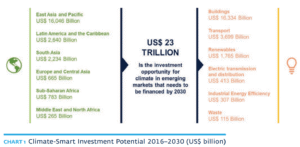
Emerging markets need far more climate investment than they currently receive. These regions represent ~60% of global emissions but receive around 40% of global climate finance.

Many developing economies still depend heavily on coal, oil, and other fossil fuels. They also face growing energy demand as populations expand and economies grow.

The United Nations estimates that developing countries require $1.3 trillion annually in climate finance through 2030 to meet Paris Agreement goals. This underlines the urgency behind funds like Brookfield’s Catalytic Transition Fund.

global climate finance vs COP30 target

Without major investments in clean energy, these countries may struggle to reduce emissions. The lack of investment also limits economic opportunities. Clean power systems, efficient factories, and low-carbon technologies can create new industries and jobs.

The Catalytic Transition Fund seeks to close part of this investment gap. It sends funds to key areas like renewable energy, tech upgrades for industries, and sustainable infrastructure. These projects can lower emissions and increase energy access.

The fund highlights several priority areas, including:

  • Renewable power sources, such as solar, wind, and hydro.
  • Industrial systems that reduce energy waste.
  • Technologies that improve energy storage and grid reliability.

These projects support both climate goals and long-term economic development. Clean energy can lower energy costs over time, reduce pollution, and support new business opportunities.

The IFC estimates that these markets could attract as much as $23 trillion in climate-related investments by 2030. These investments can lower environmental impacts while creating major growth opportunities.

Climate-Smart Investment Potential 2016–2030

SEE MORE: Goldman Sachs Launches Green Bonds ETF for Emerging Markets

Risks and Challenges That Investors Face

Investing in emerging markets involves risks, including these ones:.

  • Political and regulatory shifts: Policy changes can affect power prices, incentives, and project timelines.
  • Currency risk: Exchange-rate swings impact returns when revenues are in local currency but costs or debt are in foreign currency.
  • Technology risk: New or fast-evolving climate technologies may underperform at scale; require strong technical capacity and supply chains.
  • Exit risk: Smaller capital markets and fewer buyers in some emerging markets make exits harder.
  • Mitigation measures: Strong governance, portfolio diversification, and IFC’s oversight help reduce overall risk.

Strong governance practices and diversified portfolios can help lower risks. IFC’s participation also adds reassurance that the fund has strong risk management systems in place.

A Path Forward for Scalable, High-Impact Climate Projects

IFC’s $100 million investment in Brookfield’s Catalytic Transition Fund is a major step in expanding climate finance in emerging markets. The fund supports clean energy, decarbonizing industries, and climate tech in various areas.

The fund also lowers risks by mixing private capital with catalytic finance. This approach invites more investors to join in.

Moreover, the initiative supports long-term global climate goals while also promoting economic development. Emerging markets need significant investment to transition to cleaner energy and more sustainable industries. More than 700 million people in these regions still lack access to reliable electricity. Funds like this play a key role in closing that gap.

The Catalytic Transition Fund will succeed with strong project selection, good risk management, and clear results. If it performs well, it may serve as a model for future climate finance efforts in developing economies.