Google and NV Energy: Powering Nevada’s Future with 115 MW of Geothermal Energy

Googleโ€™s Alphabet is advancing towards its zero-carbon goals by partnering with NV Energy, to supply its Nevada data centers with geothermal electricity. With this move, Google plans to inject 115 megawatts of carbon-free geothermal power over the next six years. However, the deal is pending approval from state utility regulators.

Letโ€™s zoom in on the details here:

Google and NV Energy Amplify Clean Power 25x with CTT

From a regulatory perspective, Googleโ€™s partnership with Berkshire Hathaway’s electric utility, NV Energy is based on a “Clean Transition Tariff” (CTT) to procure 115MW of RE from a geothermal power plant operated by Fervo Energy.

Notably, Fervo Energy began a pilot program with Google in 2021 and is now set to significantly scale up its supply to meet Google’s growing demand for renewable power.

The company has been working with partners across the U.S. to create a scalable approach for utilities and large energy users to invest in clean firm capacity. They aim to speed up the commercial deployment of advanced clean technologies.

Most significantly, Google-NV energy deal will further enhance geothermal capacity by ~ 25 x.

This expansion brings more round-the-clock carbon-free energy to the local grid, supporting Google’s data center operations like AI and cloud computing in Nevada.

CCT Bolsters the Grid and Customersโ€™ Confidence for a Sustainable Future

The Clean Transition Tariff (CTT) brings together utilities and customers in long-term energy agreements. Here’s how it can transition U.S. holistically to a sustainable future:

  • ย Fosters investments in new projects that supply clean power to the grid. This, in turn, would amplify clean energy capacity and boost grid reliability.
  • Allows customers to meet their rising power demands with 24/7 carbon-free energy.
  • Customers gain long-term benefits of enhanced clean and reliable power through their existing utility connections.

Amanda Peterson Corio, Global Head of Data Center Energy, and Briana Kobor, Head of Energy Market Innovation at Google have expressed themselves in Google blog by noting,

โ€œItโ€™s not just Google that stands to benefit from this new model. If widely adopted across U.S. markets, the CTT structure can expand clean energy capacity and improve grid reliability, accelerate the roll-out of new technologies needed to enable clean industrial growth, and bring the economic benefits of clean energy to communities everywhere.โ€

The Rise of Revamped Procurement Models to Drive Energy Transition

Amanda and Briana have further revealed in their article that many companies secure clean energy, mainly wind and solar, through power purchase agreements (PPAs) with project developers. Google has been a leader in this successful model. Since 2008, corporate clean energy buyers have contributed nearly 200 GW of new solar and wind capacity globally.

However, they have highlighted the drawbacks of this method, like

  • PPAs are often not integrated with broader grid planning and utility investment processes.
  • Weather variability can lead to inconsistent availability of solar and wind energy.

Therefore, achieving fully decarbonized electricity systems necessitates technologies capable of providing clean power at any time, known as โ€œclean firm capacity.โ€ However, technology is still in its infancy primarily due to improper regulatory framework and huge cost factors. Consequently, customers are forced to depend on fossil fuels for consistent power when renewables are insufficient.

Thus, Google believes in taking full advantage of 24/7 carbon-free energy technologies. It is addressing the increasing demands of local grids with a streamlined approach to investing in clean energy projects that provide firm capacity.

Is Googleโ€™s CTT a Game-Changer for Clean Energy Investment?

Based on the confirmative statements made by Google officials, we can confidently say YES to this question.

Furthermore, Google claims that the CTT will enhance the clean energy transition by enabling companies like NV Energy to receive funds downright to invest in new technologies. Certainly, this is a unique approach and significantly different from traditional power purchase agreements (PPAs). Subsequently, helping Google offset its emissions.

In 2022, Google signed contracts for approximately 2.8 GW of clean energy generation capacity, the highest ever.

Google’s latest environmental report shows that 64% of its global operations use carbon-free energy such as wind and solar.

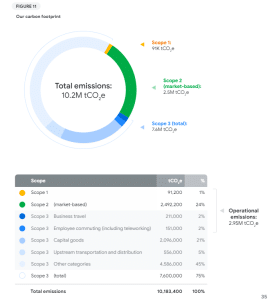
Below is the image of Google’s carbon footprint for 2022. It aims to reduce 50% of our
combined Scope 1, 2 (market-based), and 3 absolute GHG emissions before 2030.
Googlesource: Google Environmental Report

The deal with NV Energy is a strategic move to increase this percentage, highlighting Google’s commitment to its clean energy goals. From media reports, we also discovered that Duke Energy has alreadyย partnered with Google and others to develop a similar CTT model in the Southeast United States.

Powering Nevada: NV Energy and Google Transform Clean Energy Access

In Nevada’s regulated power markets, companies struggle to source entirely clean energy directly from generators. This groundbreaking partnership tackles this challenge by integrating Google into NV Energy’s power generation with the help of CCT.

Doug Cannon, president and CEO of NV Energy has given a long statement on the prospects of this deal. He said,

โ€œThe partnership can develop new solutions to bring clean, firm energy technology โ€” like enhanced geothermal โ€” onto Nevadaโ€™s grid at this scale is remarkable. This innovative proposal will not be paid for by NV Energyโ€™s other customers but will help ensure all our customers benefit from cleaner, greener energy resources. If approved, it provides a blueprint for other utilities and large customers in Nevada to accelerate clean energy goals.โ€

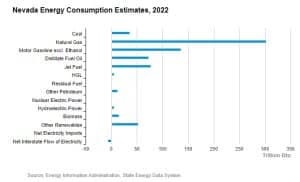
Nevada consumes 6X more energy than the state produces in part because Nevada produces only small amounts of natural gas and crude oil and does not mine any coal. Geothermal energy, which utilizes naturally occurring underground heat to generate electricity, holds considerable promise in Nevada.

According to US Energy Information and Administration (US EIA)

  • In 2023, Nevada accounted forย 26%ย of the nationโ€™s utility-scale electricity generation from geothermal energy.ย Only California generated more.
  • Geothermal resources contribute to aboutย 10%ย of Nevadaโ€™s total electricity generation.

Nevada NV ENERGY

This pivotal agreement with NV Energy integrates advanced geothermal projects, delivering carbon-free electricity to power Google’s data centers. Google will keep partnering with utilities, regulators, and energy customers to drive clean energy investments, and advanced technologies, and build a robust, carbon-free grid.

US Targets 200 GW Nuclear Expansion to Meet Soaring Energy Demand

With rising energy demands, nuclear power is gaining attention as a key component of the US’s carbon-free energy strategy. The US Energy Department (DOE) aims to triple nuclear capacity by 2050, adding 200 gigawatts (GW) to meet net zero emissions goals.ย 

Michael Goff, acting assistant secretary of the DOE’s Office of Nuclear Energy, emphasizes the urgency of this expansion, noting that:

“We are serious. We need to start deploying now.โ€

Meeting Rising Energy Demands with Nuclear Power.ย 

Matt Crozat from the Nuclear Energy Institute (NEI) notes a significant rise in utility interest, particularly among those with existing nuclear fleets.ย 

Last month, the largest nuclear power operator in the country, Constellation Energy Corporation, revealed plans to explore the construction of new nuclear capacity at its reactor sites to address the rising energy demand of its data center clients.

However, despite growing interest, the initial investment risk for new nuclear projects remains a significant hurdle. Lynn Good, CEO of Duke Energy Corp., stresses the need for federal incentives to mitigate construction risks.ย 

Currently, federal support largely comes in the form of post-construction tax credits, which require operational plants to benefit. Good advocates for more robust support during the construction phase to balance the benefits and risks for consumers.

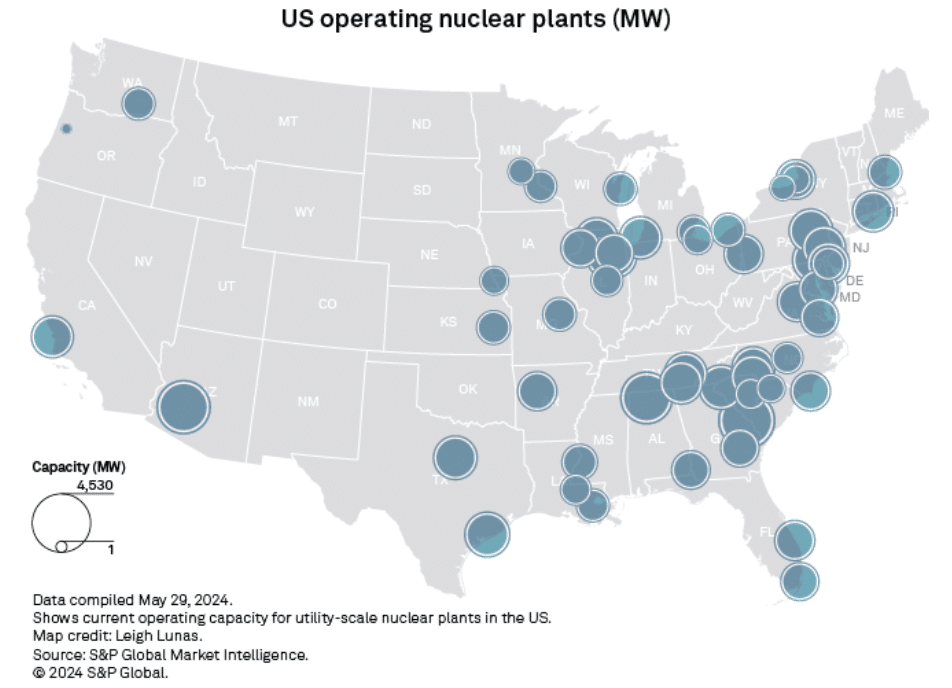
US operating nuclear plants MW

The completion of two new reactors at Georgia’s Vogtle Nuclear Plant, adding over 2,000 megawatts (MW), has sparked optimism. Georgia Gov. Brian Kemp and other officials argue that this project proves new nuclear construction is feasible in the US.

Energy Secretary Jennifer Granholm supports expanding the nuclear industry, suggesting more reactors should be planned, while also noting that:

โ€œWe are determined to build a world-class nuclear industry in the United States, and we’re putting our money where our mouth is.โ€

Balancing Investment Risks and Federal Incentives

However, Southern Company, which oversaw the Vogtle expansion, has no immediate plans for further reactors. Georgia Public Service Commission member Tim Echols underscores the need for federal backstops against cost overruns before approving additional units.ย 

He believes that current incentives, including tax credits and loan guarantees, are insufficient, referencing the bankruptcy of Vogtle’s contractor, Westinghouse, which caused significant industry concern.

The DOE’s Goff acknowledges the challenge of increasing incentives further, noting the substantial existing support under the 2022 Inflation Reduction Act (IRA). This legislation offers multiple credits for new nuclear projects, including options to layer or sell credits and additional credits targeted at clean energy. These incentives have already helped secure lifetime extensions for existing nuclear plants.

Existing nuclear plants are eligible for a production tax credit (PTC) of up to $15 per megawatt-hour (MWh). For new nuclear capacity, operators can choose between a PTC of $30/MWh or an investment tax credit (ITC) of 30%. This ITC can increase to as much as 50% if the nuclear projects use sufficient domestic content and are constructed in former coal plant communities.

Constellation Energy plans to renew operating licenses for all 23 of its reactors, with potential capacity increases qualifying for new capacity credits. This could lead to an additional 2.5 GW of nuclear capacity through uprates, according to NEI President Maria Korsnick.

The federal government is also promoting nuclear energy through public-private partnerships, cost-share projects, loan guarantees, licensing assistance, and research initiatives.ย The Biden-Harris administration has issued a $1.52 billion loan guarantee to restart an 800-MW nuclear plant in Michigan.

Nuclear Energy for the Nation’s Carbon-Free Powerย 

The surge in AI applications is significantly increasing electricity demand for data centers, presenting a lucrative opportunity for developers of small nuclear reactors (SMRs) and advanced battery technologies.

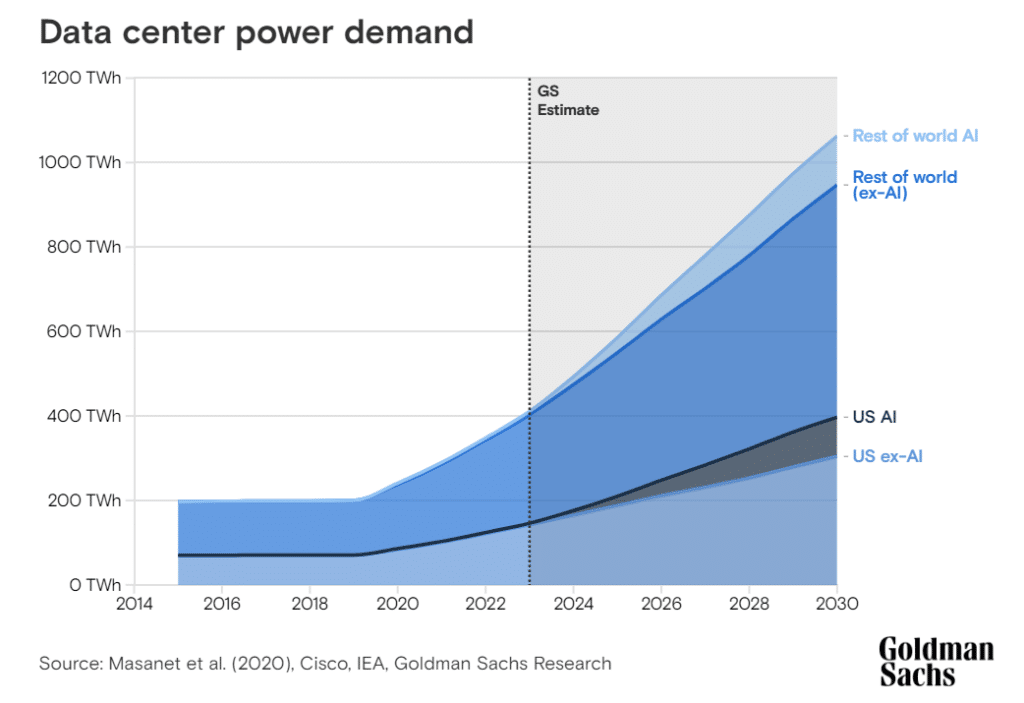
According to a Goldman Sachs report, AI applications could boost data center power needs by 160%, with AI queries like those from ChatGPT requiring nearly ten times more electricity than typical Google searches.

data center power demand 2030

Clayton Scott, chief commercial officer for NuScale Power, sees this as a perfect match for their small-scale nuclear systems.ย Scott believes the nuclear company can provide a solution with its SMRs, each generating 77 megawatts of carbon-free electricity.ย 

However, these reactors won’t be deployed until late in the decade, pending regulatory approval. The company reported minimal revenue and significant losses as it gears up for commercial operations.

Microsoft, led by Bill Gatesโ€™ TerraPower, is also exploring SMRs for powering AI data centers. Other startups, such as Oklo and Helion, are developing innovative nuclear technologies, including fission reactors and nuclear fusion.ย 

While much of the industry’s focus is on SMRs, none are yet commercially available for utility-scale power generation. Industry experts anticipate several applications for advanced reactors to be filed with the US Nuclear Regulatory Commission soon.ย 

  • However, the recent cancellation of the first modular project in Idaho and Vogtle’s completion may shift financial risk assessments back toward larger reactors.ย 

Large light-water reactors could become more prevalent in utility planning. Goff believes that there will still be demand for large-scale reactors.ย 

Overall, the completion of Vogtle’s reactors and the supportive policy landscape indicate a growing openness to nuclear energy. As demand for carbon-free power continues to rise, nuclear power may play a crucial role in the US’s energy future, provided that policy adjustments and incentives keep pace with industry needs.

Is The Voluntary Carbon Market Moving Toward Version 2.0?

According to a new analysis by Calyx Global, a carbon credit ratings platform, the quality in the voluntary carbon market (VCM) shows promising signs of improved integrity. The report combines market trend data with Calyx Global’s ratings of over 500 projects to offer insights into the ongoing efforts to enhance carbon market integrity.

Finding higher-rated carbon credits in the VCM remains challenging due to the dominance of mega-projects, such as REDD (Reducing Emissions from Deforestation and Forest Degradation) and large-scale grid-connected renewable energy projects, which typically do not achieve higher ratings (A and B).ย 

Calyx Global’s co-founder, Donna Lee, emphasizes the need for higher-quality carbon credits to restore confidence in the market.ย 

โ€œWe wanted to start tracking quality, recognizing that the voluntary carbon market is starting to mature. The quicker we improve carbon credit quality and restore confidence, the more effective companies can be at addressing climate change.โ€

The report, “The State of Quality in the Voluntary Carbon Market”, identifies major trends and below are the key findings.

Decrease in Low-Quality Carbon Credits Issued

Since 2021, media scrutiny over the voluntary carbon market has intensified, coinciding with a rise in carbon credit issuances. Both market volume and media criticism peaked in 2023. However, there has been a notable shift in the quality of credit issuances, especially from the beginning of 2024.

Quality in the VCM highly varies, with both poor-quality and high-quality credits in every sector analyzed by Calyx Global. To date, projects in the Manufacturing and Industry sector has the highest GHG integrity.

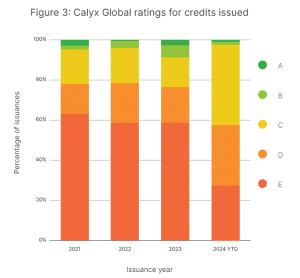
According to the analysis, which has rated over half of all credits issued in the past 5 years, only about 20% of these credits fall into the top half of their rating scale (C+ and above).

Notably, less than 10% of the rated credits received a B rating or higher. This highlights the difficulty in sourcing high-integrity carbon credits in the current market landscape.ย 

The issuance of low-rated credits (E-rated) has significantly declined, dropping by nearly 50%. This decrease is primarily due to a reduction in credits issued from REDD+ projects. These credits have historically been skewed towards lower ratings.

Calyx Global ratings for credit issued

The decline in REDD+ credits has been partially offset by an increase in issuances from household and community projects, such as cookstove credits. These projects tend to have more credits in the “C” rating range.

Despite the overall improvement in credit quality, high-rated credits (A and B ratings) remain rare. This rarity is due to the smaller number of such projects actively issuing credits in the market today. Additionally, these higher-rated projects tend to be smaller in scale compared to mega-projects like REDD and large-scale renewable energy projects.

Slow Adoption of Quality Updatesย 

Despite recent shifts towards higher quality in the VCM, a clear and consistent trend has yet to emerge.

Over 75% of new listings on major registriesโ€”American Carbon Registry (ACR), Climate Action Reserve (CAR), Gold Standard, and Verified Carbon Standard (VCS)โ€”come from the Forest & Land and Household & Community sectors. These sectors show mixed results in Calyx Global’s rating system.

The Forest & Land sector is dominated by improved forest management (IFM) and afforestation/reforestation (AR) projects, which are undergoing methodological changes aimed at enhancing their effectiveness and integrity.ย 

In the Household & Community sector, cookstove projects make up the majority of new listings. And efforts are underway to refine cookstove methodologies to improve their quality and impact.

It may take time for low-quality credits to be completely phased out of the system. Some low-quality credits are still tied up in forward contracts, delaying the full impact of improved quality standards. Although there have been improvements in the rules and requirements for generating carbon credits, these updates still need to be fully integrated into the active market.

A Tradeoff: GHG Integrity vs. SDG Impact

While buyers are attracted to benefits “beyond carbon,” such as social and environmental co-benefits, the primary driver of market trends is the search for higher greenhouse gas (GHG) integrity.

Around 54% of rated projects for GHG integrity have Sustainable Development Goals (SDG) contributions verified by a third party. This trend is especially prevalent among nature-based projects, which often seek additional SDG certification through programs like Verraโ€™s Climate, Community, and Biodiversity (CCB) Standards and the Sustainable Development Verified Impact Standard (SD VISta), resulting in verified SDG contributions.ย 

In contrast, waste and renewable energy projects frequently donโ€™t pursue extra SDG certification. Or they are registered under programs that donโ€™t require SDG claims to be verified.

Some argue that the ideal carbon credit should possess both high GHG integrity and significant SDG impact. However, such credits are currently challenging to find, per Calyx Global findings. There appears to be a tradeoff between GHG integrity and SDG impact in the current market.ย 

This tradeoff is partly because many projects that deliver the highest SDG impacts, such as REDD+ and cookstove projects, have issues with over-crediting.

Household-based projects often have verified SDG contributions, largely because of the Gold Standard‘s requirement to report, monitor, and verify at least three SDGs per project. Verra has now introduced a similar requirement.ย ย 

Calyx Global concludes that the VCM continues to evolve and is moving towards version 2.0. This analysis is crucial for instilling trust in carbon credits and enable them to effectively contribute to climate change mitigation.

Is Nickel Up for the Clean Energy Boom With Plunging Prices?

In the push for energy transition and increasing net-zero commitments, demand for clean energy technologies intensified, driving up the need for critical minerals. Among these, nickel prices stand to benefit as one of the key elements used in batteries for electric vehicles (EVs).

In the first quarter of 2024, primary nickel producers significantly increased their output, leading to an oversupplied market, while mined nickel producers reduced their supply. According to S&P Global Market Intelligence data, the top five primary nickel producers produced 11.7% more output compared to the previous year.ย 

Primary nickel includes refined nickel for electric vehicle batteries and nickel pig iron and ferronickel for steelmaking. Notably, PT Merdeka Copper Goldย and Nickel Industries, both operating in Indonesia, saw the largest increases.

Nickel Prices Plunge Amid Supply Surge

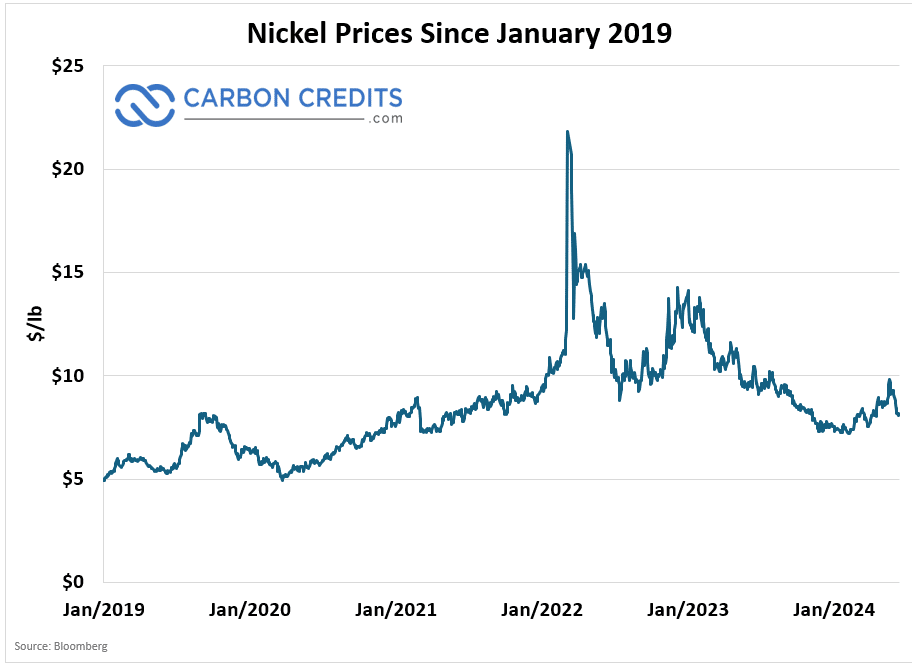
The rapid expansion in Indonesia’s nickel industry has contributed to market oversupply. This leads to significant nickel price declines from the peaks of 2022 and 2023, as seen below.ย 

Nickel prices since January 2019 to 2024

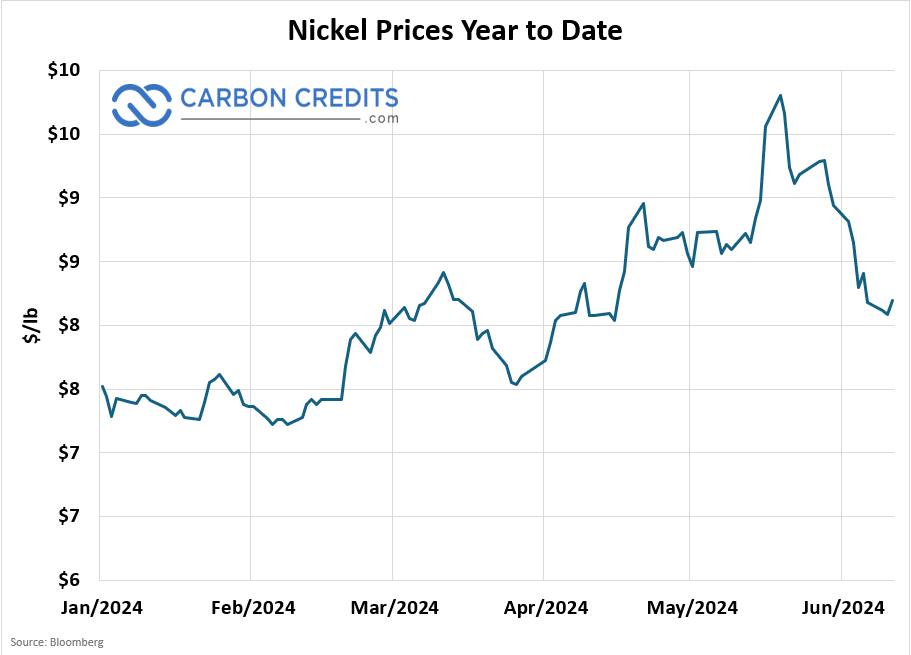
The London Metal Exchange (LME) cash price for nickel was $17,790.40 per metric ton on June 7. This reflects a massive 42% drop from the 2023 high of $30,958/t on January 3.ย 

The price also represents a 63% decrease from the 2022 high of $48,241/metric ton. Although nickel prices rose since early 2024 due to sanctions on Russian metal and protests in New Caledonia, they have since decreased but remain over 8% higher than at the beginning of the year.

Nickel prices year to date

The primary nickel surplus, driven by increased supply from Indonesia and China, has limited the upside for prices, with LME stocks reaching a two-year high on May 29. Consequently, some producers have announced plans to close operations or reduce output.ย 

  • PJSC MMC Norilsk Nickel, one of the top five primary nickel producers, reduced its production by almost 10%.

Conversely, the top five producers of mined nickel decreased their output, producing only over 17,000 metric tons in the first quarter. Mined nickel includes metal in ore.

Nickel Overload: Indonesia’s Surge Creates Market Turbulence

Indonesia, the Philippines, Russia, New Caledonia, and Australia were among the largest nickel-producing countries in 2023, according to GlobalData.

As of January 2023, global nickel reserves were estimated at 102.1 million tonnes, according to a GlobalData report that cites US Geological Survey data. The majority of these reserves are located in Indonesia and Australia, each accounting for 20.6% of the global total.

Other significant reserves are found in Brazil (15.7%), Russia (7.3%), New Caledonia (7%), and collectively in the Philippines and Canada (6.9%).

During the third quarter of 2023, average global nickel prices were $22,942 per metric ton, which was 11.6% lower than the same period in 2022. This price decline is attributed to weak demand from Chinaโ€™s battery sector and an increasing nickel supply, particularly from Indonesia.ย 

The report forecasted a further decrease in nickel prices by 14% in 2023 and an additional 10% in 2024, primarily due to the expected rise in supply from Indonesia and the Philippines. However, it is anticipated that the growing demand for electric vehicles (EVs) will boost global nickel prices in 2025.

Nickel’s Role in the Global Energy Transition

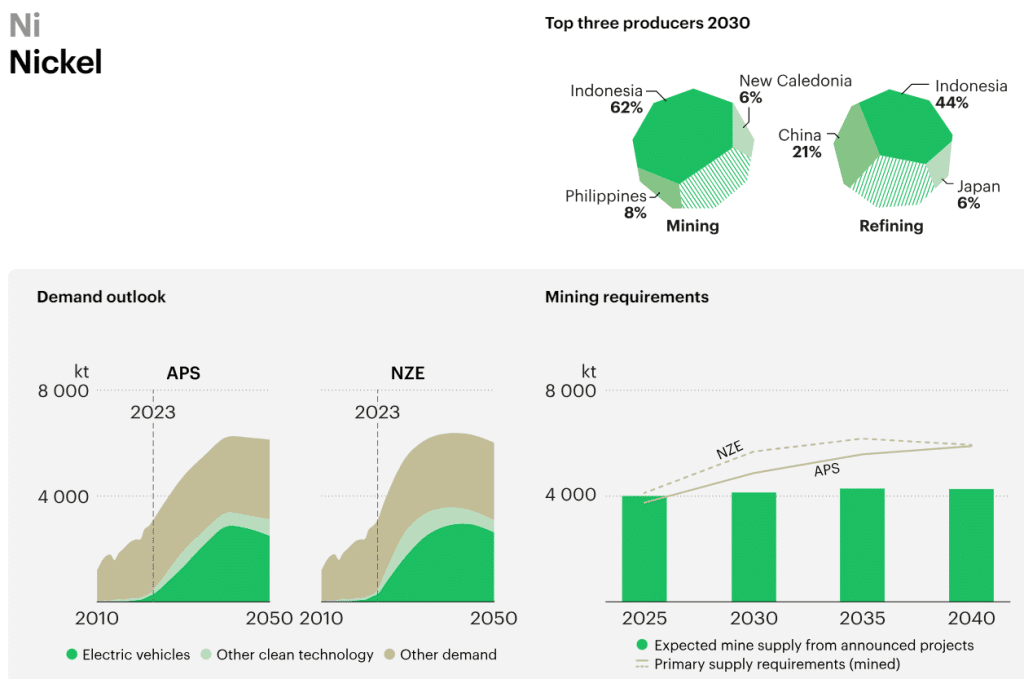
Nickel, a versatile metal long used in currency and stainless steel, is now playing a significant role in the energy transition. The International Energy Agency (IEA) predicts a 65% increase in nickel demand by 2030, driven by the growing need for resources in clean energy technologies.ย 

Nickel production and demand outlook IEA
Source: IEA

A meta-analysis of reports on this trend indicates that clean energy technologies are emerging as the sector with the fastest growth in demand for nickel and other critical minerals.

However, the nickel industry, often associated with environmental damage, faces the dual challenge of increasing production levels while enhancing sustainable practices.ย 

Nickel’s importance in energy storage technologies has been established for many years. Its ability to improve storage capacity at a low cost was instrumental in miniaturizing batteries, enabling the portable electronic devices we use today.ย 

Currently, nickel is being used in increasing quantities in the cathodes of lithium-ion batteries for electric vehicles (EVs), improving their performance and helping to overcome a major barrier to EV adoption: limited range.ย 

At the start of the decade, only 4% of nickel produced globally was used in car batteries. But this figure could rise to as much as 40% by 2030, as bans on internal combustion engine vehicles approach in many markets.

The demand for nickel is not only being driven by the EV market but also by the broader energy transition. Nickel is required for high-performance alloys used in wind turbines and solar panels, as well as for catalysts for green hydrogen production.ย 

According to the International Energy Forum’s (IEF) analysis, annual demand for nickel driven by the energy transition could increase from less than 1 million metric tons today to between 2 and 5 million metric tons by 2050.

Balancing increased nickel production with sustainable practices will be essential as the world continues to shift towards cleaner energy solutions. The industry’s ability to meet this growing demand while maintaining environmental integrity will play a pivotal role in the successful transition to a low-carbon future.

Engie Buys 5 Million Tons of Nature-Based Carbon Credits for Net Zero

Engie, the world’s largest independent power producer, has made a significant commitment to sustainability by pre-ordering 5 million tons of nature-based carbon removals from Catona Climate, a climate finance company.

This move is part of Engie’s strategy to meet its Net Zero target by 2045. It also represents a major investment in nature-based solutions, which are becoming crucial for climate change mitigation.

A Major Deal for High-Quality Climate Solutions

The recent reports from the Intergovernmental Panel on Climate Change (IPCC) have highlighted the necessity of scaling up carbon removal methods to achieve climate goals. The latest IPCC report emphasizes nature-based solutions, which can remove at least 3 gigatons of CO2 annually by 2030.ย 

Traditionally, efforts focused on technological solutions for carbon capture. However, nature-based solutions are also gaining traction due to their additional environmental benefits, as evidenced in recent Xpansiv report.ย 

Engieโ€™s partnership with Catona Climate reflects a broader industry trend toward integrating ecosystem restoration projects into corporate carbon strategies. This shift highlights the growing recognition of carbon removal alongside direct emission reductions in achieving net zero emissions.

Engie’s pre-order aligns with these findings and marks a significant step up from its previous smaller-scale carbon offset projects. However, scaling these projects faces several challenges, including complexities related to impacts on local communities and balancing carbon sequestration with other environmental benefits.

This is where Catona Climateโ€™s solutions come in.ย 

Based in California, Catona Climate funds high-impact, nature-based projects through carbon removal purchases. These projects are aligned with science-based targets and focus on regenerative land management, reforestation, and combating deforestation.ย 

The climate finance company sources, invests, and monitors these projects, offering businesses a portfolio of high-quality climate solutions. By creating clear demand signals, Catona aims to de-risk carbon investments and accelerate the development of high-quality climate solutions.ย 

A Growing Trend of Nature-Based Carbon Removal

The agreement enables Engie to secure carbon removal credits from multiple projects at fixed prices, offering financial stability and predictability. Under the partnership, the carbon removal credits will be issued between 2030 and 2039, with Engie having the flexibility to source from multiple projects at locked-in pricing.ย 

Jรฉrรดme Malka, a member of Engieโ€™s Executive Committee, emphasized the shared commitment to quality and impact between Engie and Catona. He further highlighted the benefits of this deal, saying that:

“Collaborating with Catona to address residual emissions was a natural fit given our alignment on quality and impact, and our shared commitment to supporting projects that not only remove carbon, but also provide meaningful benefits to local ecosystems and communities.”

Tate Mill, CEO of Catona Climate, stressed the importance of the partnership with Engie to drive capital and expand nature-based projects.ย 

“Those signals help us de-risk carbon investments and drive more capital through our trusted network of project developers to accelerate the development of nature-based carbon removal solutions so critical to turning the tide on climate change.”

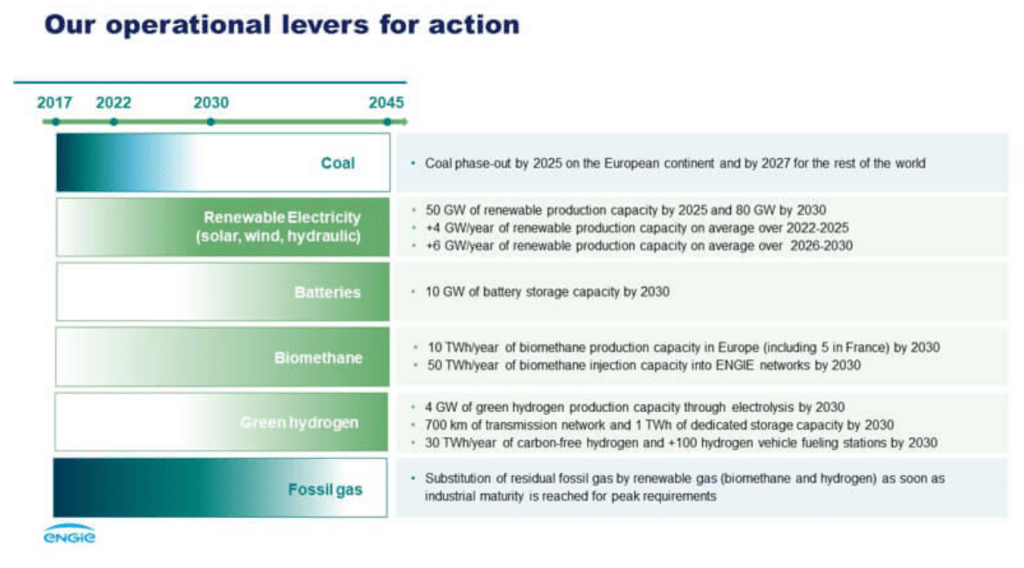
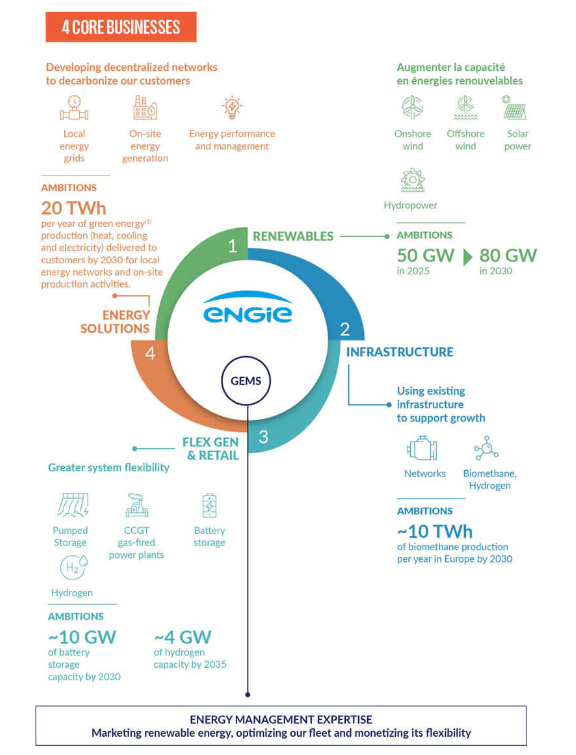
Engieโ€™s collaboration with Catona is a key component of its strategy to decarbonize clientsโ€™ operations and achieve net zero. Here are the other major operational levers of action the company is undertaking.ย 

Engie operational levers for action

What’s Inside Engieโ€™s Ambitious Net Zero Goal?

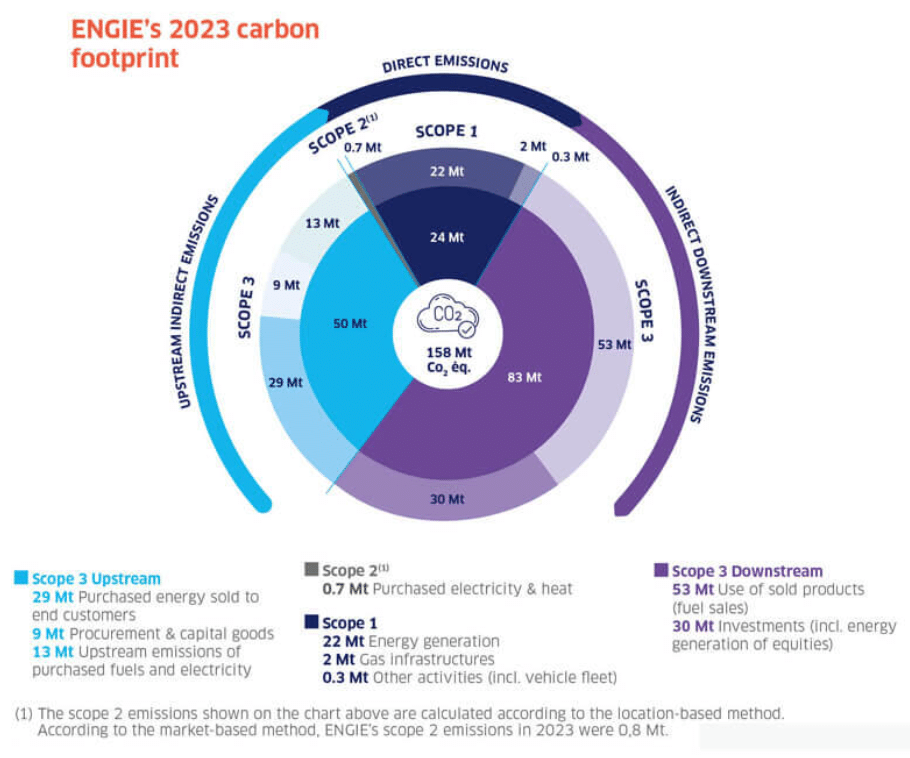
Engie is committed to a bold decarbonization strategy, aiming to achieve net zero across its three scopes. In 2023, the Group’s carbon emissions totaled 158 million tonnes of CO2 equivalent, a significant reduction of 39% from 2017โ€™s 260 million tonnes.

Engie carbon footprint emissions 2023

The French power company’s roadmap sets a goal to cut all emissions by at least 90% between 2017 and 2045, with the remaining 10% to be neutralized. The company’sย 2030 decarbonization trajectory, certified as โ€œwell below 2ยฐCโ€ by the Science-Based Targets initiative (SBTi), involves four main goals to reduce emissions. These include:

  • 59% reduction in energy production emissions (scopes 1 and 3),ย 
  • 34% decrease in emissions from gas sales (scope 3),ย 
  • 66% reduction in carbon intensity from energy production (scope 1) and consumption (scope 2), andย 
  • 56% cut in the carbon intensity of energy sales (scopes 1 and 3).

Engie net zero strategy

To achieve these targets, the power company is adopting several key strategies:

  • Phase Out Coal: The Group plans to completely eliminate coal by 2025 in Europe and by 2027 globally.
  • Expand Renewable Energy: ENGIE aims for renewables (solar, onshore, and offshore wind) to comprise 58% of its electricity generation mix by 2030, boosting production capacity by 50 GW by 2025, reaching 80 GW by 2030. Additionally, 10 GW of battery storage capacity will be installed, mainly in Europe and the US, to enhance the flexibility of the energy mix.
  • Increase Green Gases: The biomethane production capacity is targeted to reach 10 TWh/year in Europe by 2030, with an injection capacity of 50 TWh/year across ENGIEโ€™s networks. Green hydrogen is also a crucial component, with a goal of producing 4 GW by electrolysis by 2030, supported by a 700km transport network and 1 TWh storage capacity.

Notably, the Group aims to manage 30 TWh/year of decarbonized hydrogen and establish over 100 hydrogen refueling stations.

Finally, Engie commits to a program to reduce carbon emissions, targeting 45 million tons of CO2 eq. avoided each year. Part of this goal is investing in 5 million tons of carbon credits, which what the company just did.

Engieโ€™s pre-order from Catona represents a step towards achieving its net zero goal by 2045. This collaboration aims not only to reduce carbon emissions but also to support local ecosystems and communities, ensuring the long-term viability of nature-based carbon removal solutions.

Top 3 Nickel Stories You Can’t Miss

Nickel’s importance in the transition to clean energy has skyrocketed, driving demand and prices to new heights. As a key component in EV batteries, nickel enhances energy density and storage capacity, leading to longer-lasting batteries and more efficient vehicles. While the world is adopting greener technologies, the demand for nickel will grow exponentially. Thus, global mining giants are driving the transition by focusing on sustainable nickel production even with rising nickel prices.

Letโ€™s check out the top 3 nickel news making headlines in June.

1. Indonesian Nickel Giant Eyes 2025 Listing, Enters Talks with Glencore

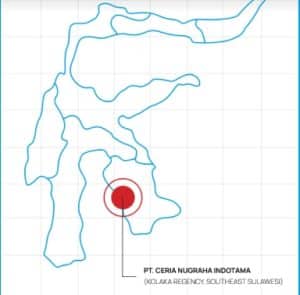
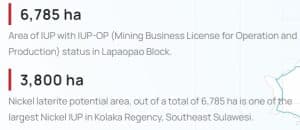
Indonesian nickel company PT Ceria Nugraha Indotama plans to launch an IPO in the first half of 2025 and is currently negotiating Ceriaa stake sale to Glencore PLC ahead of the listing. Media reports say that Ceria aims to construct an $8 billion nickel complex, featuring 11 processing plants, including two high-pressure acid leaching (HPAL) plants, to produce nickel products for electric vehicle batteries.

This collaboration aims to secure significant investments and strategic partnerships that will strengthen the firm’s foothold in the global nickel market.

Image: Ceria’s nickel exploration demography

nickel

nickelsource: PT Ceria

Strategic Partnership with Glencore

Ceria known for its extensive nickel reserves and production capabilities, sees Glencore as a pivotal partner. Glencore’s expertise in mining and commodities trading could provide crucial support in terms of technology, logistics, and global market access. The talks focus on potential joint ventures, long-term supply agreements, and investment opportunities that could enhance the Indonesian company’s operational efficiency and market reach.

Additionally, Glencore is also negotiating to participate in developing Ceriaโ€™s first HPAL plant in Southeast Sulawesi, which aims to produce over 146,000 MTs of mixed hydroxide precipitate.

Preparing for a Major IPO

The planned initial public offering (IPO) in 2025 is set to be one of the most significant listings in the nickel sector. By going public, the Ceria aims to raise substantial capital to expand its mining operations, invest in new technologies, and meet the growing global demand for nickel, a critical component in EV batteries and renewable energy technologies.

Market Dynamics and Growth Prospects

The Indonesian company’s strategic move to partner with Glencore and pursue a public listing aligns with the market’s bullish outlook on nickel. The firm’s robust resource base, coupled with Glencore’s global reach, positions it well to capitalize on these favorable market conditions.

Future Outlook

Ceriaโ€™s proactive steps in securing strategic partnerships and preparing for a public listing demonstrate its commitment to becoming a key player in this evolving market. The outcome of the ongoing talks with Glencore will be crucial in shaping the company’s future and its ability to meet the increasing global demand for nickel.

This anticipated collaboration and the forthcoming IPO not only highlight the company’s growth ambitions but also underscore Indonesia’s significant role in the global nickel supply chain. Investors and industry watchers will be keenly observing the developments as the 2025 listing approaches, marking a crucial moment for the company and the nickel industry at large.

2. Premium Nickel Resources Upsizes Equity Financing to C$27.5 Million for Botswana Projects

Premium Nickel Resources Ltd. (PNRL), the Canada-based mineral exploration and development company is pioneering in discovering and advancing high-quality nickel, copper, cobalt, and platinum group metals (Ni-Cu-Co-PGM) resources.

In a recent development, PNRL increased its non-brokered equity financing to C$27.5 million ($20 million) for its Botswana projects. Initially announced on June 5 at C$15 million ($10.9 million), the upsizing reflects strong interest from existing shareholders. The original plan was to issue approximately 19.2 million units; the revised plan includes about 35.3 million units.

Each unit, priced at C$0.78, comprises one common share and one common share purchase warrant. Holders of these warrants can acquire an additional common share for C$1.10 within 60 months.

Selebi and Selkirk Nickel-Copper Minesย 

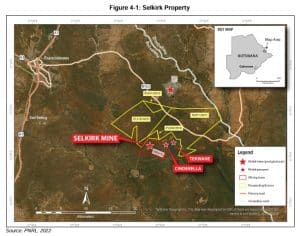
Premium Nickel’s portfolio includes two fully permitted redevelopment projects for nickel, copper, and cobalt mines in Botswana: the Selebi mine, formerly owned by BCL and Tatiโ€™s former Selkirk mine.

The Selebi mine, which opened in 1980, operated for 36 years producing nickel and copper until it was placed on care and maintenance in 2016. It features two shafts: the 1,140-meter Selebi shaft and the 970-meter Selebi North shaft. Selebi North was in production from 1990 to 2016, also yielding nickel and copper.

The Selkirk nickel-copper mine started production in 1989 and operated until 2002. It has a historical resource estimate of 165.3 million tonnes, grading 0.28% nickel and 0.24% copper, based on a cut-off grade of 0.15% nickel.

nickel

3. Electra Battery Materials: North America’s Sole Cobalt and Nickel Refinery Secures C$5 Million from Canadian Govt. to Fuel Battery Materials Recycling Technology

Electra Battery Materials announced that it has secured C$5 million in funding from the Canadian government to develop its proprietary battery materials recycling technology.

Located north of Toronto, Ontario, Electra is building North Americaโ€™s only cobalt sulfate refinery as part of a multiphase initiative to onshore refining capabilities for cathode materials. The company’s primary goal is to secure the capital necessary to recommission and expand its cobalt refinery. Subsequently, it aims to supply recycled battery materials and battery-grade nickel for the electric vehicle market.

Successful Battery Materials Recycling Demonstration

In 2023, Electra successfully operated a demonstration plant for battery materials recycling at its Ontario refinery complex. The plant processed over 40 Ts of end-of-life battery scrap, known as โ€œblack massโ€. It produced high-quality nickel, cobalt, and lithium products. This program is considered the first plant-scale recycling of black mass material in North America. It marks the first domestic production of a nickel-cobalt mixed hydroxide precipitate product.

Electra is now accelerating the next phase of its recycling project. The company aims to demonstrate continuously that the hydrometallurgical black mass process is scalable, profitable, and can be implemented at other locations.

nickelsource: Electra

Government Support and Economic Impact

The Canadian government has committed C$5 million ($3.6 million) to the project through Natural Resources Canadaโ€™s Critical Minerals Research, Development, and Demonstration program. This project will be based at Electraโ€™s fully permitted property in Temiskaming Shores, approximately five hours north of Toronto.

Electra CEO Trent Mell commented,

โ€œTodayโ€™s funding announcement signals the Canadian governmentโ€™s ongoing commitment to creating a strong, sustainable EV supply chain. While recycling critical minerals is part of our strategy, we remain focused on constructing our cobalt sulfate refinery and will update the market with funding developments for restarting construction.โ€

Notably, Jonathan Wilkinson, Canadaโ€™s Minister of Energy and Natural Resources, made an important statement,

โ€œThis funding will enhance mineral and energy security, create jobs, and support economic opportunities, contributing to a cleaner Canada and a prosperous, sustainable economy for everyone.โ€

The announcement was made in Sudbury, alongside a similar funding announcement for the Mining Innovation Rehabilitation and Applied Research Corp, which also received C$5 million.

Oranoโ€™s Unlikely Uranium Partner GoldMining (GLDG) Makes Big Strides at Rea

Disclaimer: Disseminated for GoldMining Inc.

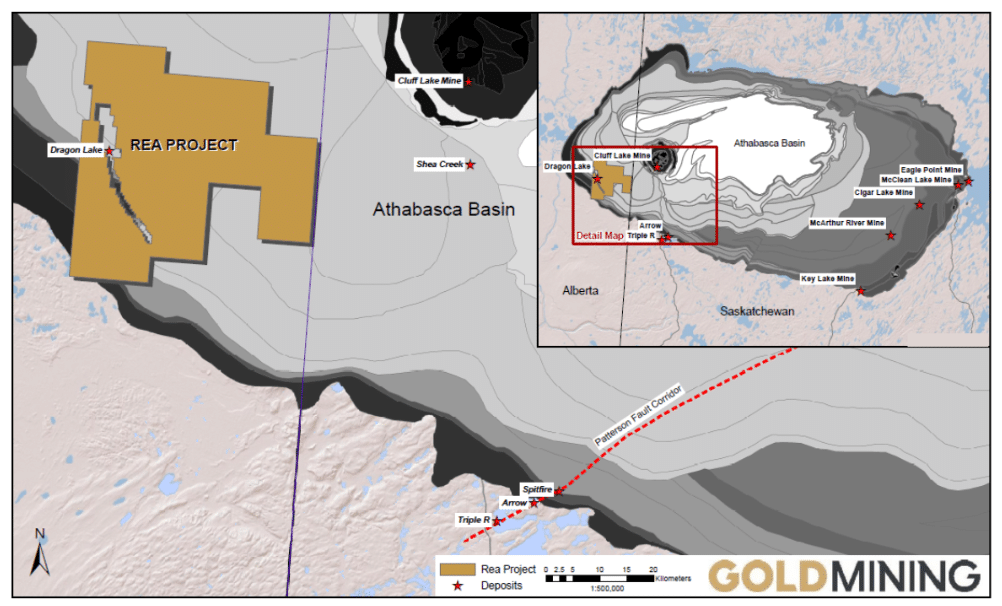
From the latest press release, we discovered that GoldMining Inc. (GLDG: NYSE) has unveiled promising preliminary results from reprocessing, inversion, and modeling of historic geophysical surveys on its Rea uranium project in the Western Athabasca Basin, Alberta, Canada. The Rea Project, with GoldMining holding a 75% stake and Orano Canada holding the remaining 25%, spans approximately 125,328 hectares around Oranoโ€™s high-grade Dragon Lake prospect.

Furthermore, located 60 km southeast of the Rea Project are world-class uranium deposits, including Fission Uranium Corp.’s Triple R deposit and NexGen Energy Inc.’s Arrow deposit. Both these projects are currently in development phase.

Navigating the Athabasca Basin’s Strategic Frontiers

GoldMiningโ€™s CEO Alastair Still has expressed his excitement about the Rea project in the following statement:

โ€œWe are extremely encouraged by the targets we have generated within the Athabasca Basin, an area that contains some of the worldโ€™s largest and highest-grade uranium deposits. This work enhances our activities that have and continue to focus on unlocking value within our portfolio of gold and gold-copper projects located throughout the Americas.”

He further emphasized the impressive, cost-effective work by GoldMining’s technical team, underscoring their strategic approach to significantly enhance shareholder value.

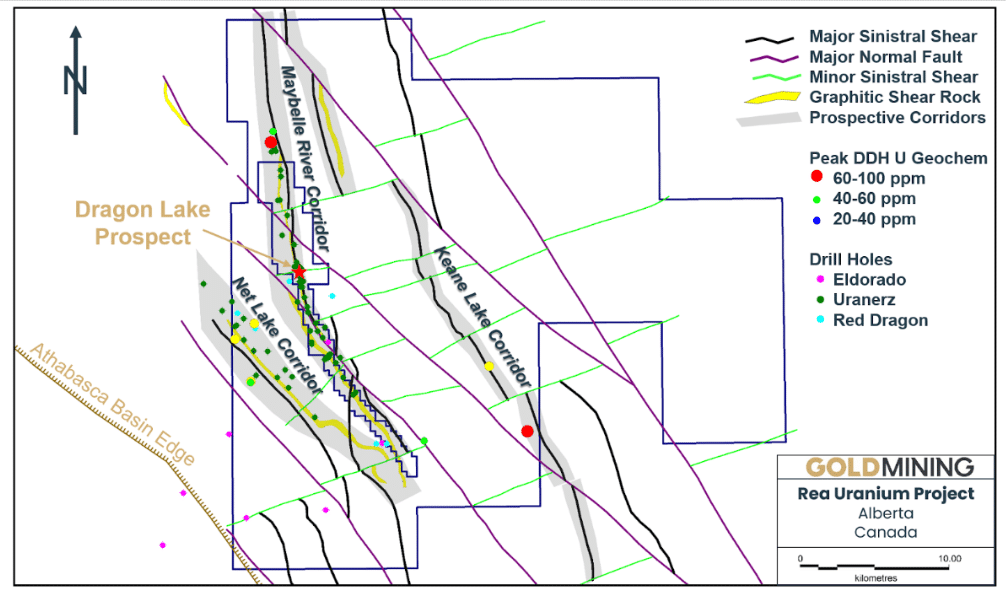
The team also utilized modern reprocessing techniques and inversion modeling of historic geophysical surveys to identify over 70 km of prospective areas for follow-up exploration. These areas, spanning three distinct corridors, exhibit geophysical signatures similar to known Athabasca Basin uranium deposits.

Rea Project: Unlocking Promising Uranium Potential

1. Strategic Location

The Rea Project comprises 16 contiguous exploration permits covering about 125,328 hectares around Orano’s Maybelle River project, featuring the shallow Dragon Lake prospect. Located roughly 175 km north-northwest of Fort McMurray, Alberta, the project is accessible via winter roads and air charter.

Goldmining Rea Project
Figure 1. Rea Project location map

2. Geophysical Insights

Reprocessing, inversion modeling, and reinterpretation of historic surveys have mapped over 70 linear kilometers of basement conductive trends. They are interpreted as graphite-bearing shear zones, indicative of potential unconformity-style uranium mineralization.

3. Three Prospective Corridors

Maybelle River Corridor (11 km): Extending northward from Orano’s Maybelle River Project, where shallow, high-grade uranium mineralization is hosted at the Dragon Lake prospect. Dragon Lake, discovered in 1988, has previously reported historic high-grade drill intersections including 17.7% U3O8 over 5 m in MR-39 and 4.7% U3O8 over 1.7 m in MR-34.

    • Five historic drill holes on the Companyโ€™s Rea Project claims tested a portion of the Maybelle River Corridor, intersecting anomalous uranium values in two holes and anomalous pathfinder elements and mineralsโ€”including clay alteration and dravite, a distinctive accessory mineral linked to many significant Athabasca uranium occurrencesโ€”in three holes.

Net Lake Corridor (20 km): 20 widely spaced drill holes have tested the area, with five intersecting anomalous uranium and associated pathfinder elements such as vanadium, nickel, cobalt, and arsenic, as well as pathfinder minerals like clay alteration and dravite

Keane Lake Corridor (40 km): The area remains largely unexplored, except for two historic drill holes that intersected anomalous uranium values in the south-central area of the Project.

Significant Geological Findings and Future Exploration

Each of the three prospective corridors is interpreted as a potentially significant and deeply rooted basement structure, fundamental to the formation of Athabasca uranium deposits. Drill-proven fault and shear zones have been intersected on both the Maybelle River and Net Lake corridors. Follow-up exploration programs will include additional geophysical surveys to refine targets before drilling.

Exploration Focus: Uranium Deposits in the Athabasca Basin

Geological Context and Deposit Characteristics

In the Athabasca Basin, conductive graphite-bearing shear zones in basement rocks beneath sedimentary layers are intricately associated with unconformity-related uranium deposits. These shear zones, identifiable through electrical geophysical methods, typically underlie extensive hydrothermally altered zones within the overlying sandstone.

Uranium mineralization often occurs near the unconformity within sandstone. Notable deposits, such as Fission’s Triple R and NexGen’s Arrow, specifically occur within graphitic shear zones in the basement rocks.

Geophysical Survey and Interpretation

GoldMining Inc. recently enlisted Fathom Geophysics LLC to process, invert, and model historical airborne and ground geophysical surveys within the Rea Project area. These surveys, conducted between 2005 and 2009, include Versatile Time Domain Electromagnetics (EM), magnetic surveys, Induced Polarization (IP) surveys, and Full Tensor Gradiometry data. These surveys’ resulting structural and lithological interpretation aligns closely with the modeled geophysical data and the regional tectonic framework.

Goldmining Rea project locational map
Figure 2: Interpreted major sinistral shear faults and associated graphitic shear rock outline three northwest-trending corridors: Net Lake, Maybelle River, and Keane Lake. These corridors are offset by younger northeast-striking sinistral shear faults, crucial for localizing uranium mineralization at the Dragon Lake prospects

GoldMining Inc. is a public mineral exploration company focused on gold assets in the Americas. It controls a diversified portfolio of resource-stage gold and gold-copper projects across Canada, the U.S., Brazil, Colombia, and Peru.

The company also holds significant shares in Gold Royalty Corp., U.S. GoldMining Inc., and NevGold Corp. Moving forward, the company remains committed to further exploration and development to unlock substantial value within its diversified portfolio of mineral assets across the Americas.

How Gold Standard’s Innovative Certification is Paving the Way for Climate Action

In the fight against climate change, effective emission reduction policies are more essential than ever. Gold Standard, the leading Geneva-based nonprofit, drives ambitious climate action through solid standards and verified impacts and is rolling out new norms for government emission reduction policies. This innovative initiative, currently in its pilot phase, will provide governments with a robust framework to certify and validate the impact of their emission reduction efforts.

Unveiling Gold Standard’s Groundbreaking Climate Certification Initiative

The press release states that:

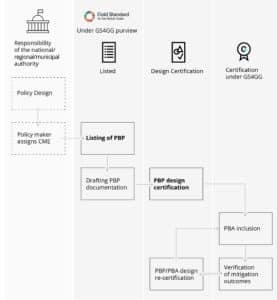
Gold Standardโ€™s Policy Requirements and Procedures allow for the certification and crediting of greenhouse gas reductions or removals achieved as a result of the introduction of new policies or regulations.ย 

This policy represents a significant advancement in the field of carbon finance, creating a pathway for governments to receive recognition and financial support for their climate policies.

Building Trust in Emission Reduction Policies

Adhering to Gold Standard’s rigorous criteria ensures the credibility and effectiveness of emission reduction policies. Governments can demonstrate the real-world impact of their initiatives, enhancing transparency and building trust among stakeholders, including international organizations, investors, and the general public.

How the Certification Process Works

The certification process under Gold Standard’s new initiative involves several key steps:

1. Policy Assessment

Governments submit their emission reduction policies for evaluation. This includes a detailed analysis of the policy’s design, implementation strategy, and expected outcomes.

2. Impact Evaluation

It conducts a thorough review to assess the actual impact of the policy. This involves measuring the reduction in greenhouse gas emissions and other environmental benefits.

3. Verification and Certification

Once the impact is verified, the company issues a certificationย along with carbon credits that can be used to attract funding and investment.

Gold Standardsource: Gold Standard

How Governments Benefit from Gold Standardโ€™s Climate Policy

Governments that participate in this certification process stand to gain numerous benefits:

  • Increased Credibility: Certification by a reputed body like Gold Standard enhances the credibility of their climate policies.
  • Financial Incentives: Certified emission reductions can be translated into carbon credits, opening new avenues for carbon finance.
  • International Recognition: Certification provides international recognition, positioning governments as leaders in climate action.

The Broader Impact on Climate Action

Gold Standard’s new certification norms can potentiallyย drive significant progress in global climate action. This initiative encourages governments to implement more ambitious and effective climate policies by providing a reliable framework for evaluating and certifying emission reductions. Furthermore, the financial incentives associated with certification can help mobilize additional resources for climate action.

By pioneering these new norms, the company is helping governments prove the effectiveness of their emission reduction policies and secure the financial support necessary to scale up their efforts. Thisย initiative marks a significant step forward in the global fight against climate change. We can infer, that it sets a new standard for transparency, accountability, and impact in climate policy.

Xpansiv Sees Surge in VCM Activity, Spot N-GEO Price More Than Double

Xpansiv’s verified carbon market (VCM) experienced notable dynamics last week, with an increase in buyers and competitive price bids. A participant highlighted this “dynamism in the market,” which was evidenced by a significant number of trades matched on the CBL spot exchange.

The data presented in this report is from Xpansiv Data and Analytics, which provides comprehensive spot firm and indicative bids/offers, as well as transaction data.ย 

Xpansiv supports the CBL, the worldโ€™s largest spot environmental commodity exchange, offering a daily and historical bid, offer, and transaction data for carbon credits, compliance, and voluntary renewable energy certificates, and Australian Carbon Credit Units (ACCUs) traded on the CBL platform. The spot data is enriched by forward prices from top market intermediaries, aggregated registry statistics, and ratings from leading providers.

Key Carbon Credit Transactions and Prices

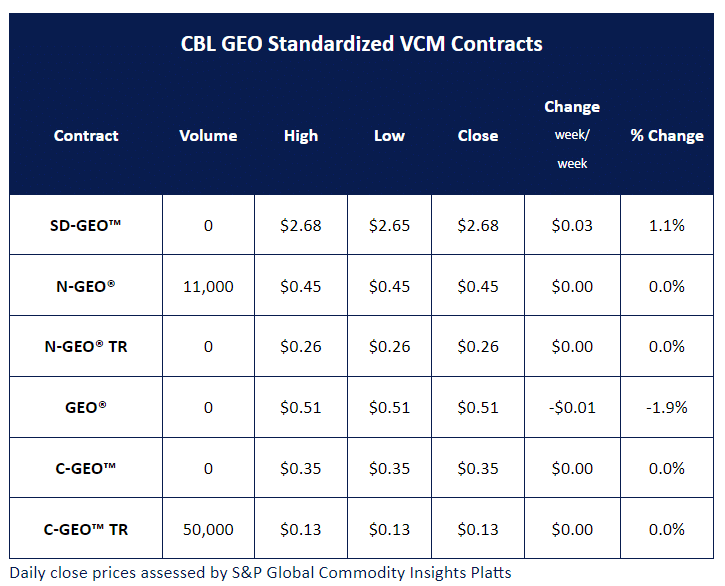
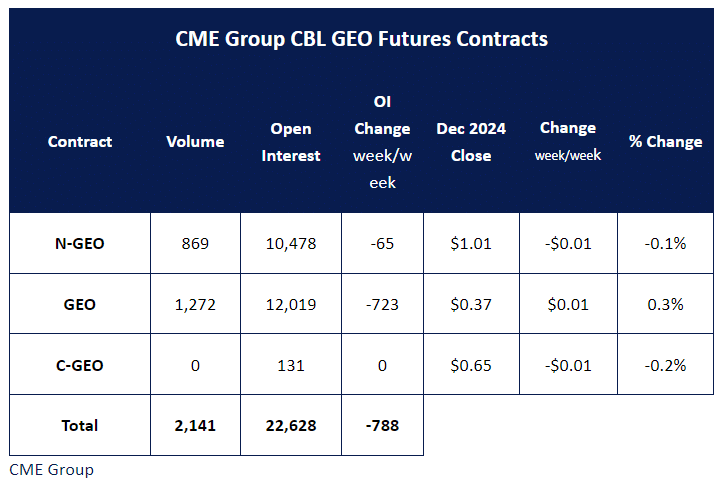
A noteworthy transaction included a 5,000 metric ton spot N-GEO trade at $1.15, aligning with the prices of over 200,000 tons of N-GEO-eligible credit OTC transactions settled via the exchange. This carbon price level was more than double the contract settlement from the previous week.ย 

Meanwhile, CME Groupโ€™s CBL N-GEO December futures settled at $1.01, showing a rare discount to the spot N-GEO. The CBL N-GEO, CBL GEO, and CBL C-GEO futures all closed the week with minor movements of $0.01 on light trading volume.

CBL GEO Standardized VCM contracts

CME Group CBL GEO futures contracts

Several project-specific credits were also matched on the CBL screen. These included:

  • VCS 2250 vintage 2020 Pakistani Delta Blue carbon credits: 3,678 credits matched at $30.00.
  • VCS 674 vintage 2018 Indonesian Rimba Raya credits: 6,363 credits transacted at $7.80.
  • VCS 595 vintage 2020 United States Anew Elk Forestry Project credits: $18.00.
  • VCS 1477 vintage 2019 Indonesian Katingan credits: $5.50.
  • Vintage 2015 Katingan credits: $5.00.
  • VCS 2886 vintage 2022 Malawi cookstoves credits: $3.99.
  • ACR 556 vintage 2019 United States Industrial Process credits: $2.75.
  • VCS 1115 vintage 2018 Brazilian AFOLU credits: $2.50.
  • ACR 455 vintage 2018 United States Industrial Process units: $2.00.
  • VCS 1753 vintage 2020 Indian bundled solar credits: $1.25.

An additional 200,000-plus tons of OTC transactions were settled via CBLโ€™s automated post-trade settlement infrastructure, bringing the exchangeโ€™s total volume to 325,079 tons.

The 20-day moving average price for recent-vintage nature credits stood at $7.03, while technology instruments averaged $1.30.

What’s Happening in North American REC Market?

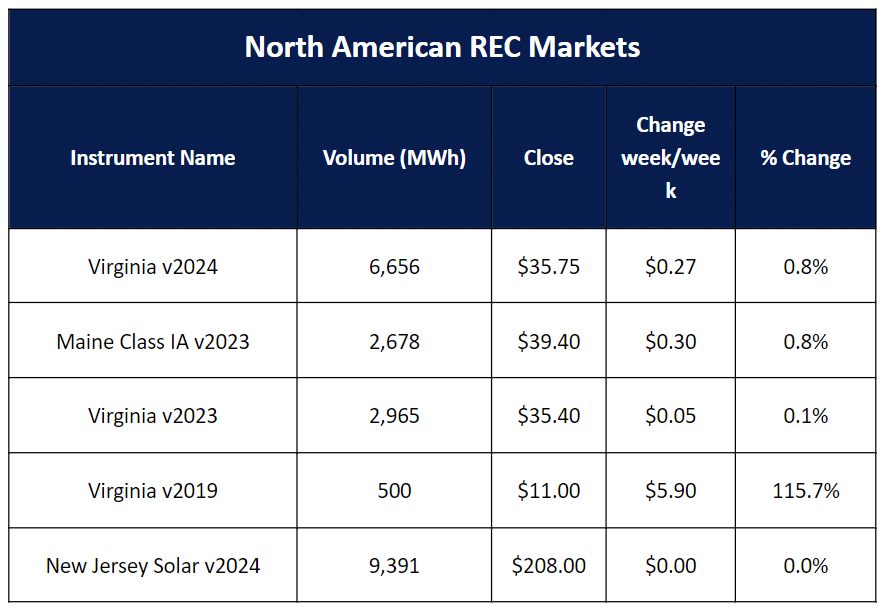
PJM REC market activity saw significant trading, particularly with Virginia REC trades and larger New Jersey solar REC transactions. Pricing remained stable across PJM, with New Jersey solar RECs closing at $208.00 as energy year 2024 concluded. This showed an uptick at the end of the week.ย 

North American REC MarketsVirginia markets experienced slight price increases for 2023 and 2024 vintages, closing at $35.40 and $35.75, respectively.

In NEPOOL markets, Massachusetts solar REC II traded at $243.00, up from $230.00 in late May. Meanwhile, Massachusetts solar REC I and Class I markets were relatively quiet. Maine Class I markets saw a 0.8% increase week-over-week, closing at $39.40.

The VCM demonstrated increased activity and competitive trading last week, indicating growing interest and engagement from market participants. Xpansiv continues to provide essential data and analytics, supporting informed trading decisions in the carbon and renewable energy markets.

Occidental Petroleum and BHE Renewables JV to Revolutionize Lithium Extraction

On June 4 Occidental Petroleum and BHE Renewables announced their joint venture to extract high-purity lithium from Berkshire’s geothermal facility in California. Together, they plan to revolutionize commercial lithium production by installing TerraLithiumโ€™s Direct Lithium Extraction (DLE) technology. This partnership marks a significant step in the advancement of sustainable energy solutions.

We shall deep dive into the JV details and explore the technology in the next paragraphs:

Oxy-BHE Synergy Leading the Future of Sustainable Lithium Extraction

ย The collaboration aims to leverage the strengths of both companies. Occidental will bring its expertise in chemical engineering and large-scale operations while BHE Renewables will contribute its knowledge of renewable energy and environmental sustainability.

Alicia Knapp, President and CEO of BHE Renewables has further assured that,

โ€œThis joint venture with TerraLithium represents a significant advancement in BHE Renewablesโ€™ commitment to pursuing commercial lithium production that is environmentally safe, commercially viable, and leads to good outcomes for the Imperial Valley community.โ€

She further envisions making Imperial Valley a global leader in lithium production.

After successfully demonstrating the technology, BHE Renewables will construct, own, and operate commercial lithium production facilities in California’s Imperial Valley. The joint venture also plans to license the technology and set up commercial lithium production facilities outside the Imperial Valley.

Oxy’s TerraLithium Acquisition Sparks Lithium Revolution

The demand for EVs and consumer electronics propels the lithium market. It is projected to soar from $22.2 billion to $89.9 billion by 2030. Conventional lithium production methods, like evaporation ponds, pose significant environmental concerns. Moreover, production facilities are heavily concentrated in Australia, Chile, and China.

  • From the companyโ€™s climate report, we discovered that Oxy’s acquisition of TerraLithium in 2022, now a wholly owned subsidiary, is a game-changer.

formed through a partnership with All-American Lithium in 2019, TerraLithium boasts patented technologies capable of cost-effectively extracting trace lithium from waste brines, ensuring ultra-high-purity lithium while minimizing environmental impacts. By acquiring the remaining interests, Oxy harnesses its expertise in chemical plant operations and brine management, promoting sustainable lithium production and securing strategic domestic lithium sources. TerraLithium’s demonstration plant in Brawley, California, near the Salton Sea, is slated to commence operations in 2024.

Jeff Alvarez, President and General Manager of TerraLithium being extremely optimistic about the merger, commented,

โ€œCreating a secure, reliable, and domestic supply of high-purity lithium products to help meet growing global lithium demand is essential for the energy transition. The partnership with BHE Renewables will enable the joint venture to accelerate the development of our Direct Lithium Extraction and associated technologies and advance them toward commercial lithium production.โ€

TheTerraLithium Technology Advantage

TerraLithium owns patented Direct Lithium Extraction (DLE) technologies that transform any lithium-containing brine into a superior and responsibly sourced lithium supply. It leverages Oxy’s expertise in subsurface and chemical engineering, coupled with a track record in technology scale-up, pilot project development, and global commercialization.

This lithium extraction process promises higher efficiency and lower environmental impact than traditional methods. It minimizes water usage and reduces carbon emissions.

Notably, BHE operates 10 geothermal power plants in California, processing 50,000 gallons of lithium-rich brine every minute and generating 345 MW of clean energy.

This sustainable technology is set to meet the growing demand for lithium, crucial for EV batteries and renewable energy storage. Thus, aligning with both companies’ commitments to environmental stewardship to a low-carbon future.

Oxyโ€™s Commitment to Net Zero goals

Oxy is committed to being part of the climate change solutions and developed the Net-Zero Strategy in alignment with the Paris Agreement. Being the largest oil and gas producers in the U.S., they have established key operations in the Permian and DJ basins and offshore in the Gulf of Mexico.

Furthermore, their subsidiary, Oxy Low Carbon Ventures, spearheads innovative technologies and business strategies that drive economic growth while curbing emissions. They are committed to global carbon management to propel a transition towards a lower-carbon future.

Additionally, it attracted significant new investments into low-carbon projects like DAC, carbon sequestration hubs, hydrogen, and notably, lithium.

Occidentalsource: Occidental

Warren Buffetโ€™s Bold Lithium Bet

In 2021, Warren Buffett’s Berkshire Hathaway Inc. launched a groundbreaking plan to extract lithium from the superhot geothermal brines beneath California’s Salton Sea. It was believed to be a process that had never been explored before.

Here’s the image of it:

source: BHE

In 2022, they launched a demonstration project with this innovative technology. The strategic JV with Occidental is an extension of this plan. BHE Petroleum notes that if these demo projects succeed then construction of the first commercial plant could start as early as 2024. As already explained before it would essentially provide an environmentally responsible domestic source of lithium. Most significantly, all energy used in this lithium production process would be 100% renewable.

BHE Renewables is making strides in lithium production research in California’s Imperial Valley. Lithium, a crucial mineral for lithium-ion batteries used in cellphones, laptops, and EVs, dominates the brine processed at BHE Renewables’ geothermal facilities.

Will this JV Spark a Lithium Boom in the Future?

The demand for lithium is surging with the rise of EVs and renewable energy storage solutions. Technically the joint venture aims to capture a significant share of this expanding market. Furthermore, TerraLithium’s efficient and eco-friendly extraction process positions it as a competitive player in the industry.

Looking ahead, Occidental and BHE Renewables plan to scale up TerraLithium’s deployment. They are exploring opportunities to implement this technology at various sites. The goal is to enhance the supply chain for lithium, ensuring a stable and sustainable source for future energy needs.

Global oil giants are entering the electrification sector as the US and EU promote higher EV adoption and reduced fossil fuel dependency. Subsequently, Exxon Mobil aims to commence lithium production from sub-surface wells by 2027. Meanwhile, European oil leaders BP and Shell have directed investments toward EV charging stations as integral components of their energy transition strategies.

Last but not least, Richard Jackson, President, of US Onshore Resources and Carbon Management, Operations at Occidental has expressed himself that:

โ€œBy leveraging Occidentalโ€™s expertise in managing and processing brine in our oil and gas and chemicals businesses, combined with BHE Renewablesโ€™ deep knowledge in geothermal operations, we are uniquely positioned to advance a more sustainable form of lithium production. We look forward to working with BHE Renewables to demonstrate how DLE technology can produce a critical mineral that society needs to further net zero goals.โ€

All said and done, the partnership between Occidental and BHE Renewables signifies a major leap forward in lithium extraction technology and a transition to a greener future.