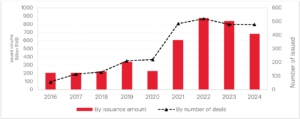
How Standard Chartered’s โ‚ฌ1 Billion Green Bond Is Scaling Climate Finance in Emerging Markets

Standard Chartered has taken a major step in sustainable finance. The UK-based multinational bank issued its first-ever green bond, raising โ‚ฌ1 billion to fund climate-focused projects. These projects will span Asia, Africa, and the Middle East, regions where financing gaps remain severe.

Although this is the bankโ€™s fifth sustainable finance issuance, it is the first issued only as a green bond. This shift signals a stronger focus on climate-driven investments. It also shows that Standard Chartered plans to remain active in the sustainable debt market.

The press release also highlighted that investor interest was strong. The bond was nearly four times oversubscribed, with demand exceeding โ‚ฌ3.9 billion. This response highlights growing confidence in green finance when projects are clear and credible.

Dan Hodge, Group Treasurer,ย Standard Chartered, said:

โ€œInvestor demand was strong for this issuance with orderbooks peaking at over EUR 3.9bn. Investors in our Sustainable Finance offering continue to enjoy the benefit of facing a UK-regulated Bank counterparty, while the impact delivered through our products and in this case, through our first Green Bond, takes place in many of the most dynamic and high-growth developing markets.โ€

Why Sustainable Finance Matters More Than Ever

The timing of this bond is critical. Standard Chartered’s 2024 Sustainable Finance Impact Report noted that only five years are left to achieve the UN Sustainable Development Goals, and global progress remains slow. Out of 139 measurable SDG targets, only 18% are on track to be met by 2030. Meanwhile, 17% show limited progress, and 18% have moved backward since 2015.

At the same time, global investment has weakened. Foreign direct investment fell again in 2024, and early trends suggest continued pressure in 2025. This decline has hit SDG-linked sectors the hardest.

Investment in infrastructure in developing countries dropped sharply. Renewable energy funding also fell. Water, sanitation, and agrifood systems saw similar declines. As these trends continue, the financing gap for emerging economies keeps widening.

Thus, without urgent action, this shortfall could reach USD 6.4 trillion by 2030. Therefore, banks and investors must act faster to redirect capital toward sustainable growth.

How Standard Charteredโ€™s Green Bond Makes a Real Impact

The โ‚ฌ1 billion raised will support projects aligned with Standard Charteredโ€™s Sustainability Bond Framework. This framework has received a Second Party Opinion from Sustainalytics, which adds credibility and transparency.

The bank will use the funds to finance renewable energy, green buildings, and circular economy solutions. In addition, the bond will support climate-resilient infrastructure, energy efficiency upgrades, and sustainable water and natural resource projects.

Importantly, these investments address both sides of the climate challenge. They reduce emissions while also helping communities adapt to climate risks. As a result, the projects aim to deliver long-term environmental and economic benefits.

Significantly, the bank’s green financing is already making a difference. The Impact Report, green assets supported projects that reduced emissions and strengthened climate resilience.

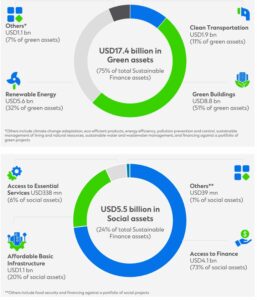
Standard Charteredโ€™s Sustainable Finance Asset Portfolio

sustainable finance standard chartered
Source: Standard Chartered

Flood-Resilient Infrastructure in Ghana

In Ghana, the bank financed the design and supply of 89 rapid-response emergency bridges. These bridges serve flood-prone regions across the country. During extreme weather events, they restore access to roads and essential services.

As a result, rural communities gain faster access to healthcare, education, and jobs. These projects also reduce long-term damage from floods, which are becoming more frequent.

Supporting Indiaโ€™s Shift to Clean Transport

The bank has also played a role in Indiaโ€™s clean mobility transition. Through a USD 15.2 million green loan, Standard Chartered supported GreenCell Mobility in deploying 150 electric buses in Surat, Gujarat.

This project marked a first for India. It became the countryโ€™s first project-finance green loan in the e-mobility sector. Over the ten-year loan period, the buses are expected to avoid nearly 99,500 tonnes of COโ‚‚ equivalent.

Beyond emissions cuts, the buses reduce fuel costs and eliminate pollution from diesel and gas. At the same time, they improve public transport quality. Passengers benefit from quieter, cleaner, and more reliable travel.

Expanding Solar Power in Tรผrkiye

In Tรผrkiye, Standard Chartered supported one of the countryโ€™s largest renewable energy projects. A EUR 249 million green loan, backed by export credit agencies, helped Kalyon Enerji develop Tรผrkiyeโ€™s second-largest solar power plant.

Once completed, the project will generate enough electricity for over 80,000 households each year. It will also account for about 11% of the countryโ€™s total solar generation.

As a result, Tรผrkiye will reduce fossil fuel use while strengthening energy security. This project shows how large-scale green finance can drive national energy transitions.

The Scale of Standard Charteredโ€™s Green Portfolio

Standard Charteredโ€™s sustainable finance activity continues to grow. As of September 2024, the bank reported USD 23.3 billion in sustainable finance assets. Around 78% of these assets are located in Asia, Africa, and the Middle East.

Within this pool, USD 17.4 billion qualifies as green assets. These funds support more than 350 green projects across multiple sectors.

Collectively, from January 2021 to September 2024, the bank mobilized USD 121 billion in sustainable finance. This progress moves it closer to its USD 300 billion target by 2030.
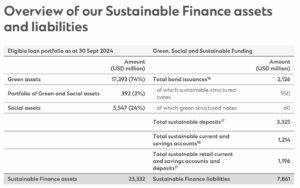
standard chartered green bond
Source: Standard Chartered

Clear and Measurable Climate Benefits

The environmental impact of this financing is measurable. By September 2024, 74% of the bankโ€™s sustainable finance lending supported green projects. These investments helped avoid 4.06 million tonnes of COโ‚‚ emissions during the reporting period. This figure represents a 34% increase from the previous year.

To put this in context,

  • The avoided emissions are equivalent to removing 9.5 million barrels of oil from use.
  • They also match emissions from 3.7 million economy-class round-trip flights between London and Singapore.

Salman Ansari, Global Head, Capital Markets,ย Standard Chartered, said:

โ€œSCPLC navigated what transpired to be the busiest ever day in EUR IG credit markets to price its debut Green offering, having previously issued in Social and Sustainable format. The EUR 1 bn-sized offering landed flat to the Issuerโ€™s secondary curve โ€“ credit to the strength of our credit and the investor interest in our sustainability story.โ€

Standard Charteredโ€™s first green bond sends a clear message. Demand shows that investors are ready to support climate action when projects are transparent and impactful.

As climate risks rise and funding gaps widen, such initiatives will become essential. By focusing on emerging markets and real outcomes, Standard Chartered is positioning green finance as a core part of long-term growth and climate strategy.

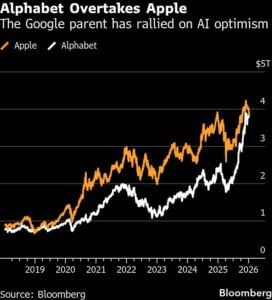
Alphabet (Google) Surpasses Apple in Value: But How About Their Climate Ambitions and Progress?

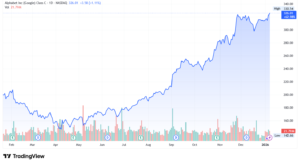
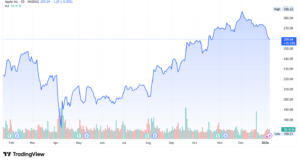
Alphabet, parent company of Google, has overtaken Apple to become the worldโ€™s secondโ€‘most valuable company. Alphabetโ€™s market value reached about $3.9โ€ฏtrillion, while Appleโ€™s was around $3.85โ€ฏtrillion.

This shift highlights Alphabetโ€™s rapid growth in AI and technology and invites a look at how these two tech giants compare in their efforts on sustainability and climate goals.

Alphabet Ascends, Passing Apple in the Tech Race

Alphabet has surpassed Apple in market value, with nearly $3.9โ€ฏtrillion, while Appleโ€™s was about $3.85โ€ฏtrillion. Nvidia remains the most valuable company, at over $4.5โ€ฏtrillion.

This is the first time Alphabet has held the numberโ€‘two spot since 2019. The change shows how fast values can shift among the largest tech companies.

alphabet vs apple market value 2026

Alphabetโ€™s rise reflects strong investor confidence in its broad technology portfolio. The company has made large strides in AI with tools like its Gemini model and investments in custom hardware.

Apple, by contrast, has seen slower adoption of some AI innovations in its devices, which has affected investor sentiment. The companies’ stocks also show contrasting movements, with Google’s jumping and Apple’s tumbling.ย 

Google stock

Apple stock

Market Shake-Up: Why Numbers Matter

Market capitalization is a measure of a company’s value. It equals the total value of all the companyโ€™s shares. Being ranked second in market value means Alphabet is now larger than Apple by this measure. This does not necessarily mean Apple is weaker as a company. It simply reflects how investors value each companyโ€™s growth prospects today.

Market positions can change over time. A companyโ€™s value can rise or fall with earnings, technology breakthroughs, and market trends. In this case, Alphabetโ€™s strong performance in AI and advertising helped it move ahead of Apple in the rankings. But how do the two compare in terms of their sustainability and net-zero efforts?ย 

Green Ambitions: Big Techโ€™s Climate Playbook

Beyond market value, both Alphabet and Apple have made public commitments to sustainability. These commitments focus on reducing carbon emissions, using renewable energy, and supporting environmental efforts.

Both big tech companies say they are working to lower their impact on the planet. However, their approaches and progress differ in some ways. Let’s take a closer look at how each company tackles its carbon footprint.ย 

Appleโ€™s Measurable March to Net-Zero

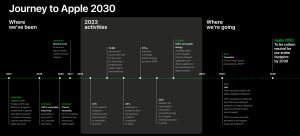
Apple has set detailed, longโ€‘term goals for reducing its environmental impact. The company aims to become carbon neutral across its entire business, manufacturing supply chain, and product life cycle by 2030. This goal means that Apple plans for its products and operations to have netโ€‘zero greenhouse gas emissions by that year.

Apple carbon neutral to 2030 pathway

The tech giant has already made significant progress toward this goal. It has reduced its global greenhouse gas emissions by more than 60% compared with its 2015 baseline. This reduction reflects energy efficiency, cleaner electricity use, and other improvements in how products are made and shipped.

Appleโ€™s 2030 strategy prioritizes reducing emissions by 75% before using carbon removal projects for the remainder. The company’s global supply chain now has 17.8โ€ฏgigawatts of renewable electricity in operation.

The renewable energy procured by Apple suppliers helped avoid about 21.8โ€ฏmillion metric tons of greenhouse gas emissions in 2024. In addition to clean energy, many of Appleโ€™s semiconductor and display suppliers have pledged to reduce potent fluorinated greenhouse gases by at least 90โ€ฏpercent by 2030.

Appleโ€™s Clean Energy Capacity by Year

Apple also uses more recycled and renewable materials in its products. For example, a recent MacBook Air contains over 55% recycled materials, the highest percentage in any Apple device. Suppliers participating in Appleโ€™s Zero Waste program redirected around 600,000โ€ฏmetric tons of waste from landfills in 2024.

In addition, Apple and its suppliers have saved more than 90โ€ฏbillion gallons of fresh water since launching their Supplier Clean Water Program in 2013. In 2024 alone, they saved 14โ€ฏbillion gallons through reuse and conservation efforts.

All of these efforts support Appleโ€™s 2030 carbon neutrality goal, and they include reducing emissions and investing in cleaner materials, water conservation, and waste reduction.

Alphabetโ€™s Broad-Stroke Climate Push

Alphabet has also made public climate commitments. The company has a goal to reach netโ€‘zero emissions across its operations and value chain by 2030. This goal includes supporting 24/7 carbonโ€‘free energy where feasible. Alphabet reports emissions and tracks progress in its annual Environmental Report.

Alphabet has worked to use more renewable energy and improve energy efficiency at its offices and data centers. It has also taken steps to reduce emissions from transportation and offer tools to help customers measure and cut emissions.

Google clean energy emission reductions
Source: Google

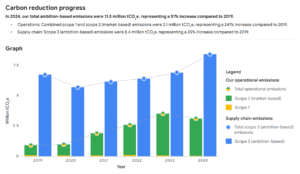
The company reported a 12โ€ฏ% reduction in data center energy emissions in 2024, even though total energy demand has risen due to AI and data center growth. It also procured over 8โ€ฏGW of clean energy in 2024, the most in any year.

Alphabet replenished about 4.5โ€ฏbillion gallons of water and outlined products that helped others reduce an estimated 26โ€ฏmillion metric tons of emissions.

However, Alphabetโ€™s overall emissions have increased in recent years because of rapid AI growth and higher electricity use. Reported ambitionโ€‘based emissions rose 11โ€ฏ% in one year and are about 51โ€ฏ% higher than in 2019, driven in part by the energy needs of AI infrastructure.

Google carbon emissions 2024
Source: Google

READ MORE:

Apple vs Alphabet: Who Leads on Green?

Both Apple and Alphabet are among the worldโ€™s largest technology companies. Both have made public commitments to tackle climate change, use renewable energy, and pursue emission reductions.

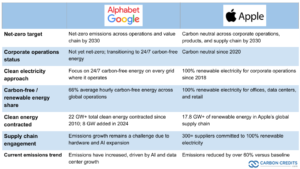
A key difference is how detailed and measurable some goals are. Apple has published numerical progress toward several targets, such as its 60โ€ฏ% emission reduction and 17.8โ€ฏGW of renewable energy in its supply chain. Its 2030 goal is backed by specific steps in product design, materials use, and energy sourcing.

Alphabet, while also committing to netโ€‘zero by 2030, emphasizes broader goals across its operations and value chain. It reports efforts in energy efficiency and green electricity, but has seen rising emissions in recent years, and its public metrics focus more on aspirational goals than on absolute emissions reductions.

alphabet google vs apple

Independent research into the environmental impact of big tech suggests that large technology firms together contribute a measurable share of global greenhouse gas emissions. Their data centers and supply chains use large amounts of energy, making renewable energy and efficiency improvements key to future progress.

Why Green Strategy Shapes Tech Giants: Big Tech, Bigger Responsibility

Large tech companies have significant environmental footprints. Their products are used by billions of people, their data centers run around the clock, and their supply chains stretch across many countries. Because of this, their choices on energy use, materials sourcing, and emissions can influence broader trends in corporate sustainability.

Investors, customers, and regulators are increasingly focused on these issues. Companies with clear and transparent climate strategies may attract investors who value longโ€‘term environmental performance.

Workers and consumers may prefer companies that show real progress toward sustainability. These factors can affect a company’s reputation and market value over time.

Alphabetโ€™s rise past Apple in market value marks a major shift in the tech industry. While it now ranks second in global market capitalization behind Nvidia, both Alphabet and Apple remain leading technology players.

As large tech companies grow in size and influence, their climate and sustainability strategies will continue to shape industry standards and affect investor and consumer expectations. Achieving ambitious environmental targets remains complex, but both Alphabet and Apple have signaled a longโ€‘term commitment to reducing their impact on the planet.

U.S. Court Clears the Air: ร˜rstedโ€™s Offshore Project Gets Green Light

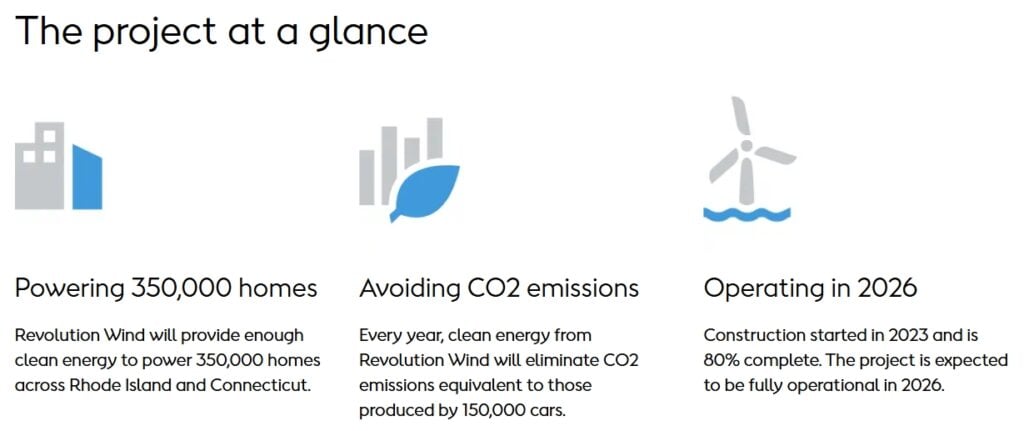
A major win for U.S. offshore wind came on January 13, 2026, when a U.S. District Court overturned a Trump-era block on ร˜rstedโ€™s Revolution Wind project. The ruling allows the Danish energy giant to resume full operations immediately. ร˜rsted shares rose 5โ€“5.5%, reflecting strong investor confidence in the U.S. clean energy sector. The 704 MW project off Rhode Island will provide renewable electricity to around 350,000 homes.

ร˜rstedโ€™s Shares Soar with Legal Winย 

The press release explained that the court acted swiftly after ร˜rsted challenged the Bureau of Ocean Energy Managementโ€™s (BOEM) stop-work order, originally issued in August 2025, over national security concerns. A preliminary injunction in September 2025 had temporarily paused the halt. Todayโ€™s ruling clears all barriers, calling the stop-work order likely unlawful and highlighting the serious harm to the project if work remained suspended.

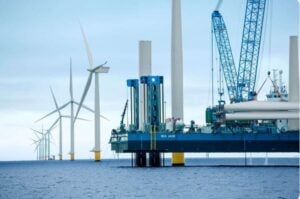
Construction now resumes with a target of full operation by Q2 2026, despite earlier delays caused by soil cleanup at Quonset Point. The decision demonstrates how courts can check executive actions that threaten renewable energy development. BOEMโ€™s 2023 approvals, including the Construction and Operations Plan (COP), had already authorized 65 Siemens Gamesa 11 MW turbines on monopile foundations in federal lease OCS-A 0486.

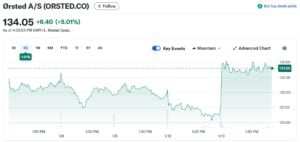
Following the announcement, ร˜rstedโ€™s shares jumped 5.37%, reaching 134.45 DKK in early European trading, up from 127.65 DKK, signaling strong market approval of the project restart.

ร˜rsted stock
Source: Yahoo Finance

READ MORE: Offshore Wind Shock: Trump Administration Hits Pause Citing National Security Risks

Revolution Wind: Key Facts

Revolution Wind sits about 15 nautical miles southeast of Point Judith, Rhode Island, covering 83,798 acres in the Rhode Island/Massachusetts Wind Energy Area. Submarine cables connect the farm to the Davisville substation at Quonset Business Park, supplying 400 MW to Rhode Island through National Grid and 304 MW to Connecticut via Eversource and United Illuminating.

Power purchase agreements (PPAs) lock in electricity rates of 9.8โ€“10 cents per kWh for 20 years, helping stabilize costs and cut emissions. ร˜rsted leads the project alongside Skyborn Renewables, a Global Infrastructure Partners firm, after Eversource exited in 2024.

The total investment exceeds $5 billion, including $100 million each for manufacturing hubs in Connecticut and Rhode Island and $35 million for Quonset logistics. The project supports 1,200 direct jobs and thousands of indirect roles.

Revolution Wind Project

REVOLUTION WIND
Source: Revolution Wind

Economic Impact and Job Creation

The courtโ€™s ruling boosts local economies. ProvPort ramps up turbine production, creating 125 union jobs, while Quonset Pointโ€™s $35 million hub adds crew vessels and the U.S.โ€™s first offshore wind helicopter base. Connecticutโ€™s $310 million State Pier redevelopment supports heavy turbine lifts.

Financially, the project benefits from IRA incentives and RECs, with National Grid expecting $4.6 million over 20 years, while ร˜rstedโ€™s stock rises on renewed market confidence.

Environmental Benefits and Mitigation Measures

Revolution Wind reduces fossil fuel use and helps Rhode Island meet its climate goals under the Act on Climate. The โ€œAligned Gridโ€ turbine layout reduces wake losses and coordinates with nearby projects like South Fork Wind. Monopile foundations disturb less seabed than jacket structures, while cables are buried 4โ€“6 feet deep.

Agencies like NMFS, USACE, and EPA require safeguards, including seasonal pile-driving pauses for North Atlantic right whales, vessel speed limits, and noise-reduction measures. The project sets aside $12.9 million to compensate fisheries, $5.3 million for studies and contingency funds, and consults tribes through BOEMโ€™s ERIF program. Continuous monitoring ensures adaptive protection of marine life.

Implications for U.S. Offshore Wind

The courtโ€™s decision reverses setbacks from 2025, including a Trump executive order halting new offshore leases. Revolution Windโ€™s development reflects 15 years of planningโ€”from 2011 site calls to 2023 approvalsโ€”with the first turbine installed in September 2024. It is the first U.S. offshore wind farm spanning multiple states.

The project boosts the blue economy by establishing ProvPort and State Pier as East Coast offshore wind hubs. Carbon reduction is significant: 704 MW of renewable energy offsets millions of tons of COโ‚‚ each year. ร˜rstedโ€™s expertise positions it for further U.S. expansion.

ร˜rsted
Source: ร˜rsted, Revolution Wind

Looking ahead, the ruling could accelerate permitting, attract private investment, and stabilize policy for the sector. Jobs in clean energy will grow, local supply chains will expand, and emissions will dropโ€”key factors for ESG investors and carbon markets.

However, challenges remain. Visual impacts, FAA aviation markings, and EPA air permits require ongoing attention. Fisheries and tribal groups raise legitimate concerns, underlining the need for balanced, responsible development. With full operation expected in Q2 2026, Revolution Wind demonstrates how courts, regulators, and developers can align for sustainable growth in U.S. offshore wind.

Shell’s Initiative to Cut Methane in Rice Farming in the Philippines and Create Carbon Credits

Shell Eastern Trading (Pte) and Green Carbon, a Japanโ€‘based carbon credit developer, have announced a partnership to reduce methane emissions from rice farming in the Philippines. The initiative uses a water management method and aims to generate verified carbon credits under Japanโ€™s Joint Crediting Mechanism (JCM). The project seeks to cut greenhouse gases while offering new income opportunities for rice farmers and contributing to climate goals.

Rice paddies in the Philippines are a major source of methane, a potent greenhouse gas. Green Carbon and Shell will implement the project under the JCM framework, applying proven techniques across large farming areas. Validated carbon credits may be issued once emission cuts are verified.

Why Rice Fields Heat Up the Planet

Rice paddies release methane when fields stay flooded for long periods. This happens because wet soil creates conditions that allow methaneโ€‘producing bacteria to thrive.

  • Methane traps heat in the atmosphere much more effectively than carbon dioxide; over 100 years, methaneโ€™s warming impact can be about 28โ€“30 times greater than COโ‚‚.

In the Philippines, the agricultural sector emits about 54โ€ฏmillion metric tons of greenhouse gases per year. Rice paddies contribute roughly 13โ€ฏmillion metric tons, which is about 25โ€ฏ% of total agricultural emissions.

From 2013 to 2023, GHG emissions from the Philippinesโ€™ agriculture sector remained high and relatively stable, according to CEIC data. In 2017, the sector recorded its highest emissions in this period at about 60.3 million tonnes of COโ‚‚-eq.

Philippine Agriculture GHG Emissions by Year
Source: CEIC Data

The data show that agriculture has remained a consistent and significant source of GHG emissions in the Philippines over the past decade. This is driven largely by methane and nitrous oxide from farming activities.

The country is a major rice producer in Southeast Asia. And so changes in how farmers manage water in rice fields can reduce methane emissions significantly. Improved practices also align with national climate strategies and help reach goals in greenhouse gas reporting.

A Water-Smart Solution

Green Carbon and Shell are focusing their first largeโ€‘scale project on 50,000 hectares of rice paddies on Mindoro Island. They will introduce Alternate Wetting and Drying (AWD) irrigation. AWD means rice fields are not kept continuously flooded. Instead, fields are alternately flooded and dried at intervals determined by water level monitoring.

The approach has been studied and shown to reduce methane by about 30โ€ฏ% compared with traditional continuous flooding. This technique also uses less water and can help preserve local water resources.

The project follows the JCM methodology for โ€œMethane Emission Reductions by Water Management in Rice Paddy Fields (PH_AM004),โ€ which was officially approved by the JCM Joint Committee on 3โ€ฏFebruaryโ€ฏ2025. This is the first JCM carbon credit methodology in the agricultural sector outside energy and industrial projects.

Under the JCM system, methane reductions achieved through AWD will be measured and verified by third parties. Verified reductions then become carbon credits that can be sold or used to meet climate commitments, including in markets such as Japanโ€™s Green Transformation Emissions Trading Scheme (GXโ€‘ETS).

Turning Methane Into Marketable Credits

The Joint Crediting Mechanism is a bilateral system between Japan and partner countries, including the Philippines, that supports climate action and carbon credit generation. When a project reduces greenhouse gases below a baseline level, it can earn credits. These credits represent quantifiable reductions and can be used by buyers to meet climate goals.

In this rice methane project, carbon credits will reflect actual methane reductions achieved through AWD water management. Verification and monitoring will follow international standards to ensure credits are credible and of high quality.

Once verified, these credits may help bridge demand from companies in Japan and other markets that recognize JCM credits. Some of these companies must reduce emissions or meet emissions trading obligations, such as under Japanโ€™s GXโ€‘ETS. This connection could increase demand for agricultural methane reduction credits.

Farmers Cash In While Cutting Emissions

For Filipino farmers, the project offers potential benefits beyond carbon credits. By adopting AWD, farmers can use water more efficiently and reduce irrigation costs. This practice can help farmers better manage water resources, especially in areas where water scarcity is a concern.

Generating carbon credits may also provide an additional source of income for participating farmers. If methane reductions are verified, farmers or project partners can sell these credits to buyers in carbon markets that value JCMโ€‘registered credits.

Other benefits for farmers and the environment include:

  • Agronomic benefits: Well-managed water systems improve soil health, reduce other greenhouse gas emissions, and keep rice yields stable, offering farmers both economic and environmental gains.

  • Environmental impact: Reducing methane from rice paddies contributes to climate mitigation, providing near-term benefits due to methaneโ€™s high warming potential and short atmospheric lifetime.

  • Scaling potential: Expanding similar projects to provinces like Nueva Vizcaya, Pampanga, and Leyte could cover large areas and generate millions of metric tons of carbon credits over the next decade.

Scaling Green Rice Across the Philippines and Beyond

The ASEAN region, including the Philippines, is increasingly seen as important for methane reduction in agriculture due to its large share of rice production and potential for AWD adoption. Projects like this may pave the way for wider regional implementation of methane reduction techniques under systems such as the JCM.

In the U.S., the same improved rice farming method, AWD, cut methane emissions from flooded fields. It has also produced tens of thousands of verified carbon credits. For example, more than 33,000 credits from a U.S. rice methane project in 2025 that reduced methane by up to 70% and saved 21 billion gallons of water.

Globally, research shows that AWD can reduce methane emissions by roughly 30% to 65% compared with continuous flooding. One study found AWD fields emitted about 7โ€“32 kg CHโ‚„-C/ha, compared with 76โ€“142 kg CHโ‚„-C/ha under traditional flooding. That’s a ~64% reduction.

A Model for Climate-Friendly Agriculture

Carbon markets are growing, and demand for highโ€‘quality credits is rising globally. Projects that generate verifiable carbon credits from agriculture contribute to market diversity and supply.

The voluntary agriculture carbon credit market is set to grow quickly in the next ten years. This includes methane reduction from rice farming and other agricultural practices.

The global market was valued at around US$36.1 million in 2024. Forecasts show strong growth through 2034, with an annual growth rate of about 32%,ย to about US$648 million in 2034. This growth shows increasing interest from corporate buyers looking for diverse, high-quality credits. Asia-Pacific is the largest market for this credit.

voluntary-agriculture-carbon-credit-marketss-2025-2034Methane reduction projects tied to rice farming are quickly growing. Some forecasts show these initiatives could grow by nearly 38% through the early 2030s. This highlights their rising importance in the agricultural carbon credit market.

Under the JCM, agricultural methane credits are among the first in this sector. This gives early project developers an opportunity to shape market practices and standards. Buyers such as corporations and investors looking to meet emission goals may consider these credits valuable if they meet strict verification criteria. As demand grows, more carbon credit generation from rice methane and other agricultural sources may follow.

If successful, the Green Carbon and Shell project could become a model for riceโ€‘based methane reduction across Southeast Asia and beyond, connecting sustainable farming, local benefits, and global climate action.ย 

Microsoftโ€“MISO AI Partnership Sets Path for Smarter, Cleaner US Electricity Grid

Microsoftโ€™s (MSFT) strategic partnership with the Midcontinent Independent System Operator (MISO) marked a major shift in how the US power grid adapts to rising electricity demand. Announced on January 6, 2026, the collaboration brought artificial intelligence and cloud computing directly into grid operations.

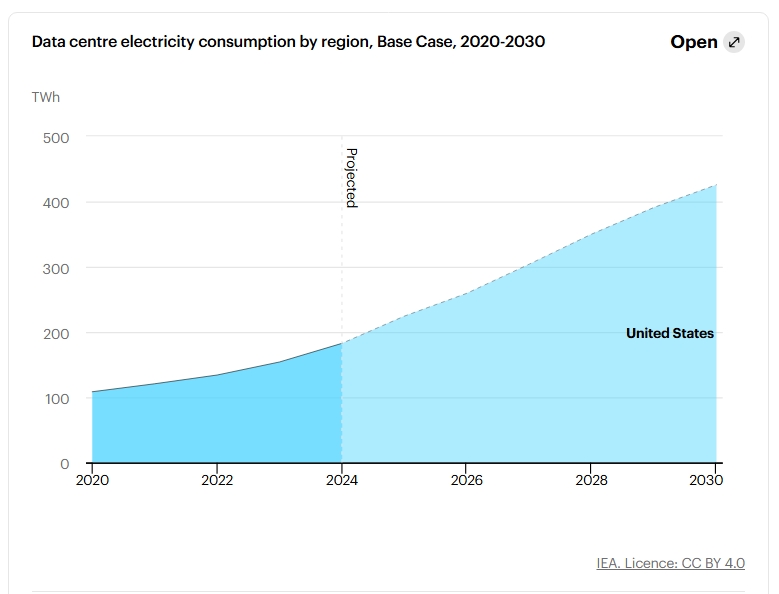
As per IEA, US data centers consumed about 183 terawatt-hours (TWh) of electricity in 2024. That represented more than 4% of total US power use. AI workloads continue to push that number higher. Thus, the goal was clear: prepare the grid for explosive growth from data centers, electrification, and clean energyโ€”without sacrificing reliability or climate goals.

US data center electricity
Source: IEA

MISOโ€™s Grid Faces a New Era of Relentless Demand Growth

MISO operates one of the largest power systems in North America. It serves about 42 million people across 15 US states and the Canadian province of Manitoba. At peak times, the grid handles around 127 gigawatts of electricity.

That scale now faces unprecedented strain. AI-driven data centers, electric vehicles, heat pumps, and industrial electrification are pushing electricity demand higher. MISOโ€™s interconnection queue already holds more than 350 gigawatts of proposed new generationโ€”most of it wind, solar, and storage. Legacy planning tools struggle to keep pace with evolving needs.

Extreme weather adds another layer of risk. Heatwaves, cold snaps, and storms test grid reliability just as renewable output fluctuates. At the same time, delays in transmission approvals slow the connection of clean energy projects.

MISO has made progress. It approved roughly $22 billion in long-term transmission investments, designed to support up to 120 gigawatts of new resources. Wind and solar already hit record levels, including a new solar peak in early 2025. Still, aging infrastructure and fragmented data systems limit how fast the grid can evolve.

This is where Microsoft comes into play.

How Microsoftโ€™s AI and Cloud Tools Change Grid Operations

The partnership centers on building a unified data platform using Microsoft Azure and Foundry AI. Instead of siloed systems, MISO gains a single, secure environment to analyze grid conditions in near real time. And the impact shows up across operations.

Better Forecasting and Planning

AI models improve long-term transmission planning. They simulate how wind, solar, storage, and demand growth interact across seasons and weather scenarios. This helps MISO plan lines that reduce congestion, limit curtailment, and avoid overbuilding fossil backup power.

Faster, Smarter Reliability Decisions

Machine learning tools detect abnormal grid conditions earlier. During extreme weather, AI helps operators diagnose problems and respond faster. MISO already tested similar tools during winter events, where they improved market efficiency and system coordination.

Easier Collaboration and Innovation

Microsoft tools like Power BI and Microsoft 365 Copilot allow teams to visualize data and share insights quickly. Analysts spend less time cleaning data and more time solving problems. This speeds up innovation and supports faster decision-making as conditions change.

Together, these upgrades turn the grid from a reactive system into a predictive one.

Data Centers Are Reshaping US Electricity Demand

EIA’s data shows demand rose to around 200 TWh in 2025 and can surpass 250 TWh in 2026. By 2030, consumption could double or even triple, reaching 426 TWh or more. Hyperscalers like Microsoft drive much of this growth.

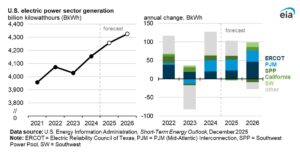
This surge reversed a long-standing trend. From 2010 to 2020, US electricity generation declined slightly each year. Since 2021, growth returned. Generation rose about 2% annually and is expected to increase by 2.4% in 2025 and 1.7% in 2026.

us electricity demand
Source: EIA

Regional impacts vary. Texas (ERCOT) and the Mid-Atlantic/Ohio Valley (PJM) see the fastest growth. PJM demand is expected to rise more than 3% annually through 2026. ERCOT could see double-digit growth as large loads come online.

Energy mixes are shifting, too. Natural gas remains dominant, but solar grows fastest. In ERCOT, solar generation may jump more than 90% between 2024 and 2026. In PJM, coal and solar both expand as demand surges.

MISO sits between these regions, making grid efficiency critical to prevent higher emissions.

Grid Intelligence: A Tool to Control US Emissions

Smarter grids directly support decarbonization. When operators forecast conditions more accurately, they rely less on fossil fuel peaker plants. Better transmission planning reduces renewable curtailment. Faster responses during stress events avoid inefficient emergency generation.

EIA expects total CO2 emissions in 2025 and 2026 to be 1.9% and 0.9% higher, increases in 2026 are associated with relatively higher natural gas-fired electricity generation, associated with rising electricity demand for data centers and cryptocurrency mining.

us emissions
Source: EIA

Thus, these improvements can potentially lower system-wide emissionsโ€”even as electricity demand rises. Even though challenges remain, the benefits outweigh the risks. Data privacy, cybersecurity, and regulatory alignment need careful management. Grid operators must also ensure AI tools remain transparent and auditable.

In conclusion, the Microsoftโ€“MISO alliance shows how technology can unlock the next phase of the energy transition. Likewise, Google and other hyperscalers have also launched similar initiatives with PJM.

In short, AI will not just support the gridโ€”it will become a core tool for decarbonization across the United States.

What Happens Next as Trump Withdraws U.S. From Major Global Climate Agreements?

The United States announced it would leave several major international climate agreements and scientific organizations. This includes pulling out of the United Nations Framework Convention on Climate Change (UNFCCC), reducing involvement with the Intergovernmental Panel on Climate Change (IPCC), and ending participation in dozens of other international groups. This is one of the biggest changes in U.S. climate diplomacy in recent years.

The decision has drawn strong reactions from governments, scientists, and environmental groups worldwide. Leaders and experts are discussing how this decision will impact global climate cooperation, scientific research, and long-term climate action.

What Was Announced: The Scope of the U.S. Withdrawal

On January 7, 2026, the Trump administration released a memo. It ordered the country to pull out of 66 international organizations. This includes key climate bodies like the UNFCCC and the IPCC.

The UNFCCC is a treaty adopted in 1992 to help countries work together on climate change. Almost every country in the world is part of it. The treaty supports frameworks such as the Paris Agreement.

The IPCC is not a treaty but a UN scientific group that reviews climate research. Countries participate by sending scientists, attending meetings, and helping fund their work. U.S. withdrawal means Washington will no longer take a full part in these activities. The memo reads:

“I (Pres. Trump) have considered the Secretary of Stateโ€™s report and, after deliberating with my Cabinet, have determined that it is contrary to the interests of the United States to remain a member of, participate in, or otherwise provide support to the organizations listed in section 2 of this memorandum.”

The White House said these organizations โ€œno longer serve American interests.โ€ Officials said the move is part of a plan to focus on national priorities over international agreements.ย 

Treaties, Science, and Authority: Legal and Procedural Questions

The UNFCCC became effective in 1994 after ratification by countries, including the United States. Under its rules, a country can leave, but the process can take time and may face legal challenges.

The U.S. has already left the Paris Agreement twice in the past decade. Under Executive Order 14162, President Trumpโ€™s administration started the withdrawal from the Paris Agreement, effective in January 2026.

Because the Paris Agreement is part of the UNFCCC, leaving the UNFCCC also ends U.S. obligations under the Paris Agreement framework.

Some legal experts note that the U.S. Constitution sets rules for international agreements. Critics of the withdrawal say the president may not have full authority to leave a treaty without Congress. This could lead to court cases.

The Roles of the UNFCCC and IPCC

The UNFCCC helps countries work together to reduce emissions and adapt to climate change. Countries report greenhouse gas emissions each year. They also meet yearly at the Conference of the Parties (COP) to set climate goals.

The Paris Agreement sets targets to limit global warming. It aims to keep the temperature rise โ€œwell below 2ยฐCโ€ above pre-industrial levels and to try to limit it to 1.5ยฐC.

The IPCC produces reports that summarize global climate research. Governments and international organizations use these reports to make policy decisions.

Without formal participation, the U.S. government wonโ€™t negotiate climate rules as a full member. It also wonโ€™t help shape scientific reports.

Global Response and Reactions

Many governments and climate leaders reacted quickly.

The UN climate chief called the decision a โ€œcolossal own goalโ€ that could hurt U.S. economic opportunities and climate preparedness. Further, Jake Schmidt of the Natural Resources Defense Council said in an interview:

“It’s critical the United States is a participant in and is actively trying to reduce climate change — it’s the world’s largest economy, the world’s biggest historical emitter.”

European Union officials said the move is “regrettable” and emphasized that they will continue international climate work, per the European Commissioner for Climate Action Wopke Hoekstra. Meanwhile, Vice-President Teresa Ribera stated:

“The White House does not care about the environment, health, or human suffering.”

Environmental and science groups warned that leaving climate institutions could hurt global cooperation. It may also cut funding for poorer countries.

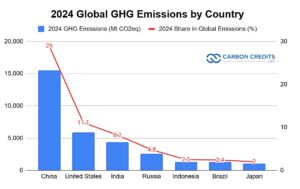
Critics also note that the U.S. is one of the worldโ€™s largest greenhouse gas emitters. It is, in fact, the second-biggest emitter in 2024. It produced over 11% of global CO2 emissions, as shown below.

2024 global GHG emissions by country EDGAR
Data source: EDGAR (Emissions Database for Global Atmospheric Research)

What This Means for Global Climate Action

The U.S. has played an important role in global climate work. As a major economy and emitter, it has helped set global goals, reporting rules, and funding for developing countries.

With the U.S. withdrawing, climate negotiations will continue but without American influence in formal treaty processes. Other countries, like the EU and China, are expected to take leading roles.

For science, the IPCC will continue producing reports, but U.S. government scientists may be less involved. Private researchers and universities can still take part independently.

Money and Markets: Climate Finance at a Crossroads

International climate finance helps countries reduce emissions and adapt to climate change. Funds such as the Green Climate Fund and the Global Environment Facility receive some money from rich countries, like the U.S.

Leaving these bodies could make funding less predictable, at least temporarily. This may affect projects in developing countries, such as clean energy development and climate resilience programs.

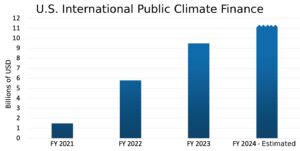
In 2024, the United States gave about $11 billion each year in international public climate finance under the former Biden administration. This funding helped developing countries reduce emissions and adapt to climate impacts. It made up around 8% of global climate finance that year. This figure shows a big jump from past years. It grew from about $1.5 billion in 2021 to over $9.5 billion in 2023. By 2024, it reached $11 billion.

US climate finance
Source: U.S. Department of State

However, recent policy changes canceled the U.S. International Climate Finance Plan. The U.S. contributed to both bilateral and multilateral programs. It also pledged $3 billion to the Green Climate Fund. However, future payments may be uncertain due to recent policy changes.

Market analysts also note that climate policies, standards, and carbon markets guide clean energy investments. Without the U.S., these frameworks might change. This could impact global energy markets and corporate strategies.

What Happens Next?

Withdrawal from treaties like the UNFCCC takes time and may face legal challenges in U.S. courts or Congress. Some experts expect court cases over whether the president can leave treaties ratified by the Senate alone.

Meanwhile, countries will continue climate talks and prepare for future COP meetings. U.S. states, cities, and private businesses may also increase climate cooperation outside the treaty system. However, the U.S. government’s role in guiding global science and policy through the IPCC and UNFCCC will be smaller during the withdrawal.

Trump’s decision to leave the UNFCCC, reduce engagement with the IPCC, and exit other international bodies is a major change in global climate policy.ย Even though the U.S. remains a major economy and emitter, its role in shaping global climate agreements and scientific reports has been greatly reduced.

The full effects of these moves will unfold over the coming years as climate negotiations continue and countries adjust to a new international landscape.

Is China Setting a New Global Standard for Corporate Climate Reporting?

China has taken a major step toward improving climate transparency for businesses. The Chinese government released a new national corporate climate reporting standard titled Corporate Sustainable Disclosure Standard No. 1 โ€“ Climate (Trial). The standard was issued by the Ministry of Finance along with the central bank and several other regulators. It aims to help companies disclose climate-related risks, opportunities, and impacts in a clear and consistent way.

This new standard represents one of the most important changes in Chinaโ€™s environmental, social, and governance (ESG) reporting system. It shifts corporate climate disclosure from informal, voluntary practices to a clear framework. This allows for easier comparison between companies and countries.

Inside China’s New Climate (Trial) Reporting Standard

The Climate (Trial) Standard gives rules for Chinese companies on reporting climate-related data. It is called a โ€œtrialโ€ standard because it is being introduced in phases before it becomes fully mandatory. It initially applies to more than 5,000 listed companies. Full mandatory compliance is expected by 2028, according to the Ministry of Finance guidance.

The standard follows the International Financial Reporting Standards (IFRS) S2. This framework is the global guide for climate disclosure, created by the International Sustainability Standards Board (ISSB). By doing this, China is aligning its rules with global reporting practices.

Under the standard, companies must provide information on:

  • Governance: How the companyโ€™s leadership oversees climate risks and strategies.
  • Strategy: How climate change affects its business plans.
  • Risk and Opportunity Management: How the company identifies and manages climate risks and opportunities.
  • Metrics and Targets: What measurements and goals the company uses to track climate performance.

Beyond the IFRS S2 includes four pillars, it also requires Scopes 1-3 greenhouse gas emissions, internal carbon pricing, and climate-related capital expenditures. These rules go beyond the global standard and show China’s unique approach.

The reporting framework organizes climate information. This makes the data clearer and easier for investors, lenders, and the public to compare.

Why Beijing Is Tightening Climate Transparency

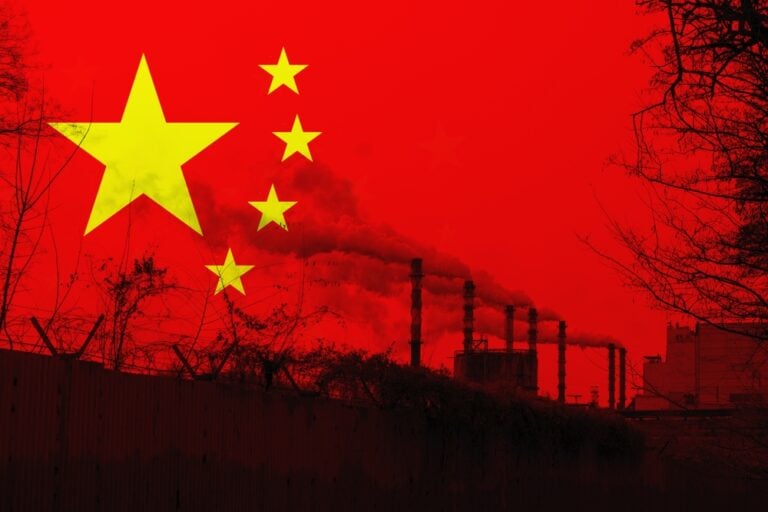
China is the worldโ€™s largest greenhouse gas emitter. It has pledged to reach peak carbon emissionsย and to achieve carbon neutrality by 2060. In effect, the government aims to help companies better measure and report their environmental impact. This will support its climate goals.

China carbon emissions

Corporate climate disclosures help investors and regulators understand risks linked to climate change. They also guide capital toward cleaner and low-carbon investments. A clear reporting standard can reduce greenwashing, where companies exaggerate or misstate their environmental actions.

In recent years, many Chinese firms have reported climate data on a voluntary basis. However, these disclosures have varied widely in detail and quality.

Authorities plan a phased approach to implementation. At first, the standard will apply mainly to large listed companies and key sectors. Later, it may become mandatory for all major enterprises.

Key Features of the Standard

Chinaโ€™s climate reporting standard contains several key features that align with global best practices.

  • It follows the four pillars used in international climate reporting: governance, strategy, risk management, and metrics.
  • It encourages disclosures on climate risks and opportunities linked to business strategy.
  • It supports decision-useful information for investors, lenders, and regulators.
  • It is structured to eventually provide comparable climate data across firms.

The standard is more detailed than some earlier ESG guidelines. In some cases, it goes beyond the level of detail required by international frameworks. This reflects Chinaโ€™s intent to tailor global standards to local conditions.

Industry-specific guidance will be for sectors such as steel, cement, power, fossil fuels, and automobiles. This will help companies in high-emission industries report more precise climate data.

How It Fits With Other Chinese ESG Rules

China has been building a broader ESG reporting system since 2024. In late 2024, the Basic Standards for Corporate Sustainability Disclosure came out. They provide guidance for ESG reporting. The new climate standard builds on that foundation.

In addition, Chinaโ€™s main stock exchanges in Shanghai, Shenzhen, and Beijing require listed companies to publish sustainability reports with climate information. Many firms are now preparing for the first real reporting cycle under these exchange rules in 2026.

Together, national standards and exchange requirements move China toward a more uniform reporting regime. Over time, climate disclosure could shift from voluntary to mandatory for a broader range of companies.

The framework also boosts China’s rapid growth in green finance. Industry projections suggest sustainable bond issuance to reach $1.2 trillion annually by 2025.

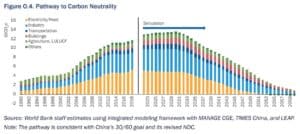
The framework also helps China meet its dual-carbon goals: peaking emissions before 2030 and reaching neutrality by 2060.

China pathway to net zero

What Companies and Investors Need to Prepare For

Chinese companies must strengthen their internal systems to collect climate data when they adopt the climate reporting standard. Firms will need to track emissions, set targets, and disclose climate strategies clearly.

Many companies have already begun reporting climate information, but the quality varies. In 2024, research revealed that most firms reported Scope 1 and Scope 2 emissions. However, only a few shared data on Scope 3 emissions tied to their value chains. This signals a need for stronger and more complete reporting.

  • Specifically, a 2024 survey of top Chinese firms found that 84% reported Scope 1 and 2 emissions, but only 22% provided Scope 3 data tied to their value chains.

The new standard aims to raise the overall level of disclosure and build trust in climate data.

Investors, both domestic and foreign, are following these changes closely. Reliable climate data helps investors assess financial risks. This includes risks from policy changes, climate hazards, and market shifts. Regulators and investors see improved transparency as foundational to sustainable finance.

Stronger reporting can open up more green financing opportunities over time. This includes options like green bonds and sustainability-linked loans. As stakeholders see better data quality, their confidence will grow.

China-green-bonds 2024
Source: The Green Finance & Development Center

What Comes Next for China’s Corporate Reporting?

The release of this standard signals Chinaโ€™s intention to modernize its corporate reporting landscape. Over time, standards could expand beyond the trial phase and become a required part of corporate disclosure. Authorities are expected to issue implementation guidance and set timelines for mandatory compliance.

As China aligns its disclosure framework with global norms, its reporting standards could impact climate reporting in other emerging markets. This could help integrate Chinese companies more fully into global sustainable finance systems.

The standard is voluntary for now, but its phased rollout shows a move toward clearer and enforceable climate reporting. This change shows Chinaโ€™s aim to support green development. It also helps markets grasp climate risks and opportunities better. Over time, businesses are likely to strengthen their climate data systems, and investors may benefit from clearer and more reliable information.

Oklo Stock Rises as DOE Approves Radioisotope Pilot Using Recycled Nuclear Fuel

Advanced nuclear energy is moving from concept to execution in the United States. Oklo Inc. (NYSE: OKLO), a next-generation nuclear technology company, has reached a major milestone after signing an Other Transaction Agreement (OTA) with the U.S. Department of Energy (DOE). The agreement supports the design, construction, and operation of a radioisotope pilot plant under the DOEโ€™s Reactor Pilot Program (RPP).

This step marks Okloโ€™s transition from planning to active deployment under formal DOE authorization. It also signals growing federal confidence in private-sector nuclear innovation, especially as energy demand rises alongside AI-driven infrastructure growth.

DOE Agreement Pushes Oklo into Active Execution Phase

The OTA allows Oklo to move forward with its Radioisotope Pilot Facility, a project designed to demonstrate domestic production of critical medical and research isotopes. Unlike traditional federal contracts, OTAs provide flexibility, speed, and fewer administrative constraints. This framework is increasingly favored for advanced reactor development.

With the agreement now in place, Okloโ€™s subsidiary Atomic Alchemy Inc. will focus its near-term efforts entirely on building and operating the pilot facility. As part of this โ€œlearn first, then scaleโ€ approach, the company has withdrawn its earlier Nuclear Regulatory Commission (NRC) permit application for the Meitner-1 commercial facility. Instead, Oklo plans to use insights from the pilot plant to support future commercial-scale deployments.

Jacob DeWitte, co-founder and CEO of Oklo, said:

โ€œThis OTA establishes a framework for execution and risk reduction. By building and operating a pilot reactor, we generate the data and experience to streamline future commercial deployments, improve regulatory efficiency, and deliver long-term valueโ€ย 

Why Domestic Radioisotope Production Matters

Radioisotopes play a critical role across healthcare, research, and national security. They are used to diagnose and treat cancer, support medical imaging, power scientific research, and enable space and defense applications. Yet many of these isotopes are still produced overseas or at aging facilities.

Oklo aims to change that. By establishing a pilot plant in the U.S., Atomic Alchemy is laying the foundation for reliable, domestic isotope supply chains. This shift could reduce dependence on foreign sources while improving long-term availability for hospitals and research institutions.

Moreover, Okloโ€™s technology allows the recycling of used nuclear fuel to extract valuable isotopes. Some materials, such as Strontium-90, can be used directly in applications like space power systems without additional processing. This approach improves efficiency while reducing waste, offering both economic and strategic benefits.

Oklo Stock Gains Strong Investor Confidence

Investors responded quickly to Okloโ€™s DOE milestone. As of January 9, 2026, OKLO shares closed at $105.31, rising nearly 8% in a single session. It traded between $104.03 and $115.72, with after-hours activity pushing prices even higher.

Trading volume surged to 33.8 million shares, more than double the average, signaling heightened market interest. Okloโ€™s market capitalization now stands at roughly $16.45 billion.

Zooming out, the performance is even more striking. The stock is up 30% year-to-date in 2026 and more than 260% over the past year. Strategic partnerships, including power supply agreements linked to major technology companies, have helped position Oklo as a leading nuclear play in a rapidly evolving energy market.

One major development was its recent agreement with Meta (Nasdaq: META). Here, Oklo’s Aurora Powerhouse will support a 1.2 GW nuclear power campus in Ohio for Meta’s data centers.

oklo stock
Source: Stock Analysis

More Developments: Terrestrial Energy Joins the DOE Pilot Program

This week, Terrestrial Energy, a Generation IV small modular reactor (SMR) developer, also signed an OTA with the DOE for Project Tetra.

Project Tetra will support the development of Terrestrial Energyโ€™s Integral Molten Salt Reactor (IMSR), a design intended to deliver clean, flexible power to industrial users, data centers, and electric grids. The IMSRโ€™s molten salt technology allows for high-temperature operation, enabling efficient electricity generation as well as direct heat supply for industrial processes.

Notably, the IMSR relies on standard low-enriched uranium (LEU), avoiding the supply constraints associated with HALEU fuel. This design choice could accelerate commercialization at a time when fuel availability has become a key bottleneck for advanced nuclear projects.

As of January 10โ€“11, 2026, the Terrestrial Energy stock (IMSR) hovered between $9.37 and $9.80, posting recent gains amid renewed enthusiasm for nuclear technologies.

Trading volumes exceeded averages, and the companyโ€™s market cap reached approximately $768 million. While the stock remains volatileโ€”common for pre-commercial SMR developersโ€”investor interest reflects broader optimism around molten salt reactors and advanced nuclear designs.

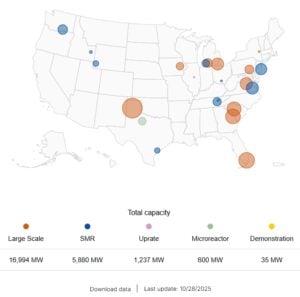
nuclear US
Source: Centre for Strategic and International Studies

OTAs Create a Faster Path From Pilot to Commercial Scale

Both Oklo and Terrestrial Energy are operating under the DOEโ€™s Advanced Reactor Pilot Program, which allows privately built reactors to operate outside national laboratories. This program can bridge the gap between early system testing and full commercial licensing.

By using OTAs, the DOE enables companies to test reactors, gather operational data, and refine designs without the delays of traditional procurement frameworks. As a result, advanced nuclear technologies can reach the market more quickly.

In conclusion, recent U.S. executive actions aim to expand nuclear capacity from 100 gigawatts to 400 gigawatts by 2050. The plan includes upgrading existing reactors, restarting idle plants, and launching new large-scale reactor projects by 2030.

Duke Energy Florida Launches First 100% U.S. Green Hydrogen Power System

Duke Energy Florida has launched a new clean energy system that is the first of its kind in the United States. The system can produce, store, and burn 100% green hydrogen fuel at a commercial power plant. The project is called the DeBary Hydrogen Production Storage System. It uses solar power to make hydrogen, stores the fuel, and sends it to a combustion turbine to produce electricity. This project marks an important step in using renewable hydrogen to generate power when needed.

The DeBary project is located in Volusia County, Florida. It sits at an existing Duke Energy Florida site that already includes solar and natural gas power facilities. The hydrogen system is designed to help the utility add more clean energy while keeping the electric grid reliable, especially during times of high demand.

Hydrogen Hits the Grid: How DeBary Produces Power on Demand

The DeBary system combines several steps of green hydrogen production into one working process. It starts with electricity from a 74.5-megawatt (MW) solar array already at the site. This clean power runs electrolyzers, which split water into hydrogen and oxygen. The oxygen is released into the air, while the hydrogen gas is collected.

The system works in three main steps:

  1. Solar power runs electrolyzers that split water to produce hydrogen.
  2. The hydrogen is stored in reinforced containers on site.
  3. The stored hydrogen is sent to a gas turbine that can burn hydrogen alone or mixed with natural gas.

The turbine has been upgraded with technology from GE Vernova. This allows it to run on up to 100% hydrogen. This level of operation has not been demonstrated at this scale before in the United States.

Unlike solar and wind power, which depend on weather conditions, this hydrogen system can generate electricity on demand. The stored hydrogen can be burned when renewable energy output is low. This makes the system a dispatchable clean energy source. It supports grid reliability and reduces dependence on fossil fuels.

Melissa Seixas, Duke Energy Florida state president, stated:

“The DeBary hydrogen project underscores Duke Energy Floridaโ€™s deep understanding of that notion and our commitment to making strategic infrastructure investments that will allow us to continue providing value for our customers while meeting their rapidly increasing demand for energy.”

Why Green Hydrogen Matters: From Water to Watts

Hydrogen can help cut carbon emissions if it is produced using renewable energy. It supports Florida’sย 100% clean energy by 2050ย mandate while deliveringย peaker plant flexibilityย for summer demand spikes.

Green hydrogen is made by splitting water with renewable electricity. This is different from hydrogen made from natural gas or coal, which releases carbon dioxide.

Today, most hydrogen in the United States is produced from fossil fuels. Less than 2% comes from renewable-powered electrolysis.

Green hydrogen offers several benefits:

  • Produces no direct greenhouse gas emissions when used in turbines or fuel cells.
  • It can store energy for longer periods than batteries.
  • It can be used in power generation, transportation, and industry.

However, increasing production and lowering costs remain major challenges.

Industry forecasts show strong growth for green hydrogen. One estimate projects that the U.S. green hydrogen market could grow from about $274 million in 2024 to nearly $7 billion by 2034. This equals a compound annual growth rate of about 38%. Utilities and power generation will be among the fastest-growing uses.

us-green-hydrogen-market-size


Part of a Global Push: Hydrogen Projects Gaining Traction

The DeBary system is part of a larger trend. Utilities, governments, and companies around the world are testing green hydrogen as part of the clean energy transition.

In the United States, similar projects exist in Illinois, Washington, Utah, and New York. Many of these projects combine renewable power with electrolyzers to produce hydrogen at a commercial scale. For example:

  • The Douglas County Public Utility District in Washington uses hydropower to produce and distribute green hydrogen.
  • The Advanced Clean Energy Storage Project in Utah plans to produce up to 100 metric tons of green hydrogen per day and store it underground.
  • A green hydrogen plant in New York uses hydropower to supply renewable hydrogen to industries.

These projects show how renewable energy can support hydrogen production. They also help utilities diversify their power sources. Green hydrogen can improve grid flexibility by storing extra renewable energy and using it later during peak demand.

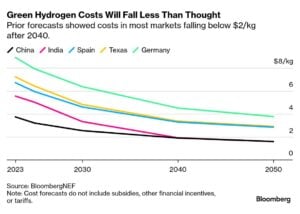
Globally, large initiatives are also underway. One example is the Green Hydrogen Catapult. This effort is supported by the United Nations and the Rocky Mountain Institute. The group boldly aims to cut green hydrogen costs to below $2 per kilogram by 2026.

green hydrogen cost

Fuel Savings for Customers: Lower Bills, Cleaner Power

Duke Energy Florida says its recent infrastructure investments could lower fuel costs and improve reliability. These include the DeBary hydrogen system and other upgrades. Across Florida, customers could see more than $350 million in total fuel cost savings. Average monthly energy bills could drop by about $10, based on company statements.

The hydrogen system also helps meet peak electricity demand. During extreme heat or cold, stored hydrogen can be burned to produce power when solar and wind are unavailable. This is a form of long-duration energy storage. Such systems can store energy for 10 hours or more, which is much longer than typical battery storage.

Dispatchable power is becoming more important as solar and wind capacity grow. These energy sources are variable and do not always match demand. Without flexible backup power, grid stability can be harder to maintain. The DeBary system helps address this issue by delivering electricity on demand.

Challenges Ahead: Costs, Infrastructure, and Scaling Up

The global green hydrogen market reached $7.98 billion in 2024 and could grow to $25-60 billion by 2030 at a 22-39% annual growth rate, driven by government support and rising industry demand.

Still, green hydrogen faces major challenges. Cost is one of the biggest barriers. Producing hydrogen through electrolysis is currently more expensive than making hydrogen from fossil fuels.

A recent techno-economic study estimated green hydrogen costs between $3.50 and $6.00 per kilogram. These costs are expected to fall as renewable energy prices drop and electrolyzer technology improves. U.S. government incentives, including tax credits under the Inflation Reduction Act, are also helping reduce costs.

Infrastructure is another challenge. Hydrogen pipelines and storage facilities are limited today. More investment is needed to support wider use. Even so, projects like DeBary help show how hydrogen can work within existing energy systems.

Utilities are also investing in other clean technologies. These include battery storage, advanced nuclear power, and carbon capture. Green hydrogen is expected to support these solutions rather than replace them. Strong coordination among regulators, investors, and industry players will be important for scaling hydrogen use.

Lessons From DeBary and the Future of Hydrogen

Duke Energy Floridaโ€™s DeBary Hydrogen Production Storage System is a major step forward for clean energy. By combining solar power with hydrogen production, storage, and combustion, it provides a new model for reliable, low-carbon electricity. The system may help lower fuel costs, improve grid flexibility, and support long-term decarbonization goals.

As green hydrogen markets expand and technology improves, projects like DeBary will offer valuable lessons. Continued innovation, policy support, and investment will shape how quickly green hydrogen becomes a regular part of the energy system.

Meta Signs Three Nuclear Deals of Up to 6.6 GW to Fuel AI Data Center Growth

Meta Platforms, the parent company of Facebook, Instagram, and WhatsApp, has announced a series of major nuclear energy agreements. The deals will secure up to 6.6 gigawatts (GW) of power. This will support the fast growth of its artificial intelligence (AI) operations and data centers. This amount of capacity could power the equivalent of about 5 million homes by 2035.

The agreements involve partnerships with established and emerging nuclear energy companies, including Vistra, TerraPower, and Oklo. These moves show a major corporate push for nuclear energy in U.S. history. They highlight how tech giants like Meta want reliable, clean power for future growth.

According to Joel Kaplan, Chief Global Affairs Officer, Meta, these agreements make the company:

“…one of the most significant corporate purchasers of nuclear energy in American history. State-of-the-art data centers and AI infrastructure are essential to securing Americaโ€™s position as a global leader in AI. Nuclear energy will help power our AI future, strengthen our countryโ€™s energy infrastructure, and provide clean, reliable electricity for everyone.”

Why Meta Needs Round-the-Clock Power for AI

Metaโ€™s data centers, especially those focused on AI workloads, consume large amounts of electricity. Traditional renewable sources such as wind and solar can be variable and may not always provide electricity around the clock.

Nuclear power, by contrast, offers reliable, 24/7 clean energy that can help meet consistent demand. Meta’s new agreements will help secure a steady electricity supply. This aligns with its sustainability goals and boosts its growing computing infrastructure.

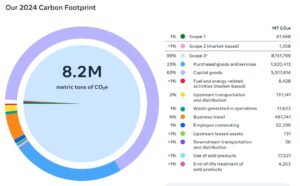
According to Metaโ€™s own statements, the companyโ€™s carbon footprint rose 20% to 8.2 million tCO2e as AI data centers demanded more power. Scope 1+2 emissions dropped 15% through energy efficiency gains. However, Scope 3 grew from supply chain activity.

Meta 2024 carbon footprint
Source: Meta

Still, Meta matched 100% renewable energy and cut water use by 25%, keeping its 2030 net-zero target on track, with nuclear power part of its strategy.

Nuclear energy helps cut fossil fuel use. It adds carbon-free power to electrical grids. This provides a stable source of baseload energy and also supports the companyโ€™s environmental strategy.

The Nuclear Agreements: Three Key Partners

Metaโ€™s nuclear energy strategy centers on three major partners:

Vistra: Power From Existing Plants

Meta signed a 20-year power purchase agreement (PPA) with Vistra Corporation. Through this deal:

  • Meta will buy more than 2,176 megawatts (MW) of nuclear energy from the Perry and Davis-Besse plants in Ohio.
  • The deal includes 433 MW of additional capacity from uprates (increased output) at these plants and Beaver Valley in Pennsylvania.
  • These plants will continue to supply power to the PJM grid, which serves tens of millions of people across the U.S. Midwest and Mid-Atlantic region.

The Vistra agreement gives Meta immediate access to operating nuclear generation, helping bridge the gap while new reactors are built. This type of long-term purchase also helps extend the operational life of existing nuclear plants.

TerraPower: Advanced Natrium Reactors

Meta has teamed up with TerraPower, co-founded by Bill Gates. This partnership aims to develop advanced nuclear reactors called Natrium units.

  • The deal initially covers two Natrium reactors capable of generating 690 MW, with delivery as early as 2032.
  • Meta also holds rights to energy from as many as six additional Natrium units, which could produce a further 2.1 GW by 2035.
  • At full deployment, up to eight Natrium units can provide around 2.8 GW of baseload energy. They also have energy storage to balance power output.
terrapower natrium SMR design
Source: TerraPower

This agreement is Metaโ€™s largest support for advanced nuclear technology to date. Natrium reactors are safer and more flexible than older designs. Their built-in storage helps adapt to grid conditions.

Oklo: New Nuclear Campus in Ohio

Under the deal with Oklo, a nuclear start-up with ties to major tech investors, Meta will help advance the development of a new nuclear energy campus:

  • The project in Pike County, Ohio, could deliver up to 1.2 GW of electricity.
  • Oklo expects the first phase of this nuclear campus to be operational as soon as 2030, with full capacity by about 2034.
  • Metaโ€™s funding will support early steps such as fuel procurement and site development for Okloโ€™s advanced reactor designs.

Oklo uses new reactor designs that build on current technology. Their goal is to make construction simpler and cheaper. However, these designs require regulatory approvals and remain in early stages of commercialization.

AIโ€™s Energy Appetite Is Reshaping Power Markets

Metaโ€™s nuclear energy push comes amid a wider tech industry effort to secure reliable, low-carbon power. Large data centers that run AI systems demand significant electricity.

If grid supply cannot keep up, it can lead to higher energy costs, reliability challenges, and increased emissions. For this reason, companies like Meta are investing in long-term energy contracts and exploring new energy technologies.

Metaโ€™s nuclear agreements build on earlier deals, including a long-term purchase agreement signed with Constellation Energy in 2025. The deal aimed to keep the Clinton nuclear plant in Illinois running. This also helps expand Metaโ€™s nuclear energy reach.

Supporters of nuclear energy say it gives steady, carbon-free power. This can help balance out the ups and downs of renewable sources like solar and wind. Supporters also highlight possible economic gains. These include local jobs and improved energy infrastructure.

However, nuclear projects face regulatory hurdles and long development timelines, especially for advanced designs. Still, analysts see strong demand for this clean power for the energy transition to materialize.

The Nuclear Revival Gains Momentum

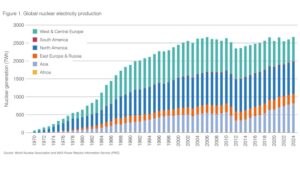
Nuclear power is gaining renewed interest worldwide as countries and companies seek reliable, low-carbon energy. In 2024, nuclear reactors produced a record 2,667 terawatt-hours (TWh) of electricity, the highest amount on record.

global nuclear power production 2024

Reactors also ran at an average capacity factor of 83%, meaning they produced power most of the time. This shows nuclear energy is a stable source of electricity compared with intermittent sources like solar and wind.

Global nuclear capacity has been rising slowly. At the end of 2024, the world had about 398 gigawatts (GW) of nuclear power capacity. This total includes both older reactors and new ones that are in operation.

Industry forecasts point to growth ahead. A recent report projects nuclear capacity could reach 494 GW by 2035 as new plants are built and small modular reactors (SMRs) are deployed. SMRs are smaller, factory-built reactors that may be easier to construct and add to grids.

Long-range projections are even larger. According to the International Atomic Energy Agency (IAEA), global nuclear capacity could expand to 992 GW by 2050 in a high-growth scenario, more than double todayโ€™s level. SMRs could make up a growing share of this capacity.

Nuclear Power Req in 2050 - CC (1)

These trends reflect a broader industry shift toward clean, firm power that can support both grid stability and growing demands from industries like data centers.

What This Means for Metaโ€™s Future

Metaโ€™s nuclear energy strategy reflects a long-term approach to meeting the power demands of AI computing. By securing a diverse mix of clean energy sources โ€” including nuclear โ€” the company aims to ensure that energy supply keeps pace with its growth plans.

In Metaโ€™s view, nuclear energy can help provide stable, carbon-free power to fuel data centers without interruption. It also positions the company as a major corporate purchaser of nuclear capacity, potentially encouraging further investment in U.S. nuclear infrastructure.

Whether the planned reactors reach full operation on schedule remains to be seen. But Metaโ€™s agreements have already influenced markets, supported early-stage nuclear ventures, and drawn attention to the role of clean energy in powering the next generation of computing.