EU Greenlights Nearly €1 Billion for Green Hydrogen Projects

The European Union (EU) has approved €992 million in funding for 15 renewable hydrogen projects in 5 countries across the European Economic Area. This investment, under the EU Innovation Fund, is a key part of Europe’s clean energy strategy.

The projects aim to produce about 2.2 million tonnes of green hydrogen over the next decade, helping to cut over 15 million tonnes of CO₂ emissions. The focus is on heavy industry and transport. These sectors are tough to decarbonize using regular clean energy solutions.

Why Green Hydrogen Matters in the Energy Shift

Green hydrogen forms when renewable electricity drives electrolysers. These devices split water into hydrogen and oxygen. This process does not produce any direct greenhouse gas emissions, unlike grey hydrogen, which comes from fossil fuels.

green hydrogen production
Source: Shutterstock

Green hydrogen is a clean option for industries that can’t easily use electricity. This includes steel production, aviation, shipping, and chemicals.

The high price of electrolysers and changing renewable electricity costs make it tough for green hydrogen to compete with fossil-based hydrogen. That’s why the EU’s direct financial support is critical. It helps lower the cost difference and speeds up the adoption of clean hydrogen technologies.

Environmental Gains from Funded Projects

The 15 projects backed by the EU will avoid over 15 million tonnes of CO₂ emissions by 2033. That’s roughly the same as taking 9 million cars off the road for a year. These projects are expected to generate 2.2 million tonnes of renewable hydrogen.

  • For comparison, producing one tonne of hydrogen using fossil fuels emits about 6.3 tonnes of CO₂.

Green hydrogen will help reduce emissions from hard-to-abate sectors. These sectors contribute a significant portion of Europe’s greenhouse gases. Globally, hydrogen production—mostly from fossil fuels—releases nearly 900 million tonnes of CO₂ each year. If green hydrogen replaces that, it could eliminate an important source of emissions.

EU renewable hydrogen projects
Source: EU

Boosting EU Energy Security

More than 70% of Europe’s energy is imported, most of it in the form of fossil fuels. Supporting local renewable hydrogen production helps the EU rely less on imported energy. This boosts energy security.

Electrolysers can use local wind or solar power, which means hydrogen can be made closer to where it’s used. This cuts transmission costs and prevents supply chain issues from global politics or market changes.

Developing green hydrogen also adds stability. It allows the EU to better manage global energy shocks and cut exposure to changing oil and gas prices.

Building a Competitive Hydrogen Market

This funding round is part of a wider EU plan to grow a €100 billion clean economy by 2030. The REPowerEU strategy aims to produce 10 million tonnes of renewable hydrogen domestically and import an additional 10 million tonnes by 2030. This makes hydrogen a key part of the EU’s energy transition and decarbonization goals.

EU hydrogen plan 2050
Source: EC

The European Hydrogen Bank (EHB) will hold its next auction in late 2025, offering another €1 billion to green hydrogen developers. These auctions promise a set payment for each kilogram of hydrogen produced over 10 years, which helps companies feel secure in their investments.

Hydrogen-related investments are growing globally. The International Energy Agency (IEA) expects that more than €150 billion will be invested in hydrogen annually by 2030.

global hydrogen 2030 IEA
Source: IEA

The EU’s funding structure helps lower costs and expand electrolyser manufacturing. Grants for individual projects go from €8 million to €245 million. Bigger amounts are available for tough areas like maritime shipping.

Each project must reach financial close within 2.5 years and start operations within five years. Many will back the production of chemicals like methanol and ammonia. Hydrogen plays a key role here. It can work as both an energy source and a raw material.

Jobs, Innovation, and Export Opportunities

The green hydrogen economy will create up to 1.4 million jobs by 2030. This is according to the European Renewable Energy Council. It also offers environmental benefits. These include jobs in engineering, manufacturing, logistics, and maintenance.

The EU also expects new hydrogen hubs to encourage innovation, similar to how the solar and wind industries grew. The Innovation Fund helps European businesses develop the entire supply chain. This includes everything from raw materials to energy management software.

Countries in Asia and North America are investing heavily in clean energy, and Europe’s early moves may offer a strong competitive edge.

Cross-Border Collaboration for a Unified Hydrogen Market

One of the key goals of the EU hydrogen strategy is to create a unified hydrogen market across member states. Many funded projects have cross-border elements. They connect producers, pipelines, storage, and end-users across national lines.

This integration is key. It balances hydrogen supply and demand. Countries with extra renewable power, like Spain and Portugal, can help those with high industrial needs, like Germany and the Netherlands. It supports building trans-European hydrogen corridors, which allow for large-scale transport and trade of renewable hydrogen across borders.

The EU is enhancing cross-border infrastructure. This builds a more flexible and connected energy system. It supports electricity networks and lets hydrogen move to where it’s needed most.

Public-Private Partnerships Are Paving the Way

Many EU Innovation Fund projects depend on strong partnerships. These partnerships involve governments, private companies, and research institutions. They combine technical skills, funding, and policy support, speeding up deployment.

Some winning projects show energy companies teaming up with electrolyser makers and local utilities. Together, they create complete supply chains. Some smaller startups are exploring niche areas. They focus on green hydrogen for uses like fertilizer and aviation fuel.

Challenges Ahead and A Strategic Step Toward a Greener Europe

Despite the progress, there are still hurdles. Electrolyser production needs to grow a lot. Also, renewable electricity capacity has to increase to satisfy hydrogen demand. Storage, transport, and end-use systems also need to be built quickly.

Many developers say that long permitting timelines and unclear rules slow things down. To fix this, the EU plans to launch a Hydrogen Mechanism platform in 2025. It will connect hydrogen buyers and sellers and will lower transaction costs.

Moreover, it will help track emissions better. This platform will make it easier for hydrogen to fit into existing energy systems.

The European Commission’s €992 million investment is more than just funding—it’s a clear signal of strategic direction. With auction-based support, market tools, cross-border coordination, and public-private partnerships, the EU is positioning itself as a global leader in renewable hydrogen. 
Banking in Carbon: JPMorgan Chase Invests $90M in Carbon Removal with CO280

JPMorgan Chase, one of the largest banks in the world, has entered a landmark agreement with Vancouver-based carbon removal company CO280. The deal is worth $90 million and involves the purchase of 450,000 metric tons of carbon dioxide removal (CDR) over the next 13 years. This move shows more confidence in carbon removal tech. It also reflects a strong effort by companies to combat climate change in clear, measurable ways.

The deal makes JPMorgan the first major bank to commit to engineered carbon dioxide removal at this scale. Each ton of carbon will cost less than $200, a notable price improvement in a field that has often struggled with high costs. This long-term agreement boosts CO280’s growth. It also speeds up new carbon capture projects in North America.

Turning Pulp and Paper Mills into Carbon Removal Facilities

CO280 is taking a different approach to carbon capture. The company is retrofitting old pulp and paper mills. They will use carbon capture technology instead of building new factories. These mills produce biogenic CO₂, a carbon dioxide from natural sources, like wood and plants.

CO280 aims to capture emissions before they reach the atmosphere. Then, it stores them permanently underground in deep geological formations.

CO280 carbon capture process
Source: CO280

The technology used comes from SLB (formerly Schlumberger) and is known as SLB’s “Capturi” system. It captures up to 95% of CO₂ emissions from flue gas and purifies them for transport to secure storage locations.

CO280 partners with legacy mills. This choice saves time and money by avoiding new infrastructure. It also helps cut emissions right at the source. This model is scalable, cost-efficient, and a strong example of how to bring older industries into the clean energy future.

The method uses the current infrastructure and supply chains of the pulp and paper sector. This sector emits around 88 million tons of biogenic CO2 each year in the U.S.

By retrofitting instead of rebuilding, CO280 cuts down on complexity, cost, and risk. It also speeds up deployment and keeps mills running smoothly. This approach also supports local economies by preserving jobs and using established supply networks.

JPMorgan’s Climate Strategy in Action

JPMorgan has been working on ways to reduce its carbon footprint and support a low-carbon economy. The company has committed to financing $2.5 trillion in sustainable investments by 2030. Out of that, $1 trillion is for green projects. This includes renewable energy, energy efficiency, and carbon capture. This $90 million deal with CO280 fits directly into that framework.

JPMorgan Chase green investments 2023 progress
Source: JPMorgan Chase

According to Taylor Wright, Head of Operational Sustainability at JPMorgan Chase, the bank is focused on “solutions that can scale and be verified.” She noted:

“We’re thrilled to continue to help speed and scale the growth and development of CDR technologies with this latest offtake. CO280’s ability to provide near-term, affordable removals at scale is a key catalyst for making high-quality, engineered CDR available to a wider range of buyers.”

Engineered carbon removal is different from nature-based solutions like tree planting. It is seen as more measurable and permanent. The agreement with CO280 marks a move to better carbon removal credits. These credits can be audited, monitored, and verified for many years.

The 13-year term lets CO280 raise more funds. It can keep growing its pipeline of retrofit projects. As more mills adopt the model, the volume of carbon captured will increase, and costs could go down even further.

A Growing Market for Carbon Removal

JPMorgan’s deal with CO280 is part of a growing trend. According to BloombergNEF, the global carbon management market could exceed $800 billion by 2030. Engineered carbon removal was once viewed as costly and experimental. Now, it is drawing significant investment.

Microsoft, Stripe, Shopify, and Frontier have made similar deals. They aim to support carbon capture startups. Frontier is a carbon removal fund backed by tech companies. Early offtake agreements help startups grow. They lower prices and build the infrastructure for large-scale operations.

  • CO280’s offering stands out because it delivers carbon removal for under $200 per ton.

Engineered removals cost more than nature-based offsets, which are often under $50 per ton. However, they are seen as more durable and reliable. They will be key to solving climate issues. This is especially true for sectors like aviation, shipping, and heavy industry. These sectors are tough to decarbonize.

Securing carbon removal for under $200 per ton is a big deal. Early-stage engineered CDR projects usually cost over $500 per ton. This price drop shows that CO280’s technology is now mature. 

As seen below, more CDR suppliers expect to have the average cost per metric tonne to go down by 2030. Lower prices make high-quality engineered CDR easier to access and more appealing to many companies.

average production cost per tonne CDR
Source: CDR.fyi

JPMorgan’s financial support adds credibility and visibility to this model. This helps attract more institutional investment in carbon removal. The deal comes after JPMorgan made several agreements worth over $200 million. This shows the bank’s strong role in backing climate technology on a large scale.

The Role of MRV: Making Carbon Removal Trustworthy

One of the biggest challenges facing the carbon credit market is trust. Critics say many voluntary carbon credits rely on weak assumptions or results that can’t be verified. That’s why CO280’s commitment to strong MRV standards (monitoring, reporting, and verification) is so important.

Every ton of CO₂ taken out through the JPMorgan agreement will be measured with third-party tools and checked by independent audits. This ensures that the carbon is not only captured but also stored in a way that is safe and permanent.

CO₂ will be stored in Class VI wells. These wells follow U.S. federal rules and are made for long-term storage of carbon dioxide.

A Blueprint for Scalable Climate Solutions

CO280 plans to continue expanding and is seeking further investment to bring more facilities online. The JPMorgan deal is a signal to other investors that carbon capture can be both environmentally and financially viable.

Each retrofit project could remove 100,000 metric tons of CO₂ per year. With dozens of mills across North America, the potential impact is significant.

From a climate perspective, biogenic CO₂ removal is particularly valuable. Capturing and storing carbon from renewable sources, like trees, has a net-negative effect.

Thus, CO280 doesn’t just cut emissions. It also removes carbon from the air. This helps balance out emissions from sectors that can’t fully go green.

The partnership between JPMorgan Chase and CO280 represents a promising shift in how major companies approach climate solutions. Their agreement uses real-world infrastructure and proven technology to deliver measurable, permanent results. With strong verification, clear pricing, and local job creation, this project serves as a blueprint for other corporations looking to invest in high-quality carbon removal.

Lithium Supply Outpaces Demand—for Now: What’s Ahead?

Last month, the U.S. shocked global trade with a 10% tariff on all imports. China was hit harder—34% overall, and up to 145% on battery products. However, it was later reduced to 30%. So far, key battery minerals like lithium, nickel, cobalt, graphite, and copper are exempt. This is because the U.S. still depends on imports to meet clean energy targets.

In April 2025, President Donald J. Trump signed an Executive Order to investigate how relying on imported processed critical minerals could harm U.S. national security. Nonetheless, lithium is safe for now, but uncertainty is growing.

IEA has recently analyzed that new tariffs could raise EV costs, delay battery projects, and shake supply chains. If lithium is targeted, prices may spike, and the race for U.S. refining will speed up. Let’s study the case of lithium more deeply.

Lithium Prices Stabilize as Supply Overtakes Demand

After years of volatility, lithium prices have stabilized. As per the IEA’s Global Critical Minerals Outlook 2025, last year global lithium demand rose 30% year-over-year. It reached more than 200,000 tonnes of lithium, or around 1.1 million tonnes of lithium carbonate equivalent (LCE). This was roughly equal to all lithium demand in 2018.

Lithium demand
Source: IEA

This growth was largely driven by the electric vehicle (EV) sector, while energy storage systems (ESS)—now accounting for 9% of lithium use are contributing significantly.

However, supply grew even faster, jumping by over 35%. This oversupply pushed lithium prices down to around USD 12,000 per tonne of LCE, a sharp decline from the record highs of 2022.

Economic uncertainty and weaker consumer confidence in the U.S. could also reduce EV purchases, hitting lithium, cobalt, graphite, and copper demand. Large-scale supply projects, particularly for capital-heavy minerals like copper, may stall or face delays, impacting future availability.

China Remains the Demand Giant

According to the EU’s Raw Materials Information System (RMIS), China consumed over 75% of global lithium in 2024 due to its stronghold in battery manufacturing. South Korea and Japan followed, owing to their significant battery cathode production capacity.

The rise of LFP (lithium iron phosphate) batteries in EVs channeled most demand toward lithium carbonate, while lithium hydroxide, used in nickel-rich batteries, experienced slower growth.

However, RMIS has a different prediction. It reveals that demand for most battery materials will likely exceed supply after 2029–2030, except for graphite, because of China’s rapid growth in synthetic graphite production.
Lithium demand is rising fast. However, without major new investments, shortages could hit lithium markets between 2030 and 2040.

Forecast of global Supply-Demand Balance for Lithium

lithium supply demand
Source: RMIS

Cost Relief for Battery Makers

The dip in prices brought welcome savings. IEA highlighted that in 2022, the lithium cost in a typical 57 kWh EV battery was USD 67. By 2024, that figure dropped to just USD 15, easing the pressure on EV manufacturers.

Mergers and New Players

IEA also analyzed how the low-price environment triggered a major industry consolidation. For instance, Rio Tinto acquired Arcadium Lithium, a company formed from the merger of Livent and Allkem.

Some significant lithium production hubs emerged, such as:

  • Ioneer Ltd secured a US$996 million loan from the U.S. Department of Energy’s Loan Programs Office. The funding, provided through the Advanced Technology Vehicles Manufacturing (ATVM) program, supported the development of a processing facility at the Rhyolite Ridge Lithium-Boron Project in Esmeralda County, Nevada. Once operational, this project can quadruple the nation’s current domestic lithium supply and power ~ 370,000 electric vehicles annually.
  • Africa saw a fivefold jump in lithium supply, contributing 30% of new output, especially from Zimbabwe and Namibia, up from just 6% in 2023.

  • Latin America recorded a 65% increase, led by Argentina and Brazil. One highlight was Eramet’s Centenario project in Argentina, which began small-scale production using direct lithium extraction (DLE)—a promising new method for tapping brine resources.

Lithium Prices in 2025: Volatility Ahead

Analysts at Shanghai Metals Market (SMM) expect lithium prices to remain volatile throughout 2025. Projections for battery-grade lithium carbonate range between USD 9,000 and USD 12,000 per tonne, depending on how supply keeps pace with growing EV and ESS demand.

Here’s the latest lithium price trend prevailing between April and May.

lithium prices
Source: SMM

Lithium hydroxide is also expected to rise in price, driven by the shift toward high-performance battery chemistries.

Microsoft’s Major Biochar Deal Aims to Offset 1.24M Tonnes CO2

Microsoft has signed the world’s largest biochar carbon removal agreement with Bolivia-based Exomad Green. The 10-year deal will permanently eliminate 1.24 million tonnes of carbon dioxide, equal to the yearly emissions of over 260,000 cars.

This marks a significant step in Microsoft’s push to become carbon negative by 2030 and remove its historical emissions by 2050.

By locking in high-durability carbon removals, Microsoft is demonstrating a long-term commitment to verifiable climate action. The deal is also one of the largest ever in durable carbon dioxide removal (CDR), putting biochar on the map as a serious climate solution.

Why Exomad Green’s Biochar Project Stands Out

Exomad Green’s biochar project offers a powerful, long-term carbon removal solution—while also benefiting local communities and the environment.

Biochar is made by heating biomass without oxygen, locking carbon into a stable form that remains in soil for hundreds of years. It not only traps emissions but also enriches the soil, helping crops grow better with fewer chemicals.

In this project, Exomad Green converts sawmill waste or wood scraps that would normally be burned into biochar.

So, instead of sending harmful smoke into the air, the company puts that carbon to good use by distributing biochar to local farmers. This helps improve soil quality, reduce air pollution, and lower the risk of fires in surrounding areas.

BIOCHAR market

Local Impact with Global Potential

Exomad Green’s approach supports rural and Indigenous communities by giving them access to biochar for use in farming. This helps:

  • Improve soil fertility and crop productivity

  • Reduce health risks from open burning

  • Prevent wildfires caused by unmanaged wood waste

The result is a carbon removal project that benefits both people and the planet.

Setting a New Standard in Carbon Removal Deals

This 10-year agreement isn’t just large—it’s groundbreaking. It brings new industry benchmarks in traceability, transparency, and quality.

  • Biomass traceability: Exomad runs a Forest Monitoring Center that tracks every batch of biomass used. This ensures all raw materials meet strict sustainability standards.

  • High product quality: Regular testing guarantees the biochar meets top international standards, making it effective both for carbon storage and soil health.

Exomad’s production process is certified under Puro.earth’s Biochar Methodology, ensuring full compliance with global best practices.

How Does This Impact Microsoft’s Climate Strategy?

Microsoft aims to be carbon negative by 2030 and to cut all its past carbon emissions by 2050. To achieve this, it also needs reliable ways to remove carbon from the atmosphere. This is one of the main reasons behind the tech giant’s partnership with Exomad Green.

Significantly, this deal adds trusted, long-lasting carbon removal to Microsoft’s climate strategy, using biochar that stores carbon for centuries.

Additionally, it also boosts Microsoft’s image as a leader in corporate sustainability. By choosing verified biochar over less reliable offset methods, the company builds trust with investors, employees, and business partners.

microsoft emissions
Source: Microsoft

In 2024, Microsoft made up 63% of all carbon dioxide removal (CDR) purchases, securing about 5.1 million metric tons of durable CDR credits.

As rules around carbon reporting become stricter, Microsoft’s clear and high-quality approach to carbon removal gives it a strong advantage.

What Is the Environmental Impact of This Deal?

Removing 1.24 million tonnes of carbon dioxide over ten years is a big step in fighting climate change while also improving land use. The biochar made in this project stores carbon in the soil for hundreds of years.

It also helps reduce harmful smoke and greenhouse gases that would normally come from burning leftover wood in Bolivia’s forests.

When added to soil, biochar brings many benefits. It boosts soil fertility, helps soil hold more water, and supports healthy microbes. This increases crop yields, especially in poor-quality farmland. So, naturally, these gains are helpful for farmers near Exomad’s facilities, giving them stronger harvests and better income.

This deal shows how large-scale carbon removal can work in real life. Thus, extending beyond reducing carbon dioxide, this deal also supports local communities.

More than 250,000 people in Concepción, Riberalta, and nearby areas in Bolivia are expected to benefit from the project’s social and environmental impact.

How This Deal Fits into the Carbon Credit Market

The carbon credit market is changing. It’s moving away from short-term solutions and focusing more on long-lasting carbon removal. Companies and governments now prefer projects that can clearly prove they store carbon for a long time. This shift is driven by global net-zero goals, and biochar is becoming a key part of that future.

By partnering with Exomad Green, Microsoft is backing a trusted, nature-based method for carbon storage. This deal shows that large-scale biochar projects can reduce carbon emissions while also creating jobs, cleaning the air, and helping farmers grow more. These added benefits make the deal more valuable for investors, communities, and regulators.

What the Market Trends Reveal

Experts predict the voluntary carbon credit market will grow to $200 billion by 2030. There’s a growing demand for carbon removal projects that show real, lasting impact. Microsoft’s agreement with Exomad Green is a strong example of this shift.

carbon market

Biochar stands out in the market because it does more than just cut carbon. It also improves soil health, helping farmers grow better crops. This win-win makes it easier to adopt and lowers the cost of carbon removal over time.

Carbonfuture’s MRV

Buyers also want credits they can trust. Projects that have solid tracking and third-party checks are seen as more reliable. Exomad Green uses Carbonfuture’s MRV+ system to follow every step, from collecting waste to registering the carbon removed. This level of transparency is key for scaling up carbon removal across industries.

Is Biochar the Future of Carbon Removal?

Microsoft’s support and Exomad Green’s growing capacity show that biochar is ready for big-scale climate solutions. Their facility in Concepción, Bolivia, plans to remove up to 1 million tonnes of CO₂ per year by 2027. That puts it among the world’s largest carbon removal projects.

If more companies copy this model, biochar could become a regular part of business and land management strategies. As rules around carbon get stricter and the public demands real action, companies will need to show real results.

This partnership sets a strong example. It proves that climate goals can be met while helping local communities and protecting the environment. Thus, Microsoft’s betting on biochar deals shows a major transition in the fight against climate change.

CORSIA Carbon Credit Prices, Demand, and Supply: What the Future Holds

The Carbon Offsetting and Reduction Scheme for International Aviation (CORSIA), launched by the International Civil Aviation Organization (ICAO), plays a major role in helping airlines offset their emissions and meet climate goals.

International air travel is bouncing back after the pandemic. This drives a surge in demand for carbon credits under CORSIA. A new report by Allied Offsets forecasts strong growth in both demand and prices of eligible carbon credits from 2025 through 2035.

This article explores the latest trends, price scenarios, and what this means for airlines, project developers, and the broader voluntary carbon market.

Rising Demand: Airlines Set to Purchase More Credits

Industry estimates say that demand for CORSIA-eligible carbon credits will hit 101 to 148 million tonnes (MtCO₂e) during Phase I (2024–2026). Demand will rise quickly in Phase II (2027–2035).

Cumulative needs are expected to be between 502 and 1,299 MtCO₂e. This will depend on how much international air traffic grows and how CORSIA expands its coverage.

This big increase comes from the rebound in international air travel and the start of Phase II in 2027. During this phase, most ICAO member countries must take part.

By 2035, demand might exceed 1 billion tonnes in high-growth scenarios. That’s about the same as the yearly emissions of a major industrialized country.

To summarize projected cumulative demand:

  • Phase I (2024–2026): 101–148 MtCO₂e

  • Phase II (2027–2035): 502–1,299 MtCO₂e

This growth presents both challenges and opportunities. Airlines need enough credits to comply with regulations. At the same time, project developers and suppliers face pressure to increase the verified supply of eligible credits.

Price Outlook: A Wide Range with Upward Pressure

The report outlines three price scenarios for carbon credits based on different market dynamics:

  1. Low Scenario: Prices start at $14/tonne in a tight supply scenario and grow slowly to $25/tonne in under supply scenario.

  2. Medium Scenario: Prices rise from $15/tonne to $29/tonne.

  3. High Scenario: Prices climb sharply from $16/tonne to $34/tonne.

CORSIA carbon credit supply, demand, and prices
Source: Allied Offsets

Even in the conservative case, prices show modest growth. But in the high-demand scenario, prices could grow over the next decade.

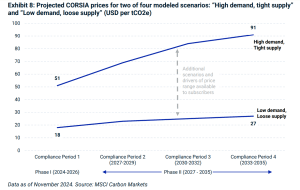
On the other hand, MSCI outlines a range of price scenarios for CORSIA-eligible carbon credits as follows:

  • Phase I (2024–2026): $18–$51 per tonne

  • Phase II (2027–2035): $27–$91 per tonne (by 2033–2035)

Projected CORSIA prices for two of four modeled scenarios
Source: MSCI

This price rise shows that airlines face more pressure to secure high-quality credits. This is especially true as more projects focus on long-term removal instead of just temporary avoidance.

High prices might lead some airlines to invest in sustainable aviation fuel (SAF) or insets. These options help reduce emissions in their operations.

Supply Gaps and Quality Filters

CORSIA doesn’t allow just any carbon credit. ICAO has strict rules for what qualifies — including restrictions on project start dates, crediting periods, and approved methodologies. Only credits from approved programs (like Verra, Gold Standard, and ART TREES) that meet these standards are eligible.

The report estimates that:

  • Only about 543 MtCO₂e of eligible credits will be issued by 2027.

CORSIA carbon credits supply
Source: Allied Offsets

Supply is projected to lag behind demand. Reports suggest possible deficits of 12–43 MtCO₂e in Phase I. Phase II may face even larger shortfalls. This is likely if stricter quality filters are used. These filters include co-benefits, permanence, and additionality. The exact numbers for filtered supply aren’t given, but these criteria would greatly lower the usable pool.

CORSIA credits issued versus forecast supply
Source: AlliedOffsets

Currently, most eligible supply comes from avoided deforestation (REDD+) and renewable energy projects. As demand increases and quality standards get stricter, the market will likely move toward lasting carbon removal solutions. This includes methods like reforestation, biochar, and direct air capture (DAC).

Regional Insights: Where Supply Comes From

The current credit supply under CORSIA is heavily concentrated in a few countries:

  • India, China, and Brazil together account for over 50% of the available supply.

Africa has fewer CORSIA-eligible credits now. However, it is expected to grow. This growth will focus on nature-based solutions, such as afforestation and cookstove projects.

This geographic concentration means that any changes in policy, political stability, or project approvals in key countries could disrupt supply. For example, if India were to change its rules on carbon credit exports — as some officials have suggested — global supply could shrink quickly.

Interest is growing in boosting credit generation in Southeast Asia and Latin America. Many areas there have good land for reforestation and carbon farming.

Market Trends and Implications for Airlines

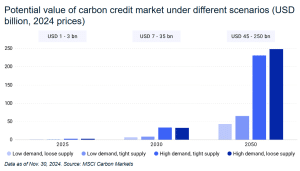
CORSIA credits are part of the larger voluntary carbon market. This market has attracted a lot of interest from companies and governments. According to MSCI report, voluntary carbon markets could reach $250 billion annually by 2050.

carbon credit market value 2050 MSCI
Source: MSCI

But today’s CORSIA credits are selling for far less than the cost of removing CO₂ using high-tech methods like DAC, which can exceed $300 per tonne. This price gap has raised questions about credit quality and how buyers can demonstrate real climate impact.

SEE MORE: CORSIA Credits Soaring Costs: How They Are Reshaping Aviation’s Future

Some key trends include:

  • Airlines such as Delta, United, and Lufthansa are now mixing credit purchases with investments in SAF. They also support offsets from reforestation or engineered removals.

  • Programs like SBTi (Science-Based Targets initiative) encourage firms to reduce emissions. They also promote high-quality removals instead of bulk offsetting.

For airlines, this means they may need to:

  • Budget more for compliance over time

  • Diversify carbon offset portfolios

  • Communicate clearly about the credibility of their offsets

The Bigger Picture: What Comes Next

The Allied Offsets report shows that corporate buyers, like airlines, play a key role in global carbon markets. Their large, long-term offtake agreements — such as Microsoft’s 18 MtCO₂e deal with Rubicon Carbon — are shaping demand signals for the next decade.

ICAO plans to tighten CORSIA rules in future reviews. This may mean more removals and limits on older avoidance projects. This could further reduce supply and raise prices.

Policymakers can boost support for in-sector measures. This includes increasing SAF production and encouraging new removal technologies.

Airlines face challenges now. They must deal with rising prices, new rules, and increased scrutiny on carbon offsetting. In the long run, using durable carbon removals could change aviation and the climate finance system.

CORSIA is entering a critical phase. Demand is set to rise sharply. Meanwhile, supply is tightening due to stricter quality controls. As the report shows, the window to build a balanced, credible carbon market is narrowing. The next few years will shape the cost and credibility of airline decarbonization for decades to come.

SolarBank Stays Strong as Trump’s Clean Energy Rollbacks Loom

Disseminated on behalf of SolarBank Corporation

The U.S. House of Representatives proposes rollbacks to key clean energy programs, which raises questions across the sector. Among the targeted provisions are the residential solar tax credit and funding elements of the Inflation Reduction Act (IRA)—a landmark climate package that helped spark record investment in clean energy over the past two years.

The proposal suggests ending the 30% federal residential solar tax credit by the end of 2025. This is nearly 10 years sooner than expected. This policy change could greatly affect companies in the solar industry.

Understanding the Proposed Policy Change

The residential solar tax credit, or Solar Investment Tax Credit (ITC) is Section 25D of the U.S. Tax Code. It lets homeowners claim 30% of the cost of installing solar panels. This credit appears on their federal tax returns.

The credit, part of the Inflation Reduction Act, was to last until 2032. It will start to decrease gradually in 2033. The schedule is below. However, the new proposal aims to terminate this credit by December 31, 2025. 

solar tax credit sched
Source: Ecowatch

Experts warn that this sudden change might raise costs for consumers. It could also lower demand for residential solar installations and lead to job losses in the sector. Small solar installation businesses often rely on credit for competitive pricing. This makes them especially vulnerable.

The solar industry has expressed strong opposition to the proposed cuts. Many stakeholders say the tax credit has helped grow residential solar. It creates jobs and promotes energy independence.

The Solar Energy Industries Association says the residential solar market has grown 10x in the last ten years. The tax credit has played a big part in this growth.

The proposal passed the House Ways and Means Committee. However, it still has many hurdles to clear before it can become law. Some lawmakers, including Republicans from areas that benefit from clean energy investments, are worried about the possible negative effects of the cuts.

The final outcome will depend on negotiations in both the House and Senate. 

Policy Uncertainty and Its Limits

For many solar developers, these changes could signal uncertainty and disruption. For SolarBank, a developer focused on community and commercial-scale solar (as opposed to residential solar installations), the path forward remains steady. This is due to careful planning, strategic focus, and a shift in business model that favors long-term sustainability.

The company’s CEO, Dr. Richard Lu, says the company’s business model is largely shielded from this turbulence, saying:

“Over the next several years we are not expecting any major changes or challenges from the potential changes to federal solar tax incentives. Support for our community solar projects comes at a state level, and we only focus on the 22 states that have community solar policy.”

This is a key distinction. SolarBank focuses on commercial, industrial, and community solar projects. Unlike residential solar companies, it benefits from strong state mandates and incentives.

Moreover, the timeline for scaling back federal tax credits for commercial solar systems doesn’t begin until 2028 or 2029. SolarBank has already factored that into its long-term planning. Dr. Lu emphasized this, noting:

“We work with industrial and commercial large-scale solar projects, and not residential. The schedule to reduce tax incentives… has already been included in our operations to mitigate the effect.”

Resilience Through Integration

SolarBank isn’t shaken by the headlines. Instead, it is strengthening its operations. Its resilience comes from a vertically integrated model. This model covers development, construction, and long-term operations and maintenance.

This structure helps the company control costs, speed up deployment, and rely less on uncertain external factors. Dr. Lu stated:

“We have a vertically integrated system… which gives us the capability to manage our costs and simplify our process. This is really where our lean set up is competitive.”

That competitiveness is especially important in a rapidly evolving energy market. AI data centers, electric vehicles, and digital industries are driving high electricity demand.

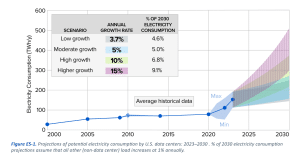
Data center power use in the U.S. will grow twofold in 2030 due to AI. Meanwhile, traditional energy systems are having a tough time keeping up.

US data centers power use under 4 scenarios EPRI analysis
Source: Electric Power Research Institute (EPRI)

SolarBank sees this mismatch as an opportunity. The company can meet rising energy needs by staying agile and keeping costs in check, that is faster than many big, slower competitors.

Shifting from Build-to-Sell to Build-to-Own

In response to both market evolution and policy unpredictability, SolarBank is also adjusting its core business strategy. Once focused on a build-to-sell model, the company is now emphasizing build-to-own projects.

The CEO noted that this shift aims to create a more stable revenue base, making SolarBank less reliant on one-off transactions and external funding sources. He said:

“This will boost our long-term recurring revenue. It makes it easier to take on new projects with less external funding.”

This change also helps the company hedge against potential federal funding shortfalls. SolarBank can continue to grow by attracting private investment and forming strategic partnerships. This will help, even with solar tax credit challenges.

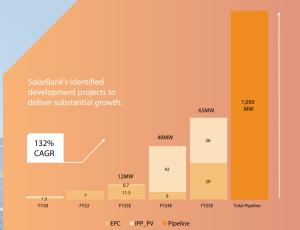
A recent collaboration with Qcells, involving the use of U.S.-manufactured solar modules, is one example of how the company is preparing for multiple future scenarios. SolarBank has the following project pipeline that will bring significant growth to the company:

SolarBank projects
Source: SolarBank

A Message for Policymakers

The company is confident in its own path. However, Dr. Lu emphasized the broader value of maintaining federal support for clean energy—especially for community solar and distributed energy systems. He remarked:

“Consistent and long-term support… is not just an investment in clean energy but also in social equity and economic resilience.” 

Community solar programs are especially important for expanding access to renewable energy among low- and moderate-income households, renters, and underserved communities. Without strong policy support, these groups risk being left behind in the clean energy transition.

Dr. Lu added:

“Stable policies and incentives are crucial for planning and investment. By supporting these initiatives, policymakers can drive job creation, foster local economic development, and advance national goals for carbon reduction and climate resilience.”

What’s The Future for Solar?

SolarBank’s calm response shows its strong position, even if the headlines are unsettling. The company is ready to succeed by using state support, seeking private investment, and adjusting its business model. This approach helps it thrive despite federal uncertainty.

Still, the broader industry faces real questions. Will Congress follow through with proposed rollbacks? Can community solar continue to grow if the tax credits vanish? And what does this mean for energy equity in the U.S.?

For now, SolarBank believes that its focus on fundamentals, policy-savvy expansion, and forward-thinking leadership will carry it through.

This report contains forward-looking information. Please refer to the SolarBank press release entitled “SolarBank Announces Third Quarter Results” for details of the information, risks and assumptions.


Disclosure: Owners, members, directors, and employees of carboncredits.com have/may have stock or option positions in any of the companies mentioned: None.

Carboncredits.com receives compensation for this publication and has a business relationship with any company whose stock(s) is/are mentioned in this article.

Additional disclosure: This communication serves the sole purpose of adding value to the research process and is for information only. Please do your own due diligence. Every investment in securities mentioned in publications of carboncredits.com involves risks that could lead to a total loss of the invested capital.

Please read our Full RISKS and DISCLOSURE here.

Google and energyRe Boost Clean Energy in South Carolina with 600 MW Solar Deal

energyRe, a U.S.-based renewable energy developer, has signed a new renewable energy agreement with Google to support over 600 megawatts of solar and solar-plus-storage projects in South Carolina. Through this agreement, Google will invest in and buy Renewable Energy Credits (RECs) from these projects to reduce its emissions across operations and the global value chain.

Notably, this is the second time Google has partnered with energyRe, and together. Both deals will bring more than 1 gigawatt (GWac) of clean energy to the grid.

Amanda Peterson Corio, Head of Data Center Energy, said,

“Strengthening the grid by deploying more reliable and clean energy is crucial for supporting the digital infrastructure that businesses and individuals depend on. Our collaboration with energyRe will help power our data centers and the broader economic growth of South Carolina.”

energyRe and Google: Powering Progress with Solar and Storage Projects

In October 2024, energyRe signed a 12-year agreement with Google to provide clean energy and Renewable Energy Credits (RECs) from a new 435-megawatt (MWdc) solar project in South Carolina. energyRe will develop, own, and operate the project, which will generate enough electricity to power more than 56,000 homes each year.

Google and energyRe completed the deal through LEAP™—a clean energy procurement platform co-developed by Google and LevelTen Energy. LEAP™ simplifies and speeds up the process of securing renewable energy agreements.

Boosting America’s Clean Energy Footprint

energyRe is a leading independent clean energy company based in the United States. The company focuses on delivering large-scale renewable energy solutions across utility-scale solar, onshore and offshore wind, transmission infrastructure, distributed generation, and battery storage.

With offices in New York, Houston, Indianapolis, and Charleston, energyRe is driving the U.S. energy transition with an emphasis on building robust, regional electric grids that can handle growing clean energy demands.

Its national renewable portfolio includes:

  • 1,520 MWdc of contracted solar assets
  • 398 MWh of battery storage capacity

These projects can potentially enhance grid reliability, reduce energy costs for consumers, and help cities cut carbon emissions.

Miguel Prado, CEO of energyRe, also commented,

“This agreement is a milestone in energyRe’s mission to develop innovative and impactful clean energy solutions for the future. We’re honored to partner with Google to help advance their ambitious sustainability and decarbonization objectives while delivering dependable, locally sourced clean energy to meet growing energy demands.”

Flexible Clean Energy for All

energyRe offers flexible purchase agreements to meet different customer needs. It provides both bundled energy with Renewable Energy Credits (RECs) and REC-only options. These agreements can be delivered physically or financially nationwide, making it easier for companies like Google to access renewable energy.

With this latest deal, energyRe continues to play a vital role in decarbonizing U.S. cities, supporting transmission-led generation, and creating a resilient, clean energy future.

Google Stays on Track for Net-Zero by 2030

Google plans to reach net-zero emissions across its operations and value chain by 2030. Its strategy includes reducing emissions where possible and using carbon removal to handle what remains.

In 2023, Google’s total emissions reached 14.3 million tons of CO₂ equivalent—a 13% rise from the previous year. The increase came mostly from higher data center power use and supply chain growth, though the pace of increase slowed.

Google emissions
Source: Google

24/7 Carbon-Free Energy

In 2023, Google made solid progress on its clean energy journey. It maintained a global average of 64% carbon-free energy across all its offices and data centers, even as electricity use increased. In fact, 10 of its grid regions reached at least 90% carbon-free energy.

Thus, instead of just matching its annual energy use with clean power, Google wants to use carbon-free electricity every hour, everywhere it operates. That’s why this partnership with energyRe is significant for the tech giant.

These new projects will deliver local clean energy and support South Carolina’s clean energy targets as well.

Additionally, Google also avoids buying older “unbundled” energy certificates that would lower its reported emissions but don’t lead to new clean energy. Instead, it focuses on newer, bundled projects that bring real impact.

google
Source: Google

Betting on Renewables

Some innovative technologies Google uses to cut down its emissions are: smart solar panels like dragonscale rooftops and solar facades. It also applies machine learning to forecast wind energy and shifts computing tasks based on the carbon levels of local power grids.

Moreover, Google is backing new clean energy tech like next-gen geothermal and carbon removal solutions such as direct air capture and BECCS. It’s also helping improve how clean energy is tracked by supporting time-based certificates that measure real-time clean energy use.

So far, Google has signed contracts for over 7 gigawatts of renewable energy and helped pioneer hourly clean energy tracking, giving the world a better way to measure carbon-free electricity.

google renewable energy
Source: Google

All in all, by expanding its partnership with energyRe, Google continues to move closer to its goal of carbon-free energy round the clock. Furthermore, the partnership is a key step in aligning corporate climate action with local clean energy development.

2025 EV Sales Surge: Which Countries Are Winning the Electric Race?

Electric vehicle (EV) sales around the world have grown fast in recent years. In 2024, global electric car sales topped 17 million, representing over 20% of all new cars sold worldwide. That’s more than triple the number sold just 4 years earlier, according to the latest report by the International Energy Agency.

The momentum continues into 2025, with EV sales expected to exceed 20 million, or more than one-quarter of all new vehicle sales globally. The year kicked off strong: in the first quarter alone, more than 4 million EVs were sold, marking a 35% increase compared to Q1 2024.

quarterly EV sales q1 2025
Source: IEA

This explosive growth shows how quickly the global auto market is shifting toward electric mobility—driven by falling battery prices, better infrastructure, and strong policy support in key markets.

Countries like China, the United States, and several in Europe are leading the charge in this shift. Their efforts are helping to reduce emissions, cut oil use, and push new technologies into the spotlight.

Let’s take a deeper dive into the IEA’s Global EV Outlook 2025 Report to see who’s leading the electric car revolution and other key industry trends.

China’s EV Empire Expands

China has once again proven itself the global leader in electric car adoption. In 2024, electric vehicles made up almost 50% of all car sales in the country. China also accounted for nearly two-thirds (65%) of all electric cars sold worldwide that year.

EV production by region 2024
Source: IEA

What’s driving this boom? One reason is cost. Over half of all electric cars sold in China now cost less than similar gasoline-powered models.

Government support has also played a big role. For example, in April 2024, China launched a trade-in program that encourages people to buy new electric or gasoline cars by giving them money to exchange old ones. While this scheme supports both types of vehicles, it has helped electric cars become even more attractive to buyers.

As seen below, the Chinese government has spent USD30 billion on EV production.

government spending on EV by region 2024
Source: IEA

In addition, the Chinese government has extended EV tax exemptions through 2027 and trade-in grants through 2025. These policies give people more reasons to go electric. With all these efforts, under current policies, China is expected to hit an 80% EV sales share by 2030.

Europe Charges Ahead Despite Road Bumps

Europe continues to be a strong performer in the electric car space. Many European countries are seeing electric cars take up a larger share of new vehicle sales. In places like Norway, the share is already above 80%, while in others like Germany, France, and the Netherlands, the share is steadily rising.

The European Union supports this growth by setting strict emissions limits, offering purchase incentives, and investing in charging infrastructure.

In fact, some countries have already announced bans on the sale of new gasoline and diesel cars by the early 2030s. This sends a clear signal to both consumers and automakers to prepare for an all-electric future.

Even though sales dipped slightly in some parts of Europe during the first half of 2024 due to inflation and policy changes, demand bounced back in the second half of the year. Falling battery costs and a wide range of available models helped fuel this recovery. Europe remains a critical market, making up around 20% of global EV sales.

The European Automobile Manufacturers Association (ACEA) reports that new electric car registrations in Europe, including the UK, grew by 28% in the first quarter. This increase brought the total to 573,500 units, mainly driven by a strong rebound in Germany.

new car registrations by power source EU
Chart from: Financial Times

America Hits the Accelerator

The United States also saw strong growth in electric car sales in 2024 and early 2025. Sales rose about 20% compared to the previous year.

The Inflation Reduction Act (IRA), passed in 2022, played a big part in this rise. The IRA gives buyers tax credits for new and used electric vehicles and helps manufacturers build EVs and batteries in the U.S.

By the end of 2024, EVs made up about 10% of new car sales in the U.S. California leads all states, with EVs making up over 25% of new car sales. Other states, such as New York and Washington, are following closely behind.

Zero-emission vehicle sales remained flat in 2024 California
Source: Calmatters.org

New models from both U.S. and international carmakers are giving buyers more choices than ever. At the same time, the charging network is expanding, making it easier for people to switch to electric.

Other Countries Show Promise

While China, Europe, and the U.S. lead in total sales, several other countries are making big progress in 2025:

  • India is seeing fast growth, especially in two- and three-wheeled EVs. Affordable electric scooters and rickshaws are helping more people go electric. While electric car sales are still low, the numbers are growing quickly thanks to local manufacturing and incentives.
  • Southeast Asia, including countries like Thailand, Vietnam, and Indonesia, is beginning to scale up EV sales. Thailand aims to make 30% of its electric car production by 2030 and has started to attract foreign EV investment.
  • Latin America is still in the early stages, but countries like Brazil, Colombia, and Chile are rolling out policies to support EV growth. Charging networks are expanding slowly, and imports of electric vehicles are increasing.

Charging Infrastructure Supports Growth

One major reason behind the EV boom is the growing number of charging stations. In 2024 alone, the world added over 2 million public chargers, with most of them in China and Europe.

Fast chargers, which can charge a car in under 30 minutes, are becoming more common, making EVs practical even for long trips. Chinese carmaker BYD has announced its breakthrough in EV battery charging in just 5 minutes last month. 

In the U.S., public charging infrastructure is also improving. The federal government has invested billions in new charging stations, with a goal of building a nationwide network that works for everyone. More reliable and widespread charging reduces “range anxiety,” the fear that an EV will run out of battery far from a charger.

However, a major news came out recently that the Trump administration froze the $5 billion funding intended to EV chargers. This led some US states to bring the matter to court. The final decision will greatly impact the industry.

Automakers Race to Meet Demand

Automakers worldwide are responding to this demand shift. Nearly every major car company now offers electric models, and many plan to go fully electric in the next 10 to 15 years. For example:

  • General Motors aims to sell only zero-emission vehicles by 2035.
  • Volkswagen plans to make EVs 70% of its European sales by 2030.
  • BYD has already stopped making gas-only cars and is expanding rapidly into global markets.

The competition helps lower costs and improve technology. Battery range is improving, and newer models are becoming more affordable. As EVs get better and cheaper, more people are choosing them over traditional cars.

The EV market shows no sign of slowing down. If battery prices continue to fall and policies stay strong, sales in 2025 may hit a new record. With continued global effort, EVs could become the norm by the end of the decade.

ENGIE Supercharges 2.4 GW Battery Storage in Texas & California with CBRE Partnership

ENGIE North America has partnered with CBRE Investment Management to grow its battery storage presence across the U.S. The deal includes a 2.4 GW portfolio made up of 31 battery energy storage projects spread across Texas and California.

It’s one of ENGIE’s biggest operating partnerships in the country and ranks among the largest battery storage asset transactions in the sector.

Even after the deal, ENGIE remains in control. The company will continue to operate the assets while CBRE brings in new capital to support future growth.

Massive Deal with CBRE Boosts Engie’s Clean Energy Ambitions

ENGIE North America is based in Houston, Texas. It’s part of the global ENGIE Group, investing more than €10 billion each year to lead the global energy transition.

The press release revealed that the 2.4 GW battery storage capacity spans 31 projects in the ERCOT and CAISO markets. ENGIE remains the majority owner and operator of the assets. CBRE Investment Management, which has over $149 billion in assets, joins as a strategic partner in this large-scale clean energy expansion.

Robert Shaw, Managing Director, Private Infrastructure Strategies at CBRE Investment Management, commented,

“We are excited to partner with ENGIE on this high-quality, scaled battery storage portfolio with a strong operating track record. This investment reflects our proven strategy of investing in infrastructure 2.0 assets that leverage the breadth of the CBRE IM platform and benefit from strong contracted revenue and macro digitalization and decarbonization tailwinds.”

Thus, this partnership supports ENGIE’s strategy to accelerate clean energy deployment.

Dave Carroll, Chief Renewables Officer and SVP, ENGIE North America, said,

“We are delighted that ENGIE and CBRE IM are partnering in this industry-leading transaction, supporting 2.4 GW of storage that will support the growing demand for power in Texas and California. The scale of this portfolio reflects ENGIE’s commitments to meeting the energy needs of the U.S. and increasing the resilience of the ERCOT and CAISO grids. CBRE IM’s investment reflects their confidence in ENGIE’s proven track record in developing, building, operating and financing renewable assets, both in North America and globally.”

North America’s Battery Storage Market Set to Soar by 2030

The battery energy storage market in North America is on a strong growth path. According to Grand View Research, the market is projected to hit $10.72 billion by 2030, growing at a compound annual growth rate (CAGR) of 30.7% from 2024 to 2030.

Back in 2023, the market brought in around $1.65 billion in revenue. Among all applications, the commercial sector led the way, generating the highest revenue that year.

With rising demand for grid stability, clean energy integration, and backup power, battery storage systems are quickly becoming a key part of North America’s energy future.

North America battery energy storage systems market, 2018-2030 (US$M)

north america battery storage
Source: Grand View Research

Another company that is growing its solar footprint across North America is SolarBank Corporation (NASDAQ: SUUN; Cboe CA: SUNN; FSE: GY2).

Recently, it signed a $100 million deal with a California-based real estate and infrastructure investor, CIM Group, to support solar projects of 97 megawatts (MW) across the country.

SolarBank also develops renewable energy projects in Canada and the USA, and its Battery Energy Storage System (BESS) project in Ontario is of paramount priority.

Leading the Storage Surge

In North America, ENGIE now has more than 11 GW of renewable and battery storage projects, both operating and under construction.

Of this, 25 grid-scale storage projects already deliver nearly 2 GW of capacity, and another 2 GW is being built. Globally, ENGIE aims to reach 10 GW of energy storage capacity by 2030.

Battery storage plays a key role in the energy transition. It helps balance the grid by storing electricity from renewable sources and releasing it when demand spikes or supply drops. This improves reliability and reduces emissions.

More Than Just Storage: ENGIE’s Full Energy Stack

ENGIE’s energy solutions go beyond batteries. The company delivers on-site solar with integrated storage, helping businesses reduce their energy costs while using clean power during peak demand hours.

It also develops district energy systems and central plants that provide heating, cooling, and electricity for large campuses, hospitals, and data centers.

In addition, ENGIE

  • Builds microgrids for backup power during outages
  • Designs electric vehicle charging stations for fleets.
  • Upgrade HVAC systems, lighting, and building controls to boost energy efficiency.
  • Converts organic waste into renewable natural gas

ENGIE supplies renewable energy directly to customers through long-term contracts and Renewable Energy Credits. It has been offering retail electricity in North America since 2002 and continues to support clients with customized green energy solutions, including both physical and virtual power purchase agreements.

Notably, its community solar programs have 100 MW of solar energy capacity.

Engie’s 2045 Net Zero Target

ENGIE has set bold climate targets. It plans to reach net zero across all scopes by 2045. By 2030, it aims for 80 GW of renewable capacity and wants renewables to make up 58% of its total electricity mix.

Recently, the company also signed a preliminary agreement with Cipher Mining Inc. to expand its renewable energy portfolio to supply 300 MW of clean wind energy to a new data center in Texas. This marks ENGIE’s entry into the AI-driven data infrastructure space with a sustainable twist.

engie renewable energy
Source: Engie

Its greenhouse gas targets for 2030 include removing 43 million metric tons from electricity, heat, and cooling, 52 million metric tons from fossil gas use, and zero emissions from its operations.

engie emissions net zero
Source: Engie

ENGIE’s energy services also help customers avoid up to 45 million metric tons of emissions, making it a key player in global decarbonization.

In 2023, it reduced the carbon intensity of its energy production to 131.4 grams of CO₂ equivalent per kilowatt-hour, marking a 13.4% drop from 2022 and a 70.3% decrease since 2012.

The company’s Scope 1 emissions, which cover direct CO₂ emissions, dropped by more than 5.5 million tons throughout the year. It fell from 30 million tons in 2022 to 24.5 million tons in 2023, a total reduction of 18.2%.

engie emissions
Source: Engie

ENGIE’s new partnership with CBRE Investment is a big step toward a cleaner energy future. By growing its battery storage projects in Texas and California, ENGIE is helping make the power grid more reliable and supporting America’s energy transition.

Occidental and ADNOC’s $500M Texas DAC Deal Marks a Global Milestone in Carbon Removal

Occidental (Oxy) and its carbon-focused subsidiary 1PointFive have partnered with XRG, ADNOC’s energy investment company, to build a large Direct Air Capture (DAC) facility in South Texas. XRG is considering an investment of up to $500 million to support the project. The proposed plant would pull 500,000 tonnes of CO₂ from the air every year.

Occidental and 1PointFive: Driving Low-Carbon Energy Solutions

The global energy leader has major operations in the United States, the Middle East, and North Africa. In the U.S., Oxy ranks among the top oil and gas producers, with strong operations in the Permian Basin, DJ Basin, and the Gulf of Mexico.

But the company isn’t just focused on fossil fuels. Through its subsidiary Oxy Low Carbon Ventures, Occidental is taking major steps toward a cleaner future. In 2020, it launched 1PointFive to develop and scale up carbon removal and storage technologies for industries that are hard to decarbonize.

1PointFive has a clear mission to reduce CO₂ in the atmosphere and help limit global warming to 1.5°C by 2050, in line with the Paris Agreement. To achieve this, the company focuses on Carbon Capture, Utilization, and Storage (CCUS) as a key tool in the fight against climate change.

Pioneering Direct Air Capture and Clean Fuels

One of 1PointFive’s flagship technologies is Direct Air Capture, developed with Carbon Engineering. It also offers AIR TO FUELS, a clean fuel solution made using captured CO₂. These technologies are backed by large-scale underground storage hubs that safely lock away carbon.

Furthermore, Occidental brings years of experience in CO₂ transportation, use, and storage, making it well prepared to lead low-carbon energy projects. Together, they aim to grow responsibly, cut emissions, and support global climate goals.

Supporting Oxy’s Net Zero Strategy

Oxy aims to reach net-zero emissions from its operations and energy use by 2040. A key part of this plan is led by Oxy Low Carbon Ventures, which follows a four-part strategy: revolutionize, reduce, reuse/recycle, and remove.

In 2023, 1PointFive made significant progress by signing agreements to sell direct air capture (DAC) carbon dioxide removal (CDR) credits to major global companies. These credits help organizations reduce their greenhouse gas (GHG) footprints.

occidental oxy DAC credits
Source: Oxy

DAC CDR credits are unique compared to other carbon credits because:

  • They’re long-lasting: CO₂ is captured from the air and stored deep underground, where it stays safely for thousands of years.

  • They’re trustworthy: These credits use strong monitoring, reporting, and verification standards to ensure transparency and effectiveness.

By developing high-integrity, science-backed solutions like DAC, Occidental and 1PointFive are paving the way toward a lower-carbon future.

occidental net zero
Source: Oxy

Unlocking the Oxy-ADNOC Carbon Capture JV

Now talking about XRG, the global investment arm of ADNOC, based in Abu Dhabi, has a valuation of over $80 billion. It invests in lower-carbon energy and essential chemical solutions.

This potential joint venture exemplifies the fight against climate change using carbon capture technology. The press release revealed that the agreement was signed by Occidental CEO Vicki Hollub and ADNOC CEO Dr. Sultan Ahmed Al Jaber during a visit by former U.S. President Donald Trump to the UAE.

 “We are proud to advance our decades-long partnership with ADNOC and XRG on our South Texas DAC Hub, which we believe will deliver game-changing technology to support U.S. energy independence and global goals. Agreements like this, along with U.S. DOE support, demonstrate continued confidence in DAC as an investable technology that can create jobs and economic value in the United States and Texas.” 

What’s DAC and Why South Texas?

Direct Air Capture (DAC) pulls CO₂ directly from the atmosphere, which can then be stored underground or reused. As per the IEA, so far, 27 DAC plants are running globally, capturing only about 0.01 million tonnes of CO₂ per year. However, more than 130 large-scale DAC projects (each designed to capture over 1,000 tonnes annually) are now in the pipeline.

If all proposed facilities move ahead, DAC could capture 65 million tonnes annually by 2030. This figure is close to the level needed under the Net Zero Emissions by 2050 scenario. DAC plants typically take 2 to 6 years to build, making this target possible with strong policy backing.

direct air capture

According to BloombergNEF, the global market for carbon capture and removal could reach $100 billion by 2030. This growth comes from stricter climate rules, net-zero goals, and rising investment in clean tech.

carbon capture
Source: BloombergNEF

Currently, most projects are still in early planning stages and need market incentives to move forward. Supportive policies and pricing mechanisms will be key to making these carbon removal services viable.

U.S. Backs Big Direct Air Capture Projects

The IEA also highlighted that the United States has significantly invested in Direct Air Capture technology. Two large hubs in Texas and Louisiana will share $3.5 billion in federal funds and could pull 2 million tonnes of CO₂ from the air each year.

New incentives make these projects more attractive:

  • The Inflation Reduction Act raised the 45Q tax credit to $180 per tonne of CO₂ stored through DAC.
  • Projects as small as 1,000 tonnes per year can now qualify.
  • A federal buying program promises long-term contracts to purchase the CO₂ that DAC plants capture.

These moves aim to boost deployment and build a strong market for carbon removal in the U.S.

Moving on, this South Texas Project is planned at King Ranch in Kleberg County, a site near Gulf Coast industrial zones and energy infrastructure. This location is ideal for transporting and storing CO₂.

  • The hub has the potential to store up to 3 billion tonnes of carbon underground across 165 square miles.

Ongoing Progress and Support

  • Occidental is already building a DAC facility called STRATOS in West Texas. It’s expected to begin operations in 2025.
  • The U.S. Department of Energy has awarded Occidental up to $650 million to support DAC development in South Texas.
  • The technology behind DAC is becoming more reliable and cost-effective.

Interestingly, Occidental and ADNOC have been working together since signing an MoU in 2023. They are exploring opportunities in carbon capture and storage across both the U.S. and the UAE. They also partner on major energy projects like Al Hosn Gas, one of the largest gas developments in the Middle East.

Khaled Salmeen, Chief Operating Officer, XRG, also commented on this JV,

“Our longstanding partnership with Occidental continues to drive scalable, high-growth and strategically attractive projects that create long-term sustainable value. The U.S. is a priority market for XRG and we look forward to building on this partnership as we continue to invest in strategic projects across the energy value chain.”

This partnership could mark a major step forward in the use of carbon capture to tackle climate change. With significant backing, ideal location, and proven collaboration, Occidental, 1PointFive, and XRG are aiming to scale up climate tech with South Texas as its base.