

The Temasek-owned GenZero is putting commercial viability at the center of its climate investment strategy as demand grows for high-quality carbon credits, carbon removals and scalable climate technologies.
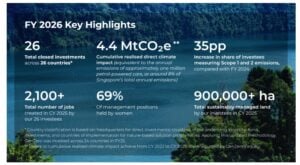
- The company reported 1.4 million metric tons of carbon dioxide equivalent (MtCO₂e) in direct realized climate impact in 2025.
- That lifted its cumulative direct impact to 4.4 MtCO₂e between 2022 and 2025, based on GenZero’s stake-adjusted measurement.
Direct realized impact increased 47% from the previous year. When direct and indirect impacts are combined, GenZero said its portfolio generated 8.3 MtCO₂e of realized climate impact in 2025.
The results come at an important point for the carbon market. Buyers still want credits, but they are becoming more selective. At the same time, project developers need long-term commitments to finance projects that may take years to generate credits.
That is pushing the market toward a new model: climate projects must show both measurable environmental benefits and a credible path to commercial scale.
Carbon Footprint and Climate Impact Data

GenZero Expands Its Global Climate Portfolio
GenZero outlined its progress in its second Sustainability Report, Steadfast in Shifting Times. The company now has 26 closed investments across 26 countries, covering climate technology, nature-based solutions and carbon-market infrastructure.
Overall, nature remains an important part of the strategy.
More than 900,000 hectares are now under sustainable management through GenZero-backed investments. That is up from about 750,000 hectares at the end of 2024 and equals almost 13 times the land area of Singapore.
These projects can deliver more than carbon benefits. Forest conservation, restoration and sustainable land management can also support biodiversity, improve ecosystems and create economic opportunities.
Stronger Impact Measurement
GenZero has also strengthened how it measures portfolio performance. The share of portfolio companies measuring Scope 1 and Scope 2 emissions increased by 35 percentage points to 58% for the financial year ended March 31, 2025. More than 2,100 jobs were also created across investee companies under its expanded impact framework.
Climate Investment Is Becoming More Commercial
The bigger shift, however, is in how investors approach climate solutions.
Early-stage climate companies once attracted funding largely because of their emissions-reduction potential. Today, investors increasingly want to know whether those solutions can compete on cost, scale production, and generate reliable revenue.
GenZero calls this approach “principled pragmatism.”
The strategy reflects a tougher climate investment environment. Higher financing costs, supply-chain challenges, and policy uncertainty have made it harder for emerging technologies to move from pilot projects to commercial operations.
At the same time, demand for climate solutions continues to grow.
Rising electricity consumption, including demand linked to artificial intelligence and data centers, is increasing pressure on businesses to manage both energy costs and emissions. As a result, technologies that can cut emissions without adding high costs could gain an advantage.
Carbon Market Capital Is Moving Into Future Supply
This commercial focus also fits a major change taking place in carbon markets.
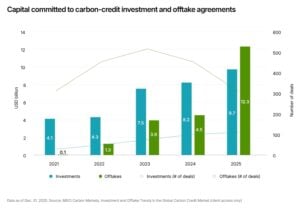
MSCI found that total tracked investment and offtake activity in the global carbon-credit market reached $22 billion in 2025, a 72% increase from 2024. However, the market recorded fewer deals, showing that larger transactions are driving growth.
More importantly, buyers are increasingly securing future supply.
- $12.3 billion went into carbon-credit offtake agreements in 2025.
- Offtakes exceeded direct investment for the first time.
- Forward agreements and pre-purchases represented 66% of offtake value.
- Corporate carbon-market activity reached $11.4 billion.
The trend matters for project developers. A long-term offtake can provide predictable future revenue, making it easier to raise capital and build projects.
It also shows that large buyers are becoming more proactive. Instead of waiting for credits to reach the market, companies are increasingly helping secure future supply from projects they consider strategically important.
GenZero’s Low-Carbon Cement Targets a Major Source of Emissions
GenZero’s investment in Terra CO2 shows how this strategy is taking shape.
The company represents GenZero’s first investment in the built environment sector. Terra CO2 develops lower-carbon cementitious materials using locally available feedstocks.
The opportunity is significant because cement remains one of the hardest industrial sectors to decarbonize. Traditional cement production emits pollutants from both fuel combustion and the chemical processes used to make clinker.
Therefore, replacing some conventional cement with lower-carbon alternatives could reduce emissions without forcing builders to change how they construct buildings completely.
The challenge is cost.
If low-carbon materials cannot compete with conventional products, adoption will remain limited. GenZero’s investment reflects the growing focus on solutions that can address emissions while also making commercial sense.
Nature Restoration Attracts More Capital
GenZero is also expanding its nature-based investments. Its first investment in Brazil came through The Reforestation Fund, which targets the conservation, restoration and reforestation of 270,000 hectares of degraded land across Latin America.
Nature projects have become an increasingly important part of the carbon market. However, buyers now demand stronger evidence that projects deliver real and lasting climate benefits.
That is changing where capital goes.
- MSCI found that nature restoration attracted $10.1 billion of investment and offtake activity in 2025, more than double its 2024 level.
- Carbon engineering attracted another $10.3 billion. Together, the two categories accounted for 93% of tracked carbon-market deal activity.
The numbers suggest that buyers are concentrating capital around carbon removal and nature projects rather than spreading funding evenly across the market.
Carbon Credits and Sustainable Agriculture
GenZero’s involvement in sustainable agriculture highlights another important trend. The Good Rice Alliance significantly secured a long-term agreement with Amazon for more than 680,000 tCO₂e of carbon credits from methane-reduction projects in India.
Rice cultivation can generate methane when farmers flood fields. Improved water management can reduce those emissions while maintaining rice production.
Long-term agreements can give developers greater revenue visibility before credits reach the market. They can also help projects secure financing and scale operations.
Demans for Future supply
This demand for future supply is particularly important for carbon removal.
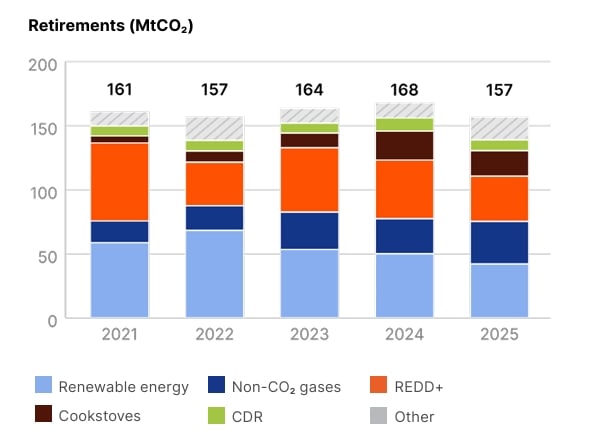
- Carbon Direct’s 2026 market analysis found that carbon-credit retirements fell 7% in 2025, even as corporate climate commitments increased 227%.
- It also found that more than 80% of high-durability carbon removal capacity is at risk of not being realized without additional offtake commitments.
That creates a clear financing gap.
The market may have a growing pipeline of future carbon removal projects, but developers still need buyers willing to commit before those projects are fully operational.
Blended Finance Opens Another Route
In this domain, the company participated in a $91 million blended finance package for the Imperative Spekboom Ecosystem Restoration Project. The structure combines a World Bank Outcome Bond with a streaming facility involving GenZero and other investors.
Blended finance can reduce some of the risks that discourage traditional investors from entering climate and nature projects.
That could become increasingly important as developers seek larger amounts of capital to build climate infrastructure.
Building a Stronger Carbon Market
However, GenZero’s work extends beyond individual investments. It launched the Action for a Resilient Climate Coalition to help mobilize funding for high-quality climate projects. It also expanded its Green Fuel Forward initiative to 45 participating organizations to support demand for sustainable aviation fuel certificates across Asia-Pacific.
GenZero also joined the All Aboard Coalition and became part of the steering committee for the ASEAN Common Carbon Framework.
These initiatives reflect a broader goal: building the infrastructure needed for climate finance to grow.
The carbon market still faces challenges around credit quality, transparency, and inconsistent rules. Carbon Direct found that carbon removal represented only 6% of voluntary carbon credits in its 2026 analysis, while fewer than 10% of the projects it reviewed met its high-quality thresholds with minimal reservations.
That scarcity could make high-quality projects more valuable as corporate demand increases.
The Next Stage of Climate Finance
GenZero’s 4.4 MtCO₂e of cumulative direct climate impact shows how its portfolio has grown since 2022. More importantly, its strategy reflects where climate finance may be heading next.
The market is no longer focused only on generating more carbon credits. Buyers want better credits. Investors want stronger projects. Developers need reliable offtake agreements. Climate technologies must also prove that they can operate as sustainable businesses.
GenZero’s investments in low-carbon cement, reforestation, sustainable agriculture and climate finance show how these priorities can come together.
The carbon market’s next growth phase may therefore look different from its earlier years. Instead of relying mainly on spot purchases, companies are increasingly using long-term offtakes and pre-purchases to secure future supply.
That shift could benefit projects with strong measurement, credible climate claims and clear commercial models.
A market for two gigatonnes of CDR by 2050?
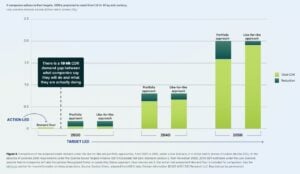
As carbon markets mature, the winners may not simply be projects that promise the largest emissions reductions. They will be projects that can prove their impact, attract long-term buyers and scale economically.
For investors like GenZero, that combination could become the defining test of the next generation of climate solutions.