


Climate Impact X (CIX) and Carbonplace plan to merge in a deal that could reshape the infrastructure behind global carbon markets. The Singapore-based environmental markets exchange and London-based carbon portfolio management platform announced their intent to combine on August 26, 2026.
The deal would bring together CIX’s exchange, trading, and price-discovery tools with Carbonplace’s multi-registry access and bank-grade settlement system. The companies say the goal is to create a more connected system for buying, trading, settling, holding, and retiring carbon credits.
The deal still needs regulatory approval. The companies expect to finish the integration by Q1 2027. Both businesses will keep their current brands during this time.
Two Carbon Market Powerhouses Move to Join Forces
CIX and Carbonplace operate at different points in the carbon credit transaction process.
CIX provides procurement, trading, and price discovery. Its platforms include an exchange for standardized carbon contracts and tools for project sourcing and transactions. CIX also provides price benchmarks and data products.
Carbonplace focuses on what happens after a trade. Its platform provides multi-registry access, settlement, custody, reporting, and retirement. It currently connects users to 14 carbon and renewable energy certificate registries through a single system.
The merger would combine these functions. Buyers and sellers could have one clear path. They can find and price credits easily, and they can complete the transaction and track ownership smoothly.
The companies say this could ease some of the friction in the carbon market. Right now, it’s divided across various exchanges, registries, countries, and standards.
CEO Oi-Yee Choo remarked:
“Scaling access and liquidity to meet the growing needs of global carbon markets requires robust, trusted infrastructure. This infrastructure must work across voluntary and compliance schemes, and across geographies and standards.”
12 Financial Giants Back the Deal
The proposed company will have backing from 12 major financial institutions, investors, and market operators.
- They are BBVA, BNP Paribas, CIBC, DBS, GenZero, Mizuho Financial Group, National Australia Bank, NatWest Group, Singapore Exchange (SGX), Standard Chartered, Sumitomo Mitsui Banking Corporation (SMBC), and UBS.
The shareholder base gives the deal a strong link to traditional financial markets.
CIX itself was established in 2021 and is backed by DBS, GenZero, Mizuho, SGX, and Standard Chartered. GenZero is a decarbonization investment platform founded by Temasek. In 2020, major banks like BBVA, BNP Paribas, CIBC, National Australia Bank, NatWest, SMBC, Standard Chartered, and UBS supported Carbonplace.
The combined ownership, therefore, gives the new platform access to financial institutions across Asia, Europe, and other major markets.
Can One Platform Fix Carbon Market Fragmentation?
The merger comes as carbon markets try to become larger and more credible. A major challenge is fragmentation.
Different carbon standards and registries use different systems for issuing, tracking, and retiring credits. Buyers may also need separate relationships with different platforms to source credits, assess prices, and complete transactions. That can make carbon trading more complex than trading many traditional financial assets.
CIX and Carbonplace argue that stronger infrastructure can help solve this problem. Their proposed platform would connect price discovery, trading, registry access, settlement, custody, and retirement across the transaction lifecycle.
That could become more important as carbon markets expand beyond voluntary corporate purchases.
Article 6 Could Increase Demand for Infrastructure
The growth of Article 6 of the Paris Agreement is one reason companies see a need for better infrastructure.
Article 6.2 allows countries to transfer emissions reductions internationally, provided they follow agreed accounting rules. This creates a potential bridge between national climate policies and international carbon markets.
The CIX-Carbonplace announcement also points to the Carbon Offsetting and Reduction Scheme for International Aviation (CORSIA). CORSIA requires participating airlines to use eligible emissions units to address certain growth in international aviation emissions.
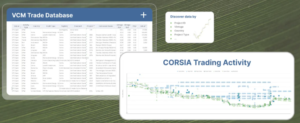
As these systems expand, carbon transactions may involve more than just voluntary corporate buyers. Governments, financial institutions, and regulated companies could play a bigger role.
That could increase demand for systems that can track ownership and retirement with clear records.
CIX Brings Trading and Price Discovery to the Table
Price transparency is another major part of the proposed merger. Carbon markets often have different prices for credits based on project type, location, vintage, and quality. This can make it difficult for buyers to compare credits.
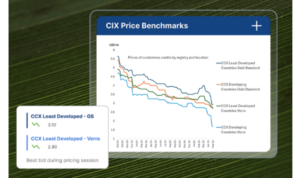
CIX operates an exchange and develops price benchmarks designed to provide more visibility into market-driven prices. Its exchange offers standardized contracts. This lets buyers purchase larger volumes of credits that meet specific requirements. They don’t have to pick individual credits from each project one at a time.
Carbonplace adds a different layer. Its system tracks ownership and provides settlement and reporting tools across multiple registries.

Combining the two could address both market sides: finding and pricing credit, then securely completing and recording the transaction.
Singapore and London Build a Carbon Market Bridge
The proposed merger also connects two important financial centers. CIX is headquartered in Singapore, while Carbonplace is based in London. The companies say the combined business could connect participants across different time zones, regulatory systems and trading communities.
That Asia-Europe link could be important for carbon markets.
Southeast Asia offers great potential for nature-based carbon projects. Meanwhile, Europe holds vast amounts of corporate and institutional capital eager for climate investments.
A more connected platform could make it easier to link project developers and suppliers in emerging markets with international buyers.
The companies highlight cooperation among Singapore, the UK, and Kenya. They’re working together through the Coalition to Grow Carbon Markets. This group aims to boost carbon market development.

Better Infrastructure Won’t Fix Credit Quality
Despite its potential, the deal does not automatically solve the carbon market’s biggest challenges. A better trading and settlement system cannot by itself guarantee that carbon credits deliver real emissions reductions or removals.
Credit quality remains critical.
CIX says it maintains standards around quality, impact, and credibility for the products offered through its platforms. Carbonplace focuses on secure ownership, tracking, and reporting. The broader market still needs strict rules for additionality, permanence, monitoring, reporting, and verification.
Liquidity is another challenge.
A platform can make trading easier, but buyers and sellers still need to participate at a sufficient scale. Without enough market activity, price discovery and trading volumes can remain limited.
The merger, therefore, provides infrastructure. It does not guarantee the growth of the underlying market.
The Bigger Goal: Unlock Institutional Carbon Trading
The CIX-Carbonplace deal reflects a broader shift in carbon markets.
Early voluntary carbon markets relied heavily on project developers, brokers, and individual registries. As the market becomes more connected to Article 6, CORSIA, and sovereign climate policies, participants need systems that can handle more complex transactions.
The proposed merger aims to provide that foundation. If completed, the merger would mark a major consolidation in carbon market infrastructure.
The bigger question is whether a more connected trading and settlement system can help carbon markets attract the liquidity, transparency and institutional capital needed to scale.