

Mercedes-Benz has secured priority access to ProLogium’s latest Gen4 solid-state battery cells, expanding a partnership that could help bring higher-energy, safer, and more efficient batteries to future electric vehicles.
The companies signed a joint testing agreement on September 24, 2026. Mercedes-Benz will test ProLogium’s Gen4 cells for electrical, thermal, and safety performance at its own facilities and at specialist testing centers.
One point is important: the official announcement describes “priority access,” not exclusive rights. The agreement gives Mercedes-Benz early access to test the technology, but it does not say that Mercedes has exclusive global rights to the cells.
The deal builds on nearly 10 years of cooperation between the two companies. Mercedes-Benz invested in ProLogium in 2022 and joined its board as part of efforts to develop next-generation battery technology.
Jörg Burzer, Mercedes‑Benz Group AG, Chief Technology Officer, said:
“At Mercedes-Benz, we are committed to shaping the future of electric mobility through technological leadership and innovation. Our long-standing partnership with ProLogium is a strong example of how we bring the best expertise together to advance next-generation battery technologies. By combining ProLogium’s pioneering solid-state battery approach with Mercedes-Benz’s deep battery development, testing, and integration capabilities, we are taking the next step in exploring advanced battery technologies for future electric vehicles.”
More Energy, Less Weight: Gen4’s Big Battery Pitch
Solid-state batteries replace the liquid electrolyte used in conventional lithium-ion cells with a solid material. The technology can allow manufacturers to use higher-capacity materials while reducing some fire and safety risks linked to liquid electrolytes.
ProLogium’s Gen4 lithium ceramic battery uses a fully inorganic electrolyte and ceramic separator. The company says its anode-less version can reach 430–470 Wh/kg and 1,000–1,100 Wh/L at the cell level.
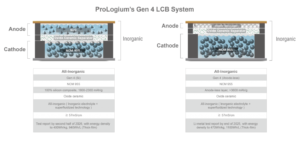
These specifications come from the company. They show cell-level performance, not the energy density of a full vehicle battery pack.
ProLogium states that Gen4 combines high energy density with fast charging. It also performs well in low temperatures and has better safety features. Its active safety system is intended to help prevent thermal runaway.
The potential benefit for EVs is significant. Higher energy density means a battery can store more energy without adding as much weight. That could support longer driving range or allow automakers to use smaller battery packs for the same range.
Mercedes Has Already Put Solid-State to the Road Test
Mercedes-Benz has been testing solid-state batteries on public roads since 2025. In September 2025, the company reported that a modified EQS test vehicle traveled 1,205 kilometers on a single charge from Stuttgart to Malmö. The vehicle arrived with about 137 kilometers of remaining range.
That vehicle used lithium-metal solid-state cells supplied by Factorial Energy, not ProLogium. Mercedes-Benz announced that the new battery boosts usable energy by 25%. It also maintains a weight and size similar to the standard EQS battery.
The demonstration showed the potential of solid-state technology, but it was a test vehicle rather than a mass-produced model. The new ProLogium agreement gives Mercedes another route to develop the technology and compare different solid-state battery approaches.
The EV Battery Market Is Getting Bigger—Fast
The timing is important because global demand for EV batteries is growing rapidly. The International Energy Agency estimates that EV battery deployment hit 1.2 terawatt-hours (TWh) in 2025. This is nearly a 30% increase from 2024 and over seven times the level in 2020. EV batteries accounted for more than 70% of total battery deployment during the year.
Global electric-car sales also exceeded 20 million units in 2025, up about 20% year over year. One in every four new cars sold worldwide was electric. That is creating strong demand for batteries that can deliver better range, faster charging, and improved safety without sharply increasing vehicle cost.
But solid-state technology is entering a market already dominated by conventional lithium-ion batteries. The global battery industry remains heavily concentrated.
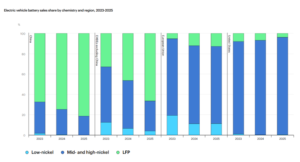
The IEA says global lithium-ion battery manufacturing capacity exceeded 4 TWh at the end of 2025, up about 30% from 2024. China accounted for more than 80% of global manufacturing capacity and more than 80% of battery-cell production.
Chinese battery makers also supplied almost 75% of global EV battery deployment in 2025. This creates a major challenge for European automakers seeking more control over their battery supply chains.
Solid-state batteries could offer both a technology advantage and a chance to diversify supply. ProLogium is building its first overseas gigafactory in Dunkirk, France, giving Europe another potential source of advanced battery cells.
ProLogium Is Moving Toward Mass Production
ProLogium has already moved beyond the laboratory stage. The company began mass production of its Gen3.5 lithium ceramic battery in Taiwan in September 2026. A third-party TÜV test confirmed a 381 Wh/kg gravimetric energy density and 903 Wh/L volumetric energy density for its 185.4-Ah large-format cell.
ProLogium says its Taiwan gigafactory had shipped more than 800,000 cells by 2026. It is now preparing to bring Gen4 production to Europe.
The Dunkirk factory broke ground in February 2026. ProLogium’s current plan calls for 0.8 GWh of Gen4 production in 2028, with capacity rising to 4 GWh by 2030 and 12 GWh by 2032.
The company has also reserved land that could allow the site to expand to as much as 48 GWh in the future. This planned expansion will be important if automakers want solid-state cells at meaningful scale.
Europe Wants More Local Battery Production
The European link is important for Mercedes-Benz. The EU’s battery industry remains much smaller than China’s. By the end of 2025, Europe held just 6–7% of the world’s lithium-ion battery manufacturing capacity. In contrast, China dominated with over 80%.
Building more local battery capacity can reduce supply chain risks and support Europe’s automotive industry. Mercedes-Benz has been working on this through several battery partnerships and its wider electrification strategy.
The company says its Ambition 2039 plan aims for its new-vehicle fleet to be net carbon-neutral across the value chain and vehicle life cycle by 2039. Mercedes also targets reducing lifecycle CO2 emissions per passenger car by up to 50% by 2030 compared with 2020.
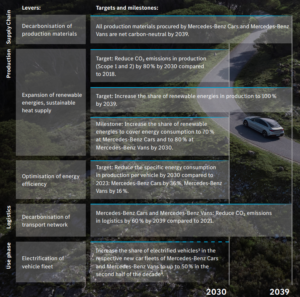
Battery production is a major part of that strategy. Mercedes needs battery-cell partners to achieve net-carbon-neutral cell production. This could cut emissions from battery manufacturing by around 40%.
Could Better Batteries Also Cut EV Emissions?
Solid-state batteries are not automatically low-carbon. Their climate benefit depends on the materials used, where cells are manufactured, the electricity used in production, and what happens to the battery at the end of its life.
The Next EV Battery Race Goes Beyond Range
The Mercedes-ProLogium agreement is significant because it combines automotive demand with battery innovation and European manufacturing ambitions. Mercedes gets early access to ProLogium’s Gen4 technology. ProLogium gets another major automaker testing its cells and a potential path toward future vehicle applications.
For the energy transition, the potential prize is not simply longer-range EVs. Energy-dense batteries can lead to lighter batteries, more efficient vehicles, and less material use. This may also lower lifecycle emissions, but only if the cells are made sustainably and at a competitive cost.
The latest agreement is a testing and evaluation step. Still, it shows that the next stage of the EV battery race is moving from the laboratory toward commercial production, supply chain control, and lifecycle sustainability.