

Europe’s soil carbon market has reached a new milestone. The European Soil Revitalization Programme, covering farms in France and Belgium, has issued the first carbon credits worldwide under the Gold Standard Soil Organic Carbon (SOC) Framework Methodology.
South Pole, agricultural technology company Gaïago, and Gold Standard announced the first issuance on October 6, 2026. The initial issuance covers 6,000 verified hectares. The wider program includes 727 farms and could expand to more than 39,282 hectares.
At full enrollment, the project is forecast to remove 264,174 tonnes of CO₂ equivalent (tCO₂e) during its first crediting period.
The milestone comes as Europe builds a stronger policy framework for soil health and carbon farming. The European Commission says 60% to 70% of EU soils are unhealthy, while new EU rules are creating a formal system for certifying carbon farming activities.
That could create a growing role for high-quality soil carbon projects in Europe’s climate market.
A First for Gold Standard Soil Credits
The European Soil Revitalization Programme is the first project worldwide to issue credits under Gold Standard’s Soil Organic Carbon Framework Methodology. Gold Standard launched the framework to measure changes in soil carbon and greenhouse gas emissions when farmers adopt improved agricultural practices.
The framework can cover both emissions reductions and carbon sequestration in soils. It also allows different approaches to measure soil carbon, including direct field measurements, scientific models, and approved default factors.
Sarah Leugers, Chief Growth Officer at Gold Standard, said:
“As the first project worldwide to issue credits under our Soil Organic Carbon Framework Methodology, the European Soil Revitalization Programme shows how rigorous standards can unlock vital finance for sustainable land management. We congratulate Gaïago and South Pole on this important milestone.”
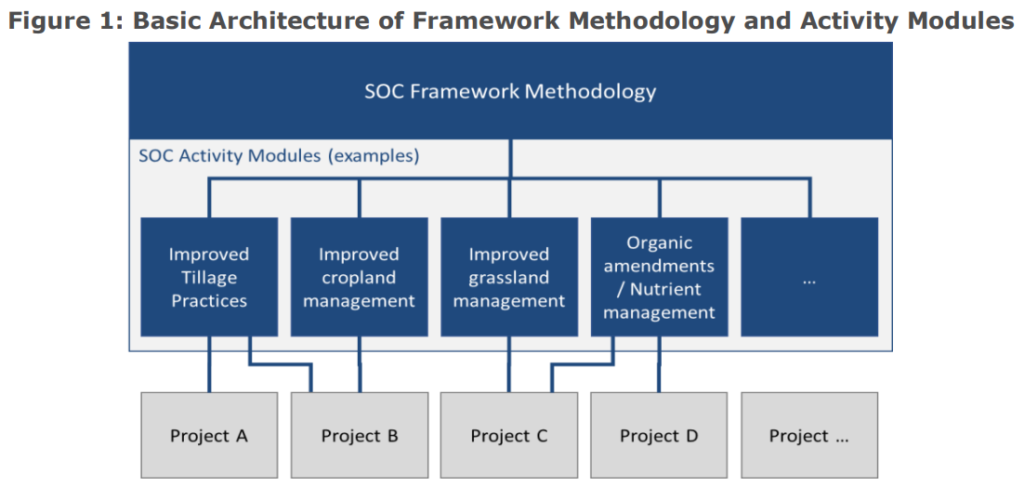
For the French and Belgian project, the specific activity module covers biostimulants for soil revitalization. The project combines this approach with other regenerative farming practices, including reduced or zero tillage and year-round cover crops.
The program began in 2022 and has a planned 20-year operational horizon. South Pole has worked with Gaïago since launch as the carbon asset development partner. They help develop the project and complete the certification and verification process.
The project uses the UN Food and Agriculture Organization’s GSOC monitoring, reporting, and verification protocol (MRV). It also aligns with the FAO’s RECSOIL initiative.
6,000 Hectares Mark the First Step
The first issuance is based on the program’s initial 6,000 verified hectares. The full program is much larger.
- Across its 727 participating farms, the project could eventually cover more than 39,282 hectares and remove an estimated 264,174 tCO₂e during its first crediting period.
That works out to roughly 2.5 tCO₂e per hectare per year based on the project’s full enrollment forecast.
The first group of participating farms has already produced measurable results. The project developers’ latest calculations from August 2026 show that the first cohort removed about 3.1 tCO₂e per hectare each year over the last three years.
The developers have not publicly disclosed the exact number of carbon credits contained in the inaugural issuance in the announcement.
That distinction matters. The 6,000-hectare figure is the verified area covered by the first issuance, not a statement that 6,000 credits were issued. As more farms join the program, the project could become a meaningful source of European soil-based carbon removals.
Why Soil Carbon Matters to European Farmers
The project arrives against a major soil-health problem. The European Commission says 60% to 70% of EU soils are in an unhealthy state. Soil degradation costs the EU more than €50 billion each year, according to the Commission.
Loss of soil organic carbon is one of the main forms of degradation. Healthy soil does more than store carbon. It helps retain water, supports crops, protects biodiversity and improves the resilience of farmland. That gives soil carbon projects a different value proposition from credits focused only on carbon removal.
Regenerative practices can potentially improve farm conditions while also creating carbon market revenue.
For farmers, however, changing agricultural practices can involve upfront costs and uncertainty around yields. Carbon finance can help offset some of those costs by creating another source of income.
That is a key part of the European Soil Revitalization Programme. The project aims to enhance soil structure, fertility, and water retention. It also boosts farm resilience and increases soil carbon stocks.
Gold Standard Tightens the Rules for Soil Carbon
Measuring soil carbon is not as simple as measuring emissions from a factory. Carbon levels can vary across fields and change with weather, farming practices and soil conditions. Carbon stored in soil can also be released later if management practices change.
- Gold Standard has therefore placed strong requirements around additionality, permanence, uncertainty and measurement.
Its SOC framework lets projects use various measurement and modeling methods. However, it requires that uncertainty be addressed in the calculations.
In September 2025, Gold Standard also released specific guidelines for using soil organic carbon models. The guidelines set out a seven-step process covering model selection, data collection, calibration, validation, prediction, and verification.
The goal is to make soil carbon estimates more consistent while still allowing models to reflect local soil and climate conditions. That could become increasingly important as more agricultural projects seek carbon market certification.
Europe Builds a New Framework for Carbon Farming
The Gold Standard issuance is happening alongside a separate European policy push. In July 2026, the European Commission adopted new certification methodologies under the Carbon Removals and Carbon Farming Regulation (CRCF).
The rules cover three types of carbon farming:
- Agriculture and agroforestry on mineral soils,
- Rewetting and restoration of peatlands and other organic soils, and
- Afforestation.
The EU states that these activities offer benefits beyond just carbon removal. They also enhance climate resilience, protect biodiversity, and improve food and biomass security. This creates an emerging European framework for certifying carbon farming.
The Gold Standard program is separate from the EU’s CRCF certification system. However, both developments point toward a larger focus on measuring and rewarding carbon stored in agricultural land.
For project developers, that could mean more opportunities to finance regenerative farming. For buyers, it could create a wider pool of European carbon removal projects.
Soil Carbon Credits Command Premium Prices
Soil carbon is emerging as a premium segment of the voluntary carbon market. In January 2026, Microsoft agreed to buy 2.85 million soil carbon removal credits from Indigo Carbon over 12 years. Reuters reported that Indigo’s historical credits sold for 60–80 per tonne, implying a potential deal value of 171 million–228 million.
Microsoft’s disclosed purchases from Indigo now total 2.95 million tonnes, including earlier purchases of 40,000 tonnes in 2024 and 60,000 tonnes in 2025.
Europe is also seeing significant transactions. In June 2026, South Pole facilitated the sale of 29,000 Verra-certified soil carbon credits from eAgronom for €1.46 million, equal to about €50 per tonne.
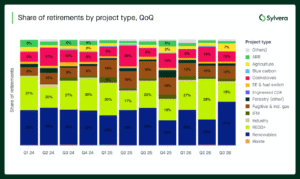
These transaction prices are much higher than in the broader VCM. In Q3 2026, the average retired credit price was $6.92/t. This shows how much more buyers will pay for high-quality agricultural removals. The volume of retired credits also increased for the quarter, per Sylvera’s report.
A New Test for Europe’s Soil Carbon Market
The first Gold Standard soil issuance does not mean soil carbon has become a mature market. It does, however, remove one important barrier:
- A large European agricultural project has now demonstrated that soil carbon can be certified and issued under Gold Standard’s dedicated framework.
The next challenge is scale. The program must expand beyond its initial 6,000 hectares while maintaining reliable measurement and verification. More projects will also need to show that soil carbon gains are real, additional and durable.
Europe’s policy environment is moving in the same direction. The EU aims to achieve healthy soils by 2050, while its carbon-farming rules are creating new certification pathways for agricultural carbon projects.
If more farmers can combine regenerative practices with credible carbon revenue, soil could become an increasingly important part of Europe’s carbon-removal market.
The first Gold Standard issuance is therefore more than a project milestone. It is an early test of whether carbon finance can help turn healthier European farmland into a measurable climate asset.