

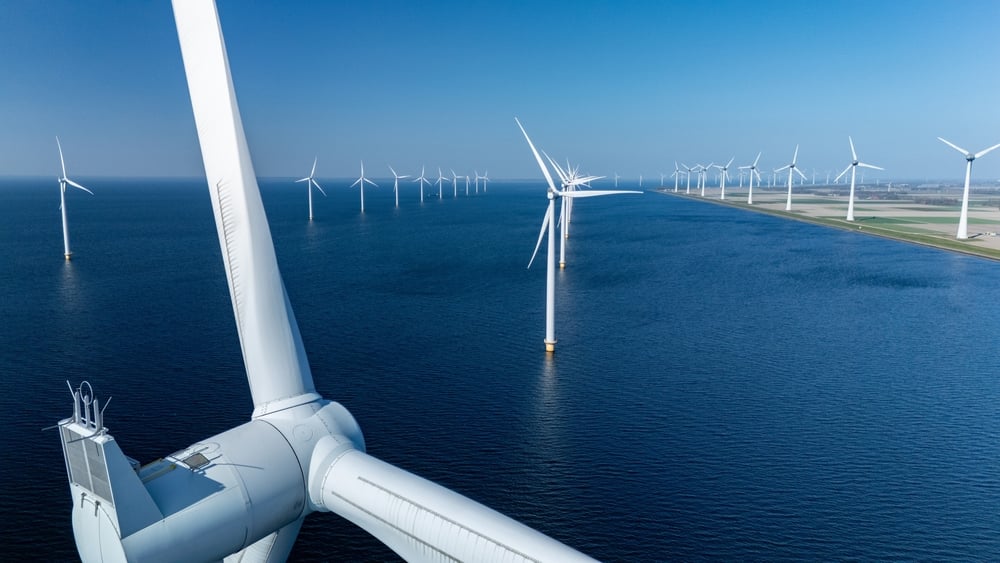
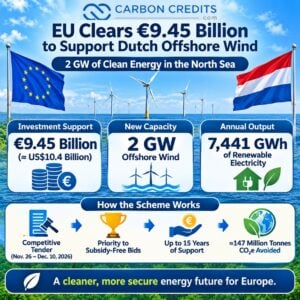
The European Commission has approved a €9.45 billion (about US$10.4 billion) Dutch state aid scheme to support two new offshore wind farms in the North Sea. The projects, IJmuiden Ver Gamma-A and Gamma-B, will have a combined planned capacity of 2 gigawatts (GW) and could generate up to 7,441 gigawatt-hours (GWh) of renewable electricity each year.
Announced on November 17, the approval gives the Netherlands a new way to support offshore wind development as higher costs and uncertain market conditions make projects harder to finance. The government estimates that the two wind farms could avoid around 147 million tonnes of carbon dioxide equivalent (CO2e) over their lifetimes.
However, the €9.45 billion is a maximum support budget, not money already awarded or spent. Developers must still compete for the two sites, and the government will first give priority to bids that do not require subsidies.
EU Clears €9.45 Billion to Support Dutch Offshore Wind
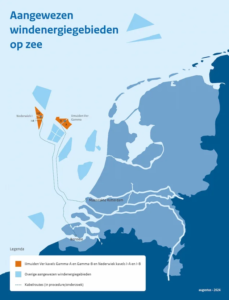
The European Commission approved the Netherlands’ Temporary Support Mechanism for Offshore Wind Energy, known as TOWOZ, under EU state aid rules. The scheme covers two wind farm sites in the IJmuiden Ver zone, located in the North Sea off the Dutch coast. Each site can support around 1 GW of offshore wind capacity.
The Netherlands plans to use the scheme to attract developers and keep the projects moving despite investment risks in the offshore wind market. The support connects to the EU’s Clean Industrial Deal. This deal aims to boost European industry and speed up the move to cleaner energy.
The maximum budget is €9.45 billion, with support available for up to 15 years from the start of operations. Both projects are expected to begin operating in 2032.
The approval is important because offshore wind projects require large upfront investments in turbines, foundations, cables and grid connections. Developers also face uncertainty over future electricity prices, construction costs and financing.
By approving the scheme, the Commission has allowed the Netherlands to offer financial support under a defined set of conditions. It does not guarantee that developers will receive the full amount.
Teresa Ribera, Executive Vice-President for Clean, Just and Competitive Transition, remarked:
“Every euro invested in homegrown clean energy makes Europe more energy-independent and our industry more competitive. Today’s decision unlocks €9.5 billion in Dutch support for two major offshore wind projects in the North Sea, bringing more clean electricity to the grid, cutting emissions and reducing our reliance on imported fossil fuels.”
How the Dutch Wind Farm Support Will Work
The Dutch government will organize two competitive tenders for the wind farm sites. Developers can choose between submitting a bid without subsidies or requesting financial support.
Under the first option, companies can offer to pay the Dutch state for the right to develop a site. The government will give priority to eligible bids that offer a concession payment.
Only if no qualifying subsidy-free bids are received will authorities consider applications requesting financial support. In that case, developers will compete based on the lowest premium they need on top of electricity market prices.
The support will take the form of a variable premium. It is designed to help cover the gap when market electricity prices are too low to support the project’s costs.
The scheme also includes safeguards to protect public funds. These include limits on the amount of support developers can request and a repayment mechanism if electricity prices rise above the agreed reference price. This claw-back provision helps prevent companies from receiving excessive public support when market conditions improve.
The tender process is scheduled to open on November 26 and close on December 10, 2026. The Netherlands Enterprise Agency (RVO) expects to award the permits in the first quarter of 2027.
- RELATED: China and Türkiye Sign $15 Billion Renewable Energy Deal at COP31, Target 7 GW of Solar and Wind
Two Projects Could Deliver 7.4 TWh of Renewable Electricity
The two IJmuiden Ver wind farms could generate up to 7,441 GWh of renewable electricity annually. This output would add a major source of clean power to the Dutch electricity system. It might also lower the need for electricity from fossil fuels, which depends on factors like demand, grid conditions, and which power sources are replaced.
The Netherlands estimates that the projects could prevent around 147 million tonnes of CO2e over their lifetimes. Actual results will depend on construction, operating performance, electricity generation and the energy mix the wind farms replace.
The projects will also connect to the offshore electricity grid operated by TenneT, the Dutch-German transmission system operator. The two sites will share an offshore platform with a 2 GW direct-current connection to the onshore grid.
The shared connection aims to improve offshore grid use. It also reduces the effort needed to link both wind farms to the electricity system.
EU Rules Push for Stronger European Wind Supply Chains
The tenders will also include requirements under the EU Net-Zero Industry Act. These rules seek to diversify supply chains for wind turbines and key parts. This will help reduce heavy reliance on imports from outside Europe.
This gives the scheme a wider purpose beyond adding renewable electricity. It also supports the EU’s effort to strengthen its clean energy manufacturing base and improve supply chain security.
Offshore wind projects rely on specialized equipment, including turbine blades, towers, foundations, generators and electrical systems. A more diverse supply chain can help reduce exposure to trade disruptions and dependence on a small number of suppliers.
The projects will therefore need to meet technical, financial and security requirements as part of the tender process. Dutch authorities will assess developers’ financial capacity, technical experience and ability to operate the wind farms safely.
Environmental conditions also apply. Dutch rules require temporary turbine shutdowns during periods of heavy bird migration, using prediction models to help limit bird strikes. The shutdown time is capped at 60 hours per year under the relevant site rules.
Offshore Wind Faces a Tougher Investment Climate
The approval comes as the offshore wind industry faces higher costs and greater uncertainty. Inflation, supply chain pressures, interest rates and rising construction expenses have made it harder for developers to secure financing for large projects.
The Netherlands has already adjusted the support terms for the Gamma sites to account for investment uncertainty and potential costs related to electricity grid charges. The maximum tender price was raised to €117 per megawatt-hour (MWh) for Gamma-A and €116/MWh for Gamma-B.
The new support mechanism aims to boost projects’ chances of attracting developers. It also limits the use of public funds. The government will consider subsidy requests only if the tender does not produce eligible bids that can proceed without aid.
The Netherlands is also preparing a longer-term contract-for-difference model for offshore wind, expected to take effect from mid-2027. These contracts can offer steady revenue. They pay developers if market prices drop below a set level. If prices go up, developers must repay some of the funds.
This type of support can reduce revenue uncertainty and make it easier for developers to finance capital-intensive projects. However, the final cost to the public will depend on electricity prices and the terms of the contracts.
Dutch Wind Expansion Supports Europe’s Climate Goals
The two projects form part of the Netherlands’ wider offshore wind development plans and the EU’s effort to increase renewable energy production. Offshore wind can provide large amounts of electricity without the direct fuel-related emissions associated with coal and natural gas generation. It can also help improve energy security by reducing reliance on imported fossil fuels.
However, new wind capacity alone will not deliver the energy transition. Countries also need stronger electricity grids, storage, flexible power systems and enough demand for renewable electricity.
For the Netherlands, the next milestone will be the November tender. The response from developers will show whether the revised support terms are strong enough to attract investment.
If the projects proceed as planned, they could add 2 GW of offshore wind capacity from 2032 and help cut emissions from the power sector. The EU approval provides financial backing, but the final test will be whether developers commit capital, construction stays on schedule, and the wind farms deliver the expected clean electricity.