


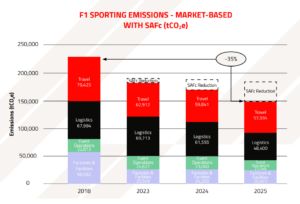
Formula 1 has reported a 35% reduction in its carbon footprint since 2018, putting the sport on track to achieve its Net Zero 2030 target. The latest figures show that emissions fell to around 148,800 tonnes of CO₂ equivalent (tCO₂e) in 2025, down from a 2018 baseline of 228,793 tCO₂e. The sport also reduced emissions by 12% compared with 2024 alone.
The update comes as the 2026 FIA Formula One World Championship is currently underway. Teams are competing across a 24-race global calendar that runs from March to December.
The season has already completed seven rounds and remains one of the most ambitious in the sport’s history. It features new regulations, expanded sustainability initiatives, and preparations for the introduction of 100% advanced sustainable fuels in 2026.
The achievement is notable because Formula 1 has continued to expand during the same period. Stefano Domenicali, President and CEO of F1, remarked:
“At Formula 1, we act and show our achievements through facts, not just words, and I am incredibly proud that we remain on track to achieve Net Zero by 2030, made possible by the collective effort across the sport to reduce our environmental impact.”
Since 2018, the race calendar has expanded from 21 to 24 events. Annual attendance jumped from 4 million to 6.5 million fans, and the sport’s global fan base now exceeds 826 million.
Despite that growth, F1 has removed nearly 80,000 tonnes of CO₂e from its operations. This suggests the sport is reducing emissions even as its global reach continues to grow.
Why Formula 1 Set a Net Zero Goal
Formula 1 launched its sustainability strategy in 2019 and committed to reaching net zero carbon emissions by 2030. The goal is not simply to offset emissions. F1’s strategy needs at least a 50% cut in emissions from its 2018 baseline. After that, any remaining emissions can be handled through credible carbon removal or offset programs.
The challenge is significant because racing itself contributes only a small share of Formula 1’s emissions.
According to the sport’s sustainability report, the largest sources come from logistics, travel, factories, facilities, and race operations. Moving cars, equipment, and people between continents each year leaves a big environmental mark.
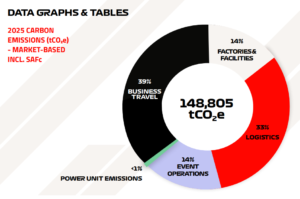
That challenge is becoming more important as global pressure grows for sports organizations to reduce emissions.
Sports-related emissions are drawing increasing attention from sponsors, investors, governments, and fans. Large international events like the ongoing 2026 FIFA World Cup often involve extensive travel, freight movement, energy use, and infrastructure requirements.
For Formula 1, reaching net zero has become both an environmental goal and a business priority.
Travel and Logistics Remain the Biggest Battleground
Travel has historically been one of Formula 1’s largest sources of emissions. The latest report shows that travel-related emissions have fallen by more than 21,000 tCO₂e since 2018, representing a 27% reduction. Several initiatives helped achieve this result.
One of the most important has been the increased use of sustainable aviation fuel (SAF). Formula 1 and its teams have doubled their SAF investments since 2024, says Ellen Jones, F1’s Head of ESG. This move has cut air charter emissions by about 40%, which is equal to 20,000 tCO₂e.
SAF is becoming a key tool for industries that rely heavily on air travel. IATA says sustainable aviation fuel can cut lifecycle emissions by up to 80% compared to regular jet fuel. This reduction depends on the feedstock and how it’s made.
Formula 1 is also changing how it moves equipment around the world.
The sport is shifting more freight from air transport to sea and land transportation, which generally produce lower emissions. For the first time, lower-carbon solutions are now being used across all three major freight modes: air, sea, and land.
Formula 1 aims to cut over 50% of broadcast and related freight from air transport by 2030. This move could lead to further reductions.
How Renewable Power Is Rewriting the Formula 1 Playbook
Another major source of emissions comes from factories, offices, and team facilities.
Formula 1 says emissions from these operations have fallen by more than 37,000 tCO₂e since 2018, representing a 64% reduction. Compared with 2024 alone, emissions dropped another 14%. Much of this progress comes from switching to renewable electricity.
Formula 1, its teams, and the FIA have expanded the use of renewable power across offices, technical centers, and manufacturing facilities. Several teams now source significant portions of their electricity from renewable energy.
This mirrors a broader trend across industries.
According to the International Energy Agency (IEA), renewable energy additions reached nearly 700 gigawatts globally in 2024, the largest annual increase ever recorded. Businesses are increasingly turning to renewable power as one of the fastest ways to reduce operational emissions.
For Formula 1, these changes have delivered some of the largest carbon reductions achieved so far.
Sustainable Fuels Could Become Formula 1’s Biggest Climate Legacy
One of Formula 1’s most ambitious projects will arrive in 2026. The sport plans to introduce 100% sustainable fuel for all next-generation hybrid race cars. The fuel is being developed with support from manufacturers, suppliers, the FIA, and energy partners.
The impact could extend far beyond racing.
The company says the fuel is designed as a “drop-in” solution that can work in many existing internal combustion engines. Supporters think this technology can cut emissions from almost 2 billion vehicles worldwide. It offers a way to improve the current fleet without needing immediate replacements.
Advanced sustainable fuels can reduce carbon emissions by approximately 85% to 96% compared with conventional fossil fuels, according to Formula 1.
Interestingly, race fuel itself accounts for less than 1% of Formula 1’s total emissions. The sport thinks the technology could impact the wider transportation sector. It may speed up the use of lower-carbon fuels. This aligns with a growing global market.

Industry forecasts predict that the sustainable aviation fuel market could grow from billions today to tens of billions annually in the next decade. Airlines are looking for alternatives to fossil fuels.
Sustainability Is Becoming a Competitive Advantage for Global Sports
Formula 1 is not alone in pursuing climate goals. Sports organizations worldwide are investing in sustainability programs as environmental performance becomes a bigger part of sponsorship, broadcasting, and brand value.
The global sports industry generates hundreds of billions of dollars annually and has a significant environmental footprint. Major leagues and event organizers increasingly face pressure to reduce emissions and improve sustainability reporting.
Formula 1’s latest results show that emissions reductions can occur alongside growth.
Since 2018, the sport has added more races, attracted more fans, and grown its audience. At the same time, it has cut emissions significantly. Formula 1’s analysis shows that without sustainability measures, its carbon footprint would have risen by about 10% during that time.
That makes the reported reductions particularly significant.
Four Years to Go: Is F1 Really on Track for Net Zero?
Formula 1 still has work to do before reaching its 2030 target. The sport must continue cutting emissions across travel, logistics, facilities, and race operations while managing future growth. It must also ensure that any remaining emissions are addressed through credible climate solutions.
However, the latest figures suggest that the strategy is working.
A 35% reduction since 2018, nearly 80,000 tonnes of emissions eliminated, a 64% cut in facility emissions, and a 27% drop in travel emissions all indicate measurable progress.
For Formula 1, the challenge has never been simply making race cars greener. The larger task has been reducing emissions across a global operation that moves people, equipment, and technology around the world every week.
With four years remaining until 2030, the sport appears closer than ever to proving that growth, performance, and emissions reductions can move forward together.