

HSBC is launching a new $4 billion financing program for China’s clean energy and low-carbon industries. The funding will support sectors such as renewable energy, electric vehicles, battery storage, hydrogen, and advanced manufacturing.
The move shows how global banks are putting more money into climate and energy transition projects. China remains the world’s biggest clean energy market and the largest producer of many green technologies.
HSBC said in its news release that the new facility will help companies reduce emissions while expanding industrial growth. The bank also expects demand for climate financing to keep rising as China upgrades its energy system. The company further noted:
“The dedicated credit facility will offer financing to eligible businesses operating in a range of sectors, including clean power, electrification of transport, data centres, and artificial intelligence. The initiative reflects our focus on supporting clients to transition and enabling innovation, growth, and opportunity.”
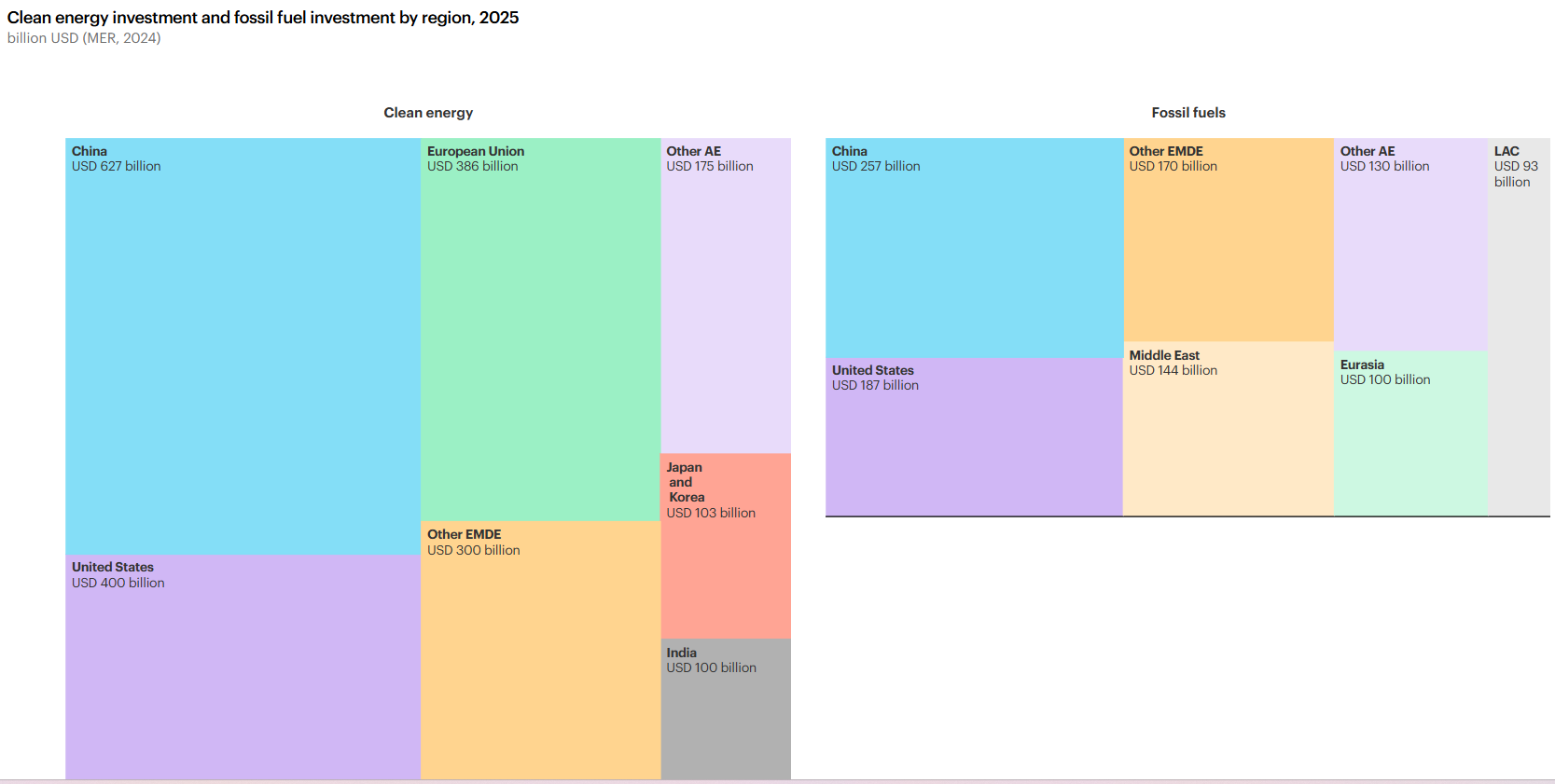
According to the International Energy Agency, China invested more than $627 billion in clean energy in 2025 alone. That represented roughly one-third of all global clean energy investment last year.
China’s Clean Energy Boom Is Reshaping Global Markets
China is now the center of the global clean energy economy. The country added 434 gigawatts of new solar and wind capacity in 2025, according to China’s National Energy Administration. That was more than the rest of the world combined.
The world’s biggest carbon emitter also dominates major supply chains tied to the energy transition:
- More than 80% of global solar panel manufacturing.
- Around 70% of the lithium-ion battery production capacity.
- The world’s largest electric vehicle market.
The China Association of Automobile Manufacturers said China sold 16.49 million new energy vehicles in 2025. EVs and plug-in hybrids now make almost 48% % of all new vehicle sales in the country for that year.
China’s climate goals are also driving investment growth. The country aims to peak carbon emissions before 2030 and reach carbon neutrality before 2060.
To support those goals, China continues expanding its national carbon market. The emissions trading system launched in 2021 and is already the world’s largest carbon market by emissions covered. Regulators are also preparing to add industries such as steel, cement, and aluminum.
At the same time, electricity demand is rising quickly because of AI infrastructure, data centers, and industrial electrification. This is increasing investment in batteries, smart grids, and renewable power systems.
These trends are creating major financing opportunities for banks like HSBC.
HSBC Doubles Down on Its Climate Finance Strategy
HSBC has made climate finance one of its biggest long-term growth areas. The bank previously committed to provide between $750 billion and $1 trillion in sustainable finance and investment by 2030.
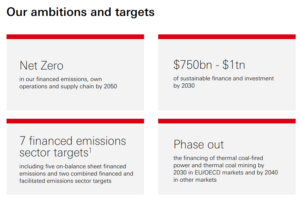
By the end of 2025, HSBC reported that it had already provided over $495.6 billion for that goal. This included lending, bonds, advisory services, and investment activities.
The bank is also working toward net-zero emissions across both its operations and financed emissions by 2050.
Financed emissions are especially important for large banks. These emissions come from the companies and projects that banks support through loans and investments.
HSBC said its Scope 1 and 2 operational emissions dropped about 76% from 2019 levels by 2024, according to its latest net zero transition plan. The decline came from higher renewable electricity use, energy efficiency improvements, and lower energy consumption across its operations.
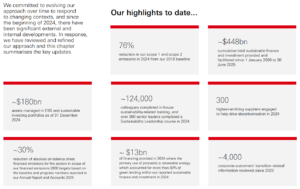
The company also said renewable electricity now covers nearly all the electricity used across its offices and operations worldwide. However, the bank still faces pressure over fossil fuel financing.
Groups like the Rainforest Action Network report that major global banks still fund oil and gas projects heavily. HSBC has tightened its fossil fuel policies recently. They’ve set limits on coal financing. Still, environmental groups want stricter lending rules.
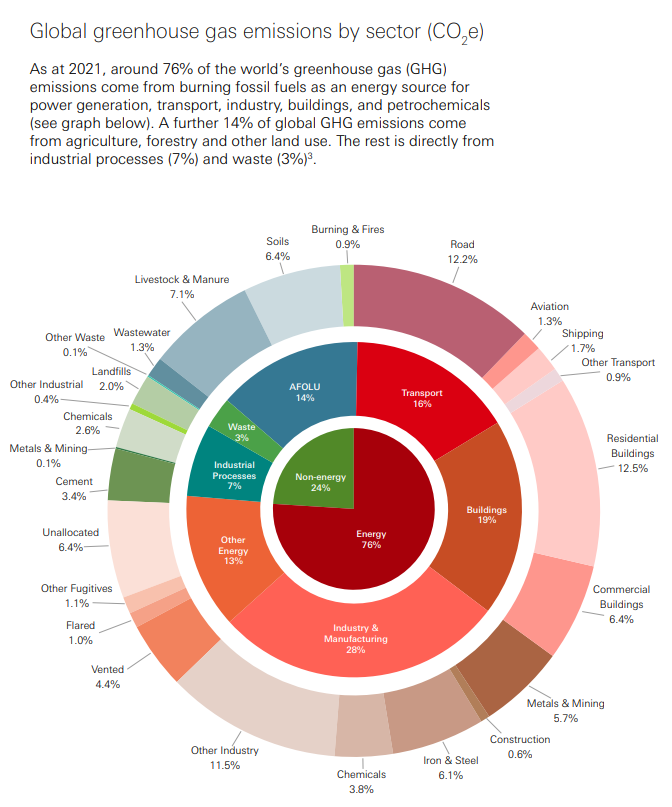
This reflects a wider challenge across the financial sector. Banks are trying to balance climate targets with ongoing energy demand and industrial growth. The company’s latest GHG emissions by sector are as follows:
AI and Data Centers Are Driving New Energy Demand
Another major trend behind HSBC’s latest move is the rapid growth of AI infrastructure.
AI systems and hyperscale data centers need huge amounts of electricity. The International Energy Agency estimates that global data center electricity demand could more than double by 2030 in high-growth AI scenarios. This is increasing demand for clean electricity, battery storage, and grid upgrades.
China is already expanding power infrastructure to support this growth. State Grid Corporation of China plans to invest record amounts this decade. This is due to rising electricity demand from AI computing and industrial electrification.
Battery storage is becoming especially important. BloombergNEF expects global energy storage deployments to pass 1 terawatt-hour annually before 2030. This creates strong demand for financing across clean energy supply chains.
Low-carbon industries are no longer limited to solar farms and wind turbines. They now include batteries, semiconductors, smart grids, hydrogen systems, and AI-related infrastructure.
That broader shift is helping to make climate finance a core part of industrial and technology investment.
Green Finance Competition Is Accelerating
HSBC is not alone in expanding climate financing. Banks across Asia, Europe, and North America are increasing investments in green bonds, renewable energy loans, and sustainability-linked financing.
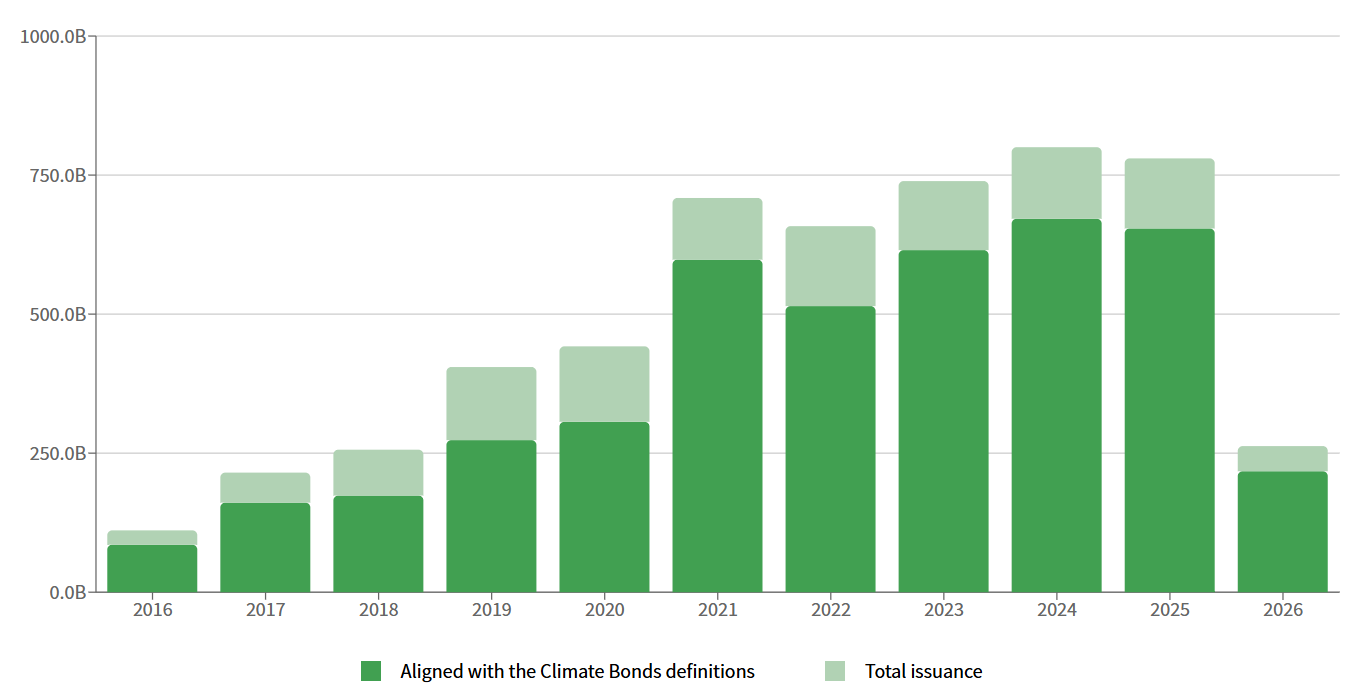
The Climate Bonds Initiative said global green bond issuance exceeded $650 billion in 2025. Sustainable finance markets are growing. Governments are tightening climate policies. Companies are also investing in emissions reduction projects.
Competition is especially strong in Asia because the region is expected to account for a large share of future clean energy spending. At the same time, climate finance is becoming more connected to industrial policy and energy security.
Countries now see renewable energy, batteries, and grid systems as strategic industries. Financing these sectors is no longer viewed only as ESG investing. It is increasingly tied to manufacturing growth, trade policy, and long-term economic competitiveness.
Climate Finance Is Becoming Core Economic Infrastructure
HSBC’s $4 billion China initiative shows how climate finance is moving into the center of the global economy. The bank is targeting industries tied to electrification, renewable energy, battery storage, and industrial decarbonization. These sectors are growing quickly as countries respond to rising electricity demand and tighter climate rules.
China remains central to this transition. The country leads the world in solar, batteries, EVs, and renewable infrastructure investment. It also represents one of the largest future markets for industrial decarbonization financing.
For HSBC, the initiative strengthens its position in one of the fastest-growing parts of global banking. For the broader market, it shows that finance, energy systems, AI infrastructure, and climate policy are becoming more connected than ever before.