


Shell Canada’s recent approval of the Polaris carbon capture project marks the beginning of significant investment in emissions-reducing technology, according to federal Natural Resources Minister Jonathan Wilkinson.
The Minister predicts 20 to 25 carbon capture and storage (CCS) projects will start in Canada within the next decade. This is spurred by a new federal investment tax credit, covering up to 50% of CCS project capital costs.
Wilkinson further noted that the tax credit is crucial for heavy industry companies to make final investment decisions. The Shell Polaris project is a direct result of this incentive.
Pioneering Investment in Emissions Reduction
The CCS project will capture 650,000 tonnes of CO2 annually from the Scotford refinery near Edmonton, Alberta.
Shell’s Polaris carbon capture project will mitigate about 40% of direct CO2 emissions from the Scotford refinery and 22% from its chemicals complex. Although the project’s cost remains undisclosed, it is expected to start operations by the end of 2028.
Additionally, Shell announced the development of the Atlas Carbon Storage Hub in partnership with ATCO EnPower. The first phase of Atlas will be connected to Polaris via a 22-kilometer pipeline, providing permanent underground storage for CO2 captured by Polaris. This CCS project just received a green light.
Polaris is Shell’s second carbon capture and storage (CCS) project in Canada. The first project, Quest, completed in late 2015 at the Scotford complex, cost $1.3 billion. It has captured and stored about 1 million tonnes of CO2 annually since its inception.
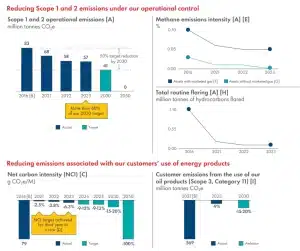
All these are part of the energy giant to achieve its 2050 net zero emissions target outlined in the chart.
CCS technology, which captures and compresses CO2 emissions from industrial processes for safe underground storage, is considered one of the most effective ways to decarbonize heavy-polluting industries like oil, gas, and cement production.
Canada considers this carbon management essential for reaching its net zero emissions target.
How Carbon Capture And Storage Can Support Canada’s Path to Net Zero
Currently, Canada has a few CCS projects operational, storing about 44 million tonnes of CO2 since 2000. The federal plan to cut emissions by 40-45% below 2005 levels by 2030 and reach net zero by 2050 requires tripling national CCS capacity by 2030. This involves adding facilities capable of capturing at least 15 million tonnes of CO2 annually.
The International CCS Knowledge Centre in Regina states that achieving this goal calls for implementing CCS across various heavy industries. These include power generation, cement, steel, fertilizer manufacturing, mining, and petrochemicals.
Apparently, Shell’s industry heavily needs this carbon capture technology to decarbonize.
Canada aims to achieve significant reductions in the oil and gas sector as outlined in its Emissions Reduction Plan. The goal is to cut emissions from 191 million tonnes in 2019 to 110 million tonnes by 2030.
Under the International Energy Agency’s Updated Roadmap to Net-Zero Emissions by 2050, carbon capture and storage technologies need rapid scaling to capture 1.2 gigatonnes (Gt) globally by 2030 and 6.2 Gt by 2050, accounting for about 15% of total required GHG reductions.
Recognizing this challenge and opportunity, Canada’s G7 peers like the United States, the United Kingdom, Germany, and the European Union prioritize carbon management technologies through national strategies and significant investments.
According to the Canada Energy Regulator’s (CER) “Canada’s Energy Futures 2023” report, carbon management is crucial for domestic emissions reductions. In the CER’s Global Net-Zero Scenario, CCUS sequesters nearly 60 million tonnes (Mt) annually in Canada by 2050, with 25 Mt from heavy industry.
In a slower global transition (Canada Net-Zero Scenario), CCUS costs fall more slowly, capturing 80 Mt annually due to greater global fossil fuel demand.
Decarbonizing Heavy Industries
Canada boasts vast geological storage resources, presenting opportunities to store both domestic and international CO2, potentially generating revenue and investment from abroad.
Key storage areas include:
- Western Canadian Sedimentary Basin (WCSB): Spanning from British Columbia to Manitoba. It includes regions that could store about 4.2 gigatonnes of CO2, equivalent to over 66 years of British Columbia’s emissions.
- Williston Basin: Primarily in southern Saskatchewan, offering additional significant storage capacity.
- Southern Ontario and Quebec: Contain several sedimentary basins that may also be suitable for CO2 storage.
The estimated capacity of Canada’s saline aquifers within these sedimentary basins exceeds 100 billion tonnes. That would be sufficient for hundreds of years of CO2 storage.
Offshore Storage Potential:
- Nova Scotia and Newfoundland and Labrador: These regions have suitable seabed geology for conventional subseabed CO2 storage.
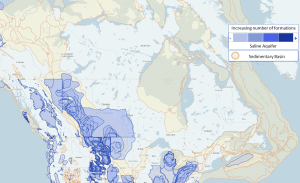
These extensive storage capacities and geological resources position Canada as a potential leader in global carbon capture and storage. There are over 40 proposed CCS projects in Canada, according to the IEA.
The most prominent CCS proposal comes from the Pathways Alliance, a group of oilsands companies planning a CA$16.5 billion pipeline to transport captured carbon from 14 sites to a storage location near Cold Lake. Although a final investment decision is pending, Minister Wilkinson believes the project will proceed.
Mayor Rod Frank welcomed the news, stating that the addition of Polaris to Alberta’s Industrial Heartland aligns with the county’s economic development and environmental sustainability goals.
“These carbon capture projects will create new jobs, support our economy and enhance investment attractiveness while capturing emissions that would otherwise be released into the atmosphere.”

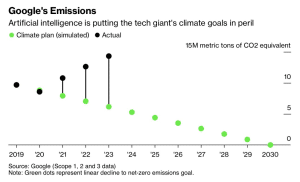

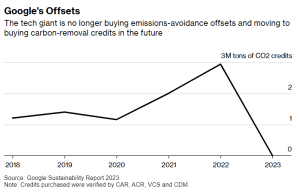





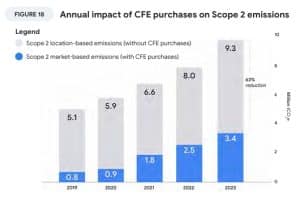 source: Google
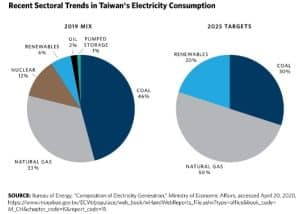 Taiwan’s renewable energy future looks sunny with rapidly expanding solar developers like NGP, supported by strong partners such as BlackRock and Google. Undoubtedly, it’s a significant step towards sustainable energy solutions in data centers, digital services, and the entire tech industry.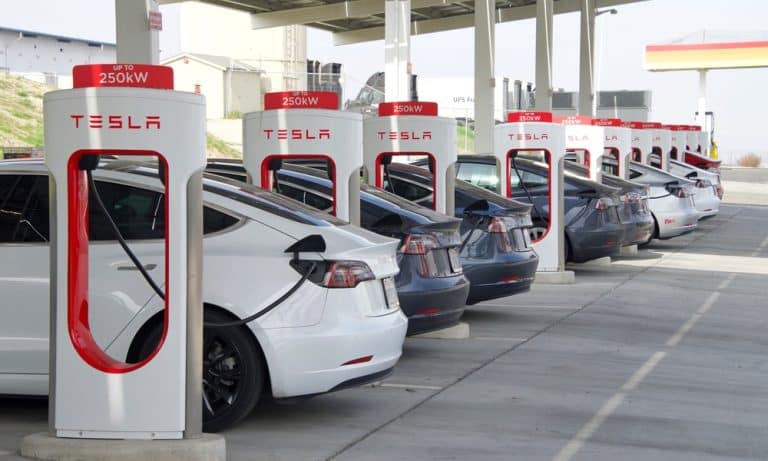
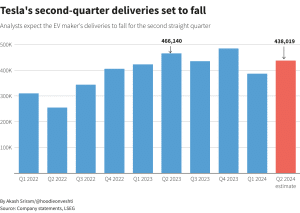

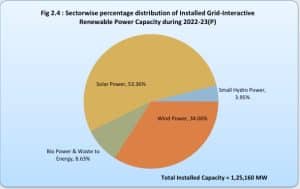 source: Energy Statistics India 2024
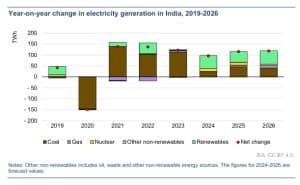 India has scaled up solar and wind investments and promoted domestic clean energy manufacturing through the Production Linked Incentives scheme. The country also boasts of strong energy efficiency programs and a new hydrogen policy.