British Airways Commits ยฃ9M to Carbon Removal Credits. Can this Propel Aviation to Net Zero?

British Airways, one of the finest airlines has launched an ambitious initiative to accelerate its climate action by investing over ยฃ9 million in carbon removal credits. The move strengthens its position as the UK’s largest carbon removal purchaser and the leading airline in the space. These efforts are part of the company’s broader strategy to achieve net zero emissions by 2050.

In Pursuit of Aviation Sustainability!

Carrie Harris, Director of Sustainability at British Airways, gave a long statement on this move. He said,

As we approach the halfway point in this critical decade of action, weโ€™re sharpening our focus on delivering real, tangible progress by 2030. We know flying has a significant impact on the planet, and achieving net zero by 2050 requires bold, innovative action today, as well as long-term transformation, and our latest investments in carbon removals reflects this commitment. While small in comparison to our total emissions, these projects are crucial in stimulating the carbon removals market. By supporting pioneering solutions, weโ€™re not only contributing to immediate progress but also laying the groundwork for the large-scale changes needed to meet our climate goals. There is no pathway to net zero for aviation without carbon removals.โ€

From the UK to Canada: British Airways’ Innovative Carbon Removal Projects

The press release has rolled out details of all the innovative carbon removal projects that British Airways is pursuing in both the UK and abroad. One standout initiative is in Scotland, which involves capturing CO2 emissions from whisky distilleries and repurposing them into building materials. Additionally, they have invested in an enhanced rock weathering (ERW) technique that locks carbon for a prolonged time in different parts of the country.

The airline has also committed to purchasing carbon credits from high-durability reforestation projects in Scotland and Wales, aimed at expanding forested areas. These projects demonstrate British Airways’ focus on both reducing emissions and enhancing natural carbon sinks.

Aviationโ€™s carbon capture efforts in Canada involve removing carbon dioxide from rivers and oceans using alkaline rock particles. Another key initiative is its investment in a biochar project in India. This project not only boosts soil biodiversity but also empowers female farmers by enhancing farm productivity. Through this effort, the airline is supporting sustainable agriculture while addressing climate change.

Partnering with CUR8, Earthshot Prize, and Climeworks

To further scale up its sustainability goals, British Airways has teamed up with UK-based CUR8, which specializes in sourcing high-quality carbon removal credits. The airline purchased 33,000 tons of these credits, a step that, while small compared to its total emissions, signals its commitment to advancing this emerging sector.

Marta Krupinska, CEO of CUR8, applauded British Airwaysโ€™ crucial role in carbon removals. She expressed pride in partnering with the airline that is building a diverse portfolio spanning from the UK to Canada.

She also highlighted that CUR8 has top scientists and the best climate software to help organizations like British Airways source and manage carbon removals, reducing risks for their net zero goals.

British Airways is also a key partner of The Earthshot Prize, an organization dedicated to discovering and scaling climate solutions. This partnership aligns with the airlineโ€™s focus on fostering innovation in the aviation sector, including the development of sustainable aviation fuels and advanced carbon removal techniques. In addition, British Airways has purchased carbon removal credits from Climeworks, which operates the world’s two largest Direct Air Capture plants in Iceland.

Flying Toward a Greener Future: Net Zero Ambitions

British Airways acknowledges that achieving net zero by 2050 is a significant challenge for the aviation industry. According to Carrie Harris, roughly one-third of the airlineโ€™s emissions reductions by 2050 will come from carbon removals. While these investments are a fraction of the airlineโ€™s overall emissions, they play a crucial role in scaling up a sector that is vital for long-term climate goals. With its new investment, British Airways is actively supporting the growth of this essential market.

Carbon Removals are Not Enoughโ€ฆ

In March the company announced is investing millions to upgrade its ground support equipment at Heathrow Airport, reinforcing its commitment to cutting emissions both on the ground and in the air. The airline is gradually replacing its vehicles, including vans, cargo transporters, and passenger steps, with hybrid or electric alternatives. Currently, over 90% of its ground vehicles at Heathrow run on zero-emission electric power or operate using hydrotreated vegetable oil (HVO) fuel.

British Airways is the first global airline to commit to net zero emissions by 2050, aligning with the Paris Agreement’s 1.5-degree goal. This commitment addresses Scope 1, 2, and 3 emissions, covering the entire value chain.
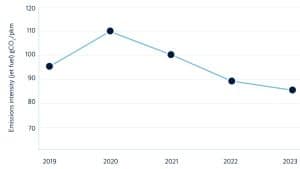
British Airways

Source: BA

Significantly, it aims to reduce its emissions intensity to 86gCO2 per passenger kilometer by 2050. The airline will continue to monitor its progress and adjust its plans with emerging innovations to achieve this goal.

Commitment to SAF

The airline uses SAF produced from sustainable sources, including used cooking oil, woody biomass, and agricultural waste. By 2030, British Airways aims to fly with 10% SAF, following the UK government’s SAF Mandate guidelines. This initiative includes investing in innovative SAF plants in the UK and the US to enhance SAF availability and improve aircraft operations.

This study highlights British Airways as a leader in carbon removal credits and a key driver of change in the aviation sector. The airline’s current efforts are paving the way for the large-scale transformations needed to achieve net zero climate goals for all airlines.

DOE Supercharges the U.S. Battery and Critical Minerals Industry with $3 Billion Boost

On September 20, the U.S. Department of Energy (DOE) announced over $3 billion in funding for 25 projects across 14 states. These initiatives are a part of the Biden-Harris Administrationโ€™s Investing in America agenda, which aims to boost domestic production of advanced batteries and essential materials like lithium.

Unlocking DOE’s $3B Boost for a Stronger U.S. Battery Industry

Notably, this effort builds on the administrationโ€™s previous commitment of nearly $35 billion to strengthen U.S. critical minerals and battery supply chains. The $3 billion in grants for these new projects will help expand EV and energy storage production while reducing reliance on foreign supply chains, particularly Chinaโ€™s.

Furthermore, the selected projects will be administered by the U.S. DOE’s Office of Manufacturing and Energy Supply Chains (MESC). The main goals of the funding are:

  • Build a robust domestic battery supply chain, including the production of key battery components like cathodes, anodes, and electrolyte materials. These elements are crucial for both current and next-generation battery technologies.
  • Focus on constructing, expanding, and retrofitting facilities for battery production, recycling, and the processing of critical minerals, such as lithium, graphite, and manganese.

U.S. Secretary of Energy Jennifer Granholm emphasized the importance of this initiative, stating,

โ€œWeโ€™re witnessing a manufacturing revival in America, thanks to the Investing in America agenda. By establishing the U.S. as a leader in battery manufacturing, weโ€™re not only creating high-paying jobs but also securing our energy future and strengthening our global leadership.โ€

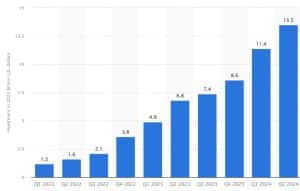
Battery manufacturing investment in the United States from 1st quarter 2022 to 2nd quarter 2024

us battery investment DOE

Source: Statista

Key Projects in Lithium Extraction and Recycling

Arkansas and Texas

Among the new projects, the DOE awarded the two largest grantsโ€”$225 million eachโ€”for direct lithium extraction (DLE) initiatives. These projects will be based in Arkansas and Texas, both part of the Smackover Formation. SWA Lithium LLC, a joint venture of Standard Lithium Ltd. and Norwayโ€™s Equinor ASA, is one of the recipients. Their Arkansas-based project aims to produce 45,000 metric tons of battery-grade lithium carbonate per year.

The DOE also selected Terravolta Resources LLC for another $225 million grant for a DLE project located in the Texarkana region. This project will focus on producing 25,000 metric tons of lithium carbonate annually.

Another significant investment includes a $200 million grant to Cirba Solutions US Inc., which plans to build a lithium-ion battery recycling facility in Columbia, SC. The plant will recycle batteries from EVs, energy storage systems, and consumer electronics, processing up to 60,000 metric tons per year.

South Carolina and Michigan

The Cirba Solutions project is one of five selected facilities in South Carolina. It is joined by a $198.7 million grant awarded to EnerSys Advanced Systems Inc. to establish a new lithium-ion battery cell plant in Piedmont, SC, set to begin production in 2028 with an initial capacity of 5 GWh.

In Michigan, four projects were highlighted, including a $145 million grant for Revex Technologies Inc. to collaborate with Eagle Mine LLC, a subsidiary of Canadaโ€™s Lundin Mining Corp., on the REV Nickel Project. This initiative aims to process Eagle Mine waste and spent batteries to recover valuable materials.

Additionally, Mitra Future Technologies Inc. received a $100 million federal grant for a facility in Muskegon, focused on producing lithium iron phosphate cathode materials for electric vehicles, energy storage, and defense applications.

On the West Coast

The DOE also selected Group14 Technologies Inc. to negotiate a $200 million award for a silane production facility in Moses Lake, Washington. This facility will manufacture silicon-based anode materials. Furthermore, Form Energy Inc. received a $150 million grant to support its production of iron-air battery storage systems at a factory in Weirton, West Virginia.

Meanwhile, Reuters reported Albemarle is slated to receive $67 million for a project in North Carolina aimed at producing commercial quantities of anode material for next-generation lithium-ion batteries. Additionally, Honeywell will be awarded $126.6 million to build a commercial-scale facility in Louisiana that will produce a key electrolyte salt essential for lithium batteries.

The media agency also noted that DOE intends to grant DOW Chemical Company $100 million to manufacture battery-grade carbonate solvents for lithium-ion battery electrolytes. Others in the pipeline include Clarios Circular Solutions, in partnership with SK ON and Cosmo Chemical will receive $150 million for a project in South Carolina to recycle lithium-ion battery production scrap materials from SK ON, the battery division of SK Innovation.

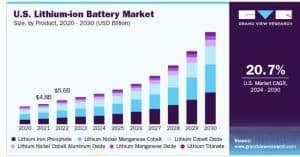
battery US Lithium

A Bold Step Toward Economic and Energy Security

John Podesta, Senior Advisor to President Biden for International Climate Policy, remarked on the importance of securing EV and battery supply chains.

ย โ€œThe administration is using every tool available to onshore and โ€˜friend-shoreโ€™ supply chains. This will boost national security, strengthen our economy, and help combat the climate crisis,โ€

The press release mentions, the battery sector will see a total investment of $16 billion, which includes contributions from private companies. However, a significant purpose of the selected projects is job creation. Considering this, more than half of the 25 projects have committed to labor agreements and can potentially create 8,000 construction jobs and over 4,000 long-term operating jobs.

The next step for these projects involves a negotiation process with the DOE before funding is finalized. Environmental reviews will also be completed during this time. This groundbreaking investment boosts domestic battery manufacturing and strengthens the country’s leadership in the global clean energy transition.

Shifting Dynamics in the U.S. Battery Market

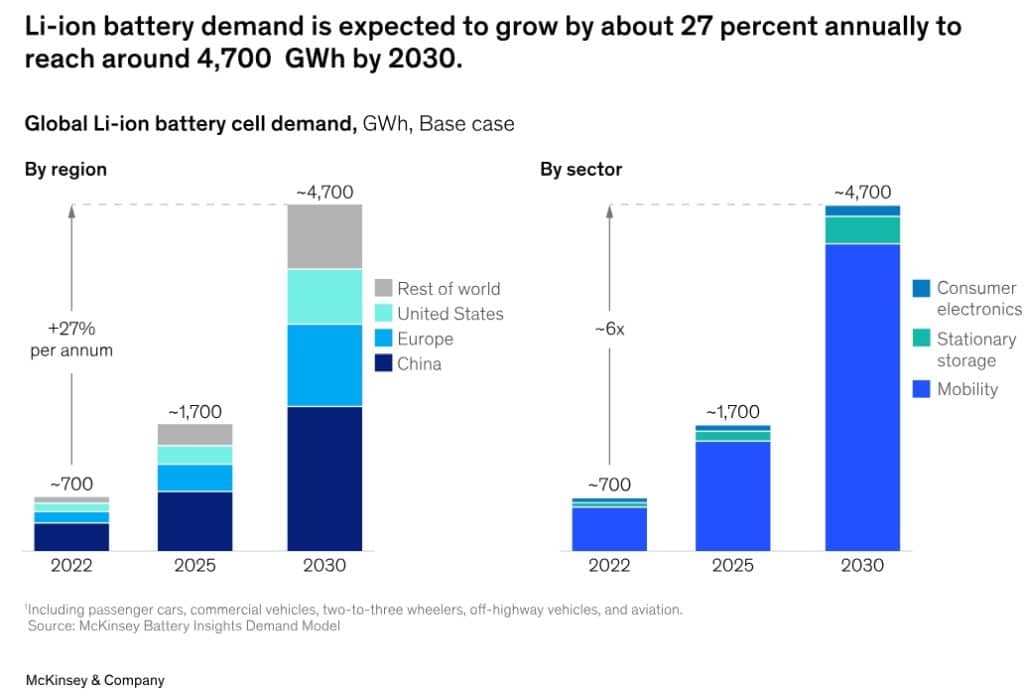
Batteries are crucial to enhancing the U.S. energy grid, powering homes and businesses, and supporting EVs. Itโ€™s a known fact that China has dominated the battery market, controlling key minerals like lithium, and rare earth elements. However, U.S. production is rising.

Lithium battery

The U.S. is intensifying efforts to boost domestic battery manufacturing by implementing robust measures to protect its interests. Furthermore, the Biden administration is introducing new tariffs on Chinese products, including lithium-ion batteries and EVs.

This effort not only propels the US battery industry forward but also drives innovation and minimizes dependence on foreign suppliers. All in all, it would position the country as a leader in clean energy, ensuring access to crucial materials, mainly lithium remains domestic.

Powering the West: How Transmission Projects Can Slash Power-Sector Emissions by 73%

The successful completion of 12 high-voltage electric transmission projects in the US West could dramatically reduce the regionโ€™s carbon emissions. It can cut power-sector emissions by 73% from 2005 levels by 2030, according to a recent study by the Pacific Northwest National Laboratory (PNNL).ย 

The study underscores the critical role that renewable energy and transmission infrastructure will play in achieving national climate goals, specifically President Bidenโ€™s ambition to transition to a 100% carbon-free power system by 2035.

A Holistic Approach to Decarbonization

The 12 transmission projects could unlock over 72 GW of new solar, wind, and battery storage capacity. It can significantly contribute to the regionโ€™s decarbonization efforts. Importantly, all of these projects are either in advanced development, under construction, or already operational, making them essential components of the renewable energy expansion in the West.

The study was conducted in connection with the US Department of Energyโ€™s forthcoming National Transmission Planning Study, which seeks to provide insight into regional and interregional grid planning efforts. It predicts a 32% drop in energy generation costs by 2030, assuming the completion of critical transmission projects.ย 

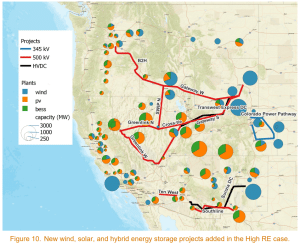
The research, led by Konstantinos Oikonomou of PNNL, analyzes how the 12 new transmission lines across the Western Interconnection, which will add 3,000 miles of capacity, could lower carbon emissions and enhance grid reliability. With this infrastructure, the region could expand its renewable capacity by 35 GW of wind, 31 GW of solar, and 12 GW of energy storage.

transmission projects in Western Interconnection

In the study, titled the Western Interconnection Baseline Study, PNNL researchers assessed whether the current industry planning processes in the West are aligned with national climate goals. They created a base case using data from the Western Electricity Coordinating Council (WECC). They factored in expected generator additions, retirements, new transmission capacity, and load growth through 2030.

The study then compared this base case with a “high renewables case,” which assumes the completion of 12 high-voltage transmission projects across the region. These projects were selected because they are “sufficiently far along in the development pipeline”. This means that construction is either ongoing or in advanced stages of federal and state permitting.

Unlocking Renewable Potential

One notable project is the Ten West Link transmission line, which began commercial operation in June 2024. Spanning 125 miles, this line is set to deliver over 3 gigawatts (GW) of renewable energy to consumers in California and the Desert Southwest. Owned by Lotus Infrastructure Partners and operated by California ISO, the Ten West Link exemplifies the vital role transmission lines play in decarbonizing the power sector.

Another significant project in the study is the Gateway West project, which stretches 488 miles and is developed by PacifiCorp. This project is specifically designed to transmit wind energy from Wyoming to a substation in Idaho.

PNNL study renewable storage projects

From there, the energy will be further transmitted through the Boardman-to-Hemingway transmission line. This nearly 300-mile line is a collaborative effort by Berkshire Hathaway Energy and other partners.

These interconnected projects showcase a coordinated approach to transferring renewable energy from low-density states, like Wyoming and New Mexico, to more densely populated regions throughout the West.

The complementary nature of these projects is essential for ensuring that renewable energy can flow across long distances. This capability is crucial for reducing carbon emissions in large urban centers, as it enables cities to access cleaner energy sources.

Enhancing Grid Reliability with High Renewables

The transition to renewable energy is essential for reducing carbon emissions and achieving a sustainable power grid in the US. However, integrating more renewable sources, like solar and wind, into the grid presents challenges.

Notably, the PNNL study uses a unique modeling approach called alternating current (AC) power flow modeling. This method differs from the more traditional production cost analysis, which primarily focuses on the cost of energy production.ย 

Instead, AC power flow modeling allows researchers to simulate how new renewable energy sources affect the grid. They can identify potential weaknesses and vulnerabilities in the grid when high levels of renewables are integrated.

The study found that the additional high-voltage transmission lines would support 29 GW of new solar capacity, 26 GW of onshore wind, 15 GW of battery storage, and 3 GW of offshore wind.ย 

Additionally, the study assumed that all new solar installations would incorporate 4-hour battery storage with a storage capacity equivalent to 50% of the solar resourceโ€™s nameplate capacity. This is a critical feature, as it would make solar and wind energy dispatchable. It means that energy generated by these sources could be stored and used when demand spikes or during periods of low generation.

However, even with these advancements in renewable energy and storage, the study found that some thermal generation capacity may still be required. This is particularly true during the early morning hours when storage systems may not be fully charged or available.ย 

Nader Samaan, a PNNL power systems research engineer and co-author of the study, noted that:

โ€œThis could be one of the more challenging periods, where you need to have some thermal generation on your system to help with the morning ramp-up period.โ€

The completion of the transmission projects represents a significant step toward achieving a carbon-free power system in the US West by 2035. The study highlights the importance of advancing transmission infrastructure to support the nationโ€™s decarbonization goals.

Can BC Hydroโ€™s Clean Energy Push Transform British Columbiaโ€™s Power Grid?

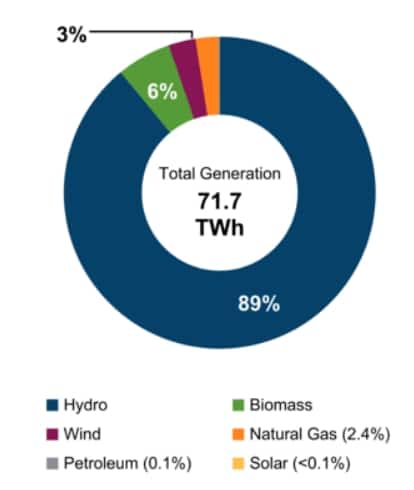
BC Hydro, the government-owned electric utility company, supplies electricity to 95% population of British Columbia. In April 2024, they called for acquiring 3,000 GWh of clean energy to bolster B.C.โ€™s electricity grid. Quite surprisingly, the government recently announced an overwhelming response to BC Hydroโ€™s call for clean energy. Independent producers across the province submitted proposals that boosted the capacity 3X more than what they expected, totaling 9,000 GWh.

Josie Osborne, Minister of Energy, Mines and Low Carbon Innovation

โ€œWe need more clean energy to power our homes, businesses and industries, to power growing communitiesย and to power our future. Building an economy powered by clean, reliable and affordable electricity is one of the job-creation opportunities of our generation. Through regular calls for power and BC Hydroโ€™s 10-year capital plan, we are creating over 10,000 construction jobs and driving sustainable growth across the province.โ€

From Diverse Projects to Economic Growth, BC Hydro Set to Revolutionize the Energy Landscape of British Columbia

Unlike other regions, British Columbia’s hydroelectric system offers a key advantage for integrating intermittent renewables like wind and solar. Hydroelectric dams, acting as energy reservoirs, can store water and release it when needed. This flexibility allows BC Hydro to balance the grid, ensuring consistent power amid adverse weather. Concisely, the hydroelectric dams are stable and reliable sources of clean energy.

  • The 21 submitted proposals cover a wide range of renewable sources, with approximately 70% focusing on wind power, 20% on solar, and 10% on biomass and hydroelectric projects.

The projects span almost every region of British Columbia, namely the southern Interior, central Interior, north coast, Peace Region, and Vancouver Island. The government also highlighted that this was the first competitive energy call in over 15 years.

As BC Hydro evaluates the proposals, electricity purchase agreements are expected by December. Construction of these clean energy projects could start by fall 2028, bringing an estimated $2.3 to $3.6 billion in private investment and creating 800 to 1,500 jobs annually across the province.

Electricity Generation by Fuel Type (2021)

british columbia renewable energy

Source: Canada Energy Regulator

Ongoing Investments Driving BC Hydroโ€™s Future

Chris Oโ€™Riley, president and CEO, of BC Hydro emphasized the significant changes they are making to enhance connections timeless in newly constructed homes and buildings.

He further added,

โ€œIn growing municipalities like Vancouver, where we are seeing substantial population growth and increasing residential, commercial and industrial customers clean electricity needs, we are embarking on significant upgrades to our electricity system, including adding new substations and expanding existing substations, transmission lines and distribution network to ensure we can continue to provide reliable and clean electricity to our customers.โ€

The company revealed that it is just not boosting clean electricity generation but also upgrading its transmission and distribution networks. In January 2024, the company rolled out a 10-year, $36 billion capital plan to expand infrastructure and support clean growth. These projects will create 10,500 to 12,500 jobs annually, while ensuring a stable energy supply as large projects, like the Site C dam, wrap up.

Site C BC HYDRO
Site C dam artist render

Source BC Hydro

Furthermore, it will be holding competitive power calls every two years to keep pace with British Columbiaโ€™s growing economy and the need for renewable energy. This approach also fortifies the electrical grid and ensures that clean energy reaches homes, businesses, and industries while keeping electricity rates affordable.

In addition to increasing the electricity generation in the province, BC Hydro is also investing to expand and strengthen its transmission and distribution system through its capital plan. Upgrading BC Hydroโ€™s electricity grid will ensure that clean power can be delivered to new homes, businesses, and industries when and where they need it.

Latest: BC Hydro Unveils High-Powered EV Charging Stations

In its latest news release, the company unveiled its plans to expand its electric vehicle (EV) fast charging network, adding two new 180-kilowatt chargers in Vanderhoof. These chargers will help British Columbians transition from gas-powered vehicles to those that run on clean electricity.

George Heyman, Minister of Environment and Climate Change Strategy assured that,

“These new stations will help British Columbians travel quickly and reliably using clean energy,” stated. More charging options also contribute to our goal of reducing climate-changing emissions by 40% by 2030.”

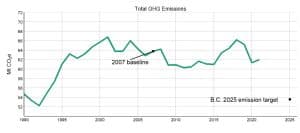
GHG EMISSION BRITISH COLUMBIASource: Climate Change Accountability Report, British Columbia

This initiative reflects the growing enthusiasm for EVs among British Columbians. With over 170,000 EVs already on the road, BC Hydro anticipates this number could soar to between 700,000 and 900,000 in the next decade.

Overall, BC Hydroโ€™s clean energy goals are set to transform the landscape of British Columbia. This shift will create a greener environment, allowing both residents and businesses to thrive.

Xpansiv Joins Forces with S&P Global and CME to Supercharge Australiaโ€™s Carbon Credit Market

Xpansiv announced a strategic collaboration with S&P Global Commodity Insights and CME Group to enhance the Australian Carbon Credit Unit (ACCU) market. This partnership will introduce new pricing mechanisms, improve liquidity, and provide risk management tools, including ACCU futures contracts.ย 

The effort marks a milestone in carbon markets, allowing for better carbon price discovery and future price risk management.

Strengthening Carbon Price Discovery and Liquidity

Xpansiv, a leading market infrastructure provider for the global energy transition, is set to integrate its existing standardized ACCU spot contracts with a new CBL-Platts ACCU price assessment. This will improve alignment in end-of-day price references and support physical market trading.ย 

CME Group will also launch a CBL ACCU futures contract, scheduled for October 13, 2024, pending regulatory review. This contract will settle against Xpansivโ€™s CBL spot ACCU market, creating a seamless carbon credit trading experience for market participants.

The collaboration marks the first initiative of its kind for compliance carbon market. This partnership aims to enhance the transparency and liquidity of the ACCU market, a key component in achieving national emission reduction goals.ย 

By leveraging expertise in market insights and commodity exchanges, the collaboration seeks to create a more standardized and efficient trading environment for carbon credits. This, in turn, can promote stronger participation in carbon markets and support global climate efforts.

These carbon credits represent emissions reductions that fund renewable energy and decarbonization projects. Companies purchase these credits to offset their hard-to-abate emissions that they can’t reduce directly.

Ben Stuart, Chief Commercial Officer, Xpansiv, emphasized the importance of their initiative, saying:

โ€œWe are pleased to continue our collaboration with market leaders S&P Global Commodity Insights and CME Group, each of which are relied upon for solutions to pricing challenges in the marketplace. Together we have set a new standard for reliable price signals and trading instruments in this important, evolving market.โ€

A Robust Market for Compliance and Carbon Reduction

The ACCU market has grown rapidly. There are over 3.5 million tons of Australian carbon credits traded through Xpansiv’s CBL platform since January 2023. The new collaboration builds on this momentum by combining robust physical market data, improved price assessments from S&P Global, and a new hedging tool via CMEโ€™s futures contracts.ย 

The initiative is designed to give carbon market participants, including major carbon emitters and financial institutions, enhanced tools for price risk management and portfolio reporting.

Brian Casey, Head of Markets Strategy & Partnerships at S&P Global Commodity Insights, noted that the partnership will deliver โ€œa deeper and broader view of valueโ€ in the ACCU market.ย 

Australia’s carbon market is rapidly expanding, positioning itself as a major global producer of carbon credits. Recent data from the Clean Energy Regulator shows that 51% of all ACCUs are now by safeguard or safeguard-related entities. Leveraging these volumes could further boost the market.

Rising ACCU Holdings and Issuances

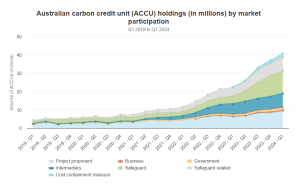
As of Q1 2024, the Australian National Registry of Emissions Units (ANREU) reported a holding of 38.6 million ACCUs. That’s a rise of 2.4 million during the quarter. ANREU issued 3.8 million ACCUs during the same period. This is robust progress towards a record issuance target of 20 million ACCUs for the year.

ACCUs holdings by market participation

The number of Safeguard accounts holding ACCUs rose by 11, totaling 54 accounts. Safeguard entities now hold 12 million ACCUs, with a 4.6 million increase in Q1. Many ACCUs are likely held by intermediaries on behalf of these entities, suggesting a higher volume overall.

CME Groupโ€™s Peter Keavey, Global Head of Energy and Environmental Products, added that these developments are part of a broader suite of risk management tools designed to help clients meet carbon reduction targets, whether through compliance or voluntary programs.

A Growing Market Infrastructure for Environmental Commodities

CBL will manage futures delivery for positions held to expiration through its Xpansiv Connectโ„ข post-trade infrastructure. This is linked to 14 prominent carbon and renewable energy registries. The CBL ACCU futures will be listed by and governed under the rules of the New York Mercantile Exchange (NYMEX).

Xpansiv has been instrumental in scaling market infrastructure for environmental commodities like carbon credits globally. The company operates the largest spot exchange for carbon credits and renewable energy certificates, as well as leading platforms for environmental portfolio management. This collaboration with S&P Global and CME further cements its role in shaping the future of energy transition markets.

Will AI Drive A Global Copper Shortage? BHP Rings the Alarm

As artificial intelligence (AI) is taking over industries, its impact on global copper demand is becoming increasingly evident. BHP, the world’s largest mining company, has warned that AI’s growth and clean energy transition could aggravate an already looming copper shortage. With copper’s critical role in powering data centers, EVs, and renewable energy systems, the metal’s future availability is a growing global concern.

BHP Predicts Soaring Copper Demand in The Future

BHPโ€™s chief financial officer Vandita Pant has reported to Financial Times that the company predicts the global demand for copper to soar by 72% by 2050. This clearly shows a rising trend from 30.4 million tons in 2021 to 52.5 million tons annually. She further explained the surge to be driven by the increasing need for copper in electric vehicles (EVs), solar farms, and particularly, data centers powered by AI technologies.

Pant added,

โ€œToday, data centers are less than 1 percent of copper demand, but that is expected to be 6 to 7 percent by 2050.โ€

Notably, AI applications, which require energy-intensive computing, are expected to increase copper demand by an additional 3.4 million tons each year by 2050. The copper dominates the power transmission and cooling systems that keep these facilities operational. As AI continues to drive the expansion of data centers, its infrastructure will rely heavily on copper, intensifying competition for the red metal.

To sum up, BHP right now sees a temporary weak copper demand but predicts strong long-term potential.

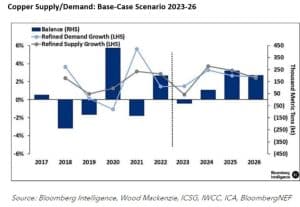
copper demand

Global Copper Shortage an Imminent Challenge, Reports Financial Times

BHPโ€™s concerns come amidst a broader conversation about the future of copper supply. A copper shortfall is expected in the medium to long term, triggering a race among mining companies to secure access to copper deposits.

Financial Times reported, that earlier this year, BHP failed to acquire Anglo American, a major copper producer, in a bid to strengthen its position in the copper market. Though the $49 billion offer was rejected, BHP continues to invest heavily in copper assets. In July 2024, the company teamed up with Canada’s Lundin Mining to acquire South America-focused Filo Corp. for $3 billion, securing copper-rich assets in Chile and Argentina.

Colin Hamilton, commodities analyst at BMO Capital Markets said,

โ€œData centers themselves are becoming incrementally less copper intensive, but getting the electricity to them, that is copper intensiveโ€

Despite these efforts, global copper inventories have been declining. In CME warehouses, copper stock fell by 71% between March and July, reaching their lowest levels since 2008. Furthermore, new copper mines aren’t being developed quickly enough to meet rising demand, as it takes nearly more than a decade to actively set up a project. This lag in supply could lead to a significant shortage of copper in the coming decades.

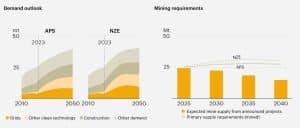
CopperSource: IEA

Is Chinaโ€™s Slowdown Holding Copper Prices Steady?

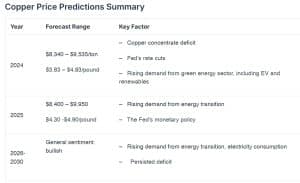
While the long-term outlook for copper remains robust, the short-term market is facing challenges. This year weak demand from China, the worldโ€™s largest consumer of copper, has weighed on prices. Copper is currently trading at around $9,207 per tonne, down 15% from its peak earlier this year. Media reports say that concerns about Chinaโ€™s property sector and slower-than-expected economic growth have contributed to this decline.

Most recently Bloomberg reported,

  • The latest 3-month closing price for LME copper is $9,515.00, reflecting a 1.22% increase.

Even The Wall Street Bank has projected copper prices to average $10,100 per metric ton in 2025 which is significantly lower than its earlier forecast of $15,000.

copper price forecast

Source: Technopedia

However, analysts and mining executives agree that copperโ€™s demand remains solid. The energy transition, driven by renewable energy projects and electrification, will be a key growth driver for copper demand. BHP expects that as the world advances towards its net-zero goals, the demand for copper will certainly spike, especially in developing countries.

A Race for Copper in the Age of AI: Who Are the Top Players?

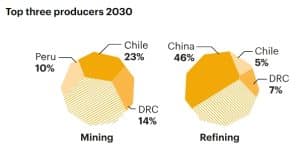
As copper prices hit a two-month high, major mining firms like Anglo American, Southern Copper, Vale, Ero Copper, Rio Tinto (RIO), Antofagasta, Freeport-McMoRan, and Glencore gained the spotlight on the London Stock Exchange. Furthermore, the recent half-point rate cut by the U.S. Federal Reserve has contributed to broader gains in the metals market, making it an exciting time for copper investors.

copper IEA

Source: IEA

The growing influence of AI and the energy transition is reshaping the global copper market. BHPโ€™s warnings about a potential shortage underscore the importance of securing copper resources for the future. As the demand for AI-driven data centers and clean energy solutions rises, industries are bracing up for the coming copper crunch.

We can see how significant sustainable mining and innovation in resource management have become more critical than ever. Copper, once only made for traditional industries, is now at the forefront of the global energy transition.

Well, the race to secure copper mines is on, with mining giants like BHP positioning themselves to meet the future needs of the tech world. Nonetheless, the question remains: Will the supply of copper keep up with the rapid advancements in AI and the shift toward renewable energy? Letโ€™s wait and watch!

Carbon Price Showdown: Poilievreโ€™s โ€˜Nuclear Winterโ€™ Warning Rattles Canadian Politics

Conservative Leader Pierre Poilievre set the tone for his partyโ€™s fall agenda by targeting the Liberals’ carbon price policy. Poilievre warned of a “nuclear winter” for the economy if the governmentโ€™s planned carbon price increases take effect.ย 

Poilievre described a dire scenario, claiming that high taxes would lead to โ€œmass hunger and malnutritionโ€ and force older people to endure frigid conditions just to survive the winter. He further argued that rampant inflation would make it impossible for Canadians to afford basic transportation.

Singh and Trudeau Clash on Climate Strategy

With the fall session of Parliament set to resume, all parties are recalibrating their strategies after NDP Leader Jagmeet Singh ended the agreement that kept Prime Minister Justin Trudeau’s Liberal government in power. Poilievre, maintaining his party’s lead in the polls, is preparing to introduce a non-confidence motion as early as this week.ย 

However, passing the motion will be a challenge, as the Conservatives would need support from both the NDP and the Bloc Quรฉbรฉcois, and neither has shown a willingness to trigger an election.

Jagmeet Singh criticized both the Liberals and the Conservatives for their climate policies. But he avoided clarifying whether an NDP government would maintain the consumer carbon price.ย 

  • The administration sets a carbon price of $65 per tonne of CO2 in 2023. This translates to an added cost of 14 cents per liter of gasoline, 10 cents for propane, and $145 per tonne of high-grade coal.

In response, Trudeau accused Singh of succumbing to political pressure from Poilievre. Meanwhile, Poilievre took aim at both leaders of Canada, calling the carbon tax an โ€œexistential threat to our economy and our way of life.โ€ He also criticized Singh for failing to commit to bringing down the government despite withdrawing from the previous agreement.

The political stage is set for a heated session, with carbon pricing and economic policy at the forefront of the debate. Poilievre’s push against the carbon price signals a season of political maneuvering, as each party navigates shifting alliances and voter sentiments.

Poilievre’s ‘Nuclear Winter’ Comment Sparks Heated Political Debate

The Canadian political scene further heated up as Liberal House leader Karina Gould criticized Poilievre for his recent comments on carbon pricing. Poilievre warned of a “nuclear winter,” arguing that the federal carbon price would lead to widespread starvation and freezing as people struggle with unaffordable food and heating costs.ย 

Gould fired back. She called Poilievre a “fraudster” for what she saw as irresponsible rhetoric that ignores Canada’s rebate system intended to offset carbon pricing.

The Canada Carbon Rebate (CCR), previously the Climate Action Incentive Payment (CAIP), is a tax-free benefit aimed at offsetting the federal carbon price for eligible individuals and families. It includes a basic amount plus a supplement for those in small or rural communities. The rebate amount varies by province and household size and is calculated annually based on the expected revenue collected from carbon pricing in each province.

Poilievre-Gouldโ€™s fiery exchange comes just as the House of Commons reconvenes, following the summer break and the end of an agreement that had insulated the Liberals from a snap election. Poilievre aims to trigger what he calls a “carbon tax election,” urging the other parties to vote the government down.ย 

Bloc Quรฉbรฉcois Leader Yves-Franรงois Blanchet hinted at the possibility of a short-lived parliamentary session, describing the current political climate as “playing chicken with four cars.”

Carbon Price Rebates: Poilievre’s Rejection and Public Misconceptions

  • The federal carbon price currently adds about 17.6 cents to every liter of gasoline, but quarterly rebates aim to offset these costs for Canadians.ย 

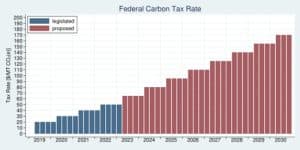
The chart below shows the federal government’s proposed annual carbon price increases each April 1st.

Canada carbon price rate increase

The Parliamentary Budget Office notes that 80% of households in Canada receive more in rebates than they pay in carbon pricing. However, the long-term economic impact, such as potential harm to jobs and wage growth, remains a concern.ย 

Despite these nuances, Poilievre dismisses the rebate system and criticizes carbon pricing as an “existential threat” to the economy. His comment sparked accusations that he is ignoring expert opinions.ย 

More than 200 economists have cited carbon pricing as the most efficient way to lower emissions, yet Poilievre pushes forward with his campaign against it.

Political Strategy Amid Carbon Pricing Debate

The Liberals are sharpening their attacks on Poilievre in an attempt to reverse his rise in the polls. Despite the end of the supply and confidence agreement, Gould stated that they are returning to a โ€œnormal minority parliament.โ€ That means theyโ€™re willing to collaborate with any party to advance legislation.ย 

Meanwhile, NDP Leader Jagmeet Singh has distanced himself from the consumer carbon price, focusing instead on holding big polluters accountable. The Conservatives plan to bring a non-confidence motion against the government. However, they would need support from both the Bloc and NDP to succeed, which appears uncertain.

The stage is on for a potentially turbulent parliamentary session, with major bills like the online harms act and the NDP-backed pharmacare bill in the legislative pipeline. The political debate over carbon pricing is poised to continue dominating discussions in the House. At the same time, each party maneuvers to address Canadians’ concerns on affordability, climate policy, and economic stability.

Alaska Energy Metals Pioneers A Model of Carbon-Neutral Mining

Disseminated on behalf of Alaska Energy Metals Corporation.ย 

Alaska Energy Metals Corporation has announced a pioneering collaboration with the Colorado School of Mines and Virginia Polytechnic Institute (Virginia Tech). This partnership aims to evaluate the carbon sequestration potential of its Eureka nickel deposit at the Nikolai project in Alaska.

The collaboration aims to evaluate how much carbon dioxide (CO2) can be captured and stored by the project while simultaneously extracting critical minerals for the energy transition. These include nickel, copper, cobalt, and platinum group metals (PGMs).

Greg Beischer, President and CEO of Alaska Energy Metals, emphasized the importance of sustainable mining, saying that:

โ€œU.S. domestic mining is essential for both the electrical energy expansion and U.S. national security. For these reasons, we have intentionally begun to study and assess the use of modern technological innovations like ultramafic mine tailings carbonation at the early stages of the development phase of our project.โ€ย 

Ultramafic Rocks: Natureโ€™s Carbon Vaults

The Eureka deposit contains more than 8 billion pounds of nickel, embedded in ultramafic rocks that are rich in magnesium. These rocks have a unique capability: they naturally react with atmospheric carbon to form carbonate minerals, which trap CO2 for a long time. This natural process, known as carbon sequestration, locks CO2 in solid rock, providing a long-term solution to storing greenhouse gasses.

Typically, ultramafic rocks remain buried beneath the Earth’s surface, limiting their interaction with carbon dioxide. However, mining operations provide an opportunity to bring these rocks to the surface. Crushing the rock to extract valuable minerals exposes more surface area to the atmosphere, creating ideal conditions for carbon sequestration.

Cutting-Edge Research and Technology

In 2023, the Colorado School of Mines received a grant from the U.S. Department of Energy’s Advanced Research Projects Agency-Energy (ARPA-E) to develop new technologies for assessing the carbon-absorbing potential of ultramafic deposits. These deposits are enriched with essential metals like nickel, copper, and PGMs, which are vital for the energy transition.ย 

The program focuses on using advanced scanning technologies and machine learning algorithms to analyze the potential of these rocks to capture carbon. These technologies are now being applied to Alaska Energy Metals’ Nikolai project. The goal is to better understand how the Eureka deposit can help mitigate climate change by sequestering carbon.

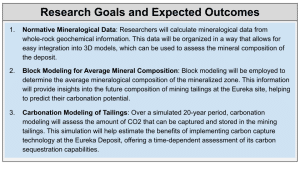
The research will be essential in understanding the environmental benefits of the mining operation and its potential economic advantages. The partnership between Alaska Energy Metals, Colorado School of Mines, and Virginia Tech aims to deliver these specific outcomes:

Alaska Energy Metals Pioneers A Model of Carbon-Neutral Mining research objectives

Eureka Deposit: A World-Class Resource

The Eureka deposit in Nikolai project contains a vast resource of potentially carbon-absorbing ultramafic rock. According to calculations, the deposit holds:

  • Indicated resource: 813 million metric tons averaging 0.22% nickel (3.88 billion pounds), 0.07% copper (1.28 billion pounds), 0.02% cobalt (303 million pounds), and 0.15 grams per metric ton palladium-platinum-gold (4 million ounces).
  • Inferred resource: 896 million metric tons averaging 0.21% nickel (4.23 billion pounds), 0.05% copper (1.04 billion pounds), 0.02% cobalt (327 million pounds), and 0.12 g/t palladium-platinum-gold (1.3 million ounces).

alaska energy metals nikolai project

These resources represent a significant source of metals critical to renewable energy technologies and an enormous opportunity for carbon sequestration.

Key Research Objectives

The first phase of the study will focus on quantifying and characterizing the magnesium-rich minerals within the Eureka deposit. Key minerals such as brucite, olivine, pyroxene, and anorthite will be examined for their carbon-absorbing potential.ย 

Previous research from the University of British Columbia has identified brucite as a particularly effective mineral for carbon sequestration.

Once these magnesium minerals have been thoroughly studied, researchers will use reactive transport modeling to simulate how much carbon can be sequestered into one ton of mining tailings. This model will provide a clear framework for estimating the carbon footprint reduction associated with nickel production at Eureka.

Pioneering Sustainable Mining for National Security and Energy Independence

The Eureka deposit, with its potential to supply energy-related metals, represents a significant opportunity for the U.S. to reduce its reliance on foreign sources of critical minerals.ย 

The study findings will be instrumental in determining how much carbon can be captured by the mineโ€™s tailings and wastes. These findings will provide a roadmap for implementing carbon capture technologies in future mining operations. As such, it can potentially help reduce the carbon footprint of nickel and other critical metal production.

Furthermore, this research may reveal economic benefits associated with carbon sequestration, such as the possibility of generating carbon credits. These credits can be sold to companies seeking to offset their emissions.

As governments and industries seek ways to reduce carbon emissions, projects like Eureka can play a crucial role in achieving net zero goals.

Alaska Energy Metals’ collaboration with the Colorado School of Mines and Virginia Tech represents a forward-thinking approach to mining in the 21st century. By integrating carbon sequestration into the mining process, AEMC is positioning itself as a leader in sustainable resource extraction. Its Eureka deposit could serve as a model for future carbon-neutral mining projects.ย 

Google to Buy 50,000 MTs of Nature-Based Carbon Credits from Brazil Startup Mombak

Google has taken a significant step in its sustainability efforts with a forest carbon removal deal from a Brazilian startup Mombak. The tech giant aims to buy 50,000 metric tons of carbon credits by 2030 to bolster its fight against climate change.

Google Embraces Reforestation: A New Step in Carbon Removal Strategy

Last year, Microsoft committed to buying up to 1.5 million credits from Mombak, highlighting a growing trend of companies incorporating nature-based carbon removal into their sustainability strategies.

Dan Harburg, Mombakโ€™s Chief Technology Officer, remarked,

โ€œAs we scale our operations, this collaboration with Google is a major milestone in our mission to become the worldโ€™s largest and most impactful carbon removal project developer. We look forward to working with Google and other leading organizations to further develop the field of nature-based carbon removal, ensuring that our projects continue to meet the highest standards for climate impact, transparency, and community engagement.โ€

Notably, Google, Microsoft, Meta, and Salesforce are co-founders of the Symbiosis Coalition. This collective has committed to buying 20 million tons of nature-based carbon removal credits by 2030.

Previously, Google had invested in carbon capture and storage (CCS) carbon credits. However, this new deal signals a shift toward nature-based solutions like reforestation thereby joining other biggies Microsoft and Meta to meet their climate goals. Earlier this week, Meta also announced purchasing up to 3.9 million carbon offset credits from Brazilian bank BTG Pactualโ€™s forestry division.

Randy Spock, Googleโ€™s Carbon Removal Lead, said:

โ€œWeโ€™re pleased to partner with Mombak on our first purchase of forestry-based carbon removal credits, with an eye to solving a central challenge of this field: ensuring certainty of climate impact. Looking ahead, weโ€™re excited to build on this deal via our participation in the Symbiosis Coalition.โ€

Aiming for Net-Zero by 2030

To achieve its goal, the company aims to cut 50% of its combined Scope 1, Scope 2 (market-based), and Scope 3 absolute emissions by 2030, using 2019 as the baseline. To offset remaining emissions, it plans to invest in both nature-based and technology-driven carbon removal solutions.

Google’s sustainability report highlights its commitment to the Science Based Targets initiative (SBTi) to validate this highly ambitious emissions reduction target. The company’sย 2023 progress indicates:

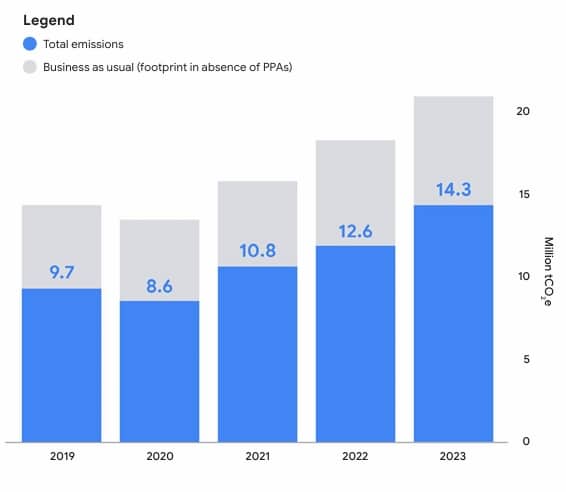
  • Emissions Reductions: Total GHG emissions reached 14.3 million tCOโ‚‚e, reflecting a 48% increase compared to 2019.
  • Residual Emissions: The company signed offtake agreements for approximately 62,500 tCOโ‚‚e of removal credits.

GoogleSource: Google

Can Mombak Solve Googleโ€™s Carbon Problem?

Mombak is on a mission to become the worldโ€™s largest carbon removal company, focusing on large-scale reforestation and carbon sequestration from the atmosphere. The company mainly focuses on native, biodiverse reforestation projects in the Amazon rainforest.

They restore degraded pastureland with native trees and assist regeneration to reduce carbon, boost biodiversity, and improve ecosystems. Apart from environmental benefits, their projects impact local communities by improving water resources, creating jobs, and uplifting their social standards.

Private-sector involvement in carbon reduction drives Mombakโ€™s high-impact reforestation. Significantly, the startupโ€™s innovative approach has caught the attention of global corporations like Microsoft and now of course Google. They use advanced technology and data to guarantee the highest quality carbon removal credits in the market while minimizing carbon leakage.

Thus, itโ€™s pretty much evident that Mombakโ€™s robust plan can potentially help Google achieve its carbon removal goals while restoring the vital ecosystem of the planet.

This is why Harburg noted that Googleโ€™s involvement sends a strong vote of confidence for both Mombak and the carbon removal sector as a whole, describing it as a very positive signal. He also hopes that the growing market for nature-based carbon removal will triggerย more deals in the future.

Although Mombak and Google did not disclose the financial details of the agreement, Mombak’s credits sold for more than $50 per ton when McLaren Racing purchased in 2023. This pricing sets a potential benchmark for the future value of nature-based credits, especially as demand grows among companies eager to offset their emissions.

The Growing Demand for Nature-Based Carbon Credits

Carbon offsets help companies reduce their environmental impact by funding projects that remove greenhouse gases. Each carbon credit represents one ton of CO2 removed from the atmosphere. By purchasing these credits, companies like Google, Microsoft, and Meta aim to offset their emissions while supporting global sustainability initiatives.

Speaking about Amazon rainforests, they absorb vast amounts of carbon and are crucial to global climate efforts. Googleโ€™s investment in nature-based solutions or forest carbon credits through reforestation efforts in the Amazon with startups like Mombak, offers immediate benefits. By supporting Mombak, Google not only offsets emissions but also aids in preserving this essential ecosystem.

However, thereโ€™s a catch. As more companies enter the carbon credit market, transparency and accountability will be key to ensuring these projects deliver measurable results. Many environmentalists and sustainability experts predict that the future of carbon offsets may shift towards more personalized, localized solutions.

On the flip side, the rising demand for carbon offsets is subjected to substantial criticism. Groups like Greenpeace argue that offsets can allow companies to delay direct actions like adopting renewable energy. Critics claim relying on credits could slow the transition to cleaner technologies and energy efficiency.

Google’s Strategy to Strengthen its Carbon Markets

Google carbon credits

Source: Google

Google boats of investing over $6 million to enhance carbon markets, digitize infrastructure, and establish standards for high-quality carbon credits. Recently, they committed $35 million to carbon removal credits, becoming the first major company to support the US DOEโ€™s push to build a robust and credible carbon removal market.

Googleโ€™s partnership with Mombak marks a critical step in advancing carbon removal strategies while showcasing trust in nature-based carbon credits.

Can the U.S. Break Chinaโ€™s Grip on Rare Earths?

The United Statesโ€™ goal to break Chinaโ€™s grip on the global supply of rare earth minerals faces numerous hurdles. In a remote field outside Houston, Texas, plans are in place for a rare earth processing plant by Lynas Rare Earths, an Australian company.ย 

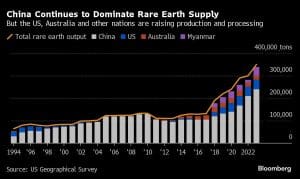
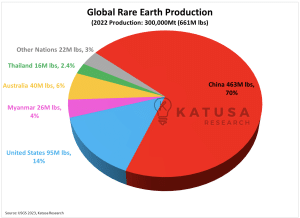
Despite its potential significance, this plant is just one step in the USโ€™s larger, multibillion-dollar effort to challenge Chinaโ€™s monopoly, which controls roughly 70% of the world’s rare earth output and over 90% of its refining capacity.

China Continues to Dominate Rare Earth Supply | But the US, Australia and other nations are raising production and processing

US Investment: Slow Progress in a High-Stakes Race

Rare earth elementsย are essential components in various high-tech applications like smartphones, wind turbines, and military equipment.

The Texas plant, set to be built by Lynas, is part of a growing US initiative to reduce reliance on China for rare earths. For the 149-acre (60 hectares) site, Lynas has secured more than $300 million in contracts from the Pentagon. If all goes according to plan, this facility will be operational within 2 years, contributing significantly to the US’s rare earth processing capacity.

This plant represents just a fraction of the billions of dollars in subsidies and loans pledged by the US and its allies to foster domestic rare earth production. The American government has increasingly viewed the development of a domestic rare earths supply chain as a matter of national security. It aims to break China’s near-total control over refining and production.

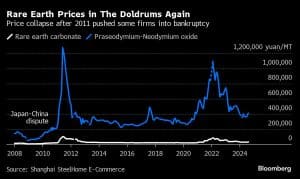
However, while the intention is clear, market conditions present a significant challenge. Since 2022, the global prices for rare earth elements have slumped. This is primarily due to an increase in supply from China and a slowdown in its domestic economy.ย 

Rare Earth Prices are plummeting again

This decline has raised doubts about the long-term financial viability of many new projects outside China. Thus, the prospect of establishing a robust, independent supply chain remains uncertain.

Market Volatility Threatens New Rare Earth Ventures

Despite global demand for rare earth elements, their extraction and processing remain fraught with economic and environmental challenges. Rare earths are not truly “rare” but are seldom found in concentrations high enough to justify environmentally intensive mining operations.ย 

There are 17 chemically related elements in this category, each with properties critical to manufacturing electronics, renewable energy components, and defense technology.

Current market conditions pose a threat to new entrants. According to MP Materials Corp., which operates the only rare earth mine in the US and is building a factory to manufacture magnets in Texas, CEO James Litinsky:

โ€œThese market conditions have now destroyed most of the hoped-for projects from just a couple of years back.โ€ย 

However, even with domestic mining in place, refining and processing are still predominantly under Chinese control, underscoring the dominance of Chinaโ€™s supply chain.

In the face of these market challenges, Laura Taylor-Kale, the US Assistant Secretary of Defense for Industrial Base Policy, promised earlier this year that the US would establish a โ€œsustainable mine-to-magnet supply chain capable of supporting all US defense requirements by 2027.โ€ย 

  • She further highlighted that the Lynas project in Texas could produce around 25% of the world’s supply of rare earth oxides once operational.

China’s Dominance: Strategic Price Manipulation at Play

China’s control over the rare earth market stems from its aggressive mining and refining activities, supported by government policies. Per Katusa Research report, the country merged its 5 largest producers into a single entity, further tightening its grip on the worldโ€™s rare earth supply.

global rare earth production 2022

The Chinese Ministry of Natural Resources, along with its industry ministry, raised mining quotas for rare earths in 2023 and 2024, driving down global prices and applying further pressure on competing projects. The result has been a market environment in which many rare earth mines struggle to break even, forcing early-stage projects into delays and funding shortfalls.

The current situation has echoes of past geopolitical maneuvers. In 2011, China temporarily cut off rare earth supplies to Japan over a territorial dispute. This move pushed Japan to seek diversification in its rare earths supply chain, eventually investing in Lynas. The event shows how geopolitics and market control can intersect in ways that significantly impact global supply chains.

Despite securing substantial investments, some rare earth projects outside China are already encountering setbacks. Arafura Rare Earths is one such company. It received an A$840 million (approximately $560 million) loan from the Australian government and signed agreements with two Korean auto firms in 2022 to supply rare earths from its Nolans project in Australia.ย 

However, construction has yet to begin, largely due to funding gaps. CEO Darryl Cuzzubbo mentioned that while debt and approvals are in place, the “one missing piece is the equity.” The company aims to secure half of the required equity from cornerstone investors before turning to the broader market for the remaining funds. Cuzzubbo hopes to finalize the equity by the end of the year to start construction in early 2025.

The Key to Rare Earth Supply Chain Independence

Japanโ€™s experience offers critical insights into the complexities of establishing an independent rare earth supply chain. Following Chinaโ€™s 2011 export restrictions, Japan invested $250 million in Lynas, allowing the company to start trial production two years later.ย 

However, it took Lynas until 2018 to become profitable, highlighting the extended timeline and considerable financial backing required for such projects.

Lynas CEO Amanda Lacaze emphasized the need for โ€œpatient capitalโ€ when venturing into the rare earths market. This is particularly true for projects breaking new ground. Recent delays with the Texas facility due to issues with wastewater permits highlights the obstacles facing new rare earth projects in the West.

The US’s push to build a competitive rare earths supply chain faces headwinds in both market conditions and geopolitical maneuvering. As the global rare earth prices slump and Chinaโ€™s strategic control persist, the development of a robust, independent supply chain remains an uncertain endeavor. The Western worldโ€™s goal of building a competitive supply chain will require not just investment but strategic patience and international cooperation.