Ørsted has announced a significant expansion of its partnership with Microsoft, agreeing to sell an additional 1 MT of carbon removal over 10 years from the Avedøre Power Station. This is part of the bioenergy carbon capture and storage (BECCS) initiative known as the ‘Ørsted Kalundborg CO2 Hub’. This new deal builds on Microsoft’s existing commitment to purchase 2.67 million tonnes of CO2 from the Asnæs Power Station, bringing their total contracted carbon removal to 3.67 MTs.
The Key Highlights of the Ørsted-Microsoft Deal
1. Carbon Capture Implementation
As part of the ‘Ørsted Kalundborg CO2 Hub’, Ørsted will install carbon capture technology at the wood chip-fired Asnæs Power Station in Kalundborg, western Zealand, and the straw-fired boiler at Avedøre Power Station in Greater Copenhagen. The combined heat and power plants will capture 430,000 tonnes of biogenic CO2 annually, which will then be transported to a storage reservoir in the Norwegian North Sea for permanent storage. The hub is expected to be operational by early 2026.
2. Microsoft’s Carbon Removal Commitment
Starting in 2026, Microsoft will receive one million tons of carbon removal from the straw-fired unit at Avedøre Power Station. This plant uses locally sourced straw, an agricultural by-product, to generate electricity and district heating. By capturing and storing biogenic carbon from these biomass-fired plants, the process not only reduces CO2 emissions but also removes carbon from the atmosphere, creating negative emissions. This is because biogenic carbon from sustainable biomass is part of a natural cycle.
3. Supporting Sustainable Development
The collaboration between Ørsted and Microsoft is crucial for advancing the ‘Ørsted Kalundborg CO2 Hub’, especially since bioenergy-based carbon capture and storage technology is still emerging. The project, which received a subsidy from the Danish Energy Agency, included anticipated revenue from carbon removal certificates in its investment decision. This competitive pricing was a key factor in the subsidy award.
4. Importance of BECCS for Climate Goals
The UN’s Intergovernmental Panel on Climate Change (IPCC) has highlighted the importance of carbon removal technologies like BECCS for limiting global warming. Projects such as the ‘Ørsted Kalundborg CO2 Hub’ are essential for helping companies like Microsoft achieve their sustainability targets and contribute to global climate goals.
Is Microsoft Leading the Charge Toward a Carbon-Neutral Future?
Decoding its carbon emissions and net-zero plans
In 2023, Microsoft expanded its renewable energy assets to over 19.8 gigawatts (GW), incorporating projects across 21 countries. Additionally, last year the company secured contracts for 5,015,019 MTs of carbon removal to be retired over the next 15 years. Its net-zero plans focus on three primary areas:
Reducing carbon emissions
Increasing the use of carbon-free electricity
Removing carbon
The company’s latest ESG report suggests that the pathway to becoming carbon-negative has the following milestones:
Reducing Scope 1 and Scope 2 Emissions
Microsoft aims to nearly eliminate its Scope 1 and 2 emissions by increasing energy efficiency, decarbonizing its operations, and achieving 100% renewable energy by 2025. It achieved a 6% reduction in its Scope 1 and 2 emissions from the 2020 base year by advancing clean energy procurement, implementing green tariff programs, and using unbundled renewable energy certificates
Reducing Scope 3 Emissions
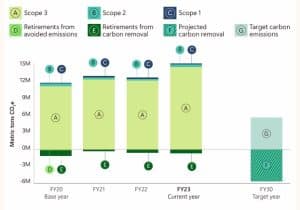
Microsoft’s Scope 3 emissions account for more than 96% of its total emissions. Most of these emissions come from purchased goods and services, capital goods, downstream, and the use of sold products downstream. By 2030, Microsoft aims to cut its Scope 3 emissions by 50% from the 2020 baseline.
Although Scope 3 emissions have surged by 30.9% since 2020, Microsoft remains committed to expanding clean energy purchases across its supply chain. It aims to invest in the decarbonization of hard-to-abate industries like steel, concrete, and other materials used in its data centers.
Tracking progress toward carbon negative by 2030
Microsoft’s overall emissions increased by 29.1% in FY23 from the base year. Additionally, it retired 605,354 MTs of carbon removal as part of its net zero goals.
Can Ørsted’s Bold Strategies Propel U.S. to a Carbon-Free Future? Find Out…
Ørsted has committed to achieving net-zero emissions across its value chain by 2040, aiming to reduce emissions through various initiatives, including renewable energy projects, energy efficiency measures, and engaging stakeholders in sustainable practices.
The company reports its greenhouse gas emissions under three categories: Scope 1, Scope 2, and Scope 3, as defined by the Greenhouse Gas (GHG) Protocol.
ReducingScope 1 and Scope 2 Emissions
Ørsted significantly reduced its Scope 1 emissions by transitioning from fossil fuels to renewable energy sources like wind and biomass. For Scope 2 emissions, Ørsted focused on increasing energy efficiency and sourcing renewable energy to reduce the emissions from purchased electricity and heat.
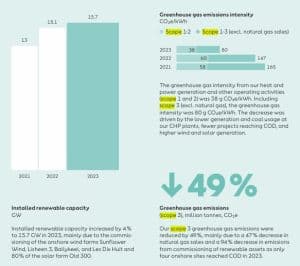
Scope 1 and 2 emissions: FY2023 was 38g CO2e/kWh
Reducing Scope 3 Emissions
To address Scope 3 emissions, Ørsted engages with suppliers, optimizes logistics, and promotes sustainable practices across its value chain, targeting emissions from fuel production and transportation, manufacturing of wind turbine components, business travel, and the use of sold products.
Scope 3 emissions: FY2023 was 80g CO2e/kW
The image depicting Ørsted’s installed renewable capacity and GHG emissions intensity
source: Ørsted
Key sustainability targets
Scope 1-2 emissions intensity: 98 % reduction by 2025 and 99 % reduction by 2030 (from 2006)
Scope 1-3 emissions intensity (excl. natural gas sales): 77 % reduction by 2030, and 99 % reduction by 2040 (from 2018)
Scope 3 emissions (from natural gas sales): 67 % reduction by 2030, and 90 % reduction by 2040 (from 2018)
Top Clean Energy and Decarbonization Projects
Microsoft:
The company invests in renewable energy sources such as wind, solar, and hydroelectric power, and implements energy efficiency measures across its operations. Like its partnership with Ørsted, and other CDR projects alike to offset emissions and remove CO2 from the atmosphere. Through these efforts, Microsoft aims to become carbon-negative by 2030, addressing both its direct emissions and those across its entire value chain.
Some remarkable decarbonization achievements of Microsoft include:
Ørsted is leading the way in clean energy and decarbonization. It is transitioning from fossil fuels to renewable energy sources such as wind, solar, and biomass. The company majorly focuses on:
Large-scale offshore wind farms
Onshore wind energy
Bioenergy carbon capture and storage projects.
Solar power and grid stabilization
These initiatives aim to reduce and remove CO2 emissions, contributing to Ørsted’s goal of achieving net-zero emissions across its value chain by 2040. Thus, Ørsted is making significant strides in combating climate change and promoting sustainable energy solutions through these projects.
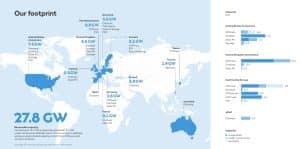
Ørsted’s Global Footprint
source: Ørsted
Notably, Ole Thomsen, Senior Vice President and Head of Ørsted’s Bioenergy business has commented:
“This expanded collaboration with Microsoft is a testament to our shared vision for a sustainable future. By combining Ørsted’s expertise in bioenergy carbon capture and storage with Microsoft’s commitment to reducing its carbon footprint, we’re showcasing how strategic relations can accelerate the transition to a greener economy.”
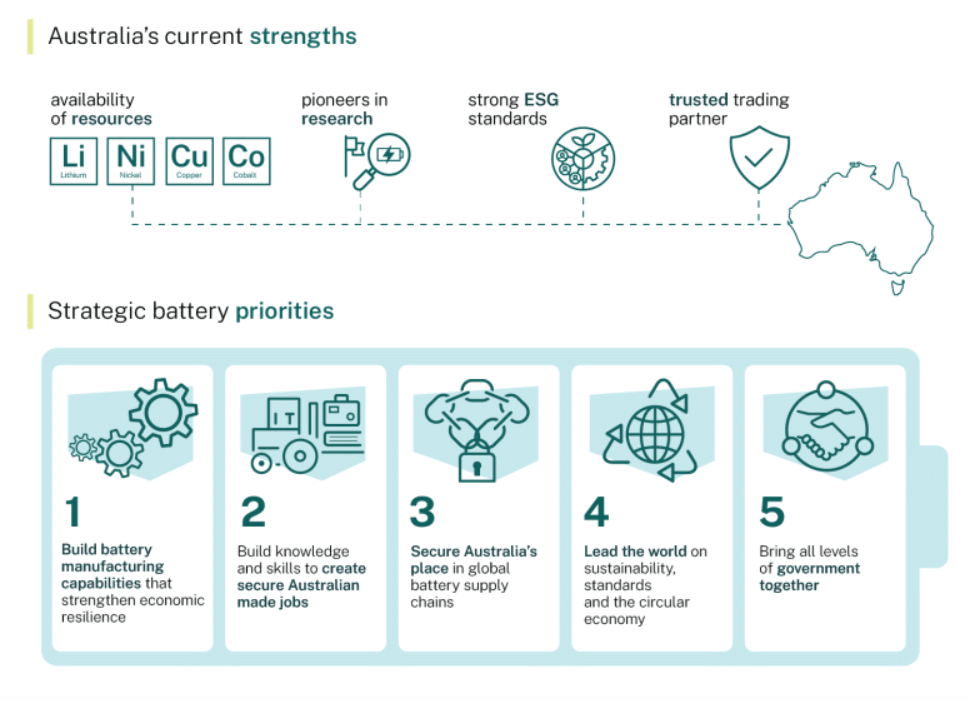
The Australian government unveiled the country’s first National Battery Strategy, detailing plans to establish a domestic battery industry. The strategy aims to develop processing capacity for upgrading raw minerals into processed battery components. This will enable Australia to supply battery-active materials globally, as stated by Prime Minister Anthony Albanese’s government.
Key elements of the strategy include building energy storage systems to bolster renewable power generation in the national grid and leveraging industry expertise to develop safer, more secure batteries for grid connection. Additionally, Australia plans to create batteries for its transport manufacturing sector, including heavy vehicle production.
Federal Budget Boosts Battery Breakthrough
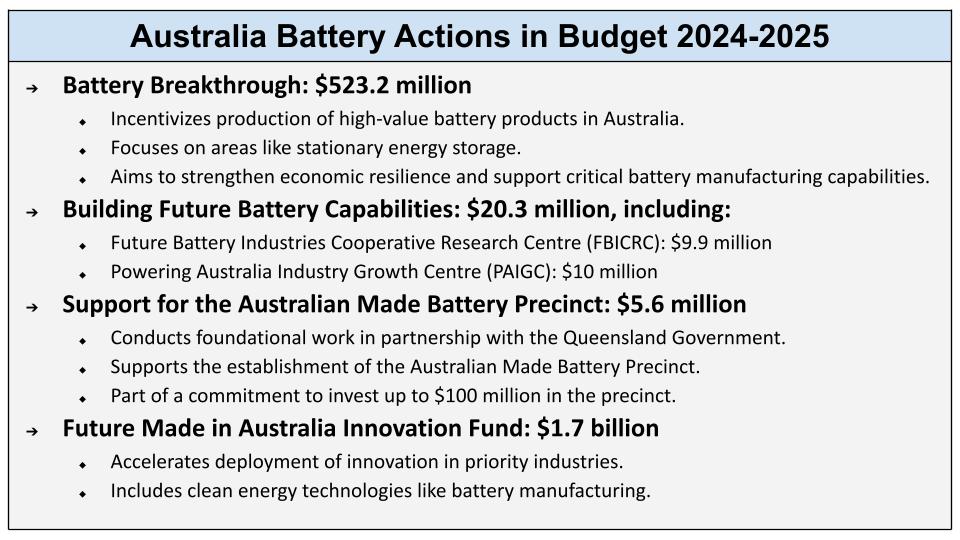
The strategy is funded by Australia’s 2024–2025 federal budget, which allocates A$523.2 million for the Battery Breakthrough Initiative. The initiative offers production incentives to enhance battery manufacturing capabilities. Furthermore, the Building Future Battery Capabilities plan provides A$20.3 million to support battery research.
Prime Minister Albanese emphasized the importance of this initiative, saying that:
“We want to make more things here and with global demand for batteries set to quadruple by 2030, Australia must be a player in this field. Batteries are a critical ingredient in Australia’s clean energy mix. Together with renewable energy, green hydrogen, and critical minerals, we will meet Australia’s emission reduction targets and create a strong clean energy manufacturing industry.”
Australia aims to transition its electricity grid to 82% renewable energy by 2030, supporting the country’s commitment to reduce emissions by 43% within the same period.
The federal government has also announced an A$7 billion tax incentive for critical mineral producers. It aimed at bolstering domestic supply chains for raw materials essential to the energy transition.
Unveiled as part of the 2024–2025 federal budget, the Critical Minerals Production Tax Incentive will cover 10% of relevant processing and refining costs for 31 critical minerals. This incentive will apply to minerals processed and refined between 2027-2028 and 2039-2040, extending up to 10 years per project.
Future Made in Australia: Jobs, Innovation, and Sustainability
This initiative is a key component of the government’s A$22.7 billion Future Made in Australia package. It is designed to create jobs and strengthen the economy while striving for net zero greenhouse gas emissions by 2050. The government sees it crucial in helping the country meet its 82% renewable energy target and cement its position in global battery supply chains.
Prime Minister Albanese and Treasurer Chalmers highlighted that the plan aims to maximize economic and industrial benefits from the global shift to net zero, securing Australia’s position in the evolving economic and strategic landscape.
Additionally, the government will allocate A$14.3 million to enhance trade competitiveness in critical minerals and A$10.2 million for prefeasibility studies of common-use infrastructure to support the sector.
Australia’s critical minerals list includes lithium, nickel, cobalt, vanadium, graphite, and rare earths.
The country is a leading global producer of lithium, iron ore, and bauxite, and boasts the largest reserves of lithium, iron ore, zinc, and vanadium, according to S&P Global Market Intelligence and federal government data.
The Prime Minister emphasized the need for Australia to enhance its competitiveness in the global metals and battery investments market, particularly in response to the US Inflation Reduction Act and other international incentives promoting domestic supply chains.
Albanese noted that “Australia cannot compete dollar-for-dollar with the US Inflation Reduction Act, but this is a competition, not an auction.” He acknowledged the global competition, noting initiatives in the US, EU, Japan, Korea, and Canada aimed at strengthening their industrial and manufacturing bases.
Below is the country’s battery actions identified in the federal budget 2024-2025. Amounts are in Australian dollars.
Industry Praise and Economic Resilience
The Association of Mining and Exploration Companies (AMEC), which includes over 500 members such as Fortescue Ltd. and Albemarle Lithium Pty. Ltd., praised the tax incentive.
AMEC’s chief executive, Warren Pearce, stated that the incentive would spur new projects and industries, driving economic growth and job creation, while maintaining Australia’s high standard of living. He emphasized that this proven mechanism would reward those taking risks in new and costly industries, promising significant returns on investment.
AMEC advocates for a 10% federal production tax credit for downstream materials producers to mitigate Australia’s production cost disadvantages compared to countries like the US. Pearce believes the proposed legislation could be a “game-changer” for clean manufacturing and critical minerals investment.
Amanda McKenzie, CEO of the Climate Council, also expressed support. She remarked that the legislation could catalyze immediate investments in clean energy sectors.
Indeed, Australia’s National Battery Strategy marks a significant step toward a sustainable energy future, backed by substantial federal investment. By enhancing battery production and innovation, the strategy aims to strengthen the nation’s position in the global market, create jobs, and support the transition to renewable energy.
Singapore and Ghana signed a carbon credit agreement on May 27, 2024, in a significant step towards global environmental sustainability. This deal enables businesses in Singapore to offset a part of their carbon tax by investing in certified carbon reduction projects in Ghana.
Unlocking the Details of the Singapore-Ghana Carbon Credits Agreement
The carbon credit agreement, officially known as the “Implementation Agreement” promotes cooperation under Article 6 of the Paris Agreement. Singapore’s Minister for Sustainability and the Environment and Minister-in-charge of Trade Relations, Grace Fu, and Ghana’s Minister of Environment, Science, Technology and Innovation, Ophelia Hayford, officiated the signing.
The important attributes of this agreement are:
Project developers must contribute 5% of proceeds from authorized carbon credits to climate adaptation efforts in Ghana. It would assist the country in preparing for climate change impacts.
Developers will have to cancel 2% of authorized carbon credits upon initial issuance to contribute further to global emissions reduction. These carbon credits cannot be sold, traded, or counted towards any country’s emission targets. They will contribute only to a net decrease in global emissions.
Under Singapore’s International Carbon Credit (ICC) framework, eligible ICCs from this Implementation Agreement can be used by Singapore-based companies to offset up to 5% of their carbon tax liabilities.
The Agreement can meet binding mandates like Nationally Determined Contributions (NDCs) and international mitigation requirements such as the Carbon Offsetting and Reduction Scheme for International Aviation (CORSIA).
Singapore’s Minister Grace Fu said,
“Singapore and Ghana share many mutual interests in the sustainability sphere. The conclusion of the Implementation Agreement is a testament to our shared commitment to advance global climate action through high-integrity carbon markets.”
She further assured that carbon credit projects under this Agreement will deliver climate and economic benefits. Subsequently, Singapore will keep collaborating with partners like Ghana to create opportunities for a sustainable future.
Media reports state that the bilateral agreement follows Temasek-backed investment platform GenZero’s ongoing investments in a forest restoration project in Ghana’s Kwahu region.
The project, in collaboration with Singapore-based AJA Climate Solutions, aims to replant degraded forest reserves. It includes sustainably growing cocoa trees in shaded farms to protect them from climate impacts like floods, heat stress, and pests.
The project area within the Kwahu region, once a lush forest 40 to 50 years ago, has been heavily exploited for timber in recent decades. This deforestation has resulted in Ghana losing more cocoa hectares each year, leading to economic downfall. Consequently, this Agreement under Article 6 and the project came as a blessing for Ghana.
The forest project will eventually focus on regenerating native tree species across degraded forests. It plants to grow 20 million seedlings within seven years to balance the impact of heavy deforestation.
Talking about economic benefits, Ghana will experience increased investment in its green projects.
These initiatives, which range from reforestation to renewable energy, will not only reduce carbon emissions but also promote sustainable development and create job opportunities within Ghana.
Supporting Singapore’s Climate Goals
For Singapore, this partnership is a strategic move to meet its ambitious climate goals. The city-state has committed to cut down its GHG emissions by 50% by 2030. The country aims to help businesses by allowing them to offset their carbon taxes through overseas credits.
Notably, the Kwahu project extends Singapore’s intergovernmental partnerships regarding Article 6. In November 2022, Singapore and Ghana finalized substantive negotiations on the Implementation Agreement on Cooperative Approaches. This agreement allows for the bilateral transfer of carbon credits aligning with Article 6.
Singapore is most likely to witness the following impacts on its carbon credit economy:
Carbon credits traded under this Implementation Agreement, upon completion, might offset a portion of corporate carbon tax liabilities in Singapore.
This would be the first project in the country to generate carbon credits with corresponding adjustments under this Implementation Agreement.
We may infer that the carbon credit agreement offers a win-win scenario economically and environmentally. Singaporean companies gain flexibility in managing their carbon tax liabilities, potentially lowering their operational costs. Simultaneously, Ghana benefits from the inflow of funds into its green economy, bolstering its efforts to combat climate change and fostering economic growth.
However, both nations must establish a robust monitoring and verification mechanism to maintain the integrity of the carbon credits.
All said and done, The Singapore-Ghana carbon credit agreement can leverage international cooperation to combat global climate change. No wonder it provides a scalable model for other nations to follow and paves the way for a more sustainable future.
Enbridge Inc. has received a permit from Wyoming’s Industrial Siting Council to proceed with a major solar-plus-storage project in Laramie County, Wyoming. The $1.24 billion Cowboy Solar I & II Project, paired with the Cowboy Battery Project, will be one of the largest in the U.S., featuring up to 771 MW of solar power and 269 MW of battery storage.
Solar power, using the sun’s energy to produce electricity, is fundamental to the global move toward sustainable energy. As a clean and renewable resource, it plays a crucial role in reducing greenhouse gas emissions and addressing climate change.
Enbridge’s Solar Ambitions Take Root
In the United States, solar energy has grown tremendously due to technological improvements, falling costs, and greater environmental consciousness. This rapid expansion has also propelled the rising demand for battery storage, positioning Enbridge in this burgeoning industry.
Enbridge, headquartered in Calgary, Alberta, operates natural gas, oil, and renewable energy projects across North America. It is the region’s largest natural gas utility by volume and owns the world’s longest crude oil and liquids pipeline system.
As pressure for companies to help in decarbonization efforts continues to intensify, energy companies must step up in slashing their carbon footprint. Enbridge is employing various means to decarbonize its operations and reach net zero by 2050.
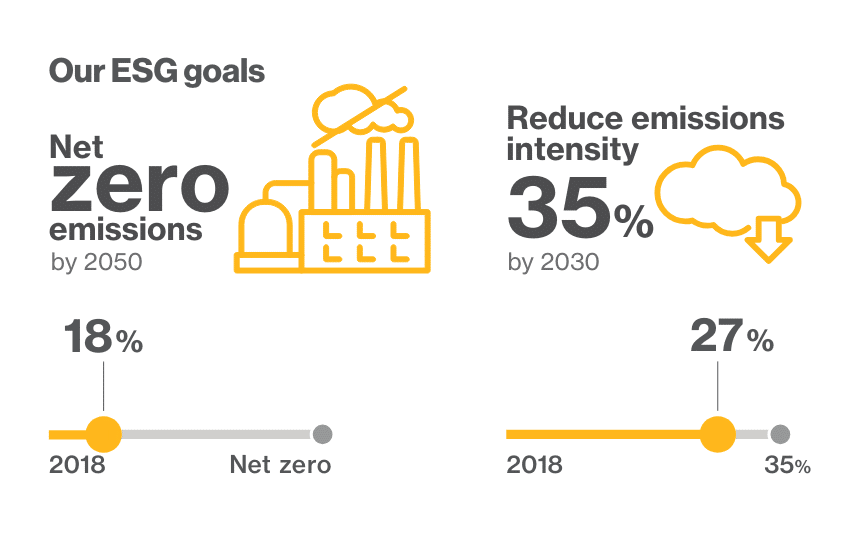
In 2020, Enbridge set new ESG targets, including a goal to reduce GHG emissions intensity by 35% by 2030. Since 2018, the energy company has achieved a 27% reduction in emissions intensity.
Enbridge Net Zero
In 2022, despite increased energy consumption, Enbridge saw a slight decrease in emissions intensity, mainly due to enhanced system efficiency and the use of lower-intensity power.
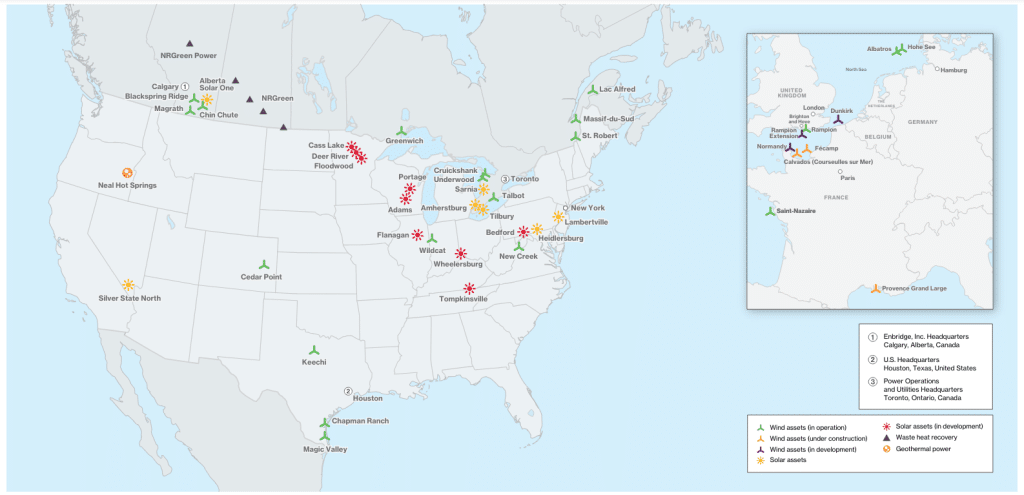
The company is reducing the emissions intensity of the electricity it buys with solar self-power projects and advocating for policies that decarbonize the power grid. Below are the company’s renewable projects, operational and under development.
Source: Enbridge net zero report 2023
A Landmark Solar-Plus-Battery Storage Initiative
The $1.24-billion Wyoming solar-plus-storage project is one of the initiatives Enbridge pursues as part of its net zero efforts. Construction will start in March 2025, with the first phase expected to be operational by January 2027 and the second by August 2027.
The first phase includes a 400-MW photovoltaic (PV) system and 136 MW of battery storage, while the second phase will add 371 MW of PV and 133 MW of storage.
Fluence Energy Inc. will supply the battery system, and American Hyperion Solar LLC, a subsidiary of China’s Jiangsu Runergy New Energy Technology Co. Ltd., will provide the solar panels.
The project will connect to the local grid operated by Cheyenne Light Fuel and Power Co., an affiliate of Black Hill. Enbridge’s application mentions planned data centers in Laramie County, including one by Microsoft Corp., which will require substantial electrical power.
Enbridge’s gas utilities in Canada are receiving requests from data centers, according to Cynthia Hansen, president of gas transmission and midstream. She noted that they’re supplying the utilities that are getting such requests. While their main lines haven’t received direct requests from data centers yet, they would support those markets through their utilities.
The Wyoming project faced some opposition from local mining and ranching interests but received support from the Cheyenne-Laramie County Corporation for Economic Development and local labor groups. Enbridge estimates a peak workforce of around 375 workers during construction.
John Fulk, business manager of Construction and General Laborers’ Local 1271, remarked on the project approval, saying that:
“The development of solar, wind power and battery storage creates an opportunity for the state’s legacy coal workers to expand their skills so they may fully participate in new job opportunities created by the energy transition.”
Enbridge’s Pathway to Reducing Carbon Footprint
In addition to its renewable energy initiatives, the energy company is also balancing residual emissions by purchasing carbon offset credits. These credits are from nature-based solutions and renewable energy credits, with a primary focus on areas near their operations. According to its recent net zero report, the company invested a total of $350,000 in carbon credit projects.
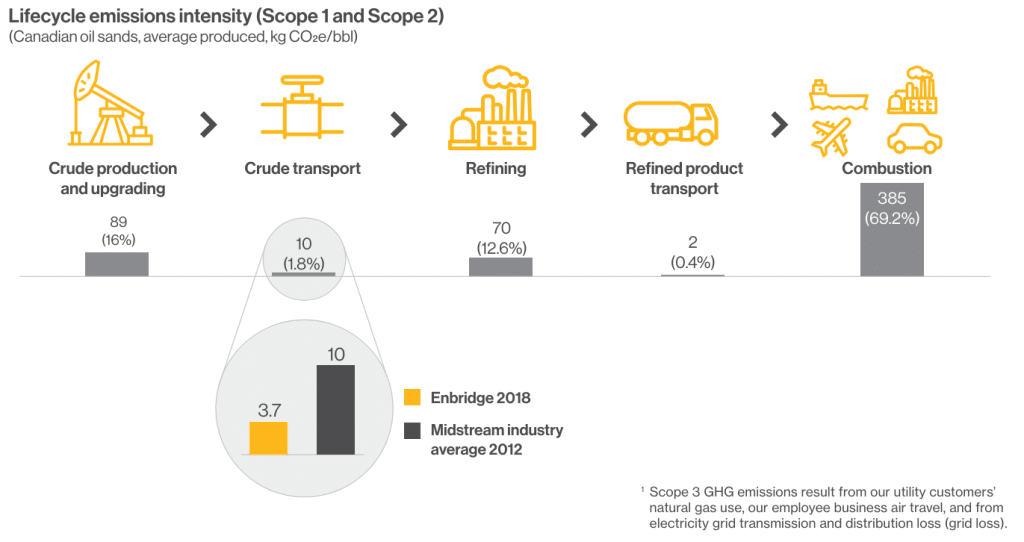
Enbridge’s GHG emissions reduction targets focus specifically on Scope 1 and Scope 2 emissions. However, carbon emissions from the midstream constitute only a small part of its total GHG emission on a lifecycle basis.
Oil sands transportation accounts for less than 2% of lifecycle emissions, with most emissions from combustion, production, and upgrading. Enbridge leads in tracking, reporting, and reducing Scope 3 emissions, doing so since 2009 despite limited sector guidance.
The company reports on utility customer natural gas use, employee air travel, and electricity grid loss. In 2021, Enbridge added metrics for emissions intensity of delivered energy and emissions avoided through renewables, lower-carbon fuels, and conservation programs. They’re also committed to collaborating with suppliers to further reduce Scope 3 emissions.
Through innovative projects and comprehensive emission reduction strategies, Enbridge continues to lead in the global shift towards renewable energy.
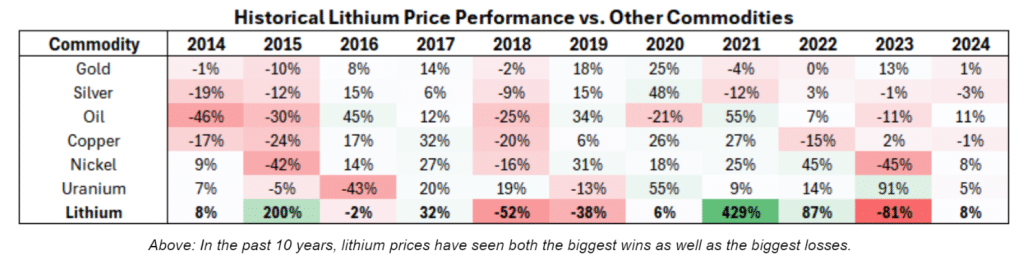
Lithium, a critical element in modern technology, has become a focal point in discussions about renewable energy and electric vehicles (EVs) due to its importance in batteries. The fluctuating prices of lithium have significant implications for industries and economies worldwide. This article explores the dynamics of lithium pricing, offering insights into historical trends, current market conditions, future predictions, and the key factors that drive its valuation.
Background Information
Lithium is a soft, silvery-white metal belonging to the alkali metal group. It is highly reactive and flammable, making it essential in various industrial applications. Most notably, lithium-ion batteries power everything from smartphones to electric vehicles.
The demand for lithium has surged with the rise of renewable energy technologies and the global push towards reducing carbon emissions. Lithium’s unique properties make it irreplaceable in high-performance batteries, which are pivotal in energy storage solutions and portable electronics.
Lithium is also on several countries’ Critical Minerals lists, such as the U.S., Canada, and Australia.
Historical Lithium Price Trends
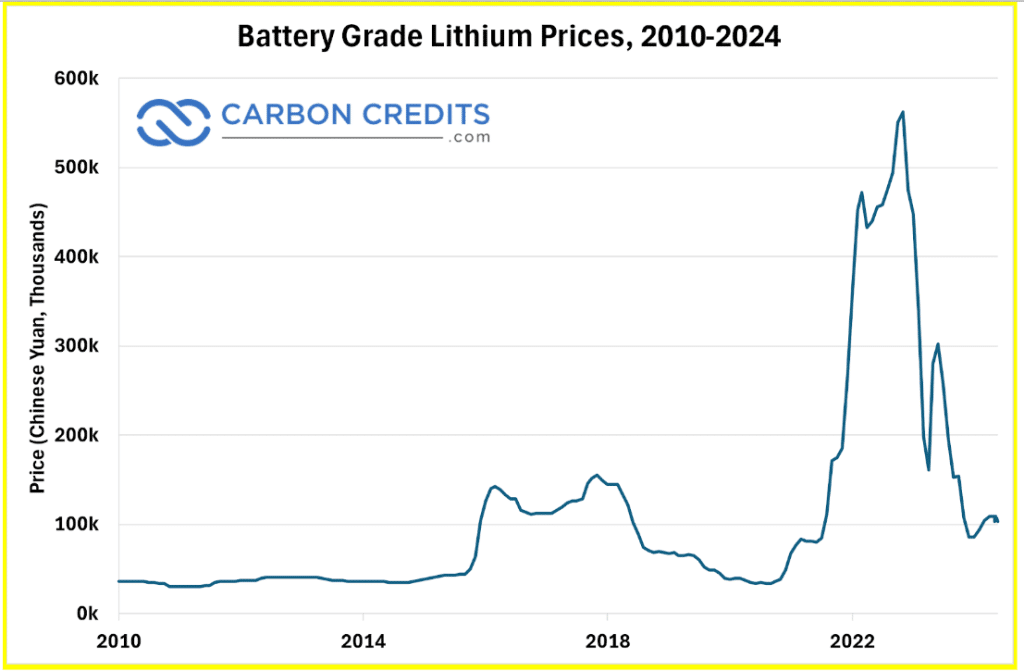
Lithium prices have seen dramatic changes over the past decade. From 2010 to 2015, prices remained relatively stable, with minor fluctuations due to steady demand and supply conditions. However, from 2015 onwards, prices began to soar, driven by the booming EV market and increased demand for renewable energy storage solutions.
By 2017, lithium prices had tripled compared to their 2015 levels. This spike was primarily due to the rapid expansion of China’s EV market and increased lithium mining and production investments.
The year 2018 saw prices peaking, but by 2019, an oversupply in the market led to a sharp decline. From 2019 to 2021, prices remained subdued, reflecting a period of market correction and stabilization.
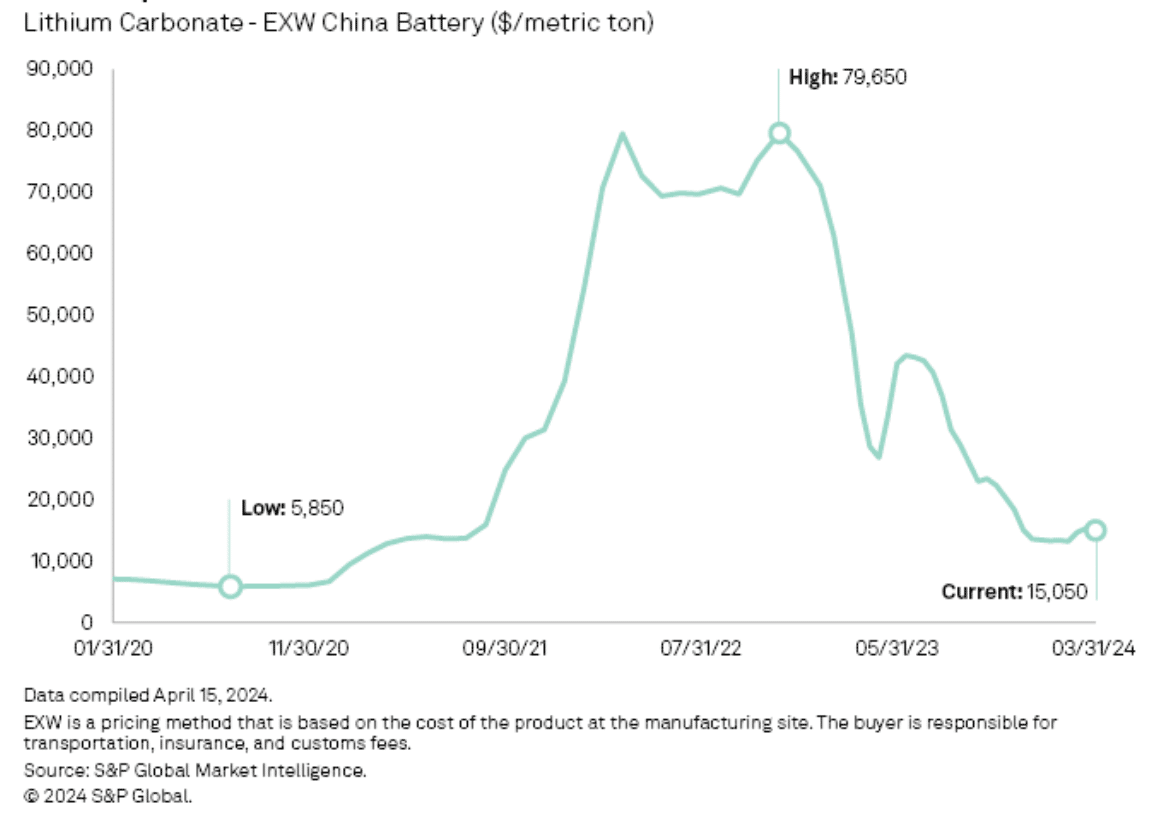
In 2022, however, a record-breaking price rally occurred due to a large supply deficit. Lithium’s largely agreement-based supply model also contributed to this squeeze, sending lithium prices skyrocketing over 5x. This push would continue until midway through the year as China re-implemented full lockdowns nationwide due to rising COVID-19 case numbers, leading to a brief economic slowdown.
While the end of lockdowns coincided with another surge in demand, sending lithium prices to their all-time high of 575,000 CNY (USD 80,000) per tonne, this rally was short-lived. With inflation rates on the rise and EV supply finally overtaking demand, lithium prices plummeted back down in 2023 before stabilizing around the 100,000 CNY (USD 14,000) level, where it continues to trade today.
The past few years have been marked by significant market adjustments. Producers ramped up supply, anticipating continuous high demand, but the market did not grow as quickly as expected.
Consequently, this led to a surplus, driving prices down. Moreover, technological improvements in mining and processing lithium contributed to cost reductions, which also played a role in lowering market prices during this period.
Lithium Price Volatility
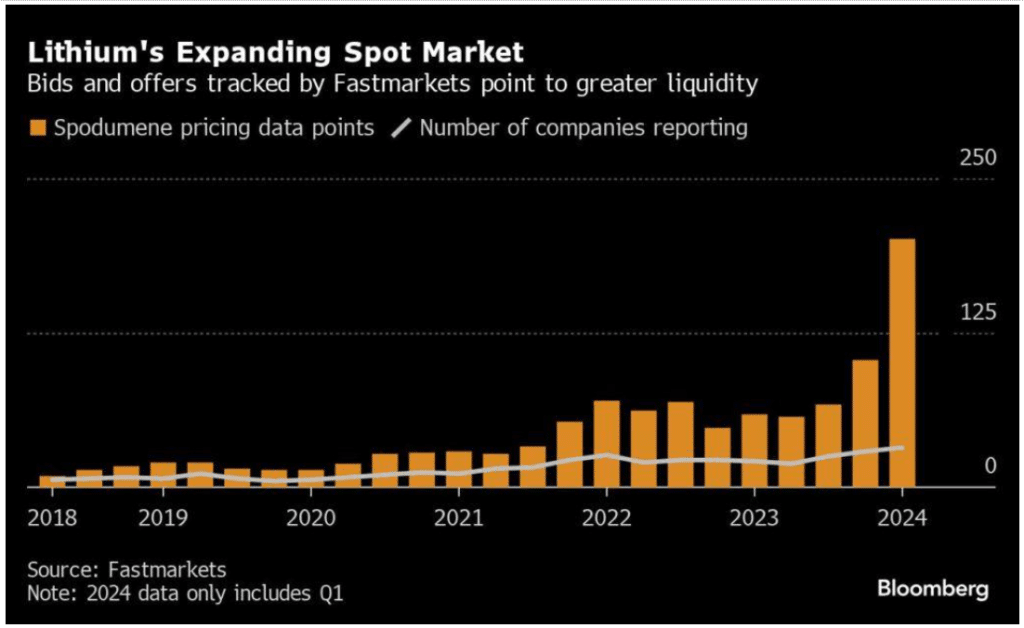
One of the main factors contributing to the volatility of lithium prices is that unlike other minerals like gold or copper, the lithium markets are still fairly young and hence the spot market is not very well established. With the recent explosive growth in lithium demand added on top of that, the result is a market sector that’s very much still going through growing pains.
Right now, instead of purchasing contracts for delivery on a spot market most lithium consumers choose to directly sign long-term offtake agreements with lithium miners, securing a guaranteed supply at a fixed price. The current state of the lithium markets has drawn parallels to the iron ore market prior to the 2010s, where pricing would follow an annual benchmark negotiated between miners and steelmakers each year.
In the early 2000s, explosive growth in iron ore demand from China was the catalyst that finally led to change in the iron ore markets. It would take a concerted effort from BHP and other top miners for the iron ore markets to shift towards the spot pricing model it follows today.
Something similar is happening in the lithium markets, with top producer Albemarle having begun holding auctions for its mined lithium since March 2024. These auctions allow buyers to secure pricing that’s more truly reflective of the present supply-demand dynamic, as opposed to being forced to lock in fixed long-term pricing to avoid not having enough supply.
Albemarle plans on holding auctions every two weeks in order to provide more timely and consistent data on lithium pricing.
The lithium spot market has been seeing increasing activity as well, as shown in the chart above. In conclusion, while lithium prices will likely continue to be volatile for the foreseeable future, there are changes under way that will help stabilize the market as it matures and develops.
Current Market Analysis
As of 2024, lithium prices have stabilized from their major plunge of 2022-2023. The current price is attributed to several factors:
Increased Demand: The global shift towards electrification and decarbonization has accelerated the demand for lithium-ion batteries. EVs, energy storage systems, and consumer electronics continue to drive this demand. The Paris Agreement and other international efforts to curb carbon emissions have further intensified the focus on lithium as a key resource for achieving climate goals.
Supply Chain Dynamics: While demand is rising, supply chain disruptions have hindered the steady flow of lithium. These disruptions are caused by geopolitical tensions, logistical challenges, and regulatory hurdles in major lithium-producing countries. For instance, political instability in regions like South America, where a significant portion of lithium is mined, has led to production slowdowns and export restrictions. However, there is still a significant surplus of lithium supply to work through.
Technological Advancements: Innovations in battery technology, such as solid-state batteries, promise higher efficiency and longer life cycles. These advancements have spurred further investment in lithium production, contributing to the current price dynamics. Additionally, advancements in extraction technologies, such as direct lithium extraction (DLE), are expected to enhance the efficiency and environmental sustainability of lithium production.
The increased focus on domestic production in countries like the United States and Australia is also reshaping the market landscape. Efforts to reduce dependence on imported lithium are driving investments in local mining projects, which, in turn, affect global supply and pricing dynamics.
Future Price Predictions
Looking ahead, the future of lithium prices is shaped by a combination of technological, economic, and geopolitical factors.
Analysts predict that demand for lithium will continue to grow, driven by several key trends:
Expansion of the EV Market: With governments worldwide setting ambitious targets for EV adoption, the demand for lithium is expected to skyrocket. For instance, the European Union aims to phase out internal combustion engine vehicles by 2035, significantly boosting lithium demand. Major automakers are also announcing aggressive plans to electrify their fleets, further driving demand.
Advancements in Energy Storage: Beyond EVs, the need for efficient energy storage solutions in renewable energy systems will drive lithium demand. Solar and wind energy projects increasingly rely on lithium-ion batteries for energy storage, ensuring a steady demand. The development of grid-scale storage solutions is particularly significant, as it addresses the intermittency issues associated with renewable energy sources.
Sustainable Mining Practices: The push for sustainable and ethical mining practices may impact the supply side. While this could constrain supply in the short term, it is expected to ensure a stable and environmentally friendly lithium supply in the long run. Innovations in recycling technologies and the development of closed-loop systems are also expected to play a crucial role in meeting future demand sustainably.
Factors Affecting Lithium Prices
Several factors influence lithium prices, creating a complex and dynamic market landscape:
Supply and Demand Dynamics: The fundamental economics of supply and demand play a crucial role. Any imbalance, such as oversupply or undersupply, directly affects prices. For example, the rapid development of new mining projects can lead to temporary oversupply, depressing prices until demand catches up.
Geopolitical Factors: Lithium-rich countries, such as Australia, Chile, and Argentina, play a significant role in the global supply chain. Political stability and regulatory policies in these regions can impact lithium prices. Trade policies, tariffs, and international agreements also influence the global flow of lithium and its pricing.
Technological Developments: Breakthroughs in battery technology can influence lithium demand. For example, the development of alternative battery chemistries could reduce reliance on lithium, affecting its price. Conversely, improvements in lithium extraction and processing technologies can increase supply efficiency and reduce production costs, impacting prices favorably.
Environmental Regulations: Stricter environmental regulations on mining practices can limit supply and drive up prices. Conversely, advancements in sustainable mining techniques can stabilize prices. The growing emphasis on reducing the environmental footprint of lithium extraction is prompting the industry to adopt greener practices, which may initially increase costs but lead to long-term sustainability.
Key Players in the Lithium Market
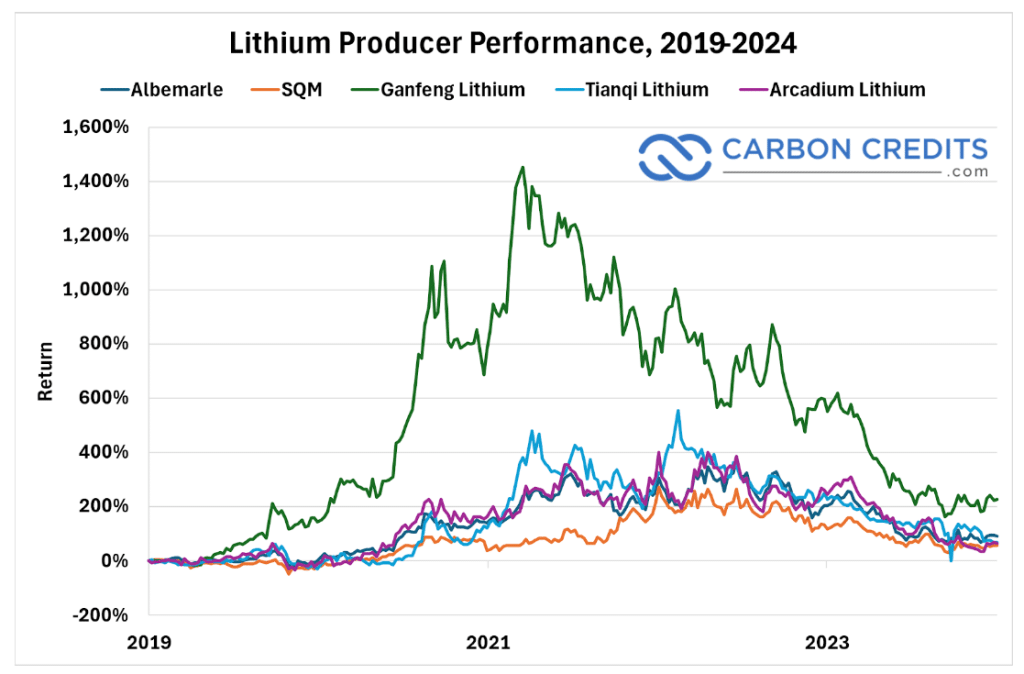
The global lithium market is dominated by a few key players who control a significant share of the mined supply. Here are five of the top producers from 2023, who combined for roughly half of total global production:
Albemarle Corporation: Currently the world’s largest lithium producer, Albemarle operates major lithium mining projects in Australia and the United States. The company has invested heavily in expanding its production capacity to meet rising demand.
SQM (Sociedad Química y Minera de Chile): Based in Chile, SQM, the world’s second largest producer, is known for its extensive lithium brine operations in the Atacama Desert. The company has leveraged its strategic location and technological expertise to become a dominant player in the market.
Ganfeng Lithium: A Chinese company, Ganfeng is a major player in the lithium market, with operations spanning from mining to battery production. The company’s vertically integrated business model allows it to control the entire supply chain, ensuring stable supply and competitive pricing.
Tianqi Lithium: Another Chinese giant, Tianqi, has significant stakes in lithium mining operations globally, including the Greenbushes mine in Australia. The company’s strategic investments and partnerships have positioned it as a key supplier in the global market.
Arcadium Lithium: A vertically integrated lithium company formed from a merger between American refiner Livent and Australian miner Allkem, Arcadium focuses on high-quality lithium compounds used in batteries and other applications. The company’s commitment to innovation and sustainability has made it a preferred supplier for many high-tech industries.
Environmental Impact: Lithium mining has significant environmental repercussions, including water usage and habitat destruction. Addressing these concerns is crucial for sustainable growth. The industry is under increasing scrutiny to minimize its environmental footprint and adopt greener practices. Expect to see a more pronounced price premium for “green” sustainable lithium once the market matures further.
Market Volatility: Fluctuations in supply and demand combined with the infancy of the lithium markets can lead to volatile prices, making it challenging for investors and producers to plan long-term strategies. The cyclical nature of commodity markets adds to the unpredictability, requiring robust risk management practices.
Technological Risks: Dependence on lithium-ion technology poses a risk if alternative battery technologies emerge, potentially reducing lithium demand. The rapid pace of technological innovation necessitates continuous adaptation and investment in research and development.
Opportunities:
Technological Innovation: Advancements in mining and processing technologies can enhance efficiency and reduce environmental impact. Innovations such as direct lithium extraction (DLE) and improved recycling techniques are expected to revolutionize the industry.
Strategic Investments: Investing in lithium recycling and alternative sources can diversify supply and stabilize the market. Developing secondary sources of lithium, such as extracting lithium from geothermal brines or recycling used batteries, offers promising avenues for ensuring supply security.
Global Collaboration: International cooperation on sustainable mining practices and environmental regulations can ensure a stable and ethical lithium supply chain. Collaborative efforts among governments, industry players, and environmental organizations can drive the adoption of best practices and foster a resilient market.
Types of Lithium Companies: Technology, Exploration, Production, Extraction, Refining
The lithium industry comprises various types of companies, each playing a crucial role in the supply chain. These companies can be broadly categorized into technology, exploration, production, extraction, and refining. Understanding the distinct roles and contributions of each type is essential for grasping the complexity of the lithium market.
Technology Companies
Role and Contribution: Technology companies are pivotal in the development and advancement of lithium battery technologies. These firms focus on enhancing the performance, efficiency, and safety of lithium-ion batteries. Innovations by technology companies drive the demand for lithium by creating new applications and improving existing ones.
Examples:
Tesla: Known for its electric vehicles (EVs), Tesla also invests heavily in battery technology through its Gigafactories, which produce lithium-ion batteries for both EVs and energy storage systems.
Panasonic: Partnering with Tesla, Panasonic manufactures lithium-ion batteries, focusing on improving energy density and reducing costs.
Impact: Technology companies push the boundaries of battery capabilities, influencing the overall demand for high-quality lithium and driving advancements that make renewable energy solutions more viable and efficient.
Exploration Companies
Role and Contribution: Exploration companies are responsible for discovering new lithium deposits. These firms conduct geological surveys, drilling, and sampling to identify potential lithium reserves. Exploration is the first step in the lithium supply chain, determining future supply availability.
Examples:
LiFT Power Corp: An exploration company focused on developing its lithium project in Northwest Territories, Canada, aiming to establish a domestic North American supply of lithium.
Impact: Successful exploration leads to the development of new lithium mines, increasing the global supply of lithium and potentially stabilizing prices. These companies are crucial for ensuring a steady pipeline of lithium resources to meet future demand.
Production Companies
Role and Contribution: Production companies are involved in the extraction of lithium from mines and brine sources. They manage the operations of lithium mines and are responsible for bringing raw lithium materials to the market.
Examples:
Albemarle Corporation: The world’s largest lithium producer in 2023 with operations in Australia and the USA, Albemarle is a key supplier of lithium compounds to various industries.
SQM (Sociedad Química y Minera de Chile): Operating extensive lithium brine extraction facilities in the Atacama Desert, SQM is a leading global producer of lithium.
Impact: Production companies are the backbone of the lithium supply chain, ensuring that sufficient quantities of lithium are available to meet industrial and consumer needs. Their production capacities and efficiencies directly influence lithium prices and availability.
Extraction Companies
Role and Contribution: Extraction companies specialize in the technologies and processes used to extract lithium from raw materials. These firms develop and implement methods for efficiently and sustainably extracting lithium from both hard rock (spodumene) and brine sources.
Examples:
Standard Lithium: Known for its proprietary extraction technology that aims to streamline the lithium extraction process and increase efficiency.
Impact: Advancements in extraction technology by these companies can significantly lower production costs and environmental impact, making lithium more accessible and sustainable. Efficient extraction processes are essential for meeting growing demand while minimizing ecological footprints.
Refining Companies
Role and Contribution: Refining companies are responsible for processing raw lithium materials into high-purity lithium compounds that are suitable for use in batteries and other applications. These companies ensure that the lithium meets stringent quality standards required by technology and battery manufacturers.
Examples:
Ganfeng Lithium: A vertically integrated company that not only mines lithium but also refines it into battery-grade compounds.
Tianqi Lithium: Engages in refining lithium to produce battery-grade lithium hydroxide and carbonate, supplying major battery manufacturers.
Impact: Refining companies add value by transforming raw lithium into a usable form, ensuring a consistent supply of high-quality lithium to downstream industries. Their operations are critical for maintaining the supply chain’s integrity and meeting the specifications required for advanced lithium-ion batteries.
Conclusion
Lithium prices are influenced by a myriad of factors, from technological advancements and supply chain dynamics to geopolitical and environmental considerations. The future of lithium pricing looks promising, with growing demand driven by the global shift towards electrification and renewable energy.
However, addressing the challenges of sustainable production and market volatility will be crucial for long-term stability. As the world continues to embrace green technologies, lithium remains a critical component in the journey towards a sustainable future.
References and Further Reading
Lithium Market Overview and Trends. (2023). International Energy Agency. https://www.iea.org/reports/critical-minerals-market-review-2023/key-market-trends#abstract.
The Future of Lithium: Supply, Demand, and Prices. (2023). BloombergNEF (https://about.bnef.com/blog/the-future-of-lithium-supply-demand-and-pr)
The Biden administration announced the release of the “Voluntary Carbon Markets Joint Policy Statement and Principles”, aiming to enhance and advance the market for carbon credits by establishing the US government’s guidelines to ensuring the high integrity of voluntary carbon markets (VCMs).
This policy statement arrives as demand for carbon offset projects and related credits will surge. It’s primarily due to companies pursuing net zero goals and using offsets to complement their emissions reduction efforts or to balance unavoidable emissions. Notably, the Science Based Targets initiative (SBTi) recently indicated that carbon credits may be allowed in net zero targets to address Scope 3 emissions.
Despite the growth, the market faces significant integrity challenges. Participants struggle to differentiate between high and low-quality projects due to insufficient or inconsistent data on project effectiveness.
Announcing the new carbon credits guidelines, US Treasury Secretary Janet Yellen stated:
“Voluntary carbon markets can help unlock the power of private markets to reduce emissions, but that can only happen if we address significant existing challenges. The principles released today are an important step toward building high-integrity voluntary carbon markets. This is part of the Biden administration’s ambitious efforts to tackle the climate crisis and accelerate a clean energy transition that benefits all Americans.”
Here Are the Key Points of the Policy Guidelines:
Certified Carbon Credits
Carbon credits and the activities that generate them must meet credible atmospheric integrity standards, representing real decarbonization. They should be certified to robust standards for design and MMRV (Measurement, Monitoring, Reporting, and Verification).
Core principles include additionality (activities wouldn’t occur without the crediting mechanism), uniqueness (one credit corresponds to one tonne of CO2 reduced or removed without double-issuance), and real, quantifiable emission reductions. Activities must prevent leakage and be validated and verified by an independent third party.
Permanence is essential, ensuring emissions stay out of the atmosphere for a specified period. More remarkably, robust baselines should avoid over-crediting and reflect advancements in climate policy and technology.
Climate and Environmental Justice
Credit-generating activities should avoid environmental and social harm, supporting co-benefits and transparent, inclusive benefits-sharing. Understanding climate and environmental justice impacts is crucial, and developers should avoid negative externalities for local communities.
Safeguards must prevent adverse impacts on people and the environment, including land use, tenure rights, food security, and biodiversity. Continuous monitoring and mitigation of adverse impacts are necessary, with efforts to enhance positive impacts where possible.
Verified co-benefits, such as sustainable economic development and increased biodiversity, are encouraged. Projects should be designed and implemented in consultation with relevant stakeholders, respecting Free, Prior, and Informed Consent where applicable.
Emissions Reductions Within Value Chains
Corporate buyers of credits should prioritize measurable emissions reductions within their own value chains. The use of credits involves purchasing and canceling or retiring them, and making public claims based on their climate impact. To achieve long-term climate goals, businesses must transform their models across economies.
Credit users should use VCMs to complement measurable within-value-chain emissions reductions as part of their net zero strategies. This includes taking inventory of Scope 1, 2, and 3 emissions, regularly reporting them, setting near-term emissions reduction targets, and adopting transition plans. Where feasible, companies should collaborate with their stakeholders to achieve these goals.
Disclosure of Purchased and Retired Credits
Credit users should disclose purchased, canceled, or retired credits annually, providing details to assess their integrity and environmental and social impacts. This disclosure may exceed legal requirements and should be in a standardized, easily accessible format for comparability.
Users should consider reporting to aggregating resources that disseminate this information publicly, ensuring stakeholders can evaluate the credibility and impacts of the credits.
Public claims by credit users must reflect the true climate impact of retired credits, using only high-integrity carbon credits. Claims should support ongoing incentives for within-value-chain emissions reductions and align with developing frameworks.
Credits should meet high integrity standards, avoiding claims based on reversed or failed credits unless remediated. Corporate climate strategies should prioritize within-value-chain reductions, using credible credits to complement efforts.
Improving Market Integrity
Market participants should enhance market integrity by creating incentives for high-integrity carbon credits, improving transparency, and ensuring fair treatment of suppliers. Measures include preventing fraud, promoting global standards interoperability, and supporting equitable market participation.
Enhancing market functionality involves collaboration among private, public, and civil sectors, focusing on robust data, fair revenue distribution, and clear accounting practices to support the health of VCMs.
Facilitating Efficient Market Participation
Policymakers and market participants should lower transaction costs and support credit providers, especially those in developing countries. Addressing barriers for suppliers can enhance VCMs’ ability to produce high-integrity credits.
Efforts should include using robust models to reduce MMRV costs and providing market certainty for long-term decarbonization investments. Supporting credible credit providers is crucial for advancing decarbonization and generating economic opportunities as part of the climate strategy.
The new US’ voluntary carbon credit guidelines was co-signed by senior administration officials, including Treasury Secretary Janet Yellen, Agriculture Secretary Tom Vilsack, Energy Secretary Jennifer Granholm, Senior Advisor for International Climate Policy John Podesta, National Economic Advisor Lael Brainard, and National Climate Advisor Ali Zaidi.
Xpansiv, a leading provider of market infrastructure for the global energy transition, has finalized a new capital raise led by Aramco Ventures, a major investor in low-carbon energy and sustainability, along with existing investors. This investment will help further develop Xpansiv’s global energy and environmental markets infrastructure solutions and support the company’s investment and acquisition strategy.
Strengthening Market Infrastructure for Sustainable Growth
Xpansiv runs the largest spot exchange for environmental commodities, including carbon credits and renewable energy certificates. As the premier provider of registry infrastructure for energy, power, and environmental markets, Xpansiv also operates the largest independent platform for managing and selling solar renewable energy credits in North America.
Aramco Ventures is the corporate venturing subsidiary of Aramco, the world’s leading fully integrated energy and chemical enterprise. Headquartered in Dhahran, Aramco’s investments primarily support Aramco’s operational decarbonization, new lower-carbon fuels businesses, and digital transformation initiatives.
The investment from Aramco Ventures is part of its Sustainability Fund, which focuses on companies that can support Aramco’s goal of achieving net zero Scope 1 and Scope 2 greenhouse gas emissions across its wholly owned and operated assets by 2050. This aligns with Aramco’s broader sustainability objectives and commitment to reducing its carbon footprint.
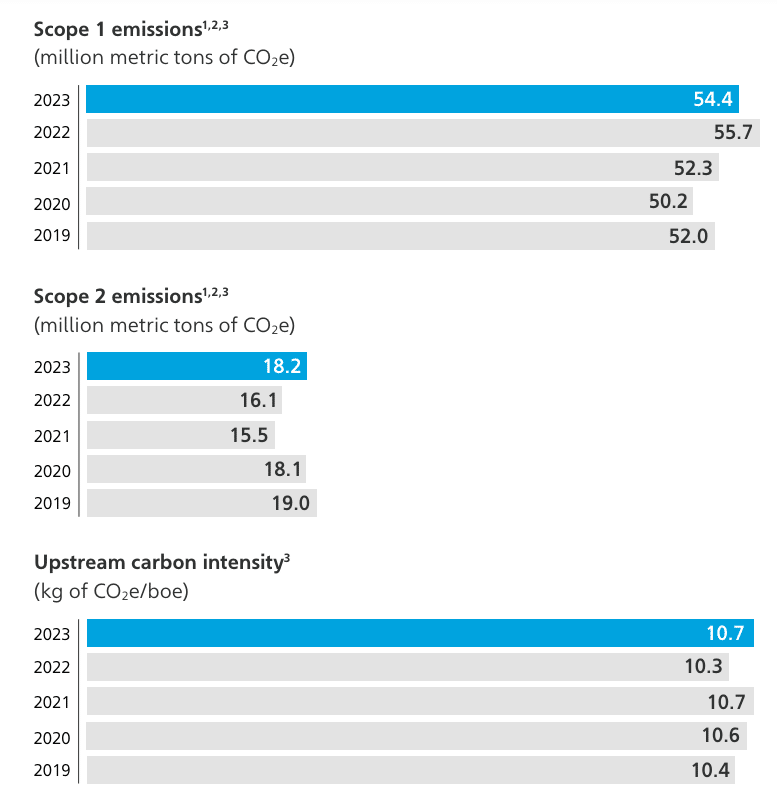
In 2023, the oil major’s Scope 1 emissions decreased by 2.4% compared to 2022, primarily due to lower hydrocarbon production and a revised CO2 venting emissions methodology for gas processing operations, leading to more accurate accounting.
Conversely, Scope 2 emissions increased by 13.0% compared to the previous year. The company said it’s mainly due to the inclusion of the Jazan Refinery in the 2023 greenhouse gas emissions inventory.
As part of its decarbonizing efforts, the oil giant recently invested in a US-based direct air capture (DAC) company, CarbonCapture. Moreover, in line with Saudi Arabia’s Vision 2030 plan, Aramco partnered with ADNOC to launch ambitious lithium extraction projects.
Aramco Ventures also operates Prosperity7, the company’s disruptive technologies investment program. Daniel Carter, Managing Director at Aramco Ventures, emphasized the significance of robust market infrastructure in driving the global energy transition. He noted,
“We recognize the importance of markets to drive the global energy transition at pace, and further recognize Xpansiv’s core position as the innovator of new trading products, marketplaces, and institutional-grade market infrastructure to enable these vital markets to flourish and scale.”
Leading the Charge in Environmental Commodities and Market Integration
John Melby, Chief Executive Officer of Xpansiv, expressed his satisfaction with Aramco’s investment, stating:
“We are pleased to receive this investment from Aramco Ventures and existing investors, which not only represents significant support for our organic and acquisition-driven strategy, but also our shared belief in the pivotal role of market infrastructure in accelerating investment in the global energy transition.”
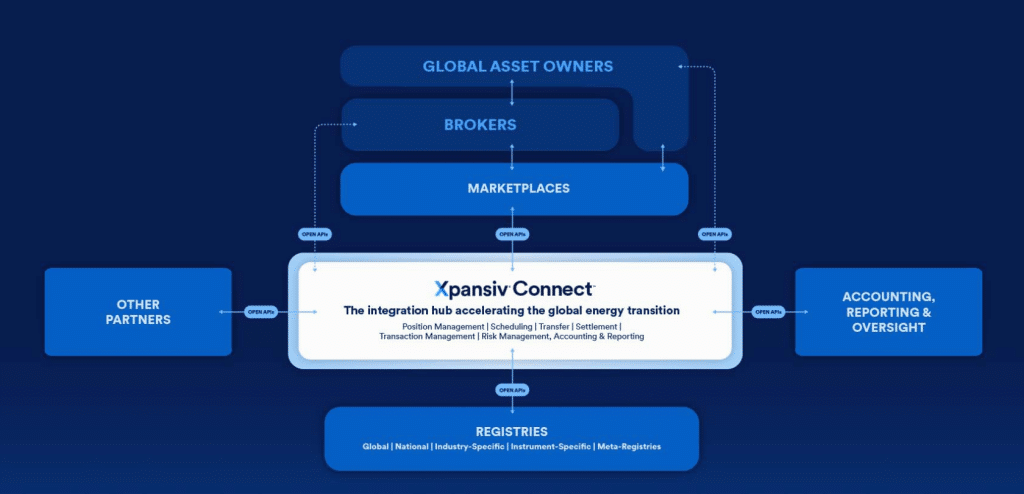
Xpansiv continues to expand its suite of solutions for the global energy transition markets. The company recently launched its Xpansiv Connect™, an open-access market infrastructure which facilitates efficient trading and market operations. This strategic investment will enable Xpansiv to further enhance its capabilities and support the broader push towards sustainable energy solutions.
Xpansiv manages over 1 billion asset transfers annually through its SaaS meta registry and portfolio management system at the core of Xpansiv Connect. This system is integrated with 13 leading carbon and renewable energy registries worldwide.
Xpansiv’s registry software supports more than 80% of global carbon credits and 60% of North American renewable energy certificates (RECs). This along with new environmental commodities such as digital fuels. Its CBL spot exchange holds over 90% global market share of exchange-traded and settled carbon credits.
In 2023, nearly 2 billion metric tons of carbon and over 36 million megawatt hours of renewable energy were transacted by Xpansiv market intermediaries. For live carbon prices, it’s available here.
The company has completed 11 acquisitions and strategic investments recently, including a notable investment in Evident, a leading clean economy registry provider and certification body. This investment highlights Xpansiv’s support for the growing international renewable energy certificate (I-REC) market and emerging instruments. These include sustainable aviation fuel (SAF), green hydrogen, biomethane, and carbon removals.
Xpansiv’s investors include prominent names such as Aramco Ventures, Blackstone Group, Bank of America, Goldman Sachs, Macquarie Group Ltd., S&P Global Ventures, Aware Super, BP Ventures, Commonwealth Bank of Australia, and the Australian Clean Energy Finance Corporation.
By leveraging the new capital raise, Xpansiv will continue to lead in the environmental commodities sector, fostering innovation and efficiency in carbon credits and renewable energy market solutions, crucial for achieving sustainable energy goals and reducing global carbon emissions.
Following Nvidia’s first-quarter earnings report, the company’s CEO Jensen Huang emphasized that it is facing overwhelming demand rather than a lull. This happens as the company transitions from its Hopper AI platform to the more advanced Blackwell system. Huang dismissed concerns about a potential slowdown in demand, stating,
“People want to deploy these data centers right now. They want to put our [graphics processing units] to work right now and start making money and start saving money. And so that demand is just so strong.”
Surpassing Expectations with Stellar Q1 Results
For the first quarter, Nvidia reported stellar results. Adjusted earnings per share reached $6.12 on revenue of $26 billion, representing year-over-year increases of 461% and 262%, respectively. Non-GAAP operating income was $18.1 billion for the quarter.
Nvidia expects its revenue for the current quarter to be around $28 billion, plus or minus 2%, surpassing analysts’ expectations of $26.6 billion.
Nvidia’s data center segment, crucial for AI and reliant on high-powered server farms, generated $22.6 billion or 87% of its revenue between February and April 2024. Other segments also saw growth, with gaming and visualization solutions increasing by 18% and 45%, respectively, compared to fiscal Q1 2024. However, the data center segment’s growth was extraordinary, surging 427% year-over-year, as seen below.
In addition, Nvidia announced a 10-to-1 stock split, effective June 10 for shareholders as of June 7, and increased its quarterly dividend to $0.10 per share, up from $0.04. Following the earnings report, Nvidia’s stock rose by as much as 6% in extended trading.
Moreover, Huang highlighted the growing customer base for Nvidia chips beyond the major cloud service providers, mentioning companies like Meta, Tesla, and various pharmaceutical firms. He specifically pointed out the automotive industry as a significant user of Nvidia’s data-center chips.
Setting New Standards in Energy Efficiency
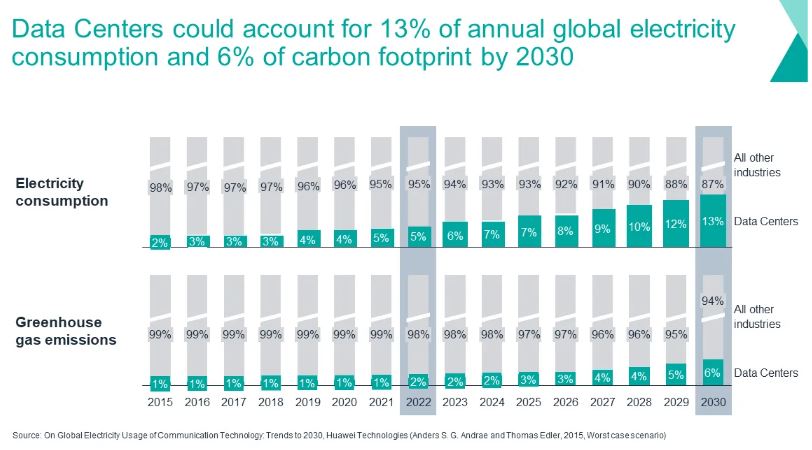
Nearly 75% of global carbon emissions stem from the production and consumption of energy, primarily due to the burning of fossil fuels for electricity. Data centers, which currently consume 460 terawatt-hours of electricity annually, contribute about 2% to this total. However, this share is expected to nearly triple to 6% by 2030 as data centers continue to expand.
Improving energy efficiency in data centers is crucial for reducing their carbon footprint and mitigating their environmental impact. By adopting more efficient technologies and practices, data centers can play a significant role in lowering overall carbon emissions.
Nvidia aims to address growing concerns about AI’s monetary cost and carbon footprint by highlighting Blackwell’s energy efficiency.
One expert at Microsoft has suggested that the Nvidia H100s currently in deployment will consume as much power as the entire city of Phoenix by the end of this year. What’s noteworthy about the new Blackwell GPU is its power efficiency, which Nvidia is now highlighting as a key selling point.
Traditionally, more powerful chips have also required more energy, and Nvidia focused primarily on raw performance rather than energy efficiency. However, when unveiling the Blackwell, CEO Jensen Huang emphasized its superior processing speed, which significantly reduces power consumption during training compared to the H100 and earlier A100 chips.
Huang noted that training ultra-large AI models with 2,000 Blackwell GPUs would consume 4 megawatts of power over 90 days, whereas using 8,000 older GPUs for the same task would consume 15 megawatts. This reduction translates to the power consumption of 8,000 homes compared to 30,000 homes.
Undeniably, Nvidia stands at the forefront of the exploding demand for AI applications, driven by major tech giants like Tesla, Meta, Microsoft, and Alphabet. These companies’ recent management commentary underscores the significant potential for Nvidia’s business expansion in the AI sector.
Tesla’s ambitious plans to increase its Nvidia chip use by 140% highlight the critical role of Nvidia’s GPUs in training AI models for its full self-driving capabilities and upcoming robotaxi launch. This substantial investment represents a major endorsement of Nvidia’s technology by Tesla CEO Elon Musk.
Similarly, Meta’s aggressive spending to bolster its AI infrastructure aligns with CEO Mark Zuckerberg’s vision of establishing Meta as a leading AI company globally. As Meta continues to develop its large language model (LLaMA) and Meta AI chatbot, Nvidia’s chips remain integral to its AI training efforts.
Microsoft is also experiencing surging demand for AI, outstripping its available capacity. The tech giant is investing in its own AI development using OpenAI’s GPT model. However, it plans to ramp up spending to meet the growing demand, with Nvidia’s chips playing a crucial role in its cloud service offerings.
Finally, Alphabet’s substantial capital expenditures in the first quarter, primarily directed towards Google Cloud and advanced AI models, further validate the importance of Nvidia’s technology in powering AI-driven initiatives. While Alphabet uses its chip designs for certain AI tasks, it continues to rely on Nvidia chips to meet its cloud customers’ needs.
While most AI runs on renewable energy, concerns persist about water consumption for data center cooling. As AI adoption grows, renewable energy demand could outpace supply, prompting interest in expediting nuclear plant approvals, notably by Microsoft.
Overall, the overwhelming demand for AI compute presents a significant opportunity for Nvidia, reflected in its robust financial performance and soaring gross margins. And with the company’s discussion of the Blackwell GPU’s energy efficiency, it signals that the company is starting to consider AI’s sustainability.
Lithium, a crucial element in energy storage, holds immense significance in powering various industries. With metal prices soaring, the demand for lithium has surged over recent years.
This article delves into the intricate world of lithium dynamics, exploring the factors influencing lithium prices, recent trends, and future projections.
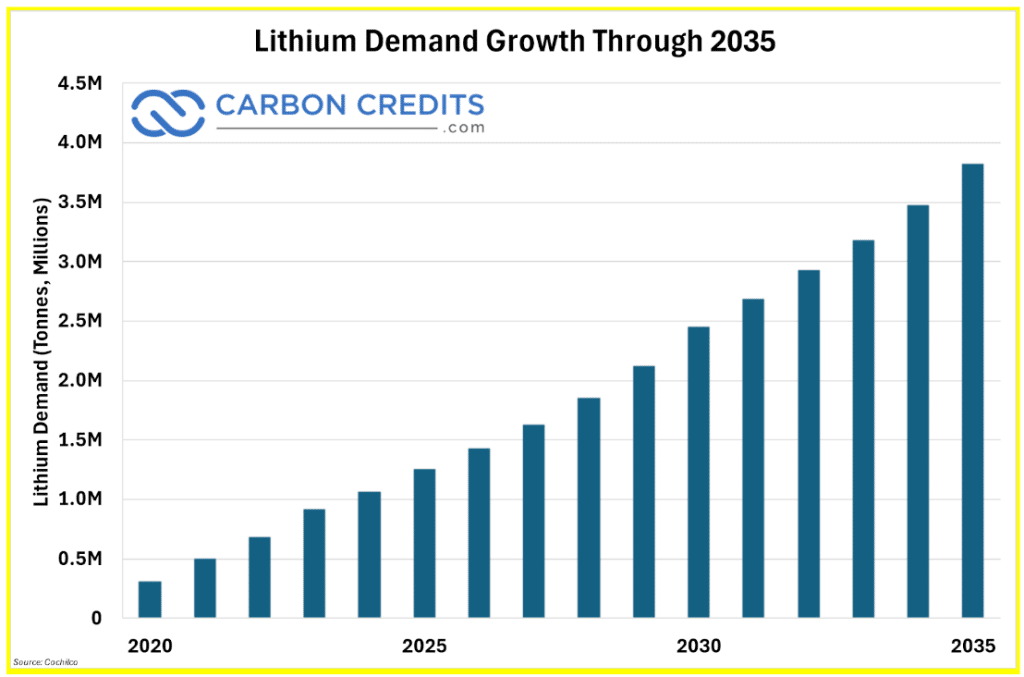
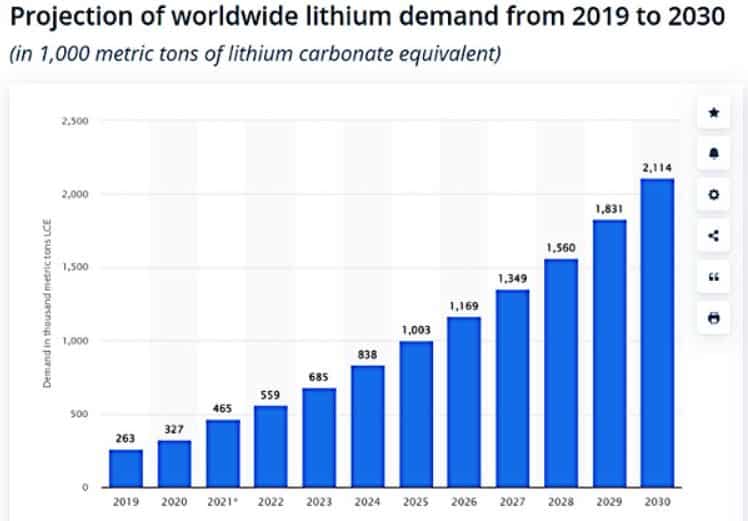
Global production of lithium has seen a remarkable increase. In 2020, the total demand for lithium worldwide was 292 thousand metric tons of lithium carbonate equivalent.
Forecasts indicate a substantial rise to over 2.1 million metric tons by 2030, highlighting the industry’s exponential growth. This surge is primarily due to the rising battery demand for electric vehicles, which is expected to reach 3.8 million tons by 2035.
Source: The World Economic Forum
Data from the US Geological Survey shows that global lithium production reached 180,000 metric tons in 2021, with about 90% coming from just three countries.
Market Demand
Despite robust demand for lithium, growth experienced a decline year-on-year in 2023 due to economic slowdowns, particularly affecting the electric vehicle market in China. Additionally, accelerated capacity expansions led to an oversupply situation. These fluctuations underscore the delicate balance between supply and demand that significantly impacts lithium prices globally.
Economic Factors
Economic factors such as inflation rates and currency fluctuations also influence lithium prices considerably. These macroeconomic indicators directly impact production costs and subsequently affect pricing strategies within the lithium market.
Lithium prices have recently experienced a notable downward trajectory. As of December 18, prices plummeted by 80% within a year, and as of May 7, CIF North Asia price at $14,600/t. This decline has sparked discussions about the sustainability of this trend.
Expert insights suggest that low prices may lead to reduced supply and hesitant new investments amidst strong demand and cautious predictions.
Effect on the EV Sector
The lithium price drop has a significant impact on the EV sector. Reduced input costs present opportunities for manufacturers to recalibrate pricing strategies, potentially driving down EV costs and increasing consumer adoption rates. This shift highlights the interconnected nature of commodity pricing and its far-reaching consequences on diverse industries.
What’s the Future of Lithium Prices?
As the lithium market navigates significant fluctuations, industry experts provide valuable insights into future price trajectories. By examining expert predictions and analyzing market opportunities and challenges, stakeholders can comprehensively understand the dynamic landscape ahead.
In a recent interview, industry analyst Joe Lowry predicts that the lithium chemical supply is nearing equilibrium, with prices expected to rise by mid-2024 as inventories rebuild in key markets like China. Similarly, Andy Leyland emphasizes that the lithium market’s balance is delicate and that a projected surplus of 24,000 tonnes LCE in 2024 could quickly change due to market dynamics.
Staying informed about lithium carbonate and hydroxide prices is crucial for industry participants to capitalize on opportunities and navigate challenges. Monitoring real-time lithium prices and commodity trends provides invaluable insights for strategic positioning amidst market uncertainty.
On May 17th, Japan’s House of Councillors passed a new law to bolster the business environment for carbon capture and storage (CCS) technology which is crucial for achieving a decarbonized society. The legislation received majority support in the plenary session.
Key Provisions of Japan’s New CCS Law
The law mandates that the government introduce a permit system for businesses to facilitate CO2 capture from industries operating at variable scales and their underground storage. This measure is part of Japan’s broader strategy to achieve net-zero carbon emissions by 2050.
Role of Japan’s Ministry of Economy, Trade, and Industry (METI)
To foster a conducive business environment for CCS projects, theMinistry of Economy, Trade, and Industry (METI) of Japan will establish a licensing system. It will cover storage and exploration drilling rights, and develop business and safety regulations for storage companies and CO2 pipeline transportation businesses. Test drilling permits at potential CCS sites will initially be valid for four years. METI will designate suitable geological storage areas as “specified areas” and solicit operators, granting licensed operators prospecting and storage rights.
Notably, this is the first time the CCS bill defines operators’ rights and regulatory requirements. The main highlights of the newly introduced bill are:
CCS Sites and Business permits
Designate Suitable Areas: Identify specific regions where carbon dioxide (CO2) can be safely stored underground.
Grant CCS Business Permits: Select businesses through a public offering process and grant them permits to operate CCS projects.
Licensed operators will be given
Exploratory Drilling Rights: These rights allow businesses to drill and confirm if geological formations are suitable for CO2 storage.
Storage Rights: These rights permit the actual storage of captured CO2 underground.
Obligations and Liabilities
The law imposes several obligations on businesses:
Monitoring: Businesses must continuously monitor for any CO2 leaks.
Liability for Accidents: Businesses are liable for compensation regardless the leak was due to negligence or an intentional act.
CCS project operators must have their implementation plans approved by the Minister for Economy, Trade, and Industry. Once the stored CO2 is stabilized, theJapan Organization for Metals and Energy Security (JOGMEC) will take over the management. Operators will be liable for compensation during accidents, regardless of intent or negligence.
Subsidy System for Hydrogen
In addition to the CCS law, the House of Councillors also passed a law to establish a subsidy system. This system aims to narrow the price gap between hydrogen and natural gas, promoting hydrogen as a viable next-generation energy source.
This comprehensive approach strengthens Japan’s efforts to reduce carbon emissions through CCS and supports the broader adoption of hydrogen energy, aligning with the country’s long-term environmental goals.
Japan Advances Carbon Capture under Green Transformation (GX) Policy
Japan’s newly approved law is crucial to achieving a decarbonized economy. It’s an extension of the Green Transformation (GX) Policy that existed since last year.
Unveiled in February 2023 and approved in July 2023, Japan’s GX policy integrates fiscal and policy measures, potentially amounting to a $1 trillion (150 trillion yen) budget. This policy provides a roadmap for the next decade, balancing economic growth with environmental sustainability.
Japan’s Prime Minister Fumio Kishida said,
“First of all, green transformation, or GX in short, does not just mean the departure from fossil energy. It involves the implementation of major reforms of energy, all industries, and our economy and society, toward achieving the goal of carbon neutrality by 2050. To this end, Japan has made a highly challenging international pledge of a 46 percent reduction in greenhouse gas emissions by fiscal 2030.”
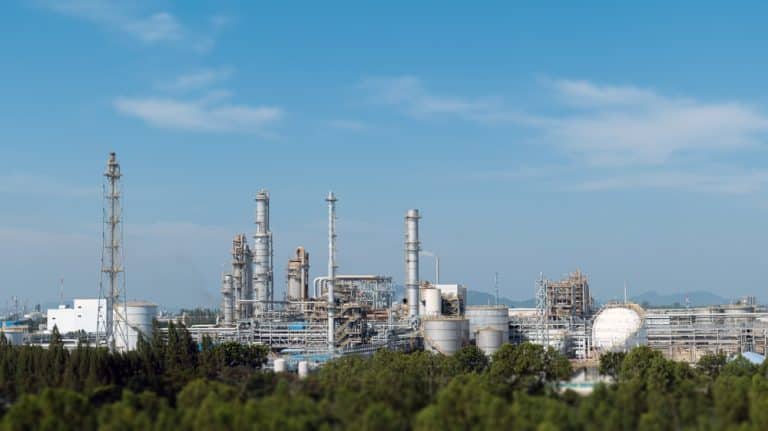
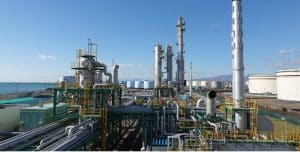
Image: The Tomakomai CCS Demonstration Project- Japan’s first full-chain CCS project, captured and stored CO2 from a coastal oil refinery on Hokkaido Island in Japan from 2016 to 2019.
source: IEA
Based on International Energy Agency (IEA) calculations,
Japan’s estimated annual storage capacity for CCS could range from 120 to 240 MTs by 2050. The goal is to have the first commercial CCS project operational by 2030.
By advancing these legislative measures, Japan aims to create a robust framework for CCS and low-carbon hydrogen, supporting its long-term decarbonization and economic growth objectives.
By enacting these laws, Japan is taking significant steps toward a sustainable and decarbonized future, leveraging both CCS technology and hydrogen energy to mitigate climate change.
To provide the best experiences, we use technologies like cookies to store and/or access device information. Consenting to these technologies will allow us to process data such as browsing behavior or unique IDs on this site. Not consenting or withdrawing consent, may adversely affect certain features and functions.
Functional
Always active
The technical storage or access is strictly necessary for the legitimate purpose of enabling the use of a specific service explicitly requested by the subscriber or user, or for the sole purpose of carrying out the transmission of a communication over an electronic communications network.
Preferences
The technical storage or access is necessary for the legitimate purpose of storing preferences that are not requested by the subscriber or user.
Statistics
The technical storage or access that is used exclusively for statistical purposes.The technical storage or access that is used exclusively for anonymous statistical purposes. Without a subpoena, voluntary compliance on the part of your Internet Service Provider, or additional records from a third party, information stored or retrieved for this purpose alone cannot usually be used to identify you.
Marketing
The technical storage or access is required to create user profiles to send advertising, or to track the user on a website or across several websites for similar marketing purposes.



 source: Ørsted
 source: Ørsted








 source: IEA