Maritime Decarbonization: Japanese Shipping Giant NYK Partners with 1PointFive for DAC Credits

Japan’s Nippon Yusen Kabushiki Kaisha (NYK), one of the world’s largest shipping companies, strengthened its decarbonization push by purchasing carbon dioxide removal (CDR) credits from 1PointFive’s Direct Air Capture (DAC) technology.

This deal marked the company’s second credit purchase from 1PointFive, confirming its leadership in the maritime sector’s race to cut emissions.

Shipping’s Carbon Challenge

Since its founding in 1885, NYK Line has built one of the most extensive global logistics networks, operating car carriers, container ships, and bulk energy transport vessels. But the company also faces a clear challenge: shipping emits around one billion tons of CO2 every year.

Even if operators slash most emissions, about 10% will remain as residual output. That means the industry will need to remove roughly 100 million tons of CO2 annually to meet its climate targets. NYK acted on this reality by buying durable CDR credits, showing how it plans to balance reductions with removals.

Akira Kono, Representative Director, Executive Vice-President, Executive Officer of NYK.

“Together with 1PointFive, we aim to contribute not only to the decarbonization of international shipping, but to decarbonization worldwide. NYK is proactively driving decarbonization in the international shipping industry through a multifaceted approach that includes introducing fuel-efficient vessels, adopting low-carbon fuels such as biofuels, and improving each vessel’s energy and operational efficiency. Addressing the residual emissions that cannot be eliminated through operational or technological improvements alone requires CDR.”

1PointFive’s DAC Advantage

Backed by Occidental, 1PointFive draws on over 50 years of carbon management expertise and large-scale project experience to deliver DAC at commercial scale. The company uses Carbon Engineering’s DAC technology, sequestration hubs, and AIR TO FUELS® solutions to scale carbon removal.

Notably, NYK will source its CDR credits from STRATOS, 1PointFive’s first DAC facility in Texas, scheduled to begin operations this year.

They expect this facility to become the world’s largest DAC once operational. It can potentially capture 500,000 tonnes of CO2 per year. And future facilities will double that capacity.

1PointFive further highlights that their DAC system offers three clear benefits:

  • Durability: Geologic sequestration locks CO2 away for thousands of years.
  • Scalability: Companies can replicate DAC plants worldwide to meet demand.
  • Measurability: EPA-approved monitoring and reporting verify every tonne of CO2 removed.

By securing credits from STRATOS, NYK ensured transparency and accountability in its climate plan.

direct air capture 1PointFive
Source: 1PointFive

Anthony Cottone, President and General Manager of 1PointFive, noted,

“We’re excited to expand our partnership with NYK who has taken a leadership approach in decarbonization, and to demonstrate how Direct Air Capture is uniquely positioned to deliver durable and verifiable carbon removal,” said “By working together, we’re building a pathway to help the maritime sector take actionable steps to further sustainable operations.”

NYK’s Commitment to Net Zero by 2050

NYK pledged to reach net zero emissions by 2050 through a mix of reductions and removals. The two strategies include:

  • Efficiency First (until 2030): NYK improved vessel operations and ship designs to maximize energy efficiency and reduce emissions from its fleet.
  • Alternative Fuels (from 2030): The company plans to introduce zero-emission fuels like ammonia while ensuring they also meet safety and environmental standards.

For Scope 3 emissions, NYK works with partners to share data and build a low-carbon supply chain ecosystem. Significantly, it invests in Negative Emission Technologies (NETs) such as CCUS and carbon credits to eliminate unavoidable emissions. These steps support both decarbonization and marine biodiversity protection.

nyk emission
Source: NYK

Driving Innovation in Marine Fuels

NYK accelerated research into fuels that can replace heavy oil. Liquefied natural gas (LNG) serves as a bridge, but ammonia shows strong potential as a zero-emission alternative.

Ammonia does not release CO2 when burned, but it poses safety risks due to toxicity. Scaling its use also requires a new global supply chain. NYK, backed by Japan’s Green Innovation Fund, is leading this effort.

The company is developing the Ammonia-Fueled Ammonia Gas Carrier (AFAGC) with Japan Engine Corporation, IHI Power Systems, and Nihon Shipyard. After securing approval in principle in 2022, NYK is refining designs to launch the ship in 2026.

Expanding Carbon Credit Projects

NYK also invested in carbon credit initiatives to expand its climate impact.

  • Carbon-Neutral Shipping: In 2019, NYK became Japan’s first shipping firm to offer carbon offset services. In 2023, it launched the coal carrier Kagura for Chugoku Electric Power. The project used offsets to achieve theoretical zero GHG emissions for the entire voyage.
  • Forest Fund: The company partnered with Sumitomo Forestry to back a forest restoration fund that generates credits while protecting biodiversity.
  • Australian Projects: Through a joint venture with Mitsubishi Corporation, NYK invested in Australian Integrated Carbon Pty Ltd (Ai Carbon). By 2024, Ai Carbon absorbed 5 million tonnes of CO2 annually and set a goal of 100 million tonnes cumulatively by 2050.
Carbon credits NYK
Source: NYK

These investments give NYK valuable expertise in the growing carbon credit market.

DAC Carbon Credits: Expensive but Essential for Net Zero

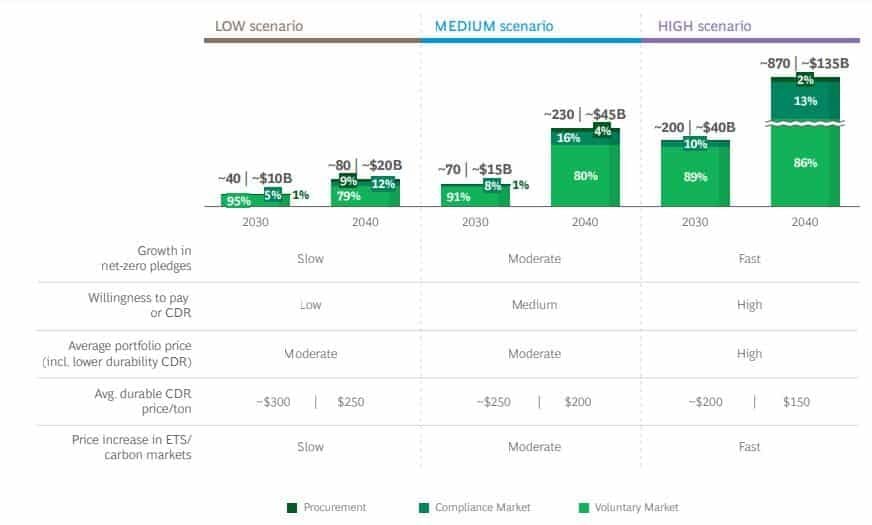
Direct Air Capture (DAC) represents only a small share of the global carbon removal market but is expanding rapidly. Market reports say that the DAC sector, valued at $97.6 million in 2024, could grow to $1.7 billion by 2030, rising at more than 60% annually.

Governments are accelerating adoption with incentives and policy support. The U.S. offers 45Q tax credits of up to $180 per ton for DAC storage. Japan has already included DAC in compliance markets, and the EU is preparing carbon removal rules that may integrate DAC after 2030.

direct air capture tax

DAC credits remain costly, usually between $170 and $500 per ton, with some exceeding $1,000. The price reflects the difficulty of removing CO2 directly from the air and the long-term durability of storage. Despite the cost, buyers view DAC as the “gold standard” of offsets. Early demand helps scale projects, cut future costs, and strengthen climate action.

Most buyers purchase DAC credits directly from developers such as Climeworks and CarbonCapture, through platforms like Patch, or via advance agreements. Third parties verify credits, and buyers receive certificates and documentation once delivered.

Although expensive, DAC credits deliver measurable and durable removals, offering companies a reliable tool to reach net zero.

Now coming back to the maritime sector, it faces rising regulatory pressure and customer demand to decarbonize. However, NYK has set a clear roadmap to boost efficiency, adopt alternative fuels, and invest in carbon removal.

Through partnerships like 1PointFive for DAC credits, NYK is on the right track. Its actions show how shipping can pair innovation with carbon removal to achieve net zero and support global climate goals.

Tesla Stock Powers Ahead: Can TSLA Balance AI, EV Growth, and Net-Zero Goals?

Tesla Inc. (NASDAQ: TSLA) remains one of the most closely watched companies in the global market. The company is known for leading in electric vehicles (EVs), artificial intelligence (AI), and clean energy. This has drawn both loyal fans and careful skeptics.

Tesla’s stock performance has been shaped by analyst upgrades, bold technological moves, and its growing role in sustainability and emissions reduction. This article looks at Tesla’s current status, recent changes, financial results, risks, and its long-term focus on sustainable innovation.

Analyst Upgrades Fuel Tesla’s 2025 Momentum

Tesla’s momentum in 2025 has been strengthened by positive analyst sentiment. Piper Sandler raised its price target from $400 to $500, keeping an “Overweight” rating. The firm pointed to Tesla’s advances in autonomous driving and robotics after reviewing progress during a research trip to China.

Analysts noted that while Chinese EV makers remain tough competitors, Tesla continues to lead in AI-driven mobility.

Another boost came from Baird analyst Ben Kallo, who upgraded Tesla to a “Buy” with a price target of $548. Kallo pointed out Tesla’s impact on “physical AI.” This area covers self-driving tech, humanoid robots, and energy storage systems. These endorsements boosted investor confidence. They show that Tesla is more than an automaker; it’s a tech company with wide-ranging applications.

Stock Market Performance and Investor Sentiment

Tesla’s stock has seen both volatility and growth in 2025. On September 22, 2025, shares closed at $433.77, up 1.8% from the prior day. Intraday trading reached $444.84, moving closer to the 52-week high of $488.54. These gains have been partly fueled by analyst upgrades and upbeat investor outlooks.

Investor sentiment was further boosted by a $1 billion stock purchase by CEO Elon Musk. This was Musk’s first open-market buy since 2020 and was widely interpreted as a sign of his confidence in Tesla’s future. Following the purchase, Tesla’s stock rose 3.6%, adding to a broader upward trend in September.

tesla tsla stock price

Beyond Cars: AI, Robotaxis, and Humanoid Robots

Tesla has continued to push beyond its traditional EV business. In 2025, the company expanded its self-driving taxi service in Austin, Texas, with plans to extend operations to Nevada and Arizona. These robotaxi services are part of Tesla’s long-term vision to transform urban mobility through AI-driven transportation.

The company is also advancing its humanoid robot project, with sales expected to begin in 2026. The project is still in development, but it shows Tesla’s goal to use robotics in business and industry.

In addition, Tesla continues to strengthen its energy storage solutions. Battery innovations and big storage projects are key to its plan. They support renewable energy use around the globe. Together, these initiatives show Tesla’s effort to diversify and establish itself as a leader in both AI and clean energy.

Financial Results Show Strengths and Strains

Tesla’s most recent quarterly earnings reflected both progress and challenges. The company reported $22.5 billion in revenue, slightly below the market expectation of $23.18 billion. Earnings per share (EPS) were $0.40, missing the consensus forecast of $0.43.

Even with the earnings miss, Tesla’s market cap is still huge. Investors continue to trust its growth path, which keeps it among the world’s largest companies.

Analysts project Tesla will deliver around 495,000 vehicles in the third quarter of 2025, which could mark a new record. In 2026, forecasts show deliveries might reach about 1.9 million units. This includes the much-anticipated “Model 2.”

The Roadblocks: Competition and High Valuations

Tesla’s growth story is not without risks. The EV industry is getting more competitive. Established automakers and new companies are quickly expanding their electric lineups. In markets like China, Tesla faces pressure from lower-cost manufacturers who are rapidly scaling production.

Another concern is Tesla’s high stock valuation. At more than 168 times projected 2026 earnings, the company trades at a premium that some investors see as unsustainable.

Tesla’s investments in robotics also carry execution risk. Developing humanoid robots at scale will require breakthroughs in hardware, software, and AI integration. It also has to tackle regulatory issues and labor market challenges.

Driving Net-Zero: Tesla’s ESG Blueprint

Sustainability remains central to Tesla’s mission and identity. The company aims for net-zero emissions by 2040. They have set interim science-based targets. These targets are verified by external organizations.

Its ESG strategy focuses on several pillars:

  • Net-Zero and Carbon Emissions: Cutting greenhouse gases across Scope 1, 2, and 3 categories.

  • Circular Economy: Expanding recycling programs to reduce reliance on raw mineral extraction.

  • Battery Innovation: Increasing recovery of nickel, lithium, and cobalt from used batteries.

  • Water Stewardship: Moving toward water-neutral operations across global factories.

  • AI Supply Chain Optimization: Using predictive logistics to lower emissions in transport and distribution.

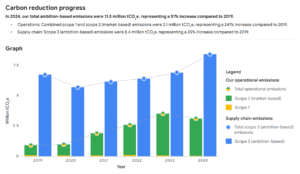
Tesla has already achieved measurable progress. Since 2020, it has reduced Scope 1 emissions by 35% and Scope 2 emissions by 41%, largely due to expanded on-site solar power. However, Scope 3 emissions remain the biggest challenge, making up about 84% of Tesla’s total carbon footprint in 2024.

tesla emissions reduction
Source: The Sustainable Innovation

The company is tackling this issue by working with suppliers to cut emissions. It also redesigns logistics networks and scales up recycling and energy efficiency programs.

The EV leader says its customers have avoided around 32 million metric tons of CO2 equivalent through its products. That’s a 60% increase compared to the previous year.

Key Emissions Progress and Other Sustainability Moves: 

  • Tesla has sold over 4.2 million EVs globally as of 2024.

  • It achieved about 82% renewable energy usage across its global manufacturing sites in 2024.

  • Battery recycling throughput rose by 34% year-over-year in 2024.

tesla battery recycling growth
Source: The Sustainable Innovation
  • Tesla’s Gigafactory in Berlin became net water-neutral in 2024 (it offset its freshwater use via reuse or treatment).

  • Average water use per vehicle produced is 2.5 cubic meters in 2024, which is about 35% less than typical auto manufacturing averages (~3.8-4.0 cubic meters).

The Bigger Picture: Tesla’s Role in the Transition

Tesla’s impact extends beyond its own operations. By expanding EV adoption, the company has helped reduce global dependence on fossil fuels. The International Energy Agency (IEA) reports that EVs cut over 80 million metric tons of CO₂ emissions globally in 2024. Tesla was the biggest contributor.

Its growing energy storage solutions help utilities balance renewable power grids. This cuts emissions from backup fossil fuel plants. For example, Tesla’s Megapack projects in California and Australia have already replaced thousands of megawatts of fossil-based generation capacity.

tesla energy storage
Source: Tesla

These developments position Tesla not only as an EV leader but also as a major player in global decarbonization efforts.

Tesla’s story in 2025 is one of growth, innovation, and risk. Strong analyst ratings, new technology, and eager investors have driven its stock performance.

Tesla’s most enduring advantage may be its commitment to sustainability. With significant emissions reductions already achieved and ambitious net-zero goals ahead, the EV giant is shaping the clean energy transition while maintaining its role as a technology leader.

As the company advances into 2026, investors and stakeholders will be watching closely to see whether Tesla can balance bold innovation with sustainable, long-term growth.

Apple Stock (AAPL) Goes Green: 14,000-Acre California Forest Deal Advances Carbon Neutral Strategy

Apple announced a new environmental project: it will help protect and restore a redwood forest in California. This effort is part of its larger climate plan. Apple’s work spans carbon reduction, sustainable supply chains, and nature-based carbon removal. 

Lisa Jackson, Apple’s vice president of Environment, Policy, and Social Initiatives, remarked:
“Forests are one of the most powerful technologies we have for removing carbon from the atmosphere. Our global investments in nature are leveraging that technology while supporting communities, stimulating local economies, and enhancing biodiversity in ecosystems around the world.”

Protecting the Gualala River Redwood Forest

Apple joined with The Conservation Fund to invest in the Gualala River Forest, a working coastal redwood forest in Mendocino County, California. The project protects 14,000 acres of coastal redwoods. The tech titan will help restore and manage the forest in ways that allow both forest growth and sustainable economic use.

As trees grow, they absorb carbon dioxide, so forests act like natural “carbon sinks.” As such, Apple will receive carbon credits as the forest strengthens its capacity to store carbon. Each credit represents one ton of carbon removed from the atmosphere. 

The Conservation Fund will manage the forest, measuring tree growth over time, marking certain trees to track diameter and height. This grants Apple a way to count how much additional carbon the forest stores.

The Conservation Fund has safeguarded more than 120,000 acres of forest since 2004. It monitors tree growth to measure stored carbon and generate carbon credits for Apple.

With 13 million U.S. forest acres at risk of disappearing by 2050, projects like this are vital. Apple has also worked with the group to protect 36,000 acres in Maine and North Carolina and invested in a temperate rainforest in Washington.

Apple’s Restore Fund and Its Role in Carbon Removal

This forest work is part of Apple’s Restore Fund, which began in 2021. The fund supports conservation and regenerative agriculture projects in many countries—and now six continents. Not only the Gualala Forest, but also other forest, mangrove, and grassland projects around the world benefit from Apple’s investment.

Apple plans to be carbon neutral by 2030. This goal includes the whole business footprint. It covers the supply chain, product manufacturing, usage, and end-of-life. Apple aims to cut its emissions by 75% from its 2015 levels. 

Apple carbon neutral to 2030 pathway
Source: Apple

For any remaining emissions, it will use nature-based carbon removal solutions. Apple says it has already cut more than 60% of its emissions versus 2015.

Counting Carbon: Apple’s Progress in Numbers

The iPhone maker has made measurable gains in cutting emissions and increasing clean energy. Here are the latest achievements so far:

  • Apple has achieved a 60% reduction in global greenhouse gas emissions since 2015.
  • In 2024, Apple’s suppliers put 17.8 gigawatts (GW) of renewable electricity into their operations. That avoided about 21.8 million metric tons of greenhouse gases.
  • They also avoided nearly 2 million metric tons of emissions from energy efficiency improvements.
  • Apple reduced emissions in product manufacturing by nearly half: from about 16.1 million tons in 2020 to 8.2 million tons in 2024.
  • The company uses over 99% recycled rare earth elements in magnets, and 100% recycled cobalt in its Apple-designed batteries.
apple carbon emissions 2024
Source: Apple

These stats show that Apple is not just promising, but also delivering in some key areas.

Why Nature-Based Solutions Matter in Apple’s Strategy

Forests, mangroves, and healthy ecosystems do more than store carbon. They support biodiversity, clean water, and local economies. Apple emphasizes that its new redwood project will also help communities in Northern California whose economies depend on forests.

Nature-based solutions are important because some emissions are tough to fully eliminate. This is especially true for emissions from materials extraction, manufacturing, transportation, and product use.

By restoring forests, Apple can “offset” some residual emissions. But offsetting isn’t a substitute for cutting emissions—it works best combined with deep reductions.

Nature-Based Solutions Taking Root

The push for carbon neutrality is shaping the entire tech industry. Global supply chains are under increasing pressure to switch to renewable energy, but progress is uneven. In areas with limited clean power, many suppliers depend on fossil fuels. This reliance slows down efforts to reduce emissions in various industries.

Nature-based carbon removal is now a key part of Apple’s climate plan. The company aims to cut emissions by 75% from 2015 levels and balance the rest through projects that restore and protect ecosystems. Its Restore Fund supports forest conservation and regenerative farming around the world. 

The newest project will help protect California’s redwood forests. This approach reflects a broader industry trend, as most companies still rely on nature-based removals to meet their climate goals.

Demand for carbon removal has been rising fast. In 2024, about 180 million carbon credits were retired, roughly the same as the year before, but with stronger growth in removal-focused projects.

Nature-based solutions like reforestation and forest protection still made up most of these retirements. Between 2022 and 2024, nature-based methods accounted for 98% of carbon dioxide removal (CDR) credits issued.

carbon removal market by type
Data Source: Allied Offsets Q1 2025 Carbon Dioxide Removal (CDR) Market Update

At the same time, newer methods such as biochar saw retirements double, showing that buyers are starting to support more durable forms of carbon storage.

Still, the scale is far too small compared to climate needs. In 2023, the world could remove only 41 million tonnes of CO₂ per year. Net-zero roadmaps show that this must grow 25 to 100 times larger by the early 2030s. That means companies like Apple must invest in projects that store carbon for the long term.

Forest growth, healthy soils, and mangroves are strong options, but they face risks from wildfire, drought, and disease. Ensuring that carbon stays stored is just as important as planting new trees.

From Silicon Valley to Forest Valleys: The Bigger Picture

Apple is making a case that technology companies can leverage nature as part of climate action. The redwood forest investment boosts its global portfolio. It includes projects like mangroves, agriculture, and other forest restorations. These projects help sequester carbon and bring co-benefits (biodiversity, local jobs, ecosystem services).

Apple is making strides in material and renewable energy. Its efforts include recycling, using clean energy from suppliers, and cutting emissions in manufacturing. Many parts of its value chain are already advancing, while the forest project helps cover emissions that are otherwise hard to eliminate.

As 2030 approaches, Apple must keep pushing on supplier transitions, transparency, and reducing emissions in all material, energy, and product use areas. If it can do that, the company stands a strong chance of meeting its carbon-neutral goal. Its journey shows that large companies can scale up both innovation and nature in their work toward a low-carbon future.

Pony.ai (PONY) Expands in Singapore as Global Robotaxi Race Heats Up

Pony.ai (NASDAQ: PONY), a leader in autonomous driving, has officially entered the Singapore market. The company is partnering with ComfortDelGro, the nation’s largest transport service provider, to launch self-driving mobility services in Punggol. Operations will begin once regulatory approvals are secured.

The rollout supports Singapore’s strategy to integrate autonomous vehicles (AVs) into public transport. By the end of 2025, the Ministry of Transport aims to introduce AVs in public housing estates, with Punggol being the first focus area. The plan is designed to tackle driver shortages and improve connectivity, especially during off-peak hours when demand remains unmet.

Dr. James Peng, Founder and CEO of Pony.ai, said,

“We are thrilled to introduce Pony.ai’s advanced autonomous driving technology to Singapore. By delivering safe, comfortable, and efficient autonomous mobility services, we are committed to enhancing local residents’ daily commutes and advancing the nation’s smart mobility vision.”

WeRide and Grab Compete for Singapore’s Growing Robotaxi Market

Pony.ai’s arrival comes with immediate competition. The press release highlighted that Chinese rival WeRide, in partnership with Grab Holdings, launched its Ai.R shuttle service in the same Punggol district. The Land Transport Authority tapped WeRide to operate Singapore’s first autonomous shuttle routes.

WeRide has deployed 11 vehicles, including five-seater GXRs and eight-seater Robobus models, across two fixed routes. Both passed Singapore’s rigorous Milestone 1 safety assessment, giving them the green light for public road operations.

The competitive tension is already showing in the market. WeRide’s stock has dropped 19% year-to-date amid investor concerns about intensifying rivalry, while Pony.ai (NASDAQ: PONY) has surged more than 44% over the same period. Investors appear to be betting that Pony.ai’s technology and global partnerships will give it an edge.

global robotaxi market

ALSO READ ABOUT: 

Pony.ai Robotaxi Services Scale Across China’s Tier-1 Cities

Pony.ai is no stranger to large-scale deployment. The company already operates fully driverless robotaxis across all four of China’s tier-1 cities: Beijing, Shanghai, Guangzhou, and Shenzhen. These operations span over 2,000 square kilometers, with the company logging more than 50 million kilometers of autonomous driving globally.

User adoption is also accelerating. Registered users on Pony.ai’s ride-hailing platform jumped 136% year-over-year in Q2 2025. Despite rapid growth, customer satisfaction remains strong, with ratings above 4.8 out of 5.

The company’s advantage lies in being the only operator with fully driverless, commercially available robotaxis in all four tier-1 cities—a milestone competitors have yet to match.

Accelerates Gen-7 Robotaxi Fleet Production in 2025

Pony.ai is aggressively scaling production to meet surging demand. In June and July, it kicked off mass production of its Gen-7 robotaxis with partners Guangzhou Automobile Group (GAC) and Beijing Automotive Industry Corporation (BAIC).

More than 200 vehicles are already produced, and the company is targeting a 1,000-vehicle fleet by year-end 2025. Alongside expansion, Pony.ai is driving down costs. Improved efficiency in remote monitoring is expected to reach a 1:30 ratio by the end of this year—meaning one remote assistant will be able to oversee 30 vehicles. Lower insurance costs are also boosting margins.

At the World Artificial Intelligence Conference (WAIC) 2025 in Shanghai, Pony.ai stood out as the only company offering fully driverless ride-hailing to the public. It also remained operational during extreme weather events, including typhoons and heavy rains, highlighting the resilience of its technology.

Expands Robotaxi Partnerships in the Middle East and Europe

The Singapore launch is part of a broader global push. Pony.ai recently partnered with Qatar’s national transport company, Mowasalat “Karwa,” to bring autonomous vehicles to the Gulf state. This builds on its earlier collaboration with Dubai’s Roads and Transport Authority (RTA).

In Europe, the company is conducting road trials with Luxembourg’s Emile Weber, one of the region’s largest transport providers. Meanwhile, in South Korea, Pony.ai runs 24/7 testing in Seoul’s Gangnam district. The company is also working with Uber on joint initiatives in the Middle East.

This multi-region expansion highlights Pony.ai’s strategy: build strong partnerships with local transport leaders while scaling a unified autonomous driving platform across continents.

Autonomous Vehicles and the ESG Climate Question

Autonomous vehicles are often seen as climate-friendly, but the reality is more complex. While most AV fleets, including Pony.ai’s, rely on electric or hybrid-electric vehicles, the carbon footprint depends on several factors:

  • Electricity Source: Charging with renewable energy reduces emissions, but fossil-based grids limit climate gains.
  • Hardware Energy Use: AVs consume extra power due to sensors, computing, and communications systems.
  • Supply Chain: LiDAR systems, batteries, and chipsets add carbon costs if supply chains are not sustainable.

Pony.ai’s partnerships with Toyota, GAC, and BAIC ensure that most of its fleets are electric or hybrid-electric, a positive step toward cleaner mobility. However, the company has yet to publish detailed net-zero targets or disclose its carbon accounting framework. Without formal ESG reporting, it remains unclear how sustainable its operations are in the long term.

PONY Stock Rides Robotaxi Growth Amid ESG Uncertainty

Pony.ai’s Singapore debut marks another milestone in its global expansion. The company is scaling faster than rivals, producing new fleets at a record pace, and securing partnerships across Asia, the Middle East, and Europe.

With its stock (NASDAQ: PONY) already up more than 40% this year, investors are betting on Pony.ai’s edge in fully driverless technology. But the climate question lingers.

pony stock pony.ai
Source: PONY

However, the stock has also gained on its financial performance. It shows momentum even as profitability remains elusive. For Q2 2025, Pony.ai reported:

  • Total revenue up 76% year-over-year.
  • Robotaxi fare revenues up 300% year-over-year.
  • Significant progress on cost efficiency through better monitoring ratios and insurance savings.

Although still loss-making, the company’s growth trajectory is catching Wall Street’s attention. Goldman Sachs recently raised its price target for Pony.ai stock to $27.70, maintaining a Buy rating.

As of September 22, 2025, Pony.ai (NASDAQ: PONY) trades at $20.56, giving it a market capitalization of about $7.25 billion. To sum up, the stock is up more than 71% over the past 12 months

For Pony.ai, proving its climate credentials may be the final piece needed to solidify its leadership in the robotaxi race.

Quantum Stocks Rally: Rigetti (RGTI) & Quantum Computing Inc. (QUBT) Surge on U.S. Strategy

The Trump administration is set to update America’s quantum computing strategy, reports Cyberscoop. This comes from executives and former national security officials. The plan may involve new executive orders and a national action plan. It will be like the White House’s July AI roadmap. This plan focuses on keeping U.S. leadership in new technologies.

Let’s explore what quantum computing really is, examine the market forecast, and highlight the stocks riding this emerging wave.

Quantum Computing: A Market on the Rise

Quantum computing is an emerging investment space with the potential to transform how information is processed. Experts believe that this technology could reshape cybersecurity, finance, defense, and global communications.

Unlike traditional computers that use bits as 0 or 1, quantum computers use qubits, which can exist in multiple states at once. This ability allows them to solve complex problems thousands of times faster than today’s supercomputers.

The networking system uses rules of quantum mechanics to create ultra-secure communication systems. Instead of relying on encryption that future quantum machines could break, it uses entanglement. It’s a process that links particles across long distances to transmit information instantly and securely.

Simply put, quantum networks deliver unconditional data protection and enable advanced tools like quantum teleportation, transforming how information moves.

Experts also predict that the quantum computing sector holds huge promise and could rival the impact of artificial intelligence (AI).

Quantum computing

Carbon Footprint of Quantum Computing

A 2023 research report found that running large quantum simulations, like a 43-qubit system, could generate 48 times more CO₂ equivalent emissions than training a typical transformer-based machine learning model.

Quantum computing is more computationally efficient than classical supercomputers. This can reduce energy needs for future simulations and AI tasks. Scientists also say that if quantum processors utilize renewable energy and optimized algorithms, their carbon footprint may be much smaller than that of traditional high-performance computing centers.

Thus, to lessen the environmental impact of quantum technology, the industry needs:

  • Sustainable manufacturing of quantum hardware

  • Energy-efficient system designs

  • Responsible sourcing of rare earth elements and other materials

Researchers are looking into “carbon-aware quantum computing.” This means tracking and managing the entire life-cycle carbon footprint of quantum technology.

As the industry aims to cut emissions, quantum computing is expected to help decarbonize other sectors.

Decarbonization Potential

Quantum computing supports low-carbon solutions by modeling materials, chemical reactions, and energy systems beyond classical limits. It enhances batteries, improves solar panels, optimizes carbon capture, and refines hydrogen processes. It also aids in creating cleaner cement and optimizing energy grids.

With faster and more accurate simulations, quantum computing can reduce emissions across industries and support the green transition.

U.S. Pushes Quantum Computing Overhaul as Industry Gains Billions

Cyberscoop further reported that the White House is weighing steps to push federal agencies toward post-quantum cryptographic protections. The urgency stems from a looming future in which quantum computers could crack today’s encryption, threatening financial systems, government databases, and defense communications.

The Office of Science and Technology Policy and the Department of Commerce are said to be leading these efforts. A senior executive in the field revealed that “everyone in the quantum industry has heard some version of the message that the White House wants to replicate for quantum what they did for AI in July.”

Paul Dabbar, a former Department of Energy official and now Commerce Deputy Secretary, is reportedly at the center of the initiative. Dabbar previously launched a quantum networking startup, giving him unique insight into both the research and commercial sides of the industry.

Cybersecurity and Geopolitics Drive Action

Washington has long recognized the risks of outdated encryption, pushing contractors for over a decade to adopt stronger post-quantum algorithms. But migration has been slow, sparking fears that the U.S. may fall behind in the global race for secure communications.

Rising geopolitical competition has intensified those concerns. With rival nations investing heavily in quantum research, U.S. leaders see a coordinated national strategy as critical to maintaining technological dominance.

If finalized, the federal push could deliver significant benefits for publicly traded quantum companies such as Rigetti Computing (RGTI), IONQ (IONQ), D-Wave Quantum (QBTS), and Quantum Computing Inc. (QUBT). Government contracts, clearer priorities, and investor confidence could drive further growth across the sector.
Quantum Computing Inc. (QUBT) Lands $500M, Shares Surge

Quantum Computing Inc. (QUBT) boosted the sector on September 21 by raising $500 million in a private placement that was oversubscribed. This is one of the largest quantum funding rounds this year. The deal boosted the Hoboken-based firm’s cash position to about $850 million.

The company will issue over 26.8 million shares to institutional investors. This includes support from major existing shareholders and a new global alternative asset manager. Following the news, QUBT shares jumped 26.8% to $23.27, increasing its market cap to $3.72 billion.

CEO Dr. Yuping Huang called the deal a strong vote of confidence. He noted it was priced at a premium compared to the last four offerings. Titan Partners Group, a division of American Capital Partners, managed the placement.

So far in 2025, QUBT stock has risen more than 40% year-to-date. This highlights growing investor enthusiasm for quantum optics and computing firms.

QUBT stock
Source: Yahoo Finance

Rigetti Rides $5.8M Air Force Deal: RGTI Stock Surges

Meanwhile, Rigetti Computing is growing its government partnerships. On September 18, the company announced a three-year contract worth $5.8 million with the Air Force Research Laboratory (AFRL). This contract aims to advance superconducting quantum networking. Rigetti will collaborate with Dutch startup QphoX, known for its quantum transduction technology.

The project tackles a big challenge: changing microwave signals that control qubits into optical photons. These photons can travel long distances through fiber-optic cables. This advance could link smaller quantum processors. It would create distributed quantum systems, similar to classical high-performance computing clusters.

Rigetti CEO Dr. Subodh Kulkarni called the partnership a significant step forward. He highlighted the strengths of Rigetti, QphoX, and AFRL in building hybrid quantum networks.

The company’s market cap has climbed to $9.25 billion. It’s up 10.4% in the past month, showing strong investor interest as funding and commercial traction grow in 2025. The stock was trading near $28.37 as of September 22, 2025, after reaching a recent high of $29.59. This momentum comes from a major analyst price target upgrade and key contract wins.

RGTI stock
Source: Yahoo Finance

Quantum technology is being adopted by organizations, defense departments, and global markets. Defense agencies are racing to use quantum systems for national security. Government funding is increasing. Corporate investment is picking up speed. Breakthrough research is underway. The industry is entering a crucial phase.

If the White House’s plans to launch a new quantum strategy succeed, it could boost U.S. cybersecurity. It would also send a clear message to investors and innovators: quantum is not just the future; it’s already here.

Palantir (PLTR) Stock Soars 370% in One Year: Can AI Drive ESG and Net-Zero Progress?

Palantir Technologies (PLTR) has become one of the most talked-about tech companies of 2025. Known for its data analytics and artificial intelligence (AI) software, the company has seen its stock surge more than 370% in the last year.

Investors see Palantir as more than just a government contractor. It is positioning itself as a leader in using AI for business, climate, and sustainability challenges.
Let’s explore Palantir’s stock momentum and how the company expands its markets. Lastly, let’s unravel how ESG goals and net-zero commitments are opening new opportunities for its software.

Riding the AI Wave: Palantir’s Stock Momentum

Palantir’s stock has climbed sharply since late 2024. Much of the growth comes from strong demand for its AI-driven Foundry and Gotham platforms. These systems help governments and companies make better choices. They analyze large amounts of data in real time.

The company has also shifted from relying mostly on government contracts to building a much larger commercial business. Palantir’s U.S. commercial revenue grew over 70% in the past year. Analysts note that this kind of growth is rare for a company of its size.
This expansion has turned Palantir into what some investors call a “cult stock.” It has gained a loyal base of supporters who believe the company’s tools can transform industries. They admire its work in AI, defense, and data analytics, which gives Palantir a devoted following. The company’s leadership style and the secrecy around some contracts also add to its mystique.

palantir pltr stock

What causes the stock to climb higher?

Palantir’s stock rose about 300% over the past year and is up roughly 130–140% year-to-date in 2025. Retail investors have poured it into their portfolios, ranking it among the top three for net inflows behind Nvidia and Tesla. CEO Alex Karp has sold around $1.9 billion in shares since early 2024, highlighting the company’s high value.

Palantir’s stock has also climbed due to a major £750 million ($950 million) contract with the UK Ministry of Defence, finalized this month. This deal is ten times larger than its previous UK contract and will expand AI integration across military, health, and law enforcement systems.

The agreement positions London as Palantir’s European defense hub, supports up to 350 new jobs, and strengthens Western AI and defense partnerships. Combined with its commercial growth and strong ESG positioning, this contract adds another reason why investors are bullish on Palantir’s stock.

While these excitements fueled the company’s share price, it is Palantir’s role in ESG and sustainability that could define its long-term growth. Investors increasingly look at how the company manages carbon, energy use, and ethical practices alongside financial performance.

Why ESG Data Is Palantir’s Secret Weapon

The global push toward net zero is changing the way businesses operate. Over 140 countries have set net-zero targets. Also, thousands of companies have pledged to reduce carbon emissions. Tracking and meeting these goals requires accurate data, clear reporting, and advanced forecasting tools.

This is where Palantir fits in. Its software can integrate data from across supply chains, energy use, shipping, and raw materials. By giving companies a complete picture of their environmental footprint, Palantir helps them track progress on emissions reduction and prepare for stricter climate regulations.

For example, Palantir can:

  • Monitor Scope 1, 2, and 3 emissions across global supply chains.
  • Run simulations to test how business decisions affect carbon output.
  • Help companies meet new reporting rules, such as the EU’s Corporate Sustainability Reporting Directive (CSRD).
  • Support governments in planning renewable energy infrastructure and grid optimization.

Palantir’s ESG focus makes it key in the global push for sustainability. This also gives investors another reason to back the stock. Here are the company’s emission reduction and energy efficiency works in connection to its software:

  • Trafigura Supply Chain Tracking: Built a platform with Palantir Foundry to model and report lifecycle carbon intensity. Covered 10 million carbon pathways across crude oil, refined metals, and more. Helps companies understand and reduce Scope 3 emissions.

  • Tree Energy Solutions (TES) Partnership: Supports green hydrogen and e-natural gas projects. Foundry used for supply chain management, site selection, asset management, and carbon tracking. Improves efficiency and lowers carbon costs globally.

  • Nuclear Energy Collaboration: Co-developing a Nuclear Operating System (NOS) to speed up reactor construction. Improves safety, lowers costs, and supports faster clean energy deployment to cut emissions.

  • Utility Grid Modeling: A European utility used Foundry to combine control system and geographic data. Built network models that improved outage management, maintenance, and planning. Reduced downtime and wasted energy.

  • EV Charging Optimization: Foundry helps plan charging station locations. Cuts unnecessary infrastructure and costs. Supports EV adoption and reduces transport emissions.

Net-Zero Policies: Fuel for Foundry’s Growth

Governments worldwide are tightening climate policies. In the United States, the Inflation Reduction Act is channeling billions of dollars into clean energy and carbon tracking. In Europe, regulators are making carbon disclosures mandatory for many large firms. Meanwhile, in Asia, countries like Japan and Singapore are setting frameworks for voluntary carbon markets.

As companies work to comply, they are turning to advanced software to handle the complex data. Palantir’s Foundry platform helps energy companies manage renewable projects. It’s also used by manufacturers to track emissions.

McKinsey & Company estimates that the semiconductor industry alone could reduce emissions by up to 90% if it meets net-zero goals by 2050. Similar targets exist across industries such as automotive, steel, and logistics. To meet them, we need digital solutions that can handle millions of data points. Palantir excels in this area.

Palantir is also showing significant progress in cutting its own carbon footprint. It has achieved carbon neutrality in 2024, cutting emissions by 31% from its 2019 baseline. That year, it reported 23,018 metric tons of CO₂e, a small rise from 2023 due to increased travel. However, emissions per employee dropped 57% since 2019, now just 6 tCO₂e.

Palantir Gross Emissions 2024 by Scope
Sorce: Palantir

As a software company without factories, Palantir’s direct emissions are low, mostly from office energy use. Its largest impact is Scope 3, especially travel and cloud services.

Cloud emissions fell 32% between 2022 and 2023 thanks to energy-efficient data centers. To offset residuals, Palantir buys verified carbon credits supporting renewable energy and waste projects.

Palantir Scope 3 Emissions Contributors
Source: Palantir

Why Investors Care

For ESG-focused investors, Palantir offers a mix of strong financial performance and sustainability potential. Its ability to connect AI with climate challenges is becoming a major selling point.

The ESG angle makes the story even stronger. Palantir helps businesses measure and reduce emissions. This puts the company in a strong spot as the world moves toward net zero. Investors looking for both growth and impact see this as a rare combination.

The Future of Palantir: AI at the Heart of Net Zero

Palantir is no longer just a defense contractor or niche software provider. It is becoming a mainstream AI company with a major role in the sustainability economy. The ability to link financial goals with ESG progress is a key advantage.

Looking ahead, Palantir’s growth will likely come from three main areas: commercial expansion, sustainability solutions, and government partnerships. 

Palantir’s rise is more than just a stock story. It reflects a shift in how businesses and governments use AI to tackle climate change and net-zero goals. By giving organizations the tools to track emissions, improve efficiency, and meet ESG standards, Palantir has positioned itself at the center of two powerful trends: AI adoption and sustainability.

NVIDIA Stock Surges on $100B OpenAI and $5B Intel Deals: Driving Sustainable AI Computing

The semiconductor industry powers artificial intelligence, cloud computing, and modern data centers. Yet, it is also one of the most energy-hungry and resource-heavy industries. When Nvidia announced a $5 billion investment in Intel, with plans to co-develop chips that combine Nvidia’s AI technology with Intel’s CPU architecture, many see this as a big business move.

Adding to the spotlight, Nvidia also signed a $100 billion deal with OpenAI to supply advanced AI hardware for the next generation of AI models. However, these moves raise an important question: can such deals help reduce carbon emissions and improve sustainable computing?

The High Cost of Silicon: Why ESG Matters

Environmental, social, and governance (ESG) issues now play a major role in how technology companies are judged. Making chips requires huge amounts of water, energy, and chemicals.

Once built, the chips power data centers and AI systems that consume even more electricity. This makes sustainability a challenge for both chip production and chip use.

Both Intel and Nvidia have set ambitious climate goals. Intel has pledged to reach net-zero greenhouse gas emissions for Scope 1 and Scope 2 operations by 2040. The company further aims for net-zero upstream Scope 3 emissions by 2050. It also targets net-positive water use and zero waste to landfills by 2030.

Intel net zero roadmap
Source: Intel

Nvidia, which outsources chip production, promises to lower emissions in its products. It also wants suppliers to set science-based climate goals.

By the end of fiscal 2025, Nvidia used 100% renewable electricity in all its offices and data centers. This move cut its Scope 2 emissions to zero. In fiscal 2024, the company emitted 3,692,423 metric tons of CO₂ equivalent. This total includes emissions from Scopes 1, 2, and 3, showing its environmental impact.

nvidia 2024 emissions
Source: NVIDIA

Nvidia surpassed its supplier engagement goal. It worked with partners covering over 80% of Scope 3 Category 1 emissions, up from the initial target of 67%.

By joining forces with Intel, Nvidia gains access not only to its production capacity but also to its sustainability practices. Intel aims for cleaner supply chains and greener manufacturing. This effort could lower the impact of new joint chips.

Nvidia is “fabless” and usually relies on partners like Taiwan Semiconductor Manufacturing Company (TSMC). This partnership gives Nvidia more control over how chips are made, packaged, and delivered.

The recent OpenAI deal further emphasizes Nvidia’s role in high-powered AI while keeping sustainability in mind. The company will provide energy-efficient chips for OpenAI’s large AI tasks. This shows the importance of balancing AI development and reducing carbon emissions.

Power-Hungry AI: Cutting Emissions per Computation

The environmental impact of chips is not limited to their production. In fact, much of the emissions tied to semiconductors come from how they are used in practice. Large-scale AI training, for example, requires massive computing power and electricity.

As demand for AI continues to surge, the energy needs of data centers are climbing quickly. The International Energy Agency predicts that global data center electricity demand may double by 2030. This raises concerns about the carbon footprint of AI-driven growth.

data center electricity demand due AI 2030

Here, the Nvidia-Intel partnership could play a vital role. Intel has set a target to improve the energy efficiency of its processors by 10 times by 2030. Nvidia is also focusing on efficiency. They aim to cut emissions for each computation. This includes lowering carbon dioxide equivalent per petaflop of processing power.

The OpenAI deal adds another layer. Nvidia will supply AI chips to power massive models while aiming to maintain energy efficiency. This ensures that even as AI workloads grow dramatically, emissions per computation can stay lower than older technologies.

“Compute infrastructure will be the basis for the economy of the future,” said Sam Altman, cofounder and CEO of OpenAI. “We will utilise what we’re building with Nvidia to both create new AI breakthroughs and empower people and businesses with them at scale.”

Sam Altman, OpenAI CEO, stated:

“Compute infrastructure will be the basis for the economy of the future… We will utilise what we’re building with Nvidia to both create new AI breakthroughs and empower people and businesses with them at scale.”

Nvidia and OpenAI: The $100 Billion AI Hardware Deal

Under its $100 billion deal with OpenAI, Nvidia will provide AI hardware for the next generation of large AI models. This agreement names Nvidia as the main supplier of specialized GPUs and AI chips for OpenAI’s large computing tasks.

The deal includes support for AI training infrastructure. It also covers software optimization and ongoing maintenance of data center operations.

Nvidia’s fine print states it will provide advanced GPUs over the years. This way, OpenAI can grow its AI systems smoothly and without delays. OpenAI will also commit to using Nvidia’s energy-efficient chips and adopt best practices to limit energy use per computation. Both companies will closely track power use and emissions. They will link efficiency gains to contract milestones.

The companies will work together to build advanced AI supercomputing systems, starting with the Nvidia Vera Rubin platform in the second half of 2026. They plan to roll out 10 gigawatts of computing power, creating one of the largest AI infrastructures ever.

This partnership emphasizes two points:

  • AI demand is growing at an unprecedented speed, and

  • There is increasing pressure to meet that demand while minimizing carbon emissions.

Nvidia is using high-performance, energy-efficient hardware to support OpenAI’s bold AI projects. This helps keep energy use and emissions low. The deal further boosts Nvidia’s role in driving sustainable AI growth. It aligns with its ESG and supply-chain efforts.

Following this announcement, Nvidia’s stock experienced a significant uptick. Shares surged over 4%, making it a top performer on major indices including the Dow, Nasdaq, and S&P 500. This surge reflects investor optimism about Nvidia’s strengthened position in the AI infrastructure market.

nvidia stock

The Fine Print: Supply Chains and Scope 3 Hurdles

Even with progress, the semiconductor industry faces significant challenges in reducing its environmental footprint. Making advanced chips requires temperatures over 1,000°C. It also requires special chemicals and rare materials such as gallium, cobalt, and indium.

Modern fabs use a lot of energy. For example, one Intel fab can use up to 150 million kWh of electricity each year. This results in about 50,000 metric tons of CO₂ emissions annually.

Globally, semiconductor manufacturing produces over 400 million metric tons of CO₂ each year. This is about 1% of all global emissions. With demand for AI chips and cloud services growing, efficiency gains risk being offset.

McKinsey & Company’s analysis suggests that the industry must reduce Scope 1 and 2 emissions by at least 4.2% annually from 2020 levels to align with a 1.5°C trajectory by 2030. However, even with full implementation of current decarbonization measures, emissions could reach 89 million tons of CO₂e by 2030, falling short of the 54 million tons needed for net-zero by 2050.

semiconductor industry net zero scenario
Source: McKinsey & Company

Supply chains are an even bigger hurdle. Scope 3 emissions cover raw material extraction, supplier manufacturing, packaging, and logistics. They can account for 70–80% of a chipmaker’s total carbon footprint.

Nvidia has already engaged suppliers covering over 80% of Scope 3 Category 1 emissions, exceeding its initial 67% target. Yet, emissions from mining, wafer fabrication by foundries, transportation, and overseas assembly are still significant. For example, shipping a single ton of semiconductor wafers internationally can add up to 20 metric tons of CO₂.

Energy sourcing is also critical. Chips remain high-emission if produced or operated in regions reliant on fossil fuels. Training a large AI model, such as OpenAI’s GPT-4 or the future GPT-5, can use up to 1,000 MWh of electricity. This process may emit hundreds of metric tons of CO₂, depending on the energy source. It does not even include the energy for using the AI model.

chatGPT energy use
Source: EpochAI

A coal-powered data center with an efficient chip generates 17 kg of CO₂ per teraflop. In contrast, renewable-powered setups only produce 4–5 kg per teraflop. The Nvidia–OpenAI deal focuses on providing GPUs and AI hardware.

This new tech aims to boost energy efficiency. It could cut emissions per computation by 30–50% compared to older hardware. This shows that while chip-level efficiency is essential, a full lifecycle approach is necessary.

Emissions reduction relies on several factors. It depends on processor design, energy sources for manufacturing, supplier practices, and how data centers operate. Without cleaner grids and good supply chain management, much of the carbon-saving potential from new chips and AI workloads may be wasted.

Beyond Business: A Climate Play in Disguise

These partnerships show that top chipmakers now see sustainability as part of growth. Investors, customers, and regulators are increasingly focused on the carbon footprint of technology. Linking climate goals to high-profile deals shows that Nvidia and Intel view emissions reduction as a strategic priority.

The Nvidia-Intel partnership and Nvidia’s OpenAI deal could shape the chip industry’s climate impact. Intel’s clean manufacturing record and Nvidia’s efficient AI hardware can help reduce emissions in production and use.

Still, the results will depend on whether efficiency matches demand and if energy sources move to renewables. For now, these collaborations highlight how innovation and sustainability can go hand in hand.

Eni’s $1 Billion Bet on Fusion: Partnering with Commonwealth Fusion Systems (CFS) for a Net-Zero Future

Eni has taken a bold step in its energy transition journey by signing a power offtake agreement worth more than $1 billion with Commonwealth Fusion Systems (CFS). The deal secures clean energy from CFS’s upcoming 400 MW ARC fusion power plant in Virginia, expected to deliver power to the grid in the early 2030s.

This agreement expands the long-term partnership between Eni and CFS, positioning fusion energy as a cornerstone of the future clean power market.

Eni CEO Claudio Descalzi said,

This strategic collaboration, with a tangible commitment to the purchase of fusion energy, marks a turning point in which fusion becomes a full industrial opportunity. Eni has been strengthening its collaboration with CFS through its technological know-how since it first invested in the company in 2018. As energy demand grows, Eni supports the development of fusion power as a new energy paradigm capable of producing clean, safe, and virtually inexhaustible energy. This international partnership confirms our commitment to making fusion energy a reality, promoting its industrialization for a more sustainable energy future.”

Driving the Energy Transition: Eni’s Fusion Power Strategy

Eni, headquartered in San Donato Milanese, Italy, has been active in the US since 1968. Traditionally an oil and gas producer, the company has transformed into a broad energy leader. Today, Eni operates across oil, gas, renewables, and biofuels while also investing in cutting-edge energy transition technologies through its Boston-based venture arm, Eni Next.

The agreement with CFS underscores Eni’s role as both an energy provider and a pioneer in clean innovation. By locking in future fusion power supply, Eni gains an early-mover advantage in a market expected to revolutionize global electricity generation.

How CFS’s ARC Plant Is Shaping the Future of Energy

The centerpiece of the deal is CFS’s ARC plant, the world’s first grid-scale fusion power facility, currently under development in Chesterfield County, Virginia. Once operational, ARC will generate 400 MW of zero-carbon electricity, enough to power hundreds of thousands of homes.

CFS sees ARC as the launchpad for a new era of energy. After the Virginia project comes online, the company plans to replicate the model worldwide—building thousands of ARC plants to meet rising electricity demand.

ARC isn’t just about scale. It’s designed to integrate smoothly with existing grids and mimic the flexibility of natural gas plants—except without the carbon emissions. Operators will be able to adjust output quickly, making ARC an ideal partner for renewable sources like wind and solar.

Game-Changing Features

Fusion power has long been seen as a distant dream. ARC, however, is built for real-world deployment. Its design checks every box utilities look for in a new capacity:

  • Firm, clean power available on demand.

  • Compact footprint, about the size of a big-box store.

  • Rapid siting, thanks to its small land requirements compared to wind and solar.

  • Inherent safety, with no meltdown risk or long-lived nuclear waste.

  • Affordable electricity, expected to compete with or beat the cost of fossil fuel power.

Fusion’s fuel mix—deuterium and tritium—is abundant and cheap. A single truckload can supply 30 years of fuel for an ARC plant. With no exposure to volatile global commodity markets, ARC’s economics offer long-term price stability for customers.

Here’s what CFS ARC looks like: 

CFS arc fusion
Source: CFS

Drawing Big Backers

The Virginia ARC plant has already attracted high-profile partners. In addition to Eni’s offtake agreement, Google has signed a deal to buy half of the plant’s electricity. The tech giant’s involvement highlights the growing interest from corporations looking for dependable, zero-carbon power.

CFS will finance, build, own, and operate the facility itself, creating hundreds of jobs in the Richmond region. With support from strategic partners like Eni and Google, CFS is on track to turn fusion from a lab experiment into a commercial industry.

Bob Mumgaard, Co-founder and CEO of CFS, also highlighted,

“The agreement with Eni demonstrates the value of fusion energy on the grid. It is a big vote of confidence to have Eni, who has contributed to our execution since the beginning, buy the power we intend to make in Virginia. Our fusion power attracts diverse customers across the world — from hyperscalers to traditional energy leaders — because of the promise of clean, almost limitless energy.” 

Eni’s Bold Bet on Fusion and Net Zero Strategy

Eni has been betting on fusion since 2018, when it became one of the first investors in CFS. The company later boosted its stake during CFS’s $863 million Series B2 round. In 2023, the two firms signed a Collaboration Framework Agreement to share expertise, methodologies, and industry connections.

This latest offtake deal cements Eni’s role as a key player in commercializing fusion. For Eni, fusion is not just a side project—it’s part of its roadmap to achieve carbon neutrality by 2050.

To achieve this, the company is also transforming its operations, investing in clean energy, and supporting breakthrough technologies that can accelerate global decarbonization.

2050 Net-Zero Plan

ENI net zero
Source: ENI

Key strategies of net-zero goals include:

  • Cutting Carbon from Oil and Gas
    Eni is cutting emissions from oil and gas by upgrading facilities, reducing methane leaks, and streamlining production. These steps help meet energy demand while lowering its carbon footprint.

  • Scaling Renewables and Biofuels
    The company is expanding solar and wind projects and boosting bio-refining capacity. By turning waste and feedstocks into low-carbon fuels, Eni targets emissions in aviation and shipping.

  • Advancing Carbon Capture Solutions
    CCS is key to Eni’s strategy. By installing it at industrial sites and power plants, the company locks away carbon and prepares for future negative emissions technologies.

  • Driving Circular Economy Practices
    Through circular initiatives, Eni recycles materials, reuses resources, and cuts waste. This reduces environmental impact while improving efficiency and lowering costs.

Fusion as the Next Frontier

The promise of fusion is clear: virtually limitless clean energy without the risks of traditional nuclear or the land demands of renewables. CFS’s progress, especially its advances in high-temperature superconducting magnets, shows the technology is moving from science fiction to reality.

According to the Fusion Industry Association’s latest report, the fusion industry secured $2.64 billion in private and public funding in the 12 months ending July 2025. Global investment in fusion has surged, reaching nearly $10 billion by mid-2025, driven by both public and private capital and rapid annual growth since 2020.

fusion market
Source: The global fusion industry in 2025 Fusion Companies Survey by the Fusion Industry Association

The U.S. and China lead the market, accounting for roughly 85% of total funding, with the private sector attracting most new investment. This marks a notable rise from 2024 and is the second-highest annual funding total since the report began, trailing only the 2022 record year.

As fusion edges closer to commercialization, early adopters like Eni and Google stand to gain significant advantages. They will secure reliable, zero-carbon energy sources at predictable prices, while also shaping the trajectory of a new global industry.

However, Eni’s $1 billion-plus deal with Commonwealth Fusion Systems is a landmark moment for the energy transition. It also signals fusion is moving from promise to practice.

Singapore to Buy $76.4M Worth of Nature-Based Carbon Credits

Singapore has announced that it will buy about US$76.4 million worth of carbon credits from international projects in Ghana, Peru, and Paraguay. The move reflects the country’s growing role in the global carbon market and its strategy to meet national climate targets. The credits will come from nature-based projects such as forest conservation and reforestation, which reduce or capture greenhouse gas emissions.

The government stated:

“These projects aim to reduce carbon emissions from deforestation, increase carbon sequestration of soil organic carbon stock in grasslands through sustainable management practices, and remove carbon emissions through the reforestation of degraded pastureland.”

Buying Carbon, Growing Climate Impact

The carbon credits will be bought through agreements signed under Article 6 of the Paris Agreement. This article allows countries to trade emission reductions across borders.

Investing in projects abroad helps Singapore reach its climate goals. It also supports other nations in funding sustainable development.

The total contract amounts to S$104 million (US$76.4 million), or about 2.175 million tonnes worth of credits. These credits will come from projects that protect rainforests, restore damaged land, and capture carbon in nature. Each credit represents one metric ton of carbon dioxide reduced or removed from the atmosphere.

Officials have emphasized that all credits must meet strict quality standards. Projects need to show that emission reductions are real, measurable, and verified by independent groups. They must also show benefits for local communities and biodiversity.

Why Singapore Is Buying Carbon Credits

Singapore is a small, urban country, ranked as the world’s 57th-biggest emitter by Global Carbon Atlas. It has little space for renewable energy or big nature projects. The nation is investing in solar power, efficiency measures, and new technologies. However, it still can’t meet its climate targets on its own.

Carbon credits allow Singapore to close this gap. By supporting projects overseas, the country can compensate for emissions it cannot cut at home. Officials have stressed that credits are not a substitute for domestic action. Instead, they are a way to complement local measures and move faster toward climate goals.

Singapore has pledged to cut emissions to 60 million tons of CO₂ equivalent by 2030, down from about 52 million tons in 2021, and to reach net zero by 2050. Buying high-quality credits is part of that plan.

Singapore net zero roadmap
Source: Ministry of Sustainability and the Environment, Singapore

The Role of Nature-Based Projects

The credits Singapore will buy focus on nature-based solutions. These include protecting forests, restoring ecosystems, and preventing land degradation. Such projects are critical because they deliver both climate and social benefits.

Forests, for example, absorb carbon dioxide while also providing habitat for wildlife and resources for local communities. Reforestation creates jobs, improves soil health, and supports water cycles. Protecting land in Ghana, Peru, and Paraguay keeps these benefits going. It also helps avoid emissions from deforestation.

Analysts say nature-based credits are among the most popular in the voluntary carbon market (VCM). In 2024, they made up over 40% of global credits traded. They often sold for higher prices than energy-related credits.

Nature-based avoidance credits, mainly from REDD+ forest projects, are expected to see higher demand in 2025, per S&P Global analysis. However, prices will likely stay low, mostly under US$5 per ton. Despite growing corporate interest, buyers remain cautious and unwilling to pay more without stronger proof of credit quality and stricter standards, keeping prices steady.

nature-based carbon credits price

Singapore’s Hub Ambition in Carbon Markets

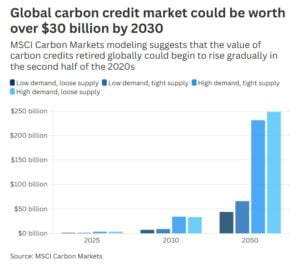
The global carbon market is growing quickly. The VCM was valued at about US$2 billion in 2024 and could reach US$50 billion by 2030 if demand keeps rising.

Compliance markets, such as the European Union’s Emissions Trading System, are even larger. Singapore’s early participation positions it to benefit from this growth and to shape global standards.

Singapore has positioned itself as a regional hub for carbon trading and finance. In recent years, the country launched the Climate Impact X (CIX) exchange, a platform for trading high-quality credits. It also signed bilateral carbon credit agreements with countries such as Papua New Guinea, Bhutan, and Morocco.

Partnerships Stretching Across Continents

Singapore’s US$76.4 million purchase from Ghana, Peru, and Paraguay is part of a broader plan. This strategy aims to create a strong network of carbon credit partnerships under Article 6 of the Paris Agreement. These deals focus on getting high-quality credits. They also aim to boost climate cooperation and keep environmental integrity.

A key milestone was the Implementation Agreement with Ghana in May 2024. This agreement sets the rules for generating and transferring credits. It also required that 2% of credits be canceled at issuance and 5% of proceeds be directed toward Ghana’s climate adaptation.

In August 2025, Singapore signed its first transfer agreement with Thailand, its first such deal in Southeast Asia. This opens the way for Thai mitigation projects to supply credits for Singapore’s climate targets.

In September, a request-for-proposal boosted activity from four projects in Ghana, Peru, and Paraguay. They have support from GenZero, AJA Climate Solutions, Boomitra, and Mercuria Asia Resources.

Beyond these deals, Singapore is working with Bhutan, Chile, Vietnam, Papua New Guinea, and Rwanda on new agreements. These partnerships strengthen Singapore as a carbon market hub. They also direct funding into global climate action.

Through this growing network, Singapore is positioning itself as a trusted player in global carbon markets. It also supports partner nations in attracting funding for climate and conservation projects.

singapore carbon trading hub
Source: The Straits Times

Benefits for Host Nations and Their Communities

For Ghana, Peru, and Paraguay, the deal brings funding for sustainable development. Forest protection projects often struggle with limited resources. Selling credits helps these countries pay for activities like patrols against illegal logging. They can also fund community programs and build infrastructure to support conservation.

Carbon finance also creates jobs in rural areas. Planting trees, restoring land, and managing conservation areas all require local workers. Communities can gain from revenue-sharing programs. These programs can help schools, health care, and water access.

By linking their projects to Singapore’s market, these countries gain more visibility and credibility. This can attract further investment from other governments or private companies seeking high-quality credits.

Global Signals From a Small Island Nation

The deal shows how international carbon markets are starting to scale. Under the Paris Agreement, countries can trade credits to meet national targets. This allows funds to move from rich countries with few natural resources to those with big forests and ecosystems.

Experts say such cooperation is essential. Meeting global climate goals will require both deep domestic emission cuts and large-scale protection of natural ecosystems. Carbon markets provide a way to finance the latter.

Singapore’s move could inspire other small but wealthy nations to follow. If successful, the model may become a blueprint for how developed economies can support climate action in developing regions while also meeting their own goals.

The purchase also boosts Singapore’s role as a carbon market hub and highlights the rising importance of international carbon finance. Credit quality and long-term effects remain a challenge. However, strict standards help this deal show that global partnerships can boost climate action and support sustainable development.

Plug Power Stock Soars 40% on Hydrogen Deals, DOE Boost and Climate Goals

Plug Power’s shares have taken off once again. The stock rose about 40% in just three days and more than 50% across the last eight trading sessions. The sudden rise has drawn strong attention from investors, many of whom see Plug as a key player in the fast-growing hydrogen economy.

This rally comes as the company extends major partnerships, reports stronger sales, wins government support, and pushes ahead with big clean energy goals. Plug Power wants to scale hydrogen production and help build a net-zero future.

A Big Rally in Plug’s Shares

Plug Power’s stock had been under pressure earlier in the year. But over the past week, shares rebounded sharply, climbing past the $2 level for the first time in months.

plug power stock price

Several factors drove the surge. Interest rate cuts in the U.S. lifted clean energy stocks across the board. Plug also showed strong results in its electrolyzer business, with sales rising more than 200% year over year. Together, these updates gave investors new confidence in the company’s growth plans.

Another big driver was the news that Plug Power extended its deal with Uline, a major logistics company, through 2030. The long-term contract shows that big customers continue to rely on Plug’s hydrogen fuel solutions.

At the same time, Plug announced a new partnership with GH2 Global in Brazil, which will bring hydrogen-powered logistics to South America. These agreements strengthen Plug’s market reach and support its goal of building a global hydrogen network.

What Plug Power Does

Plug Power builds hydrogen fuel cells, electrolyzers, and storage systems. Its technology replaces fossil fuel engines and batteries in forklifts, trucks, and stationary power systems.

Fuel cells make electricity by combining hydrogen with oxygen, leaving only water vapor as waste. Electrolyzers create “green hydrogen” by splitting water with renewable electricity. This type of hydrogen has no carbon footprint.

Plug’s goal is to create a full hydrogen network — from making the fuel, to moving it, to using it in everyday machines. The company says this can cut emissions from industries that are hard to abate, like trucking and heavy industry.

Today, Plug has thousands of fuel cells in use, including in forklifts at major warehouses for companies like Walmart, Amazon, and now Uline. These real-world applications show how hydrogen can replace fossil fuels in everyday logistics.

Government Backing Fuels Expansion

Plug Power’s stock rally was also supported by investor sentiment around its previously announced $1.66 billion U.S. Department of Energy loan guarantee, first approved in January 2025. The financing supports plans to build up to six hydrogen plants in the U.S., producing liquid hydrogen using renewable energy rather than fossil fuels

The company is also expanding abroad. It has signed deals in Europe, Australia, and Asia to sell electrolyzers and supply hydrogen.

In Australia, Plug is working with Allied Green Ammonia to provide a massive 3 GW electrolyzer system, one of the largest announced projects to date.

With the global hydrogen market expected to grow from about $200 billion in 2023 to more than $600 billion by 2030, Plug hopes to capture a large share of green hydrogen. Governments worldwide are funding clean hydrogen as part of their climate plans, which provides Plug with both opportunities and competition.

global green hydrogen market 2030
Source: Grand View Research

Plug Power’s Climate Goals

While it does not have a direct net-zero target year, Plug Power has made clear climate commitments. The company says it wants to help build a net-zero economy while also reducing its own footprint.

Key goals and steps include:

  • Producing 2,000 metric tons of green hydrogen per day by 2030.
  • Supplying Amazon with liquid green hydrogen, helping the retailer meet its 2040 net-zero pledge.
  • Completing a full Scope 3 emissions inventory to track indirect emissions from suppliers and customers.
  • Using renewable power to run its hydrogen plants, avoiding reliance on natural gas.
  • Recycling and reusing parts from fuel cells and electrolyzers to cut waste.

These steps show that Plug is tying its growth to climate progress. By scaling clean hydrogen, the company aims to replace dirty fuels, cut emissions, and support global net zero targets.

PLUG power GHG emissions 2023
Source: Plug Power

Hydrogen’s Role in the Global Transition

The rise in Plug’s stock reflects bigger trends in the clean energy transition. Hydrogen is now seen as a critical fuel for cutting carbon emissions in industries like steel, cement, aviation, and shipping.

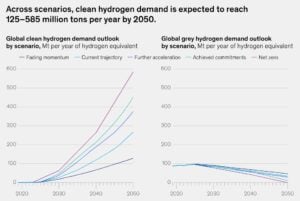
The International Energy Agency says global demand for low-carbon hydrogen could grow sixfold by 2050. If the world is to reach net-zero emissions, hydrogen will play a major role.

hydrogen demand by sector 2050 McKinsey
Source: McKinsey & Company

Governments in the U.S., Europe, Japan, and South Korea all have hydrogen roadmaps. Billions of dollars in public and private money are being invested in the space. More than 1,000 hydrogen projects worldwide have already been announced or are in development.

Plug Power is positioning itself early. By building large-scale hydrogen plants, extending long-term partnerships, and expanding into new regions like Brazil, it is pushing to secure a role at the center of this global shift.

Opportunities and the Pains

The current rally shows strong investor interest, but Plug Power still faces hurdles. Some of the opportunities for the company are:

  • Riding a global wave of clean energy policies that favor hydrogen.
  • Serving companies that need low-carbon fuel to meet climate goals.
  • Using government support to lower costs and expand faster.
  • Building credibility with long-term deals, like those with Uline and GH2 Global.

But Plug also has to deal with these risks:

  • Execution risks in building hydrogen plants on time and within budget.
  • Supply chain challenges, especially for key components.
  • Volatile market sentiment which often swings in clean energy stocks.

The company has struggled with cash burn in the past, which has made investors cautious. Achieving financial stability while scaling hydrogen production will be one of Plug’s biggest tests.

From Rally to Reality: What’s Next for Plug?

Plug Power’s stock surge was boosted by new demand, supportive policies, and investor optimism. Behind the rally is a company aiming to scale clean hydrogen while linking growth to climate goals.

The extension of its Uline partnership through 2030 and its new deal with GH2 Global in Brazil add credibility to Plug’s expansion plans. With targets like producing 2,000 metric tons of green hydrogen a day by 2030, Plug is moving fast.

The path is not without risks. Plug still needs to prove it can scale profitably. But its mix of bold expansion, clean energy focus, and climate commitments is putting the company at the center of the hydrogen transition. For investors, the stock’s surge signals growing belief that Plug Power can help shape the future of energy.